The Dark Truth Behind Mary Poppins: Onset Disasters, Bitter Feuds, and Bizarre Secrets Disney Tried to Hide
The Dark Truth Behind Mary Poppins: Onset Disasters, Bitter Feuds, and Bizarre Secrets Disney Tried to Hide
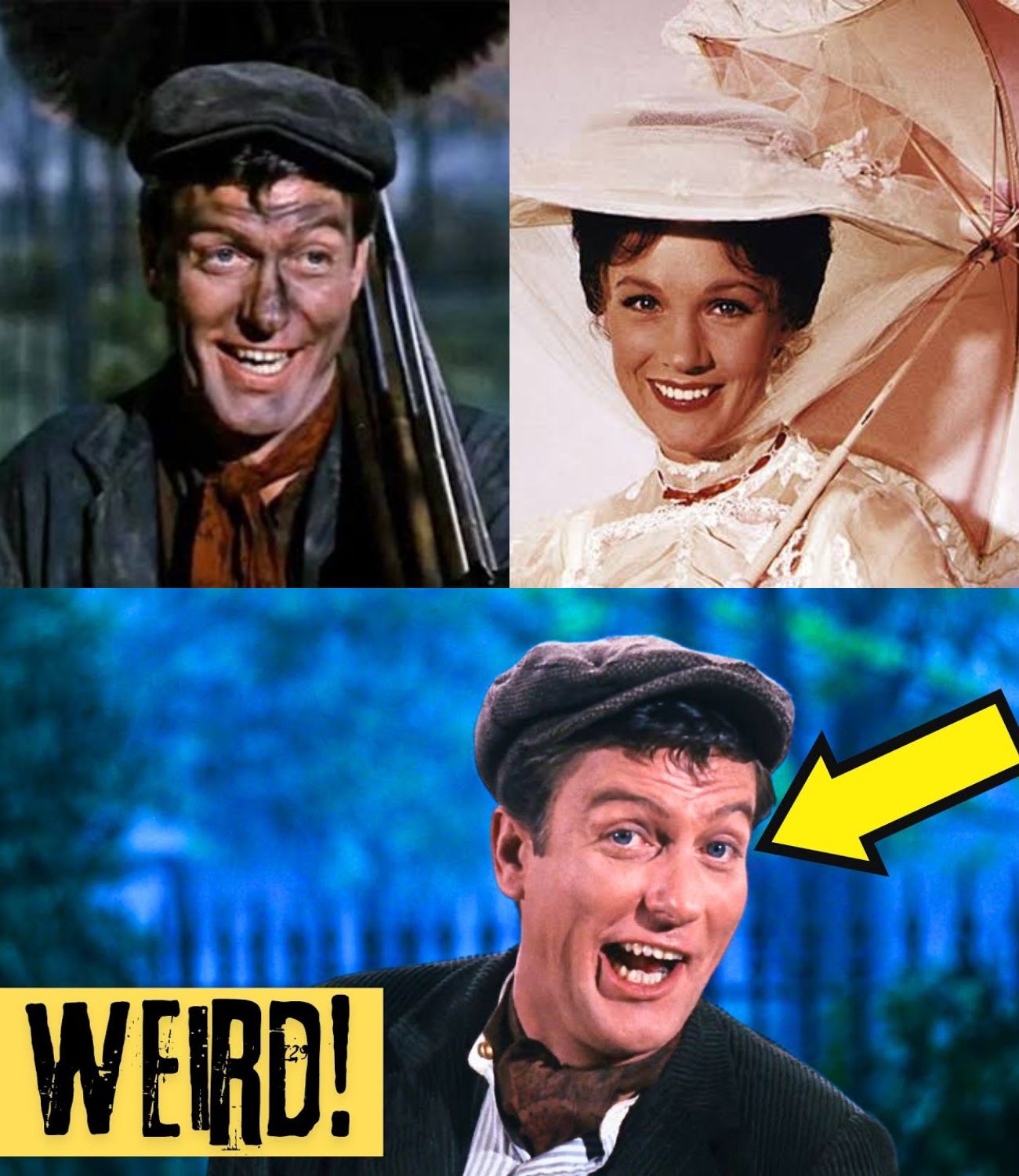
For over six decades, Walt Disney’s 1964 musical fantasy comedy Mary Poppins has enchanted audiences worldwide as the ultimate symbol of cinematic magic, warmth, and heartwarming family values. Based on the beloved book series by Pamela Travers and featuring unforgettable songs by the Sherman brothers, the film marked Julie Andrews’ iconic feature debut as the practically perfect magical nanny. However, beneath the polished surface of catchy tunes and groundbreaking visual effects lies a fascinating underworld of strict literary contrasts, fierce creative battles, terrifying onset hazards, and bizarre production anomalies.
1. The Original Literary Mary Poppins Was Severely Unnerving
While the cinematic Mary Poppins is celebrated for her firm yet warm and nurturing disposition—famously declaring a cheery “I am never cross”—the literary counterpart created by Pamela Travers was vastly different. In the original book series, Travers depicted her nanny as a far more severe, strict, and unsettling figure who never wasted time being overly nice. In one particularly dark turn from the source material, the book character even proposes turning the pigeons from the “Feed the Birds” sequence into a savory pie, showcasing a stark contrast to Disney’s sanitized, compassionate adaptation.
2. The Real Origin of “Supercalifragilisticexpialidocious”
The legendary word “supercalifragilisticexpialidocious,” officially added to the Oxford English Dictionary as a definition for something extraordinarily good or wonderful, has a disputed etymology. While the film’s composers, Richard and Robert Sherman, are widely credited with coining the playful expression to use when there is nothing else to say, similar phonetic variations had surfaced in earlier decades. Robert Sherman even noted hearing a comparable slang term during his youth, proving that linguistic evolution played a heavy role in crafting the cinematic staple.
3. Deceiving the Young Cast for Authentic Reactions
To capture genuine astonishment and emotional authenticity, the filmmakers frequently kept young actors Matthew Garber and Karen Dotrice completely in the dark about upcoming scene elements. Jane’s genuine gasp when Mary Poppins pours multicolored medicine out of a single bottle was entirely unscripted and real. Furthermore, the children were completely fooled by elaborate prosthetic makeup, having no idea that the ancient, crusty bank director Mr. Dawes Sr. was actually Dick Van Dyke under heavy layers of disguise.
4. David Tomlinson’s Hidden Voice Roles
Actor David Tomlinson is best remembered for his buttoned-up portrayal of Mr. George Banks, the stern father who grows wary of Mary Poppins’ disruptive magical ways. However, Tomlinson’s talents extended far beyond on-screen acting. Behind the scenes, he lent his versatile voice to several animated characters within the film, including a dapper penguin and a racing jockey. Most impressively, he also provided the voice for Mary Poppins’ sarcastic, talking umbrella parrot, adding an extra layer of hidden depth to his performance.
5. Overcoming Severe Phobias with Cash Bribes
Matthew Garber, who portrayed young Michael Banks, suffered from a severe and paralyzing fear of heights. This phobia presented a major production hurdle during the whimsical “I love to laugh” sequence, which required actors to be suspended in wire harnesses and float up to the ceiling for a tea party with Uncle Albert. To encourage Garber to participate and complete the stunts, the production team resorted to offering him a direct cash bonus of 10 cents for every single take he successfully completed.
6. Rescuing Jane Darwell from Retirement
The poignant and emotionally resonant character of the Bird Woman—who sits on the steps of St. Paul’s Cathedral feeding pigeons—was portrayed by legendary actress Jane Darwell. At the time of casting, Darwell had already retired from acting and was living quietly in a home for the elderly. Walt Disney personally sought her out, tracked her down, and passionately convinced her to take the role. Deeply honored by the personal gesture, she agreed, delivering one of the most touching cameo performances in cinematic history.
7. The Bitter Feud That Sparked “Saving Mr. Banks”
The arduous making of Mary Poppins was so fraught with tension, creative disagreements, and emotional friction that it ultimately inspired its own biographical drama film in 2013, Saving Mr. Banks. In the film, Emma Thompson portrays the uncompromising author Pamela Travers, while Tom Hanks steps into the shoes of Walt Disney. The narrative details Disney’s relentless years-long campaign to secure the adaptation rights, bonding ultimately over shared, complicated childhood relationships with their respective fathers—a trauma that heavily inspired the character arc of Mr. Banks.
8. A Polio Vaccine Sparked “A Spoonful of Sugar”
One of the most beloved musical numbers in cinematic history, “A Spoonful of Sugar,” owes its existence to an unexpected medical breakthrough. Songwriter Robert Sherman was inspired to write the track after returning home and discovering that his young son had just received the polio vaccine. Instead of experiencing a painful injection, the vaccine was administered orally on a simple sugar cube. Sherman immediately loved the concept of making something bitter or unpleasant easy to swallow with a touch of sweetness, instantly giving birth to the iconic anthem.
9. Defending the Worst Cockney Accent in Cinema History
Dick Van Dyke’s infamous attempt at a Cockney accent while playing Bert the sweep is frequently ranked by critics and linguists as one of the worst and most grating accents in movie history. However, Van Dyke has taken the decades of relentless teasing in stride. In later years, he humorously defended himself by revealing the root of the disaster: his assigned dialect coach was actually Irish and proved to be just as utterly clueless about authentic Cockney speech as he was.
10. A Terrifying Onset Rigging Malfunction
While Julie Andrews’ graceful descent from the sky with her parrot umbrella appears effortless on screen, the reality of the stunt work was perilous. On the final days of production, Andrews was suspended high above the stage in a safety harness for flying sequences. After enduring hours aloft, she felt a sudden drop of about six inches. As crews attempted to lower her, the rigging malfunctioned entirely, causing Andrews to plummet hard onto the stage floor, narrowly avoiding a catastrophic injury while a disembodied voice called out from across the set asking if she was down yet.
Bonus Production Realities
Adding to the surreal nature of the production, none of the charming, picturesque London street scenes were actually filmed in England. Instead, every single outdoor lookalike was meticulously constructed and shot on a closed sound stage located right at Disney’s studio lot in Burbank, California. Furthermore, the cheerful Robin whistling merrily during “A Spoonful of Sugar” was not produced by a professional animal wrangler or trained whistler—it was performed entirely by lead star Julie Andrews herself.

