The Bizarre Truth Behind the Missing Cast and the Ultimate Television Paradox of 90s Sitcoms
The Bizarre Truth Behind the Missing Cast and the Ultimate Television Paradox of 90s Sitcoms
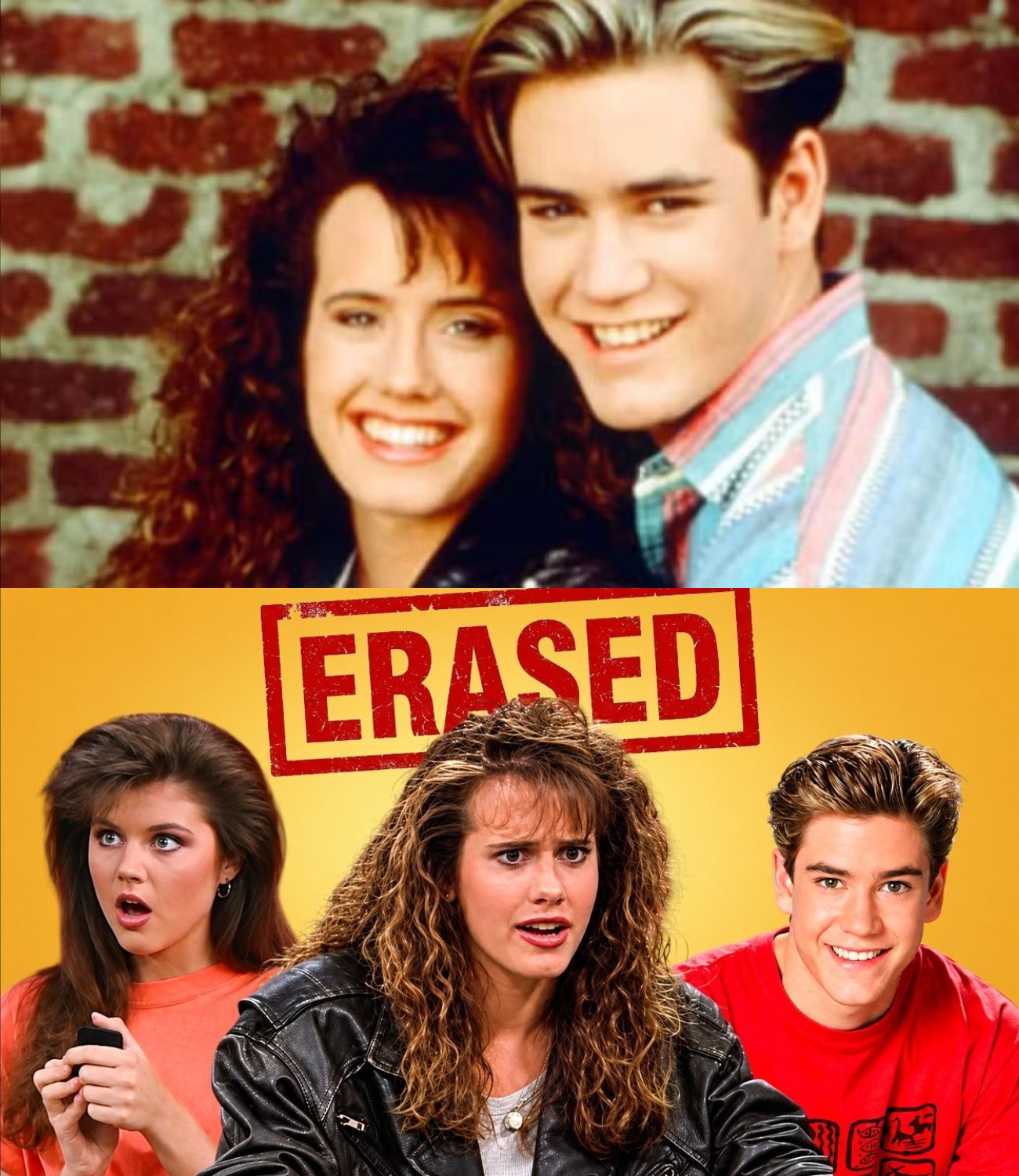
For generations of viewers who grew up glued to their television screens on Saturday mornings, Bayside High represented a comforting, predictable sanctuary of teenage life. The formula was brilliantly simple: a quick scheme cooked up by a charismatic ringleader who could freeze time with a single timeout, a lesson learned, and the entire core group of friends gathered safely back at their favorite local diner by the closing credits. The show did not rely on complex continuity or heavy serialized drama, which made the massive, unacknowledged hole in the middle of its final season all the more jarring. For a stretch of ten episodes near the end of the run, two of the show’s most prominent female leads simply vanished from the halls of Bayside with zero explanation, no transfer notices, and no family emergencies mentioned on screen. In their place stood a tough, leather-jacketed newcomer riding a motorcycle whom nobody in the audience had ever met.
To understand how this peculiar situation unfolded, one has to look behind the curtain at the chaotic business decisions driving the production. By the time the cast and crew reached what they understood to be the definitive final season, the emotional graduation episode had already been filmed, complete with caps, gowns, and a presiding principal bidding farewell to the graduating seniors. As far as the creative team was concerned, the book was closed. However, the network subsequently requested an additional batch of episodes after production had technically wrapped. Because the actors’ original contracts had already expired along with the initial production schedule, bringing anyone back required renegotiating new terms from scratch for work that had never been promised going in. While most of the main cast returned, two lead actresses had already moved on to other career paths and film opportunities, leaving the production stranded without a clause to force their return.
Faced with a sudden void in a friend group built specifically around three female leads, the producers decided to write a brand-new character rather than shrink the dynamic. They cast a history student at UCLA who expected roughly ten weeks of work to help cover tuition, entirely unaware that she was stepping into an enduring pop-culture enigma. The new character made her debut by clashing over a parking space before engaging in various teenage crises, including getting trapped in an elevator during an earthquake and dealing with romantic rivalries. Yet, because these newly commissioned episodes were shuffled randomly into the broadcast rotation alongside the older episodes that had already been completed, viewers experienced a dizzying whiplash. One week, the original dynamic was intact; a few weeks later, characters disappeared without a trace, only to reappear mid-conversation later as if the newcomer had never existed at all.
The confusion was only compounded by syndication and rerun schedules throughout the subsequent decade, as television stations broadcasted the episodes completely out of their original production or broadcast order. Fans watching reruns in the mid-1990s might catch an episode featuring the original lineup one afternoon and a substitute-character episode the next, with no logical way to determine the chronological timeline. This persistent narrative anomaly eventually caught the attention of cultural commentators and writers, who dubbed the erratic shifting of social circles a surreal structural paradox. While some argued that shifting friend groups mirrored the natural instability of real adolescent social circles, the reality behind the scenes remained a mundane yet fascinating consequence of expired contracts and corporate timing.
Decades later, the strange production anomaly continues to fascinate enthusiasts who comb through airing dates and script notes to make sense of a fragmented season. Even the actors involved found themselves navigating the bizarre legacy of a character born out of a scheduling scramble. While the original cast members eventually returned for later revivals and franchise reunions, the temporary substitute remained a unique footnote in television history—a glaring narrative gap that the creators chose to address decades later with nothing more than a nostalgic shrug and a punchline. Ultimately, the mystery stands as a testament to the unpredictable behind-the-scenes mechanics of the television industry, proving that sometimes the most memorable television mysteries are born not from brilliant artistic design, but from a simple race against a ticking clock.

