Cop Forces Black Woman’s Car Into Mud—Then Freezes as She Leads Federal Oversight Team Into Station
Cop Forces Black Woman’s Car Into Mud—Then Freezes as She Leads Federal Oversight Team Into Station
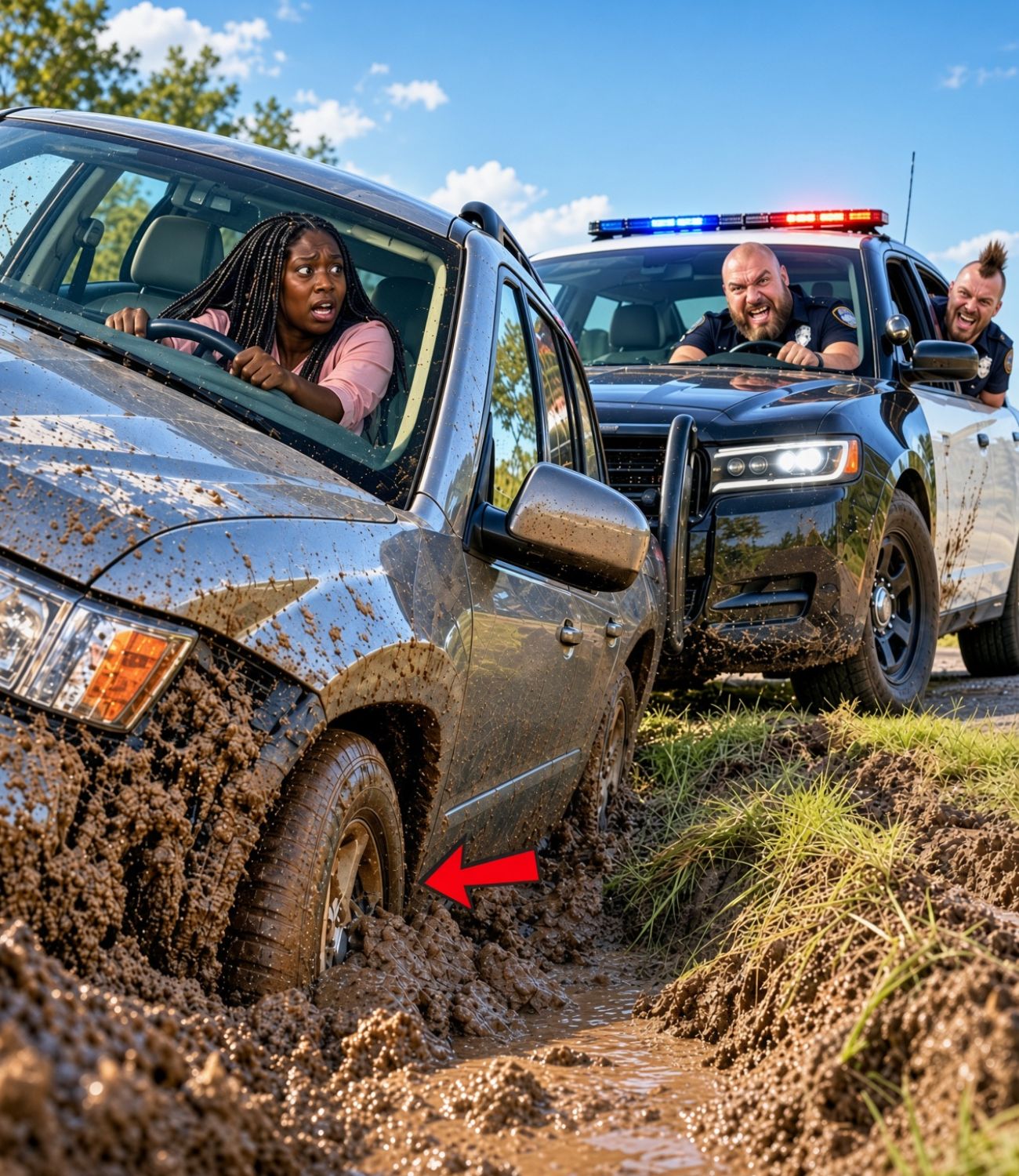
The patrol car surged forward, swerved, and slammed into the side of the gray SUV on an empty stretch of road in Brier County. Corporal Wade Mercer gripped the steering wheel and continued ramming the front of his cruiser into the SUV, forcing it off the pavement. The SUV’s right tires dropped onto the soft shoulder.
The vehicle tilted, then slid deep into the muddy ditch. Mercer stopped his cruiser, stepped out, and walked directly toward the scene. Maya Williams pushed open the door, stepped out, and stood directly in Mercer’s path. “You deliberately struck my vehicle and staged this scene so you could unlawfully seize it,” Maya said firmly, looking him directly in the eyes.
Mercer pointed toward the muddy ditch. “Your vehicle is obstructing traffic and will be impounded immediately. You have no legal basis other than the abuse of authority you just committed,” Maya replied without backing down. Every violation you’re about to put in your report will be fabricated,” Mercer moved closer. “I’m going to seal all property inside this vehicle.
Stay where you are and step away from the vehicle,” Maya said firmly. “You will be held legally responsible for every piece of property you unlawfully interfere with.” Mercer stopped several feet from her. He had expected anger, panic, or an argument about the damage. Instead, Maya spoke as if she were already documenting a formal violation.
She had not asked how much the repairs would cost. She had not demanded to call a supervisor. Her attention remained on his authority, his actions, and the legal basis for what he intended to do next. Mercer reached toward his uniform and activated his body camera. Maya noticed immediately his tone changed.
driver failed to yield and lost control of the vehicle while attempting to continue forward. He said toward the camera. Maya looked at the device on his uniform. “Your body camera was not recording when you struck my vehicle,” Mercer continued. “The vehicle is disabled and creating a traffic hazard.
It is completely off the roadway because you forced it there. I’m not debating this with you. You’re creating a false record.” Deputy Ethan Cole stepped out of the passenger side of the cruiser and approached slowly. At 29, Ethan had worked with Mercer long enough to recognize when a routine stop was becoming something else.
He looked first at the SUV and then at the cruiser, the damage along the side of Ma’s vehicle was visible. Tire marks also showed where the SUV had left the pavement after the patrol car moved against it. Mercer noticed Ethan studying the scene. Call Brier recovery. Ethan looked at him. Not county rotation, Brier recovery. Maya turned toward Ethan.
Has anyone determined whether the vehicle can be safely recovered without impoundment? Mercer answered before Ethan could speak. The decision has already been made by you, by the condition of the vehicle. The vehicle is in that condition because you put it there. Mercer ignored her and motioned for Ethan to make the call.
Maya returned her attention to the road, the ditch, and the position of both vehicles. She studied where the SUV had left the pavement and where Mercer had stopped his cruiser. She did not take out her phone. She did not pace. She simply observed. Remember the sequence, she told herself. “Remember where the cruiser was.
Remember when the camera came on.” Mercer walked toward the SUV. Maya moved into his path again. “Do not enter my vehicle. This is an impound scene. You have not established a lawful basis for impoundment. I have an unsafe vehicle and a driver who failed to yield. You have a vehicle you intentionally forced off the road. Mercer’s expression tightened.
Several minutes later, headlights appeared behind them. A flatbed tow truck from Brier Recovery and Storage pulled onto the shoulder. The driver was a man in his late 50s wearing a work jacket. He stepped down from the truck and looked toward Mercer. Evening Wade. Mercer pointed toward the SUV. Administrative hold. Take it in.
The driver nodded and began preparing the truck. He did not ask Maya whether she wanted the SUV recovered without impoundment. He did not ask whether she had another towing company she preferred. He acted as if Mercer’s decision had already settled everything. Maya watched the exchange. You use this company regularly? She asked.
They’re under county contract, Mercer said. Exclusive contract? That’s not your concern. It became my concern when you ordered them to take my vehicle. Mercer opened a patrol bag and removed a property tag. He began filling it out. Maya watched carefully. What’s the authorization number? Mercer looked up. For what? The impound authorization.
You’ll get your paperwork later. I asked for the authorization number. Mercer finished writing and attached the tag to the SUV. You ask a lot of questions. Maya read the number on the tag and committed it to memory. The tow driver moved closer to the ditch and began positioning the equipment needed to recover the SUV.
Maya looked back at Mercer. What percentage of vehicles seized by this department are eventually returned to their owners? Mercer stopped. Ethan looked toward her. The tow driver also paused briefly before continuing his work. Mercer faced Maya. Why are you asking me that? Because you decided to seize my vehicle before determining whether seizure was necessary.
That still doesn’t explain the question. It explains enough. Mercer studied her more carefully. Until then, he had treated her as a driver who would eventually become overwhelmed by the situation, sign the required forms, pay the fees, and leave the county. Now he was no longer certain. The tow operator began pulling the SUV out of the ditch.
Maya watched as the vehicle moved slowly back toward the road. Mud covered the tires and lower body, but the passenger compartment remained intact. Everything she had brought into Brier County was still inside. Her laptop, her document pouch, her personal belongings, and several items Mercer had not yet seen.
Mercer walked toward the rear of the SUV. Maya followed his movement with her eyes. You already tagged the vehicle, she said. There is no reason for you to enter it. Mercer stopped beside the rear door. Impounded vehicles require an inventory. After lawful custody is established, “It has been established.” “No, you declared it.
” Mercer reached for the rear door handle. Maya did not move toward him. She simply said, “If you open that vehicle, document every item you touch.” Ethan looked at her again. Mercer did, too. There was no fear in her voice. There was also no attempt to persuade him. She sounded as though she already expected him to make another mistake.
Mercer opened the rear door. Until that moment, he had been interested in the value of Maya’s SUV. Now he was about to discover something inside it that would change the entire direction of the night. Mercer leaned into the rear compartment and began looking through the contents without waiting for Mia’s consent. He moved a jacket aside, checked a small travel bag, then reached toward a black laptop case secured behind the passenger seat.
Maya remained several feet away. Before you continue, identify the policy authorizing a roadside inventory before the vehicle has entered lawful impound custody. Mercer looked over his shoulder. I already told you this vehicle is being impounded. That doesn’t answer the question. It doesn’t have to. It does if you’re going to document this as an inventory rather than a search.
Ethan stood near the patrol car and watched them. He had participated in enough impounds to know the usual sequence. A vehicle was normally secured, transferred to the towing company, and documented according to department procedure. Mercer had skipped ahead and was already handling Mia’s belongings while the SUV was still partly on the shoulder.
The tow operator continued preparing the flatbed, but he kept glancing toward the conversation. Mercer opened the laptop case. Inside was a slim computer, charging cable, and a small notebook. He picked up the notebook. Put that back, Maya said. Mercer turned it over in his hand. If it’s inside an impounded vehicle, it gets inventoried.
Then identify it on the property sheet without opening it. Mercer placed the notebook back but kept the laptop case open. Maya watched every movement. She could not stop him without giving him another excuse to accuse her of interfering, so she focused on what could be established later. The position of the vehicle, the time the body camera had been activated, the towing company, the property tag number, the order in which Mercer touched each item.
Mercer moved to the cargo area. A dark document pouch was secured against the side panel. He reached for it. That pouch is closed and secured, Maya said. There is no inventory reason to open it. Mercer examined the small lock. What’s inside? Property that belongs to me. That’s not an answer.
It’s the only answer you’re entitled to. Mercer looked at her for several seconds, then left the pouch where it was. Ethan noticed the change. Mercer was no longer moving quickly. He was becoming selective, deciding which items might tell him more about Maya. The tow operator approached from the rear of the SUV.
Wade, I need the wheels straight before I finish loading it. Mercer stepped aside. The man adjusted the recovery equipment while Maya remained near the edge of the road. Once it gets to the yard, how long before I can retrieve it? She asked. The tow operator looked at Mercer before answering. Mercer spoke first. That depends on the administrative hold.
Who controls the hold? The department. How long can the department maintain it? As long as necessary. Maya turned to the tow operator. What is the daily storage charge? He hesitated. Depends on the vehicle. This vehicle? The man rubbed one hand across his work jacket. You’ll get the full rate sheet at the office.
So, you know the rate, but you won’t tell me here. Mercer stepped between them. You can deal with Brier recovery. After processing, Maya looked at him. You made the seizure decision. I’m asking what financial consequences follow from that decision. I don’t set towing fees, but you choose when the fees begin. Mercer did not answer.
Ethan lowered his eyes. He had heard drivers complain about Brier recovery before. Most argued about the cost after their vehicles were already behind the company’s locked gate. By then, the daily charges were increasing, and the paperwork required a department release before the company would return the vehicle. Mercer returned to the SUV.
He reached beneath the rear seat and found a compact hard-sided case. Unlike the other items, it was fitted closely into a storage compartment and secured with a simple latch. Mercer pulled it free. Maya’s attention shifted immediately. It was a small change, but Ethan noticed it. Mercer noticed it, too.
He held the case in one hand. What’s this? Personal equipment. What kind? Maya did not answer. Mercer opened the latch. Inside were a set of cables, a compact external microphone, spare batteries, and a digital recording device designed for professional field use. Mercer removed the recorder and turned it over. The unit had independent storage, multiple audio inputs, and enough capacity for extended recording.
His expression changed. Maya kept her voice level. Put it back. Mercer examined the controls. You record interviews? You are handling private property without lawful authority. That’s not what I asked and I’m not required to answer. Mercer looked at Ethan. Ethan had moved closer now. His eyes settled on the recorder in Mercer’s hand.
This was no ordinary voice memo device. It was equipment someone bought because reliable audio mattered. Mercer looked back at Maya. You a reporter? Maya said nothing. Newspaper? No response. Television? Maya continued watching him. Mercer’s suspicion sharpened. You come out here recording people without telling them. Maya finally answered.
“You should be more concerned with what you are doing than with who might be documenting it.” If you sympathize with Maya, who continues to stand up for her rights and protect her property, even as Mercer abuses his authority, please give this video a like. Tell us in the comments what city, state, or country you’re watching from.
because there may be people near you following this story too. And don’t forget to subscribe so you won’t miss the next powerful stories.” Ethan glanced toward Mercer. The statement did not confirm anything, but Mercer reacted as if it had. He began searching the hard case more carefully, checking beneath the cables and inside the accessory pocket.
Mia spoke again. “If you intend to seize that recorder, log the serial number and issue a property receipt.” Mercer stopped. You know a lot about evidence procedure. I know what accountability looks like. Mercer turned the recorder over and found the serial number printed on the back.
Instead of reading it aloud or writing it on the inventory form, he closed his hand around the device. Ethan watched him. Should I get an evidence bag? He asked. Mercer looked at him. No. Ethan hesitated. If we’re taking it, shouldn’t it be tagged with everything else? I said I’ll handle it. The tow operator had finished loading the SUV and was securing the wheels to the flatbed.
Mercer stepped away from the vehicle with the recorder still in his hand. Maya followed it with her eyes. Where are you putting that? Mercer ignored her. He walked to the patrol car, opened the front passenger door and placed the recorder inside instead of adding it to the property inventory attached to the SUV. Ethan stood beside the cruiser and stared at the device.
Maya looked directly at him. You saw where he put it. Ethan said nothing. Mercer closed the patrol car door and turned back toward them. For the first time that night, the value of Mia’s SUV was no longer his main concern. He now believed the woman standing on the roadside might have been recording far more than he had expected.
Mercer walked back toward Mia with a clipboard in one hand. The tow operator had finished securing the SUV to the flatbed, and Ethan remained beside the patrol car where Mercer had placed the recorder. Sign this,” Mercer said. Maya took the form but did not reach for the pen. She read the first paragraph, then continued through the remaining sections without speaking. Mercer waited.
When she finished, Maya looked up. This says, “I voluntarily surrendered the vehicle for administrative impound. You’re acknowledging the toe.” No. This says, “I agreed to surrender possession. It’s the standard form. That doesn’t make the statement accurate.” Mercer held out the pen. Sign it and we can move on.
Maya handed the form back. I won’t sign a false statement. Mercer wrote something on the bottom of the page. What did you write? She asked. Refused to cooperate. I refused to sign an inaccurate document. Put that in the report. I’ll write the report. That’s exactly the problem. Ethan watched from several yards away.
He had seen Mercer use the same form before. Most drivers signed it because they wanted the encounter to end. Few read the wording carefully enough to notice how much authority they were surrendering. Mercer clipped the form back to the board. Stand beside the SUV. Maya looked toward the flatbed. The SUV is already secured.
I gave you an instruction. She walked to the side of the tow truck and stopped where he directed. Mercer waited several seconds. Move away from the vehicle. Maya stepped back. Not there. over by the cruiser. She moved toward the patrol car. Mercer turned slightly so his body camera faced her directly.
Subject continues moving around the scene despite repeated instructions to remain stationary. Maya stopped. You instructed me to move three times. Stay where you are. I am. Mercer approached the patrol car and opened the rear door. Maya, remain still. Come over here. She looked at him. You just ordered me to stay where I was.
Are you refusing a lawful instruction? No. I’m asking you to clarify which instruction you want followed. Mercer looked toward his body camera. Subject is argumentative and repeatedly challenging directions. Maya’s expression did not change. Your instructions are changing faster than your report can record them.
Ethan looked away for a moment. Mercer’s attention shifted toward him. You got something to say? No. Corporal Mercer faced Maya again. Walk toward me. She did. Stop. She stopped immediately. Hands where I can see them. Maya held both hands at her sides. Mercer nodded toward the camera. Subject finally complying after multiple warnings.
Mia looked at the camera. For the record, I followed every clear instruction you gave me. Mercer stepped closer. You don’t get to decide what goes in the record. No, but you don’t get to decide what happened. His jaw tightened. The tow operator closed the final equipment compartment and returned to the cab. Before leaving, he handed Mercer a towing receipt.
Mercer signed it without showing it to Maya. I want a copy of that. She said, “You’ll get paperwork at the station. I want the towing authorization and the property inventory before the vehicle leaves. You’re not getting anything until processing is complete.” Maya turned toward the driver. Do you have a copy for the registered owner? The man glanced at Mercer before answering.
The office handles releases. I’m not asking about release. I’m asking whether you have documentation showing what you’re taking. Mercer stepped between them. That’s enough. The tow driver climbed into his truck. Maya watched the flatbed pull away with her SUV. She did not call after it or try to stop the driver.
Instead, she followed the vehicle until its lights disappeared around the bend. Mercer returned to the clipboard. You’re coming to the station. Am I under arrest? You’re being detained for administrative processing. For what offense? Interfering with an official impound, refusing instructions, and obstructing an active investigation.
Maya looked at him. You created the impound, gave contradictory instructions, then recorded my objections as non-compliance. That’s your version. It’s the sequence of events. You can explain your side later. Maya glanced toward the cruiser. Where is my recorder? It’s secured. It isn’t on the inventory. It will be handled.
By whom? Mercer did not answer. She turned to Ethan. Did you see him enter the recorder on the property sheet? Ethan hesitated. Mercer spoke before he could. Deputy Cole is not here to answer your questions. Maya looked back at Mercer. Then note that the device was removed from my vehicle and separated from the listed property without a receipt.
You’re making this harder than it needs to be. No, I’m making it documented. Mercer pointed toward the rear seat of the cruiser. Get in. Maya did not move immediately. Am I free to leave? No. Then state the legal basis for the detention. I already did. You listed conclusions. I asked for the conduct supporting them. Mercer stepped closer.
But Maya held her position. You refused to sign the surrender form. That is not interference. You refused instructions. I followed every clear instruction. You challenged an active investigation. Questioning you is not obstruction. Mercer stared at her for the first time. Maya could see that he was no longer trying to convince her.
He was trying to create enough language around the incident to make his decisions appear reasonable later. She entered the rear seat without further argument. As Mercer closed the door, Ethan walked toward the front of the cruiser. Corporal, I need to check the dash cam upload before we leave. Mercer glanced toward him.
Do it fast. Ethan got into the passenger seat and opened the vehicle system. The recording began before the first contact with Mia’s SUV. He watched Mercer accelerate. He watched the cruiser move against the SUV. He watched Maya try to remain on the pavement. Then he watched the second maneuver force her into the ditch. Ethan’s breathing changed.
There was no way to reconcile the footage with Mercer’s report. He checked the backup storage slot. The original removable card was still there. Ethan looked through the windshield. Mercer was outside the cruiser finishing paperwork. His back turned. He removed the card, slid it into a routine paperwork folder beside his seat, and closed the compartment.
A few seconds later, Mercer opened the driver’s door. “Dash cam clean?” Ethan looked at him. “Yeah.” Mercer got behind the wheel. Maya sat silently in the rear seat, unaware that the only untouched record of what had happened was now hidden less than 3 ft in front of her. The drive to the Brier County Sheriff’s Office took less than 20 minutes.
Mia sat quietly in the rear seat while Mercer drove and Ethan remained beside him. No one spoke. Mercer occasionally checked the mirror, but Mia gave him nothing to react to. She used the silence to organize the sequence in her mind. The first impact, the second maneuver, the SUV leaving the pavement, the body camera activated afterward.
Brier recovery called without a recovery assessment, the property tag, the false surrender form, the recorder removed without being logged. By the time the cruiser entered the sheriff’s office parking lot, Maya could repeat the sequence without missing a step. The building was a low brick structure connected to the county administrative complex.
Several pickup trucks and patrol vehicles filled the front lot. An American flag and a North Carolina flag hung beside the entrance. Mercer parked near the side entrance. Out, he said. Mia stepped from the cruiser. Ethan carried the paperwork folder under one arm. The memory card remained hidden inside it. Mercer led Mia through a secured door and into the booking area.
A woman in her 60s sat behind the desk, reading information from a computer monitor while a half-finished cup of coffee rested beside the keyboard. She looked up. Evening, Sergeant. Administrative detention, Mercer said. Vehicle impound dispute escalated at the scene. Maya turned toward him. That description is inaccurate.
The booking clerk looked between them. Mercer placed the paperwork on the counter. She refused instructions and interfered with the impound. I refused to sign a document falsely stating that I voluntarily surrendered my vehicle. The clerk paused before touching the papers. Mercer’s expression tightened. Process her. The woman pulled the form closer.
“Ma’am, I need your full name.” Maya Williams. Date of birth? Maya provided it. “Current address?” she answered. The clerk continued through the required information. Maya responded calmly to each question until the woman reached employment. “Employer?” Maya looked at her. “Is that required for this detention?” The clerk hesitated.
Mercer answered, “Put it down.” Mia kept her attention on the clerk. I asked whether it is required. The woman glanced toward Mercer, then back at Maya. Not for identification. Then I’m not providing it. Mercer stepped closer to the counter. Why are you making everything difficult? I’m answering every question necessary to process the detention.
You refuse to identify your employer because it isn’t necessary. Ethan stood near the wall and watched Mercer become more frustrated with every answer. The booking clerk returned to the form. “Do you need to contact anyone?” “Not yet,” Mercer frowned. “Most people in your position would want to make a phone call.” Mia looked at him.
“Most people in my position probably still have possession of their phone.” The clerk glanced toward the property sheet. Mia continued. “Speaking of property, I want the control number for everything removed from my SUV. You’ll receive it after intake.” Mercer said. I want the number assigned to the recorder. Mercer said nothing.
The clerk looked down at the documents again. There isn’t a recorder listed here. Maya turned toward Mercer. That’s interesting. Mercer leaned one hand against the counter. It hasn’t been entered yet. Then where is it? It’s secured. Where? You don’t need to know. I do if you removed it from my vehicle and separated it from the listed inventory. Mercer looked toward Ethan.
Ethan kept his expression neutral. The booking clerk shifted uncomfortably in her chair. Sergeant, if it’s evidence, I need an item number before I can attach it to this detention. I said I’ll take care of it. Maya watched the clerk carefully. You should note the time you requested that number.
Mercer turned sharply. You don’t tell my staff what to put in departmental records. Maya met his eyes. Then they should follow their own procedure. A door opened behind the booking area. Sheriff Randall Pike entered. He was 61, broad-shouldered, neatly dressed, and carried himself with the calm confidence of someone accustomed to being recognized when he entered a room. Wade Mercer turned.
Sheriff Pike looked at Maya, then at the paperwork. What happened? Outofount driver refused to yield, lost control, interfered with the impound, and refused processing instructions. Maya spoke before Pike could respond. His patrol car struck my SUV twice and forced it into the ditch. His body camera was activated after the collision.
He then ordered a specific towing company, attempted to have me sign a false voluntary surrender form and removed recording equipment from my vehicle without placing it on the property inventory. Pike studied her. Mercer said she thinks she knows procedure better than everyone here. That isn’t what I said. Pike raised one hand. All right.
His tone was calm. He looked at Maya. Miss Williams, I’m Sheriff Randall Pike. If we can lower the temperature here, maybe we can get this sorted out. My temperature is fine. Pike gave her a brief look. Fair enough. Why were you in Brier County tonight? My reason for traveling has nothing to do with the legal basis for seizing my vehicle.
That wasn’t what I asked. It’s the answer that matters. Pike watched her for a few seconds. You an attorney? Maya did not react. Where is the property receipt from my recorder? Pike’s expression changed slightly. Mercer stepped in. Sheriff, I found professional recording equipment in the SUV. I think she may be press. Pike looked at Maya again.
Are you? Maya ignored the question. Who authorized Brier Recovery to take exclusive possession of the vehicle? Pike folded his arms. They’re a county contractor. That doesn’t answer who authorized this specific seizure. Mercer exhaled impatiently, Maya continued. I also want the inventory control number, the towing authorization number, the location of the recorder, and confirmation of when your body camera and hallway camera systems began retaining footage related to this incident. This time, Pike did not answer
immediately. Ethan noticed it. Until that moment, Pike had been looking at Maya as an inconvenient driver. Now he was looking at her differently. Why are you asking about digital retention? Pike said, “Because records matter when people disagree about what happened.” Pike’s eyes remained on her. Then he turned to Mercer. Hallway.
The two men stepped several yards away, close enough that Ethan could see them, but not hear every word. Pike kept his voice low. Who is she? Mercer shook his head. I told you maybe a reporter maybe isn’t good enough. She won’t say. Pike glanced back toward Maya. She was speaking quietly with the booking clerk, asking only for the documentation associated with her property.
No threats, no demands for special treatment. Pike looked at Mercer again. Find out who she is before she leaves this building. The booking clerk returned with a thin packet of documents and placed it on the counter in front of Maya. Mercer and Pike were still speaking in the hallway and Ethan had moved to a desk near the wall with the patrol paperwork.
These are the forms connected to your vehicle, the clerk said. Tow authorization, administrative hold, and property intake. Maya pulled the packet closer. May I review them? They’re your copies. She began reading from the first page. Brier recovery and storage appeared at the top of the towing document. Beneath it were separate charges for recovery, transport, administrative processing, storage, and vehicle release.
The rates were not unusually presented, but the structure mattered. Every additional day increased the amount owed before the owner could recover the vehicle. Maya moved to the next page. Who controls the administrative hold? The clerk looked toward the hallway. The sheriff’s office. Does Brier Recovery have authority to release a vehicle without department approval? No, ma’am.
So, storage fees continue while the department maintains the hold. The woman hesitated. Generally, yes. Maya looked back at the document. What happens if the owner contests the seizure? There’s an appeal process. Does filing an appeal stop storage charges? I don’t believe so. Maya nodded once and continued reading. Ethan glanced toward her.
She was not reading the packet the way most people read a bill. She was comparing dates, authorization fields, signatures, and reference numbers. Then she stopped. The towing authorization carried a number that did not appear to have been created at the roadside. It belonged to a printed block of departmental authorizations assigned in advance. Maya pointed to it.
When was this number issued? The clerk leaned forward. That’s a department authorization code. I understand what it is. When was it issued? I don’t know. Was it generated tonight? The woman shook her head. Those numbers are assigned in batches. Maya looked toward Mercer. He had told her the circumstances required immediate empoundment, but the paperwork used a preassigned authorization system that allowed an officer to initiate the process quickly without waiting for separate approval.
Pike returned before Mercer. Everything all right here? He asked. Maya held up the form. How many officers have authority to issue these impounds? Pike looked at the paper. Depends on the circumstances. That isn’t what I asked. He gave her a measured look. Patrol supervisors have authority when a vehicle meets department criteria and who reviews the decision.
There are administrative procedures before or after storage fees begin. Pike did not answer immediately. Maya set the form down. How much revenue did Brier County receive last year from vehicle storage, administrative holds, and auctions? The booking clerk stopped typing. Pike studied Maya. Why would you know to ask that? Because your department took control of my vehicle and sent it to a private contractor.
I want to know how that system works. You think this is about money? I think financial incentives matter whenever the person ordering a seizure is not the person paying for it. Pike rested one hand on the counter. Brier Recovery provides a service. The county doesn’t set every cost associated with that service, but the county decides when the service becomes mandatory.
That still doesn’t mean the department profits from it. I didn’t say it did. Pike noticed the distinction. Mia continued, I asked how much revenue the county receives from the process. Mercer returned from the hallway. What’s going on? She’s reviewing the tow paperwork, Pike said. Mercer gave a short nod. She can read it at home.
I don’t have my vehicle, Maya replied. So, I have time. The booking clerk looked down to hide her reaction. Mercer moved closer. You’ll get the SUV back when the hold is cleared and the required fees are paid. How long does that usually take? Depends on the case. How many owners challenge an impound? Mercer folded his arms.
I don’t keep statistics. How many abandon the vehicle because the storage bill becomes higher than the value of the car? Mercer’s expression changed. Pike stepped in. That’s enough. Maya looked at him. Is it? Pike held her gaze, then reached for the documents. This is an administrative matter, Miss Williams.
You can use the appeals process like anyone else. That process starts after the fees begin. It starts when the vehicle enters custody. Exactly. Pike put the papers back down. Maya turned another page and found a printed description of the lean process. If charges remained unpaid and required notices were completed, a vehicle could eventually move towards sale.
She read the language twice. This applies even when the original seizure is disputed. Pike answered this time. There are deadlines. People have the right to contest. Do the charges stop while they contest? No. Maya looked at him. Neither said anything for a moment. Ethan lowered his eyes to his paperwork. He remembered an older man who had come to the station several months earlier over a work van.
The man owned a small heating and air conditioning business and said he could not take jobs without the vehicle. He had spent days trying to get the hold released while storage fees continued. Ethan never learned how the case ended. He remembered a woman in her late 60s who had sat in the lobby with a folder full of receipts and asked why she owed more to recover her sedan than she had originally paid for it.
At the time, Ethan had treated both situations as paperwork problems. Now he was no longer sure. Mia turned back to the towing form. Is Brier Recovery your only contracted provider? Pike answered carefully. They handle most department directed impounds. For how long? That contract is public record, so I can assume several years.
You can assume whatever you want. Maya closed the packet. I prefer records. Pike said nothing. Mercer leaned toward him. Can I talk to you? The two men stepped away again. This time, Pike led Mercer into a small office near Booking and closed the door. He sat at the computer and typed Mia’s name into a search field.
A clean driving record appeared. No local arrests, no criminal history, nothing that explained the recorder. Pike tried another database, still little. No newspaper employer, no obvious television affiliation, no investigative organization, no public profile that matched Mercer’s theory. Mercer stood behind him. Maybe she’s freelance.
Pike kept searching. Freelancers leave footprints. What are you saying? Pike leaned back. I’m saying we have a 28-year-old woman sitting 10 yards from us who knows our towing procedures, understands evidence handling, asks about retention systems, and refuses to tell us what she does for a living. Mercer looked toward the closed door.
Pike lowered his voice, and I can’t find a reason why she knows any of it. Outside the office, Maya reopened the packet and studied the authorization number one more time. She had come into Brier County with questions. The papers in front of her were beginning to provide answers. Sheriff Pike waited until the booking clerk finished processing Mia’s paperwork before asking Mercer to follow him into the small operations office behind the main hallway.
Ethan remained outside completing the patrol report while Mia sat near the booking desk with her copies of the towing documents. Pike closed the office door and turned to Mercer. Show me exactly what happened after you brought her property inside. Mercer frowned. What do you mean? the recorder. I secured it. That isn’t what I asked.
Mercer looked toward the hallway. I brought it in with the rest of the property. Pike sat at the computer and opened the internal surveillance system. Several camera feeds appeared on the monitor. He selected the corridor between booking and the evidence annex, then entered the approximate time Mercer had arrived. The footage showed Mercer entering through the secured door with Maya several steps behind him.
Ethan followed, carrying the paperwork folder. A few minutes later, another camera captured Mercer returning to the cruiser, removing the digital recorder and carrying it inside by itself. Pike moved the video forward. Mercer walked past the normal property intake counter without stopping. He continued down the hallway and entered a small evidence adjacent room used for temporary storage and administrative supplies. Pike paused the recording.
Where’s the intake scan? Mercer did not answer. Pike turned toward him. Where is it? I was going to log it after I finished processing her. You carried an untagged device past property intake and put it in a room that isn’t approved for evidence storage. It was temporary. The camera doesn’t know that.
Mercer crossed his arms. Nobody’s looking at the hallway footage unless there’s a complaint. Pike looked back at the screen. She’s already building one. Mercer said nothing. Pike resumed the video. Several minutes later, Mercer appeared again, entered the room, and moved the recorder somewhere outside the camera’s view.
Where is it now? Locker 12 in the annex. Tagged? Not yet. Pike leaned back. You took property from her vehicle, left it off the inventory, moved it twice, and still haven’t entered it into the system. She had professional recording equipment hidden in the SUV. I needed to know what I was dealing with. You needed to follow procedure. Mercer gave him a hard look.
You think procedure matters more than finding out whether she came here to investigate us. Pike lowered his voice. Procedure is what protects us when somebody does. That ended the argument. Pike looked at the hallway footage again. The recorder itself was not the only problem. The video established when Mercer possessed it, where he took it, and how long it remained outside normal evidence control.
If Maya obtained that footage, the department would have to explain every missing step. Pike opened the retention settings. This clip is tied to which incident number? Mercer gave him the number from his report. Pike entered it and frowned. That number wasn’t created until after you got back. I know.
So, the hallway camera doesn’t automatically match the event. No. Pike considered that. He changed the camera entry from active incident footage to administrative review and marked it as potentially duplicative of the booking record. Mercer watched that remove it. No, it changes where it appears. Can you delete it? Pike turned toward him.
We are not having that conversation. Mercer understood the warning. Pike continued working. He restricted general access to the relevant corridor footage and changed the retention category pending what he described in the system as a maintenance review. Then he pointed at Mercer. Get the recorder properly entered.
Use the time it arrived at the station, not the time you finally decide to fill out the form. Mercer hesitated. That creates a gap. You already created the gap. Outside the office, Maya noticed Mercer emerge and walked directly toward the evidence annex. A few minutes later, a lieutenant cross the same hallway and checked one of the ceiling cameras.
Then, a civilian IT contractor entered through the side door carrying a laptop case. Maya looked at the wall clock. It was late for routine maintenance. The booking clerk noticed her watching. Something you need, ma’am? Maya turned back to the desk. Does your camera system usually require technical maintenance this time of night? The clerk looked toward the hallway.
I wouldn’t know who controls retention. I don’t handle that system. Sheriff’s administration. The clerk paused before answering. Supervisors have access. Maya nodded. She did not ask another question. A few minutes later, Mercer returned with a clear property bag. The recorder was now inside it along with a handwritten evidence label.
He placed the bag on the counter. There logged. Maya looked at the label. What time did you enter it? It’s on the form. That wasn’t my question. Mercer pushed the paper toward her. You wanted a receipt? You have one? Maya read the document. The property entry showed the recorder arriving at the station significantly later than the time Mercer had actually taken possession of it on the roadside.
She looked at him. This time stamp is wrong. It’s the time the property was processed. It’s not the time you took custody. That distinction doesn’t matter. It matters to chain of custody. Mercer leaned closer. You keep using that phrase because you keep giving me reasons to. Pike appeared behind him.
What’s the issue? Maya handed him the receipt. Your officer took this device from my vehicle before I was transported here. This record starts much later. Pike examined the document. It was entered when it reached formal property intake, so there is an undocumented period. Pike returned the form.
The device remained in department control. That doesn’t establish who handled it, where it was stored, or whether anyone accessed it. Mercer interrupted. Nobody accessed anything. Maya looked at him. Then preserving the complete hallway footage should make that easy to verify. Pike’s eyes stayed on her. Maya continued, “I want written confirmation that all video connected to my detention, property handling, and booking is being preserved.
You can make that request through the proper process.” Pike said, “I just did.” Pike did not respond. Across the room, Ethan looked down at the paperwork folder beside him. The original dash cam card was still inside. Until that moment, he had thought the greatest danger was Mercer’s false report. Now he understood that the department had already started changing the records around it.
Pike returned to the operations office and shut the door on the computer screen. The hallway footage still existed. So did the access history showing who had changed its classification when the change occurred and which supervisor account had approved it. Pike stared at those entries. The visible record could be altered.
The system was still keeping a record of the alteration. Pike remained in the operations office after Mercer left. He reopened the surveillance archive and pulled up the administrative history connected to the hallway camera. The video itself was no longer the only issue. The system showed every change made to it. The original retention category had been replaced.
Access permissions had been restricted. The incident reference had been changed. And Pike’s supervisor account appeared beside each modification with an exact timestamp. He opened another menu and found the maintenance history. Nothing had been erased from the audit record. Pike stared at the screen for several seconds before calling Mercer back into the office.
Mercer entered and closed the door behind him. What now? Pike turned the monitor toward him. Every change is logged. Mercer leaned closer. Can the log be cleared? That would create another entry. So, what do we do? We stop making unnecessary changes. Mercer looked irritated. The hallway footage still shows me carrying the recorder. Yes.
And she already asked for it to be preserved. Yes. Mercer lowered his voice. Then leaving it there doesn’t solve anything. Pike sat back. Neither does touching the system every 10 minutes. Anyone who knows digital evidence will look at the history before they look at the clip. Mercer’s expression changed slightly. Anyone who knows digital evidence, he repeated.
Pike understood what he meant. They both looked through the office window toward booking. Maya was still seated near the counter. She had finished reviewing the towing packet and was now comparing the property receipt with the administrative hold document. She had asked for a pen, but instead of writing on the originals, she was making notes on the blank back of one of her copies.
Mercer crossed his arms. She knew the term chain of custody. She knew to ask about retention. She knew the roadside inventory was out of sequence. She also knew what an administrative hold does to storage charges. And she had a professional recorder. Pike looked at him. You said she was press. I thought she was.
You found a media credential? No. A company identification card? No. Anything in the vehicle connecting her to a newspaper, station, or production company? Mercer shook his head. Pike returned to the computer and searched Maya’s name again. The results remained ordinary. Driver information, address history, a clean criminal record, nothing that explained her behavior, Mercer said.
Maybe she works independently. Independent reporters still publish. She could be using another name. Maybe. Mercer waited. Pike did not sound convinced. A few minutes later, Ethan entered the operations area carrying the completed patrol paperwork. Reports ready for review, he said. Mercer took it. Pike looked at Ethan. Did you inspect the patrol car upload? Ethan kept his face neutral.
Yes, Sheriff. Any system errors? Nothing showed on the vehicle terminal. Pike watched him carefully. Did you access the backup storage? Ethan paused only long enough to appear as though he was thinking. No, sir. The memory card remained hidden inside the routine paperwork folder he had placed among other administrative documents near his workstation. Pike nodded.
Leave the report. Ethan set the papers down. As he turned toward the door, Pike added, “Stay available tonight.” Ethan looked back. “Yes, sir.” He left without asking why. Mercer waited until the door closed. “You think he knows something? I think I’m checking everyone who touched that vehicle.
” Mercer opened Ethan’s report and scanned the first page. He kept it simple. That’s usually smart. Mercer read further, then stopped. “What?” Pike held out his hand. Mercer passed him the report. Ethan had written that the SUV was found in the ditch when he exited the patrol vehicle. He had not written that Maya had independently lost control.
He had not confirmed Mercer’s description of the moments before the vehicle left the pavement. Pike read the paragraph twice. He left out the cause. Mercer’s voice hardened. He knows the cause. Then why didn’t he write it? Mercer looked toward the door Ethan had just used. Pike placed the report on his desk. Don’t confront him yet.
He was sitting next to me. Exactly. If there’s a problem with the dash cam, I want to know what he did before he knows we’re looking. Mercer said nothing. Outside the office, Maya handed the booking clerk one of the forms. This property receipt shows the recorder entered after arrival at the station.
Can you give me a copy showing when the rest of the vehicle inventory was created? The clerk searched through the packet. This one should have it. Maya compared the times. The towing authorization had been initiated first. The general inventory followed. The recorder appeared later under a separate entry. Three stages. Three different records for property taken during one encounter.
Is that normal? Maya asked. The clerk looked uncomfortable. Different items can be processed differently, even when they come from the same vehicle. I don’t handle evidence decisions, ma’am. Maya nodded. I understand. She did not pressure the woman further. The clerk had answered enough. Maya looked toward the hallway camera.
Someone had adjusted its position slightly since she arrived. She could not know whether that mattered yet, but she remembered where it had been pointed before. Pike came out of the operations office. Miss Williams. Maya looked up. I’m trying to understand what you believe happened tonight. I’ve already explained what happened.
I’m asking what you think this department is trying to do. Maya studied him. That’s a different question. It is. She folded her copies of the paperwork neatly. Your corporal forced my vehicle off the road, created a justification to seize it, separated recording equipment from the property inventory, and then produced records that do not accurately reflect when that equipment entered his custody.
Pike remained calm. You’re making serious accusations. I’m describing the records you gave me. And you think all of that is connected? I think you’re asking because you’re worried it might be. Pike’s expression tightened. Mercer appeared behind him. You really think you’ve figured this place out in one night? Maya looked at him.
I haven’t said what I think about this place. Then what are all the questions for? To determine whether your actions are mistakes or a pattern. Mercer stared at her. That word stayed in the room longer than the rest. Pattern. Pike spoke carefully. What exactly are you looking for? Maya gathered her documents. I’m looking at what your department chose to record, what it chose not to record, and what changed after I started asking questions. Mercer turned toward Pike.
The possibility that Maya was a reporter no longer explained enough. She had not asked for a statement. She had not tried to publish anything. She had not contacted a newsroom. Instead, she had asked about authorization numbers, revenue, evidence, custody, retention schedules, and audit trails. Mercer stepped closer to Pike after Maya returned her attention to the booking desk. She isn’t press.
Pike kept watching her. Then what is she? Neither man had an answer. Across the room, Ethan sat at his workstation and opened an unrelated report. He could feel Mercer looking in his direction. For the first time, Ethan understood that the danger was no longer limited to the memory card. Pike and Mercer had begun searching for whoever might know that the official version of the night was false.
And sooner or later, that search would reach him. By early morning, Ethan’s routine had already changed. He noticed it when Mercer told him not to take the patrol car back to the motorpool. Leave it where it is, Mercer said. Sheriff wants it available for what? System check. Ethan kept his expression neutral. Something wrong with it? Mercer looked at him for a moment.
That’s what we’re checking. Ethan handed over the keys and walked toward the report room. The memory card was no longer in the folder beside his workstation. During a short period when Mercer had been occupied with Pike, Ethan had moved it into the inner pocket of his uniform jacket. Keeping it there had seemed safer than leaving it where anyone could open the folder.
Now he was not sure. At the report desk, he logged into his workstation and immediately saw a security notice stating that his access history had been reviewed overnight. That could have been routine. But when he opened the scheduling system, his assignment had also been changed. He was now paired with Mercer for the rest of the day.
Ethan leaned back slightly. Mercer entered a few minutes later, carrying two cups of coffee. He set one beside Ethan. Long night? Yeah. You heading anywhere after shift? Ethan looked at the coffee but did not touch it. Home. Mercer sat across from him. Good. Sheriff wants everybody close until we straighten out the paperwork from last night.
Everybody? Anybody involved? Ethan nodded. The answer confirmed what he already suspected. Pike was not questioning him directly because Pike did not yet know what had happened to the dash cam copy. He was narrowing the space around him first. Across the building, Maya was still dealing with administrative processing and the dispute over her property.
Her presence had changed the mood inside the station. Staff members who had treated the incident as an ordinary impound were now careful about what they said near her. Ethan understood why. She listened too closely. Pike appeared at the report room doorway. Cole, my office. Ethan followed him. Pike closed the door and remained standing.
You checked the cruiser system last night? Yes, sir. What did you check? The upload status and vehicle terminal. Nothing else? No, sir. Pike watched him. Did you open the dash cam archive? I verified that the system was functioning. That’s not what I asked. Ethan kept his voice steady. I looked at the recording status.
Pike walked behind the desk and sat down. The server copy has a gap. Ethan said nothing. You know anything about that? No, sir. Pike studied him for several seconds. You were in the passenger seat during the incident. Yes. What did you see before the SUV left the road? Ethan chose his words carefully. I saw the vehicles moving close together.
Pike’s eyes narrowed. That’s vague. I’m trying not to say more than I can support. That concern didn’t stop you from writing a report that avoided the cause entirely. Ethan looked directly at him. I wrote what I personally observed. Pike leaned back. Department reports are supposed to clarify events, deputy, not create questions. Ethan did not respond.
Pike opened a printed access log. Your badge was used in the vehicle bay after the incident. I checked the cruiser. Your workstation logged into the patrol archive. Afterward, I completed my report. Pike slid the paper across the desk. This department is under enough pressure without people creating confusion from inside it.
Ethan looked at the document but did not touch it. Am I being accused of something? No. Then what are we discussing? Pike’s voice remained calm. Loyalty. Ethan understood the warning. He had heard that word used many times in the department. Usually it meant protecting another deputy from unfair criticism.
Sometimes it meant giving someone the benefit of the doubt. Lately, it had begun to mean accepting a version of events because questioning it would inconvenience the department. Pike continued. Mercer has been here nearly 20 years. He knows these roads. He knows procedure. You’re still learning how situations look when lawyers and complaints get involved.
Ethan thought about Maya’s SUV entering the ditch. Then he thought about the video. I understand. Pike watched him. Do you? Yes, Sheriff. Good. Stay with Mercer today. If you need to leave the building, clear it through him,” Ethan stood. As he reached the door, Pike added, “And don’t remove any department records from the property.
” Ethan turned back. “I wasn’t planning to.” Pike gave him a small nod. Then, “We don’t have a problem.” Ethan left the office. His locker was open when he reached the staff area. A lieutenant stood beside it with an inventory sheet. “What’s going on? Routine equipment audit. Today, sheriff’s order. Ethan looked inside. His spare uniform, flashlight, notebooks, and personal items had been moved while the lieutenant checked serial numbers.
The memory card was still inside Ethan’s jacket pocket. He walked away before his expression could reveal anything. Later, in an empty interview room, Ethan locked the door and removed the card. He inserted it into an offline department laptop used for training presentations, one that was not connected to the main evidence server. The footage opened.
He watched it from the beginning. Mercer’s cruiser accelerated behind Mia’s SUV. The gap closed. Mercer moved left, then sharply back toward her vehicle. The patrol car struck the SUV and forced it toward the shoulder. Mia corrected. Mercer moved against her again. The SUV left the pavement. Ethan continued watching. After Mia stepped out and confronted Mercer, the dash cam microphone captured their voices from a distance.
Later, while Maya was near the SUV and the tow company had not yet arrived. Mercer walked back toward the cruiser. His voice was clearer then. That one’s worth holding. Ethan stopped the playback. He had heard the sentence the night before, but at the time he had not understood its importance.
Now, after listening to Maya question towing fees, storage charges, and impound authority, he understood exactly how it could sound to someone investigating the system. He removed the card, keeping it on his person was no longer safe. His locker was being searched. His workstation was monitored. His vehicle movements could be tracked.
Pike had already told him not to leave without permission. Ethan returned to the records area carrying a small stack of closed complaint files scheduled for scanning. He searched through them until he found one from the previous year. The complainant was a 57year-old contractor from another county whose work truck had been impounded after a roadside incident involving Mercer. Ethan began reading.
One sentence stopped him. The driver alleged that the officer had deliberately created the condition later used to justify the tow. Ethan read it again. Different road, different vehicle, same officer. He opened another file. A 64year-old woman had disputed an impound after being instructed to move her sedan onto unstable ground near a drainage shoulder.
Another file described a driver being pressured to sign a voluntary surrender form. Ethan no longer needed Mia’s questions to tell him what he was looking at. He placed the memory card inside a plain envelope, slid it deep into the first complaint folder and returned the folder to the pending records stack.
For the moment, it was safer among old complaints than anywhere connected to him. Then a records clerk entered carrying a new directive from the sheriff’s office. Everything in this section gets reviewed today, she said. Ethan looked at the stack for what? Retention cleanup. His attention returned to the folder containing the memory card.
The place he had chosen to protect the evidence had just been placed on a list for possible destruction. The records clerk placed the sheriff’s directive on the counter and began separating files by retention date. Ethan stayed beside the pending stack, careful not to look directly at the folder containing the memory card.
“What exactly are we reviewing?” he asked. “Complaints, towing disputes, old video requests, anything marked for administrative closure,” she said. Sheriff wants the backlog cleared today. That’s what the memo says. Ethan picked up the directive. It authorized an accelerated records review under Pike’s signature.
Files considered duplicated, expired, or administratively resolved could be moved to destruction without the usual monthly schedule. That was not routine. He read the list again. Vehicle impound complaints were specifically included. Ethan returned the paper to the clerk. Who requested the accelerated review? She lowered her voice.
Sheriff’s office. That’s all I know. Across the building, Pike was standing in his office with Mercer when a county administrator called. Pike listened without interrupting. When? The answer made him turn toward the window. You’re certain. Another pause. No, don’t send me anything by email. I understand. He ended the call.
Mercer had been waiting near the desk. What happened? Pike put the phone down. Someone at the county offices heard there may be a federal compliance team coming into Brier County. Mercer’s face tightened. For us? They don’t know when. They don’t know that either. Mercer looked toward the hallway. Williams. Pike did not respond. Think about it. Mercer continued.
The recorder. The questions about retention. The towing contract. She knew exactly what to ask. You still don’t know who she is. I know she isn’t press. Pike walked to the office door and closed it. That makes her more of a problem, not less. Mercer lowered his voice. Then we need to know what she has.
What she has may not matter if the department’s records are clean. Mercer looked at him. They aren’t. Pike’s expression hardened. Neither man needed to explain further. Too many impound complaints contained inconsistent documentation. Too many towing authorizations depended on reports written by the same small group of deputies.
Some camera requests had been denied because footage was classified as unavailable. Several owners had challenged administrative holds before abandoning their appeals when storage fees became too expensive. Any one case could be explained. A federal team would not look at one case. It would look for a pattern. Pike opened the records management system.
We do a legitimate retention cleanup, he said. expired duplicates, closed administrative copies, anything already preserved elsewhere. Mercer understood the wording and the old complaints. If they qualify under policy, they go, “What about camera exports?” “Same rule.” Mercer nodded. Pike pointed at him. “Nothing outside policy.
” Mercer gave him a brief look. Of course, within an hour, the records office received a second directive. The destruction review expanded to include towing appeals, impound correspondence, old video export requests, vehicle auction notices, disciplinary attachments, and unresolved property complaints that had been administratively closed.
Ethan watched the list grow. The clerk beside him shook her head. I’ve worked records 23 years. Never seen them clear this much in one day. Ethan looked at her. Does that bother you? she continued sorting files. Son, when somebody gets in a hurry to clean a government office, I start wondering what they’re afraid somebody might find. Ethan said nothing.
She pulled another stack toward her. The hardest thing about staying in one place too long is figuring out whether you’re protecting the institution or protecting what the institution was supposed to stand for. The word stayed with him. He found the complaint folder containing the memory card and checked its retention date.
It was not eligible for destruction. The case had been closed, but the required retention period had not expired. Ethan took the folder to the computer and opened the records control form. He could stop it, but the system required a reason and a name. He stared at the screen. If he entered the hold, Pike would know exactly who had interfered with the cleanup.
If he did nothing, the dash cam card could be destroyed before anyone outside the department ever saw it. Ethan selected formal retention hold reason active evidentiary relevance pending administrative review. He entered the complaint number then his employee identification. The final field required an electronic signature. He hesitated.
For months he had told himself that silence kept him out of problems he had not created. That excuse no longer worked. Ethan signed. The file status immediately changed from eligible for review to hold do not destroy. He closed the screen. Less than 15 minutes later, Pike saw the notification. He was standing behind Mercer’s desk when the alert appeared.
Who placed this hold? Mercer opened the record. Ethan Cole. Mercer looked toward the records room. He’s hiding something. Pike read the justification. Maybe you still want me not to confront him. Not yet. Mercer pointed at the screen. He just put his name between us and a complaint file, which means he either knows something or wants us to think he does. Mercer stood.
I’m checking the box. Pike did not stop him. By late afternoon, Mercer entered the records room carrying an empty transfer cart. He collected the complaint files scheduled for destruction review, including the box Ethan had been working from. Ethan saw him. Where are those going? Final review.
That box contains an active hold. I know. Then it shouldn’t leave records control. Mercer looked directly at him. You worried about something? I’m telling you what the system says. Mercer pushed the cart toward the secured destruction room. I’ll check the system myself. Ethan followed several steps before Pike appeared in the hallway.
Cole. Ethan stopped. Pike looked at him. Back to your workstation. Sheriff, that box contains a protected file. I heard you. Then why is it going into destruction review? Pike’s tone remained calm. Because a hold protects a file from destruction. It doesn’t protect it from inspection. Ethan could not argue with that.
Mercer entered the room and closed the door. Inside, he placed the box on a table and began opening folders one by one. Ethan returned to the records desk, but he could see the destruction room door from where he sat. Mercer was getting closer to the envelope. One folder, then another, then another. At the front desk, a phone rang.
A clerk answered, listened briefly, then stood and looked down the hallway. Sheriff Pike. Pike turned. You need to come out here. Why? The clerk glanced toward the lobby. There are people here asking for you. Pike walked toward the front entrance. Through the glass doors, he saw several unfamiliar men and women entering the building carrying document cases and equipment bags.
His expression changed immediately. The people entering the lobby did not approach the front desk as a single group. Two carried document cases, one had a hard equipment case, and another held a sealed folder against his side. Their clothing was professional but unremarkable, and none of them appeared interested in explaining themselves to the deputies watching from the hallway.
A woman in her 40s stepped forward and presented identification to the desk clerk. We need Sheriff Randall Pike. Pike was already approaching. I’m Sheriff Pike. She handed him a document. This is a federal preservation notice covering records, digital systems, property logs, vehicle seizure records, towing records, surveillance footage, and related administrative materials maintained by this department.
Pike looked at the first page but did not take his eyes off her for long. On what basis? The authority is stated in the notice. I need county council before anyone touches department records. You may call council. She said the preservation requirement is effective now. Mercer remained inside the destruction room. Unaware of the full conversation.
He had reached the middle of the complaint box and was working through the files one at a time. Ethan watched the lobby from his workstation. The moment he heard the word federal, his attention shifted to the secured records area. The memory card was still somewhere inside the box Mercer had taken.
If Mercer found the envelope before the preservation order reached that room, the most important evidence in the building could still disappear. Pike lowered the document. What exactly are you here to preserve? All material within the scope listed on pages 2 through six. He turned the page. Vehicle impound authorizations, towing agreements, lean and auction files, complaint records, body camera data, dash cam records, surveillance systems, evidence room access logs, deletion cues, retention changes.
Pike stopped reading, the woman continued. effective immediately. No covered record may be deleted, destroyed, altered, moved outside ordinary secured storage, reclassified for destruction, or removed from existing digital systems. Pike’s voice became firmer. We have scheduled records management underway right now. Then it stops right now.
Several deputies had begun watching from the hall. Pike looked toward them. Nobody does anything until I speak with county council. The federal official did not raise her voice. Sheriff, your staff may continue ordinary operations. They may not continue destruction or alteration of covered records.
That sounds like you’re taking control of my building. We are preserving records in your building. Pike glanced toward the records hallway. Ethan saw him do it. So did one of the federal investigators. The investigator followed Pike’s line of sight and asked, “Is record destruction currently taking place?” Pike answered carefully.
Routine administrative review. Where? Pike hesitated. Ethan stood. The secured records wing. Pike turned toward him. Ethan continued before he could lose his nerve. There’s a destruction room past the evidence annex. The federal woman looked at Pike. We need access to that area now. Pike’s face remained controlled, but his tone changed.
Deputy Cole, return to your desk. Ethan did not move. Sheriff, the federal official said, “Do not interfere with an employee providing location information covered by this notice.” Pike looked at her, then at Ethan. Fine. Two digital forensic specialists moved toward the hallway with another investigator. Pike stepped in front of them.
Nobody enters a secured records area without an escort. “That’s acceptable,” the woman replied. “You may escort us.” Pike had no choice but to walk with them. Ethan followed several yards behind inside the destruction room. Mercer had opened another complaint file. He scanned the first page, closed it, and placed it in a separate stack.
The folder containing Ethan’s envelope was now near the top of the box. Mercer reached for the next file. A knock came at the secured door. He looked up. Another knock followed. Corporal Mercer. Pike called from the other side. Open the door. Mercer stopped. He looked at the files on the table, then at the locked destruction bin against the wall.
Wade, Pike said again. Now, Mercer closed the complaint box before opening the door. Pike entered first, followed by three people Mercer had never seen. What is this? Mercer asked. The first investigator displayed federal identification. Step away from the table. Mercer looked at Pike. Pike gave him a small nod. Do it. Mercer moved back.
The investigator approached the box. Has anything from this room been destroyed today? Routine records only, Mercer said. What records? Expired administrative material. Who approved destruction? Department policy? That wasn’t my question. Mercer looked at Pike. Pike answered. The sheriff’s office authorized a retention cleanup.
One of the forensic specialists photographed the room before touching anything. The other examined the destruction bin, the document staging area, and the computer terminal mounted near the wall. Do not log out of that workstation. She said Mercer’s hand had been near the keyboard. He pulled it away.
Why? Because the current session is part of the system state. We need to preserve. Mercer’s expression tightened. The investigator placed a temporary federal preservation label across the complaint box. Ethan watched from the doorway. The memory card was now physically protected for the first time since he had removed it from the patrol cruiser.
He felt certain Mercer could no longer destroy it without doing so in front of federal investigators. That relief lasted only a moment. One of the specialists opened the records management terminal and reviewed the active queue. She looked toward the investigator. There were retention changes made within the last several hours. How many? More than one category.
Pike stepped closer. routine maintenance. The specialist did not respond to him. She continued reading. Video files reclassified. Complaint records moved to accelerated review. Access permissions changed. Several items marked for early purge. The investigator turned to Pike. Who authorized those changes? Pike answered without hesitation.
Administrative staff under my authority. Then we’ll need the user logs. You’ll have to request those through county IT. The specialist looked at the screen. They’re already here. Pike said nothing. The system displayed account names, access times, and every recent change. Mercer looked toward Pike.
The investigation had reached the part of the system they had believed nobody would inspect closely enough to understand. The federal woman entered the doorway carrying the original preservation notice. Sheriff, we’re securing this room and the relevant servers until the initial preservation is complete. Pike folded his arms. Who is leading this review? She looked down the hallway. Lead council is on site.
Mercer turned toward the lobby. Ethan followed his gaze. Someone was approaching through the station, but from their position inside the records wing. They could not yet see who it was. Pike took one step toward the doorway. Who? The federal official moved aside. Footsteps came closer. Mercer stared down the hall as the person reached the final corner.
Maya Williams came around the corner wearing a dark navy suit, her hair pulled back, a federal credential clipped at her waist and a legal folder under one arm. Mercer stared at her for several seconds. He did not speak. Pike looked from Maya to the federal officials standing around the records room, then back to her. The change in his expression was small but immediate.
He understood before Mercer did. Maya stopped at the doorway. Sheriff Pike. Pike’s voice lowered. Miss Williams, the woman who had delivered the preservation order, stepped beside Maya. Sheriff, this is Maya Williams. Lead council assigned to the Federal Review. Mercer looked at Pike, then at Maya.
You’re a federal attorney? Maya did not answer him immediately. She opened the folder and handed Pike a copy of the authorization. My name is Maya Williams. I’m a federal prosecutor assigned as lead counsel to the oversight review of Brier County’s vehicle seizure, towing, impound, and records practices. Mercer’s face changed less than a day earlier.
He had forced her SUV from the road, seized her property, and treated her questions as an inconvenience. Now she stood in the records wing with a federal team securing the files he had been reviewing for destruction. Pike began reading the document. When did this review begin? Before last night.
You came into this county without notifying my office. The formal inspection notice was issued through the appropriate channels. My presence before the team arrived did not require advanced notice to your department. Mercer stepped forward. So, you were investigating us when I stopped you? Maya looked at him. I was in Brier County reviewing complaint locations and observing publicly accessible procedures. You set me up.
No, you had recording equipment in your vehicle. That does not mean I arranged for you to strike my SUV. Mercer’s jaw tightened. Maya continued in the same controlled tone. You selected my vehicle. You initiated the contact. You made the impound decision. You removed property from my SUV. Every decision after that was yours. Pike closed the folder.
There’s an obvious conflict here. You were involved in the incident personally. That incident has been separated from my authority. Pike looked at her carefully. Maya continued, “Any determination regarding conduct directed specifically at me will be handled by an independent federal team. I will not make charging or disciplinary recommendations concerning my own roadside incident.
” “Then why are you here?” “Because the broader review began before that incident occurred.” She pointed toward the records room. The towing system existed before I arrived. The complaints existed before I arrived. The impound records existed before I arrived. The retention changes made this morning also existed independently of anything I might personally want.
Pike did not respond. Mercer glanced toward the complaint box. Maya noticed. She stepped into the room. Corporal Mercer, move away from the records. He looked at her. The wording was simple, but both of them remembered the roadside. Mercer had ordered Maya away from her own SUV while claiming control of everything inside it.
Now she was asking him to step away from department records under a lawful preservation order. He did not move immediately. The federal investigator beside Mia spoke. Corporal, comply with the instruction. Mercer stepped back. Mia did not look satisfied. She did not smile. She turned to the digital forensic specialist. Has the room been documented? Yes.
Current workstation session preserved. Yes. Destruction coup frozen access logs available locally. We’re imaging them now. Maya nodded. Preserve both the live environment and the audit history before anyone changes permissions. Mercer watched her. The questions she had asked during booking now made sense. Chain of custody, retention, authorization numbers, audit trails. She had not been showing off.
She had been identifying which systems mattered. Pike stepped closer. You questioned my staff while refusing to identify yourself. I answered every question I was legally required to answer. You let us believe you might be a reporter. I did not tell anyone I was a reporter. Mercer interrupted. You knew what I thought. Maya turned toward him.
Your assumptions are not my responsibility. He looked toward Pike, but the sheriff said nothing. Maya moved to the table where the federal preservation label had been placed across the complaint box. Was this box already inside the destruction room when the team arrived? The investigator nodded. Yes.
Who brought it in? Mercer answered reluctantly. I did. Were the contents reviewed before you brought it here? Some of them. Were any files removed? No. Maya looked at the forensic specialist. Document the box exactly as found before opening anything. The specialist began photographing the contents. Maya then turned to the evidence log displayed on another screen.
Where is the recorder taken from my vehicle? Silence followed. Mercer looked at Pike. Pike looked at Mercer. Maya waited. Finally, Mercer said it was entered into property. What location? Evidence annex. Locker 12. Mercer looked at her sharply. She had remembered the number from the receipt. Maya turned to an evidence specialist.
Preserve the locker, entry log, access history, and the device itself. Do not power it on. The specialist nodded and left the room with another investigator. Pike stepped toward Maya. You’re treating routine administrative problems as criminal evidence. I’m treating records as records until they tell us what happened.
That department has hundreds of routine corrections every month. Then a review of the audit history should show that. Pike said nothing. Maya pointed toward the computer terminal. How many retention categories were changed after my property entered this building? The specialist answered from the screen. At least four so far. Which accounts? One supervisory account and one administrative account.
Pike’s expression remained steady, but Mercer looked at him. Maya noticed that too. She turned to the federal team. Preserve every related user log from the beginning of yesterday’s evening shift through the present. Include towing authorizations, evidence access, camera retention, complaint files, and destruction requests.
Pike crossed his arms. You came prepared. Maya looked at him. We were already coming. That answer settled another question. Last night had not created the federal review. It had placed Mercer and Pike directly inside it. A forensic specialist examining the destruction queue raised her hand. Miss Williams, there’s something else.
Maya walked over. The specialist pointed to a series of entries. Several complaint files were moved into accelerated destruction after the preservation related activity began this morning. One of them was manually placed on hold by a deputy. Which deputy? The specialist opened the entry. Ethan Cole. Mercer turned toward the doorway.
Ethan was still standing there. Mia looked at him. For the first time since the roadside, their eyes met without Mercer controlling the scene between them. Ethan said nothing. Mia did not ask him a question yet. She looked back at the complaint box. Whatever Ethan had been trying to protect was still inside. Ethan stepped away from the doorway and entered the records room.
Mercer watched him closely. What exactly did you put on hold? Ethan ignored the question and looked at Maya. There’s something in that box the server won’t show you. Pike immediately moved forward. Deputy, if you have information related to department records, you discuss it with your chain of command first. Maya raised one hand toward the federal team.
Nobody touches the box. The forensic specialist stopped beside it. Ethan looked at Pike. For years, the sheriff’s authority had been enough to end most disagreements inside the building. This time, Ethan remained where he was. I tried the chain of command, he said. That’s why the file was about to be destroyed.
Mercer’s expression hardened. Watch yourself. Ethan turned toward him. I have been. Maya addressed Ethan directly. Tell us what you preserved. The original dash cam copy from last night. The room became quiet. Pike spoke first. The dash cam is already on the department server. No, sir. Part of it is Mercer stepped toward Ethan.
What did you do? I kept the original backup. You removed department property. I preserved evidence after I saw the server copy no longer matched what happened. Pike’s tone sharpened. That is not your decision to make. Ethan looked at him. Neither was deleting it. Maya did not interrupt. She let the statement remain in the record with everyone present.
Then she turned to the forensic specialist. Open the box under documented conditions. Photograph every layer before removing anything. The specialist put on gloves and began recording the contents. Each folder was photographed in place before being lifted. Ethan pointed toward the middle of the box.
It’s inside a complaint file from last year. Mercer stared at him. You hid it in an old complaint. I needed somewhere it wouldn’t be found immediately. That file was scheduled for review. That file wasn’t eligible for destruction. Pike looked at him. You signed the retention hold because of the card. Yes. The specialist reached the complaint folder Ethan identified.
She photographed the cover, opened it, and found a plain envelope inside. She did not open the envelope immediately. Who handled this after you placed it here? Ethan shook his head. I don’t know. I put it inside the folder and returned the file to the pending stack. Did you alter the card? No. Copy it.
I viewed it once on an offline department laptop. Did you export anything? No. Maya nodded toward the specialist. Document that laptop as well. We’ll compare access history later. The envelope was opened. Inside was the memory card. The specialist placed it in a new evidence sleeve, assigned a federal preservation number, and recorded Ethan as the person identifying its origin.
Mercer looked at Maya. You’re going to accept evidence he admits he removed from a patrol vehicle. We’re going to preserve it. Maya said authenticity comes after preservation. He could have changed it. Then forensic examination will show that. Pike crossed his arms. And if it doesn’t match our system, then we determine why.
Maya did not look away from him. That is what an investigation is for. The specialist connected the card to a right protected forensic reader. No file was opened until the device had been imaged and a verification value recorded. Mercer became impatient. How long is this going to take? As long as it takes to preserve the original correctly, Maya said.
Pike gave her a cold look. You seem very concerned about proper procedure. Now erned about it last night. No one answered. When the forensic copy was ready, the specialist opened the dash cam file. The video began with the patrol car traveling behind Mia’s SUV. Mercer stood near the table with both hands at his sides.
The recording showed his cruiser close the distance. Then it moved toward the SUV. The first contact was visible. Maya’s vehicle shifted toward the edge of the road, but remained under control. Mercer’s cruiser moved against it again. The SUV’s right tires dropped onto the soft shoulder. The vehicle left the pavement and slid into the ditch.
Nobody in the room spoke. The video continued. Mercer stopped his cruiser. He exited. Only later did his body camera activate. The sequence directly contradicted the report describing Maya as having failed to yield and lost control independently. Pike looked at Ethan. You should have brought this to me. Ethan turned toward him.
Would it still exist if I had? Pike’s face tightened. Mercer pointed toward the screen. That doesn’t show intent. Maya finally looked at him. It shows what happened. Intent will be evaluated with the rest of the evidence. Your vehicle moved too because your cruiser was forcing it off the road. You’re making conclusions about your own case. I’m describing the video.
The recording continued into the minutes after the collision. Maya and Mercer were outside the dash cam’s main frame, but the patrol microphone continued capturing audio. The tow company had not yet arrived. When Mercer returned near the cruiser, his voice became clearer. That one’s worth holding.
The specialist paused the playback. Mercer immediately spoke. That could mean anything. Maya did not respond. Ethan did. You said it before you called Brier Recovery. Mercer turned toward him. You don’t know what I meant. No, Ethan said. But I know what happened next. Pike stepped toward the table.
One sentence doesn’t establish some financial conspiracy. Mia closed the video window. You’re right. Pike appeared surprised by the answer. Maya continued, “One sentence proves very little by itself. That is why we are not investigating one sentence.” She looked toward the complaint box. “We’re going to compare the dash cam with towing authorizations, storage records, auction files, prior complaints, and the changes made to this department’s records after the incident.” Mercer said nothing.
Maya turned to the federal investigators. Preserve every complaint involving Corporal Mercer and a department directed impound. Cross reference each one with Brier recovery invoices and vehicle disposition. Pike objected. That could be hundreds of records. Then we’ll review hundreds. Ethan remained beside the table. Maya looked at him.
Deputy Cole, I also need every report you signed involving Mercer and a vehicle seizure. Ethan’s face changed. He had known this moment would come. There are reports I should have questioned. He said, “How many?” “I don’t know yet.” “Then find out.” Ethan nodded. Maya did not praise him for producing the card. She did not offer forgiveness for earlier silence.
The original dash cam had preserved the truth about one night. Now, Ethan would have to help determine how many other nights had ended without anyone preserving theirs. By midm morning, the federal team had converted one end of the sheriff’s office conference room into a temporary review center. Laptops, evidence logs, towing records, complaint files, and printed authorization sheets covered the long table.
Maya stood near the far end, reading a spreadsheet prepared from Brier County’s own records. The first pattern appeared quickly. Vehicles impounded under Mercer’s authority remained in storage longer than the department average. Many belong to outofcount owners. Several entered lean proceedings after their owners failed to pay accumulated towing and storage charges.
A federal analyst pointed to one column. Look at the release delays. Maya moved closer. What am I looking at? Vehicles tied to ordinary roadside incidents were held an average of several days longer when Mercer initiated the impound. Were those delays supported by separate investigations? Not consistently. Another analyst handed Mia a summary.
Some holds remained active even after the original traffic matter had been resolved. Mia read the figures without commenting. Pike stood near the doorway with county council beside him. He had insisted on being present but had stopped interrupting every question after the first hour. Mercer was no longer allowed near the records room.
Ethan sat at a smaller table with a stack of old reports. He had already identified six cases in which he had been present during a Mercerdirected vehicle seizure. Three reports contained wording he now recognized immediately. Driver failed to comply. Vehicle created roadway hazard. Administrative impound necessary. Owner voluntarily surrendered temporary possession.
The phrases appeared often enough that they no longer looked like separate judgments. They looked standardized. Maya approached Ethan. How many of those did you sign so far? Four. Did you write them? Mercer usually wrote the narrative. I signed as assisting deputy. Did you verify everything before signing? Ethan looked down. No.
Maya did not soften the question. Why? Because that was how things worked. That isn’t an answer. Ethan nodded slowly. Because questioning a senior officer meant becoming the problem. I told myself I wasn’t responsible for his decisions. And now, now I know my signature made those decisions harder to challenge. Maya looked at the reports.
That matters. I know. Keep going. She returned to the main table. A financial investigator had begun matching impound records with invoices from Brier Recovery and Storage. Miss Williams, we found something. Maya joined him. The towing company invoices included standard fees, daily storage charges, administrative processing costs, and additional fees for vehicles placed under department hold.
What’s unusual? The frequency. He turned the laptop toward her. Mercer’s impounds generate more hold days than almost any other patrol supervisor. Revenue significantly higher. Pike stepped forward. That doesn’t prove misconduct. Mercer works more roadway cases than most supervisors. The investigator nodded. That’s why we normalized by stop volume.
Pike said nothing. Maya looked at the result. The difference remained. Another federal attorney placed several county budget documents on the table. There’s more. Brier Recovery shares a percentage of auction proceeds with the county after certain costs and leans are satisfied. Pike immediately responded. That’s disclosed in the contract.
I’m not saying it isn’t. Then what’s the issue? Maya answered. The issue is whether public officials had a financial incentive to increase the number and duration of impounds. Pike crossed his arms. Counties recover costs. That’s not corruption. No. Maya said cost recovery by itself isn’t corruption. She slid Mercer’s dash cam summary beside the towing data.
But manufacturing the condition used to justify an impound is different. Pike looked at the document but did not touch it. Maya continued, “Changing records after the fact is different. Moving complaint files into accelerated destruction is different. Taking property outside normal chain of custody is different.
” Pike’s attorney quietly said. “Sheriff, let them finish.” Pike stepped back. Across the room, Ethan opened another complaint. The owner was a 68-year-old woman from a neighboring county. Her sedan had been towed after Mercer ordered her to move from a paved shoulder onto soft ground during road construction. When the vehicle became stuck, he classified it as disabled and ordered an impound.
Ethan read the complaint twice. He carried it to Maya. This one matters. She read it. Why? Same sequence as yours. Maya looked up. Ethan pointed to the date. 3 years ago. The complaint included photographs taken after the incident. It also contained the owner’s handwritten statement that Mercer had refused to allow her to call her own roadside assistance company.
The complaint had been closed. No sustained violation. No disciplinary finding. Maya handed it to an analyst. Find every complaint that mentions being ordered to move a vehicle before an impound. The analyst nodded. Pike spoke from across the room. You’re building a theory backward from one incident.
Maya looked at him. No, we’re testing whether the same sequence appears independently in older records. You already believe it does. What I believe isn’t evidence. Pike’s jaw tightened. That hasn’t stopped you from treating this department like it’s guilty. Maya remained calm. Sheriff, justice isn’t fair because the paperwork says it is.
The paperwork has to tell the truth first. The room became quiet. Maya continued, “If these records show lawful decisions, they’ll survive review. If they show something else, the county will have to deal with that.” A digital forensics specialist entered carrying a printed audit report. We finished the first retention comparison.
Maya took it. The report listed surveillance clips, complaint files, and towing records whose status had changed after Maya arrived at the station. Several changes came from Mercer’s credentials. Others came from Pike’s supervisory account. Maya looked at the sheriff. Pike did not speak. The specialist added, “There’s also a recurring pattern from earlier years.
Complaints involving impounds were more likely than other complaints to be reclassified, archived early, or marked administratively resolved.” Maya turned back to the investigators. “Separate those files from the rest. build a timeline by year, officer, vehicle disposition, and revenue outcome. Ethan looked at the stack in front of him.
The original dash cam had proved what happened to Maya. The older files were beginning to show that the same system had been operating long before she entered Brier County. This was no longer about proving one report false. It was about determining how many people had been forced to live with reports that nobody had ever bothered to question.
By late afternoon, the conference room held enough records to show that the problem extended beyond Mercer’s roadside decisions. Federal analysts had divided the material into four groups. Vehicle seizures, towing charges, complaint outcomes, and record changes. Each group had been reviewed separately. Now, they were being compared.
Maya stood beside a large monitor while one of the financial investigators displayed a table showing impounds over the previous 5 years. Mercer isn’t the only officer with high numbers, he said, but his cases have the longest average holds, the highest storage costs, and the largest percentage of vehicles that eventually enter lean or auction proceedings.
How many owners abandoned their appeals? Maya asked. More than half of the disputed cases we’ve reviewed so far because the seizure was upheld. Usually not. Most stopped responding before a final decision. The investigator opened several files. One owner lived two counties away and missed work every time he returned to Brier County.
Another had paid several hundred in storage charges before receiving a hearing date. A third had decided the vehicle was worth less than the amount required to recover it. Maya looked at the totals, so the appeal process existed. Yes, but the cost of using it kept increasing while people waited. Exactly.
Pike had been sitting at the far end of the table with county council. He spoke without standing. That still doesn’t mean the system was designed to take vehicles. Maya turned toward him. No one said the written policy says that. Then be careful what you imply. I’m looking at what the policy produced in practice. Pike’s attorney placed a hand near his notes.
Sheriff, let the records speak for themselves. A second investigator entered carrying several folders from the county finance office. We finished the preliminary review of auction proceeds. Maya took the summary. The county did not receive all the money generated by impounded vehicles. Brier recovery collected towing and storage charges first.
Administrative costs were deducted in certain lean and auction cases. Remaining proceeds were distributed according to the contract. The arrangement itself was documented. The problem was what surrounded it. As vehicle impounds increased, the county had begun forecasting part of that revenue in annual budget planning. Maya pointed to a line in the document.
They were budgeting expected revenue from future impounds. The investigator nodded. Not by individual vehicle, but yes. The county projected continued income from towing related administrative collections and auctions. Pike leaned forward. That’s financial planning. Counties estimate revenue all the time. Maya looked at him.
Did supervisors know which officers produced the most impounds? Pike did not answer. The investigator pulled out another report. They did. It was an internal performance summary. Officers were not formally paid commissions, but supervisors tracked traffic enforcement activity, towing numbers, and vehicle holds.
Mercer appeared repeatedly near the top. Ethan, seated nearby, recognized the format. I’ve seen those reports. Maya looked at him. How were they used? Briefings, performance reviews, sometimes shift assignments. Were officers told to increase seizures? Not directly. What were they told? Ethan thought carefully. That the department needed stronger numbers, more enforcement activity, more revenue recovery. Pike interrupted.
Revenue recovery is not the same as taking property. Ethan turned toward him. No, sir. But everyone understood which numbers got praised. The room became quiet. Mercer was seated in a separate interview room under instructions not to access records or department systems. He had not been arrested. And Maya had made clear that the federal review team would not make public conclusions before the independent investigative process was complete.
That restraint frustrated some people in the building. Maya insisted on it. Evidence first, conclusions. After a records specialist approached her with another set of files. We matched the accelerated destruction list to old complaints. What did you find? Several of the files selected for early destruction involved officers with unusually high impound activity. Mercer.
Most of them, but not all. Maya opened the first folder. A 59year-old delivery driver had challenged an impound after being ordered from a legal parking area into a restricted loading zone. The complaint alleged that the officer then cited the new location as justification for towing.
Another file involved a 63-year-old mechanic whose pickup had been held after a paperwork dispute that was resolved the following day. The truck remained in storage for more than a week. A third owner had repeatedly requested body camera footage, but received notice that the file was unavailable. Maya looked at the record specialist.
Were any of these complaints sustained? None. who reviewed them. The specialist turned the files around. Different supervisors appeared on different cases, but Pike’s approval appeared on every final closure. Maya carried the files to the sheriff. Did you personally review these? Pike looked at the signatures. I approved supervisory findings.
That wasn’t my question. He looked up. No, I did not personally reinvestigate every complaint. Did you review the supporting footage? Not always. financial records. No tow authorizations. If the supervisor said the file was complete, I relied on that. Maya placed the folders on the table. So, you signed the closure. Yes, but you did not verify the evidence behind it. Pike’s voice hardened.
That’s why departments have chains of command. Maya remained calm. A chain of command distributes responsibility. It doesn’t eliminate it. Pike did not reply. Across the room, Ethan had reached another report bearing his own signature. He read it, then stood and carried it to Maya. I need to correct this one. She opened the file.
What’s wrong with it? I wrote that the driver became uncooperative during the toe. Was that true? Ethan took a moment before answering. He was angry, but he followed the instructions. Why did you write uncooperative? Mercer told me the wording would support the hold. Maya looked at him. Did you know that mattered? Yes.
And you signed it anyway? Yes. Ethan did not offer an excuse. Maya closed the file. Add it to your disclosure list. He nodded. Before walking away, Ethan said, “How many old reports do I have to go through?” “All of them?” he accepted the answer. Near the end of the day, the federal team issued several immediate preservation measures.
The destruction program remained frozen. Pending vehicle auctions connected to disputed sheriffdirected impounds were suspended for review. Pike’s administrative access to covered records was temporarily restricted and Mercer remained removed from operational control while separate investigators examined his conduct. None of it was presented as a final judgment.
It was meant to keep the evidence intact. Maya gathered the oldest unresolved complaint files into a separate stack. One analyst looked at the growing pile. Those are the cases with active complaintants. Maya shook her head. No, these are the people who stopped answering. The analyst looked at her. They gave up. Some did.
Some couldn’t afford to keep coming back. Some stopped because every letter received the same response. Maya placed another folder on the stack. Those are the cases I want reviewed next. The evidence had already shown how Brier County kept vehicles. Now Maya wanted to know how many people the system had convinced to stop asking for them back.
Over the next several weeks, the review expanded beyond the records Mercer and Pike had tried to control. Federal investigators compared towing authorizations with storage invoices, complaint histories, vehicle auction records, digital access logs, and financial reports from Brier County. The same names appeared repeatedly, and the same sequence of decisions showed up often enough that no one could dismiss them as isolated mistakes.
A vehicle was stopped or directed into a situation that made towing easier to justify. The owner was given paperwork describing the impound as necessary or voluntary. An administrative hold delayed release while storage charges increased. If the owner complained, the complaint was reviewed inside the same system that had ordered the seizure.
Many people eventually paid. Others walked away. Several vehicles had been sold after their owners decided that fighting the county would cost more than the property was worth. Mercer was removed from active duty while an independent investigation examined his conduct. Pike lost administrative control over the records involved in the review.
The county froze disputed vehicle auctions and suspended new sheriff directed impounds under the existing towing arrangement until an outside audit could be completed. Brier Recovery and Storage remained open, but its county contract was placed under review. No one announced victory. There was too much work left.
Maya spent most of her time with the older complaint files. One belonged to a 62-year-old heating contractor who had lost access to his work van for nearly 2 weeks. Without the van, he had canceled jobs and lost customers. Another came from a 67year-old woman who had used most of her monthly social security payment to recover a sedan she needed for medical appointments.
A third involved a 58-year-old salesman who lived several hours away. He had appealed his impound twice, then stopped responding when the trips back to Brier County became more expensive than the vehicle dispute itself. Their files had all been marked resolved. Maya looked across the conference table at one of the federal analysts.
resolved for whom? The analyst did not answer because the documents already had. Several days later, Ethan entered the conference room carrying a folder thick enough that he needed both hands to keep the papers together. Maya looked up from her laptop. What is that? My disclosure list. He placed it on the table.
I went through every vehicle seizure report I signed with Mercer. How many? 11. Maya closed her laptop. How many contain statements you no longer believe were accurate? Ethan looked down at the folder. Seven? Why only seven? The other four are supported by the available footage and records. Maya nodded. Good. Ethan seemed surprised. You expected me to want all 11 to be wrong. I don’t know what I expected.
The truth doesn’t become stronger because we exaggerated. He took the chair across from her. I should have spoken earlier. Yes, Ethan accepted the answer. I kept telling myself I wasn’t the one making the decisions, but you signed the reports. Yes, you understood what your signature meant. I do now.
Maya looked at him for several seconds. Truth doesn’t erase the years you stayed quiet. It decides what you do with the next one. Ethan nodded. He did not ask whether cooperation would save his job. He had stopped expecting that. The Federal Review would evaluate his conduct along with everyone else’s, and he knew some consequences might follow him for years.
Before leaving, Ethan stopped near the door. “Can I ask you something?” Maya waited. “If I had turned that dash cam card over to Pike that night, do you think it would have survived?” Maya considered the question. “I can’t prove what would have happened.” “That’s not what I asked.” “No,” she said. “It isn’t.” Ethan understood why she refused to give him the answer he wanted.
Evidence mattered because assumptions were not enough. That principle applied even when the assumption seemed obvious. Several weeks later, Maya’s SUV was released from Brier recovery. The accumulated storage charges were suspended pending the outcome of the independent review and the vehicle was returned after being inspected and documented.
Maya arrived at the lot on a cold morning. The same employee who had handled some of the impound paperwork brought her the keys. They cleaned it, he said. Maya walked around the SUV. The exterior had been washed. The damage from Mercer’s cruiser had already been photographed and preserved for the separate investigation. She looked underneath.
Dried Brier County mud still covered part of the undercarriage. You want us to pressure wash that? The employee asked. No. You sure? Yes. Maya opened the driver’s door. She did not need the mud as a souvenir. She simply did not need anyone cleaning anything else for her. Months later, she sat in a federal conference room several hundred miles from Brier County.
The investigation there was still active. Some personnel decisions had been made, others remained under review, and the county had begun revising its vehicle seizure policies under outside scrutiny. The towing contract had been reopened for competitive review. New preservation requirements governed complaint records and video evidence.
Owners whose cases had been identified as potentially improper were being notified that they could request reconsideration. None of those changes could return lost work, missed appointments, or years spent believing nobody cared enough to look. On the conference table in front of Maya sat several boxes containing copies of older cases.
A colleague entered carrying coffee and placed a cup beside her. We’ve separated the active complaintants from the closed ones. Maya opened the first box. How many people are still pursuing their cases? More than we expected. And the others, some moved away, some stopped responding. Some never appealed after the first denial. Her colleague sat down.
Which group do you want first? Maya looked through the folders. She found the heating contractor, the older woman with the sedan, the salesman who had stopped returning to Brier County. Dozens more followed. Start with the people who stopped complaining. Her colleague looked at her. Why them? Maya closed the folder in front of her.
The people still writing letters believed somebody might listen. I want the ones who gave up. They began sorting the files. Brier County’s system had not survived simply because Mercer understood procedure or because Pike controlled the records. It had survived because challenging it became expensive, exhausting, and difficult enough that ordinary people eventually stopped trying.
One misleading report had supported another. One missing recording had made the next complaint easier to dismiss. One person’s silence had protected the silence that came before it. For years, the county had trusted that most people would eventually decide their time, money, and energy were worth more than continuing the fight.
The system had depended on that decision. Now, someone was reading the files they believed no one would ever open again. The lesson from this story is simple. Power without accountability can quietly become abuse. And silence can allow that abuse to continue far longer than anyone expects. Real justice often begins when one person decides to preserve the truth, ask the difficult questions, and refuse to look away.
Integrity may carry a price, but the cost of ignoring wrongdoing can be much greater. Thank you so much for staying with us until the very end of this story. We truly appreciate your time and your attention. We’d also love to hear your thoughts. What did you think about the way this story was told? Was the pacing clear? Were there moments that felt especially powerful or parts you think could be told better? Your feedback helps us improve every story we share.
And if you have a meaningful story of your own about justice, courage, betrayal, accountability, or someone who stood up when others stayed silent, we invite you to share it with the channel. Your story could inspire a future episode and remind someone listening that speaking up can still make a difference. Thank you again for listening and we hope to have you with us for the next story.
This video is a work of fiction created with the assistance of artificial intelligence. All characters, events, and situations are not real and do not represent any actual people or true stories. The content is intended for storytelling and emotional illustration

