Black CEO Questioned for Using Black Card at Hotel — Cancels $3.8B Deal
Black CEO Questioned for Using Black Card at Hotel — Cancels $3.8B Deal
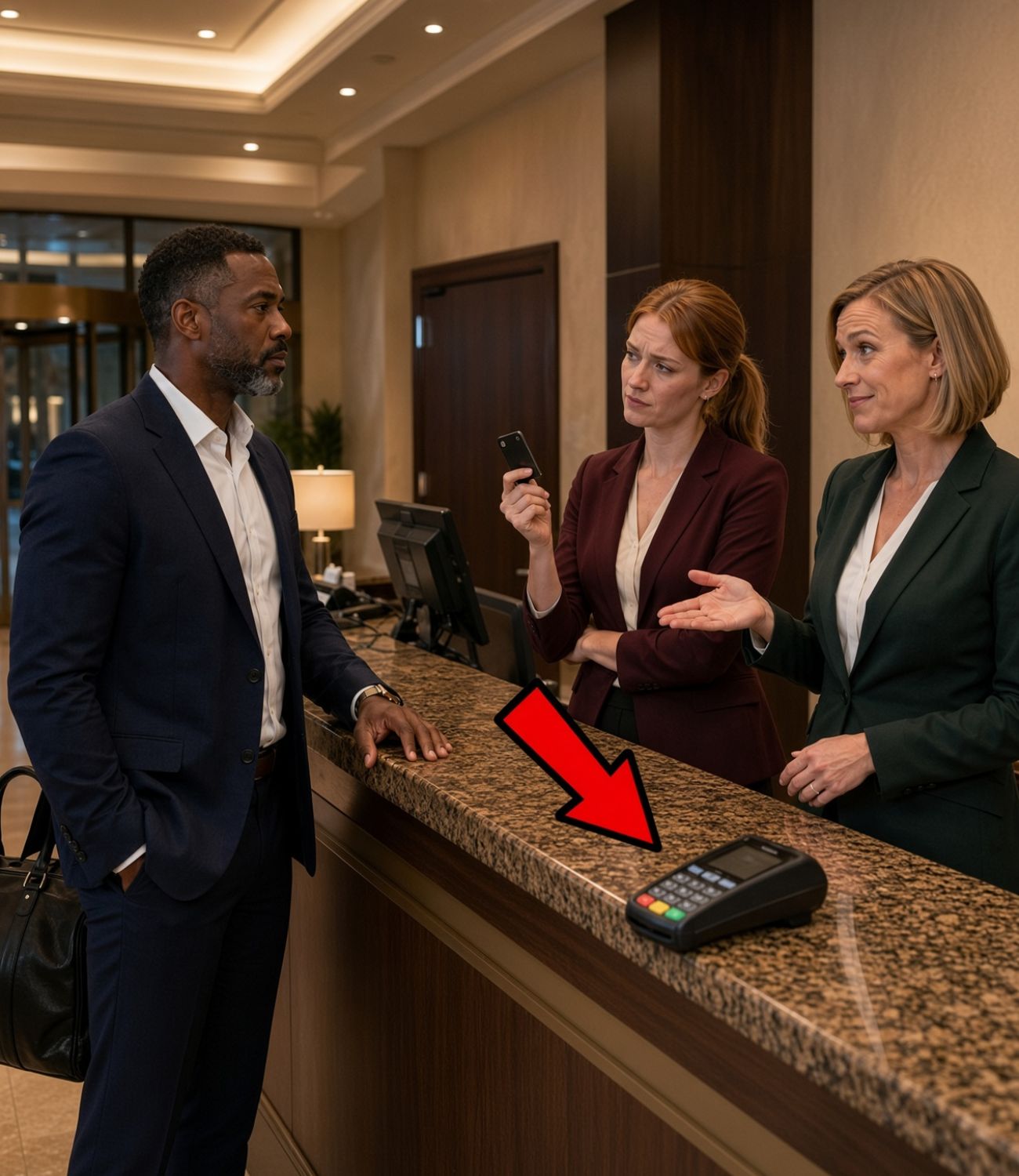
The black metal card was still lying on the granite counter when Aaron Walsh left. Not loudly, just enough to make me look up from the conference tablet. I was standing near the front desk of the Marlow Grand checking executive arrivals for the Hollander Clearspan closing scheduled the next morning. My department handled the conference floor, the room block, transportation, and catering.
We also handled every last minute change that could throw a signing schedule off course. The man at the counter was not on my face recognition list, at least not yet. He wore a navy suit without a tie and carried one leather overnight bag. He had already handed Aaron his identification. His reservation was open on her screen, ready to check in.
No alert beside the name. No payment warning. Aaron picked up the card between two fingers. I don’t see many of these. The man looked at her. Is there a problem? She turned the card slightly to test its weight. Just unusual. Then she added, almost conversationally, “Usually the guests carrying these are corporate executives.
” I looked down at my tablet again. The payment field on Aaron’s terminal was still waiting untouched. She had not inserted the card. The man noticed too. “Has it been declined?” “No.” “Then what needs checking?” Aaron’s expression tightened. “I’m just making sure everything looks right.” A white couple waited behind him with matching luggage.
The man glanced at the card, then at Aaron. Neither said anything. I stayed where I was. Front desk issues belong to guest services, and I had three incoming executive groups still missing airport confirmations. I assumed someone would run the card and end the conversation. That [clears throat] did not happen. Samantha Doyle came out from the office behind reception.
She was the assistant front office manager and had enough authority to resolve most check-in problems without involving anyone upstairs. Aaron lowered her voice. He gave me a questionable metal card. Samantha took it. She looked at the card then at the guest. What other form of payment do you have? The man did not reach for his wallet.
Was this one authenticated? Samantha gave him the practice smile managers used when they wanted a difficult moment to stay quiet. We’re trying to avoid a payment issue before we complete check-in. I looked at the reader again, still untouched. That was when the situation changed for me. Aaron had made an assumption. Samantha treated it as something worth acting on.
Neither had produced a failed transaction. The man held out his hand. Samantha returned the card. He placed it back in his wallet and took out his phone. Dana, his voice stayed level. I could hear only his side of the call. Stand down on tomorrow’s closing. I stopped scrolling. He listened briefly.
Release our rooms, too. Another short silence. Have legal hold the signature packet. Samantha’s posture changed. Sir, we can process the card now. He looked at the reader. You could have done that first. That was the only sharp sentence he gave her. He ended the call and lifted the handle of his bag.
Luis Moreno, our bell services captain, had been standing near the revolving doors. He stepped forward automatically. The guest shook his head. I’ve got it. Then he walked out. No shouting followed him. No demand for a manager. No announcement of who he was. The revolving door turned once and closed behind him. Less than a minute later, my conference tablet vibrated.
The ClearSpan room block changed first. Active became release hold. Then the airport pickups disappeared. The private dinner count dropped. The executive floor access list began removing names one by one. I opened the primary contact record. The name at the top was Quinton Harris.
Underneath it, Chief Executive Officer, ClearSpan Logistics Systems. I looked towards Samantha. She had moved around the counter and was staring at my screen. Is that the ClearSpan CEO? Yes. Her eyes shifted toward the lobby doors. The identity explained why the cancellations were hitting my system. It did not explain what had happened at the desk.
For that, I looked back at Aaron’s terminal. The payment field was still open. The black card never reached the reader. A final alert appeared on my tablet. Client closing status suspended. I was supposed to spend the evening preparing a room for a merger worth nearly $4 billion. Instead, I stood beside a card reader nobody had bothered to use.
The closing room was ready by 8:00 the next morning. Water bottles were lined up along the walnut table. Signature folders sat in front of every assigned seat and the brass marquee outside still read Hollander ClearSpan final closing. Nobody from ClearSpan came upstairs. I was checking the final catering count when Martin Kessler walked in with two members of Hollander’s legal team.
His expression told me he already knew something had changed. A minute later, Dana Whitlock’s notice reached the conference inbox. ClearSpan Logistics Systems was withdrawing from the merger. The projected transaction value was $3.8 billion. There would be no rescheduled signing. Martin read the notice twice before looking at me.
What exactly happened downstairs? I gave him the sequence I had seen. Confirmed reservation, valid identification, black metal card presented, no processor decline, no payment alert, card never inserted. Alternate payment requested anyway. Martin’s jaw tightened. That was one desk clerk. I did not answer. Rachel Sweeney from hospitality compliance arrived before anyone contacted Quentin Harris again.
She asked for Aaron Walsh, Samantha Doyle, Luis Moreno, and me to join the review room beside the executive floor. Aaron spoke first. She said the card looked unusual and she believed it might not be legitimate. Rachel opened the payment record. What was the processor response? Aaron looked at the screen. There [clears throat] wasn’t one.
Why? I hadn’t run it yet. Rachel moved to the next question without raising her voice. The procedure appeared on the wall display. A card present transaction could move into fraud handling only after an objective trigger. A processor decline, an identity mismatch, a physical security indicator, or an alert from payment security.
None appeared beside Quentin’s reservation. Samantha leaned forward. I was trying to avoid a payment problem before check-in. Rachel looked at her. What payment problem? Samantha started to answer, then stopped. That was the part Martin could not keep inside Aaron’s decision anymore. Samantha had been the supervisor.
She had received a card that had not failed anything and asked for another one instead of running the first. Louise confirmed what happened after that. Quentin did not threaten anyone. He did not raise his voice or refuse a normal check-in step. He took back the card, made one call, and left with his own bag. Martin asked Rachel whether Clearspan might reconsider once Hollander completed an internal review.
She did not speculate. Instead, she arranged a secure call with Dana and Quentin. I remained [clears throat] in the room because the canceled closing belonged to conference operations and I was responsible for the client loss file. Quentin appeared on the screen from an office I did not recognize. He did not repeat what Aaron had said.
He asked three questions. Was the card declined? Rachel answered, “No.” Was there a fraud alert? “No.” Had the card been off authenticated before the manager asked for another one? Rachel looked at the transaction record. “No.” Quentin nodded. That was enough. Martin explained that Hollander could discipline the employees involved, issue an executive apology, and complete retraining before integration began.
Quentin listened. Then he said, “The withdrawal notice would remain in effect.” He gave one reason. The merger would have connected Clearspan employees, vendors, executives, and operating teams with Hollander systems across several states. He wasn’t willing to import a process that let personal suspicion override the objective verification checks into that integration.
The call ended without negotiation. I went back to my office and opened the client loss root cause report. The first classification available was frontline service failure. It would have been easy. Aaron had started the incident, but I had watched Samantha continue it. I had watched the card reader remain untouched while a manager treated the suspicion as credible.
I changed the classification supervisory validation failure payment authentication not performed. Then I signed my name. Rachel received the report several minutes later. Aaron and Samantha were both removed from guest-facing duty pending formal findings. Martin came to my doorway after the notice went out. He looked at the classification once, then he looked at me.
You’re saying this wasn’t one employee. I’m saying what I saw. That was all. Outside my office, the brass marquee still advertised the final closing. Inside the room, every signature folder remained unopened. The merger was already gone. Now Hollander had to decide how far the failure actually reached. The personnel findings arrived before lunch the following Monday.
I was back on the executive conference floor when Rachel Sweeney called me into a smaller review room beside the elevators. Martin Kessler was already there. Two folders sat in front of Rachel. Quentin Harris was not attending. Clear Span had submitted its withdrawal, collected its materials, and moved on. Rachel opened Aaron Walsh’s finding first.
Her reservation screen had shown Quentin as a confirmed guest. His identification matched. The Centurion card had no visible damage or security feature that required escalation. Aaron still treated it as questionable before attempting authentication. The review also confirmed the comment I had heard about executives being the people who usually carried cards like that.
Rachel did not spend time trying to prove what Erin had been thinking. The [clears throat] conduct was enough. Erin had allowed an assumption about the guest to replace the hotel’s payment procedure. Then she described the card to her manager as suspicious without a processor response or security alert supporting that description.
Her employment was terminated. Samantha Doyle’s finding was thicker. She had not made the first judgment. She had been given the chance to correct it. By the time Samantha reached the desk, the reservation was valid. The identification had been checked and the payment terminal still had no transaction to evaluate. She could have inserted the card.
Instead, she asked Quentin for another one. That converted Erin’s suspicion into a management decision. Samantha’s employment was terminated as well. Martin closed his copy of the finding. Two people cost us the merger. Rachel looked at him. The merger was a business decision. These findings are about what they did. That distinction kept the review where it belonged. Then Rachel turned to me.
My name appeared in the corrective action section. I had been close enough to see that the reader had never been used. I also knew Samantha had supervisory authority. I treated the encounter as guest services business until the Clearspan block began disappearing from my system. Nothing in the finding accused me of causing the incident.
It did require conference operations to escalate immediately when a guest handling problem involves someone tied to an active contracted executive event. I signed the acknowledgement. There was no award attached to getting the root cause report right afterward. The hotel’s payment procedure changed next. A front desk employee could still question a payment instrument when something objective appeared wrong.
What they could no longer do was convert that concern into a counterfeit or fraud classification based only on intuition. A fraud-related action now required a processor response, an identity mismatch, or a documented physical security indicator. It could also require direct instruction from payment security.
If none existed, the card went through normal authentication. The [clears throat] language employees used changed with it. “Looks fake” was not a finding. “Seems unusual” was not a finding. “Doesn’t fit the guest profile” was not a finding. Those observations could trigger a check. They could not replace one. Hollander sent ClearSpan its completed review and a remediation package.
ClearSpan acknowledged receipt. The merger remained withdrawn. There was no second meeting, no revised price, no attempt to restart negotiations under another name. The transaction, [clears throat] valued at nearly $3.8 billion, stayed dead. The Marlowe Grand also lost the executive room blocks, meeting business, and long-term hospitality work that would have followed the integration.
Nobody needed to turn that number into a speech. Near noon, I returned to the conference room that had been prepared for the signing. Catering had already cleared the unopened water bottles. Legal had collected the signature folders. The long walnut table looked like any other empty meeting room.
Outside the door, the brass marquee still carried the printed insert from the morning the deal was supposed to close. Hollander ClearSpan final closing. Part of [clears throat] my job was resetting the floor for the next client. I slid the insert out. For a moment, the narrow brass frame showed only the dark backing behind it.
I carried the old sign to the operations desk and filed it with the canceled event packet. When I returned, nobody had scheduled another meeting for that room. By noon, the brass slot outside the closing room held nothing. If stories about fairness, dignity, and accountability matter to you, subscribe for more.
This story is fictional.

