Woman Livestreams Brutal Great White Shark Attack on July 17th, 2025
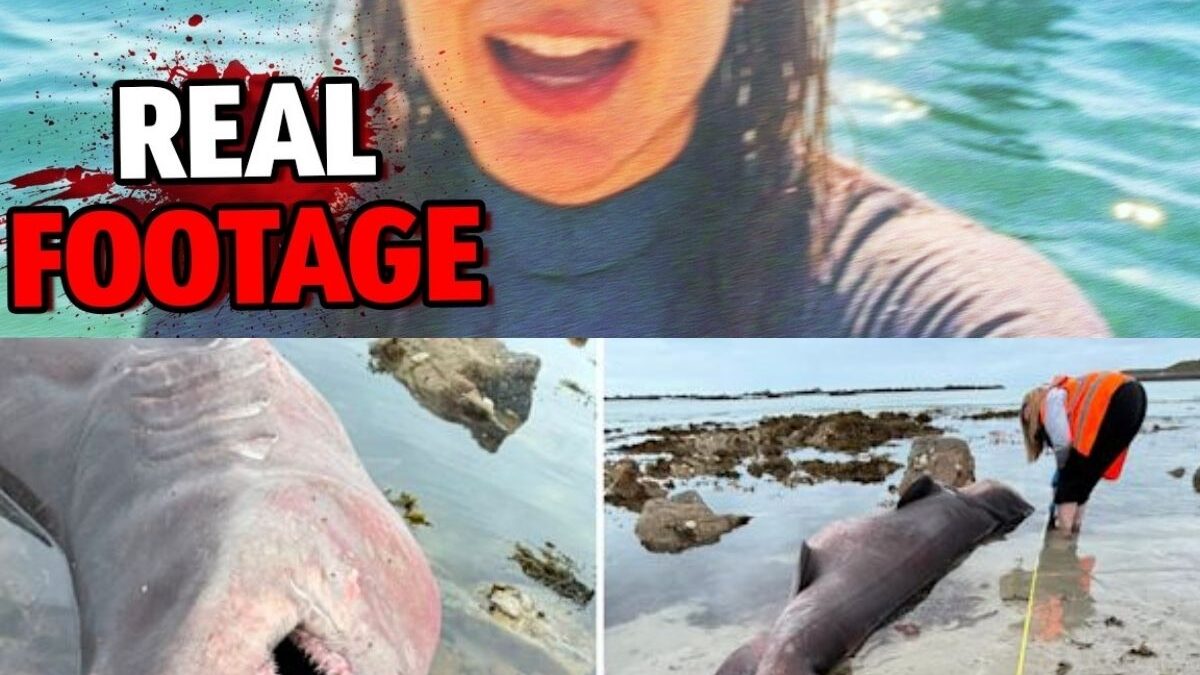
Woman Livestreams Brutal Great White Shark Attack on July 17th, 2025
The ocean can be calm and beautiful, but beneath the waves lurks danger that can strike in a heartbeat. From peaceful dives to family trips, ordinary days can turn into battles for survival when sharks appear. These six real encounters show how fast the sea can change, bringing fear, chaos, and tragedy in seconds.
Each story reveals the power of predators and the courage of people caught in their path. Together, they remind us that the ocean, while stunning, is never fully safe. On July 17th, 2025, 27-year-old Khloe Vandermir prepared for what she thought would be a calm underwater session off the coast of Namibia. She had been diving for many years, known among ocean lovers online for sharing peaceful clips from deep sea explorations.
She had grown up near the coast of New Zealand, where her interest in marine life began. Over time, this interest became her daily life. Khloe was also very good with underwater cameras and often posted live videos from her dives, showing fish, sunken ships, and coral reefs to her followers.
Her experience and calm nature made her feel comfortable in places where others felt fear. That day, she had planned to film around a quiet shipwreck, which sat deep under the waves, surrounded by thick water full of drifting sand and cloudy currents. The sunken cargo ship rested far below the surface, tilted to one side with its broken steel parts now home to sea creatures.
The sea was rough that day, and strong currents pushed through the wreckage. Visibility was very poor. Chloe was not alone in the water. Her dive partner stayed nearby, but out of frame, keeping an eye out for safety. Despite the swirling water in low light, she began streaming live from her waterproof camera. Slowly moving over the wreck, pointing the lens at small fish and rusted metal.
As she floated gently over the seabed, the shape came out of nowhere. A massive great white shark, nearly 14 ft long, shot forward from the side of the wreck like a missile. It struck her thigh with full force. The sharp teeth sank deep through her wets suit, tearing muscle and puncturing deep into flesh. The shark’s body twisted with power.
its tail slamming against parts of the ship, sending waves of motion through the water. Kloe was tossed by the force, her leg pouring blood into the sea, making the cloudy water turn red. In shock, but still aware, Khloe swung her camera case hard at the shark. She knew it was her only chance to keep it away.
At the same time, her dive partner moved fast, using fins and noise to make the shark turn its head. The loud splashes and sudden movement gave Khloe the few seconds she needed. She kicked away from the wreck, rising toward the light far above, her hands still gripping the broken camera rig.
The surface felt farther than usual, but she made it. Once above water, rescue began quickly. A call went out, and within minutes, a medical helicopter arrived. Khloe was rushed to the nearest hospital for emergency help. Her wounds were serious, deep cuts and holes in her leg, but she survived. Later, the video was removed from all websites because of how graphic and upsetting it was.
The event served as a sharp reminder that even skilled divers with all their planning and tools are still small in the world of predators that move through the sea unseen. The emergency helicopter flew fast across the sky, its blades cutting through the wind as it carried Khloe to the closest hospital. Inside, doctors and nurses waited with stretchers and supplies.
Her leg was wrapped tightly to stop the bleeding, but the wounds were still bad. The medical team worked quickly, moving her into a clean room where machines beeped softly and bright lights shown above. She needed stitches, bandages, and strong medicine to keep her from feeling pain. The doctors cleaned the bite area and checked for damage to her muscles and bones.
The deep holes in her leg were clear signs of the power behind the shark’s jaws. As she rested, news of the live stream began to spread online. Many people had watched it live. their screens filled with bubbles, flashes of movement, and the sudden appearance of the great white. The footage was clear enough to show blood in the water in the panic that followed.
Viewers were shocked and frightened. They started sharing the video in different places, and soon it was all over the internet. People who had never watched diving streams before were now talking about the attack. Some felt scared, others felt sad. A few felt angry that such a dangerous dive had been shown live.
Very quickly, video websites took down the recording. The pictures were too graphic. There were cries for better rules around live streaming from dangerous places. Experts explained that sharks do not attack people often, but this event showed how fast things can go wrong. Ocean safety became a big topic. Diving groups began sharing tips and warnings.
Some even paused their trips near shipwrecks to check if the areas were safe. Khloe’s story made many people think twice before getting into the water with only a camera and a wet suit. Khloe stayed in the hospital for days. Her body healed slowly, but her thoughts were still full of the event.
She remembered the moment the shark came out of the wreck. She remembered the sharp pain and the noise under the water. She thought of her dive buddy who helped save her life. Even after the wounds began to close, the memory stayed sharp. Doctors said her leg would recover, but she would need rest, therapy, and time away from diving.
Her fans sent messages, flowers, and drawings to wish her well. Some wrote letters about how brave she was. Others said her video made them respect the sea more than ever before. Outside the hospital, the sky stayed clear and warm, but Khloe knew she would not return to the water soon. The ocean had given her many calm dives, but now it had shown her something wild and true.
People still talked about the stream. They remembered the speed of the shark and the fear in the deep water. Even though the video was gone, the image stayed in their minds. The sea remained wide and deep, holding secrets and dangers in its quiet blue shadows. On August 12th, 2025, the sun was setting over the calm waters near Savu Savu, Fiji.
Tessa Langley, a 28-year-old student studying ocean science, was getting ready for another dive. She had spent years learning about marine animals and coral habitats. Her love for the ocean began as a child when she would collect shells on the beach near her hometown. Now she was focused on studying fish patterns in deep reef areas. Tessa was not new to the water.
She had trained hard, practiced breath control, and understood the dangers that could appear on the open sea. Her dives were part of a long project for her school. That evening, she wanted to explore a rocky reef before the light disappeared. Tessa entered the sea with smooth, slow movements. Her breathing was calm. Her body relaxed.
The sky above turned orange and pink as the light faded. She moved deeper into the blue where fish darted between coral walls. Strong water currents made it hard to stay steady. The reef below was quiet and dark, and she floated alone, writing notes on her small underwater pad. Around her, the water looked empty. But in the shadows, something large moved closer.
Without a sound, a hammerhead shark rushed toward her. It came fast from the side. The wide head and tall dorsal fin cut through the water. Tessa did not see it until it hit her. The impact knocked her hard. Sharp teeth closed on her upper leg. The pain was sudden. Her wets suit tore and her muscles burned.
Bubbles shot around her as she twisted and turned trying to get away. She kicked and hit with her arms. Each move sending streaks of red into the sea. The water grew thick with blood. The shark let go, confused by the cloud. Tessa did not wait. She swam upward, her lungs burning. Every stroke felt harder. The surface looked far.
Her body achd. She kept going, fighting through the darkness and pushing toward the light. Behind her, the shark circled, but did not strike again. It stayed close, swimming in wide loops, while Tessa climbed higher through the deep blue. Her hands broke the surface. At last, she gasped for air. Her leg throbbed, deep cuts spilling blood into the sea around her.
Dive workers on a nearby boat saw her and rushed over. They helped her out of the water and laid her down. Her suit was ripped and her skin was scratched and bruised. The shark had left deep marks across her thigh, but her spirit stayed strong. Tessa held onto the side of the boat, eyes wide, chest rising fast. Around her, the sea looked calm again, as if nothing had happened.
But those minutes had changed everything. The ocean had shown a new face, wild, sharp, and fast. Her dive had started with science and curiosity. It ended with pain and fear, and the night was just beginning. Tessa lay on the deck as the boat raced toward the shore. Her head rested on a towel, and her eyes stared at the fading sky.
The pain in her leg grew with each wave that rocked the boat. The injury was deep and blood soaked through the fabric wrapped around it. One of the local dive helpers held her hand while another used his phone to call for urgent care. Though her mind was cloudy, she stayed awake, knowing she had to reach land before she lost too much strength.
As they neared the coast, lights from the small clinic began to shine through the trees. A group of medics waited on the dock, ready with a stretcher. The helpers lifted Tessa from the boat and passed her carefully into their arms. Her face was pale, her breathing fast. Inside the treatment room, nurses cleaned the torn skin and stopped the bleeding.
The wound stretched across her thigh with ugly marks. Some of the muscle was torn. She needed many stitches and strong medicine to stop the pain. After a long time, her pulse returned to normal. News of the event spread quickly. The dive guides were shocked. Most of them had worked in the area for years, but had never seen anything like it.
Hammerhead sharks were known to swim close to reefs, but attacks on swimmers were rare. People said the low light and fast water might have confused the animal. They said maybe the shark thought Tessa was something else or that it felt surprised and reacted with force. No one could say for sure, but many divers began to speak about being more careful at dusk.
Tessa had to rest for weeks. Her school helped her take time away from her studies. She stayed in a small room near the sea where she could hear waves at night. The wound healed slowly. A large scar formed across her leg. She walked with care at first. The bite had changed her body, but not her heart.
Her notes from that dive were lost, but the memory stayed clear in her mind. She often looked out at the reef from a bench on the hill, thinking about the strike and how fast it happened. Doctors said she was lucky. The shark had missed important veins and bones. If it had held on longer, the harm could have been worse.
Some said she had stayed too long in the water, but others called her brave for surviving. Her story spread in the diving world. It served as a reminder that the ocean holds both beauty and danger. Later that year, signs were placed near the reef warning about low visibility times. New safety rules were shared with tourists, and though many returned to the water, few forgot the night when shadows moved too fast.
Tessa did not stop loving the sea, but she now looked at it with new eyes, full of care, wonder, and deep respect. On April 12th, 2025, the sea off Gansby moved with quiet waves under the soft light of early evening. A private yacht floated on the blue water, holding a small group of travelers. Among them was 35-year-old Oliver Strauss, a businessman known for his calm voice and love for ocean trips.
His wife, 33-year-old Leela, sat nearby. She was gentle and thoughtful, often quiet in crowds. The couple had been married for 6 years. They lived in Cape Town, but liked to escape to peaceful waters when life grew tense. On this day, they had invited a few friends to join them for a break away from the city noise.
The boat had food and music. Some sat in the back, chatting softly. Others leaned on the rail, looking for sea life. Laya stood near the edge, watching the waves. The wind carried sounds between her and Oliver, who had begun to raise his voice. Their talk grew sharp. No one heard exactly what was said, but people turned when they saw sudden movement.
Without warning, Oliver pushed Laya off the boat. Her body hit the water with a loud splash. The area was known for large marine creatures. Fast-moving currents carried strong scents across the sea. Lla splashed and tried to float, but the waves pulled at her. Beneath the surface, a massive shape moved.
A great white shark, almost 16 ft long, had felt the vibrations. It rushed from the deep and struck quickly. Its jaws clamped around her leg and arm. The impact sent her spinning. The water turned red as she kicked and tried to twist free. The creature dove deeper, dragging her down. The people on the yacht shouted, “Someone threw a rope. Another tossed a life ring.
” A man even jumped halfway into the water, holding a long stick. But the animal did not let go. It turned under the waves, still pulling her lower. Laya fought desperately, but the shark’s strength was overwhelming. The sea swallowed them again and again, and each time she resurfaced, her strength seemed to fade. After a long and horrible struggle, the shark finally let go.
Lla’s body floated up motionless. A lifeguard from a nearby support boat arrived. They pulled her out, her limbs torn and her skin pale. Blood soaked the towel wrapped around her. Her eyes were closed and her chest did not rise. A helicopter landed on a nearby platform. She was lifted on a stretcher and flown toward help.
The ride was fast, but her injuries were too serious. Back on the yacht, everyone stood in silence. The music had stopped. The air had grown cold. Oliver sat alone, his hands shaking. The event had changed the night from peaceful to tragic in seconds. The boat turned toward the shore. Its passengers lost in quiet fear, not knowing yet how the full story would unfold once they reached land.
As the yacht approached the harbor, flashing lights met the group. Emergency workers moved quickly, preparing for the worst. The news of the sea incident had spread fast. At the hospital, doctors tried to fight against time. They worked in silence, knowing the odds were low. The body had lost too much. The damage was too wide. Within minutes, the efforts stopped.
A voice confirmed what most feared. Laya could not be saved. The wounds had gone too deep. The pain was too great for her to return. Word reached the boat while it was still docking. People stood still, not speaking. Some cried quietly. A few held their heads in their hands. The air was heavy, filled with shock.
What had begun as a peaceful sail now ended with grief. What followed was not calm. Officers waited at the pier. They looked at each guest, asking what they had seen. The focus quickly turned to Oliver. His hands shook again. He answered their questions, but doubt filled the space around him. Later, he sat alone in a small room, lights above his head, voices around him asking about the push.
Each moment was looked at again. Each sound, each step, each glance at the boat was written down. The story started to take shape. Friends gave different versions. One said it looked like an accident. Another thought it seemed too fast to be a slip. Yet another believed the push came after sharp words. The mystery began to grow. News reporters arrived the next morning.
Cameras filmed the water where it had happened. Images of the yacht filled the screens. Headlines spoke of danger, not only from sharks, but from human choices. People online shared strong thoughts. Some blamed carelessness. Others asked how such a place could become deadly. The story sparked wide discussion.
Experts warned again about sea creatures in known hot zones. But this time, it was not just about nature. It was also about trust between people. A few days later, a small group gathered on the shore to say goodbye. Flowers floated on the tide, moving slowly away. The sea that once brought peace now held sad memories. Laya’s family stood close, holding hands, watching the waves.
Back in the city, legal steps were underway. Records were gathered. Statements were printed. Questions about Oliver’s role stayed loud. Was it a mistake? Was it done in anger? Did he think she would be safe? Only he knew the full answer. But many were now looking for the truth. What stayed in every heart was how fast things had changed.
One second of action led to a loss. One sudden moment took a life. The ocean, wide and deep, had shown once again that it held power beyond control. And this time, the pain it carried had come from above the surface, not just below. On May 29th, 2025, the sun had just started rising over the Indian Ocean as Marcus Bell prepared for another long shift offshore.
At 42 years old, Marcus was known as one of the most careful and skilled oil rig workers in his crew. Born and raised in Perth, he had spent most of his adult life working along Australia’s remote coastlines. With years of training and experience behind him, he was trusted with complex underwater tasks, often dealing with equipment bolted deep below the surface.
Marcus enjoyed quiet days spent checking support beams and pipe connections under the rig. Though the work was tough, he liked the sense of purpose it gave him. Safety was always the top priority, and every dive was planned with care. That morning, Marcus was assigned to inspect a few steel frames that held up part of the platform.
The weather was steady, but strong underwater currents had been noted by the shift manager. Wearing a harness and carrying tools, Marcus moved toward the rig’s edge and began his slow climb down to the service area near the lower beams. He had done this dozens of times before, always following every safety rule.
But this time, something went wrong. A loose bracket holding his lifeline snapped without warning. In one second, his footing slipped, and Marcus plunged straight into the swirling sea below. The impact knocked the air from his lungs. His hard hat floated away as waves spun him toward the edge of the rig.
In those deeper waters, a large tiger shark had been moving slowly, hunting for scraps or smaller fish near the structure’s base. The loud splash and kicking movement caught the shark’s attention instantly. It reacted fast, cutting through the water with sharp turns. Before Marcus could recover from the fall, he felt a crushing grip around his right leg.
The shark’s teeth tore through his protective suit and dug into skin and bone. The forest yanked him sideways and slammed him against one of the thick beams underwater. Workers above shouted as they spotted blood rising through the blue. Sirens sounded and life boys were tossed. Safety ropes were lowered, swinging through the air as crew members tried to reach him.
But the Predator was strong and relentless. It twisted its body, dragging Marcus farther, smacking him again into the metal bars. His arms flailed, trying to push away, but the sea pulled harder. After what felt like forever, the animal let go. Maybe the rope scared it. Maybe the noise confused it, but it turned away, fading back into the darker parts of the sea, Marcus floated, badly hurt.
Surrounded by red water, his co-workers acted fast, pulling him back toward the surface. The rig’s crane lifted his body slowly out of the ocean. One man held his head to keep it steady. A call for air rescue had already been made. High above, a helicopter began its approach. The fight to save him had only just begun.
As the chopper lowered its rescue basket toward the oil platform. The crew held Marcus steady. His body was weak, covered in bruises and blood. His leg had deep holes and twisted bones. Wrapping him in thick blankets, they placed him inside the harness. The wind from the blades made everything harder, but the workers moved fast, pushing past fear and shock.
Once secure, the team signaled up and the basket rose quickly into the sky. Within minutes, the aircraft disappeared into the clouds, heading straight for the nearest trauma center. At the hospital, doctors were already waiting. The injuries were severe. Large wounds marked both sides of his limb, and the skin had torn in many places.
Surgeons worked for hours stopping the bleeding and repairing the broken areas. Metal rods were used to hold the leg together. Tubes were added to help him breathe and get medicine. Nurses moved quickly between machines, checking his heart and watching for problems. After the long procedure, he was moved to a quiet room to rest.
Back on the platform, the crew was silent. No one could forget what had happened. Red stains remained on the edge of the deck. Tools lay scattered where people had dropped them while trying to help. The site manager ordered all diving work to pause until more safety checks were made.
A warning was sent to nearby rigs about the presence of dangerous wildlife in the area. Some workers called their families. Others just sat alone thinking about how fast life could change. Marcus stayed in the hospital for several weeks. Everyday doctors checked the healing. He could not walk and needed strong medicine to ease the pain. Therapists visited, helping him move small parts of his body again.
His family came often, sitting beside him and bringing comfort. The company covered all the costs, offering extra help for his recovery. Specialists explained that it would take months before he could move on his own again. Some damage might never heal fully. News of the incident spread. Reports told of the rare event, describing how even trained workers faced real risk near wild places.
Experts said the animal likely came close due to the smell and movement near the rig. Many people were surprised to learn that such large creatures swam so near human structures. Officials suggested stronger rules and better gear for future workers. After some time, Marcus began to speak again. His voice was soft and his eyes told of fear and memory.
He remembered the sharp turn, the weight of the bite, and the cold of the deep. He also remembered hands reaching for him, ropes pulling, and faces full of worry. His journey would be long, but he had survived. The sea that had almost taken his life would remain in his thoughts forever. For him and his team, the lesson was clear. Nature’s power could not be ignored, not even for one second.
On July 4th, 2025, Michael Rivera stood on the balcony of a luxury cruise ship, sailing through the calm blue waters of the Caribbean Sea near Bise. He was on vacation with his wife Elena and their young son Diego, who had just finished second grade. The family had planned this trip for months to celebrate a break from busy work schedules and school routines.
Michael, a history teacher, loved spending time on the open water. Elena worked as a graphic designer and enjoyed the quiet views and warm weather. Diego was full of energy and excitement, always running from one end of the ship to the other, soaking in every moment of the adventure. That afternoon, the family had gathered on their private balcony after lunch, enjoying snacks and the distant view of the horizon.
Without warning, a strong wave struck the ship’s side. The force tilted the vessel just enough to cause chaos on the small balcony. Michael, who had been leaning on the railing, lost his balance. Elena tried to grab him, but as she moved forward, she slipped too. Diego, holding on to his mother’s hand, was pulled along. All three members fell overboard into the open sea, their bodies slicing through the surface like heavy stones.
Splashing, gasping, and twisting in the fast-moving current, they tried to stay afloat. The cruise ship crew and nearby guests heard the screams and splashes, quickly rushing to alert the safety team. Below the surface, unseen danger waited. A large bull shark had been swimming nearby, drawn by the motion and the disruption above.
Within moments, the animal surged toward the struggling family. It moved with speed and strength, heading straight for Michael. Its jaws snapped down onto his leg with crushing power, tearing through flesh and muscle. Michael cried out in pain as red waves spread through the water. He kicked wildly, trying to get free from the animals grip.
Meanwhile, Elena fought the waves and looked for Diego, who was floating nearby on a foam life cushion. Another shark came close, bumping into the device before moving away. The water turned frantic with movement foam and cries for help. Passengers and crew tossed out rings and ropes from the deck. Elena caught one and held on tightly.
She grabbed Diego and held him against her chest as they were pulled toward safety. Michael, still struggling, finally broke free from the shark’s mouth when the animal released him. Blood poured from his wound, and he barely held onto a rope that was lowered toward him. With effort and teamwork, the safety crew pulled all three back onto the ship.
As the family lay on the deck, surrounded by worried faces, the danger below had faded, but the shock in their eyes said everything. The calm sea had turned into a nightmare, and their peaceful crews had changed forever. The deck of the ship became a scene of panic and urgency as crew members rushed to surround Michael. Blood pulled around his leg, soaking towels and clothing that passengers tried to press against the wound.
His breathing was heavy, his face pale, and his body trembled from shock. Elena sat close by, holding Diego tightly, her own arms scratched and bruised from the fall. Though her cuts were minor, the look in her eyes showed fear far greater than pain. The boy, still gripping the float he had clung to in the water, shook as tears ran down his face.
Passengers whispered in disbelief. Still shaken by the sight of the predator circling below only moments earlier. Medical staff on board worked quickly. They applied pressure to the open gashes and wrapped bandages tightly around Michael’s torn flesh. A stretcher was carried to the balcony area, and with help from several strong hands, Michael was lifted onto it.
His wife and child followed as he was taken inside toward the ship’s infirmary. Alarms had already been raised to request emergency evacuation, and a helicopter was arranged to meet the vessel at the nearest safe location. The once festive atmosphere of the crews had shifted into silence, with many guests staring out at the sea, reminded of how fast a peaceful moment could change.
Inside the medical bay, the injured man was monitored closely. Every wave of the ship caused fresh discomfort, and the staff kept adjusting his position to slow the flow of blood. His leg had deep lacerations and torn muscle. The damage so severe that only advanced treatment on land could save him from permanent loss of function.
The family remained close with Elena staying beside him, watching every movement of the doctors while Diego sat in a corner wrapped in a blanket, still trying to understand what had happened. Time passed slowly as the sound of the helicopter grew louder outside. When the rescue team arrived, the patient was carefully transferred onto a hoist and lifted into the aircraft.
Elena and Diego were brought up next, and within minutes, the helicopter carried them toward the nearest hospital. Back on the ship, passengers and crew spoke quietly about the incident. Many replaying the moment in their minds when the three had vanished over the railing. The sense of safety they once felt at sea now seemed fragile, shaken by the sudden attack.
Officials on board documented the event and contacted authorities as every detail needed to be recorded. At the hospital, surgeons worked for hours to repair the damage caused by the powerful bite. Though the leg was saved, recovery would be long and painful. News of the accident spread quickly, drawing attention to the risks of open waters, even near popular cruise routes.
For Elena, the bruises and scratches would heal, but the memory of watching her husband pulled under by a predator would remain. For Diego, the images of the sea would never feel the same. What began as a joyful trip had turned into a reminder of how quickly danger can rise from the depths. On June 4th, 2025, the waters of Guanacaste, Costa Rica, shimmerred under bright sunlight, drawing travelers and locals alike to enjoy the warm Pacific swells.
Among them was 27-year-old Marco Silva. A young man known for his energy and love for outdoor sports. Born and raised in San Jose, he had always been drawn to the coast whenever time allowed. His childhood was filled with surfing lessons, beach soccer, and weekend trips with his family. As he grew older, his passion for speed and watercraft deepened, making jet skiing his favorite escape from everyday life.
To him, the open sea meant freedom, and the roar of the engine under him felt like a call to adventure. On this particular day, Marco had traveled with a group of close friends to Guanacasti, a place famous for its golden shores and lively waves. The group rented jet skis and took turns racing across the water, pushing each other to test new tricks.
Marco, always eager to prove himself, pushed the limits more than anyone else. He sped across the chop, leaning hard into turns, lifting high off the crests and laughing as sprays of water trailed behind. The others admired his skill, though they also worried that his daring stunts might one day push him too far.
As the sun climbed higher, Marco attempted a sharper maneuver than before. He cut across the waves at an angle, leaning too far as the jet ski bounced violently on the uneven surface. The force threw him off balance, and within seconds, he was hurled into the sea. His friends slowed their machines, circling back toward him.
At first, expecting nothing more than a laugh as he climbed back aboard. Yet the splash of his fall carried farther than anyone realized, sending vibrations through the water that reached into the depths below. Unseen in the shadows, a 10-ft short fin had been moving through the currents.
The predator had been drawn to the area by schools of bait fish, their silver bodies darting just beneath the surface. The sudden turbulence from Marco’s fall caught the shark’s attention, its sleek body accelerated with terrifying speed, rising through the blue water with unmatched power. Marco, treading water and catching his breath, had no warning before the predator struck.
In a burst of force, the Mako lunged at his leg, its jaws grazing across his calf and thigh. The impact shredded fabric and tore into his muscle, leaving him stunned by searing pain. His cry was swallowed by the crashing waves. The shark’s violent thrashing churned the sea around him, pulling him under for moments at a time. Marco fought to stay afloat, gasping for air.
As panic set in, he flailed his arms, desperate to keep his head above water while the dark shape circled back. Its jaws snapped again, this time cutting close to his hand as he tried to push it away. Each second stretched endlessly, his body weakening while the predator showed no signs of retreat. On the nearby jet skis, his friends shouted and waved, desperate to draw the animals attention.
The sea, once playful, had become a battleground where survival hung by the thinnest thread. The circle of the predator tightened as Marco’s body weakened, but the shouts and frantic motions from his companions began to shift the chaos. They slapped the water and waved their arms, splashing to pull the creature’s focus away.
The sleek shadow darted near the surface before veering aside, giving Marco a brief opening to claw toward the jet ski that floated only a few feet away. Each stroke sent sharp pain through his leg. But instinct forced him forward. Blood trailed behind, swirling in the churning sea, marking every movement like a beacon in the water. With great effort, he managed to grip the edge of the jet ski.
His arms trembled as he tried to lift himself, the loss of strength nearly pulling him back into the ocean. His friends leaned down, reaching out to steady him, pulling until his battered body slid across the seat. The machine rocked under the sudden weight, but relief spread among the group as Marco was finally out of the water.
Behind them, the Mako lingered for a moment, circling once more before vanishing into the depths as quickly as it had appeared. The waves grew calm again, but the horror of what had just happened remained etched in every face. Blood poured from his wounds, soaking the surface beneath him. Torn fabric clung to the deep gashes across his thigh and calf, and each pulse of pain reminded him how close he had come to losing his life.
The group acted quickly, pressing towels and shirts against the injuries to slow the bleeding. Calls for help were sent through emergency radios and the crew of a nearby boat responded, racing to their location. Within minutes, Marco was transferred onto a larger vessel where first aid continued as he drifted in and out of consciousness.
The sight of bandages stained red and the sound of worried voices filled the deck as the boat cut through the waves toward shore. Upon arrival, a helicopter waited at the dock, blades chopping the air as rescuers carried Marco on a stretcher. He was lifted aboard and flown to the nearest hospital, the coastline shrinking below.
The medical team worked tirelessly stabilizing him during the flight. Hours later, surgeons operated to repair the torn muscle and seal the jagged lacerations. Though the attack had left severe damage, his survival was nothing short of remarkable. His friends, shaken and silent, waited in the hospital corridors until news arrived that his condition was stable.
In the days that followed, the story spread quickly. Authorities reminded the public how even skilled swimmers and riders face danger when entering environments where apex predators roam. Experts explained how splashing and sudden noise often draw fast-moving hunters, making situations like Marcos nearly impossible to predict.
For him, the memory of sharp teeth and cold eyes in the water would never fade. A constant reminder of how fragile human life can be against the power of the ocean. The experience turned a carefree day of fun into a lesson carved deep into flesh and memory, showing once again how quickly calm seas can turn into a fight for survival.

