They Threw Tourists Off The Safari Jeep. They Died Minutes Later.
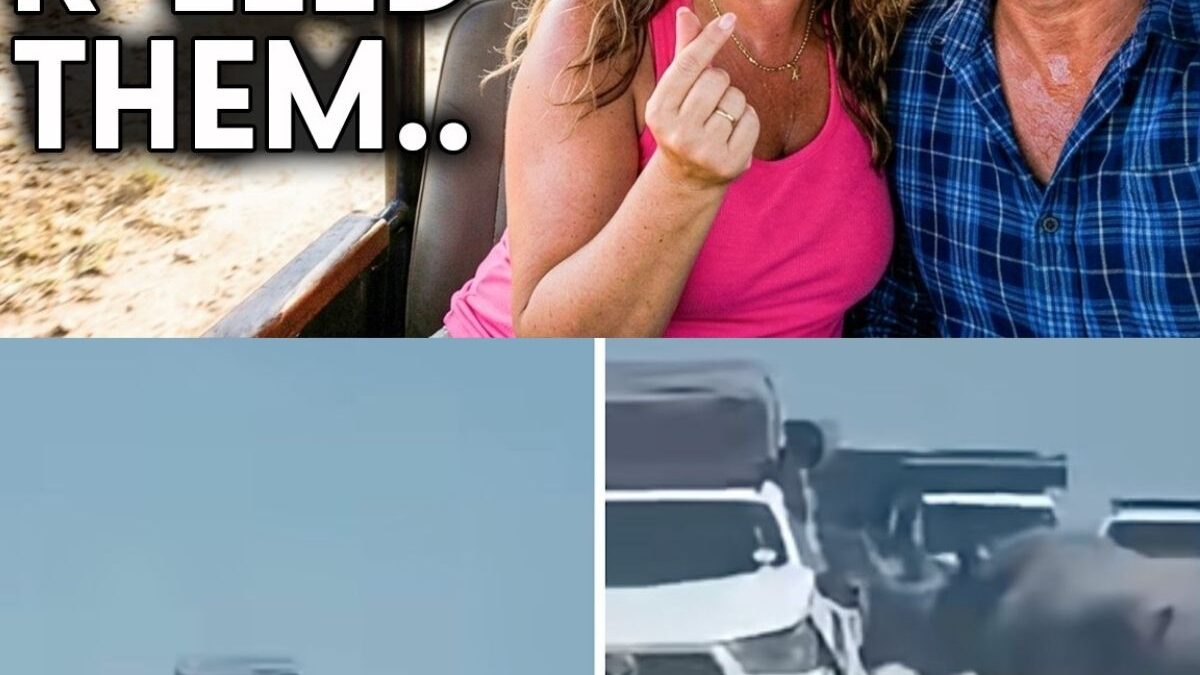
The late afternoon light on a private game reserve near Hoedspruit, South Africa, had thickened into a heavy golden haze. The midday heat had begun to break, leaving behind dust that hung motionless over the dry bushveld tracks. It was the specific hour when wildlife starts to mobilize and visitors relax at the exact wrong moment.
Michael and Cindy White, a married couple from Johannesburg aged forty-nine and forty-seven, were marking more than two decades together. The private safari had been planned as an escape following an exhausting and turbulent stretch in Michael’s commercial ventures. By their fifth consecutive day, both had settled into the easy complacency that quiet safaris tend to breed in travelers.
Several days of uneventful excursions had established a false sense of routine, eroding the natural caution required in open wilderness. Comfort in the bush never indicates that predatory or large herbivorous animals have grown gentle, but merely that the visitors have stopped paying attention. On this particular run, their open-sided safari vehicle carried four other tourists along an overgrown trail hemmed in by dense thickets.
Visibility was constricted to little more than a dozen feet beyond the steel front bumper of the vehicle. Without any sound of breaking timber, an enormous mature bull elephant emerged from the scrub and stood broadside across the sand path. The guide brought the vehicle to a halt well back from the animal, dropping the diesel engine down to a steady, low idle.
A full-grown bull elephant can exceed six tons and reach more than ten feet at the shoulder, carrying immense power. Their natural posturing before an aggressive display is deliberate: flattened ears fan out, the head lifts high, and deliberate pacing marks territory. Such physical adjustments are intended to force intruders to create distance immediately before raw physical momentum becomes necessary.
The bull faced the vehicle, took two heavy paces forward with ears spread wide, and raised his trunk to sample the scent. The guide placed the transmission into reverse and began slowly backing down the rutted corridor without making sudden sounds. Even when a six-ton bull broadcasts unambiguous biological warnings, panic inside an open vehicle often outpaces the vehicle’s mechanical withdrawal.
Michael stood up from his rear seat in blind alarm, shoving an adjacent passenger aside to reach what he imagined was safety. The shoved passenger was knocked straight out through the open rear framing of the vehicle and tumbled into the dirt. That passenger landed clear of the elephant’s immediate line of advance, sustaining a torn forearm that later required medical stitches.
The guide could not brake on the narrow track, as remaining stationary next to a displaying bull elephant invited immediate destruction. The vehicle bounced hard through an unpaved depression in the road, jarring every unsecured person against the frame. Michael, completely upright without a handhold, lost his footing instantly and fell out through the open side.
Cindy reacted on pure instinct, lunging forward to catch her husband by the fabric of his sleeve as he fell. The sharp jolt that had dislodged him dragged her over the side rail before she could register her shifting balance. She struck the dirt roadway several feet behind him, winding herself upon impact as the truck continued down the trail.
An adult elephant can close ground at more than twenty miles per hour, outpacing any grounded human on loose sand. The bull lowered its massive head and drove its tusks downward into Michael before either fallen tourist could stand upright. The immense mass pinned him against the roadbed, fracturing his ribs instantly and causing non-survivable internal trauma upon impact.
Cindy scrambled backward across the dusty dirt toward the thorny brush, but the animal wheeling around gave her no clearance. A sweeping blow from the elephant’s forehead and trunk hurled her several yards sideways across the clearing. The animal bore down upon her immediately, using its forelegs and downward weight to deliver devastating crush trauma to her torso.
The guide was forced to drive the remaining passengers clear of the charge before radioing the reserve dispatch for armed rangers. Rangers trailed the bull for roughly twenty minutes until it finally withdrew into the deeper brush away from the track. Both Michael and Cindy were confirmed dead at the scene from severe crush injuries when medical staff arrived.
Two years later, on September 3, 2018, another preventable tragedy occurred on a private wildlife conservancy near Nairobi, Kenya. The morning excursion was bathed in flat, soft light that drew Adrian Smith, a thirty-five-year-old freelance travel photographer from London. Adrian had built his reputation on capturing unusually close frames of dangerous subjects that more cautious professionals avoided.
The vehicle halted near a pride clearing where an adult lioness lay resting in the tall grass beside her cubs. Seeing the cluster of cubs, every traveler in the vehicle raised their lenses, but the guide kept the engine running steadily. The guide turned around toward the passengers and stated firmly:
“We stay right here. Do not leave your seats; this is as close as we go.”
Adrian wanted a lower perspective that would frame the moving cubs through the grass blades rather than shooting downward. When the guide leaned over to inspect another passenger’s camera mount, Adrian quietly dismounted the metal step onto the ground. He crept forward a few paces into the brush, kneeling with his camera balanced upon his left knee.
A lioness with young cubs is one of the most defensively volatile predators in the savanna when approached on foot. Any intrusion within her perceived comfort perimeter is treated as an active threat to her offspring, without hesitation or warning. Initially, the lioness remained motionless in the grass, but then one cub wandered a few yards toward the vehicle track.
Adrian shifted his position slightly to track the moving cub through his viewfinder, inadvertently closing the distance to the female. When the mother stood up smoothly from the dry grass, Adrian finally realized his exposure and lowered his lens. He turned and tried to sprint back to the vehicle, but his boots slipped across the dusty grass roots.
A lioness defending offspring does not offer an investigative snap; she drives forward directly for the spine and throat. At over two hundred pounds, she collided with Adrian from behind just as he reached the rear corner of the vehicle. Her initial bite struck the base of his neck and shoulder, instantly fracturing bone and severing critical arterial vessels.
His hands slipped from the vehicle frame under the downward force of the strike, dragging him back onto the track. A second crushing bite to his upper back ensured fatal shock before the vehicle could maneuver to deter her. The driver moved the vehicle to a safe standoff distance to protect the remaining passengers and radioed the conservancy.
By the time armed rangers drove the protective mother back into cover, Adrian had died from massive blood loss. His drive to bypass instructions for a ground-level image had placed him within an impossible defensive strike zone. Disregarding professional boundaries around wild predators has repeatedly led to sudden catastrophes across different safari hunting operations as well.
On July 21, 2014, in a hunting concession in northern Tanzania, a German manufacturing executive named Lucas Weber pushed boundaries. The fifty-two-year-old was on his third African excursion and held deep confidence in his personal marksmanship and rifle handling. Somewhere during the opening days of the tracking trip, Lucas had stopped paying attention to his professional hunter’s cautious directives.
The hunting party spotted a large African buffalo grazing near the border of a heavy mopane thicket in the clearing. Lucas took aim and discharged his rifle, striking the buffalo, but the shot failed to achieve an immediate drop. The wounded animal charged directly into the dense underbrush, leaving a dark spoor of blood along the crushed grass stems.
The professional hunter held up his hand, ordering Lucas and the trackers to remain stationary beside the vehicle track:
“Hold your ground. We do not run after a wounded buffalo until the trackers read the spoor.”
An injured African buffalo rarely flees continuously; it frequently loops back through the thick bush to ambush pursuit along its trail. Lucas checked his watch repeatedly, displaying open irritation at the slow, methodical tracking pace demanded by the lead guide. Convinced the animal was down or fleeing weak, Lucas walked ahead into the thick vegetation on his own initiative.
The lead hunter called out after him in a sharp, restrained hiss, trying not to provoke any nearby animal:
“Lucas, get back here right now! Do not walk into that brush alone!”
Lucas ignored the shout and followed the fresh spoor around an impenetrable wall of twisted thorn scrub. Waiting on the immediate other side of the clump stood the buffalo, turned toward the footsteps it had tracked approaching. African buffalo possess immense skull bosses capable of absorbing heavy fire, matched with extreme aggressive momentum when wounded.
Before Lucas could raise his weapon, the bull hooked upward with its curved horns, catching his torso with explosive power. The strike tossed him several feet backward through the air, knocking the breath and weapon entirely from his hands. Before he could recover or roll into defensive cover, the animal drove its mass directly down onto his rib cage.
The buffalo repeatedly trampled and gored him against the dry ground, inflicting catastrophic internal injuries across his chest and abdomen. The professional hunter reached the clearing seconds later and discharged a heavy finishing round that dropped the animal instantly. It was far too late to render medical aid, and Lucas succumbed to massive trauma on the forest floor.
Hubris around wild creatures is not confined to the African savannah, as captive enclosures frequently present equally lethal consequences. On May 9, 2019, two longtime Australian friends, Brian Cooper, thirty, and Daniel Foster, thirty-two, visited a wildlife facility in Zambia. The facility featured an elevated timber walkway erected over a muddy bank housing an enormous captive Nile crocodile.
Brian and Daniel had maintained an escalating habit of daring each other into foolish antics since their early school days. Standing along the perimeter railing, they began leaning their bodies out over the drop to prove their nerve above the water. A few feet beneath the timber barrier lay an adult Nile crocodile, entirely motionless along the edge of the muddy pool.
Nile crocodiles are prehistoric ambush specialists designed to launch explosive strikes the instant an object breaks the surface of their zone. Brian grabbed Daniel by the arm, laughing loudly as he shoved his friend toward the top rail:
“Let’s see if you can hold your balance over the edge, mate!”
Daniel locked both arms around the vertical timber supports, absorbing the shove and holding his ground against the barrier. Brian, who had leaned his entire body weight into the push, suddenly lost his leverage against Daniel’s anchored frame. Brian’s boots skidded on the wet timber planks, pitching his upper torso over the wooden barrier without a handhold.
He plunged ten feet downward through the air, landing heavily on the slippery mud bank within yards of the crocodile. The impact instantly triggered the predator’s hunting reflex, eliminating any assessment period an animal might typically take on open terrain. A Nile crocodile’s bite force ranks among the most powerful on earth, designed to crush bone upon initial contact.
The animal surged across the mud in a fraction of a second, locking its jaws firmly onto Brian’s lower leg. Before Brian could register the fall or crawl toward the retaining wall, the crocodile initiated its characteristic rolling maneuver. The violent torque fractured his leg instantly and dragged him down the muddy incline into the murky pond water.
A second grip caught Brian higher along his torso, dragging him beneath the surface before platform staff could deploy intervention tools. Facility personnel cleared the walkway immediately and secured the safety perimeter, but the underwater trauma and blood loss proved instantly fatal. Brian’s intended practical joke had ended with him falling victim to the exact predatory reflexes he had mocked.
A similar disregard for distance caused an avoidable incident on August 17, 2021, near Gqeberha, South Africa. Jay Whitmore, a forty-three-year-old automotive executive from Cape Town, was riding aboard an open safari truck through open scrub. Jay considered himself seasoned in reading animal behavior, having watched hours of wildlife content and undertaken several past commercial tours.
The vehicle crossed paths with a large southern white rhinoceros grazing quietly in a patch of low shrubs near the road. Seeing the vehicle approach, the rhino stopped chewing, turned its heavy head squarely toward the truck, and stood completely rigid. The safari guide immediately put the transmission into reverse, gently creating dozens of yards of open buffer between them.
Jay frowned from the middle bench, gesturing dismissively toward the motionless animal as the truck rolled smoothly back:
“Why are we reversing? It’s just standing there looking at us; you’re overreacting to an animal that isn’t moving.”
White rhinos have poor vision but maintain sharp hearing and an acute sense of smell to identify approaching disturbances. A rhino that squares its bulk directly toward an intruder is evaluating whether to disengage or eliminate the perceived pressure. The guide stopped the truck further down the dirt track, advising all passengers to keep their arms inside the frame.
Jay waited until the guide was scanning the opposite ridge, then stepped down from the vehicle’s side running board. Armed with his mobile phone, he walked several yards into the cleared dirt shoulder to capture an unobstructed image. The heavy click of his shoes on loose gravel caused the rhinoceros to snap its ears forward and advance at a trot.
The guide spun round in the driver seat, shouting with frantic urgency out the open window:
“Get back inside the vehicle right now! Do not walk out there!”
Jay turned to retreat, but his heel caught the edge of a shallow erosion ditch running parallel to the roadway. He tumbled backward into the dirt, dropping his phone as the four-thousand-pound mammal accelerated its charge toward the road. Within seconds, the charging rhino struck Jay’s torso with its front horn, tossing him several feet across the gravel bank.
The heavy blunt trauma shattered his rib cage and collapsed his lungs before the animal wheeled back toward the scrub. The rhino did not pursue him further, having neutralized what it perceived to be an encroaching threat on its territory. By the time emergency rangers secured the scene and reached the drainage ditch, Jay had succumbed to severe chest injuries.
Misjudging the instincts of large wild animals is equally fatal when tourists confuse domestic familiarity with wilderness behavior. On October 2, 2017, near Arusha, Tanzania, Natalia Voss joined an open safari drive through a riverside reserve area. The thirty-eight-year-old American worked as a veterinary receptionist and frequently referenced her deep intuitive comfort around domestic household pets.
During the morning journey, Natalia had remarked to her fellow travelers that wildlife inherently recognized benevolent human intentions:
“Animals can tell when you respect them. They only react aggressively if you carry nervous energy or bad intentions.”
The vehicle came to an idle near a muddy riverbend where a female hippopotamus and her calf rested among dense reeds. The guide positioned the vehicle back on high ground, warning the group that hippos accounted for severe casualties across Africa. The dense river reeds concealed the exact position of the mother, making an approach down to the waterline extremely dangerous.
Natalia quietly slipped out through the passenger step while the guide was explaining river topography to passengers on the left. She walked down the sloping bank toward the water to frame a clear, low photograph of the resting calf. As she stepped past the tall river reeds, the mother hippo burst from the mud cover at stunning speed.
Despite their ungainly frame, hippopotami can reach speeds near twenty miles per hour over short bursts on muddy terrain. Natalia attempted to scramble back toward the vehicle, but the wet clay gave way beneath her running shoes immediately. The adult hippo closed the ten-yard gap in seconds, lunging downward with massive jaws armed with long, sharp tusks.
The initial crushing bite struck Natalia across the pelvis, shattering bone and inflicting massive catastrophic trauma beneath the surface. The animal delivered a second crushing bite against her torso before wheeling round to return to the protective reeds. The guide rushed the vehicle forward while honking the horn to drive the hippo back into the deeper water.
Rangers responded to the scene shortly thereafter, but Natalia had died from extensive shock and internal bleeding within minutes. Her mistaken belief that wild herbivores responded to domestic affection had placed her directly within a protective maternal strike zone. Wild animals react exclusively to biological threats, a truth illustrated again by the rise of dangerous social media behavior.
On March 11, 2022, along a coastal lagoon on Mexico’s Yucatan Peninsula, Tyler Mason took reckless vanity even further. The twenty-eight-year-old content creator had garnered hundreds of thousands of online followers by filming himself provoking wild predatory animals. He repeatedly informed his digital audience that dangerous reptiles would never strike a person who projected utter dominance and calm.
Tyler set his camera on a tripod near the shoreline where an eleven-foot American crocodile lay basking in the sun. As Tyler walked closer, waving his arms, the reptile shifted its heavy body and slid smoothly into the shallow water. Tyler turned back toward the recording camera with a broad grin, narrating his actions in a boastful, theatrical tone:
“See that? It’s backing down already. It knows who’s in charge here; it’s terrified of me.”
A crocodilian entering water when crowded on land is not fleeing in submission; it is returning to its lethal hunting element. Water provides the reptile with maximum agility, speed, and complete camouflage, allowing it to strike with overwhelming mechanical advantage. Instead of maintaining safe distance on the dry bank, Tyler rolled up his pant legs and stepped into the water.
He waded into the murk until the water reached his calves, continuing to speak loudly toward his phone’s camera. The crocodile remained submerged beneath the ripples, leaving only the dark tips of its eyes and nostrils visible above water. Tyler took two more deliberate steps forward, splashing water outward with his bare hands to draw a defensive reaction.
The crocodile struck without warning, lunging out of the murky water with blinding speed to close the short distance. Its powerful jaws clamped securely onto Tyler’s thigh and pelvis, dragging his footing completely out from under him. The reptile initiated a continuous death roll, wrenching the joints violently and pulling him straight into deeper water.
Witnesses onshore shouted in panic and dialed emergency services, but the predator held him beneath the surface within seconds. The severity of the initial bite combined with immediate submersion gave Tyler no possible avenue of escape or survival. Recovery teams retrieved his body hours later, confirming fatal drowning and extensive trauma caused by the initial crocodilian strike.
Wild environments operate under unforgiving biological rules that pay no heed to human confidence, cameras, or practical jokes. When tourists stand up in moving vehicles, step beyond marked perimeters, or approach animals protecting offspring, disaster follows quickly. Nature provides unmistakable warnings through posture, territory, and distance, but surviving them requires humans to step back and listen.

