They Pushed Their Friend Into A Crocodile River. They Died Of Karma.
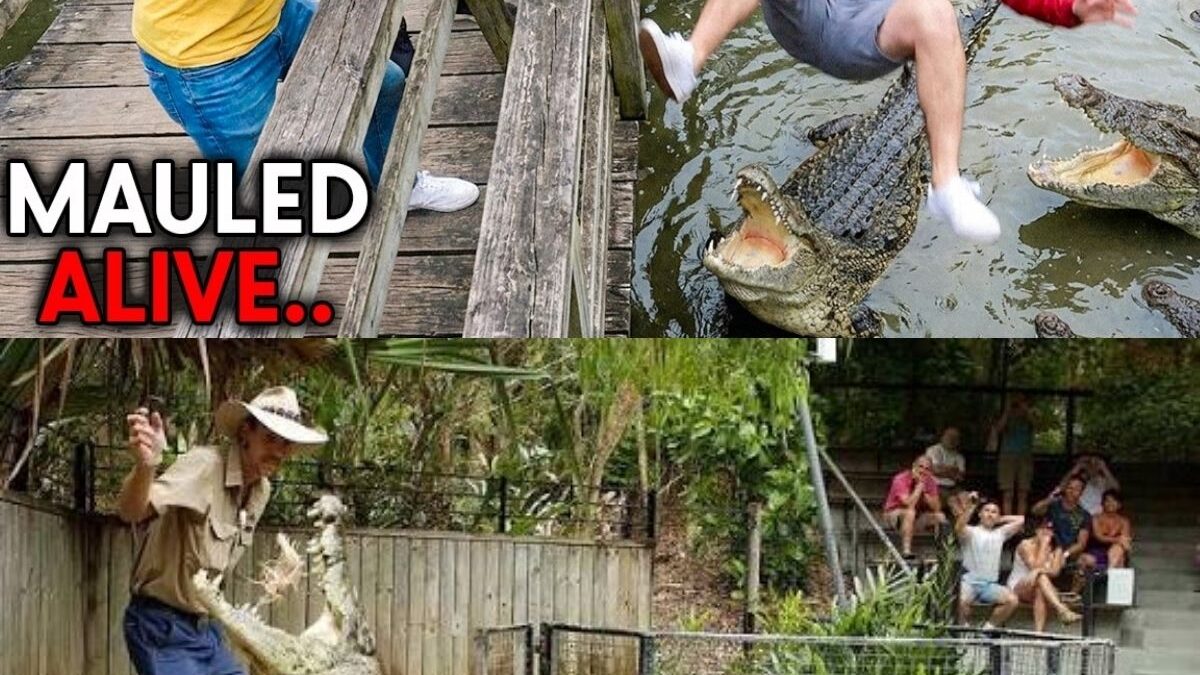
The afternoon sky hung heavy and leaden over the northern stretches of the Zambezi Valley, smothering the Zimbabwean wilderness under an oppressive, humid heat. Swollen by the late seasonal rains, the river rolled past the embankment in wide, turbulent swirls of silt, its brown water masking everything beneath the churning surface. On this particular fifth of March in 2018, three longtime companions stood close to the drop-off along the high riverbank, gazing out across the vast sweep of water.
Hennie and Marlene Cleverly, aged fifty-two and forty-nine, had spent decades vacationing alongside forty-eight-year-old Pieter Jan Delport at this quiet, remote river camp. Pieter was gentle and quiet by nature, a man who consistently chose peace over conflict and always laughed off the rough treatment handed out by his circle. Crucially, every friend in their social circle was well aware of Pieter’s profound terror of deep water, a persistent fear rooted in childhood that had never truly left him.
He had learned to swim late in life, never gaining any real competence or buoyancy, and he made an absolute rule of never venturing past waist-deep shallows. The Cleverlys, by contrast, were boisterous and carried a ten-year tradition of shoving friends into swimming pools at garden parties, barbecues, and weekend celebrations. Pieter had served as their favorite target across that entire decade because he never retaliated, never cursed, and took every soaking with humble, good-natured surrender.
Nobody had ever suffered a broken bone or a genuine scrape from these poolside antics, allowing an inherently dangerous physical prank to harden into an unchallenged ritual. Yet the muddy Zambezi was not a chlorinated suburban pool equipped with ladders, gentle slopes, and clear tile lining its sunlit concrete basin. The Nile crocodiles inhabiting these specific bends were mature apex ambushers, often measuring well past four meters and weighing hundreds of kilograms beneath the murky water.
Local villagers and seasoned wilderness guides routinely warned every newcomer that lingering on the muddy lip of the river was an invitation to violent disaster. The predator does not betray its presence with ripples or splashing; it hovers completely suspended, invisible against the churn until its strike zone is entered. Pushing an adult into clear pool water and thrusting that same person down a wild African river ledge are identical muscular motions, separated only by consequence.
About eighty meters down the current, two local men aboard a drifting utility boat were watching the three vacationers through binoculars, observing the leisurely gathering. Pieter stood directly on the crumbling edge where the earth suddenly plunged into several meters of brown water, his back completely turned to the clearing. Smiling with the familiarity of a ten-year routine, Hennie and Marlene crept across the flattened grass, positioning themselves directly behind their unsuspecting companion.
With four hands planted squarely against Pieter’s shoulder blades, the couple shoved with full force, sending him flying horizontally over the earthen lip. His arms flailed uselessly against empty air as his boots caught nothing, his body twisting in sheer surprise before slamming sideways into the brown current. Because he was wearing heavy clothing and lacked water confidence, he breached the surface only once, throwing a single desperate hand toward the mud.
Before a full breath could fill his lungs, the brown surface opened and folded over him in a violent, boiling vortex, swallowing him entirely from view. The two observers in the boat downstream froze in absolute disbelief as Pieter vanished without leaving even the faintest bobbing struggle on the muddy surface. The river did not show him again; the water simply flattened out into a muddy, spinning boil that drifted along the muddy bank.
Realizing in a split second that their long-running game had transformed into a fatal catastrophe, Hennie let out a terrified shout and leaped from the ledge.
“Pieter!”
He struck the brown water with a heavy splash, kicking hard and taking four or five furious strokes toward the swirl where his friend had disappeared. He plunged his arms into the silt, sweeping blindly under the opaque river, screaming Pieter’s name every time he raised his head for air.
“Where are you? Pieter!”
Suddenly, the brown river shattered into a violent spray much closer to the high bank, tossing heavy sheets of water across the muddy shoreline. Marlene was already shrieking hysterically from the embankment, the horrifying suddenness of the event overwhelming every instinct of self-preservation she possessed. Instead of stepping back toward the trees, she charged off the shelf, throwing herself into the river and wading past her waist before the riverbed fell away.
From the boat downstream, the two witnesses watched the water erupt into thrashing white foam, unable to tell how many animals had struck the thrashing swimmers. The brown surface churned violently for several terrible seconds, obscuring the three bodies until the splashing abruptly died away into absolute silence. Within two minutes, the utility boat reached the exact location of the disturbance, but the brown Zambezi flowed quietly as if nothing had ever disturbed it.
It required four agonizing days for search teams and police rangers to scour the downstream sandbars and tangled root systems for the missing vacationers. When the river finally yielded their remains miles apart, the bodies bore severe trauma characteristic of Nile crocodiles dragging prey beneath the silty water. The handheld camera footage recorded by the boaters downstream was handed over to local authorities and sealed indefinitely at the earnest plea of both families.
Two people had thrown their lives away within twenty seconds trying to undo a fatal prank they had thoughtlessly initiated against a trusting friend. The ancient reptiles of the Zambezi Valley had not acted outside their natural instincts; they had merely occupied their historic hunting grounds in silence. The only aberration was an arrogant human habit, born in suburban comfort and allowed to survive until it met the unforgiving reality of the wild.
Hundreds of miles away, along the southern rim of the continent, a vast expanse of thorny bushveld sprawled across northeastern South Africa. On the night of the seventh of May in 2020, a nearly full moon climbed into a cloudless winter sky, casting cold, silvery illumination over the dry scrub. Salvador Bento, a thirty-one-year-old poacher, walked in silence beneath the pale light alongside three armed companions, slipping through a damaged boundary fence.
They carried a heavy-caliber rifle, wrapped bundles of extra ammunition, and steel hacking tools designed specifically to sever a rhinoceros horn from bone within minutes. The men kept their flashlights switched off, choosing instead to trust the brilliant moonlight to guide their boots across the dry, uneven ground. Urban outsiders often imagine poachers hunting in pitch blackness, yet bright lunar phases are preferred because they eliminate telltale beams that attract park patrol units.
However, trusting a silver-lit horizon while trekking through prime African bushveld means navigating an unforgiving ecosystem while essentially half-blind to ground-level dangers. The thorny mopane woodlands conceal massive creatures whose nocturnal movements are almost entirely noiseless, their grey hides melting effortlessly into the pale lunar shadows. Among these animals, breeding elephant herds represent an immense hazard to anyone moving on foot, fiercely guarding young calves cradled within their center.
A mother elephant sensing an unfamiliar shape in the darkness does not pause to issue warnings; she moves with terrifying speed to crush the threat. The poachers marched in single file through the dense scrub, Salvador walking second in line, his eyes sweeping the dry grass for fresh white rhino sign. Without warning, the lead tracker threw his arm backward, freezing in place as the deep snap of heavy timber echoed from the gloom just ahead.
The moonlight had deceived them entirely; they had marched directly into the middle of a feeding breeding herd, separated from several cows by mere meters. There was no disciplined retreat, no tactical coordination, only four men scattering in blind panic as the massive, silent grey shapes shifted among the trees. Three of the poachers spun on their heels, sprinting back toward the fence line they knew, but Salvador panicked and darted forward and to the right.
That frantic choice sent him directly across the path of a mature cow whose calf was trailing just several steps behind her bulk. The nighttime air split with a sharp, trumpeting roar that shook the dry scrub, the sudden sound accompanied by the deafening crack of splintering timber. Salvador ran with all his strength, weaving wildly through the low brush, but an angry elephant covers open terrain with massive, stride-eating momentum.
The tracks pieced together by park rangers two days later showed that Salvador had fled for roughly sixty meters before reaching a wide, fallen mopane trunk. Trapped against the dense timber with open, exposed ground beyond it, he had nowhere left to dodge, dive, or conceal his presence in the moonlit clearing. The cow overtook him against the timber in seconds, eliminating the perceived danger to her calf with the terrible, unyielding weight of her forelegs.
A hundred meters away in the dark, the three surviving poachers heard the terrifying violence of the encounter and ran toward the park perimeter.
“Keep running!”
“Don’t look back!”
Not one of them paused to assist their companion, nor did they fire a single shot to distract the enraged cow thrashing through the brush. Their only concern was evading the anti-poaching units that patrolled the fence line, slipping into the neighboring communal lands without raising an alarm. For two full days, Salvador lay beneath the relentless sun and cold stars, his body discovered only after his companions broke their silence to his family.
When the investigating rangers reached the clearing, they documented the death of an armed intruder killed inside the reserve by an agitated elephant herd. The three accomplices were swiftly arrested based on the coordinates they provided, facing severe poaching charges while their dead companion was carted away. The elephant herd had not acted out of malice; they had merely defended their offspring against armed shadows that walked uninvited into their quiet night.
Further north, within the sprawling deciduous woodlands of eastern Zambia, another drama unfolded along the rugged drainage lines of an exclusive hunting concession. The afternoon of December seventeenth, 2016, was bleeding its final amber light across the landscape, wrapping the dense riverine thickets in deep, impenetrable shadows. Curtis Eugene Hutchkins, a fifty-seven-year-old American hunter, sat inside a camouflaged timber blind with a licensed professional hunter and two veteran Zambian trackers.
Hutchkins was in the second week of a high-dollar safari, having spent six long, fruitless evenings staring through the rifle scope at hanging meat baits. On this seventh evening, a large male leopard had finally materialized on a thick limb forty meters away, silhouetted against the fading twilight. Anxious that his expensive hunting excursion might end without a prized trophy, Hutchkins hurried his trigger squeeze before aligning his crosshairs with proper discipline.
The heavy bullet struck too low, tearing into flesh without shattering the cat’s vital skeletal structure or disrupting its devastating physical agility. Snarling with agony and shock, the wounded predator tumbled from the branch and vanished into the dense understory of an adjoining dry gully. The professional hunter and his trackers exchanged grim glances, recognizing instantly that they were facing the absolute nightmare scenario of African sport hunting.
A wounded leopard sheltered in thick vegetation at sunset is widely considered by professional guides to be the single most dangerous animal on earth. The cat does not flee endlessly; it retreats into impenetrable thorn cover, lies in absolute stillness, and frequently loops back on its own blood trail. When approached in the dark, a leopard does not warn or posture—it explodes like an uncoiling steel spring, closing distances before a rifle can be leveled.
The professional hunter turned immediately to Hutchkins, his voice low, firm, and leaving zero room for debate or civilian negotiation.
“We leave it. We pull back now and pick up the blood trail at first light when the sun gives us visibility.”
“I am flying back to the States in two days,” Hutchkins answered stubbornly, his face flushed with frustration. “I paid a fortune for this cat, and I am not leaving it out here to rot overnight.”
“You don’t understand what’s waiting in that ditch,” the guide warned, gripping the client’s arm. “If we go into that brush in the dark, somebody is going to get mauled or killed.”
Ignoring the clear command of his licensed guide, Hutchkins pulled away, chambered another round into his rifle, and strode toward the gully. Desperate to prevent the wealthy client from getting torn apart alone, the guide and trackers reluctantly closed ranks behind him, their barrels raised. There were less than fifteen minutes of usable twilight remaining as the four men edged their boots into the dense, tangled thorn thicket.
The blood trail was glaringly obvious, leading down the earthen bank before showing signs that the leopard had circled sharply back upon itself. Before anyone could shout a warning, a spotted shape launched itself outward from the low grass, covering the final yards in an instant. The cat did not merely leap; it descended onto Hutchkins with immense velocity, locking its jaws into his neck while raking his torso with claws.
The professional hunter lunged forward, but with Hutchkins and the thrashing leopard entangled in the twilight, firing the rifle carried catastrophic risk. Dropping to his knees, the guide smashed the steel barrel of his rifle across the cat’s skull, physically throwing himself into the melee. The leopard released Hutchkins and turned its fury on the hunter, tearing into both of his forearms with deep, crushing bites before fleeing.
It was over in less than forty seconds, leaving the clearing drenched in blood as the trackers dragged the two men toward the dirt track. Hutchkins was entirely unconscious, his skull and throat heavily damaged, slipping away into death long before the rescue truck reached the hunting lodge. The professional hunter was airlifted the following morning to a major trauma center, surviving only after extensive reconstructive surgeries on both arms.
The following day, local trackers found the leopard dead in the gully, having succumbed to the initial, poorly placed bullet eighty meters away. Hutchkins had made every wrong choice available to him: rushing a lethal shot, disregarding professional guidance, and walking blindly into a lethal trap. The cat had not behaved abnormally; it had defended its wounded existence precisely as its predatory nature had dictated for millions of years.
Further south along the great river system, the Lower Zambezi wound through flat sandbars under the blazing heat of late dry season. On the morning of September tenth, 2019, the water levels had dropped to historic lows, exposing wide mud flats and baking sand spits. Chonda Sakala, a thirty-seven-year-old river guide with eleven years of boat-handling experience, throttled his open aluminum craft down a narrow, crowded river channel.
Sakala had earned a reputation among local tour outfits for giving his clients the most thrilling, adrenaline-charged wildlife experiences on the river. His signature maneuver involved racing his flat-bottomed craft directly at pods of resting hippopotamuses, swerving sharply away only at the very last second. The sudden surge of spray and roaring engines invariably drove the massive beasts into high alert, splashing and roaring for the tourists’ cameras.
The tourists would scream with terrified delight, the guide would laugh heartily, and the resulting gratuities at the landing dock were consistently generous. Fellow boatmen had repeatedly cautioned Sakala that his aggressive driving was an intolerable disaster waiting to unfold during the dry season. When water retreats, hippos become intensely territorial, packing tightly into remaining channels where massive dominant bulls guard their pods against every perceived intrusion.
A bull hippo can weigh nearly two tons, equipped with ivory canines that easily puncture steel and wood when defending territory against threats. Doing something inherently reckless and escaping unharmed creates a dangerous psychological illusion, slowly convincing the perpetrator that the danger never truly existed at all. Sakala had repeated his dangerous game for over a decade, dismissing every warning from senior river pilots with an easy, dismissive wave.
“They know my engine,” he would tell anyone who questioned his speed. “They move when I tell them to move.”
On this bright morning, four foreign tourists sat on the aluminum benches, cameras raised, as Sakala identified a pod of fifteen hippos ahead. The animals were crammed into a deep, restricted pool bordered by exposed gravel beds, leaving very little room for them to maneuver comfortably. Sakala accelerated hard, aiming the bow directly into the center of the pod, exactly as he had done hundreds of times before.
The pod erupted in confusion, several cows and calves diving underwater while the water boiled furiously around the approaching aluminum hull. Instead of carving his customary sharp turn to peel away, Sakala maintained full throttle, attempting to shoot through the middle of the disturbance. Out of the churning brown water rose a massive territorial bull, charging forward rather than submerging to avoid the speeding metal craft.
The two-ton animal struck the aluminum hull near the stern with the force of an explosive shell, lifting the boat into the air. The open hull flipped violently, dumping Sakala and all four screaming passengers into the churning, foam-streaked current of the hippo pool. The four tourists surfaced together about twenty meters away from the angry animals, keeping their heads low and drifting quietly toward open water.
Sakala, who had been operating the tiller at the stern, surfaced directly in the center of the displaced and enraged pod of animals. Before he could kick his legs toward the shallows, the massive bull surfaced beside him, its jaws snapping shut through the churning current. The four tourists watched in utter horror as their guide vanished beneath the brown surface a second time, leaving only widening ripples behind.
A second safari boat cruising two hundred meters upstream arrived within minutes, quickly hauling the four terrified tourists over the gunwales. By then, the surface of the river was glassy and calm once more, the hippos resting quietly along the distant mudbank. Sakala’s body was recovered the following morning a kilometer downstream, bearing catastrophic wounds consistent with the crushing bite of a territorial bull.
The official incident report noted that an aluminum vessel had been operated at high speed directly into a concentrated pod in shallow water. No animal was culled or relocated by wildlife authorities; the pod had simply responded naturally to a high-speed vehicle ramming their nursery. Sakala had spent eleven years treating wild, lethal animals like amusement park props, completely forgetting that nature never signs contracts with showmen.
Deep within the agricultural heartland of South Africa’s Free State, the winter winds blew bitter and dry across the flat plains. The morning of June twenty-fourth, 2016, brought crisp sunshine that failed to warm the sprawling paddocks of a commercial predator breeding facility. Dirk Nell, a forty-six-year-old operator who had managed the compound for nine years, walked leisurely down the path between the chain-link enclosures.
The facility made substantial revenue from cub-petting tourism, a controversial trade where infant lions were removed from mothers to be handled by paying guests. Once the cubs grew too large and unpredictable for tourist selfies, they were transferred into breeding camps or held in enclosed paddocks. Over his near-decade of management, Nell had abandoned professional safety protocols, adopting an informal, casual routine with the adult predators he had raised.
He had personally bottle-fed a magnificent male lion from the time it was three weeks old, keeping it in his house during infancy. Nell had posed for hundreds of promotional photographs with the beast, constantly assuring visitors and employees that this specific lion loved him completely.
“He knows my scent,” Nell would often tell the maintenance crew. “He’s like a house cat with me because I’m his father.”
This sentimental conviction is the precise delusion that gets experienced handlers maimed and killed within captive wildlife compounds across the world. Bottle-feeding a wild predator does not domesticate its genetic programming; it merely erases the animal’s natural fear and avoidance of human presence. When a five-hundred-pound lion loses its instinctual fear of people, it simply views its handlers as accessible, manageable physical equals.
On that cold morning, Nell unlocked the security gate of the enclosure and stepped inside alone, carrying neither a firearm nor a defense rod. The facility’s basic protocols required two armed handlers for any enclosure entry, but Nell considered rules unnecessary when visiting his favorite animal. Two ground workers and an independent contractor were repairing an adjacent fence line, watching the routine interaction through the heavy wire mesh.
The massive male lion rose from the dry grass and walked directly toward Nell, displaying the familiar, relaxed gait it showed daily. In the surveillance footage later reviewed by investigators, the animal appeared calm, closing the distance without flattened ears or aggressive tail twitching. Reaching Nell, the lion placed one massive front paw onto his shoulder, leaning its tremendous skeletal weight forward in casual contact.
The sheer mass knocked Nell off balance, forcing him down hard onto one knee on the frozen ground of the open paddock. The moment Nell dropped below eye level, the lion’s predatory wiring tripped automatically, seizing the back of Nell’s neck in its jaws. From standing upright to lying pinned beneath five hundred pounds of muscle took less than two seconds, ending any chance of human defense.
Outside the fence, the two workers screamed in horror, running toward the padlocked gates, but entering the enclosure was utter suicide.
“Get the truck!” one yelled, sprinting toward the workshop. “Hurry, find the keys!”
The lion lifted Nell with effortless strength, dragging him fifteen meters toward the rear fence line, treating him purely as freshly taken prey. Because emergency protocols were non-existent, ten agonizing minutes passed before the response truck was retrieved, driven inside, and used to push the lion off. By the time workers could safely reach Nell, he had succumbed to massive trauma to his cervical spine and upper chest.
The facility’s incident report documented that an unarmed manager had entered an enclosure alone with an adult male lion without safety backup. The predator had not gone mad, nor had it exhibited aberrant psychology; it had simply behaved like a massive cat with superior strength. Nell had spent nine years believing his emotional affection was reciprocated by a predator that possessed no concept of human sentimentality.
Thousands of miles to the east, across the open expanse of the western Pacific, the Sulu Sea rolled beneath a suffocating canopy. On the afternoon of November second, 2021, long, oily swells lifted and dropped a wooden commercial fishing boat far out of sight. Nestor Galvez, a forty-four-year-old deckhand with six years of experience aboard offshore vessels, leaned against the low port-side washboard, slicing through flesh.
The vessel was engaged in shark finning, a brutal, highly lucrative trade strictly banned under modern international and Philippine maritime fisheries statutes. The operation was mechanical in its efficiency: living sharks were dragged aboard on longlines, their dorsal, pectoral, and caudal fins sliced away with knives. Their mutilated, living bodies were then kicked over the wooden gunwales, tumbling down into the depths to suffocate slowly on the seafloor.
By three in the afternoon, the deck was drenched in blood, offal, and slime, having processed dozens of pelagic sharks since dawn. The constant stream of blood trailing behind the drifting vessel had created an enormous feeding slick that drew predators from miles around. Throughout the morning, the deck crew had pointed out multiple large tiger sharks circling the boat, drawn by the scent of butchered carcasses.
Tiger sharks are voracious, opportunistic scavengers, built specifically to consume carrion and investigative bites on floating debris adrift on the surface. Yet after six years of hauling these magnificent creatures out of the sea, the crew viewed them with dismissive contempt rather than caution. When you spend years slaughtering an animal with industrial repetition, you easily forget that you are floating on the surface of their hunting grounds.
Galvez was working near the port rail, his boots slick with fish oil, preparing to kick another finned carcass into the gray water. A long, unexpected swell rolled the timber hull sharply to port, throwing Galvez off balance as his wet boots lost their grip. With a short gasp, he tumbled over the low wooden rail, hitting the warm, gray ocean with a loud, hollow splash.
The two deckhands standing beside him immediately abandoned their knives and rushed to the wooden bulwark, peering down into the rolling swells.
“Nestor! Grab the rope!”
Galvez surfaced immediately, shaking the salty brine from his eyes, and began treading water smoothly six or seven meters off the hull. For three seconds, it appeared to be an ordinary man-overboard incident, easily remedied by throwing a ring buoy or hauling him aboard. But Galvez had fallen into the exact plume of blood and offal where discarded carcasses had been tumbling into the sea for hours.
A massive tiger shark, drawn to the surface by the continuous trail of food, struck Galvez almost instantly from below the swell. The crew watched in absolute horror as their shipmate was yanked violently beneath the surface, reappearing seconds later screaming and flailing in red water. Before a weighted heaving line could reach his outstretched fingers, a second strike dragged him down into the depths, turning the swell dark.
By the time the panicked crew managed to hook his clothing with a gaff and pull him over the rail, it was futile. His injuries were catastrophic, and despite frantic, clumsy attempts at resuscitation, Galvez died on the blood-soaked deck twenty minutes later. When the vessel reached port, maritime authorities impounded the boat and arrested the surviving crew for egregious violations of national fisheries regulations.
The official coroner’s report listed death by massive trauma resulting from an offshore shark attack while working on an illegal fishing vessel. The sharks had not displayed abnormal aggression; they had simply responded to a massive blood trail created by the very man who fell. For six years, Galvez had cast living, mutilated sharks into the abyss, never imagining that he would one day share their fate.
Far back across the Indian Ocean, in the industrialized urban sprawl of South Africa’s Gauteng province, summer storms brewed overhead. On the afternoon of January twenty-ninth, 2013, the humid heat hung over the asphalt highways east of Johannesburg like a heavy, suffocating blanket. Jaco Pretorius, a thirty-nine-year-old illegal wildlife trafficker, steered his sedan down the highway, his trunk packed with illicit cargo.
Pretorius had spent years capturing, smuggling, and trading rare, dangerous indigenous reptiles on the flourishing black market operating beneath the radar. In the trunk of his car rested a nylon sports bag containing two adult black mambas, Africa’s largest and most lethal venomous snakes. Rather than using locked, professional transport boxes, Pretorius had shoved the snakes into flimsy, ventilated plastic containers sealed with masking tape.
The black mamba is an extraordinarily nervous, fast-moving elapid whose venom consists of powerful, rapid-acting neurotoxins that paralyze the human respiratory system. An untreated bite delivers sufficient venom to kill multiple adult men, with respiratory arrest typically occurring within forty-five minutes of envenomation. Survival depends on immediate emergency transport to a modern facility equipped with specialized antivenom and mechanical ventilation to maintain breathing functions.
Another factor governs survival: medical personnel must identify the offending species immediately so they can administer the correct specific antivenom without fatal hesitation. But Pretorius was trapped in a web of his own making, carrying illegal wildlife that would guarantee an immediate prison sentence if discovered. As the sedan sped along the highway, the crude tape lid on one container peeled loose, allowing a mamba to slip out.
The long, slate-grey serpent slid through the zipper opening of the sports bag and crept forward beneath the vehicle’s passenger seating. Pretorius felt nothing until the agitated reptile reached the pedal well, striking twice in rapid succession into his lower right calf. In a blind panic, he slammed on the brakes, sending the car careening through the gravel shoulder before crashing into a wire fence.
He tumbled out of the driver’s seat, gasping in agony, and staggered into the middle of the roadway, clutching his punctured leg. Two passing motorists immediately pulled their vehicles over, running to the roadside where the sweating, trembling smuggler sat slumped in the grass.
“What happened? Are you hurt?” one driver asked, kneeling beside him.
“Snake… bit by a snake,” Pretorius gasped, his breathing already becoming shallow and ragged.
“What kind of snake? Is it in the car?”
“Don’t look in the car!” Pretorius wheezed, terrified of the police finding his contraband. “Just call an ambulance… don’t touch the trunk.”
His desperate attempt to hide his illegal enterprise cost the responding paramedics the most vital asset in neurotoxic snakebite treatment: definitive diagnostic time. When the ambulance arrived, Pretorius was already experiencing severe ptosis, his eyelids drooping heavily as systemic neurotoxins shut down his nervous system. Because he refused to name the species, the emergency room team initially treated him for an unspecified, ambiguous neurotoxic bite.
As doctors debated antivenom protocols, police officers searching the abandoned vehicle peered through the rear glass and spotted the second mamba coiled inside. By the time emergency handlers extracted the serpent and confirmed the identity to the hospital, Pretorius had slipped into full respiratory collapse. Despite emergency intubation, the systemic damage inflicted by the unchecked neurotoxin was irreversible, and he passed away that same evening in intensive care.
The coroner and police reports confirmed that the deceased had died from respiratory failure following envenomation by an illegally transported black mamba. The snake had not acted with malicious cunning; it had merely struck out when confined within a shaking, crude plastic tub. Pretorius had spent years exploiting lethal wildlife for profit, until the very creature he caged turned the key on his life.

