They Mocked the Single Dad at His Father’s Funeral—Then the Lawyer Opened the Will
They Mocked the Single Dad at His Father’s Funeral—Then the Lawyer Opened the Will
The whispers started before Daniel Carter had even reached his father’s coffin. He heard one cousin joke that the failed son had finally come back looking for money. Another relative glanced at Daniel’s worn jacket and whispered that his father had probably left him nothing anyway. Daniel stood beside his 10-year-old daughter, Lily, inside the packed funeral chapel and pretended not to hear them.
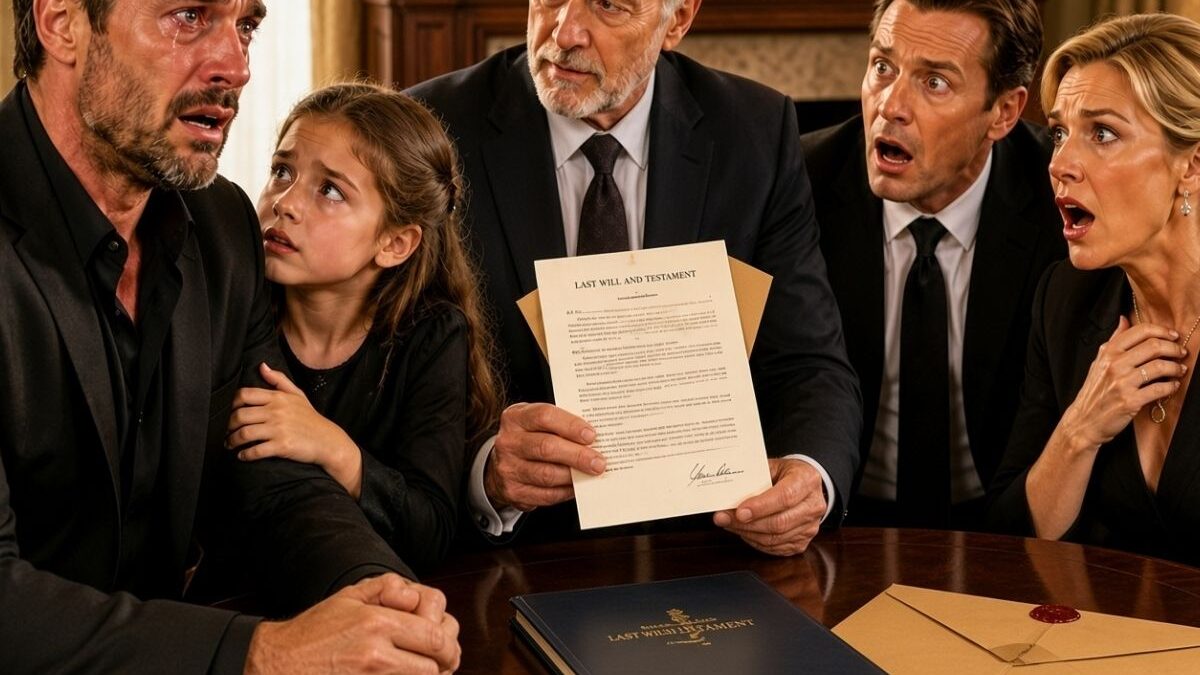
He had buried his wife 5 years earlier. Now he was burying the man who had raised him. But the humiliation was not over. After the service, the family gathered in a private room expecting the will to confirm what they already believed about Daniel. Then the lawyer opened a sealed envelope, read the first page, and the entire room went silent.
If you believe kindness, second chances, and treating people with dignity still matter, please like this video, leave a comment, share it with someone who needs this message, and subscribe to Dad’s Hope. Sometimes the person everyone underestimates is the one carrying the part of the story no one bothered to see.
Daniel was 39 and had never looked like the kind of son people expected wealthy families to produce. His father, Charles Carter, had built Carter Agricultural Supply from a two-room warehouse into a regional company with more than 200 employees. Daniel’s older brother, Michael, had joined the business immediately after college.
His cousin Rebecca managed corporate accounts. Other relatives held impressive titles, drove expensive cars, and knew how to speak confidently about investments, expansion, and legacy. Daniel had chosen a different life. He became an electrician. He lived in a small rented house outside town. He drove an 11-year-old pickup.
After his wife, Emily, died from complications following a sudden illness, Daniel raised Lily alone. People in the Carter family called it wasted potential. Charles never did. That was the part they did not understand. Daniel and his father had argued when Daniel was younger. Charles had wanted him in the company.
Daniel had wanted to build something with his own hands and live without feeling that every achievement had been purchased by his last name. For several years, stubbornness created distance between them. Then Emily died. Charles started visiting every Sunday. At first, he brought groceries. Then he stopped pretending the groceries were the reason.
He helped Lily build a birdhouse. He repaired a loose kitchen cabinet badly enough that Daniel had to repair it again. He sat on Daniel’s back porch drinking coffee and talking about everything except business. And over time, father and son became close in a way they had never been when Daniel was younger. Almost no one in the family knew.
They saw Daniel missing company dinners. They did not see Charles sitting beside Lily at school concerts. They saw Daniel refusing a management position. They did not see him driving his father to medical appointments when Charles began quietly struggling with heart problems. They saw an old truck. They saw cheap clothes.
They saw someone who had failed to become important. Daniel saw his father becoming tired. Charles was 74 when his health began declining quickly. Michael arranged specialists. Rebecca organized paperwork. But Daniel handled the nights. When Charles could not sleep, he called Daniel. Sometimes at 1:00 in the morning.
Sometimes at 3:00. Daniel would drive over, make tea, sit beside him, and listen. Charles talked about regrets, about Daniel’s mother, who had died years earlier, about the company, about how difficult it was to know whether people loved him or loved what he could give them. Daniel never asked about inheritance.
Once, Charles tried to bring it up. Daniel stopped him. He told his father he did not want to spend their remaining time discussing money. 3 weeks later, Charles died peacefully at home. At the funeral, Daniel expected grief. He did not expect cruelty. Michael greeted him politely but coldly. Rebecca looked at Lily’s simple black dress and asked whether Daniel had needed help paying for funeral clothes.
Daniel said no. An uncle commented that Charles had been disappointed Daniel never joined the family business. Another relative laughed at least Daniel had finally shown up when there might be something to inherit. Lily heard that one. Daniel felt her fingers tighten around his hand. He wanted to respond. He did not.
It was his father’s funeral. He would not turn it into a fight. During the service, Daniel sat in the second row. Michael and his family sat in front. The minister spoke about Charles as a businessman, employer, father, grandfather, and friend. Daniel barely heard any of it. He kept remembering Sundays. Charles burning hamburgers on Daniel’s grill.
Charles falling asleep during one of Lily’s animated movies. Charles pretending he understood the rules of her card games. When the coffin was carried outside, Daniel rested one hand against the wood for a few seconds. No one heard what he whispered. He simply thanked his father for coming back into his life before it was too late.
After the burial, attorney Samuel Whitaker asked immediate family members to gather at Charles’s house. Everyone knew why. The will. The mood changed almost instantly. Grief became calculation. Michael spoke about company shares. Rebecca wondered aloud what would happen to the lake property. Daniel sat quietly with Lily near the end of the long dining table.
An uncle noticed and smiled. He asked whether Daniel had brought a calculator. A few people laughed. Daniel looked at Lily. She looked down. Samuel opened his briefcase. He placed several documents on the table. He explained that Charles had revised his estate plan eight months earlier. Michael’s expression changed.
He had not known. Samuel began with smaller gifts. Money for long-time employees. Donations to the local hospital. A scholarship fund. Personal possessions divided among grandchildren. Then came the business. Michael leaned forward. Samuel announced that Michael would retain his executive position and receive a substantial ownership share.
Relief appeared across Michael’s face. Rebecca received shares as well. Several other relatives received generous financial gifts. Then Samuel paused. He picked up a separate sealed envelope. Charles had requested that the next section be read exactly as written. The room became quiet. Samuel explained that Charles had spent the final years of his life learning the difference between the people who valued his name and the people who valued his presence.
No one moved. Daniel’s stomach tightened. Samuel continued. Charles wrote that Daniel had never asked for money, position, property, or influence. When Charles was sick, Daniel came at night without informing anyone. When Charles was afraid, Daniel listened. When Charles needed help bathing after a difficult procedure, Daniel helped him without making him feel weak.
When he wanted company, Daniel brought Lily and stayed until Charles fell asleep. Michael looked toward Daniel. Daniel stared at the table. Samuel read the next sentence. Charles wrote that the son the family had mistaken for unsuccessful had given him the one thing wealth could not purchase. Time. The room was completely still.
Then Samuel reached the inheritance itself. Charles had left Daniel the family home. The lake property. A large personal investment account. And most importantly, controlling voting rights in the Carter family trust, which held the largest single block of company ownership. Someone gasped. Michael’s face went pale.
Daniel looked up sharply. He had not expected any of it. Samuel continued reading. Charles specifically wrote that Daniel was not required to become chief executive, manage daily operations, or abandon the life he had chosen. The voting rights were not a reward for becoming the son Charles once wanted. They were a responsibility entrusted to the man Charles had eventually learned to respect.
Daniel’s hands began trembling. Lily reached for him. Then Samuel read one final personal paragraph. Charles wrote that if Daniel ever wondered whether he had disappointed his father by choosing an ordinary life, he should stop wondering. Raising Lily with patience after losing Emily had taught Charles more about strength than any business achievement ever had.
Daniel lowered his head. For the first time that day, he cried. Not because of the house. Not because of the company. Because his father had answered a question Daniel had carried quietly for 20 years. Was he enough? The answer had been waiting inside an envelope. Michael finally spoke. His voice had changed. He asked Daniel why he had never told anyone how much time he had been spending with their father.
Daniel looked at him and said Charles had needed a son, not an audience. No one laughed after that. Over the next several weeks, Daniel refused several suggestions that he immediately take over the company. Instead, he met employees. Warehouse workers. Drivers. Receptionists. People who had worked for Charles for decades but had barely spoken to the family.
He discovered his father had feared the company was becoming too focused on numbers and too disconnected from the people who built it. Daniel used his voting authority carefully. Michael remained in operations. Rebecca kept her role. No one was punished for mocking him. Daniel did something harder. He treated them fairly.
But things changed. Executive bonuses were linked partly to employee retention and safety. A hardship fund was created for workers dealing with family emergencies. Long-time hourly employees gained a profit-sharing program. Daniel still worked as an electrician for several months before finally reducing his hours and joining the company board.
He never bought a luxury car. He kept the old pickup. Lilly asked him once why. Daniel smiled and told her it still ran. A year after Charles’s funeral, the family gathered again at the cemetery on the anniversary of his death. This time, no one joked about Daniel’s clothes. Michael stood beside him. There was still history between them.
Still regret. But also something new. Respect. If this story touched your heart, please like the video, share it with someone who has ever been judged by appearances, and subscribe to Dad’s Hope. And tell us in the comments, if you had been Daniel, would you have forgiven the relatives who mocked you, or kept your distance after learning the truth? Before the ending, comment “Time is worth more” if you believe showing up for someone matters more than status, money, or appearances.
Daniel eventually moved into his father’s old house, but he changed very little. Charles’s chair remained beside the living room window. His coffee mug stayed in the kitchen cabinet. On Daniel’s desk sat the letter Samuel had read from the will, folded carefully inside a wooden frame. Daniel had inherited property, money, and power that day.
But none of those became the part he valued most. The inheritance that stayed with him was one sentence from his father, that the life Daniel thought looked ordinary from the outside had been the life Charles was proudest to witness. And for Daniel, that was worth more than everything else his father had left behind.

