They Ate Bats For TikTok. They Died On Camera Minutes Later.
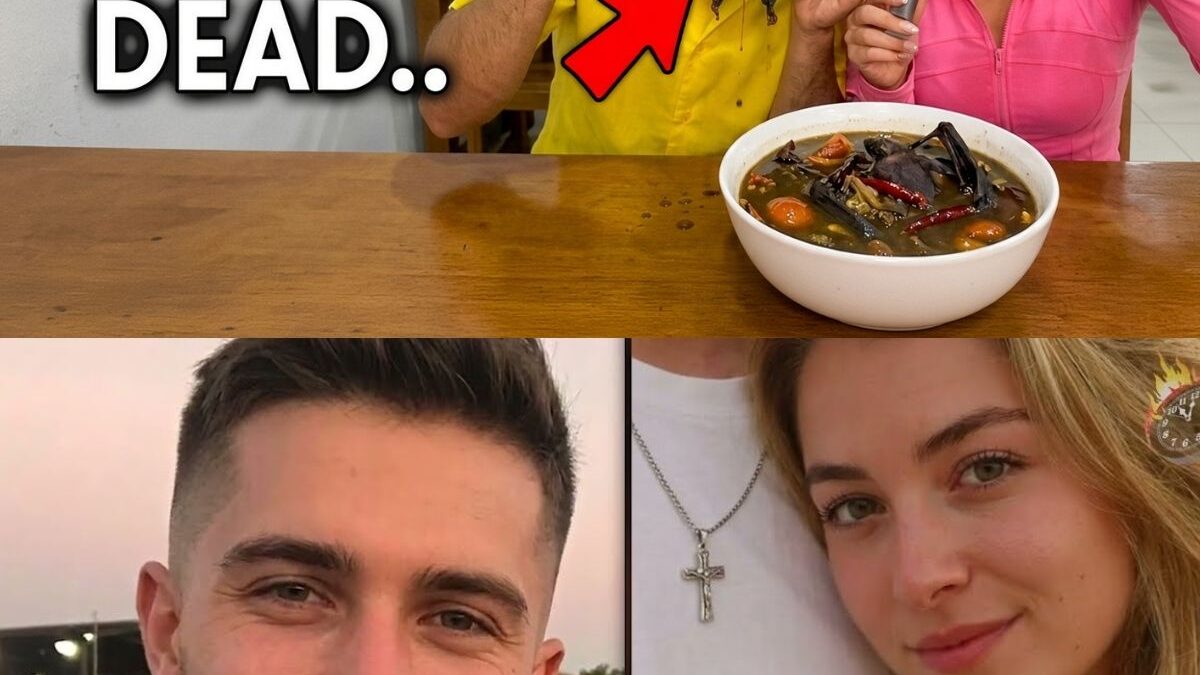
On Tuesday, July 16th, 2021, when 28-year-old Logan Pierce and his 26-year-old girlfriend Haley Brooks started a live stream from the patio of their rented villa outside Manado, Indonesia. The couple were from Tampa, Florida, and had spent the previous 4 months traveling through Southeast Asia while building a Tik Tok account based around trying foods they considered unusual.
Their videos had become increasingly competitive. If one refused to eat something, followers immediately challenged the other to do it. Earlier that day, Logan and Haley had bought two fruit bats at a local market along with cassava, fresh chilies, ginger, turmeric, shallots, and lemongrass. All commonly used in the strongly flavored food of North Suloese.
The bats were the main attraction. Neither Logan nor Haley had eaten bat before, and they had no particular recipe in mind. They planned to season the meat with the ingredients they had bought, grill everything over charcoal, and see what they ended up with. They wanted to capture the cooking and eating of this exotic meal in a live stream.
Their followers had seen them eat insects and animal organs on earlier trips, so the bats were intended to be their biggest challenge yet. I know the bat is meant to be the most shocking part here, but I wonder what was more challenging for them, eating a bat or making sure they continue to entertain their followers and grow their Tik Tok fan base.
Setting up their phones, they started their live stream with Haley holding up the bats and musing about how they would taste while Logan peeled and chopped cassava to cook alongside them. They both joked about seeing the bat’s wings move as they placed them over a charcoal grill with a cassava, then zoomed in on them as they cooked.
More followers joined in the live stream as the cooking completed. Haley had advertised the live stream that morning, and comments were already appearing before the food reached the table. By the time they started eating, backing out would have meant doing so in front of their largest live audience yet. Logan held one of the cooked bats towards the camera, spreading its wings while Haley laughed and covered her mouth.
He tore off part of a wing and held it up. Haley picked a tiny piece of meat from the leg, grimacing as she ready to eat it. Logan and Haley had built an audience by doing exactly what most people wouldn’t, and thousands of those people were now watching to make sure neither of them backed out. On the count of three, they both put the bat in their mouths.
They made faces and chewed more. Haley said she didn’t like the texture and immediately reached for a large piece of grilled cassava, hoping its taste would get the bat out of her mouth. Instead, she burst out laughing and said it was so bitter that it was almost as bad. Logan tried a piece of cassava and agreed, but dipped it into chili sauce and continued eating.
Haley took another piece, trying to get rid of the taste of the bat, while Logan continued nibbling at his food. Neither seemed concerned by the bitterness, and they kept eating as they joked with the audience. Around 10 minutes into the live stream, Haley said she felt dizzy. Logan joked that the bat was getting to her.
Haley suddenly vomited and began breathing rapidly. Logan soon felt strange too and struggled to call for help. Haley collapsed onto the patio as Logan staggered toward the phone. The live stream continued as he collapsed beside her. By then, viewers could hear people arriving and calling for help. The live stream ended when Logan fell onto the phone.
Emergency services were called and someone picked up the live streaming phone and turned it off. Paramedics arrived to find both Haley and Logan suffering seizures between states of unconsciousness. Haley went into cardiac arrest and died in the ambulance on the way to the hospital. Logan suffered cardiac arrest shortly after arriving there.
Neither survived because the couple had just eaten bats. Investigators initially focused on the animals. The remaining food, cooking equipment, and ingredients were collected from the villa. The bats did not provide the answer. The cassava did. Cassava contains naturally occurring cyanogenic compounds that can release cyanide when eaten.
Peeling and grilling alone does not reliably remove those compounds from some varieties of bitter cassava, which was what Logan and Haley had bought. Severe cyanide poisoning can cause dizziness, vomiting, confusion, breathing problems, seizures, loss of consciousness, and death very quickly after a sufficiently large exposure.
The remaining casava from the couple’s meal contained dangerously high levels of cenogenic compounds. Thousands of people had opened Tik Tok that evening to watch Logan and Haley eat something exotic. Instead, their less interesting side dish is what killed them. Our next victim also chose to eat something that was still recognizably an animal.
In his case, it was still moving. It was shortly after 8:00 p.m. on Friday, October 11th, 2020, when 42-year-old Park Minun sat down for dinner with three co-workers at a seafood restaurant in Busousan, South Korea. Minjun worked as an electrical engineer and lived in nearby Gimhi with his wife and teenage son.
The four men had spent the day inspecting equipment at a construction site and stopped for dinner before traveling home. They ordered several dishes for the table, including sanakji. The dish is made from small octopus killed and cut into pieces immediately before serving. The tentacles continue moving on the plate, and their suckers can still grip whatever they touch.
Mjun had eaten it many times before. The restaurant was busy that evening with dishes being passed between tables and staff moving constantly around the room. Minjun and his co-workers had ordered several dishes to share. When the arrived, the men watched the pieces moving across the plate and joked about which one looked most determined to escape.
Minjun reached for one of the larger pieces without hesitation, while one coworker warned him to chew it properly before swallowing. The tentacles curled around the chopsticks as Minjun placed it into his mouth and started chewing. One of the men laughed as a tentacle briefly appeared between his lips before he pulled it inside.
A few seconds later, Minjin stopped chewing, put his chopsticks down, and reached towards his mouth. He then stood abruptly, and grabbed his throat. A co-orker hit him several times between the shoulder blades while another called for restaurant staff. Minjun could not speak or cough. A staff member recognized that he was choking and began abdominal thrusts.
Part of the octopus came into Mjun’s mouth. Someone pulled it free with their fingers, but Minjun still could not breathe. There is something especially unpleasant about this one because the problem isn’t just a lump of food that has gone down the wrong way. The suckers can continue gripping surfaces after the octopus has been cut up.
I think I’d spend the entire meal wondering whether my dinner was eating me back. Mjun lost consciousness and was lowered onto the restaurant floor. Another customer began CPR while an ambulance was called. Paramedics arrived within minutes. They attempted to clear Minjun’s airway before transporting him to hospital, but he could not be revived.
Doctors found another section of octopus lodged around the entrance to his airway, just out of sight. Because the octopus had only just been killed, its tissue could still move, and its suckers could still grip surfaces, contributing to the obstruction. The piece removed in the restaurant had not been the entire obstruction. Fatal choking involving live or freshly killed octopus is a documented danger in South Korea.
Autopsy reports have found octopus parts obstructing the laryngal entrance, while other recorded deaths have involved suckers blocking the airway. There had been nothing unusual about the restaurant, the food, or the way the dish had been prepared. Minjun had eaten the same dish many times before. Unfortunately, this time, part of the octopus remained lodged in his airway.
Minjun Park died after one mouthful became lodged in his throat. Our next victim managed to swallow everything put in front of him. That was the problem. It was March 24th, 2019 when 36-year-old Nicolas Ferrer took his place at a long table during a food festival in Cordoba, Argentina. Nicholas worked as a delivery driver and had entered eating competitions at local events several times before.
He was a large man with a big appetite and enjoyed the attention he received when he won. That afternoon’s competition involved empanadas. 10 contestants had 20 minutes to eat as many as they could. Water and soft drinks were provided and anyone who vomited was eliminated. The starting clapper sounded and all the competitive eaters got to work.
Within the first few minutes, Nicolas had pulled ahead of most of the other contestants. He drank repeatedly between empanadas, washing each mouthful down before immediately taking another. Nicolas’s wife, Mariana, stood behind the barrier with their friends and cheered him on. She had seen Nicholas compete before and knew he usually started faster than everyone else, then slowed once the food began catching up with him.
That day was different. Each time another contestant paused, Nicholas seemed encouraged and kept going, especially once the announcer told the crowd he had moved into first place. By halfway, Mariana had stopped shouting for him to eat faster and was instead telling him he already had enough of a lead to slow down.
Nicholas waved her away and reached for another empanada. After 10 minutes, several contestants had slowed considerably. Not Nicholas. Mariana shouted encouragement as another tray was placed in front of him. He kept eating. Eating competitions have always confused me. I mean, food tastes great. All right, but how could you enjoy it if you’re stuffing it into your mouth as fast as you can? If anything, it might make you never want to eat again.
What a waste of good empanadas. After about 15 minutes, Nicholas began leaning backwards between bites and rubbing his stomach, but he continued eating. The organizers kept a running count in front of each contestant, which made it easy for everyone to see how close the competition was. Nicholas had won smaller events before, but this was the first time Mariana had seen him eat enough that he looked physically uncomfortable before the clock stopped.
Even after he began rubbing his stomach, the crowd was still cheering because he remained in first place. When time was called, he had won. Nicholas stood, raised both arms triumphantly, then immediately sat down again. He said his stomach hurt, and felt extremely tight. People around him laughed and told him that was hardly surprising.
Nicholas remained seated while the prizes were announced. 10 minutes later, he was sweating heavily. He tried to vomit, but could only wretch. Mariana could see his abdomen visibly swollen beneath his shirt. She asked one of the organizers for medical help. A first aid volunteer examined Nicholas and advised that an ambulance be called.
Before it arrived, Nicholas attempted to stand again and almost collapsed. He was taken to hospital, complaining of severe abdominal pain and difficulty breathing. Doctors found that his stomach had massively distended with food, liquid, and gas, causing it to rupture, spilling food and liquid into his abdominal cavity.
Nicolas was taken for emergency surgery, but the damage had been done. Despite doctor’s attempts, he developed severe infection and shock. His blood pressure fell and several organs began failing. He died the following morning. Acute gastric dilitation after extreme eating is rare, but it can become a surgical emergency. As the stomach expands, blood flow through its wall can become compromised, leading to tissue death and eventual perforation or rupture.
Published cases have documented large quantities of undigested food spilling into the abdomen after binge eating, and competitive consumption of food and large amounts of carbonated drink has also produced dangerous gastric dilitation. The photographs from the competition showed Nicolas seated, smiling with his winner certificate. Less than an hour after they were taken, he was in an ambulance.
He had entered the competition to see how much his stomach could hold. He found out our next victim was not trying to eat a large amount of anything. She was trying to get the last few pieces out of a drink. It was June 12th, 2022 when 21-year-old Lin Yu Ting left a shopping center in Tai Chong, Taiwan with two university friends.
The three women had spent the afternoon shopping and bought bubble tea before catching a bus home. Ying ordered a large milk tea with tapioca pearls. By the time they reached the bus stop, she had finished most of the drink, but several pearls remained at the bottom of the cup. The three friends had bought bubble tea from the same shop many times during university and were in no hurry as they waited for their bus.
One of friends had already thrown her empty cup away whileing was still working on the pearls left at the bottom of hers. She complained that she had paid extra for them and was not leaving them behind. Her friends teased her about getting her money’s worth as she shook the cup again, trying to move the cluster away from the end of the straw before taking another hard pull.
Several suddenly shot up the straw together, causing Utting to cough and bend forward. May laughed and told her she was going to choke herself. Utting continued coughing, then stood upright and grabbed May’s arm. She could no longer make a sound. Her other friend realized she was choking and began hitting her firmly between the shoulder blades.
Utting’s face began changing color. A man waiting for the same bus came over and performed abdominal thrusts. One of the tapioca pearls shot from mouth and landed on the pavement. She gasped but did not begin breathing normally. The man continued trying to clear her airway. There can’t be many foods that travel towards your mouth through a tube at speed.
Usually the straw is the harmless part of the drink. In this case, Utang pulled hard on the straw while several tapioca pearls were clustered at the bottom, causing multiple pearls to enter her mouth at once. Uteng collapsed. Someone called emergency services while the man continued CPR. Paramedics arrived and found another tapioca pearl lodged in her throat as they attempted to ventilate her.
Uting was taken to hospital where doctors restored her heartbeat, but she had been without adequate oxygen for too long. Over the following 2 days, tests showed extensive brain injury. Utting never regained consciousness and her family were able to be with her when life support was turned off a week later. Her friends were able to describe exactly what had happened, and one of the pearls had remained on the pavement beside the discarded cup.
The tapioca pearls themselves were ordinary. The accident occurred when several were drawn rapidly through the large straw and entered Utting’s mouth together. Eting Lynn died because of what remained at the bottom of her bubble tea. Our next victim gathered his dinner himself from rocks only a few hundred feet from his home.
It was shortly after 6:00 p.m. on Saturday, February 9th, 2017, when 58-year-old Graham Walker carried a bucket of freshly gathered muscles into his kitchen in the Marbor Sounds, New Zealand. Graham and his wife Helen had lived beside the water for 11 years. At low tide, muscles could be collected from rocks along the shore below their property.
Graham had gathered them many times before and regarded them as one of the benefits of living there. Gathering your own shellfish is common around New Zealand’s coastline. Recreational fishers are allowed to collect muscles for themselves with rules controlling how many each person can take. In the Marboroough Sounds, the daily limit for personal use was 50 muscles per person with no minimum size.
Graham never needed anywhere near his limit. A bucket collected from the rocks below the house provided more than enough for dinner whenever family visited, and he knew which areas were easiest to reach as the tide went out. His daughter Rebecca had grown up collecting shellfish with him, so joining her father that afternoon was nothing unusual.
They walked down to the shore together carrying the bucket, moving along the exposed rocks as Graham chose the larger muscles and Rebecca pulled them free. Once they had collected enough for dinner, they headed back up to the house. What an idyllic life living by the sea and just walking there to collect your dinner fresh from the rocks.
Who would need a supermarket or fish monger if you lived in a place like that? Back at the house, Helen cleaned the shells and discarded any that were damaged or remained open. She steamed the muscles with garlic, white wine, and cream, then carried the pot to the table. Graham loved muscles and ate more than anyone else. They tasted great.
As they were eating dessert about 20 minutes later, Graham rubbed his lips and said his mouth felt strange. Rebecca asked whether he had burnt himself. He told her his lips were tingling. A few minutes later, Helen noticed the same sensation in her fingertips. Rebecca started feeling a slight tingle around her mouth shortly afterwards.
As Graham stood to clear the plates, he stumbled against the table. Rebecca searched shellfish poisoning on her phone. When Graham said he was finding it difficult to swallow, she called emergency services. His condition deteriorated rapidly. By the time paramedics arrived, Graham could no longer stand without assistance and was struggling to speak clearly.
Helen was also unwell, but remained able to walk. Graham’s breathing became shallow during the ambulance journey, and he required respiratory support. At hospital, doctors suspected paralytic shellfish poisoning. Helen and Rebecca were also assessed. Helen’s symptoms remained moderate and Rebecca’s were very mild, not going beyond the slight tingling around her mouth.
Graham had consumed considerably more muscles than either of them. His respiratory muscles became progressively weaker and he was placed on a ventilator. Despite intensive treatment, Graham suffered cardiac arrest and died later that night. Samples of the leftover muscles were tested and found to contain high concentrations of paralytic shellfish toxins.
The toxins are produced by certain microscopic algae and accumulate when muscles and other shellfish filter the surrounding water. Cooking does not destroy them. Symptoms can begin between 10 minutes and 3 hours after eating and include tingling around the mouth, difficulty swallowing, weakness, paralysis, and respiratory failure. A public warning was subsequently issued for recreational shellfish gathering in the affected area.
Graham had collected muscles from the same rocks for years without becoming ill. There had been no reason for him to think that Saturday’s bucket looked any different. The difference was invisible. Our next victim was killed by something considerably sweeter, but it took several weeks to happen. It was around 12:30 p.m.
on Monday, November 18th, 2015, when 56-year-old William Deere collapsed beside his van at a building site in Roderdam, the Netherlands. William was an electrician who had worked independently for more than 20 years. He spent much of each day driving between jobs and kept snacks in the center console of his van. His favorite was black licorice.
William had eaten licorice since childhood, but during the previous month, his wife Saskia noticed he was getting through far more than usual. He had stopped smoking earlier that year and found himself constantly wanting something to chew. Licorice filled the gap. He bought large bags at the supermarket and kept one in the van, another beside his chair at home, and occasionally one in his tool bag.
Saskia complained about finding empty packets everywhere, but William joked that licorice was a better habit than cigarettes. Saskia had noticed other small changes during the month as well. William was drinking more water than usual and occasionally complained that his work boots felt tight by the end of the day. Neither of them connected this with the licorice.
The packets were so ordinary that they barely registered his food when Saskia found them in the van or beside his chair. Even when she pointed out how many he was getting through, the conversation was about replacing cigarettes with sweets, not about whether the sweets themselves could be causing a problem.
During the weeks before his death, he began experiencing headaches and muscle cramps. One evening, Saskia noticed that his ankles look swollen and suggested he see their doctor. William said he had spent the day working on his feet and would make an appointment if it continued. He carried on eating licorice. This is probably the food I’d be least suspicious of.
A man in the Netherlands eating too much licorice hardly sounds like the beginning of a medical emergency. I mean, who doesn’t eat more candy or treats than they should? But it does sound like he had a few more than most people would. On the morning of November 18th, Will met another electrician, Jirun, at a renovation site.
Jeron later told investigators that William complained of feeling tired and had a headache. At lunchtime, they walked back towards their vans. Will opened his driver’s door, then suddenly gasped and fell backwards onto the ground. Jeron initially thought he had tripped. When Willm did not respond, he called emergency services and began CPR.
Paramedics found Willm in cardiac arrest. They restored a heartbeat and transported him to hospital where blood tests revealed that his potassium level was dangerously low. Doctors initially looked for the usual causes. Will not taking medication known to explain the potassium loss. He had not suffered prolonged vomiting or diarrhea and had no known kidney disorder.
Saskia mentioned the licorice. When the family later cleared Villim’s van, they found several empty bags in another half full packet beside the driver’s seat. For weeks, Willm had been eating large quantities every day. Real licorice contains glyceric acid. Excessive consumption can produce an effect similar to having too much mineralorticoid hormone, causing the body to retain sodium while losing potassium.
Severe hypocalemia can interfere with the electrical activity of the heart and cause fatal arrhythmias. Medical literature includes cardiac arrests and deaths associated with heavy licorice consumption. William remained critically ill following his cardiac arrest and had suffered severe brain injury. He died in hospital the following day.
Nothing he ate on his final morning had poisoned him. The open bag in his van was only the latest in a long line of them. And finally, our last victim was killed by a meal almost everyone would regard as safer than any of the foods we have seen so far. It was shortly before 700 p.m. on Thursday, April 23rd, 2016, when 39-year-old Amina Odambo reheated a container of rice for dinner at her home in Nairobi, Kenya.
Amina lived with her husband, Joseph, and their three children. 2 days earlier, she had cooked a large pot of rice to accompany a chicken stew. Dinner had been interrupted when their youngest child became unwell with a fever. After eating, Amina and Joseph concentrated on settling him and cleaning up the kitchen was left until later.
The pot containing the remaining rice stayed on the stove overnight. The following morning, Amina put it into the refrigerator to have later. Oh, I’ve been there. Cleaning up a kitchen after a busy day is the last thing anybody wants to do. Sounds like Amina and Joseph had their hands full with their child, too.
At least they got leftovers. Lester cooked the next day. Amina was not the only person who had forgotten about the rice that first night. Joseph remembered seeing the pot on the stove when he came back into the kitchen after checking their son, but by then it was late and everyone wanted to sleep.
In the morning, the rice still looked normal. Amina transferred it into a container and put it in the refrigerator with the remaining stew, planning to use both rather than waste a meal that had taken time to prepare. Nothing about the food gave either of them a reason to throw it away. Two nights later, Amina arrived home from work before Joseph.
The children had already eaten at their grandmother’s house next door, so Amina decided to finish the leftovers rather than cook another meal. She spooned a large serving of rice into a bowl, added the remaining chicken stew, and heated everything thoroughly in the microwave. Joseph arrived around 20 minutes later. Amina had finished eating and was washing the bowl.
She mentioned that the rice had tasted fine and offered to heat some for him. Joseph decided to make himself eggs instead. About an hour after eating, Amina suddenly became nauseated. She went to the bathroom and vomited. Joseph assumed she had picked up the same stomach illness their son had experienced earlier in the week. Within another half hour, Amina was vomiting repeatedly.
She developed severe abdominal pain and began sweating heavily. Joseph encouraged Amina to sip water, but she vomited again almost immediately. By 10 p.m., she was weak enough that he helped her into bed. When Amina became confused and then briefly lost consciousness, Joseph called an ambulance. At hospital, her blood pressure was dangerously low.
Doctors gave intravenous fluids while carrying out tests. Her condition deteriorated far beyond what would normally be expected from a short episode of food poisoning. Amina developed severe metabolic acidosis. Her liver function rapidly worsened and her kidneys began failing. She was transferred to intensive care.
Joseph told doctors what she had eaten and brought the remaining rice and stew from the refrigerator when asked. The children had eaten the original meal two nights earlier without becoming ill. Joseph had eaten the chicken stew again but had not touched the leftover rice. Testing found heavy contamination of the rice with toxin producing bacillus cirrus.
The bacteria can form spores that survive ordinary cooking. When cooked rice is then left for long periods at room temperature, those spores can germinate and bacteria can multiply producing the toxin serialide. That toxin is unusually resistant to heat, meaning reheating contaminated rice does not necessarily make it safe.
Severe cases are rare, but documented Basilla serious food poisoning from reheated fried rice has caused liver, kidney, cardiac, and respiratory failure, and death in otherwise healthy adults. Symptoms can begin within an hour. Amina’s liver continued failing through the night. Doctors treated the shock, kidney failure, and metabolic abnormalities, but her condition became critical.
Shortly after midday, the following day, Amina suffered cardiac arrest, and she could not be revived. Joseph later told health investigators that the rice had looked completely normal when he took it from the refrigerator. It had smelled normal, too. The mistake had happened two nights earlier when the cooked rice sat at room temperature until morning.
While reheating had made the meal hot again, it had not made it

