The Leopard Seal Attack That Shocked Scientists
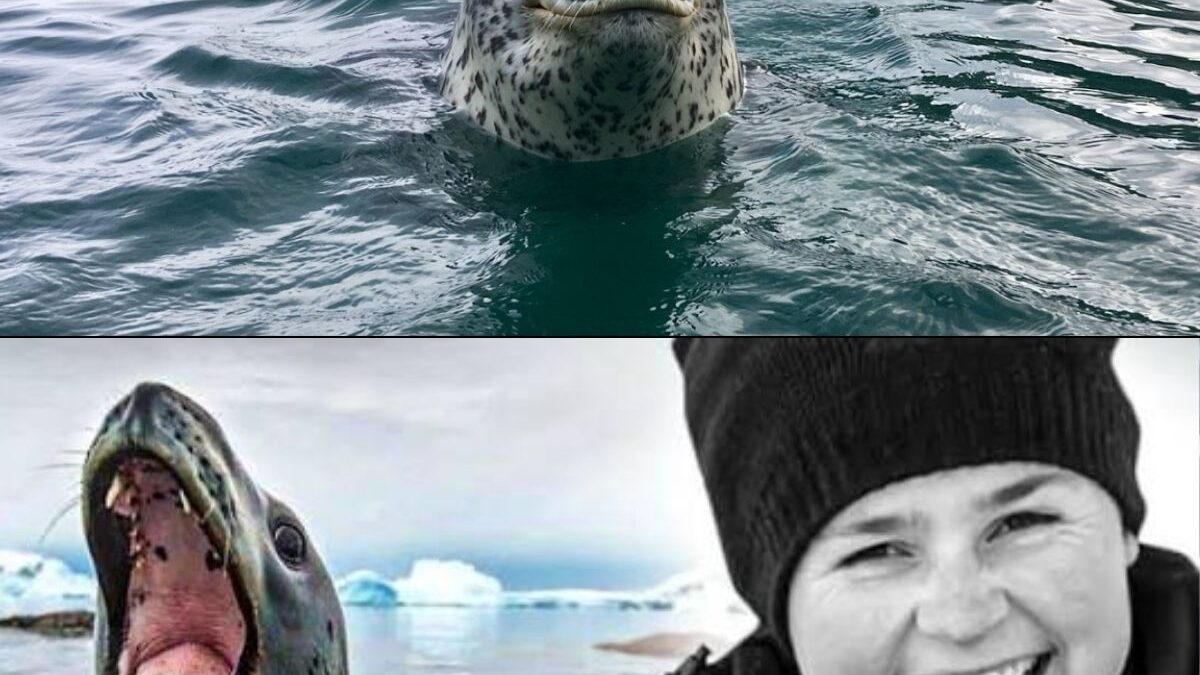
“Don’t open that damn will until you tell everyone what you fed your sister to in the water,” my mother screamed, her trembling hands slamming the black mahogany table as sixty relatives froze in sheer, suffocating terror while thirty years of buried oceanic butchery violently tore our family apart.
Part 1: The Gathering of Jackals
The mahogany dining table in my mother’s sprawling Martha’s Vineyard estate had seated governors, shipping magnates, and Wall Street titans, but on this suffocating September afternoon, it resembled a slaughtering pen. Sixty family members had jammed themselves into the ocean-facing banquet room under the ironclad guise of mourning my late uncle, Russell Partson. His silver urn rested on the central sideboard, flanked by polished brass chronometers and antique maritime charts.
Everyone was there for one thing: his seventy-million-dollar maritime estate. But when the family lawyer cleared his throat and slid the red-wax-sealed envelope from his leather briefcase, my mother, Eleanor, did not simply object—she detonated.
“Put the paper down, Arthur!” she snarled, her wine glass shattering against the hand-carved molding behind the attorney’s ear. Dark red Pinot Noir dripped like fresh arterial spray down the white wallpaper.
A collective gasp sucked the air from the room. My second cousins recoiled; uncle Nathan gripped his cane so hard his knuckles turned gray.
Eleanor moved with predatory, unhinged grace toward David Partson—her elder brother, a celebrated retired oceanographer, whose hands had shaken uncontrollably ever since I was a child. She planted her palms squarely on the mahogany, leaning directly into his weathered, sun-beaten face.
“Don’t open that damn will until you tell everyone what you fed your sister to in the water,” she spat, her voice vibrating with a decade of accumulated venom. “Tell them, David. Tell Arthur. Tell his precious firm. Tell these greedy little scavengers sitting here why Emily never came home from False Bay in 1989. Tell them why Jerome died screaming on a surgical gurney with his bowels hanging out while you walked away with a shredded calf and a foundation check!”
David didn’t blink. His jaw clenched so tight the tendons corded down his withered neck. He reached into his blazer pocket, his scarred fingers trembling violently as they fumbled for a silver lighter. He didn’t light a cigar. He just held the cold steel against his thumb, staring through Eleanor as if she were a ghost hovering over water.
“You don’t know what was out there, Eleanor,” David whispered, his voice dry and hollow, like gravel grinding against an iron hull. “You sit in this heated parlor with your crystal and your mortgages. You think the ocean plays by probate law. You think a monster cares about bloodlines.”
“You left her!” Eleanor shrieked, tears ripping black mascara tracks down her powdered cheeks. “Jerome fought it! The lifeguard shot it! And you used Russell’s old expedition journals to hide how you led them straight into an offshore feeding trough just so you could claim Russell’s trust fund for yourself!”
David slowly stood up. He pushed back his chair, and the legs shrieked against the oak flooring. He rolled up his trousers without a word.
The entire banquet hall fell into dead silence. From his ankle to his mid-thigh, his flesh looked like it had been run through an industrial woodchipper. Parallel puncture marks, an inch deep and ragged with ancient fibrous keloids, had carved away his musculature. It wasn’t the clean cut of a Great White. It was the tearing, violent mutilation of crushing jaws designed to snap penguin spines and tear four-hundred-pound blubber seals inside out.
“Thirty-seven years I carried Emily’s bones in my dreams,” David said, his voice dropping into a register that made the hair on my arms stand up. “You want the truth before Arthur divides Russell’s blood money? Sit down, Eleanor. Sit down, all of you. Because the beast that took Emily and Jerome wasn’t born in South Africa. It was an apex ghost that has hunted our family across three generations, from Shackleton’s ice packs to the bloodied shallows of False Bay.”
—
### Part 2: The Red Shallows of False Bay (1989)
The silence that followed was heavy and absolute. Even the lawyer sat frozen, holding the broken wax seal. David closed his eyes, leaning back against the high leather chair, and dragged sixty people down into the freezing depths of his memory.
In the autumn of 1989, False Bay, South Africa, was an earthly paradise masking a slaughterhouse.
David, his close friend Jerome Zuar, and Emily Cameron had grown up together on the Cape coastline. They were not naive vacationers; they were seasoned divers, water-dogs who read the Atlantic swells like open books. Emily was vibrant, twenty-four years old, and possessed a wild, untamed love for the ocean’s quiet places. Jerome was the anchor—muscular, calculating, a man who could hold his breath for three minutes while spearing kingfish off the rocky ledges.
The day had started with deceptive perfection. The waters near Simon’s Town were abnormally warm, shimmering like polished turquoise under a spotless Southern Hemisphere sun. The National Sea Rescue Institute had broadcasted an unusual marine hazard bulletin that morning over coastal VHF channels—something ambiguous about an erratic, large marine animal moving along the shallow kelp lines. But divers in Cape Town were used to Great White warnings; they knew the reef margins, stayed out of the churned surf, and kept close to the kelp forests where sharks rarely maneuvered with ease.
They had geared up on the gravelly shore, pulling on their neoprene suits and fitting masks with practiced muscle memory.
“Five fathoms only,” Jerome had said, checking Emily’s regulator and smiling his broad, reassuring grin. “We stay along the edge of the kelp. If the visibility drops, we head straight for the rocks.”
“Stop babying me, Jerome,” Emily had laughed, biting into her mouthpiece, her hazel eyes dancing with excitement. “Let’s find the sea stars.”
They kicked out into the bay. Below the surface, False Bay transformed into a cathedral of amber and gold. Strands of bull kelp rose from the granite floor like towering redwood trunks, their fronds swaying with the rhythmic, gentle swell. Schools of silver steenbras parted before them like living curtains. It was a serene, hypnotic world where human gravity ceased to exist.
David led the dive, swimming ten yards ahead toward an offshore granite drop-off. He was looking for crayfish under the ledges, his eyes scanning the crevices.
Then, the ocean went dead.
It wasn’t a gradual quiet. It was the instantaneous, suffocating stillness that occurs when every living creature realizes death has entered the room. The baitfish vanished into the granite cracks. The kelp swayed alone in the cold current.
David stopped kicking. He glanced back at Jerome and Emily. They were hovering ten yards behind him, pointing at something behind the kelp wall.
A sudden, excruciating pressure exploded through David’s right calf.
It was not a nip. It was a crushing, hydraulic vice that instantly shattered the fibula beneath his suit. The searing agony flashed red across his vision, tearing the regulator from his mouth. Before his brain could register what had grabbed him, the creature wrenched him sideways with dizzying velocity, dragging him downward into the dark granite trench.
Through the foam and the blooming red fog of his own blood, David turned his mask.
Staring directly into his eyes, not six inches away, was a face pulled straight from prehistoric hell. It was not a shark. It had a massive, reptilian skull, flattened and wide, with loose, rubbery black lips pulled back over interlocking tricuspid molars and recurved fangs. Its hide was mottled gray and leopard-spotted, slick as wet slate. But its eyes—large, glassy, obsidian globes—held an unmistakable, calculating malice.
A leopard seal. Over twelve feet of solid, four-hundred-kilogram predatory muscle, thousands of miles north of its sub-Antarctic home, rogue, starved, and hyper-aggressive.
David fought with primal fury. He jammed his spearfishing knife into the creature’s blubbery neck. The blade struck thick fat and muscle, sinking three inches. The beast let out an underwater hiss that resonated through David’s ribcage like a sonar pulse, releasing his calf only to lunge again instantly. The second bite caught David’s upper thigh, shearing through the quadricep down to the femur.
David’s muffled screams were swallowed by the ocean. He kicked with his shattered leg, punching the beast’s snout with his bare fist until the seal recoiled, spinning in a tight, serpentine barrel roll.
Bleeding profusely, his lungs burning for air, David made a frantic, ragged claw toward Jerome and Emily.
Emily was paralyzed. Her mask was flooded with tears, her hands trembling as she saw the massive plume of crimson spreading through the clear turquoise water.
The seal wasted zero seconds. Having disabled the largest target, it used its massive pectoral flippers to bank sharply, slicing through the water at twenty-five miles per hour. It didn’t bite Emily immediately—it used its blunt, heavy skull as a battering ram, slamming into her sternum with the force of an offshore speedboat.
The impact knocked the breath and regulator clean out of Emily, sending her body spinning helplessly into the open water above the kelp canopy.
—
### Part 3: The Five-Minute Carnage
Jerome moved with suicidal courage. Recognizing that Emily was drifting unconscious toward the surface, he surged forward, screaming through his snorkel, driving his twin-tined spear straight into the seal’s flank as it circled back to finish her.
The iron tip glanced off the seal’s thick ribs, leaving a shallow gouge. The seal twisted with sickening agility. In the water, against a creature built for pack ice and high-speed penguin intercepts, human movements were laughably sluggish.
The beast opened its jaws—a gaping maw spanning eighteen inches wide—and clamped down onto Emily’s shoulder and arm. It shook her with violent, whip-cracking fury, thrashing her body back and forth against the surface to break her neck, the classic method leopard seals use to flay sea lions.
David, dragging his shredded leg through the crimson water, caught up to the thrashing horror. Together with Jerome, they rained frantic blows upon the predator’s head, eyes, and throat. David stabbed repeatedly with his dive knife; Jerome beat the creature’s snout with the heavy butt of his spear gun.
For a heartbeat, the ferocity of the counterattack broke the seal’s focus. It released Emily, who floated limp on the surface, her wetsuit torn to ribbons, blood bubbling from her mouth.
“Get her to the rocks!” Jerome coughed, his face pale with horror as he treaded water between Emily and the circling shadow below. “David, take her! Go!”
“I can’t kick, Jerome! My legs are gone!” David gasped, vomiting seawater.
“Swim, you bastard! Swim!”
David grabbed the collar of Emily’s buoyancy compensator with one hand, paddling with his remaining functional arm and dragging his ruined legs.
Jerome stayed behind to cover their retreat. That was his fatal mistake.
In the chaotic, blood-clouded water, Jerome lost sight of the animal for three seconds. He pivoted in a tight circle, holding his spear outward, searching the amber kelp.
The strike came from below.
The leopard seal rocketed vertically from the granite depths like a cruise missile. It bypassed the spear entirely, opening its jaws to their maximum extension, and buried its massive recurved teeth directly into Jerome’s abdomen and pelvis.
The sickening crunch of shattering pelvic bone was audible above the surface.
Jerome let out a high-pitched, gargling scream that echoed off the granite cliffs of the shoreline. The seal did not release him. It clamped its jaws shut with hundreds of pounds of pressure, locked its teeth through his internal organs, and used its powerful flippers to dive, dragging the 180-pound man into the dark abyss like a ragdoll.
On the shore, two hundred yards away, an angler packing away his gear noticed the violent, frothing froth of red and thrashing limbs. He ran screaming toward the Simon’s Town volunteer lifeguard shack: “Shark! No, it’s a monster! It’s killing them out there!”
The duty lifeguard, a nineteen-year-old competitive swimmer named Craig, grabbed a heavy CO2-powered rescue harpoon and dashed down the gravel bank. By the time he hit the surf, David was fifty yards out, clinging to Emily’s lifeless body, screaming incomprehensibly while the water around them boiled with crimson.
Jerome’s body broke the surface once more, thirty yards farther out. The seal was still latched onto his midsection, thrashing him against the swells. Jerome was somehow still conscious, his fingers clawing at the beast’s rubbery nostrils, refusing to die quietly.
Craig swam through the blood trail with frantic strokes, raising the harpoon gun. As the seal breached to drag Jerome under a final time, Craig leveled the heavy steel shaft and fired at point-blank range.
The spear entered the creature’s skull behind the left eye. The animal shuddered violently, its massive body stiffening as neural signals short-circuited. It finally released its grip on Jerome, rolling over onto its side, its flippers twitching spasmodically as dark, thick blood poured into the bay.
The fight was over. The clock on the lifeguard tower showed that barely five minutes had elapsed since David had first put his head underwater.
Craig dragged Jerome toward the shore while beachgoers rushed into the shallows to pull David and Emily onto the sand.
The scene on the beach was beyond human description. Emily’s pulse stopped before her feet touched the sand; her chest had been crushed, her main arteries severed. Jerome lay on his back, whispering the names of his children, his hands pressed futilely against a wound no human surgeon could ever repair. He died seven minutes later in the back of the first arriving ambulance.
David survived. But as he lay on the gravel watching the dead leopard seal wash into the shorebreak—its dead, black eyes reflecting the South African sun—he saw a brass identification tag embedded in its left pectoral flipper.
A research tag from the British Antarctic Survey.
—
### Part 4: The Ghost of Adelaide Island (2000)
In the dining room on Martha’s Vineyard, Eleanor’s sobbing had quieted into a stunned, hollow silence. The relatives sat motionless; several of them had set their drinks down, their faces pale.
“You lied to the inquest,” Eleanor whispered, her voice cracking. “You said it was a rogue great white that was scared off by a seal. You let the press report it as an unprovoked seal curiosity gone wrong!”
“The British government and the South African Directorate of Forestry and Fisheries sealed the full autopsy report, Eleanor,” David said, his voice cold and steady. “They didn’t want panic in False Bay. They didn’t want the tourism industry destroyed. And more importantly… the British Antarctic Survey knew that animal had escaped an offshore tagging project after displaying unnatural predatory anomalies.”
He tapped the table.
“And eleven years later, the curse came due again. Only this time, it took someone who actually knew what she was looking at.”
David turned toward a framed photograph hanging on the far wall—a portrait of a smiling young woman in an insulated orange parka.
“Camila Roger. She was twenty-eight. A marine biologist stationed at Rothera Research Station on Adelaide Island in 2000. She was brilliant. She was also Russell’s goddaughter.”
The story shifted from the sunny, bloodied waters of Cape Town to the desolate, alien expanse of the Antarctic Peninsula.
In July of 2000, Rothera Station was locked in the deep, blue twilight of the polar winter. The sea ice had begun to firm up, but pockets of open water—leads and polynyas—remained near the rocky points of Adelaide Island.
Camila and her dive partner, Kirsty, were conducting routine benthic surveys. For weeks, they had documented the marine organisms thriving beneath the surface: giant sea spiders, transparent icefish, and undulating ribbons of nemertean worms. To Camila, the sub-zero water was not a hostile void; it was an enchanted wilderness.
On a crisp Sunday afternoon, with the sun casting a faint, pale gold crescent along the jagged peaks of Mount Liotard, Camila geared up for an ice dive off North Cove.
She wore a heavy vulcanized drysuit, three layers of thermal undergarments, and a full-face mask designed to prevent freezing in 29-degree Fahrenheit seawater. Kirsty remained on the rocky shore, managing the tether line and monitoring radio communications with the main station.
“Visibility is unbelievable today, Kirsty,” Camila’s voice crackled through the radio speaker. “At least a hundred feet. The ice ceiling looks like blue marble.”
“Don’t linger, Cam,” Kirsty replied, stomping her insulated boots against the frozen gravel. “Air temp is dropping fast. Wind chill is minus twenty.”
“Five more minutes. Just collecting the last quadrant markers.”
Kirsty watched Camila’s yellow hood break the surface sixty yards out, near the edge of a floating ice shelf. Camila waved, adjusted her mask, and dipped back down.
Twenty seconds later, a sound ripped through the communication headset that made Kirsty’s heart freeze.
It was not a call for assistance. It was a strangled, blood-curdling shriek of absolute terror, instantly cut off by the wet roar of churning water.
“Camila!” Kirsty screamed into the mic. “Camila, report!”
Static. Then, forty yards out, the surface of North Cove erupted.
A monstrous leopard seal, nearly fourteen feet in length and weighing over a thousand pounds, breached completely out of the water, holding Camila horizontally in its jaws. Its teeth had punched clean through the reinforced vulcanized drysuit, sinking into her hips and lower abdomen.
The animal shook her with primeval violence, smashing her against the edge of the sea ice.
“Base! Base! Emergency! Red alert at North Cove!” Kirsty screamed into her handheld VHF, sprinting across the jagged, slippery ice toward the water’s edge. “A seal has Camila! It’s dragging her under! Launch the Zodiac now!”
Beneath the ice, Camila fought for her soul.
The impact of the teeth had breached her drysuit, allowing sub-zero seawater to flood in, inducing instant cold-water shock. But her mind remained fiercely active. She gouged at the creature’s eyes with her dive knife, kicking with her heavy fins.
The seal was entirely unfazed. Unlike sharks, which often bite and release to let their prey bleed out, leopard seals are active, persistent hunters. It pulled her down into the black abyss, forty feet, sixty feet, eighty feet, twisting in long, agonizing corkscrews to drown her.
At the station, the alarm sirens wailed. A team of six researchers sprinted down the slipway, throwing an inflatable Zodiac into the icy brine. The outboard motor roared to life, its propeller chewing through skim ice as they raced toward the bloodied lead.
For six agonizing minutes, Camila was held in the crushing depths.
When the Zodiac reached the spot, the water was calm. Then, the seal surfaced ten feet from the boat’s pontoon, Camila’s limp, flooded body still clamped in its jaws. It seemed to look directly at the researchers—not in fear, but with brazen, triumphant defiance.
“Hit it! Hit the beast!” shouted the station commander, swinging a heavy aluminum oar with all his strength.
The oar struck the seal across its broad, serpentine head. The blow echoed across the bay. The animal hissed, snapped its jaws, and finally let Camila go before diving beneath the hull.
They dragged her over the side. The scene inside the rubber boat brought seasoned polar veterans to their knees.
Camila’s drysuit was shredded. Her body bore forty-seven distinct, deep lacerations, compound fractures, and massive internal trauma. The station doctor worked on her for three hours in the clinic, his chest compressions mechanical, his face drenched in sweat, but the hypothermia and catastrophic blood loss had ended her life minutes before she had ever been pulled from the water.
They buried her at Adelaide Island, beneath a cairn of frozen granite boulders facing the southern ocean.
—
### Part 5: The Ice of 1911
David stood up from the table, his eyes wet with tears. He walked to the sideboard, picked up Russell’s silver urn, and set it down hard in front of Eleanor.
“You accused me of killing Emily for Russell’s money,” David whispered. “You thought Russell left me his fortune because we shared a dirty secret. You want to know what Russell’s secret really was? Read the first page of his 1911 journal.”
David reached inside his coat and produced an ancient, leather-bound notebook, its pages yellowed and warped by decades of Antarctic moisture. He tossed it onto the table.
Arthur, the lawyer, carefully picked it up, opened the brittle cover, and began to read aloud at David’s gesture:
> *December 14, 1911. McMurdo Sound, Ross Ice Shelf.*
> *The pony transport is dead. The cold bites through our sheepskin coats until the bones ache like rotten teeth. Today, Sir Ernest gave us leave to scout the pressure ridges while the blizzard abated.*
> *Russell and young Thomas walked toward the sea ice edge, seeking fresh water seals for blubber and stove fuel.*
> *God have mercy on what walked out of the brine.*
David took over the narration, his voice carrying the weight of a forgotten century.
In 1911, Russell Partson—my great-uncle—was a twenty-year-old surveyor on the British Antarctic Expedition. He was young, fearless, and utterly ignorant of the creatures that lived beneath the perennial shelf.
Russell and his companion, Thomas, had stopped along an ice foot where the shelf broke off into the open, dark swell of the Ross Sea. Thomas stepped behind a hummock of pressure ice to relieve himself, leaving Russell alone near the shelf edge.
Russell was admiring the terrifying, pure beauty of the Antarctic continent—the jagged azure ice cliffs, the crystalline stillness that felt as old as the stars.
A sound broke the quiet: a wet, heavy slide.
Russell turned. Ten feet away, hauling its colossal mass onto the ice sheet, was a bull leopard seal. It measured twelve feet, its hide scarred from battles with killer whales, its chest as thick as a draft horse.
Russell did not run immediately; up to that point in polar history, explorers believed seals were harmless creatures that could be approached and clubbed for blubber.
The seal reared up. It did not flop like a Weddell seal. It galloped.
Using its massive pectoral flippers and flexing its spine like an inchworm, the predator charged across the hard-packed snow with terrifying speed, moving faster than an Olympic sprinter across the ice. Its black mouth was agape, flashing three-inch fangs.
Russell screamed, turning on his heel and sprinting in his heavy, nail-studded leather boots.
The chase was a nightmare of slipping feet and frozen lungs. Every step was an agony; the thin, dry air of the Antarctic burned his throat. The sound of the seal’s heavy, rhythmic slamming behind him grew louder with every second—the beast was closing the distance, driven not by curiosity, but by the ferocious, predatory instinct to drag anything warm-blooded into the freezing brine.
“Thomas! Thomas! Shoot!” Russell had shrieked, his voice carrying across the barren wasteland.
Russell tripped on a ridge of sastrugi, crashing hard onto his stomach. He rolled onto his back just as the massive head eclipsed the sky above him, jaws wide, descending toward his face.
*BANG.*
A shot from Thomas’s Lee-Enfield .303 rifle shattered the polar silence.
The heavy bullet struck the leopard seal square in the temple. The massive animal collapsed instantly, its head landing with a sickening thud inches from Russell’s boots, its black blood steaming as it spilled onto the virgin snow.
Thomas stood twenty yards away, the bolt of his rifle smoking, his hands shaking so violently he dropped his spare cartridges into the drift.
They dragged the carcass back to camp. When the expedition’s naturalists opened the beast’s stomach to examine its diet, they did not find krill or penguin feathers.
They found the woolen sleeve of a Royal Navy coat, two brass buttons, and human finger bones preserved in the creature’s gastric acids—remnants of a lost whaler who had disappeared off the ice shelf three weeks prior.
“Russell spent the rest of his life studying them,” David said softly. “He funded polar expeditions, he collected logs, he tracked their migration anomalies. He knew that when warming currents push their ice packs north, they don’t adapt by eating fish. They hunt larger, unfamiliar prey. They hunt us.”
—
### Part 6: The Scottish Encounter (1984)
David stepped closer to Eleanor.
“And if you think False Bay was an isolated accident, look at Tony Black.”
In 1984, Tony Black, a Scottish geologist who had spent years working out of Australia, was stationed at a remote research hut on the Antarctic Peninsula.
Like David, like Camila, Tony was not a novice. He had survived crevasse falls and whiteout blizzards. One morning, driven by restless curiosity before his team began drilling ice cores, he walked alone onto a sheet of fast ice near the shore.
The ice was thin—barely six inches of clear frozen salt-crust over thousands of feet of ink-black water.
Without a sound, without a ripple of warning, the ice beneath Tony exploded upward.
A massive leopard seal’s head and shoulders burst through the crust, showering ice shards into the air like an artillery shell. Its jaws clamped onto Tony’s right leg before he could even register the movement, crushing his calf muscle and dragging him face-first onto the breaking ice.
Tony screamed, clawing at the frozen crust with his bare hands, leaving fingernail gouges in the snow. The animal was determined to pull him through the hole into the water below.
His teammates, hearing his cries from the nearby hut, did not run for guns—they grabbed their heavy snow shovels and steel-toed boots.
They sprinted across the flexing ice, throwing themselves onto the thrashing beast. For three minutes, four men beat the leopard seal’s head with metal shovels and kicked its snout with all their might. The seal hissed, snapping at their boots, refusing to let go of Tony’s shattered limb.
It took a crushing blow from a heavy iron pry-bar across the bridge of its nose to finally force the creature to release its grip. The seal slipped back beneath the broken ice, leaving Tony bleeding profusely in the slush, his leg torn open down to the bone with two massive, gaping wounds.
He survived only because an expedition surgeon spent six hours in a wooden shack sewing his muscle tissue back together with nylon thread.
“Nature does not negotiate, Eleanor,” David said, his voice rising, echoing through the great hall of the estate. “It doesn’t care about your grief. It doesn’t care about my guilt. Emily died because we forgot what the ocean was. We treated it like our private swimming pool, and the apex predator of the southern hemisphere reminded us that we are nothing more than meat wrapped in soft skin.”
—
### Part 7: The Final Reckoning
The room was utterly quiet now. The anger had drained from Eleanor’s face, replaced by a gray, hollow exhaustion. She looked at David’s scarred leg, then down at the worn pages of Russell’s 1911 journal.
“Why didn’t you tell me?” she whispered, her voice barely audible above the ticking of the antique clock on the mantelpiece. “Why let me hate you for thirty years?”
“Because if I told you the truth, you would have looked at the ocean and seen only a monster,” David replied, pulling his trouser leg back down to cover the horrific scars. “And Emily loved the water too much for me to poison her memory with pure terror. But today, you brought the monster into this room. You wanted blood. There it is.”
He turned to Arthur, the attorney.
“Open the will, Arthur. Read the damn thing.”
Arthur wiped his brow with a silk handkerchief, his hands visibly unsteady. He broke the remaining wax on the red envelope, slid out the crisp parchment, and cleared his throat.
> *“I, Russell Partson, being of sound mind and memory, do hereby declare this to be my last will and testament.*
> *To my sister Eleanor, I leave the Martha’s Vineyard estate, that she may always have a secure harbor far from the reach of the tides.*
> *To the descendants of Jerome Zuar and Camila Roger, I leave twenty-five million dollars each, placed into irrevocable trust funds for their education, scientific research, and coastal preservation.*
> *And to my nephew, David Partson, who carried the scars of False Bay and kept the silent vigil of our family’s greatest tragedy, I leave the remaining balance of my estate, on one condition:*
> *That he never set foot in the water again, and that he establish the Emily Cameron Memorial Foundation for Polar Marine Research, so that mankind may finally understand the creatures of the southern ice before we meet them in the dark again.”*
Eleanor buried her face in her hands and wept. Not with rage, but with the crushing, humiliating grief of a sister who had spent a lifetime chasing the wrong ghost.
David did not take the money. He stepped forward, placed his hand gently on Eleanor’s shaking shoulder, and left the room without saying another word.
As he walked down the front steps of the estate, the cold autumn wind swept in off the Atlantic, carrying the familiar, brine-heavy smell of the deep ocean. David looked out toward the gray horizon where the waves broke violently against the rocky shoals.
He knew the truth.
The oceans were warming. The pack ice of Antarctica was fracturing into the warming currents, drifting north, carrying the great spotted demons of the southern shelf closer and closer to human shores every single year.
The five minutes in False Bay had not been an isolated freak occurrence. They had been a warning shot.
And somewhere out there, in the dark, sunless swells beneath the waves, the cold black eyes were still waiting.

