The IOWA Cold Case That Was SOLVED 50 Years Later
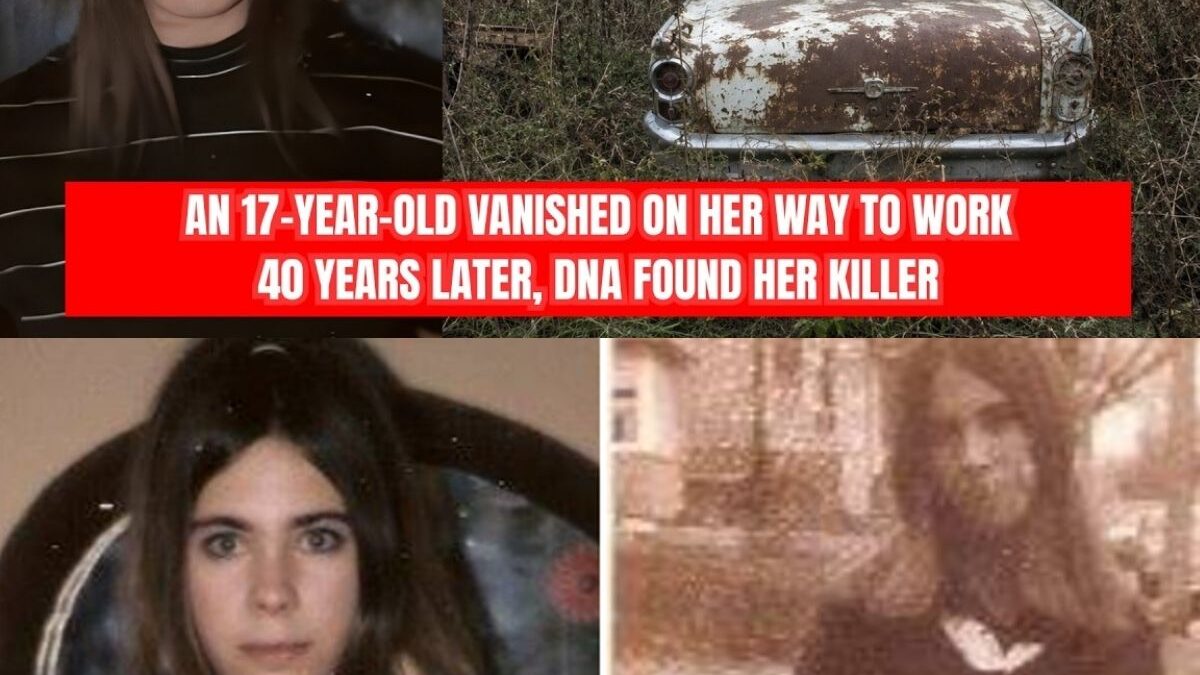
The dawn mist lay heavy over the southwestern outskirts of Cedar Rapids, clinging damp and low to the tall prairie grasses and timber along Ely Road. It was Friday, September 24, 1971, an ordinary autumn morning where the sharp, earthen scent of decaying foliage and wet black soil signaled the approaching Midwest frost. In that thick patch of bottomland near an informal local dump, two adolescent boys stepped through the brush, hunting rifles balanced across their arms as they scanned the timberline for small game.
Tucked amid the wild growth and rusted iron remnants of discarded machinery sat a battered, abandoned automobile, weathered by seasons of rain and neglect. Drawn by curiosity, the young hunters approached the vehicle, stepping carefully through the weed-choked clearing until their eyes landed upon the flat expanse of the rear trunk. What they discovered there made them drop all pretense of sport, turn on their heels, and bolt through the underbrush, their breathless shouts carrying across the empty rural road.
The body resting upon the cold metal lid belonged to a young woman, partially unclothed, stripped of her shoes, and entirely motionless under the pale morning sky. When the first patrol cars arrived, tires crunching along the gravel shoulder, the responding deputies found an eerie, solemn scene that defied the common brutality of violent street crime. Her bare feet were completely pristine, free of dirt, grass stains, or gravel abrasions, showing beyond doubt that she had never walked into those woods on her own power.
Whoever had taken her life had lifted her body and brought her into the clearing, placing her upon the trunk lid with deliberate care rather than tossing her aside into the ditches. There was no disturbance in the surrounding weeds, no scuffed shoe prints indicating a desperate fight, and no fresh blood pooling upon the leaf-covered ground. The physical reality of the clearing revealed that this desolate woodland was merely a secondary resting place, chosen by someone who knew the back roads and possessed the composure to lay her down gently.
Within hours, detectives verified the identity of the victim as Maureen Anne Brubaker Farley, a seventeen-year-old girl who had vanished seven days earlier without a trace. Her life had barely begun, yet it had been extinguished with catastrophic violence, far from the close-knit family home where she had spent her childhood. The news rippled quickly through the eastern Iowa industrial hub, shaking a blue-collar community that had long prided itself on unlocked front doors and familiar neighborhood streets.
Maureen had entered the world on the fourth of July in 1954, born into the bustling household of Edward and Mary Ann Brubaker in Sioux City, roughly three hundred miles to the northwest. As the eldest of seven children, she grew up carrying the natural mantle of responsibility, serving as a second mother, confidante, and protector to her younger brothers and sisters. Whenever their parents returned home and asked whether the little ones had behaved during their chores, Maureen never hesitated to offer an unconditional defense.
“Yes, Mama, all of them were absolute angels today,” she would insist with a bright, knowing smile.
She offered that answer unfailingly because she wanted every single child to earn their shiny penny reward, valuing their collective joy far above any petty childhood squabbles. In the cramped, energetic rooms of their family house, Maureen set the emotional temperature, teaching the younger ones how to fold laundry, tie their boots, and navigate the uncertainties of growing up. Her siblings watched her closely, admiring her sharp determination, her gentle patience, and the fearless way she approached the wider world outside their front porch.
By the time she turned sixteen, Maureen’s fierce independence began to pull her beyond the quiet domestic circle of the Brubaker residence. She fell deeply in love with a young local man named David Farley, whose troubled path contrasted sharply with her family’s orderly existence. When Maureen announced her intention to wed David, her mother, Mary Ann, confronted her with grave maternal concern, desperately urging her to slow down and reconsider the burdens of early marriage.
“You are far too young to tie your life down to such uncertainty, Maureen,” Mary Ann pleaded, gripping her daughter’s hands tightly.
Maureen met her mother’s worried gaze with unwavering resolve, her voice steady and completely devoid of childish theatricality.
“If you forbid this marriage, I will walk out that front door this very evening, and you will never see me return,” she declared.
Recognizing the immovable will of her eldest daughter, Mary Ann gave her reluctant blessing, praying silently that the young couple would find their footing against the odds. Yet the union faltered almost immediately under the weight of financial distress and David’s escalating confrontations with the legal system. Within months of their wedding vows, David was convicted of a criminal offense and sentenced to serve time at the Anamosa State Penitentiary, situated roughly twenty-six miles northeast of Cedar Rapids.
Refusing to abandon the man she had chosen, seventeen-year-old Maureen packed her meager belongings into a suitcase in the summer of 1971 and bade farewell to Sioux City. She arrived alone in Cedar Rapids, determined to build an honest life within reasonable visiting distance of the imposing stone walls of Anamosa. Navigating the unfamiliar city grid, she secured a modest, low-cost efficiency apartment situated on the second floor of 522 10th Street Southeast.
The efficiency unit offered only the barest essentials: a compact bed, a laminate kitchenette, a small closet for her dresses, and a window overlooking the neighborhood thoroughfare. It was an isolated life for a teenage girl, separated by hundreds of miles from her parents and living paycheck to paycheck in an era before mobile communications. Long-distance telephone calls were an expensive luxury reserved for urgent emergencies, meaning her routine contact with her family was reduced to intermittent letters and rare payphone check-ins.
To support her independent household and pay for bus fare out to the prison, Maureen found steady employment as a daytime waitress at Wida’s Restaurant, located at 836 1st Avenue Northeast. The diner sat approximately fifteen minutes on foot from her apartment door, a walkable daily commute through established commercial corridors lined with small shops, bakeries, and corner taverns. Each morning she tied her apron, greeted local factory hands and delivery drivers with professional warmth, and carried heavy trays of hot coffee and Midwest diner fare.
In the autumn of 1971, Cedar Rapids was a thriving industrial center of approximately 110,000 residents, defined by the towering Quaker Oats grain elevators and bustling meatpacking facilities. Shift whistles dictated the daily rhythm of the working-class avenues, where neighbors knew one another by name and church pews filled to capacity on Sunday mornings. It was a city that considered itself comfortably immune to the violent convulsions shaking larger coastal metropolises during the height of the Vietnam War and national social unrest.
Yet beneath that veneer of midwestern tranquility, Maureen moved through her daily routines as a vulnerable outsider, completely solitary and lacking a protective social buffer. Her days followed an unvarying pattern: the walk to Wida’s, long hours on her feet balancing ticket orders, the quiet walk back down 10th Street, and evenings spent alone inside her room. Those who observed her noted her striking brown hair, her polite demeanor, and the quiet dignity with which she bore the burden of her husband’s incarceration.
The final confirmed sighting of Maureen Brubaker Farley occurred in the late afternoon of Friday, September 17, 1971. Having completed her scheduled shift at Wida’s Restaurant, she untied her uniform apron, counted her modest tip money, and walked out the front doors at approximately 5:30 p.m. The late summer sun was beginning to dip behind the downtown buildings as she stepped onto the sidewalk, blending into the regular flow of homeward-bound commuters.
She vanished into the gathering dusk without drawing the attention of passersby, leaving no witnessed confrontation, no dropped purse, and no audible cry for help. Friday evening slipped into Saturday morning, September 18, and Maureen’s small apartment remained dark, its door locked from the outside. Throughout Sunday, September 19, the quiet building on 10th Street Southeast saw no sign of the young waitress, but with her husband imprisoned and her parents in Sioux City, no one raised an alarm.
This agonizing three-day window would later haunt every investigator who touched the case, representing a vacuum of time when Maureen was completely unaccounted for by the world. It was not until Monday morning, September 20, that the silence was finally broken when Maureen failed to appear for her morning shift at Wida’s Restaurant. The diner manager, knowing the young woman was exceptionally dependable and never missed work without calling, dialed her apartment number repeatedly to no avail.
Growing deeply concerned, the employer contacted the Cedar Rapids Police Department to request a formal welfare check on the missing teenager. Officers dispatched to 522 10th Street Southeast climbed the wooden staircase, knocked firmly upon the painted door, and received only dead silence in return. Using a passkey provided by the building manager, patrolmen swung the door inward, their eyes sweeping over a tidy room that showed not the slightest hint of violence.
Maureen’s clothing hung neatly in the small closet, her personal toiletries were arrayed beside the sink, and her packed suitcases remained undisturbed beneath the bedframe. There was no signs of a physical struggle, no broken glassware, and no farewell note left upon the small laminate table to suggest a voluntary departure. She had simply stepped out of her life on Friday afternoon and evaporated into the heart of the city, leaving all her earthly possessions behind.
A missing persons report was officially logged, but patrol officers in 1971 had few operational tools to locate an independent adult who vanished without a clear crime scene. For four grueling days, the inquiry stalled in administrative limbo, while three hundred miles away in Sioux City, the Brubaker household remained unaware of the gathering storm. That uneasy silence was shattered on the morning of Friday, September 24, when the two young hunters stumbled across the abandoned car near the old dump site along Ely Road.
Detectives from the Cedar Rapids Police Department and deputies from the Linn County Sheriff’s Office converged on the desolate secondary road, cordoning off the brush with wooden barricades. The county medical examiner arrived to conduct the preliminary on-scene examination, noting that the deceased young woman had been resting on the vehicle for several days. Her remains were carefully transported to the morgue, where an extensive autopsy was initiated to determine the precise timeline and physical cause of her demise.
The medical examiner established that Maureen had succumbed to a massive, blunt-force blow directed at the right side of her head, which completely fractured the base of her skull. Forensic analysis revealed that death had not been instantaneous; rather, she had survived in an unconscious, comatose state for an extended period following the initial trauma. The forensic pathologist estimated the window of her passing to fall between September 20 and September 22, indicating she had remained alive somewhere during the days she was missing.
The post-mortem examination also yielded definitive physical evidence confirming that Maureen had been subjected to a violent sexual assault prior to her death. With clinical precision according to the professional standards of 1971, the medical examiner swabbed the victim’s body, securing biological fluid samples upon clean cotton applicators. The swab was sealed within a sterile glass container, labeled with meticulous handwritten script, and cataloged into the departmental evidence vault alongside the victim’s recovered garments.
In that era, long before the emergence of modern molecular biology, forensic science lacked any technological capability to analyze the genetic coding carried within that cotton swab. The technician who carefully cataloged the vial possessed no conception of forensic DNA profiling, STR sequences, or digital genealogical databases. They simply adhered strictly to professional protocol, packaging and preserving the biological specimen with an integrity that would silently outlast an entire half-century of human progress.
With a homicide officially declared, the Cedar Rapids Police Department mobilized its detective bureau, initiating a comprehensive neighborhood canvass around 10th Street Southeast and Wida’s Restaurant. Investigators compiled exhaustive lists of every individual who had interacted with Maureen during her brief three-month residency in the city. They interviewed restaurant dishwashers, regular coffee patrons, delivery men, apartment tenants, and acquaintances who had crossed paths with the solitary seventeen-year-old girl.
Dozens of statements were transcribed onto carbon-paper reports, detailing daily movements, work schedules, and personal alibis for the hours surrounding Friday evening, September 17. Detectives knocked on doors throughout the surrounding blocks, questioning residents about unusual motor vehicles, late-night arguments, or suspicious figures loitering along the sidewalks. Yet despite hundreds of collective investigative hours, no eyewitness emerged who could provide a verifiable account of Maureen’s final moments on the city streets.
As the suspect rosters expanded and contracted through the autumn of 1971, detectives kept returning their attention to a short list of individuals possessing both geographic access and local familiarity. Among the names inscribed in the official case files, one local resident drew sustained scrutiny from the lead investigators: a middle-aged laborer named George M. Smith. Smith was an established presence in the immediate neighborhood surrounding Maureen’s apartment building, operating well within her daily field of vision.
He worked regularly at a retail liquor establishment located along 10th Street, situated only a short walking distance from the front stoop of 522 10th Street Southeast. From his vantage point behind the counter and around the commercial block, Smith had ample opportunity to observe the young woman’s daily routines. He was positioned to know that she resided completely alone, to observe what hours she walked to work, and to note the exact time she returned home.
Beyond his retail clerk duties, George Smith operated an independent local hauling and junk-removal service, utilizing his own private truck to transport discarded goods and scrap material. This enterprise gave him an intimate familiarity with the rural cut-throughs, access trails, and unregulated dumping grounds situated along the southwestern periphery of Cedar Rapids. More critically, his hauling business provided a completely legitimate justification for driving a heavy utility vehicle through commercial alleys and country roads at virtually any hour.
Yet it was not merely his geographic proximity or his mechanical equipment that cemented Smith’s prominent place within the early investigative notes. Rather, it was his extraordinary and unprovoked personal behavior in the weeks directly following the discovery of Maureen’s body that raised departmental alarms. Throughout October of 1971, while detectives were actively conducting door-to-door inquiries, George Smith began visiting the Cedar Rapids police headquarters on his own initiative.
He did not wait for a detective to summon him with an official request for an interview or a clarification of his business records. Instead, Smith walked into the station lobby repeatedly, requesting updates on the homicide investigation and asking desk sergeants what progress the detectives had achieved. He inquired whether any new leads had surfaced, whether any murder weapons had been retrieved, and whether the department was closing in on an identified perpetrator.
To the seasoned homicide investigators managing the inquiry, this persistent, unprompted interest appeared strikingly abnormal for a man who possessed no familial tie to the victim. A casual neighborhood merchant might express passive regret over a local tragedy, but Smith’s proactive inquiries suggested an obsessive need to gauge the department’s knowledge. Recognizing an opportunity to press the issue, detectives brought Smith into an interrogation room to conduct a formal, recorded interview regarding his movements and observations.
Under direct questioning, Smith maintained an outward posture of cooperative calm, answering questions about his daily schedule without visible signs of panic or physical agitation. He accounted for his presence along 10th Street, explained his routine customer interactions at the liquor shop, and claimed to have known Maureen only casually as a neighborhood passerby. However, when the interviewing detectives leaned forward across the wooden table and formally requested that he submit to a polygraph examination, the atmosphere shifted.
“I have answered every question you put to me, but I will not sit for any lie detector machine,” Smith stated coldly, folding his arms.
Under the law, his refusal was a constitutionally protected right, and detectives were entirely powerless to compel him to undergo the examination without judicial authority. In the context of 1971 criminal jurisprudence, however, where physical evidence was exceedingly sparse, that stubborn refusal served to keep his name permanently underlined within the working binder. The fundamental obstacle facing the Cedar Rapids police was not an absence of viable suspects, but an absolute absence of scientific methodology to establish objective proof.
Investigators held circumstantial suspicions, spatial correlations, and an unexplained display of post-crime curiosity, but none of these elements constituted legal proof beyond a reasonable doubt. There were no usable latent fingerprints lifted from the weathered trunk lid of the car, no surveillance footage, and no direct eyewitnesses to the abduction. Any aggressive prosecutor taking the case to a jury trial based solely on Smith’s proximity and polygraph refusal would have seen the indictment systematically dismantled.
Smith seemed intuitively aware of this legal impasse, resuming his daily life in Cedar Rapids with the placid demeanor of an ordinary working-class citizen. He continued driving his hauling truck, tending counter at local establishments, and greeting neighborhood acquaintances as the calendar leaves turned and the winter snows settled over Linn County. The weeks blurred into months, the initial community outrage subsided into collective caution, and the investigative leads gradually hardened into dead ends.
Within a few years of the murder, the active leads dried up entirely, and the file concerning Maureen Anne Brubaker Farley slipped into the tragic status of a cold case. It was a transition marked by no official press release or departmental ceremony, occurring quietly when the thick paper folders were bound with string and placed inside metal storage cabinets. The investigation transformed from an urgent daily pursuit into an administrative relic, subject to periodic reviews that rarely moved beyond the dust-covered pages.
Once or twice a year, a detective would pull the heavy binder, scan through the typed summaries, note the crossed-off names, shake his head in quiet frustration, and return it to the shelf. No remorseful confession ever broke the silence of the night; no hidden witness came forward with a late conscience; no physical murder weapon was ever turned in from the woods. The original generation of detectives who had walked the wet grass along Ely Road in 1971 reached their retirement dates one by one.
They surrendered their badges, emptied their lockers, and walked out into civilian retirement, carrying with them the indelible memories of that unsolved crime scene. A younger generation of officers took custody of the archive, occasionally leafing through the brittle yellow pages before shifting their attention back to recent crimes with living witnesses. Through the 1980s and into the 1990s, the Linn County landscape transformed, farms gave way to suburban developments, and the old dump on Ely Road was eventually developed into Tate Cummins Park.
Families walked their dogs and children played sports across the manicured green lawns of the park, entirely oblivious to the dark history that had unfolded on that very soil decades prior. Across those passing decades, the passage of time continued to take its relentless toll on the people who had been touched by the tragedy. Witnesses moved away to distant states, memories softened into vague generalities, and several elderly individuals from the original 1971 suspect list died of natural causes.
Yet three hundred miles away in Sioux City, there was one place where time was utterly powerless to diminish the sharpness of the loss. For Mary Ann Brubaker, the mother who had watched her daughter walk away into the world at age sixteen, there was no case file that could ever be closed. She had been only thirty-six years old when Maureen was ripped from her life, young enough to face more than five decades of living with a cruel, unanswered question.
Every single morning began with the hollow realization that the individual who had crushed her child’s skull was walking free under the open Iowa sky. In the Brubaker home, every Thanksgiving table, Christmas celebration, and family milestone carried the undeniable, aching weight of Maureen’s permanent absence. Her six younger siblings grew into adulthood under the long, somber shadow of the unsolved homicide, navigating their teenage years with the knowledge that their eldest sister had met a monstrous end.
While Maureen remained forever seventeen, suspended in time with her gentle smile in the family’s framed portrait, her siblings lived through the ordinary milestones of adulthood. They found careers, married their sweethearts, built homes of their own, and watched their children and grandchildren fill living rooms where Maureen should have walked. Yet the memory of the big sister who protected them never faded from their private conversations, sustained by vivid fragments of shared youth.
They remembered the clear cadence of her voice calling them in from the evening streets when dinner was served upon their mother’s table. They remembered her patience as she ironed school shirts and mended torn jackets, exhibiting the profound maturity that so often characterizes the eldest child of a large household. And they remembered the deep, comforting warmth of their parents’ kitchen whenever Maureen returned from an outing, bringing an infectious energy that lifted the spirits of the entire house.
Edward Brubaker, Maureen’s grieving father, carried that crushing burden for three decades, his quiet sorrow etched deeply into the lines of his aging face. He died in 2002 at the age of seventy-one, departing this world nineteen years before the truth would finally surface from the dark. He drew his final breath having never heard the name of his daughter’s killer, never looking upon the face of the perpetrator, and never knowing why his child’s life was taken on a lonely gravel road.
His death was an irreversible tragedy within the larger injustice, representing a permanent wound that no future scientific breakthrough could ever fully mend. In the years following her husband’s passing, Mary Ann Brubaker continued the long vigil alone, maintaining a stoic, quiet grace that captivated local journalists who revisited the cold case. Whenever television reporters arrived at her Sioux City home to produce anniversary broadcasts about unsolved regional crimes, the aging matriarch sat before the cameras with calm dignity.
“I do not speak about vengeance or legal punishments anymore,” Mary Ann told an interviewer in her clear, weathered voice.
She smoothed her hands over her lap, looking straight into the camera lens with eyes that had shed decades of private tears.
“I just want to know who did it before I die; that is all I ask of this world,” she whispered softly.
She demanded no dramatic courtroom spectacle, no lengthy prison term for a phantom, and no public retribution; she sought only the basic, human right of a mother to know the truth. That unwavering presence acted as a silent beacon across eastern Iowa, ensuring that Maureen Anne Brubaker Farley was never allowed to fade into a forgotten statistic. In 2006, thirty-five years after the murder, a sudden spark of technical hope flickered within the archives of the Cedar Rapids Police Department.
Investigator Doug Larrison, assigned to review lingering cold cases, pulled the Farley dossier from its steel drawer and began systematically examining the preserved evidence manifests. His eyes stopped on the yellowed index card detailing the single cotton swab collected by the Linn County medical examiner during the autumn autopsy of 1971. In the mid-1970s, that swab was functionally inert, a useless artifact from a low-tech era; but by 2006, the revolution of forensic DNA profiling had transformed criminal investigation.
Larrison authorized the transport of the preserved sample to a specialized state crime laboratory to determine whether any viable biological material had survived the decades of room-temperature storage. Working with meticulous care to avoid contaminating the fragile specimen, forensic biologists successfully extracted a pristine, complete male DNA profile from the 1971 swab. It was a stunning forensic triumph: thirty-five years after the assault, the unknown perpetrator’s complete genetic identity had been isolated and translated into numerical biological markers.
Investigators immediately uploaded the newly generated genetic sequence into CODIS, the FBI’s Combined DNA Index System, which housed millions of known criminal offender profiles. Detectives gathered around the terminal, holding their breath in anticipation of an immediate digital match that would solve the mystery with a keystroke. The national database completed its algorithmic sweep through the offender indexes and returned a single, devastating result: no match found.
The surge of institutional optimism collapsed almost as quickly as it had arrived, leaving detectives with a perfect biological profile that possessed no corresponding human name. The killer had left his unambiguous genetic signature upon Maureen’s body, but unless his DNA was entered into the national felon registry, the system was completely blind. Recognizing that CODIS was exhausted, the Cedar Rapids Police Department embarked on an exhaustive, methodical elimination campaign that stretched over the following decade.
Whenever statutory authority or voluntary cooperation permitted, detectives located the men who had been listed on the original 1971 suspect roster and were still alive. One by one, officers knocked on doors across Iowa and neighboring states, requesting buccal swab samples to compare directly against the 2006 forensic profile. The work was painstaking, financially draining, and legally complex, requiring explicit consent or judicial search warrants for every individual approached.
Between 2006 and 2015, investigators successfully gathered genetic samples from fifteen original persons of interest, submitting each specimen to the state laboratory for direct STR comparison. In all fifteen instances, the laboratory reports returned definitive negative exclusions: not one of those fifteen men had left the biological material found on Maureen’s body. Fifteen names that had lived under a cloud of private suspicion for four decades were formally cleared of wrongdoing, leaving the case file as baffling and empty as before.
In 2015, as the murder of Maureen Brubaker Farley crossed into its forty-fourth year of silence, Investigator Matt Deninger was assigned to the department’s cold case unit. Deninger did not arrive with fanfare, nor did he pull the thick binder because a dramatic tip had suddenly come across the dispatch radio. He opened the file simply because that was his standard operating philosophy: every cold homicide file deserved a fresh, systematic examination whenever a technological cycle turned.
He understood that what was impossible in 2006 might become viable in 2015, and what was unthinkable in 2015 might be solved in 2020 through relentless application of emerging tools. Deninger sat at his desk night after night, reading through the hundreds of handwritten and typed pages that had accumulated over forty-four years of dead ends. He scrutinized the carbon-copied interview transcripts, the black-and-white crime scene photos from the Ely Road dump, and the yellowing notes scribbled in the margins by long-retired detectives.
As he analyzed the fifteen formal exclusions achieved by previous investigators, Deninger noted that the elimination process had stalled against an insurmountable biological barrier. One name remained prominent within the historical documentation, an individual heavily scrutinized in 1971 who had never been eliminated through any scientific or circumstantial means. That man was George M. Smith, the former 10th Street liquor clerk and hauler who had repeatedly inserted himself into the police station in the weeks following the killing.
Deninger searched state vital statistics records to locate Smith for a standard buccal swab interview, only to discover a final, unyielding entry in the state mortality index. George M. Smith had passed away in 2013 at the ripe age of ninety-four, carrying whatever secrets he possessed into a quiet grave. With the primary suspect deceased, traditional forensic science had reached an absolute dead end; detectives could not summon him for an interview or obtain a lawful DNA swab from his person.
Refusing to accept defeat, Deninger linked up with retired Iowa Division of Criminal Investigation Special Agent J.D. Smith and former Cedar Rapids Lieutenant Ken Washburn. The trio of seasoned investigators began exploring a revolutionary and highly sophisticated investigative frontier: investigative genetic genealogy. This cutting-edge discipline moved far beyond the narrow boundaries of traditional CODIS searches, which required an exact one-to-one match with a known, convicted felon.
Instead, genetic genealogy utilized commercial genealogical databases such as GEDmatch and FamilyTreeDNA, where millions of ordinary citizens voluntarily uploaded their raw autosomal DNA data to discover ancestors. By analyzing hundreds of thousands of single nucleotide polymorphisms, specialized genealogists could identify distant biological cousins sharing segments of DNA with an unknown crime scene profile. From those distant familial connections, genealogists constructed vast, intricate family trees, using census records, marriage certificates, and public obituaries to trace lineages forward through time.
The objective was to narrow down the sprawling branches of an extended family tree until they converged upon a specific nuclear household and, ultimately, a viable suspect. In 2015, this methodology was still in its experimental infancy, exceptionally expensive, and viewed with immense skepticism regarding its legal admissibility in criminal court proceedings. Yet everything changed dramatically in the spring of 2018, when California authorities utilized that exact genealogical roadmap to arrest the notorious Golden State Killer, Joseph James DeAngelo.
The stunning success of the DeAngelo investigation sent shockwaves through the American forensic landscape, shattering legal doubts and proving that fifty-year-old cold cases could be unlocked through ancestral biology. Armed with this validation, Deninger and his colleagues formally submitted the 2006 DNA profile derived from Maureen’s autopsy swab to genetic genealogy specialists for deep ancestral mapping. The genetic genealogists spent months tracing the obscure lineages of Smith’s extended bloodline, navigating through branches of cousins who had dispersed across the Midwest over the decades.
Piece by historical piece, the ancestral jigsaw puzzle fell into alignment, narrowing the biological lineage toward the specific branch associated with the deceased Cedar Rapids laborer. Eventually, the genealogy team delivered a critical breakthrough to Deninger: they had identified a direct, living blood relative of George M. Smith residing within driving distance. This living individual possessed a genetic proximity to Smith that was close enough to yield a decisive statistical comparison against the crime scene swab.
Deninger now confronted an extraordinarily delicate procedural dilemma that required the utmost legal and ethical precision. The living relative was an innocent citizen who knew nothing of the 1971 murder and bore no moral or legal culpability for the terrible events of that autumn. The police could not simply appear on the relative’s doorstep, brandish their badges, and demand a biological sample without legal justification and proper privacy safeguards.
Furthermore, an improperly obtained genetic sample could be challenged and suppressed by judicial review, threatening to invalidate years of painstaking historical reconstruction. Deninger knew that every single step had to be ironclad, executed with the highest standard of procedural integrity to withstand the scrutiny of any magistrate. He sat down at his computer to author a comprehensive, multi-page affidavit to secure a formal court order for a non-testimonial biological sample.
The affidavit was a masterpiece of investigative synthesis, weaving together the entire fifty-year narrative of the Maureen Brubaker Farley homicide into a single, compelling argument. Deninger detailed the initial discovery along Ely Road, the precise findings of the 1971 autopsy, and the unbroken chain of custody that had safeguarded the medical swab for decades. He outlined the 2006 DNA extraction, the systematic elimination of fifteen other men, and the extensive circumstantial evidence linking George Smith to the victim’s physical world.
He cited the short walking distance between Smith’s workplace and Maureen’s apartment, his knowledge of her solitary living situation, and his hauling routes through southwestern Cedar Rapids. He documented the handwritten logs recording Smith’s bizarre, unsolicited visits to the police station in October 1971, and his telling refusal to submit to a polygraph. Taken individually, each detail was merely an isolated strand of circumstantial history; but woven together, they created a powerful tapestry establishing probable cause.
Deninger carried the heavy document before an Iowa state district court judge, who reviewed the factual timeline, weighed the constitutional thresholds, and signed the order. Armed with lawful judicial authority, investigators secured a discreet, consensual biological sample from Smith’s living relative, following strict chain-of-custody protocols from the moment of collection. The sealed evidence package was personally couriered to the Iowa Division of Criminal Investigation State Police Laboratory in Ankeny for advanced comparative analysis.
Inside the state forensic laboratory, senior criminalists initiated Short Tandem Repeat analysis, the global gold standard for resolving contested biological lineages and genetic relationships. The testing process required weeks of rigorous laboratory work, comparing the repeating chemical sequences of the relative’s DNA with the genetic markers extracted from the 1971 swab. Throughout those tense, quiet weeks, Matt Deninger deliberately chose not to contact Mary Ann Brubaker or her surviving children in Sioux City.
He maintained that difficult silence out of profound human compassion, knowing that false hope after half a century would be a devastating emotional cruelty. To tell an eighty-six-year-old mother that an answer was imminent, only to return with another inconclusive result, was a heartache he refused to inflict upon her. Inside the quiet walls of the Ankeny crime lab, the data processors finished calculating the complex statistical likelihoods of familial connection.
The resulting STR forensic report arrived on Deninger’s desk, containing conclusions that were unambiguous, decisive, and mathematically overwhelming. The genetic profile lifted from the cotton swab placed on Maureen Brubaker Farley’s body in September 1971 matched the familial DNA of George M. Smith’s lineage. The statistical probability was so astronomical that it completely excluded any other living or dead male on earth outside of George M. Smith himself.
Science had delivered the verdict that human memory could not: George M. Smith was the man who had sexually assaulted and murdered the seventeen-year-old girl fifty years prior. Fifty years of silence, fifty years of anguish, and fifty years of an open file had converged upon a single cotton swab preserved in an evidence locker. With the forensic confirmation in hand, Deninger and the leadership of the Cedar Rapids Police Department faced a poignant administrative question: when to announce the findings.
They looked at the calendar on the wall and realized that the fiftieth anniversary of the crime was only days away on the horizon. They deliberately chose September 24, 2021, as the date to formally close the case and deliver the long-sought truth to the Brubaker family. September 24, 1971, had been the tragic morning when two young hunters peered into the brush along Ely Road and discovered Maureen resting upon the trunk lid.
Closing the file on that exact date, exactly five decades to the very morning, was the most profound ceremonial tribute the department could offer to Maureen’s memory. There could be no formal arrest warrant issued, no flashing red lights outside a suspect’s home, and no criminal trial held before a jury of twelve citizens. Because George M. Smith had passed away eight years earlier, the legal system could only stamp the historical dossier with a standard administrative conclusion: case cleared, suspect deceased.
On the morning of Friday, September 24, 2021, Investigator Matt Deninger picked up his desk telephone and dialed the Sioux City residence of Mary Ann Brubaker. At eighty-six years old, her hearing was weathered by time, but her mind remained as sharp and focused as the morning she had sent her daughter into the world. Deninger identified himself, took a slow breath, and delivered the sentence that three generations of Cedar Rapids detectives had yearned to speak.
“Mrs. Brubaker, we have identified the man who took Maureen from you; his name was George M. Smith,” Deninger said gently into the receiver.
On the other end of the line, across three hundred miles of Iowa prairie, there was a long, heavy silence as five decades of grief hung suspended in the air. When Mary Ann finally spoke, her voice carried neither theatrical rage nor demands for retribution; she spoke with the profound, grounded peace of a mother who had outlasted an injustice.
“We just think he will answer for what he did in hell,” Mary Ann said quietly, her words measured and clear.
She took a slow, steadying breath before continuing her response to the detective who had brought her the truth.
“It happened, and at least we know exactly who it was after all these years; we can stop agonizing, and we can finally let it go,” she added.
Her words were not an act of easy forgiveness, nor did they represent an attempt to forget the horror of what had occurred on that September night. To let it go meant simply to lay down the crushing psychological weight of the unanswered question that she had carried every waking day since she was thirty-six. George Smith had stolen Maureen’s bright future, shattered the family’s peace, and robbed Edward Brubaker of the chance to see his daughter’s killer identified before his own death.
Eleven days later, on October 5, 2021, the Cedar Rapids Police Department convened a formal press conference inside the municipal council chambers. Police Chief Wayne German stepped before a bank of television microphones and camera lights, with Investigator Deninger and veteran detectives standing in quiet solidarity beside him. Chief German cleared his throat, looked out at the gathered regional media, and announced that the Maureen Anne Brubaker Farley homicide had been officially solved after fifty years.
He chronicled the generations of public servants whose combined efforts had preserved the fragile possibility of justice across five distinct decades of institutional service. He honored the 1971 medical examiner who had packaged the biological swab with such unheralded professional care on a forgotten autumn morning. He acknowledged Doug Larrison for his 2006 foresight in securing the initial DNA profile, and he praised Matt Deninger and the genealogy team for their cutting-edge dedication.
“No matter how much time passes, our officers remain absolutely committed to seeking justice and answers for all victims of violent crime and their families,” Chief German affirmed.
As the press conference concluded, the name George M. Smith echoed across local television broadcasts, radio reports, and the front pages of Iowa newspapers. Throughout Cedar Rapids, elderly residents who remembered the city as it was in 1971 felt a cold chill run through their memories as they read the reports. They recalled the familiar, weathered face of the man who had sold them spirits on 10th Street, remembering his gruff demeanor and his battered hauling truck rumbling through town.
They realized with profound unease that they had stood in line next to a killer, exchanged pleasantries about the weather, and watched him navigate their neighborhoods for forty-two years. He had not been a shadowy drifter passing through town on a freight car, but a neighbor, a familiar face woven into the daily fabric of the community. When people asked whether anyone had noticed a dark glint in his eye or erratic behavior during those decades, the answer was invariably a quiet, unsettling negative.
“No, there was nothing unusual about him at all; he looked and acted just like any other working man you’d pass on the street,” old acquaintances admitted.
That chilling normalcy left behind a multitude of profound psychological questions that no criminal court or post-mortem investigation could ever hope to resolve. Did George Smith track the rise of forensic DNA technology in the evening news during the 1990s, wondering if science was silently closing in on him? Did he experience late-night terrors, or had he compartmentalized the horror so completely that he convinced himself he was an innocent man?
Did he look into his shaving mirror each morning and see an ordinary citizen, finally closing his eyes in death at ninety-four believing he had outsmarted the world? Those questions vanished into the ether of history, buried alongside Smith in an unmarked grave that offered no confessions, no apologies, and no remorse. Yet the resolution of the Maureen Brubaker Farley case stands as an enduring monument to values that transcend the lifespan of any single human life.
The first profound truth it demonstrates is the quiet majesty of professional duty performed with precision when nobody is watching. The county medical examiner who carefully preserved that simple cotton swab on September 24, 1971, could never have conceived of genetic genealogy or STR sequencing. Yet because that public servant adhered strictly to rigorous professional standards, they forged an indestructible scientific bridge that carried the truth across half a century.
The second enduring truth lies in the unshakeable power of a family’s love, embodied by the enduring dignity of Mary Ann Brubaker. She refused to allow her daughter’s memory to be erased by the relentless march of time, keeping Maureen’s name alive through interviews, inquiries, and quiet prayer. Her extraordinary patience reminds every family mourning an unsolved loss that truth is worth seeking, no matter how many calendar pages turn in the dark.
And finally, the case underscores the transformative promise of modern forensic science, proving that time is no longer a guaranteed sanctuary for those who commit heinous deeds. For thousands of cold cases slumbering in evidence lockers across the globe, the resolution of Maureen’s story offers an enduring beacon of genuine hope. A tiny biological sample, preserved with care in a paper envelope, is often simply waiting for the right investigator to ask the right scientific question.

