Sign the papers or I’ll tell the board you had a psychotic break after the miscarriage, Hannah—and you’ll never see a four-legged animal again.” I Stared at My Husband’s Smug Face, Swiped the Keys to the Sanctuary Truck, and Sped Into the Night Toward a Grieving Lioness Who Was About to Teach Us What True Motherhood Costs
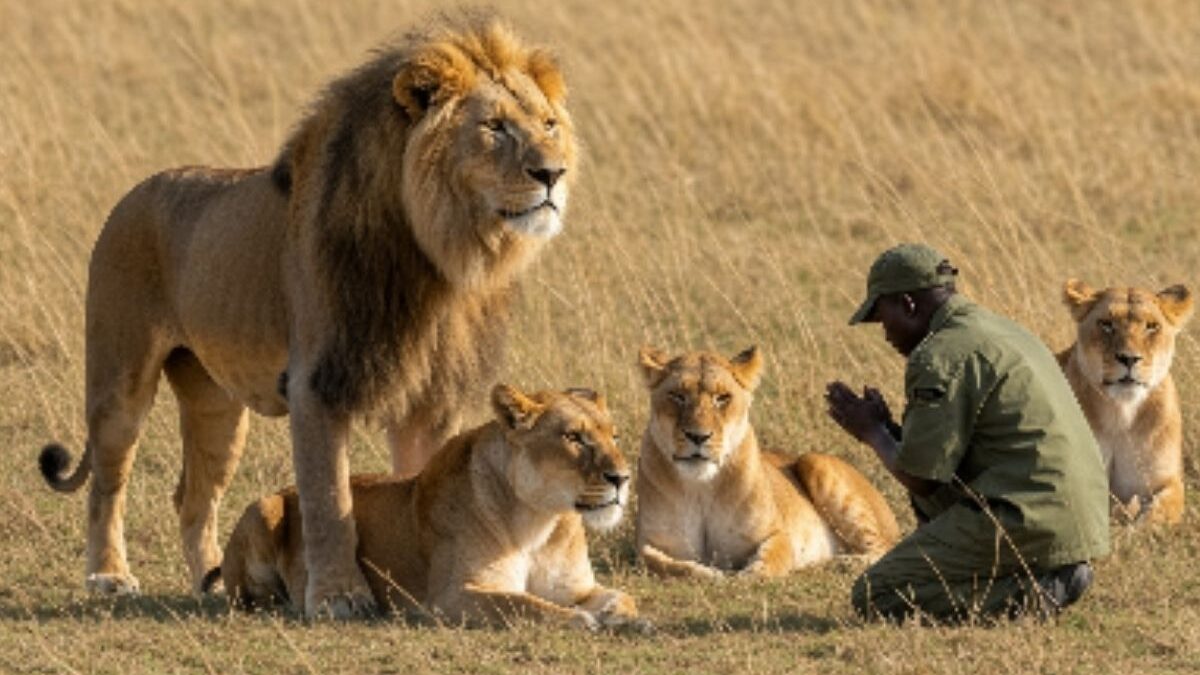
Sign the papers or I’ll tell the board you had a psychotic break after the miscarriage, Hannah—and you’ll never see a four-legged animal again.” I Stared at My Husband’s Smug Face, Swiped the Keys to the Sanctuary Truck, and Sped Into the Night Toward a Grieving Lioness Who Was About to Teach Us What True Motherhood Costs
Part 1: Bloodlines and Broken Vows
“Sign the damn papers, Hannah, or by tomorrow morning, I’ll have the county judge declare you legally incompetent.”
My husband, Dr. Richard Vance, stood over our dining table with his tailored charcoal sleeves rolled up, his Montblanc pen clicking with a rhythmic, sickening snap. Beside him sat my sister, Chloe. She wasn’t looking at the linoleum floor; she was looking at Richard’s silver wristwatch, wearing the vintage turquoise cardigan my mother had given me before she died.
“You’re out of your mind,” I whispered. My voice sounded thin, like dry prairie grass grinding against rock. “Red Mesa isn’t yours to sell. My grandfather built this reserve. The board answers to my family trust, not your suburban development partners.”
“Your family trust died when your grandfather’s will was contested two years ago,” Richard said, his tone dropping into that smooth, condescending baritone he used on wealthy donors and gullible board members. “And your grandfather isn’t here to watch you lose your mind. You haven’t slept inside this house in three weeks. You live in a truck parked by Sector Four, weeping over dirt mounds. You had a late-term miscarriage four months ago, Hannah, and instead of seeking psychiatric care, you’ve turned a twelve-thousand-acre sanctuary into your personal mausoleum.”
“Don’t talk about our daughter,” I choked out. The wound tore open behind my ribs, sharp and hot. “Don’t you dare bring her into this.”
Chloe finally looked up. Her eyes weren’t soft with sisterly sympathy; they were cold, sharp, and hungry. “He has to, Hannah. Look at yourself. You smell like diesel fuel and unwashed canvas. Richard is trying to save what’s left of our inheritance before you bankrupt the estate. A developer from Dallas offered forty-two million dollars for the northern sector. We can relocate the big cats to private ranches in Oklahoma—”
“To canned hunting ranches!” I shouted, slamming both palms down on the oak table. “You’re selling them to trophy butchers! You think I don’t know who Wayne Halloway is? I saw the wire transfers on Richard’s desk three days ago. That’s why you’ve been sleeping in my guest bedroom while I was running night patrols, Chloe. Did you think I was too broken to notice whose perfume was on my pillow?”
Chloe didn’t flinch. She simply crossed her legs and reached over, letting her manicured fingers rest casually on Richard’s forearm. The diamond on her hand was small, but the gesture was absolute ownership.
“You abandoned him, Hannah,” Chloe said softly, the cruelty effortless. “You buried that baby and you buried your marriage with it. You chose the predators over your own blood. Richard needs a woman who wants a future, not a widow mourning ghosts in the dust.”
Richard leaned down, placing both hands flat on the papers. “Sign over your voting proxy, Hannah. If you do, I’ll let you keep the southern compound. You can play ranger until the lease expires. If you don’t, I will walk into the board meeting at eight o’clock tomorrow morning with Dr. Morrison’s psychiatric evaluation. I will tell them you had a violent psychotic break after losing the baby. I will testify that you are an active safety hazard to the carnivores. You will be escorted off this property by Texas Rangers in handcuffs, and you will never touch an animal again.”
I stared at him. The man I had loved for seven years, the man who held my hand in the hospital room while the monitors went flat, had already priced out my grief per acre.
My heart wasn’t racing anymore. It had gone dead, still, and lethal.
“Give me the pen,” I said quietly.
Richard smiled, that triumphant, patronizing smirk, and slid the Montblanc toward me.
I picked up the heavy brass pen, looked him dead in the eye, and drove the steel nib straight into the center of his mahogany coaster, snapping the tip in half with a sharp crack. Before he could yell, I swept his briefcase, the legal papers, and his steaming mug of black coffee off the table. The hot liquid splashed across his designer trousers, and he screamed in shock, jumping back.
“You crazy bitch!” Richard roared.
I didn’t answer. I grabbed my leather field jacket, snatched the master key fob to the heavy-duty sanctuary patrol truck off the wall hook, and bolted through the side door into the dry, suffocating heat of the West Texas night.
“Hannah!” Chloe shrieked from the porch behind me. “If you drive out there, you’re never coming back!”
“Count on it!” I yelled into the darkness.
The heavy diesel engine of the Ford F-350 roared to life under my hands. I slammed the shifter into reverse, spun out across the gravel courtyard, and threw the truck forward. Headlights carved through the swirling dust, illuminating the iron gate that read: RED MESA CARNIVORE CONSERVATION SANCTUARY.
I had nowhere left to go. My marriage was dead. My sister was a stranger. My baby girl was buried beneath an oak tree on the ridge. The only truth left on this entire earth was out past the double-perimeter fence, out where the red dirt smelled like copper and wild sage, and where grief didn’t hide behind legal paperwork—it carried its teeth in the dark.
Part 2: The Scent of Milk and Stone
The lioness had already buried her own babies when she found the three leopard cubs.
I knew that before I ever saw her pick up the first one.
For almost two weeks after losing her litter, Sierra returned to the same rocky den every morning, smelled the empty bedding, and made soft calls into a place that would never answer her again.
I parked the patrol truck three hundred yards away, beneath the sparse shadow of a limestone bluff, cutting the engine so the ticking heat of the manifold was the only sound between us. Dawn was bleeding across the horizon, painting the dry scrub in shades of rust and bruised violet.
My name is Hannah Reed. I was the lead carnivore specialist at Red Mesa Wildlife Preserve in West Texas, a sprawling private conservation property where rescued African species lived in enormous natural-range habitats. Twelve thousand acres of rugged canyons, mesquite, and red limestone, engineered to give apex predators a life that resembled the wild they had been stolen from.
Sierra was one of our younger lionesses. Strong. Fast. Normally social. She possessed a coat the color of dried wheat and amber eyes that held an eerie, unblinking intelligence. But three weeks ago, after her three cubs died during a hyena attack in an adjacent open-range sector—a catastrophic fence breach during an unseasonal flash flood—something inside her shattered.
She still hunted with the pride. Still drank with them at the southern waterhole. Still slept nearby in the shade of the red bluffs. But she no longer touched the other lionesses when they rested together. She refused the affectionate head-rubs, the low guttural chuffs of greeting. When the dominant male approached her, she bared her teeth with such sudden, psychotic fury that even he backed away.
And her body was still producing milk.
Her heavy teats hung low, swollen and painful against her golden flank. That mattered later. That mattered more than any textbook on carnivore psychology could ever explain.
The passenger door creaked open. Marcus, my senior field tracker and the only man on this preserve who didn’t take orders from Richard, climbed in carrying two battered thermoses of chicory coffee. He smelled like tobacco, dust, and cedar shavings. His face was lined with sixty years of West Texas sun and decades of tracking big game across the Transvaal before he came to America.
“Heard the shouting all the way down at the motor pool,” Marcus said quietly, handing me a thermos. “Word is, Richard’s bringing the sheriff out here by noon.”
“Let him bring an army,” I said, my knuckles white against the steering wheel. “If he wants this land, he’s going to have to drag me off it in a body bag.”
Marcus took a slow sip, his eyes never leaving the binoculars resting on the dashboard. “Grief makes people do desperate things, Hannah. Makes men greedy. Makes women reckless.”
“And what does it do to them?” I pointed through the dusty windshield.
Out on the flat pan of the dry creek bed, Sierra was walking alone. She had separated from the pride again while the morning mist still clung to the gully.
“She’s searching,” Marcus murmured. “She knows they’re dead. She licked the blood off the rocks herself. But the biology doesn’t care about what the eyes saw. Her body thinks she’s a mother.”
At first, I thought she was returning to her old den—the deep limestone fissure where her cubs had been born. But two hundred yards short of the rocks, she stopped beside a dense cluster of thorn trees.
Her head snapped up. Her black-rimmed ears swiveled, pivoting forward like satellite dishes.
Through the cracked window, a sound drifted over the scrub.
It was tiny. High-pitched. A raspy, desperate rasp that carried an octave above the desert wind.
Not a lion cub. Lions call with a guttural, coughing squeak. This was sharper, thinner, like the tearing of wet paper.
Sierra moved toward it. Her gait changed instantly—no longer the heavy, plodding walk of depression, but the hyper-alert, fluid prowl of a hunting carnivore.
“Hannah,” Marcus said, his voice tightening. “Look under the deadfall.”
I raised my high-powered field binoculars, adjusting the focus ring until the heat shimmer vanished.
Beneath the lowest, thorny branches of a fallen acacia, huddled together in a trembling pile of spotted fur, were three leopard cubs.
They couldn’t have been more than three weeks old. Their blue eyes were cloudy, wide with terror and dehydration. Their ribs pressed sharply against their dappled hides, each breath a shuddering effort. The smallest of the three lay on its side, its tongue pale and dry, barely able to lift its blunt, spotted head off the dirt.
“God almighty,” Marcus whispered. “That’s Shaba’s litter.”
Shaba was an eight-year-old wild-caught female leopard who occupied the rugged northern rim. Twenty-four hours ago, our boundary team had found Shaba’s carcass caught in the razor-wire wash of Sector Nine after a vicious, fatal territorial fight with an intruding male. We had spent eighteen hours sweeping the rocks for her cubs, assuming they were hidden in the high crags. We hadn’t found them.
They had crawled downhill. Miles from their territory. Starving, blind with thirst, they had followed the scent of water until they collapsed in lion country.
And Sierra had found them.
My hand dropped instantly to the dashboard radio, my thumb hovering over the push-to-talk button to call the veterinary extraction team. “I need the dart rifle, Marcus. Get Dr. Kelly out here right now. If Sierra strikes, she’ll crush their skulls before we can cross the wash.”
“Wait,” Marcus said, his weathered hand clamping down firmly over my wrist.
“Wait? Marcus, you know the biology! Lions and leopards don’t co-exist. Lions kill leopards on sight. They kill their young to eliminate the competition. It’s hardwired into every strand of their DNA!”
“Look at her ears, Hannah,” Marcus said softly. “Look at her posture.”
I lifted the lenses back to my eyes.
Sierra had dropped her belly to the red dirt. She wasn’t stalking. Her tail wasn’t lashing with predatory intent; it was held low, limp, dragging behind her. She crawled forward inch by inch, her massive golden shoulders rising and falling in silence.
The smallest leopard cub—the one dying in the dirt—let out another weak, scratchy hiss. Smelling the overwhelming presence of an adult cat, the tiny creature didn’t know the difference between a spotted pelt and a golden one. It only knew the warmth of fur and the scent of living flesh.
With agonizing slowness, the dying cub dragged its front legs forward, crawling directly toward the four-hundred-pound lioness.
“Don’t,” I whispered aloud in the cab.
I didn’t know whether I meant Sierra or the cub.
The tiny spotted animal reached Sierra’s massive right forepaw. It collapsed against her heavy wrist, burying its blunt nose into the thick golden tuft between her claws.
Sierra went completely, terrifyingly still.
For five seconds, ten seconds, nothing moved in the Texas scrub. The wind died. The sun climbed higher, casting long, sharp shadows over the red rock.
Sierra lowered her massive jaw. Her nostrils flared, inhaling the scent.
She smelled leopard. She smelled foreign blood. She smelled an ancient enemy.
Then she smelled starvation. She smelled infancy. She smelled the milk that was curdling painfully inside her own heavy chest.
Slowly, her black lips pulled back—not into a snarl, but to taste the air with her Jacobson’s organ. Her eyes drifted shut for half a second. A low, vibrating hum began deep in her throat. It wasn’t a roar. It wasn’t a growl. It was the specific, maternal chuff that a lioness uses to call her young from the darkness of a cave.
Then, she opened her great jaws.
Her massive canines, capable of snapping a zebra’s spine in a single bite, closed around the back of the leopard cub’s neck.
I sucked in a sharp breath, expecting to hear the crunch of bone.
Instead, the cub dangled limp. Sierra adjusted her grip with exquisite, microscopic precision, gathering the loose scruff between her incisors. She lifted the cub cleanly off the dirt, turned her heavy body around, and began walking purposefully back toward the limestone rocks.
Marcus took off his hat, his weathered hand wiping a film of cold sweat from his forehead. “Well, I’ll be damned to hell.”
“She’s taking him to her nursery,” I breathed, my hands trembling against the binoculars. “She’s taking him to the dead cubs’ den.”
Part 3: The Sanctuary of Ghosts
We followed at a discreet distance, keeping the truck downwind behind the ridgeline.
Sierra reached the base of the limestone cliff. The den was a narrow, horizontal fracture in the rock, shielded from above by hanging wild grapevines and bordered by razor-sharp agave. It was cool, defensible, and haunted.
She disappeared inside. Less than two minutes later, she emerged without the cub.
She trotted back to the acacia tree. She didn’t hesitate. She picked up the second cub—a slightly larger female with vivid, dark rosettes—and carried her back to the rocks. Then she returned a third time for the last one.
When the third cub was safely inside, Sierra did not come back out.
“Grab the thermal scope,” I told Marcus, opening the truck door. “We need eyes inside that crevice.”
“Hannah, if Richard shows up—”
“Richard isn’t here yet!” I snapped. “And right now, there are three endangered leopard cubs in the jaws of an apex carnivore. Are you coming or not?”
Marcus grunted, grabbed his pack and the field monitor, and followed me as we scrambled on foot up the leeward side of the ridge. We kept low, sliding on our bellies over the warm sandstone until we reached an observation ledge fifteen yards above the den’s shadowed mouth.
I carefully set up the compact fiber-optic field camera, lowering the thin, flexible cable down through a narrow fissure in the rock ceiling that our maintenance crew had installed years ago for monitoring births.
The small black-and-white screen flickered, calibrated, and cleared.
Inside the subterranean chamber, the darkness gave way to soft gray tones. Sierra was lying on her side, stretched out across the bed of dried cedar mulch where her own dead litter had once slept. Her massive paws were curved protectively inward, forming a golden wall of muscle and bone.
The three leopard cubs were already moving.
Driven by pure instinct and the overwhelming warmth of her underbelly, they were blindly nuzzling into her flank. The smallest one, weak and shivering, bumped against her lowest teat.
Sierra lifted her heavy head. She looked down at the tiny, spotted intruder. Her ears twitched back. A flash of confusion seemed to cross her amber eyes. She lifted one heavy paw, her claws unsheathing slightly.
“She’s realizing,” Marcus whispered beside me, his breath hitching. “She’s smelling the difference.”
The tiny cub didn’t care about species. It opened its mouth and latched onto her teat.
A sharp, visible shudder ran through Sierra’s entire spine. Her eyes flared wide. Her hind leg twitched.
For three agonized seconds, she lay frozen as the warm milk began to flow, relieving the excruciating pressure that had built up in her mammary glands for fourteen days. The cub suckled frantically, its tiny paws kneading her golden belly with desperate, rhythmic strokes.
A second cub found a teat. Then the third.
Sierra’s head slowly sank back down onto the cedar mulch. The tension melted out of her shoulders. Her throat began to rumble with a deep, volcanic purr—a sound so heavy that we could feel the vibration through the limestone beneath our chests.
She reached down with her massive, raspy tongue. With sweeping, tender strokes, she began to lick the dried mud and cactus thorns from the smallest cub’s spotted back, smoothing down the fur with the absolute devotion of a mother who had been given a second chance at life.
“They’re nursing,” I said, a tear finally escaping my eye and tracing a clean path through the red dust on my cheek. “Marcus, look at them. They’re actually nursing.”
“It’s a miracle,” Marcus said quietly. “A biological impossibility. But Hannah… what happens when Samson catches wind of this?”
The question fell like a lead weight between us.
Samson was the undisputed ruler of the Red Mesa pride. A twelve-year-old Kalahari-strain male weighing four hundred and forty pounds, with a black mane that swept down his chest like a storm cloud. He was brutal, territorial, and completely intolerant of outsiders. Two years ago, when an adolescent male lion strayed into his territory from Sector Two, Samson had hunted him for three days before tearing his throat out against the boundary fence.
If Samson caught the scent of leopard cubs inside his core territory, he wouldn’t hesitate. He would crush their skulls in seconds. It was the law of the wild—unforgiving, sterile, and absolute.
“We have to protect them,” I said, my voice hardening.
“Hannah, we are biologists,” Marcus warned gently. “Our mandate is non-intervention within the natural-range sectors. If we pull those cubs, we have to raise them by hand in an incubator. They’ll be imprinted. They’ll spend the rest of their lives in concrete breeding pens. But if we leave them… Samson will kill them.”
“Not if Sierra stands in his way,” I said.
“Sierra weighs two hundred and eighty pounds,” Marcus said, looking at me with grim realism. “Samson is four-forty. If she fights him, he won’t just kill the cubs. He will kill her.”
Before I could answer, my radio crackled to life on my hip, shattering the silence of the ridge.
“Hannah? Hannah, do you copy?”
It was Dr. Kelly, the preserve’s chief veterinarian.
I snatched the radio. “Kelly, I’m here. Go ahead.”
“Hannah, get back to the main compound right now. Richard just showed up with two cruisers from the Pecos County Sheriff’s Department and an injunction signed by Judge Miller. They’re shutting down the power grids to Sector Four and Five to prepare for the transport trucks. They’re going to start darting the pride.”
Part 4: The Line in the Sand
“They’re doing what?!” I hissed into the radio, my voice trembling with cold fury.
“Richard told the sheriff you’ve suffered an emotional breakdown and that the sanctuary is operating without adequate veterinary oversight,” Kelly’s voice sounded rushed, breathless. “He brought in private contractors from a game capture outfit out of San Antonio. They’ve got flatbed trailers with steel crush cages parked outside the staging gate. Hannah, he’s going to sell the pride before the board can meet on Monday!”
“Kelly, listen to me,” I said, staring down into the den where Sierra was peacefully grooming her adopted litter. “Sierra has found Shaba’s leopard cubs. She’s adopted them. They are currently nursing in the Sector Four limestone crevice.”
There was a long, stunned silence on the other end of the radio.
“She what? That’s impossible.”
“It’s happening right in front of my eyes. If those contractors come in here with tranquilizer guns and heavy trucks, they will cause a stampede. Samson will go berserk, Sierra will abandon the den, and those cubs will be trampled or slaughtered. You have to stall them.”
“Hannah, I can’t stall the sheriff! He has a court order!”
“Tell them the gate locks are jammed! Tell them there’s a gas leak at the generator station! Do whatever you have to do, Kelly! Give me three hours!”
I clicked the radio off, my heart hammering against my ribs.
“Hannah,” Marcus said, his eyes scanning the horizon. “We’ve got a bigger problem right now.”
I looked up.
A mile to the south, across the golden expanse of the open savanna, the heat waves were shimmering violently. Moving through the tall, bleached grass were three distinct silhouettes.
Mara and Nala, the pride’s two adult hunting females, were walking shoulder to shoulder. And fifty yards behind them, moving with the slow, arrogant swagger of an apex king, was Samson.
His dark mane fluttered in the rising wind. His massive head was held low, his tail swinging in a slow, rhythmic arc. They were returning from the southern watering hole, heading directly toward the limestone ridge for their midday sleep.
“They’re coming,” Marcus whispered, chambering a round into his tranquilizer rifle with a heavy clack. “They’re heading straight for the den.”
My hands shook as I reached into my pack and pulled out the emergency flare gun and two canisters of bear-grade pepper fogger. It was laughably inadequate against four hundred pounds of Kalahari lion, but it was all I had.
Down in the den, Sierra suddenly stopped grooming.
Her ears flattened against her skull. Her head snapped toward the cave mouth.
A low, vibrating rumble rolled across the valley floor.
It was Samson. He wasn’t roaring; he was marking his approach with a territorial contact call—a heavy, resonant oomph-oomph-oomph that vibrated through the limestone ledges and made the dust shake loose from the rocks above our heads.
The three leopard cubs instantly froze, their tiny bodies shivering against Sierra’s belly. The smallest one whimpered, a thin, needle-sharp cry.
Sierra immediately stood up.
She didn’t hesitate. She stepped cleanly over the cubs, turned her back to them, and positioned herself directly in the narrow, shadowed entrance of the den. Her amber eyes, usually so calm and observant, burned with a wild, desperate ferocity I had never seen in her before.
“She’s not going to run,” I whispered, awe catching in my throat. “She’s going to defend that cave.”
“Hannah, if Samson attacks her in that crevice, she has nowhere to retreat,” Marcus said, raising his rifle to his shoulder. “I’ve got three darts of Carfentanil. If he makes a move to kill her, I’m taking the shot.”
“Carfentanil takes five to eight minutes to drop a male that size, Marcus,” I said, my voice dead and cold. “In five minutes, he can break her spine and eat those cubs alive.”
Down below, Mara reached the base of the rocks first.
The slender, muscular lioness trotted up the incline, expecting to find her sister ready to share the shade. She approached the cave mouth, her head tilted, letting out a soft, welcoming chuff.
Sierra didn’t chuff back.
She stood rigid, her front legs locked like iron pillars, her lips pulled tight over her gums.
Mara stopped three feet away. Her nostrils flared.
She smelled the milk. She smelled Sierra’s warm fur.
And then, she caught the scent drifting out from the cool darkness behind Sierra’s legs.
Leopard.
Mara’s entire body went rigid. Her tail whipped straight up into the air, the black tuft twitching furiously. She lowered her head, sniffing the dust where the cubs had crawled hours earlier. Her ears went flat, and a sudden, sharp hiss escaped her throat.
Mara tried to step around Sierra’s left flank, peering into the shadows.
Sierra instantly sidestepped, cutting her off with an aggressive shoulder check.
Mara recoiled, shocked. She let out an indignant growl, baring her teeth. What are you doing? Let me see.
Nala arrived a moment later. The two sisters circled the entrance like wolves, their noses glued to the ground, growing more agitated by the second. The scent of an enemy predator was an affront to everything they were programmed to protect.
Then, from deep within the rocks, the smallest leopard cub made a fatal mistake.
Terrified by the growling outside, it let out a shrill, piercing squeal.
Mara didn’t think. Instinct took over. Believing an enemy cub was trespassing in their core sanctuary, she lunged forward, her claws extended to tear into the cave.
Part 5: The Clash of Queens
Sierra didn’t give warning. She didn’t growl.
She exploded forward with a deafening roar that shook the very limestone we were lying on.
She collided with Mara mid-air, a whirlwind of gold and claws. The impact sounded like two wet sacks of concrete slamming together. Red dust erupted in a blinding cloud around the mouth of the den.
Mara struck out with her right paw, catching Sierra across the bridge of her nose, drawing a bright smear of crimson. But Sierra was fighting with the demented, unhinged fury of a mother defending her young. She ignored the blow, drove her forehead into Mara’s chest, and clamped her jaws around Mara’s throat scruff, forcing the older lioness down into the rocky shale.
Nala immediately rushed in from the flank, roaring in confusion and anger, trying to pull Sierra off her sister. Claws ripped through fur. Blood splattered across the pale rocks.
“They’re going to tear each other apart!” I yelled, bringing my radio up.
Before I could move, a sound ripped through the canyon that made all the air leave my lungs.
ROOOOAAARRRR.
It wasn’t a contact call. It was the full, earth-shattering territorial war cry of Samson.
The sound hit us like a physical shockwave. It resonated inside my chest cavity, rattling my teeth and turning my blood to ice.
Samson had charged up the talus slope at terrifying speed. For a four-hundred-pound animal, he moved with the sickening grace of a falling boulder. His black mane was flared wide around his massive neck, his amber eyes dilated into black pools of fury.
He didn’t care about the dispute. He cared about order.
Samson launched his massive bulk directly between the two fighting lionesses. With one casual, devastating swipe of his left paw, he caught Nala across the ribs, sending her tumbling ten feet down the scree slope in a cloud of gravel.
He turned on Mara, letting out a short, concussive bark that made the older female roll onto her back in immediate, terrified submission, exposing her throat and pulling her paws inward.
The fight was over in two seconds. The authority was absolute.
Both Mara and Nala scrambled backward down the slope, panting heavily, blood dripping from minor scratches, their tails tucked between their legs.
Sierra didn’t run.
She stood her ground. Her chest heaved, her flanks soaked in sweat and red dust. A thin line of blood trickled down her muzzle from the gash Mara had opened, dripping steadily onto the white stones between her paws.
She was bleeding. She was exhausted. She was outmatched by nearly two hundred pounds.
Yet she backed up exactly two inches, planting her rear feet firmly inside the mouth of the den.
Samson turned his massive, scarred head toward her.
He smelled the blood. He smelled the disruption. He walked toward Sierra with slow, measured steps, his tail twitching in rhythmic annoyance. He lowered his massive snout, sniffing her bloody face, demanding the submissive head-rub that every female in his pride owed him.
Sierra refused. She kept her head high, her amber eyes locked dead onto his.
Samson’s nostrils flared wider. He smelled her body.
He smelled the warm, fresh milk dripping from her teats.
And then, his heavy black nose dropped to the entrance of the cave.
He inhaled deeply.
The desert wind suddenly carried the distinct, unmistakable musk of leopard.
Samson’s entire posture changed. The lazy arrogance vanished, replaced instantly by the rigid, lethal tension of an executioner. His mane stood on end. His upper lip curled back, revealing four massive, yellowed canines stained with the grease of a hundred kills.
A low, guttural vibration started deep inside his chest—a sound so low it was felt rather than heard.
Inside the den, the cubs began to cry.
It was a frantic, terrified chorus of tiny squeaks.
Samson’s eyes shifted from Sierra’s face down to the darkness between her front paws.
“Sierra, don’t,” I whispered from the ledge above, tears burning my eyes. “Please, God, move. He’ll kill you.”
Samson took a heavy step forward, intending to shoulder her aside and enter the cave.
Sierra didn’t move aside.
She dropped her rear quarters, lowered her ears flat against her skull, and let out a feral, blood-curdling screech of defiance right into his face.
Samson roared back. The concussive blast of sound rattled the loose stones on our observation ledge.
He lunged.
His massive right shoulder slammed into Sierra, lifting her off her feet by sheer kinetic force. She struck at his face, her claws tearing through his black mane, scoring a deep bloody furrow along his cheek.
Samson retaliated with a brutal, hammer-like blow from his forepaw that caught Sierra square on the shoulder, knocking her hard against the rock wall of the entrance. She collapsed onto her side, dazed, gasping for breath as dust choked the air.
Samson didn’t follow up on the attack against her. His focus was on the threat inside the den.
He lowered his massive head. He pushed his enormous shoulders into the narrow limestone fissure.
Inside, three spotted cubs flattened themselves against the stone in absolute terror.
Samson raised one massive, scarred paw. His black claws slid out from their sheaths, each one curved like a steel meat hook.
“Take the shot, Marcus!” I screamed. “DART HIM!”
Marcus pulled the trigger. The pneumatic rifle hissed with a sharp pfft-thwack.
The red-tailed dart buried itself perfectly into Samson’s heavy hindquarter.
Samson flinched, snapping his head back at the sting, but the tranquilizer had no immediate effect. It would take seven minutes for the chemical to cross the blood-brain barrier.
Seven minutes was an eternity.
Samson turned back to the den, his fury redoubled. He reached his massive paw deep into the crevice, his claws sweeping toward the smallest cub, which was pinned against the rock, crying piteously.
And then, Sierra launched herself.
Part 6: The Weight of Motherhood
She didn’t fight him like a lioness fighting a mate. She fought him like a demon defending the gates of heaven.
Sierra threw her entire body between Samson’s massive bulk and the three tiny leopard cubs. She wedged herself backward into the narrowest part of the fissure, using her own spine and ribs as an impenetrable shield.
Samson’s claws tore into her back. Fur flew. Her blood sprayed against the pale limestone walls, steaming in the morning air.
Sierra screamed in agony, but she didn’t retreat an inch. Instead, she twisted her neck around and drove her teeth deep into Samson’s foreleg, biting straight through the thick tendon above his wrist.
Samson let out a roar of genuine pain. He tried to pull his leg back, but Sierra held on with locked jaws, her eyes rolled back in her head, her body trembling with absolute, manic devotion.
She was absorbing the punishment meant for babies that didn’t share a single drop of her blood.
She was taking the claws, the crushing weight, and the lethal fury of the king of the pride, all to buy another second of life for three orphaned leopards who had done nothing but seek the warmth of her milk.
“She’s dying for them!” I cried, scrambling to my feet on the ledge. “Marcus, she’s dying for them!”
“Hannah, stay back!” Marcus shouted, reaching for me.
I didn’t stay back.
I couldn’t.
I saw my dead baby girl in the darkness of that cave. I saw the empty nursery in my house. I saw the months I had spent lying on the cold linoleum, wishing that someone, anyone, would have fought for my child the way this lioness was fighting for hers.
I pulled the high-intensity marine flare gun from my belt, aimed it directly down into the scree five feet in front of Samson’s face, and pulled the trigger.
BANG.
A blinding, hissing ball of crimson phosphorus exploded against the limestone. White smoke billowed out, accompanied by an ear-splitting screech and temperatures exceeding two thousand degrees.
Samson roared in primal terror.
Lions fear fire above all things. The sudden detonation of light, heat, and sulfur right in his eyes shattered his predatory focus. He wrenched his bleeding leg free from Sierra’s jaws and stumbled backward out of the cave mouth, shaking his head violently, temporarily blinded by the magnesium glare.
At that exact moment, the Carfentanil finally hit his central nervous system.
Samson’s massive back legs buckled. His hips swayed erratically. He let out a confused, slurred growl, took two drunken steps down the talus slope, and collapsed heavily onto his side in the red dust, his breathing slowing to deep, rattling snores.
Fifty yards away, Mara and Nala saw their invincible king fall to the dirt. Terrified by the flare, the smoke, and Samson’s sudden collapse, both lionesses turned tail and bolted south into the dense mesquite brush.
Silence slammed down over the canyon like an iron door.
The red flare slowly burned out, leaving a smoking black scar on the rock.
Marcus dropped to his knees, gasping for air. “Hannah… Hannah, what did you do?”
I didn’t answer. I slid down the shale slope on the seat of my pants, tearing through my jeans and scraping the skin off my palms until I hit the flat ground outside the den.
“Sierra!” I cried, coughing through the white smoke. “Sierra!”
I dropped to my hands and knees and crawled to the mouth of the fissure.
Inside, Sierra lay slumped on her side.
Her golden coat was shredded along her back and shoulders. Deep, jagged lacerations poured blood onto the cedar mulch. Her breathing was shallow, rapid, and raspy. Her amber eyes were half-glazed, staring blankly at the stone wall.
Tucked tightly beneath her bleeding ribs, completely untouched by the violence, were the three leopard cubs.
The smallest one was covered in Sierra’s warm blood, but it was unhurt. It reached out its tiny, spotted paw and pressed it against her torn throat, letting out a soft, inquiring mew.
Sierra didn’t move. But as the cub cried, her raspy tongue weakly, agonizingly lifted from the dirt and licked the cub’s spotted forehead once. Twice.
Then her heavy head fell back against the stone, her eyes fluttering shut.
Part 7: The Confrontation
“She’s alive,” Marcus called out, his fingers pressed against Sierra’s femoral artery through the cave opening. “Pulse is rapid and thready. She’s going into hemorrhagic shock. We need IV fluids, antibiotics, and surgical staple kits right now.”
“Bring the truck down!” I ordered, pulling off my leather jacket and pressing it firmly against the deepest puncture wound on Sierra’s shoulder. She let out a faint, groaning breath, but she didn’t have the strength to fight me. She knew my scent. She had known it since she was a yearling.
Behind us, the sound of heavy diesel engines tore through the canyon.
Two white trucks with PECOS COUNTY SHERIFF emblazoned in gold on their doors crested the ridgeline, followed closely by Richard’s sleek black Land Rover and a massive flatbed commercial transport truck.
The convoy skidded to a halt in the dry wash fifty yards away.
Doors slammed. Men in tactical vests stepped out carrying Remington 870 shotguns and heavy capture poles.
Richard stepped out of the Land Rover, wearing pristine aviator sunglasses and a fresh pair of khaki field pants. Beside him, Sheriff Tom Bradley—a beefy, sun-baked man with a wide silver belt buckle and an unreadable expression—walked forward, his hand resting casually on his holstered service revolver.
“Hannah!” Richard yelled, his voice echoing off the canyon walls. “Step away from the carnivore and put your hands on your head! You are in violation of a direct court injunction!”
I didn’t move. I kept my bloody jacket pressed against Sierra’s torn flesh.
“Get the hell out of here, Richard!” I screamed back. “She’s bleeding out! I need a surgical kit, not your damn legal circus!”
Sheriff Bradley stepped up to the edge of the talus slope, his eyes darting to Samson’s unconscious, four-hundred-pound form sprawled in the dirt, then to the smoking flare cartridge, and finally to the cave where Sierra lay.
“Doc Vance,” Bradley said slowly, his Texas drawl thick as molasses, “you told me your wife was having a mental episode and wandering the brush. You didn’t tell me she had a four-hundred-pound Kalahari male tranquilized on the dirt and an active veterinary emergency.”
“She caused this!” Richard spat, his face flushing crimson with rage. “She discharged a firearm on sanctuary grounds! She illegally tranquilized preserve property! Tom, arrest her right now. My transport team will load the male, and we’ll put the female down if she’s too damaged to ship.”
Put the female down.
The words hit me like a slap across the face.
Marcus slowly stood up from the cave entrance. He didn’t raise his rifle, but he held it horizontally across his chest, his finger resting lightly along the trigger guard.
“You take one step closer to this den, Vance,” Marcus said in a voice that was dead, flat, and absolute, “and I’ll put a dart of Carfentanil through your carotid artery. You’ll be dead before your boots hit the caliche.”
“Is that a threat?!” Richard shouted, retreating behind the sheriff’s bulky frame. “Tom, shoot that man! He’s threatening me with a deadly weapon!”
Sheriff Bradley didn’t draw his gun. He looked at Marcus, whom he had known for twenty-five years. Then he looked down into the cave entrance.
His eyes widened behind his sunglasses.
“What in God’s name is that?” Bradley muttered.
Crawling out from beneath Sierra’s bleeding flank, blinking in the harsh Texas sunlight, was the smallest leopard cub. It was shivering, covered in dust and dried milk, its belly round, its spotted face lifting toward the men.
“That’s Shaba’s cub,” Bradley whispered. “The leopard that died on the north fence yesterday.”
“Yes,” I said, my voice shaking with raw, ragged emotion. “Sierra buried her own babies two weeks ago, Tom. She found these three cubs dying under an acacia this morning. She carried them here. She fed them. And when Samson came to slaughter them, she took the claws meant for them. Look at her!”
I pulled my bloody jacket away for half a second, showing the horrifying gouges along Sierra’s spine.
“She broke every rule of biology to save these babies,” I cried, tears streaming freely down my face. “She fought her own kind to give them life. And my husband wants to shoot her in the head so he can sell this canyon to a golf course developer!”
Sheriff Bradley stood perfectly still. The wind whipped through the brush, whistling softly against the rocks.
Richard stepped forward, his arrogance returning. “It doesn’t matter what the animal did, Tom! The court order gives me sole administrative authority over Red Mesa until the probate hearing! The animals are legal assets of the LLC! Now do your job and clear this scene!”
Bradley slowly turned his head and looked at Richard. The look was so cold, so full of pure West Texas disgust, that Richard actually took a step back.
“Vance,” Bradley said quietly, “my family’s been ranching this county since 1880. I know what a mother looks like. And I know what a snake looks like.”
“What did you say?” Richard gasped.
Bradley reached into his shirt pocket, pulled out the folded court injunction, and slowly, deliberately tore it in half.
“Judge Miller signed this based on your sworn affidavit that the carnivores were running loose and threatening county roads,” Bradley said, letting the shredded paper flutter into the red dirt. “Seems to me you lied on an official affidavit, Dr. Vance. In Pecos County, that’s perjury. That’s a felony.”
“You can’t do this!” Richard shrieked. “I will have your badge! I will call the governor!”
“You can call whoever you damn well please,” Bradley said, resting both hands on his utility belt. “From the back of my cruiser.”
Bradley nodded to his deputy. “Cuff him, Jesse. Take him down to the county jail in Fort Stockton. Book him on falsifying a police report and reckless endangerment.”
“Wait! No! Chloe, tell him!” Richard screamed, looking back toward the truck.
But Chloe hadn’t even gotten out of the vehicle. Through the tinted glass of the Land Rover, I could see my sister’s face. She looked at Richard being pushed against the hood of the patrol car. She looked at the handcuffs clicking around his wrists. And then, without a single word, she climbed into the driver’s seat of the Land Rover, threw it into reverse, spun the wheel, and sped away down the access road, leaving Richard to his fate.
The deputy slammed Richard into the back of the cruiser and drove off, the siren echoing hollowly through the empty hills.
Sheriff Bradley spat into the dirt, walked over to the back of his own truck, and pulled out a heavy first-aid trauma kit.
He walked up the slope and set it down at my feet.
“Get your cat fixed up, Hannah,” Bradley said softly. “I’ll call the state wildlife commission and tell them Red Mesa is under quarantine for an official investigation. Nobody touches this dirt for six months.”
Part 8: The Thread of Survival
The next seventy-two hours were a blur of sterile gauze, the smell of Betadine, and the relentless hum of the portable field generator.
We didn’t dare move Sierra to the clinic. The stress of transport would have killed her. We turned the mouth of the limestone cave into an open-air surgical theater.
Dr. Kelly worked on her knees in the red dirt for four straight hours, suturing shredded muscle tissue, closing puncture wounds, and administering five liters of Hartmann’s solution directly into Sierra’s jugular vein.
Through it all, the three leopard cubs were kept in a heated fleece crate three feet away. We tried to offer them kitten formula from a syringe, but they refused it. They hissed, spat, and huddled together, crying endlessly for the golden mother who lay motionless on the canvas tarp.
By the second night, Sierra’s fever spiked to 105 degrees.
I sat beside her in the dirt, wrapping her massive, feverish head in cold, wet towels, singing the same nonsense lullabies my mother used to sing to me when I was a sick child in this very valley.
“Don’t you dare give up,” I whispered into her scarred, black-rimmed ear. “You fought him. You won. You have to wake up, Sierra. They’re waiting for you.”
At 3:00 AM on the third morning, the desert wind died down. The stars over West Texas burned like brilliant ice chips against the black velvet sky.
Sierra’s breathing suddenly hitched.
Her massive chest rose. A deep, shuddering gasp filled her lungs.
Her golden eyelids fluttered open.
Her amber eyes were no longer cloudy with fever; they were clear, sharp, and focused. She looked directly at me. She didn’t growl. She didn’t pull away.
She let out a faint, raspy chuff.
I broke down. I buried my face in the clean fur of her uninjured flank, my shoulders shaking with sobs that had been locked inside my heart for months.
Across the cave, the crate shifted. The smallest leopard cub heard her voice.
It pushed its blunt nose through the mesh door, letting out a sharp, demanding cry.
Sierra’s ears instantly pivoted toward the sound. With agonizing, trembling effort, she pulled her front legs under her chest. She raised her head.
“Open the crate,” I told Kelly.
“Hannah, she’s still weak—”
“Open the crate.”
Kelly unlatched the wire door.
The three spotted cubs didn’t hesitate. They tumbled out onto the red dirt like spilled marbles, their tiny legs carrying them as fast as they could scramble straight toward the fallen queen.
They swarmed over her front paws. They clambered onto her bandaged chest. The smallest one crawled directly under her chin, burying its nose into the hollow of her throat.
Sierra lowered her heavy head. She curled her body inward, forming that same protective golden ring. With slow, rhythmic strokes of her massive, sandpapery tongue, she began to lick the tears from my fingers, and then turned her care to the spotted babies suckling greedily at her side.
Part 9: The Legacy of Red Mesa
Six months later, the legal war was over.
Richard took a plea deal for fraud and perjury, stripped of his medical license and ordered to pay restitution to the family estate. Chloe moved to Miami, a stranger whose name I no longer spoke.
With the backing of the Texas Historical and Conservation Trust, Red Mesa was placed into a permanent, inviolable wildlife sanctuary trust. The northern sector would never see a bulldozer. The canyons belonged to the shadows and the stone.
And out in Sector Four, something extraordinary was taking root.
We had built a reinforced, twenty-acre transition enclosure around the limestone ridge, keeping Samson and the other two lionesses in the southern range while Sierra healed. Samson’s leg had recovered from the bite, though he walked with a slight, permanent hitch in his stride—a constant reminder of the day a grieving mother defied his crown.
On a bright, crisp morning in late October, Marcus and I sat in the patrol truck on the high bluff, looking down through our binoculars.
Sierra was resting on a flat slab of red sandstone, her coat sleek, the jagged scars across her spine now hairless silver lines that shone in the sun like badges of honor.
Scrambling all over her were three half-grown leopards.
They were five months old now. Their rosettes were dark, rich, and sharp. They had the long, muscular tails and compact, low-slung frames of pure leopards, but their behavior was unlike anything modern biology had ever documented.
Leopards are solitary phantoms. They hunt alone. They hide in the canopies. They trust nothing.
Yet these three cubs lived like lions.
The male cub—whom we had named Leo—snuck up behind Sierra, his belly dragging through the grass, before leaping onto her massive tail. Sierra flicked her tail lazily, sending him tumbling head-over-heels into a clump of sagebrush.
Leo bounced back up, shook the dust from his ears, and ran headfirst into Sierra’s massive shoulder, rubbing his cheek against her scarred jaw while letting out a deep, rumbling purr that sounded part lion, part leopard.
Sierra reached out with her heavy forepaw, pulled the young leopard tightly against her chest, and began grooming his ears with rhythmic, maternal devotion.
“The scientific journal rejected our paper again,” Marcus remarked from the passenger seat, taking a slow sip of coffee. “Editor said cross-species adoption between wild-caught pantherines with long-term survival is an empirical impossibility. Said the photographs had to be staged.”
I lowered my binoculars and smiled. The wind caught my hair, smelling of sweet scrub oak, warm sandstone, and clean, uncorrupted earth.
The emptiness inside my chest was still there. It would always be there. You don’t fill the hole left by a lost child; you don’t pave it over with time or forget it with work.
You simply build a bigger world around it.
You look out at the red rock and you realize that grief is not an end. It is a terrifying, raw, and holy capacity to love. It is the fierce, roaring instinct that refuses to let the dark win.
Down on the rocks, Sierra stood up. She let out a low, resonant contact chuff.
The three young leopards instantly broke off their play, fell into formation beside her golden flank, and walked together down the canyon path—one queen and her spotted children, rewriting the laws of the wild with every single step they took across the Texas dirt.

