Orca Destroys Luxury Yacht and Attacks Family on September 10th, 2025
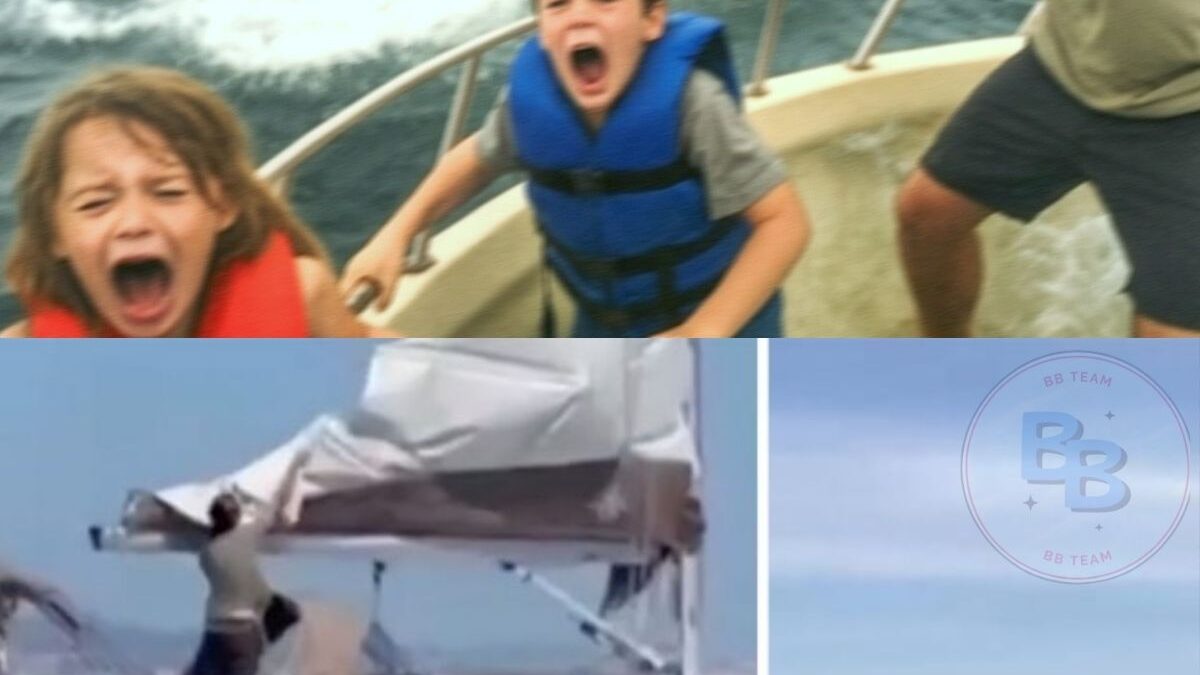
The ocean doesn’t want us here, Diego, it wants us dead!” – The Terrifying True Story of the Aurora Dreams, A Family’s Dream Vacation Turned Nightmare When A Pod of Vengeful Orcas Methodically Destroyed Their Luxury Yacht and Forced Them into a Desperate Fight for Survival in the Open Atlantic.
PART 1: The Boiling Point
“I didn’t ask for this, Diego! I asked for a weekend in Madrid, not to be trapped on a floating midlife crisis!”
Catalina’s voice cut through the salty Atlantic air, sharp enough to rival the wind whipping across the bow of the Aurora Dreams. Below deck, the hum of the twin diesel engines offered a steady, vibrating counterpoint to the escalating screaming match.
Diego gripped the polished mahogany of the ship’s wheel, his knuckles white, the muscles in his jaw ticking furiously. “Three years, Lina. Three years of seventy-hour weeks at the firm to buy this boat. For us. For the family.”
“What family?” she fired back, throwing her hands up toward the cloudless blue sky. She stumbled slightly as a gentle swell rolled beneath the 42-foot luxury yacht. “Sebastian hasn’t spoken a single word to either of us since we left Barcelona, and Isabella is downstairs crying because you confiscated her phone! You didn’t buy this boat for us, Diego. You bought it so you could play captain and pretend everything isn’t falling apart!”
The air on the aft deck was thick, suffocating despite the open ocean surrounding them off the coast of Sagres, Portugal. It was September 10th, 2025. The water where the Atlantic met the Mediterranean was supposed to be a playground, a place of pristine beauty. Instead, it had become a pressure cooker.
Up on the bow, seventeen-year-old Sebastian lay flat on his back, his headphones cranked to maximum volume, desperately trying to drown out the bitter sound of his parents’ decaying marriage. He hated this boat. He hated the forced proximity. Next to him, fifteen-year-old Isabella sat with her knees pulled to her chest, her eyes red and puffy, staring out at the endless expanse of deep, sapphire water.
“I’m trying to fix this!” Diego shouted, finally turning away from the helm to face his wife. The veins in his neck were bulging. “I am trying to keep us together! But you fight me every single step—”
“Because you don’t listen!” Catalina stepped closer, her eyes flashing with a mixture of exhaustion and profound grief. She was a marine biology professor; she understood the ocean, understood the currents and the depths, but she could no longer navigate her own husband. “We are drowning, Diego. Financially. Emotionally. And your solution was to drain our savings to buy a boat we can’t afford to maintain!”
Diego opened his mouth to unleash a devastating reply, his face flushed with dark, pulsing anger.
But the words never left his throat.
The impact hit them with the kinetic force of a freight train.
It wasn’t a scrape. It wasn’t a grounding. It was a violent, catastrophic collision that seemed to defy the laws of physics. The entire 42-foot yacht was violently shoved sideways, the deck pitching at a sickening forty-five-degree angle.
Catalina was thrown backward, her scream abruptly cut off as her shoulder slammed into the fiberglass bulkhead. Diego was ripped from the helm, tumbling hard down the steps into the lower cockpit.
Up on the bow, the violent lurch sent Sebastian rolling toward the unrailed edge. He scrambled wildly, his fingers digging into the teak decking, managing to hook his arm around a cleat just before he slid off into the churning wake. Isabella shrieked, sliding hard against the starboard rail, her small frame taking the brunt of the collision.
“What did you hit?!” Catalina screamed, scrambling to her knees, blood already welling from a gash above her eyebrow. “Diego, what the hell did you hit?!”
Diego dragged himself up, his head spinning, grabbing the wheel to stabilize himself. He looked out at the water ahead. Nothing. No reefs. No shipping containers. No rogue waves. The ocean was completely clear.
Then, he looked down over the side.
Rising from the dark, fathomless blue depths, directly parallel to the yacht, was a massive, unmistakable silhouette. It was sleek, impossibly large, and painted in stark, terrifying contrasts of jet black and bone white. A dorsal fin, taller than a grown man, sliced through the surface of the water with absolute, chilling silence.
It wasn’t just one.
To the port side, another fin breached. Then another off the stern.
“Orcas,” Catalina whispered, all the anger draining from her face, replaced instantly by the cold, paralyzing grip of raw terror. Her marine biology background kicked in, but her brain rejected the data. They were surrounded.
“Hold on!” Diego roared.
Before anyone could brace themselves, the lead bull—a colossal twenty-five-foot apex predator—accelerated with explosive, terrifying speed. It didn’t just bump the boat. It targeted the rudder. The animal slammed its massive head into the steering mechanism at the stern with a sickening, deafening CRACK.
The Aurora Dreams shuddered violently, the steering wheel spinning wildly out of Diego’s hands, snapping a bone in his wrist as the spokes caught his forearm.
The domestic dispute was dead. The fight for their marriage was over. Now, they were just meat on a sinking piece of plastic, thousands of miles from home, caught in the crosshairs of the ocean’s most intelligent killers.
PART 2: The Coordinated Assault
“Life jackets! Get the life jackets now!” Diego screamed, cradling his broken wrist against his chest. The pain was blinding, a hot spike driving up his forearm, but adrenaline was rapidly flooding his system, pushing the agony to the background.
The yacht was completely dead in the water. The brutal strike to the rudder had not only destroyed their ability to steer, but the sheer kinetic force of the twisting Orca had shattered the fiberglass housing around the steering column.
Down below, the horrifying sound of rushing water echoed up the companionway.
Catalina didn’t freeze. She scrambled toward the storage locker beneath the aft seating, her bloody hands ripping at the latch. “Sebastian! Isabella! Get down here! Get away from the rails!”
Sebastian was already moving, dragging his terrified sister by the back of her sweatshirt. The deck was slippery with sea spray and the yacht was rocking unnaturally, no longer cutting through the waves but bobbing helplessly at the mercy of the swells.
“Mom, what are they doing?!” Isabella cried hysterically as she tumbled into the cockpit, her knees bruised and bleeding. “Why are they hitting us?!”
“I don’t know, baby, just put this on, clip it tight!” Catalina shoved a bright orange vest into her daughter’s chest, her hands shaking so violently she could barely operate the plastic buckles.
In all her years teaching marine biology, lecturing in safe, dry auditoriums at the university, Catalina had taught that Orcinus orca rarely, if ever, showed unprovoked aggression toward humans in the wild. They were highly social, profoundly intelligent creatures with complex cultures and dialects.
But looking over the gunwale, she didn’t see intelligence. She saw coordinated, tactical warfare.
There were five of them. A pod. They were communicating, emitting high-pitched clicks and whistles that resonated through the hull of the yacht, vibrating up through the soles of Catalina’s shoes. It was a symphony of destruction.
BANG.
Another brutal impact, this time on the port side. The yacht listed heavily to starboard. Isabella screamed as a cabinet in the galley below burst open, sending glass plates shattering across the teak floorboards.
“They’re targeting the vulnerable points,” Catalina realized, horror dawning on her. “They aren’t just ramming us blind. They know exactly how to sink this boat.”
“I’m calling a Mayday!” Diego shouted, lunging into the cabin, wading into water that was already ankle-deep. He ripped the VHF radio from its cradle. “Mayday, Mayday, Mayday! This is the sailing vessel Aurora Dreams. We are under attack by marine wildlife. Taking on water. Coordinates…” He stared at the GPS display. The screen flickered, sparked, and died. The Orca’s assault on the stern had compromised the battery banks.
“Dead!” Diego yelled, throwing the useless radio aside. “The electrics are gone!”
“The bilge pumps aren’t running!” Sebastian yelled over the sound of rushing water. The teenager had shed his sullen, withdrawn demeanor entirely. His eyes were wide, taking in the chaotic scene. “Dad, the water is coming in too fast!”
Outside, the massive bull Orca breached the surface, its blowhole expelling a loud, percussive blast of mist that drifted over the deck, smelling of raw fish and ocean depths. It turned its massive body, locking a single, dark eye on Catalina. There was an unsettling calculation in that gaze.
Then, it dove.
Seconds later, a twin assault struck the hull from below. Two of the massive animals hit the underside of the yacht simultaneously. The sound of splintering fiberglass was deafening—a horrifying tearing noise that sounded like the very spine of the boat was being ripped out.
The Aurora Dreams groaned in agony. The deck buckled slightly. Water began pouring into the main cabin not in a trickle, but in a localized waterfall. The spiderweb cracks along the hull had given way entirely.
“We have to abandon ship!” Diego ordered, wading back out to the cockpit, the water now reaching his shins. “Sebastian, help me with the life raft! Now!”
PART 3: Blood in the Water
The life raft canister was mounted on the starboard rail. It weighed over a hundred pounds, and with Diego’s broken wrist, he was nearly useless.
“Pull the pin and shove it over!” Diego commanded, gritting his teeth in agony as he tried to use his good arm to leverage the heavy white canister.
Sebastian stepped up to the rail, his sneakers slipping on the wet deck. He grabbed the release pin, yanking it hard. The canister came loose. He leaned over the rail to push it into the water.
That was the mistake.
He leaned too far over the edge of the sinking vessel.
The water beside the yacht erupted. It wasn’t the bull this time; it was one of the younger females. She breached directly beside the rail, her massive black-and-white head surging out of the foam with the terrifying speed of a surface-to-air missile.
“Sebastian, move!” Catalina screamed, lunging forward.
She was a fraction of a second too late.
Without warning, the Orca’s jaws opened, revealing rows of thick, conical teeth. The animal clamped down laterally over the yacht’s railing, directly onto Sebastian’s left shoulder and upper arm.
The teenager didn’t even have time to scream before the sheer weight and momentum of the animal dragged him violently forward. The Orca didn’t try to pull him all the way into the water—the railing was in the way—but it hung there, suspended halfway out of the ocean, its jaws locked into the boy’s flesh, the weight of the two-ton animal pulling Sebastian horizontally over the edge.
“AGHHHHH!” Sebastian’s scream finally tore from his throat, a sound of absolute, inhuman agony that would haunt his parents’ nightmares for the rest of their lives. Blood immediately burst from the puncture wounds, staining his bright orange life jacket and splashing hot and bright red against the pristine white fiberglass of the yacht.
“NO!” Diego roared. He didn’t think. He didn’t calculate the odds. He grabbed a heavy aluminum boat hook from the deck rack, ignoring his shattered wrist, and charged the rail.
He swung the metal pole like a baseball bat, bringing the heavy, blunt hook-end down directly onto the sensitive skin around the Orca’s blowhole. SMACK.
The animal flinched, its body thrashing, but its jaws remained locked on the screaming boy.
“Pull him! Pull him back!” Catalina yelled, diving onto the deck, wrapping her arms around her son’s waist. Isabella, sobbing hysterically, threw her arms around her mother’s waist, creating a desperate human chain.
Diego struck the animal again, harder this time, aiming for the eye. SMACK. “Let him go! Let my son go!”
As if responding to some invisible, underwater signal from the rest of the pod, the Orca suddenly opened its jaws and slipped backward, sliding smoothly beneath the churning surface, taking a chunk of the boy’s life jacket and shirt with it.
Sebastian collapsed backward onto the deck, crushing his mother beneath him. He was hyperventilating, his eyes rolling back in his head. The left side of his body was a mangled mess of torn fabric, shredded neoprene, and deep, ragged puncture wounds that were bleeding profusely.
“Towels! Give me towels!” Catalina shrieked, pressing her bare hands directly into the open wounds on her son’s shoulder, trying to staunch the arterial bleeding. The hot, sticky blood welled up through her fingers instantly.
Isabella scrambled across the angled deck toward the cabin stairs to get the medical kit. The yacht gave another sickening lurch, dropping another foot into the ocean. The starboard rail was now mere inches from the water line.
As Isabella grabbed the doorframe to steady herself, another Orca approached from the yacht’s blind spot. It didn’t breach. It simply rammed the side of the hull right where Isabella was standing, hitting the fiberglass with the force of a swinging bank vault.
The impact bowed the fiberglass inward. The kinetic shockwave transferred directly into Isabella’s right leg.
There was a sharp, audible SNAP that echoed over the rushing water and the wind.
Isabella collapsed to the deck, a shrill, piercing shriek erupting from her lungs. She grabbed her right shin. Beneath the fabric of her jeans, the tibia had snapped completely in half, a compound fracture that pushed the bone against the skin at a grotesque, unnatural angle.
“Isa!” Diego yelled, dropping the boat hook and crawling toward his daughter.
They were bleeding. They were broken. And their boat was going down.
PART 4: Abandoning Ship
The Aurora Dreams was dying.
The stern was almost completely submerged, the ocean water bubbling violently around the twin diesel engines that were now dead underwater. Diesel fuel began to slick the surface, creating a rainbow sheen over the churning, chaotic waves. The smell was noxious, mixing with the metallic tang of Sebastian’s blood.
The life raft canister had tumbled into the water during the struggle with the Orca. It bobbed furiously in the waves, still tethered to the yacht by a thin nylon cord. With a sharp hiss, the CO2 cartridge triggered, and the bright yellow canopy of the raft inflated with a violent pop.
It was their only chance. But to get to it, they had to cross four feet of open water. Water that was currently occupied by five highly agitated apex predators.
“Listen to me!” Diego yelled, grabbing Catalina by the shoulders. His face was pale, his eyes wide with desperate focus. “We have to get in the raft! Now! Before the suction pulls us down with the boat!”
“They’re waiting for us, Diego!” Catalina sobbed, pressing a soaked red towel against Sebastian’s shoulder. The boy was conscious, but barely. His skin was the color of dirty snow, his lips tinged blue from shock. “Look at them!”
The Orcas hadn’t left. They were circling the inflating life raft, their massive dorsal fins cutting tight, methodical circles through the diesel-slicked water. They were vocalizing loudly now, the clicks and whistles audible even over the sound of the sinking yacht. It didn’t look like an animalistic feeding frenzy; it looked like a highly coordinated siege.
“We have no choice!” Diego shouted. He crawled over to Isabella, who was hyperventilating, her hands clamped over her eyes to block out the pain of her shattered leg. “Isa, baby, look at me. I have to pick you up. It’s going to hurt. I’m so sorry, but it’s going to hurt.”
“No, no, no, Papa, please,” she begged, shrinking away from him.
Diego didn’t hesitate. Ignoring his broken wrist, he slid his arms under his daughter and hoisted her up. Isabella let out a scream that shattered the remaining calm in Diego’s soul, her broken leg dangling horrifyingly as he carried her toward the edge of the sinking deck.
“Catalina, get Sebastian!” Diego commanded.
Catalina hauled her heavy, bleeding son to his feet. “Come on, baby. Stay with me. Walk for me, Seba. Come on.”
They gathered at the lowest point of the port side rail. The water was surging over the deck now, washing around their ankles, trying to pull them into the deep. The life raft was bobbing frantically just out of reach.
Diego held Isabella tight against his chest. He looked down at the dark water between the boat and the raft. A massive white patch ghosted just beneath the surface—one of the Orcas turning on its side to look up at them.
The ocean doesn’t want us here, it wants us dead, Diego thought.
“On three,” Diego said, his voice trembling. He looked at his wife. The anger from twenty minutes ago felt like a lifetime away, a foolish luxury of a safe world that no longer existed. “I love you, Lina.”
“I love you too,” she choked out, holding Sebastian upright.
“One. Two. THREE!”
Diego leaped across the gap, throwing his weight backward to ensure he landed on his back inside the rubber raft, protecting Isabella from the impact. They crashed into the soft, inflated floor of the raft, Isabella screaming again as the movement jolted her leg.
Before Diego could even sit up, Catalina practically threw Sebastian across the gap. Diego caught his son by the belt, hauling him over the rubber pontoon and dragging him into the center of the raft. Catalina jumped immediately after, landing hard on Diego’s legs.
“Cut the line!” Catalina screamed.
Diego fumbled in the emergency pocket of the raft, pulling out the small safety knife. He sawed frantically at the nylon tether connecting them to the yacht. With a sharp snap, the line severed.
They were free of the sinking vessel. But they were now sitting in a thin rubber balloon, directly in the center of the pod.
Suddenly, the floor of the life raft heaved violently upward.
Catalina shrieked as the entire raft was lifted nearly two feet out of the water from below. One of the Orcas had bumped them from underneath. It wasn’t a predatory strike, but an investigative nudge, testing the structural integrity of this new floating object.
The raft settled back into the water with a heavy splash.
“Don’t move,” Catalina whispered, her voice tight with absolute terror. “Nobody move. Nobody make a sound.”
They huddled together in the center of the raft, bathed in a puddle of seawater and Sebastian’s blood. Diego held Isabella’s head against his chest, covering her ears. Catalina rocked Sebastian, keeping the pressure on his shoulder.
Outside the thin rubber walls, they could hear the massive animals surfacing, exhaling heavily right next to the raft. A heavy thud struck the side pontoon. Then another.
They were waiting to die.
PART 5: The Santa Maria
Twenty minutes passed. The Aurora Dreams finally gave up her fight. With a violent, bubbling groan, the bow pointed straight up toward the sky before the yacht slipped beneath the surface, spiraling down into the cold, crushing depths of the Atlantic.
Only debris, seat cushions, and the heavy slick of diesel remained.
Inside the raft, the situation was turning critical. Sebastian was losing too much blood. His breathing was becoming shallow and rapid. Isabella had passed out from the pain of her broken leg, her head lolling listlessly against Diego’s chest.
“He’s cold, Diego,” Catalina whispered, tears streaming down her face, cutting tracks through the dried blood on her cheeks. “Seba is so cold.”
“Hold on,” Diego muttered, staring blankly at the bright yellow roof of the canopy. “Just hold on.”
Then, a new sound cut through the whistle of the wind and the splashing of the waves.
It was a low, rhythmic thrumming. The heavy, unmistakable chug of a large marine diesel engine.
Diego scrambled to the small viewing port of the life raft and unzipped the plastic window.
Less than a quarter-mile away, cutting aggressively through the swells, was a rusty, seventy-foot Portuguese fishing trawler. The name Santa Maria was painted in fading white letters across her dark blue bow.
“A boat!” Diego rasped, his voice cracking. He lunged for the emergency flare gun strapped to the side of the raft. His broken wrist screamed in protest, but he managed to load a red cartridge, shove the barrel out the window, and pull the trigger.
The flare shot into the sky with a sharp hiss, exploding into a brilliant red star that drifted slowly downward on a tiny parachute.
On the bridge of the Santa Maria, Captain Antonio Silva had already seen them. The grizzled, sixty-year-old fisherman had been monitoring the emergency frequencies when he caught the fragmented Mayday call before it cut out. He had seen the debris field.
But as he steered his heavy steel trawler toward the tiny yellow life raft, Silva saw something that made the blood run cold in his veins.
“Puta que pariu,” he muttered, grabbing his binoculars.
Surrounding the raft were five massive dorsal fins. Silva had fished these waters his entire life. He knew the Orca pods well. He respected them, and they generally ignored his trawlers. But he had never, in forty years at sea, seen them circle a survival craft like a pack of wolves cornering wounded prey.
“Full throttle!” Silva barked to his helmsman. “Get us right alongside them! Don’t let up on the engines!”
Silva knew that Orcas were highly sensitive to sound and vibration. A small fiberglass yacht was a toy to them. But a seventy-foot steel-hulled trawler churning the water with a massive brass propeller was a different beast entirely.
The Santa Maria bore down on the life raft, the heavy bow throwing up massive sheets of sea spray. The roaring noise of the engines was deafening.
As the trawler approached within fifty yards, Silva leaned over the bridge wing, watching the water intently. The noise and the sheer size of the fishing vessel did the trick. The massive bull Orca surfaced one last time, slapped its tail violently against the water in a display of frustration, and sounded, diving deep. The rest of the pod followed, melting away into the dark Atlantic shadows.
“Throw the lines!” Silva yelled to his deckhands.
Heavy ropes rained down over the life raft. Diego caught one with his good hand, wrapping it desperately around the raft’s securing ring.
“My son is bleeding out! My daughter’s leg is broken!” Diego screamed up at the bearded fishermen leaning over the rusted steel railing.
“We got you, amigo!” one of the deckhands shouted back. “Hold steady!”
The transfer was agonizing. The swells bashed the rubber raft against the unforgiving steel hull of the trawler. Two burly deckhands climbed down a cargo net, reaching into the raft. They took Isabella first, strapping her into a rigid stokes basket and hauling her up to the deck.
Next was Sebastian. The boy was completely unresponsive now. The fishermen had to physically drag him out of his mother’s arms, hoisting his limp, blood-soaked body up the side of the ship.
When Diego and Catalina finally collapsed onto the fish-smelling, rusted steel deck of the Santa Maria, they didn’t speak. They didn’t move. Catalina simply crawled over to where the crew was frantically packing gauze into Sebastian’s shoulder, laid her head on her son’s uninjured chest, and wept with a sound that tore at the hearts of every hardened fisherman on board.
Diego sat slumped against a winch, cradling his broken wrist. He looked out over the railing, staring at the empty yellow life raft bobbing in the distance.
The ocean was calm again. Beautiful. Indifferent.
PART 6: The Scars We Carry (Three Years Later)
The waiting room at the Hospital de Faro had smelled of strong bleach and stale coffee. Diego remembered that smell vividly, even now, sitting on the back porch of their home in the hills overlooking Barcelona, three years later.
It was September 10th, 2028. The anniversary.
Inside the house, he could hear the faint sound of the television. Catalina was in the kitchen, chopping vegetables for dinner. The rhythmic thwack, thwack, thwack of the knife on the cutting board was comforting, domestic. A world away from the splintering of fiberglass.
The sliding glass door opened, and Sebastian stepped out onto the patio. He was twenty now, a university student studying architecture, ironically following in his father’s footsteps.
Sebastian handed his father a cold beer. As he reached out, the short sleeve of his polo shirt rode up, revealing the thick, angry network of keloid scars covering his left shoulder and bicep. The tissue was mangled, a permanent, physical map of the day the ocean tried to claim him. The surgeons in Portugal had saved his arm, but he had lost 30% of his muscle mass in that shoulder.
“Thanks, Seba,” Diego said, taking the bottle.
Sebastian nodded, leaning against the wooden railing, looking out over the city. He didn’t look at the Mediterranean Sea shimmering in the distance. He never looked at the ocean anymore. None of them did.
“Isa’s physical therapist called,” Sebastian said casually. “Said she’s cleared to start running again next week. Real running, not just the underwater treadmill.”
“That’s good,” Diego smiled softly. Isabella had endured four surgeries to rebuild her shattered tibia. She walked with a permanent slight limp, a heavy titanium rod anchoring the bone together, but her spirit hadn’t broken. She was tougher than any of them.
The attack had broken them all down to their absolute foundational elements.
In the immediate aftermath, lying in adjoining hospital beds in Portugal, Diego had expected Catalina to hand him divorce papers. He had expected her to blame him. He had bought the boat. He had forced the trip.
But trauma has a strange way of burning away the superficial rot of a relationship, leaving only the load-bearing pillars behind. When Catalina had looked at him across that hospital room, watching him feed ice chips to their mutilated son with his one good hand, the anger was gone.
They had faced the purest form of indiscriminate malice nature had to offer, and they had survived it together. The petty arguments about finances and work hours felt entirely insignificant when weighed against the memory of a twenty-five-foot killer whale trying to drag their child into the abyss.
Diego had sold the mooring rights. He collected the insurance money on the Aurora Dreams and put it straight into a trust for the kids’ medical bills and education. He stopped working seventy-hour weeks. He started coming home at five.
Catalina stepped out onto the patio, wiping her hands on a dish towel. She walked over and stood behind Diego’s chair, resting her hands on his shoulders. He reached up, his wrist popping slightly—arthritis had settled into the poorly healed break—and covered her hand with his.
“Dinner’s almost ready,” she said softly.
“Mom,” Sebastian said, finally turning to face them. “I was reading an article today. About the pods off the Iberian coast.”
Catalina tensed slightly. She still taught marine biology, but her lectures on Orcas had changed drastically. She no longer spoke of them as gentle giants. She spoke of them with the cold, hard respect one gives to a rival nation.
“What did it say?” she asked cautiously.
“They’re still doing it,” Sebastian said, his voice flat, devoid of emotion. “They sunk a French catamaran last week near Gibraltar. Ripped the rudders clean off, just like ours. The researchers still don’t know why. They think it’s a learned behavior. A game, maybe. Or revenge for a boat strike years ago.”
Diego took a slow sip of his beer, feeling the cold liquid wash down his throat. He looked at the scars on his son’s arm, then up at the clear blue sky.
“It doesn’t matter why they do it, Seba,” Diego said quietly. “They are the kings of that world. We were just trespassers.”
Sebastian nodded slowly, rubbing his scarred shoulder absentmindedly. “Yeah. Trespassers.”
They stood there in silence as the sun began to set over Barcelona, painting the sky in violent shades of orange and blood red. They were safe on the high ground, anchored to the earth, miles away from the deep, dark water where the monsters still swam, waiting for the next fragile vessel to cross their path.
The Martinez family had learned the ultimate lesson of the natural world: The ocean owes you nothing, and it can take everything. And they would never, ever go back.

