Orca Destroys $2M Yacht and Attacks Family on April 3rd, 2025
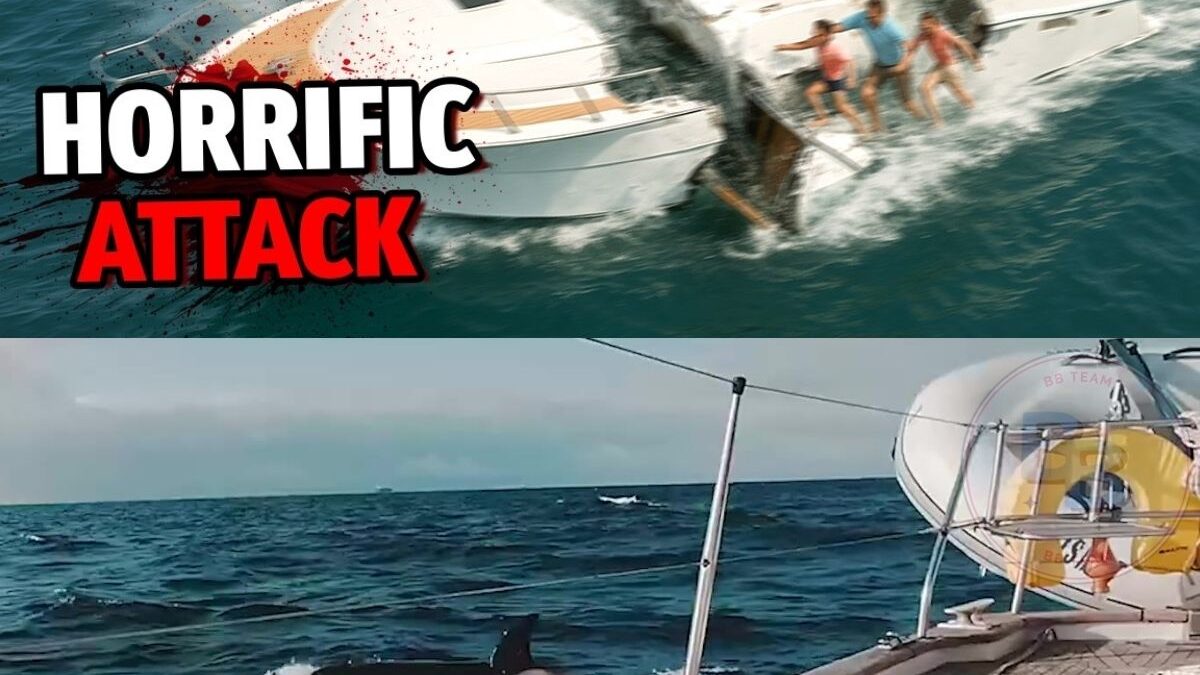
The vast expanses of the open sea command both profound wonder and primal terror. Across centuries of maritime lore, apex predators have ruled the shifting depths with lethal grace. When humans venture across the boundary of that blue frontier, nature occasionally reveals its sheer, unyielding dominion.
On the third of April, 2025, the ocean waters off the southern tip of the African continent appeared deceptively glasslike. Vadim Petrov, an accomplished entrepreneur from Moscow, stood at the polished helm of his luxury motor yacht. Beside him was his wife, Alina, and their twelve-year-old son, Nikolai, gazing across the sparkling horizons.
The family had spent the previous six months preparing for a private circumnavigation of the African coastline. Their magnificent vessel, christened the Volga Princess, was valued at over two million dollars and boasted state-of-the-art navigation. Having departed Cape Town three days prior, the vessel was tracking smoothly roughly fifteen nautical miles offshore.
Nikolai adjusted his binoculars, eager to spot any signs of local marine life moving along the current lines. His mother stepped toward the starboard railing, holding a thermal mug while enjoying the cool offshore breeze. The rhythmic hum of twin marine diesel engines provided a steady, reassuring backdrop to an otherwise silent afternoon.
A shimmering disturbance broke the surface approximately three hundred yards away, cutting through the swell. Vadim glanced toward the dark shape, initially assuming it was a playful bottle-nosed dolphin tracking their wake. Alina called out softly to her son, gesturing toward the gleaming dorsal fin rising gracefully into the sunlight.
“Look over there, Nikolai,” she said.
“Could that be a pilot whale or something else?” Nikolai asked, pressing forward against the polished steel railing.
“Let me grab the high-zoom camera from the salon,” Vadim said, stepping quickly away from the controls.
When the animal breached fully into the crisp sea air, its striking black and white coloration became unmistakably clear. It was not a harmless dolphin, but an enormous apex orca, measuring well over twenty-two feet in length. Its towering black dorsal fin sliced the ocean surface like a sharpened scythe, leaving a foaming trail behind.
Rather than diving or veering away, the massive creature altered its trajectory and aimed squarely for the vessel. Neither Vadim nor Alina had ever witnessed an orca displaying purposeful aggression toward a motorized recreational craft. Before Vadim could process the shifting situation, the multi-ton predator plunged below the waterline at terrifying velocity.
A deafening shudder tore through the stern as the animal rammed directly into the yacht’s submerged twin rudders. Ceramic dishware in the lower galley shattered onto the hardwood floors with an almighty crash of breaking porcelain. The entire sixty-foot yacht pitched violently upward, throwing the Petrov family off their feet across the wet deck.
“Hold on to the handrails!” Vadim shouted, struggling to maintain his balance on the slanting deck floor.
Before anyone could regain their footing, a second, previously unseen orca struck the vessel’s starboard flank. The devastating secondary impact buckled the lower fiberglass hull and launched Alina and young Nikolai over the railing. In a horrifying instant, mother and child plunged into the frigid, churning fifty-five-degree Atlantic water below.
Vadim screamed their names in absolute panic as the yacht drifted rapidly away on its damaged rudder assembly. Snatching two neon-orange life vests from the bulkhead locker, he leapt blindly into the freezing, turbulent ocean. The frigid brine hit his skin like a thousand needles, immediately constricting his breathing and sapping his energy.
Kicking through the swell, Vadim reached Nikolai first, wrestling the buoyant vest around his shivering shoulders. His son coughed violently, spitting out salty spray while pointing trembling fingers toward the open water. Twenty yards away, Alina was desperately treading water as a towering dorsal fin cut a circle around her.
“Keep your head up, Alina!” Vadim roared, cutting through the swells with all the strength left in his body.
“Stay back, it’s right underneath me!” she cried, her voice choked with sheer panic and freezing seawater.
The enormous bull orca swept past her at astonishing speed, its abrasive hide scraping along her bare legs. The blunt impact forced Alina beneath the surface, leaving a trail of bright crimson blood in the churning water. When she broke the surface gasping for breath, the surrounding sea was stained with a dark, terrifying plume.
Vadim lunged forward and secured the remaining vest beneath her arms, his heart pounding violently in his chest. The Volga Princess drifted nearby, but attempting to scale the swim ladder seemed suicidal with active predators circling. Instead, Vadim turned toward the yacht’s semi-rigid rescue dinghy, which had broken partially free during the impact.
With agonizing effort, Vadim hoisted his injured wife over the rubber pontoons and shoved Nikolai aboard the dinghy. He hauled his own exhausted frame over the gunwale, collapsing onto the aluminum floor beside his sobbing family. Alina groaned in severe pain, her legs mapped with deep, lacerated contusions caused by the whale’s sandpaper-like skin.
Vadim tore open the dinghy’s waterproof emergency kit and began binding her open wounds with sterile compresses. Nikolai, showing composure beyond his twelve years, activated the distress beacon, transmitting their precise GPS coordinates. For the next three agonizing hours, the family drifted helplessly while watching the pod dismantle their flagship yacht.
The massive whales repeatedly rammed the yacht’s structural bulkheads until the multi-million-dollar hull groaned in structural failure. Vadim maintained static-filled radio communication with Cape Town Maritime Rescue, reporting their deteriorating situation every quarter hour. As the late afternoon sun sank below the western horizon, the attacking pod finally vanished into the ocean deep.
A high-speed coastal rescue cutter arrived precisely as twilight cast deep shadows across the restless Atlantic waters. Trained medics quickly transferred Alina into a heated cabin, administering intravenous fluids and stabilizing her lacerated legs. Though scarred for life and requiring dozens of stitches, doctors confirmed she had sustained no permanent muscular or nerve disability.
The Volga Princess was eventually towed back to harbor, but maritime surveyors declared the hull completely unsalvageable. Six months later, Vadim Petrov published a thoughtful narrative reflecting on humanity’s fragile relationship with marine ecosystems. His son Nikolai dedicated his subsequent schooling to cetacean behavioral science, determined to uncover why the ocean turned wild.
Far down the South African coastline, the waters around Cape Town hold another realm of raw predatory majesty. In August 2017, a rare coastal upwelling had pushed vast plumes of nutrient-rich cold water toward the shallows. The phenomenon brought thousands of pelagic species within reach of underwater photographers and technical diving enthusiasts.
Among them was Clare Hargrove, a twenty-nine-year-old professional marine photographer hailing from the sunny shores of Brisbane, Australia. She had spent seven years capturing high-end imagery for international nature publications and scientific conservation journals. Her primary goal in South Africa was documenting the nocturnal fauna encrusting the sunken wreck of the Thermopylae Sierra.
The steamship had wrecked in 1991, leaving its colossal steel ribs lying sixty-five feet below the surging ocean surface. Local diving expedition leader Thabo Beki assembled a select party of six highly experienced, rescue-certified open-water divers. The roster included Swedish biologist Sven Lindberg, an American divemaster named Mackenzie, and two South African maritime veterans.
During the pre-dive briefing, Thabo checked every diver’s primary torch, secondary backup light, and high-intensity tank markers. The group adjusted their heavy drysuits against the biting water temperatures, ensuring their buoyancy control devices operated smoothly. Thabo warned the divers that unusual upwellings could alter the regular feeding habits of local apex species.
“Keep a tight formation around the stern,” Thabo instructed, tapping his dive slate with a waterproof marker.
“Visibility is moderate, so do not let yourselves drift behind the wreck,” he added firmly.
“Understood, my focus is strictly macro shots on the iron plating,” Clare replied with a confident smile.
The six divers plunged into the ink-black ocean at precisely eight-thirty in the evening, descending into silent darkness. Their torch beams cut amber tunnels through the murky water, illuminating swarms of tiny bioluminescent crustaceans drifting past. Clare floated effortlessly alongside the encrusted hull, framing stunning colonies of soft corals blooming in the dark.
At approximately nine-fifteen, the dive computer on Clare’s wrist registered forty-two minutes of total immersion time. The main cluster of divers pivoted slowly toward the broken stern section where the ship’s giant propeller lay half-buried. Fascinated by an unusual school of nocturnal fish hovering near an open hatchway, Clare paused for three additional frames.
That momentary hesitation placed her roughly fifteen feet behind the tail-end diver, isolated within the dark ocean expanse. Out of the black abyss beyond her lamp’s reach, an eleven-foot juvenile great white shark charged with terrifying velocity. Drawn perhaps by the rhythmic flash of her camera strobes, the predator struck before Clare could detect a single shadow.
The animal’s triangular serrated teeth locked around her right leg immediately beneath the knee joint with bone-jarring force. The kinetic energy spun Clare sideways through the dark water, instantly tearing her primary torch from her left hand. The dropped light tumbled through the depths, casting wild, disorienting arcs of illumination across the rusted metal hull.
Witnessing the chaotic light dance, Thabo immediately signaled the team to converge into an intimidating, unified defensive clump. Down in the dark, Clare’s instinctual survival training overrode the initial waves of blinding, paralyzing trauma. Instead of flailing her arms, which would stimulate feeding drives, she reached down toward her calf-mounted steel dive knife.
Gripping the rubber handle, Clare jammed the blunt pommel repeatedly into the soft sensory pores on the shark’s snout. Startled by the violent resistance and surrounded by approaching divers wielding blinding lights, the great white suddenly disengaged. The predator flicked its powerful tail and dissolved into the surrounding void as quickly as it had first materialized.
Sven Lindberg reached Clare’s trembling body within seconds, clamping both hands around her torn leg to restrict arterial bleeding. Thabo managed the emergency ascent profile, calculating decompression stops to prevent crippling gas embolisms from ruining their lives. At the surface, the dive tender had already spotted the erratic rising bubbles and prepared the medical winch.
They hauled Clare over the transom where Captain Hendrick Ba applied a tactical combat tourniquet within thirty seconds. The dive vessel pushed its throttles wide open, racing back to the port of Cape Town through chop and spray. Surgeons labored across five agonizing hours in the trauma bay, delicately revascularizing severed tissue and repairing damaged ligaments.
Miraculously, the shark’s razored teeth had missed her femoral artery by merely three millimeters, sparing her from bleeding to death. Nearly a year of arduous, painful physical rehabilitation followed, yet Clare refused to harbor hatred toward the ocean. She launched a photographic series titled Misunderstood Predators, educating the global diving community on apex conservation and coexistence.
Tragically, not every encounter between man and great white shark in South African waters concludes with a miraculous rescue. In November 2010, the coastal paradise of False Bay experienced an unprecedented heatwave during the early summer season. Water temperatures jumped toward seventy degrees Fahrenheit, attracting thousands of vacationers to the pristine shores of Muizenberg Beach.
False Bay is famous throughout the international scientific community as a global epicenter for large adult white sharks. Just miles offshore lies Seal Island, where tens of thousands of Cape fur seals congregate along granite boulders. To mitigate human-wildlife conflict, local coastal councils had implemented the renowned, highly trained Shark Spotters surveillance program.
Among the regular surf enthusiasts was Brian Thaxton Walker, a forty-one-year-old American digital marketing specialist from Boston. Brian had made Cape Town his permanent home five years earlier, drawn by the vibrant community and world-class waves. He was an accomplished, admired bodyboarder who frequently volunteered his mornings to teach ocean awareness to neighborhood youths.
On the morning of November twelfth, Brian arrived at Muizenberg Beach carrying his favorite polyethylene high-performance bodyboard. High atop the coastal mountain cliffs, spotting towers monitored the bay with binoculars, flying the green visibility flag. Brian waved cheerfully to local instructor Thembisa and an Australian surf tourist named Lachlan McGregor sitting on the sand.
“Looks like clean four-foot peelers out by the reef,” Lachlan said, adjusting his board leash around his ankle.
“The swell angle is perfect this morning,” Brian said, zipping up his lightweight spring suit.
“Enjoy the session, guys, I’ll join you in the lineup shortly,” Thembisa called out as they walked toward the breakers.
Brian paddled smoothly through the whitewash, comfortably clearing the outer sandbars and positioning himself in the deeper takeoff zone. He caught three spectacular left-hand peeling waves over the course of forty minutes, returning each time with a bright grin. Eventually, he paddled approximately one hundred yards out to sea, waiting patiently for the morning’s largest unbroken swell.
Sitting forty yards inside the lineup, Lachlan McGregor looked out to sea and froze in absolute, icy dread. Beneath the translucent surface, a monstrous dark shape moving at staggering speed appeared directly behind Brian’s stationary board. Before Lachlan’s lungs could draw sufficient breath to scream an alarm, the fifteen-foot great white shark detonated upward.
The initial impact erupted with the acoustic force of a gunshot, catapulting Brian and his bodyboard clean out of the water. Brian uttered a brief, terrible cry before splashing heavily back down into a frothing cauldron of crimson sea foam. The shark’s enormous crescent caudal fin breached the surface, thrashing violently as the apex predator pulled Brian into the deep.
Thembisa immediately paddled hard toward shore, shouting frantically for the lifeguard towers to raise the coastal alarm. Displaying unimaginable courage, Lachlan and two South African surfers turned their boards and paddled straight toward the blood-stained maelstrom. When they reached the coordinates of the strike, the ocean surface had fallen eerily, terribly calm under the morning sun.
All that remained of Brian Walker was the severed front section of his board, floating motionless in the red slick. A sixteen-inch curved bite radius was sheared clean through the dense synthetic foam core, matching a monstrous set of jaws. The beach spotters frantically hauled down the green flag and hoisted the black shark warning banner, sounding mechanical air horns.
Rescue vessels and an emergency helicopter scoured every square mile of False Bay throughout the remainder of that tragic day. Divers searched underwater ravines along the rocky points, but Brian’s physical remains were never recovered from the deep. Forensic biologists deduced the incident was a classic investigative ambush strike, where catastrophic initial trauma proved immediately fatal.
One week following the tragedy, more than two hundred surfers paddled past the Muizenberg surf line in unified remembrance. They joined hands in a massive traditional floating memorial circle, scattering native South African flowers upon the rolling swell. Brian’s sister Melissa traveled from Boston to establish the Brian Walker Ocean Safety Foundation, supporting non-lethal acoustic detection systems.
Thousands of miles across the Pacific, the azure waters along the Baja California peninsula tell a parallel tale of survival. In the summer of 2017, twenty-five-year-old free-diver Alex Torres arrived in Mexico alongside three of his closest childhood companions. Alex was an accomplished spearfisherman, capable of holding his breath for over three minutes while hunting giant pelagic species.
The group rented a charter boat out of Cabo, searching for migrating yellowfin tuna feeding along offshore drop-offs. The mid-afternoon sun burned brilliantly in a cloudless sky, casting intricate spiderwebs of golden light across the ocean floor. Alex adjusted his low-volume mask, loaded the rubber bands of his custom wooden speargun, and plunged into the sea.
Descending quietly to thirty feet, he relaxed his heart rate, blending his silhouette into the endless sapphire blue around him. A sleek fifty-pound yellowfin tuna materialized on the periphery of his vision, cruising comfortably within his effective shooting range. Alex took careful aim behind the gill plate, squeezed the trigger, and released the shaft with surgical underwater precision.
The tuna thrashed wildly on the shooting line before collapsing into stillness as Alex reeled the tethered fish closer. As he began his rhythmic ascent to the waiting boat, a sudden, violent disturbance agitated the surrounding water column. A ten-foot shortfin mako shark, the fastest apex hunter in the ocean, charged upward from the unseen depths below.
Makos are known for their ferocious speed, possessing needle-like recurved teeth designed to impale slippery, fast-moving pelagic prey. Drawn by the vibrational shockwaves and scent of the bleeding tuna, the predator targeted the closest large object. Before Alex could position his discharged speargun to create a defensive barrier, the mako smashed into his upper torso.
Its razor-sharp jaws clamped down over his left shoulder with bone-cracking pressure, tearing through dense neoprene and flesh. A blinding, fiery agony exploded through Alex’s consciousness as the shark shook its head violently, dragging him backward through water. The deep blue sea turned opaque and red, his blood mingling with that of the tuna in an expanding cloud.
“Don’t freeze,” Alex told himself within the suffocating confines of his own mind, fighting the overwhelming urge to panic.
“If you give up right now, you will never see the sky again,” his thoughts screamed amidst the deafening underwater silence.
His lungs were burning for oxygen, his body starving for air after the prolonged breath-hold dive. Clutching the trailing metal spear shaft with his free right arm, he drove the pointed stainless-steel tip into the shark’s gill slits. The sensitive gills flared open, and the mako released its crushing grip, recoiling from the unexpected mechanical retaliation.
Breaking free from the predator’s jaws, Alex kicked frantically toward the shimmering ceiling of the Pacific with fading strength. Behind him, the silhouette of the mako banked sharply, turning back to line up a second, fatal pass. Alex breached the surface gasping desperately, his vision tunneling into blackness as his friend Diego screamed from the boat.
“Grab the ladder, Alex! Give me your arm!” Diego screamed, leaning precariously over the aluminum transom.
“Shark! Lift him out now!” another crew member yelled, grabbing the scruff of Alex’s buoyancy vest with both hands.
They hauled him onto the deck just as the mako’s snout struck the boat’s outboard propeller in a vicious, failed lunge. Alex lay trembling on the fiberglass deck, his left shoulder mangled, with arterial blood pumping across the white floor. Diego ripped off his own rashguard, wadding the fabric against the puncture wounds and bearing down with his entire body weight.
The captain slammed the dual throttles wide open, launching the boat toward the mainland harbor across jarring, wind-blown waves. Every crest the hull slammed into sent shockwaves of agony through Alex’s shredded shoulder, testing his will to remain awake. His companions kept talking to him continuously, slapping his uninjured cheek gently whenever his heavy eyelids began to droop.
Paramedics intercepted the vessel at the marina jetty, rushing Alex into an emergency surgical theater within twelve minutes. Trauma surgeons discovered the mako’s teeth had miraculously stopped millimeters shy of severing his main subclavian artery. Had that vessel been ruptured at depth, Alex would have lost consciousness and perished before ever reaching the dive boat.
Following extensive skin grafts and months of grueling physical therapy, Alex returned to his life with a jagged purple scar. Rather than abandoning the ocean, he resumed free-diving with a radically transformed spiritual reverence for pelagic predators. He recognized that the mako was merely obeying hundreds of millions of years of evolutionary predatory programming in its home.
While pelagic encounters showcase lightning-fast predatory strikes, nearshore estuaries present unique, unforgiving perils of their own. In March 2014, the golden afternoon light fell softly across the remote coastal waters of Weipa, located in Queensland, Australia. Weipa sits perched along the Gulf of Carpentaria, a pristine wilderness celebrated for incredible sports fishing and pristine mangrove waterways.
However, these sun-drenched northern tropical shallows also harbor bull sharks, renowned globally for their territorial aggression and environmental adaptability. Unlike most marine predators, bull sharks possess specialized osmoregulatory kidneys, allowing them to hunt effortlessly in rivers, bays, and open seas. Locals and visiting tourists often frequented Albatross Bay for water sports, treating shark sightings as an occasional, distant novelty.
Adrian Cole, a thirty-six-year-old master waterman and beloved community figure, knew these tropical coastal inlets like his own backyard. That particular Saturday, Adrian joined three close friends aboard a twenty-foot fiberglass runabout for an afternoon of wake sports. The turquoise bay was completely flat, ruffled only by a gentle tropical breeze that barely cooled the humid afternoon air.
Adrian strapped his legs into his favorite padded kneeboard, tossed the braided towline overboard, and signaled to the helm. The boat throttled up smoothly, pulling Adrian across the wake as he carved sweeping turns across the mirror-like surface. He was in his element, laughing as ocean spray flew from the curved rail of his board across the calm bay.
Beneath the frothing white wake of the outboard motor, a massive ten-foot bull shark was patrolling the murky channel bottom. Drawn by the acoustic low-frequency vibrations of the board slapping against the water, the stocky predator surged vertically. Bull sharks do not circle their prey; they strike with blunt-force trauma, using their immense cranial mass to stun targets.
Without a single shadow of warning, the water beneath Adrian’s kneeboard erupted into a violent wall of churning white froth. The massive shark slammed into his lower torso, its serrated jaws clamping around his upper thigh with unimaginable crushing force. Adrian let out a horrific, truncated scream that was instantly swallowed by the roar of the wind and the outboard engine.
Aboard the boat, his friend Owen Mercer glanced back, initially believing Adrian had simply caught an edge and wiped out. Within a heartbeat, the horrific truth manifested as an enormous grey dorsal fin rolled over the boiling, blood-filled wake. The shark held its grip with unyielding tenacity, dragging Adrian completely underwater as his kneeboard popped loose to the surface.
“Cut the engine! Turn around! Turn around right now!” Owen screamed at the top of his lungs, grabbing a dock line.
“My God, he’s under! Where is he?” Marcus Tate shouted from the steering console, throwing the boat into a violent turn.
“There! Over by the wake slick! Get the gaff, get anything!” Owen yelled back, his face drained of all color.
The boat carved a foaming circle, returning to the center of the slick just as Adrian broke the surface again. His face was chalk-white, twisted in unspeakable agony, his hands clawing weakly at the surface while blood poured from his severed leg. The bull shark was already banking below, preparing to deliver a second catastrophic bite to the immobilized, dying waterman.
Owen and Marcus leaned over the gunwale, seizing Adrian by his life vest and hoisting him aboard with superhuman adrenaline. The deck of the small craft became instantly slick with bright arterial blood as Adrian gasped in rapid, shallow breaths. Marcus stripped his canvas belt, cinching it around the stump of Adrian’s thigh while Owen screamed into the marine radio.
“Mayday, Mayday, Mayday! We have a catastrophic shark attack in Albatross Bay! We need immediate trauma medevac at the jetty!” Owen yelled.
“Hold on, Adrian, stay with us, mate! Look at me, look at Marcus!” Owen pleaded, pressing towels into the gaping wound.
Adrian’s eyes flickered, his breathing growing increasingly faint as his body slipped rapidly into irreversible, catastrophic hypovolemic shock. By the time the boat slammed against the wooden pilings of the Weipa town jetty, paramedics were waiting with defibrillators. Tragically, despite every desperate measure taken by his companions, Adrian had passed away several minutes before reaching the shore.
The sudden loss of such a vibrant, experienced waterman sent profound shockwaves through the tightly knit northern Queensland community. Debates erupted across local newspapers regarding the expansion of commercial gillnetting and rising bull shark densities in public waterways. Yet for the companions who pulled Adrian from the sea, no legislative policy could ever quiet the trauma of that afternoon.
They erected a small timber memorial cross overlooking Albatross Bay, honoring a man who loved the sea with all his soul. Adrian’s sister Emily later spoke to local schools about marine safety, emphasizing that the ocean remains an untamable, sovereign realm. Every time the tide recedes across the mangrove flats of Weipa, the bay whispers a solemn reminder of nature’s terrifying power.
Far across the globe, in the remote eastern Pacific, another volcanic haven holds an equally formidable reputation for marine encounters. Cocos Island, located over three hundred miles off the mainland coast of Costa Rica, rises from the deep ocean like an emerald fortress. The uninhabited national park is recognized internationally as one of the premier destinations for observing vast schools of hammerhead sharks.
These pelagic seamounts attract thousands of scalloped hammerheads, which congregate in rhythmic, sweeping formations along nutrient-rich currents. The unique configuration of their sensory cephalofoils allows hammerheads to detect the faintest electrical pulses produced by living organisms. Divers travel across continents to witness these otherworldly gatherings, considering the species generally timid toward human presence in clear water.
In the summer of 2013, thirty-five-year-old wildlife photographer Daniel Frazier joined an elite liveaboard expedition bound for Cocos Island. Daniel possessed over a decade of technical cold-water and tropical diving experience, producing award-winning portfolios for conservation initiatives. He was armed with a heavy professional camera housing equipped with dual underwater strobe lights to illuminate the deep seamounts.
On the fourth morning of the expedition, the dive boat anchored above Bajo Alcyone, a world-famous underwater seamount. The top of the submerged volcanic plateau rested eighty-five feet below the surface, buffeted by roaring open-ocean currents. Daniel checked his breathing gas mixture alongside his veteran dive partner, Luis Navarro, an experienced Costa Rican dive guide.
“The current is running exceptionally strong toward the eastern drop-off,” Luis cautioned while strapping on his high-pressure depth gauges.
“We will descend straight to the cleaning station and anchor ourselves against the volcanic boulders,” he instructed clearly.
“Understood. If the current pushes me off, I will deploy my surface marker buoy immediately,” Daniel confirmed with a thumbs-up.
Rolling backward into the surging azure swell, the divers descended through a shimmering curtain of silver jacks and skipjack tuna. Reaching the plateau at ninety feet, Daniel wedged his knees against a basalt ledge, steadying his bulky underwater camera rig. Looking upward into the filtered sunbeams, he witnessed a breathtaking spectacle that surpassed every artistic ambition he had ever harbored.
Hundreds of scalloped hammerhead sharks were schooling directly overhead, moving in a mesmerizing, synchronized aerial ballet across the current. Their distinctive hammer-shaped heads swung gracefully from side to side, casting geometric silhouettes against the brilliant surface glare. Daniel raised his camera housing, adjusting his shutter speed and aperture to capture the exquisite interplay of shadow and light.
Without warning, an unexpected cross-current eddy sheared across the ledge, dislodging Daniel from his rocky handhold with surprising force. The hydraulic surge swept him ten feet off the seamount, placing him directly within the lower edge of the cruising school. Startled by the sudden displacement, Daniel triggered his twin strobe lights, unleashing a pair of blinding high-voltage flashes.
The sudden burst of intense artificial light, coupled with the electrical discharge of the strobes, disoriented an eight-foot adult hammerhead. Startled out of its cruising cadence, the animal snapped violently in defense, banking hard toward Daniel with astonishing agility. Before the photographer could raise his heavy metal housing as a shield, the shark’s jaws clamped onto his lower calf.
Its sharp, serrated teeth tore through his thick neoprene bootie, driving deep into the soft muscle tissue above the ankle. A sharp, searing burst of pain radiated up Daniel’s leg, accompanied by the muffled roar of his own gasping exhalation. His regulator spewed a chaotic mushroom cloud of silver bubbles into the current as he recoiled backward against the current.
Recognizing the unnatural texture of neoprene and bone, the hammerhead disengaged immediately, disappearing into the swirling mass above. Luis Navarro had witnessed the sudden collision from twenty feet away and kicked vigorously across the roaring current to his partner. A dark ribbon of blood was streaming into the blue, creating an immediate, catastrophic hazard in predator-saturated waters.
Luis gripped Daniel’s buoyancy vest securely, checking his dive computer to calculate the minimum emergency decompression ceiling. “We must ascend immediately, but we cannot skip safety stops,” Luis signaled with clear, deliberate hand movements before Daniel’s eyes. Daniel nodded through his mask, clutching his bleeding calf with both hands to compress the torn tissue during the ascent.
Every foot of upward movement seemed agonizingly slow as the divers monitored their ascent rate monitors to prevent arterial embolisms. Breaking the surface eighty yards from the mother ship, Luis inflated both emergency signal tubes and blew his high-decibel safety whistle. The skiff crew intercepted them within ninety seconds, hauling Daniel’s limp, bleeding form across the inflatable rubber tubes.
The expedition leader applied a sterile field dressing, elevating Daniel’s shredded leg to mitigate the risk of continuous blood loss. The liveaboard captain turned the vessel toward the Costa Rican mainland, initiating an emergency thirty-six-hour transit across open seas. Throughout the grueling crossing, Daniel remained conscious in the ship’s medical bay, reviewing the photographs stored within his camera.
Miraculously, his finger had depressed the shutter release at the precise millisecond of the impact, capturing a haunting masterpiece. The final image revealed the hammerhead’s jaw flared wide, its sensory pores highlighted against the vast blue canvas of Cocos. Upon arrival at the mainland hospital, trauma specialists performed reconstructive surgery, closing the complex puncture wounds with eighty-four sutures.
The bite had narrowly missed the main Achilles tendon, preserving Daniel’s long-term walking ability after months of rigorous, focused rehabilitation. Instead of developing an irrational fear or resentment toward the ocean, Daniel transformed the experience into an educational platform. He published the incredible photograph alongside a detailed essay explaining that the encounter was an defensive reflex provoked by sensory overload.
These six harrowing encounters across the world’s oceans illustrate a profound, fundamental truth about the nature of our planet. The sea is not a manicured playground designed for human recreation, but a raw, primordial wilderness operating by ancient laws. Apex predators do not navigate the deep with malicious cruelty, but with instincts refined across millions of years of evolutionary survival.
From the shattered hull of the Volga Princess to the lonely depths of Albatross Bay, the margin between life and death is thin. Those who venture into the realm of the great white, the orca, the mako, and the bull shark must walk with humility. Surviving the fury of an apex predator leaves deep scars upon the flesh, but deeper wisdom within the human soul.

