One of The WORST Great White Sharks Attacks in History
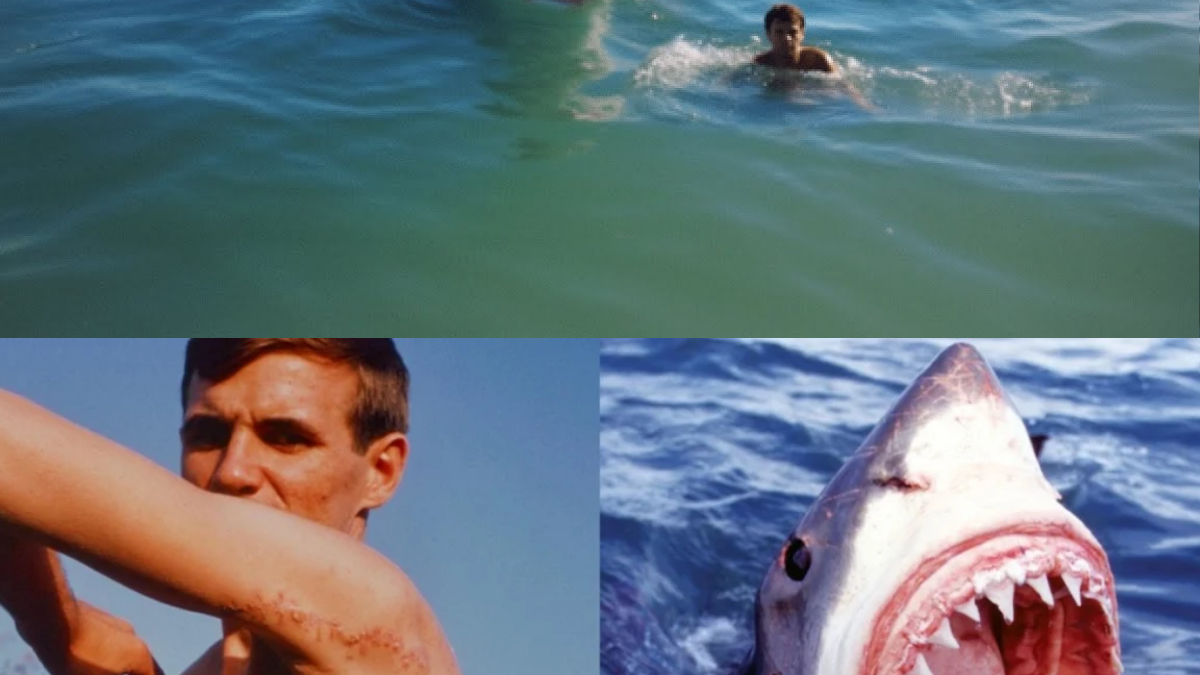
For millions of people worldwide, the ocean represents the ultimate sanctuary of freedom and renewal. The rhythmic roll of coastal breakers, the crisp scent of brine carried on offshore winds, and the thrill of gliding across open swells draw surfers, divers, and vacationing families into the tide each year. Yet beneath the shimmering, sunlit surface lies an environment governed by ancient laws. It is a vast and untamed wilderness presided over by one of evolutionary biology’s most formidable creations: the great white shark. Hone by more than four hundred million years of predatory specialization, these colossal marine hunters patrol coastal frontiers with chilling grace and near-invisible efficiency. While fatal shark encounters remain statistically rare, the moments when human recreation intersects with predatory instinct produce tragedies that linger in our collective consciousness for generations.
The devastating event that unfolded at South Moss Beach, California, on December 19, 1981, remains one of the most haunting cases in modern marine history. The morning began under thick, gray winter clouds that blanketed the Pacific coastline. Cold offshore gusts whipped the ocean into fifteen-foot waves, driving casual beachgoers away while summoning devoted wave-riders eager to test the powerful storm swell. Among them was Lewis Archer Boren, an energetic twenty-four-year-old surfer known for his fearless love of the water. Strapping his compact five-foot-four-inch yellow and black board to his car rack, Boren drove out early to meet his longtime friend Mark for an adrenaline-fueled morning on the reef.
For hours, the two young men rode the towering waves in near-perfect synchronicity. By two in the afternoon, exhausted and satisfied, they shared lunch in the coastal parking lot, chatting about surfing, family, and the future. Mark prepared to head home, but Boren looked back at the empty, churning water and felt an irresistible pull. He decided to paddle out for just one more brief run. That decision sealed his fate. Entering the solitary surf alone, Boren was silhouetted against the gray sky—a dark profile against the surface that closely mimicked the shape of a resting seal. Beneath him, moving through the deep shadows, lurked what forensic investigators later identified as one of the largest great white sharks ever documented.
The strike was sudden and catastrophic. Propelled by massive tail thrusts, an estimated twenty-three-foot, two-ton behemoth surged upward from the murky depths like a submarine missile. Delivering a devastating exploratory bite with jaws measuring eighteen inches across, the creature struck Boren from underneath, biting through both the fiberglass surfboard and his torso before pulling him beneath the swell. By the time two fellow surfers spotted Boren’s severed board washing ashore the following day, the young adventurer was gone. His remains were later recovered in a nearby cove, leaving the local surfing community deeply shaken and forever altering the mystique of South Moss Beach.
Tragedy struck an equally idyllic setting on the East Coast at Newcomb Hollow Beach in Cape Cod, Massachusetts. It was a picture-perfect summer afternoon where temperatures hovered around eighty degrees, and gentle, sunlit curls beckoned swimmers into crystal-clear waters. Arthur Mitchell and Isaac Thompson, two inseparable friends, sprinted eagerly from the dunes into the rolling waves. Nearby, adventurous surfer Emily Durden suited up alongside them while her mother, Shirley, watched from the dry sand. Nothing about the radiant afternoon hinted that a massive great white shark, nearly twenty feet long, had followed feeding currents straight into the shallows.
Within seconds of wading out, paradise turned into pandemonium. A massive dark shadow crested beneath the swell, accelerating violently toward Mitchell. With bone-crushing power, the shark’s jaws clamped down on the young man’s lower body, dragging him beneath the foaming water as blood-curdling screams pierced the air. What followed was a demonstration of extraordinary human courage in the face of sheer horror. Rather than fleeing to the safety of the dry sand, beachgoers and surfers sprang into collective action. Forming a human chain into the blood-stained water, rescuers shouted, splashed, and used their surfboards as shields to ward off the circling predator. They fought desperately to drag Mitchell back to shore. On the sand, rescuers applied a boogie board leash as an emergency tourniquet to stem the critical blood loss, but the catastrophic trauma proved insurmountable. Mitchell tragically succumbed to his injuries en route to the trauma center, casting an enduring pall over Newcomb Hollow.
Thousands of miles across the globe, a remarkably parallel scene unfolded in the summer of 2002 at Fishhook Beach. Eric Mitchell, a vibrant thirty-seven-year-old engineer from Harare, Zimbabwe, was enjoying a seaside holiday with his partner’s young sons, Sam and Jake. As the trio splashed and laughed in the gentle surf, a massive great white shark closed the distance from the deeper channel. The beast lunged forward in a horrifying instant, seizing Eric in its jaws as the boys watched in paralyzed terror. Hearing the frantic cries from the shoreline, a courageous lifeguard named Emily grabbed a boogie board and paddled directly toward the thrashing predator. Despite the shark circling beneath the bloody surface with cold, assessing eyes, Emily pulled the severely injured engineer onto her board. On the beach, bystanders banged on the water and shouted in unison to discourage a secondary strike. Though emergency responders rushed Eric to the hospital, his massive blood loss could not be reversed. In the months that followed, the devastated coastal community rallied together, establishing warning sirens and spotter networks to protect future beachgoers.
The unpredictability of the ocean’s apex hunters was demonstrated with heartbreaking finality in March 1985 along the sun-drenched waters of Port Lincoln, South Australia. Renowned as the country’s seafood capital, Port Lincoln’s azure coastline was a haven for Shirley Ann Durden, her husband Barry, and their four young children. On a radiant morning, Shirley and Barry joined their friend Keith Coventry for a relaxed scallop dive in the shallow waters, while their children built sandcastles along the shoreline. As Shirley began swimming back toward the beach with a mesh bag of fresh scallops, an enormous great white shark—starving and displaced into the shallow flats—ambushed her from below. With brutal force, the predator struck her repeatedly, churning the turquoise water into a violent red maelstrom in full view of her husband and horrified children. Before anyone could reach her, the leviathan pulled Shirley into the deep, shattering a young family and leaving a community forever gripped by the terrifying reality of what lurked just off their shores.
Equally harrowing was the mystery that unfolded off the coast of West Malibu, California, on January 26, 1989. Two twenty-four-year-old physical education teachers, Roy Stoddard and Tamara McAllister, set out on a routine ocean kayaking session to train for an upcoming triathlon. Paddling northward from Latigo Point toward Paradise Cove, the couple kept their kayaks close to the shoreward edge of the kelp beds. When afternoon winds began kicking up a choppy swell, they lashed their kayaks together with rope to maintain stability and prevent drifting. Without warning, a tremendous upward impact shattered the peace of their journey. A massive great white shark torpedoed directly into the vessels from underneath, flipping both kayaks and throwing the young couple into the turbulent water.
Tamara was immediately bitten on the upper thigh and pulled under. Roy courageously grabbed her hand, pulling her to the surface and attempting to right the overturned kayaks while fighting the heavy current. Observers near a distant Coast Guard buoy later reported seeing boiling water, thrashing, and panic-stricken seals leaping onto navigation buoys. Roy continued his desperate battle to keep Tamara afloat, but the massive predator returned, dragging him beneath the surface. He was never seen again. Two days later, search teams recovered Tamara’s body floating thirty miles north near Channel Islands Harbor, bearing fatal bite marks consistent with an immense great white shark. The couple’s battered kayaks, recovered miles from the launch point, displayed massive puncture wounds and stress fractures that bore silent witness to the staggering force of the animal’s strike.
Perhaps no incident illustrates the terrifying concept of mistaken identity quite like the tragedy of Terry Cartwright on June 5, 1993. Sailing into the Bass Strait off the coast of Tasmania, Terry, her husband Ian, their six-year-old quadruplets, and their infant son arrived at Tenth Island aboard the maritime vessel Riveresco. Tenth Island was home to a thriving colony of hundreds of playful Australian sea lions. Terry, an experienced diver eager to return to the water, donned a black wetsuit and yellow fins to join marine lecturers Steven Eirrs and Josephine Osborne for a research dive.
As the divers dropped beneath the surface, Terry paused momentarily, struggling to equalize the pressure in her ears. Dressed head-to-toe in dark neoprene and lagging slightly behind the group among hundreds of darting, twisting sea lions, she unwittingly presented the exact silhouette of a struggling marine mammal. Out of the deep blue, a fifteen-foot great white shark blindsided Terry with terrifying speed. Osborne and Eirrs could only watch from behind underwater rock formations as the animal clamped onto Terry and dragged her into the abyss. Back aboard the Riveresco, Ian Cartwright was left with the unfathomable task of searching the empty waters before breaking the heartbreaking news to their five young children.
Marine biologists and behavioral researchers emphasize that great white sharks do not view human beings as a natural food source. Most fatal encounters are the result of exploratory bites or tragic misidentifications, where a surfboard, kayak, or dark wetsuit mirrors the exact acoustic and visual signature of a pinniped. Yet understanding the science does little to diminish the profound human grief left in the wake of these incidents. These extraordinary stories stand as solemn reminders of our vulnerability. The ocean remains an authentic wilderness—magnificent, ancient, and ultimately indifferent to human presence—where survival depends on respecting the formidable predators who have ruled its depths since the dawn of time.

