Oklahoma 1999 Cold Case Solved — 12 Witnesses Knew The Truth But Stayed Silent Out Of Fear
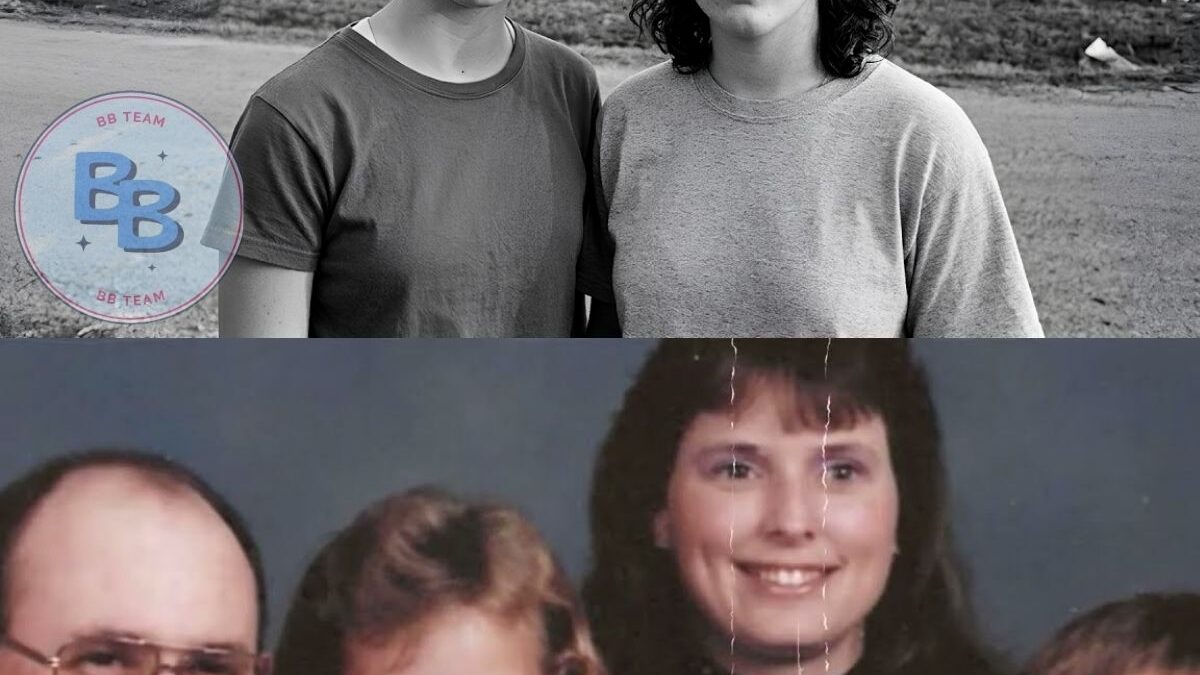
On the outer edges of Craig County, Oklahoma, the winter landscape has a way of flattening everything beneath a pale, unrelenting sky. Gravel roads trace long grid lines through barren pastureland, bordered by rusted barbed wire and skeletal oak trees standing stark against the horizon. In late December of 1999, the air carried an biting chill, smelling of dry prairie grass, woodstove smoke, and the quiet promise of an approaching new millennium.
Welch was the kind of rural community where generations had lived close to the soil, where neighbors knew the sound of each other’s pickup trucks from a mile down the lane. Families attended the same brick churches on Sunday mornings and waved to one another across the aisles of the small grocery store. To the people who called it home, the surrounding countryside felt like an unbreachable sanctuary, far removed from the violent headlines that plagued the evening television news.
Yet beneath that peaceful exterior, the geography of northeastern Oklahoma hid deep pockets of isolation and hardship that often went unnoticed. Pockets of poverty, winding backroads hidden from public view, and the quiet infiltration of illicit methamphetamine networks cast long shadows across the rural townships. Most residents lived entirely outside that dangerous periphery, unaware of how easily the darkness of the criminal underworld could spill across their fence lines.
Ashley Renee Freeman was born on December 29, 1983, a bright and spirited girl who possessed an unmistakable energy that drew people toward her. She stood about five feet seven inches tall, with athletic shoulders, lively blue eyes, and long dark blonde hair that she frequently tied back with a simple hairband. A small childhood scar marked the skin just above her left forehead, a faint reminder of an energetic life spent outdoors under the wide prairie sun.
Her sixteenth birthday was a milestone she had anticipated for months, talking about driver’s licenses, school dances, and the simple freedoms of coming of age. She was dating a local boy named Jeremy Hurst, and her days were filled with the everyday rhythms of high school classes, telephone conversations, and weekend drives. Her home was a weathered mobile home situated at 7856 South 4390 Road, a quiet stretch of country route several miles outside the Welch city limits.
Inside that home lived her parents, Danny and Kathy Freeman, whose lives were tethered to the demanding realities of working-class Oklahoma life. Kathy was known among her acquaintances as a kind-hearted, soft-spoken woman who took pride in keeping a warm household for her family. Danny worked hard with his hands, carrying the quiet, weather-beaten demeanor of a country laborer who generally kept to himself and protected his personal affairs.
Ashley’s closest companion in the world was Lauria Jaylene Bible, a girl whose presence brought a calming, gentle balance to Ashley’s outgoing nature. Born on April 18, 1983, Lauria was sixteen years old, standing about five feet five inches tall with warm brown hair and striking hazel eyes. A distinctive mole rested just beneath her nose, and another small scar was tucked along her hairline, physical details etched forever into the memories of those who loved her.
Lauria lived with her parents, Jay and Lorene Bible, in a modest home where respect, family loyalty, and hard work were treated as fundamental pillars of everyday life. Jay was a steady, quiet provider who worked long shifts to provide for his family, while Lorene was the steadfast anchor of the household, watchful, fiercely devoted, and deeply attuned to her children. In Welch, the Bible family was regarded with deep respect, embodying the straightforward decency of small-town middle America.
Ashley and Lauria had formed a bond that seemed to exist outside the need for explanations, invitations, or formal plans. They attended classes together, shared clothes and secrets, sat side by side at Friday night football games, and spent endless hours riding along county roads listening to country radio. Wherever one was seen, the other was rarely more than a few steps away, their laughter echoing through school hallways and family living rooms alike.
On the afternoon of December 29, 1999, the two girls climbed into Kathy Freeman’s car to celebrate Ashley’s sixteenth birthday in town. They drove to a local pizza parlor in Vinita, sitting together in a vinyl booth beneath the warm hum of fluorescent lights, laughing over slices of warm pizza. It was a modest gathering, devoid of extravagance, chosen deliberately by Kathy because her daughter preferred the company of her best friend over a crowded, noisy banquet.
The afternoon passed in that effortless, sunlit manner that often defines the happiest memories of youth before tragedy strikes without warning. They took photographs, made lighthearted jokes about growing older, and discussed their upcoming plans for the remainder of the winter holiday break. Kathy looked upon the two girls with quiet maternal affection, pleased to see her daughter radiant with joy on the day she officially crossed into young adulthood.
Later that afternoon, the conversation turned toward the evening ahead, with Ashley begging Kathy to let Lauria spend the night at their mobile home. A quick telephone call was made to the Bible residence, where Jay Bible answered and listened to his daughter’s eager request to extend the birthday celebration. It was a regular routine between the two households, an innocent sleepover that had taken place dozens of times across the years without incident.
Jay agreed without hesitation, setting only one simple condition that reflected his practical, paternal concern for his daughter’s schedule.
“Just make sure you’re back home before noon tomorrow,” Jay told her gently over the receiver.
“I will, Dad, don’t worry,” Lauria replied, her voice light and cheerful on the other end of the line.
Before she walked out the door to climb into the Freeman car, Lauria paused on the porch threshold and looked back into the warm living room toward her father. Her eyes caught his through the doorway, carrying the effortless tenderness of a teenage daughter who loved her family without reservation or pretense.
“I love you, Dad,” she called out, offering a small wave before turning into the brisk December twilight.
“I love you too, baby,” Jay responded, nodding from his chair as he watched the taillights fade into the darkening country lane.
Those four words would become the final phrase Jay Bible would ever hear spoken aloud by his sixteen-year-old daughter. At the time, he settled back into his evening routine, confident that she was safe under the roof of people they had known for many years. There was no intuition, no sudden tremor of dread, nothing to indicate that the fragile fabric of their ordinary lives was about to be torn to pieces.
Night fell heavy and black across the fields of Craig County, temperatures dropping well below freezing as a bitter winter wind rustled through dry brush. Inside the Freeman mobile home on 4390 Road, the heaters hummed softly against the chill, sheltering the four occupants from the cold night. Ashley and Lauria whispered in the bedroom, surrounded by birthday cards and teenage belongings, drifting off to sleep with the unburdened ease of youth.
Across town, Lorene and Jay Bible turned off their bedside lamps, resting comfortably in the knowledge that their child was only a short drive away. They had trusted the Freemans, trusted the small community that had nurtured them, and trusted the quiet country night that seemed so completely peaceful. Neither family could have conceived that while the girls slept, violence was already traveling toward them down the dark, unpaved corridors of rural Oklahoma.
Around 5:30 on the morning of December 30, 1999, a passing motorist traveling along 4390 Road saw an ominous orange glow piercing the dawn darkness. Flames were roaring high into the sky, chewing violently through the aluminum siding and wooden framework of the Freeman mobile home. Thick plumes of black smoke rolled across the frosty pastures, carrying the sickening, acrid stench of burning synthetic materials and scorched timber into the morning air.
The passerby immediately dialed 911 from a mobile phone, screaming into the receiver that a residence was completely engulfed in fire. Volunteer firefighters from Welch and neighboring rural stations scrambled into their heavy turnouts, roaring out of town with sirens echoing against the empty fields. By the time the first pumper truck arrived at the scene, the roof of the mobile home had already collapsed inward, leaving only an inferno of twisted metal.
Fire crews laid hose lines across the frozen gravel, directing powerful streams of water onto the blazing rubble in an effort to knock down the flames. As the fire died down into hissing embers and white steam, emergency responders stepped cautiously into the smoldering footprint of the home. The bitter wind blew cold ash across their helmets as they began the grim task of inspecting the devastated interior for any sign of life.
In the master bedroom area, lying amidst wet insulation, charred floorboards, and collapsed ceiling joists, searchers discovered the burned body of Kathy Freeman. A closer examination by the first arriving deputies revealed something that immediately transformed the fire from a structural tragedy into an active crime scene. Kathy had not succumbed to smoke inhalation; she had been shot execution-style in the back of the head with a shotgun before the fire was ignited.
Arson investigators quickly located multiple points of origin, confirming that an accelerant had been deliberately poured throughout the trailer to ensure its total destruction. Someone had entered the home under the cover of darkness, executed Kathy Freeman in cold blood, and ignited the residence to incinerate every shred of forensic evidence. Yet as investigators sifted through the steaming pile of debris, an unsettling and urgent mystery presented itself to the Craig County authorities.
There was no sign of Danny Freeman, nor was there any physical trace of sixteen-year-old Ashley Freeman or her best friend, Lauria Bible. Their bedrooms had been gutted by the heat, but no additional human remains, no charred bones, and no identifiable personal effects were discovered in the initial sweep. The authorities stood in the smoking wreckage with an overwhelming, terrifying question: where were the two young girls, and where was the head of the household?
Across Welch, the telephone rang inside the Bible residence early that morning, carrying news that instantly shattered the quiet peace of their household. Lorene answered the call, her breath catching in her throat as the voice on the line explained that the Freeman residence had burned to the ground. Kathy was dead, the trailer was completely gone, and authorities could find no trace of Lauria or Ashley anywhere on the property.
Jay Bible stood frozen in the hallway, his mind racing back to the porch doorway only hours earlier and the parting words his daughter had spoken. The memory of her voice saying she loved him struck him like a physical blow, leaving him struggling for breath in the sudden silence of his home. Without waiting to hear more, Jay and Lorene grabbed their coats, jumped into their vehicle, and raced through the countryside toward the smoking ruins on 4390 Road.
When they arrived at the cordoned-off perimeter, the scene before them looked like a blackened wound carved into the quiet Oklahoma landscape. Yellow crime scene tape fluttered violently in the freezing December wind, while deputies and fire investigators huddled around the perimeter speaking in low, hurried tones. Lorene demanded answers, her mother’s instincts searching every ditch, every fence line, and every vehicle for any sign of her brown-haired daughter.
“Where is my daughter?” Lorene demanded of the officers who stopped her at the perimeter tape, her voice shaking with fear.
“We don’t know yet, ma’am,” a deputy replied softly, keeping his hands raised to prevent her from stepping into the toxic ashes.
“She was here,” Lorene insisted, pointing directly toward the charred ruins. “She was staying here for the night, she has to be here.”
In those frantic opening hours, law enforcement developed an immediate working theory that appeared to fit the known circumstances of the crime scene. Because Kathy’s body had been found alone and Danny’s vehicle was missing from the driveway, detectives deduced that Danny Freeman was the primary suspect. They theorized that a violent domestic dispute had erupted, leading Danny to murder his wife, abduct both teenagers, and flee across state lines.
Bulletins were broadcast across Oklahoma, Kansas, Missouri, and Arkansas, urging law enforcement agencies to be on the lookout for Danny Freeman. The media seized upon the narrative, painting Ashley’s father as an armed and dangerous fugitive who had taken two sixteen-year-old girls hostage in a desperate escape. Search warrants were issued, telephone records were examined, and acquaintances of Danny were questioned intensely regarding where the fugitive father might have gone.
Lorene Bible, however, rejected that conclusion from the very instant it was presented to her by Craig County investigators. She had known Danny Freeman for years, understood the dynamic of his household, and knew how fiercely protective he was of his daughter Ashley. A mother’s intuition told her that Danny would never harm his own child, nor would he slaughter the mother of his daughter in such cold blood.
“Danny didn’t do this,” Lorene told investigators repeatedly throughout that agonizing first day, her jaw set with stubborn determination.
“Mrs. Bible, the evidence points to him,” one investigator argued, attempting to explain the absence of Danny’s body from the bedroom rubble.
“You haven’t looked hard enough,” Lorene countered firmly, refusing to accept the official narrative being fed to the public through the newspapers.
While the police directed their manpower toward highway checkpoints and out-of-state leads, the Bible family found themselves unable to sit idly waiting for answers. On the morning of December 31, New Year’s Eve, Lorene and Jay drove back to the desolate property on 4390 Road, driven by an agonizing need to see for themselves. The crime scene tape had been left unattended by deputies who had concluded their initial search of the debris the previous afternoon.
Jay and Lorene stepped onto the blackened footprint of the mobile home, their boots sinking into the wet, soggy layers of ash and charred fiberglass insulation. The stench of smoke, melted plastics, and burned building materials hung heavy in the freezing winter air, burning their throats with every breath. They moved slowly, methodically through the master bedroom, refusing to leave any section of the floorboards unexamined in their desperate quest for clues.
As Jay pushed aside a heavy layer of burned drywall and collapsed mattress springs, his eyes caught an irregular, blackened shape resting near the doorway. Calling Lorene over, they knelt down in the soot, their hearts sinking as they wiped away layers of grime and burned debris. Beneath the ash lay a second human body, so terribly charred and blackened by the fire that it had virtually blended into the floor.
Deputies who had walked through the bedroom the previous day had literally stepped over the remains, entirely failing to recognize them as human. Jay reached out with trembling hands, overwhelmed by the horrific reality that law enforcement had overlooked an entire adult corpse in their hasty initial sweep. Lorene felt a wave of nausea and fury wash over her as she realized the catastrophic investigative failure that had unfolded around them.
The authorities were summoned back to the property immediately, where medical examiners confirmed that the second body was indeed Danny Freeman. Like his wife Kathy, Danny had been shot directly in the head at close range before the accelerants were poured and the house was set ablaze. His body had been so thoroughly consumed by the flames that Lorene later remarked with sorrow that he seemed to have no recognizable face left.
In that single devastating instant, the police department’s working theory collapsed into dust, leaving investigators completely blind and disoriented. Danny Freeman was not a cold-blooded killer fleeing across state lines with two teenage hostages; he was a brutally murdered victim of an execution-style hit. The case was now officially a quadruple homicide and kidnapping, committed by unknown intruders who had struck in the dead of winter and vanished without a trace.
The Oklahoma State Bureau of Investigation was called in to assist the local sheriff’s department, but the initial window for collecting pristine evidence had closed. The crime scene had been compromised by water, fire, freezing temperatures, and the footsteps of officers who had completely missed a victim’s body. There were no tire tracks preserved in the driveway, no clear fingerprints recovered from the ashes, and no direct eyewitnesses who had seen strange vehicles near the home.
The days following New Year’s Day 2000 blurred into a surreal nightmare for the Bible family as the search for the missing girls expanded. Volunteer search parties formed across Craig County, with hundreds of local citizens walking shoulder to shoulder through pastures, creek beds, and overgrown timber. Mounted posses rode along the drainage ditches, four-wheelers buzzed through dense brush, and civil air patrol planes circled overhead, scanning the frozen earth for clothing.
Nothing was found; no shoes, no jewelry, no backpacks, and no discarded clothing belonging to sixteen-year-old Ashley or sixteen-year-old Lauria. It was as though two vibrant, living human beings had simply dissolved into the cold Oklahoma air between the hours of midnight and dawn. Every ringing telephone inside the Bible home brought a surge of adrenaline, followed by the crushing weight of another false lead or dead end.
As months turned into years, false confessions emerged from the prison system, cruelly dragging the Bible family through repeated cycles of hope and heartbreak. Tommy Lynn Sells, an infamous serial killer sitting on Texas death row who claimed dozens of murders, confessed to abducting and killing the two teenagers. Detectives traveled south to interrogate him, hanging on his every word as he described traveling through Oklahoma during the winter of 1999.
Lorene Bible listened with bated breath, preparing herself for the agonizing possibility that her daughter’s final moments had intersected with a traveling monster. Yet as investigators scrutinized Sells’s statements against the physical facts of the crime scene, glaring contradictions began to surface that could not be reconciled. Sells had guessed details based on sensationalized news reports, and under rigorous cross-examination by veteran detectives, he eventually recanted his entire confession.
Then came Jeremy Jones, another convicted murderer and sexual predator who had once lived in Miami, Oklahoma, only a short drive from Welch. Jones gave an elaborate, chilling confession, claiming he had killed Danny and Kathy over a drug debt before taking the girls to Kansas and shooting them. He described throwing their bodies into an abandoned mine pit filled with water, providing details that sounded terrifyingly authentic to investigators seeking a breakthrough.
The Bible family braced themselves once more, enduring the emotional torture of waiting while law enforcement mobilized specialized search teams to verify Jones’s confession. Divers plunged into freezing, murky waters of flooded mine shafts, and cadaver dogs were deployed along desolate gravel roads in southeastern Kansas. Every hour that passed without discovery chipped away at the credibility of Jones’s claims, until official records dealt the final blow.
State police records revealed that at 4:00 AM on the morning of December 30, 1999, Jeremy Jones had been arrested and booked into a county jail. He was sitting inside a holding cell eighteen miles away at the exact hour the Freeman mobile home was being set on fire. Physically, it was impossible for him to have been at the scene, and Jones, like Sells before him, casually admitted that he had made up the story.
Each fraudulent confession felt like a fresh wound carved into the hearts of Jay and Lorene Bible, but Lorene refused to retreat into quiet despair. She recognized early on that rural cold cases often died a quiet death, filed away in dusty metal cabinets and forgotten by rotating administrations. She made a silent, unshakeable vow to her daughter that as long as she drew breath, the world would not be allowed to forget Lauria.
“I won’t let them bury my daughter’s name in an archive box,” Lorene declared to her family during an anniversary gathering.
“It’s been so many years, Lorene,” a family friend noted quietly, their voice heavy with sympathetic weariness.
“I don’t care if it takes twenty years,” Lorene answered, her gaze steady and unwavering. “A mother does not stop looking for her child.”
Lorene became the voice that would not be silenced, traveling to media studios, giving endless newspaper interviews, and distributing missing person posters across several states. Every year around the end of December, when most families were celebrating the holidays, Lorene sat before television cameras to retell the agonizing story. She spoke with a calm, deliberate clarity, recounting the events of that fateful night so that no viewer could turn away from the unresolved injustice.
She welcomed any private investigator, true crime author, or freelance journalist who expressed an interest in reviewing the timeline of the disappearance. Her dining room table became an unofficial headquarters filled with binders, maps of northeastern Oklahoma, newspaper clippings, and transcripts of tips that had been ignored. Whenever someone asked how she found the strength to keep repeating the painful details, her response was always simple, direct, and profoundly moving.
“Someone out there knows what happened, and they need to hear my voice until their conscience won’t let them sleep,” Lorene would say.
To keep the girls’ memory alive within their hometown, Lorene opened a secondhand consignment store in Vinita called Pooh’s New Barely Used. The name honored Lauria’s childhood nickname, transforming a space of commerce into an enduring sanctuary of love, community connection, and active remembrance. Every dollar of profit generated by the thrift store, after paying basic operational utility bills, was placed directly into a dedicated scholarship fund.
Each spring, the fund awarded two $500 academic scholarships to graduating high school seniors from Welch High School and Blue Jacket High School. Those were the very institutions where Ashley Freeman and Lauria Bible would have graduated, had their lives not been stolen away on that winter night. Lorene attended the award ceremonies personally, looking into the eyes of young students embarking on adulthood, keeping her daughter’s spirit present among them.
Meanwhile, the Freeman family bore their grief in a different, equally agonizing manner as the years dragged forward without answers or resolution. In 2010, eleven years after the fire, Ashley’s surviving relatives filed a formal petition in Craig County District Court to have Ashley declared legally dead. It was an excruciating administrative necessity, required to settle estates and bring a measure of legal closure to an unresolved chapter of immense pain.
Lorene Bible, however, adamantly refused to file a similar petition for Lauria, resisting every suggestion from well-meaning acquaintances to take that legal step. To Lorene, signing a document declaring her daughter deceased without physical evidence felt like an act of surrender she was fundamentally incapable of making. For her, Lauria was still missing, and until her daughter was returned home for a proper burial, the search remained fully and urgently alive.
Behind the scenes of rural Craig County, dark rumors had circulated for years regarding who had truly visited the Freeman home on that fateful night. Whispers traveled through pool halls, roadside diners, and county jail cells about men who manufactured methamphetamine and bragged about horrifying deeds when high. Yet those who possessed fragments of the truth kept their lips sealed, paralyzed by a legitimate, bone-deep fear of violent retaliation.
The men whose names were whispered in the shadows were not petty thieves; they were known enforcers of a vicious regional drug trade. They were men who had beaten witnesses, burned down property, and threatened to butcher anyone who dared approach law enforcement with their names. In a small rural county where police response times could take half an hour, witnesses chose silence over the risk of signing their own death warrants.
Years turned into decades, and the case file grew cold, resting in cardboard archive boxes tucked beneath metal shelving in the sheriff’s department. Sheriff administrations came and went with local elections, each new leadership team inheriting the unsolved mystery without knowing how to reignite the stalled momentum. To the wider public outside northeastern Oklahoma, the Welch mobile home fire became just another unsolved tragedy consigned to the annals of history.
Then, in late 2017, a newly elected Craig County Sheriff named Heath Winfrey took office and made a decision that altered the course of history. Winfrey initiated a complete administrative review of the department’s physical archives, instructing staff to examine every uncatalogued box left behind by previous sheriffs. Tucked inside an obscure storage area, investigators uncovered a weathered set of original investigative notes and witness interview files from the early 2000s.
These documents were not high-tech revelations or newly discovered forensic DNA matches; they were handwritten notes containing names, addresses, and statements taken years before. They detailed tips provided by peripheral acquaintances who had attempted to speak out years earlier, only to have their words filed away and forgotten. The notes were promptly handed over to Gary Stansill, a veteran special investigator working for the District Attorney’s office.
Stansill was an experienced investigator who understood the subtle psychological mechanics that govern long-standing cold cases in rural communities. He recognized that unsolved homicides are rarely solved by sudden miracles, but rather by meticulous investigators willing to reread old papers with fresh eyes. Stansill began reviewing the names of people who had lived in Craig and Ottawa counties in 1999, cross-referencing their old statements with current realities.
“These documents contain leads that should have been followed aggressively years ago,” Stansill told colleagues as he organized the newly recovered files.
“Do you really think people will talk after nearly twenty years?” an investigator asked, skeptical that time could unlock old secrets.
“Time changes things,” Stansill replied calmly. “The people they were afraid of might not be around to hurt them anymore.”
Stansill’s insight proved prophetic as he and his investigative team began fanning out across northeastern Oklahoma to re-interview individuals named in the files. Nearly two decades had passed since the winter of 1999, and the balance of power within the local criminal underworld had shifted entirely. Some of the violent figures who had once terrorized the community had aged, some were locked away, and others were dead and buried.
As Stansill sat down at kitchen tables and across interview desks, asking direct, respectful questions, the wall of silence finally began to crumble. Witnesses who had spent eighteen years looking over their shoulders broke down in tears, admitting that they had carried terrible secrets for far too long. More than a dozen independent witnesses came forward, providing matching, corroborated accounts that pointed directly to three specific men.
The names that emerged from the shadows were Warren Phillip “Phil” Welch II, David A. Pennington, and Ronnie Dean Busick. These three men had formed a tight-knit, dangerous crew operating in Ottawa and Craig counties, immersed in the lucrative, violent production of crystal methamphetamine. Phil Welch was the undisputed ringleader of the group, a notoriously volatile and sadistic criminal whose very name inspired terror among local addicts.
Welch had a long, violent criminal history spanning several jurisdictions in Kansas and Oklahoma, including convictions for burglary, violent assault, and terroristic threats. After being released from a Kansas prison in 1996, he had returned to northeastern Oklahoma, establishing clandestine meth labs in abandoned rural shacks. He was a supplier to many local users, operating a network built on intimidation, physical violence, and ruthless financial collection.
Danny and Kathy Freeman had crossed paths with Welch through this illicit network, having accumulated an unpaid debt related to methamphetamine transactions. On the evening of December 29, 1999, Phil Welch decided that the debt had remained unpaid for too long and required a decisive, brutal settling. He did not drive out to 4390 Road to negotiate a payment plan; he armed himself with shotguns and recruited Pennington and Busick to accompany him.
David Pennington was forty-one years old in 1999, the youngest of the trio, fiercely loyal to Welch and known for carrying out Welch’s violent orders. Pennington had later confessed his participation to an intimate girlfriend, threatening to murder her and bury her in a pit if she ever spoke to police. Ronnie Dean Busick, forty-seven years old at the time, was an older, drifting associate who served as a willing accomplice and lookout.
When investigators assembled the pieces of the puzzle in early 2018, they were confronted with the frustrating reality of criminal mortality. Phil Welch, the primary architect of the slaughter, had suffered massive heart failure and died in 2007, escaping earthly justice without ever wearing handcuffs for the crime. David Pennington had also passed away, dying of natural causes in 2015, leaving only one surviving member of the trio alive to face a court of law.
Ronnie Dean Busick was still alive, sixty-six years old, currently sitting inside a county jail in Harvey County, Kansas, on an unrelated minor charge. Stansill and prosecutors meticulously assembled their affidavits, presenting a judge with sworn witness statements detailing Busick’s direct involvement in the quadruple homicide and kidnapping. An arrest warrant was signed, charging Busick with four counts of first-degree murder, two counts of kidnapping, and one count of first-degree arson.
On April 23, 2018, Ronnie Dean Busick was formally taken into custody under the Oklahoma warrant, his mugshot flashed across news screens across the country. It was the very same week that California authorities arrested Joseph James DeAngelo, the infamous Golden State Killer, drawing the lion’s share of international headlines. Yet in Craig County, Oklahoma, Busick’s arrest represented a monumental earthquake, breaking an eighteen-year cycle of silence, grief, and investigative paralysis.
District Attorney Matt Ballard stepped up to the microphones during a packed press conference in Vinita, his expression somber as he addressed the assembled media. When reporters pressed him to characterize what the two sixteen-year-old girls had endured after being taken from the Freeman property, Ballard hesitated, visibly shaken. He looked directly into the cameras and uttered a single, devastating adjective that required no further elaboration.
“Horrific,” Ballard said, his voice dropping to a near whisper as the courtroom grew completely silent around him.
The narrative that emerged from Busick’s own jailhouse admissions and corroborated witness testimonies revealed the full, unvarnished nightmare of that December night. When Welch, Pennington, and Busick arrived at the mobile home on 4390 Road, Welch had kicked open the door and executed Danny and Kathy Freeman. The two teenage girls, startled awake by the commotion, had fled into the freezing darkness of an adjacent pasture, hiding in the brush.
As the men poured accelerants and ignited the mobile home, the massive fireball illuminated the surrounding landscape, exposing the shivering girls in the open field. Phil Welch immediately declared that they could leave no witnesses behind who could identify their faces or their vehicle to the Craig County sheriff. Pennington and Welch tackled the terrified teenagers, binding their wrists and ankles with duct tape, and shoving them into the bed of Pennington’s pickup truck.
With the Freeman home roaring in flames behind them, the three men drove their captives northward toward Picher, Oklahoma, an isolated mining settlement near the border. Picher was a desolate, dying town situated in the heart of the Tar Creek Superfund site, heavily contaminated by decades of lead and zinc mining. Mountains of toxic chat piles loomed over abandoned streets, cracked foundations, and hundreds of deep, flooded, forgotten mine shafts sunk deep into the earth.
The girls were carried into a dilapidated mobile home owned by Phil Welch, where an unspeakable ordeal began that stretched across several horrifying days. According to witness statements and Busick’s own words to cellmates, the two teenagers were bound, beaten, and repeatedly injected with large doses of methamphetamine. Welch, Pennington, and Busick subjected Ashley and Lauria to relentless sexual violence and psychological torture, keeping them trapped in an inescapable nightmare.
Phil Welch documented their torment using a Polaroid camera, taking photographs of the bound, bruised, and terrified girls as they lay on the mobile home floor. He kept the developed photos inside a small leather suitcase, treating them as grotesque trophies of his absolute dominance over his victims. Eventually, when the men decided their horrific ordeal had reached its end, Ashley Freeman and Lauria Bible were strangled to death.
Their bodies were loaded into a vehicle under the cover of night, driven deep into the maze of abandoned chat piles, and thrown into a mine shaft. A female acquaintance who lived with Welch shortly after the murders discovered the Polaroid photographs inside the suitcase and confronted Welch in absolute horror. Welch grabbed her by the throat, pressing a blade against her skin, and issued a chilling threat that kept her silent for nearly two decades.
“If you ever breathe a word about those pictures,” Welch whispered into her ear, “I will throw you down that same hole with those girls.”
The terrified woman kept the photographs hidden for a time out of sheer preservation, but amidst moves and chaos, the irreplaceable physical evidence was lost forever. Its disappearance was a tragic blow to the prosecution, yet the sheer volume of consistent witness statements provided an unshakeable foundation for the criminal case. Ronnie Busick was extradited to Oklahoma, placed inside a high-security cell in Craig County Jail to await a trial that seemed long overdue.
Inside the jail, Busick adopted a strategy of self-pity and deflection, attempting to portray himself as an innocent bystander who had simply been swept along. He sat for media interviews, weeping crocodile tears and claiming that he had been entirely powerless to prevent Welch and Pennington from carrying out their atrocities. He repeatedly referred to Phil Welch as an embodiment of pure evil, while insisting that he himself had never laid a hand on the teenagers.
“The most misunderstood thing about this whole case is that I had nothing to do with it,” Busick complained from behind the visitor partition.
“You were there, Ronnie,” a local reporter challenged him through the glass. “You watched it happen and you never called the police for eighteen years.”
“I was terrified of Phil Welch, just like everyone else,” Busick muttered, casting his gaze down toward his orange jumpsuit in practiced shame.
Yet while Busick claimed innocence to reporters, his tongue loosened around fellow inmates inside the pod, bragging about specific details of the abduction and disposal. He described the cold ride to Picher, the location of the mine pits, and the methods used to silence the teenagers, accounts that inmates quickly reported to guards. Each report added another layer of confirmation to Gary Stansill’s file, closing every possible avenue of escape for the surviving perpetrator.
In 2019, Busick’s defense attorneys attempted to derail the prosecution by filing motions claiming their client was mentally incompetent to stand trial for murder. They argued that a gunshot wound to the head suffered during a 1978 shootout had caused traumatic brain injury, destroying his long-term memory. The court ordered extensive psychiatric evaluations, placing the proceedings on hold while clinical experts examined Busick’s cognitive faculties at state medical facilities.
In December 2019, the court ruled definitively that Ronnie Busick possessed the mental competence required to understand the charges and assist in his own defense. With the trial approaching, prosecutors made an extraordinary, compassionate offer that prioritized the emotional needs of the Bible family above an absolute punitive victory. They offered Busick complete immunity and financial rewards if he would simply lead investigators to the exact location where Ashley and Lauria were buried.
Lorene Bible had made it abundantly clear to prosecutors that her primary objective was not vengeance, but bringing her sixteen-year-old daughter home for a sacred burial. She was willing to forego the satisfaction of a life sentence if it meant she could lay Lauria to rest in a peaceful family plot. Busick, however, continued to play games with investigators, claiming his memory was hazy and leading search teams on wild goose chases through empty pastures.
Recognizing that a jury trial carried risks of appeals and delays, prosecutors negotiated a plea agreement with the formal consent of Lorene Bible in July 2020. Under the terms of the deal, the state reduced the primary charges to a single count of accessory to first-degree murder, carrying a ten-year sentence. The agreement included an incentive clause: if Busick led authorities to the girls’ remains before August 31, 2020, his sentence would be reduced to five years.
Lorene Bible signed the agreement with a heavy heart, believing that the structured deadline would finally compel the aging criminal to reveal the burial shaft. What Lorene did not realize, because no one adequately explained the nuances of the Oklahoma Department of Corrections point system, was how prison credits functioned. She believed that Busick would serve at least a significant portion of the ten-year sentence in the event the remains were not recovered.
August 31, 2020, came and went without Busick providing actionable information, and search teams once again found nothing beneath the toxic dust of Picher. Busick was formally sentenced to ten years in state prison, followed by five years of supervised probation, entering the correctional facility as a compliant inmate. Because his conviction was classified as an accessory rather than a violent murder charge, he qualified for Oklahoma’s standard earned-credit reduction program.
Busick entered the system at Level Four, maintaining a clean disciplinary record, avoiding fights, and displaying outward politeness to the correctional staff. Under the administrative rules, he earned up to sixty credit points per month, effectively shaving two additional days off his sentence for every single day served. When combined with the substantial credit earned while awaiting trial in county jail since 2018, his remaining prison time evaporated at an astonishing rate.
On May 19, 2023, after serving a total of merely thirty-eight months behind state prison bars for his complicity in four homicides, Ronnie Busick walked free. He walked through the prison gates into the warm spring sunshine, an elderly man carrying a mesh bag of personal belongings, fully discharged onto probation. Across Craig County, the news of his quiet, premature release struck like a bolt of lightning, igniting a wave of fierce community outrage.
For Lorene Bible, the news was a devastating betrayal of the trust she had placed in the judicial process that had promised to deliver accountability. A man who had participated in the abduction, torture, and murder of her beloved daughter had served less time than many nonviolent drug offenders in Oklahoma. To compound the psychological cruelty of the situation, Busick chose to establish his post-release residence in a trailer park only seventeen miles from Lorene’s front door.
Local law enforcement visited Lorene shortly after Busick settled into his new home, delivering an official warning that felt like an insult added to an open wound. They cautioned her that any attempt to confront, follow, or photograph Busick could be interpreted under state law as harassment or probation interference. If she crossed the boundaries of his court-ordered civil protections, she, the grieving mother of the victim, could face criminal prosecution and arrest.
“He has more rights under the law today than I do,” Lorene stated during a televised interview, her voice steady despite the agony in her chest.
“Does it frighten you that he lives so close to your home?” an interviewer asked, leaning forward with deep concern.
“I’m not afraid of Ronnie Busick,” Lorene replied, her eyes narrowing with moral authority. “He’s the one who should be terrified to look me in the eye.”
Rather than allowing her righteous fury to consume her into bitterness, Lorene channeled her grief into the one avenue that could protect future generations: changing state law. She traveled to the state capitol in Oklahoma City, walking the marble corridors of the legislative building with the same determination she had shown for twenty-five years. She met with state representatives, senators, and victim advocacy groups, demanding an overhaul of the sentencing guidelines for violent criminal accessories.
Her advocacy culminated in the drafting of House Bill 2946, officially designated by lawmakers as “Lauria and Ashley’s Law.” The proposed statute mandated that any individual convicted of accessory to first-degree or second-degree murder must serve a minimum of 85% of their imposed sentence. Furthermore, the bill barred such convicts from utilizing good-behavior administrative credits to reduce their time behind bars beneath that mandatory 85% threshold.
On the afternoon the bill was brought to the floor of the Oklahoma House of Representatives, Lorene Bible sat quietly in the public gallery above. She watched the electronic voting board light up with green indicators, tallying an overwhelming victory of seventy-six votes in favor and only eleven against. It was a profound legislative achievement that transformed the landscape of Oklahoma criminal justice, ensuring that future accomplices could never manipulate the system as Busick had.
At the press conference following the historic vote, Lorene stood before the assembled press corps, offering words that resonated far beyond the borders of Oklahoma.
“We know this law will not bring Ashley and Lauria back to our arms,” Lorene told the room, her voice carrying the accumulated weight of twenty-five years.
“What does this victory mean for your family, Mrs. Bible?” a reporter asked from the front row of the briefing room.
“It means another mother won’t have to watch her child’s killer walk out of prison after thirty-eight months,” Lorene answered with quiet finality.
Even with the passage of the landmark legislation, the central, aching question that had defined Lorene Bible’s existence since the turn of the millennium remained unresolved. Ashley Freeman and Lauria Bible were still missing, their physical remains resting somewhere in the dark, forgotten subterranean landscape of northeastern Oklahoma. The physical focus of the ongoing search remained centered on Picher, a desolate ghost town that seemed to guard its secrets with stubborn malice.
Following the total evacuation of Picher due to severe lead poisoning and mine collapse hazards, the municipality had been officially dissolved by the federal government. What remained was a surreal wasteland of abandoned concrete foundations, flooded sinkholes, and towering gray chat piles that resembled miniature mountain ranges. Among this toxic expanse lay more than one hundred and fifty abandoned mine shafts, descending hundreds of feet into flooded, decaying limestone caverns.
Over the years, specialized recovery operations had deployed sophisticated search technologies into the blighted region in a desperate effort to locate the girls. Ground-penetrating radar units were pushed across overgrown access roads, detecting underground anomalies and buried disturbances that might indicate clandestine burial pits. Dive teams from the Tulsa Police Department navigated murky, chemically contaminated waters inside flooded vertical shafts, their cameras probing through tangled rebar and industrial debris.
Excavators had dug deep trenches across property once owned by David Pennington, sifting through hundreds of tons of red clay without discovering a single human artifact. Of the more than one hundred and fifty documented shafts scattered across the mining district, fewer than a dozen had been systematically explored and cleared. The remaining shafts, structural hazards filled with toxic groundwater and unstable timber, presented nearly insurmountable physical barriers to conventional recovery operations.
Despite the staggering logistical obstacles, search efforts have continued under the dedicated leadership of local volunteers and the Quapaw Nation. The tribal government, utilizing its unique knowledge of the ancestral lands and historical mining maps, has committed resources to mapping and inspecting suspected sites. To the members of the recovery teams, the mission is not merely a forensic exercise, but a sacred duty to return two innocent children to their families.
More than a quarter of a century has passed since that freezing December night when sixteen-year-old Ashley Freeman blew out her birthday candles surrounded by love. An entire generation has grown to adulthood in Craig County, streets have changed, schools have expanded, and many who remembered the tragedy have passed away. Yet the passage of time has not dimmed the resolve of Lorene Bible, who continues to inspect leads, consult with cold case detectives, and attend every search.
The enduring tragedy of the Welch case lies not only in the brutal violence committed by three vicious men, but in the eighteen years of community silence. More than a dozen people had known the truth, had seen the trophies, and had heard the perpetrators boast about their horrific deeds in the days following the fire. Had even one individual found the courage to speak to authorities in 2000, justice might have been executed before Welch and Pennington escaped to their graves.
Lorene Bible possessed no personal fortune, no political power, and no specialized forensic background when the darkness descended upon her family in 1999. She had only the infinite, unbreakable endurance of a mother whose love proved stronger than fear, bureaucratic indifference, and the passage of decades. Her journey stands as a monument to what a single human being can accomplish when they flatly refuse to accept silence as an acceptable answer to murder.
Until the day arrives when ground-penetrating radar, an excavator bucket, or an anonymous tip uncovers the truth buried deep within the Oklahoma earth, the vigil continues. Lorene still looks out across the prairie landscape each morning, holding onto the memory of her daughter’s hazel eyes, her laughter, and her final words. Somewhere beneath the vast Oklahoma sky, Ashley and Lauria wait to be carried home, kept alive by a love that no amount of darkness can extinguish.
The empty fields along South 4390 Road remain quiet today, with wildflowers pushing through the soil where the mobile home once stood in the winter cold. Cars drive past the property without slowing down, their drivers oblivious to the violent history that once stained the gravel and forever altered two families. Yet the wind that blows across the tall grass still seems to carry an echo of an unfinished story, demanding answers from a landscape that has kept its secrets for far too long.
Every year on December 29, candles are lit in windows across Craig County, honoring the birthday of a girl who never had the chance to turn seventeen. People gather in community centers to speak the names of Ashley and Lauria aloud, ensuring that the legacy of their lives outshines the darkness of their final hours. And at the center of that remembrance stands Lorene Bible, a mother whose vigil remains as steady, unyielding, and eternal as the Oklahoma earth itself.

