Missing Kids Who Never Knew They Were Missing
Identity is the foundation of human existence. From the moment we are born, our names, our birthdays, and our family histories are the undisputed facts that anchor us to reality. But what happens when that entire foundation is a carefully constructed lie? What happens when you look in the mirror and realize the face staring back belongs to a missing child?
For decades, the stories of abducted children have haunted the public consciousness, usually ending in either miraculous immediate rescues or enduring, unsolvable tragedies. However, a new phenomenon has emerged with the rise of modern DNA genealogy. Across the globe, adults are taking simple at-home saliva tests and unearthing terrifying secrets: they were kidnapped as infants. They grew up perfectly oblivious, celebrating fake birthdays and answering to fake names, while somewhere else, their biological parents spent a lifetime waiting for them to come home. These are the astonishing, complex, and deeply emotional stories of missing kids who never knew they were missing.
The unimaginable trauma of a child abduction is often compounded by human error, as was the case for the Fronczak family. In April 1964, baby Paul Fronczak was born in a Chicago hospital. Just a day later, a woman dressed as a nurse claimed she needed to take the infant for an examination. She walked out of the room and vanished into thin air. The devastated parents and baffled police scoured the city, but the baby was gone. Two years later, a toddler was found abandoned in a stroller outside a New Jersey department store. Desperate for a resolution, the FBI matched the shape of the abandoned boy’s ear to the only existing photograph of baby Paul. The Fronczak family rejoiced, took the boy home, and raised him as their own.
But as Paul grew older, he noticed he looked nothing like his parents or his younger brother. At ten years old, he found a hidden box of newspaper clippings detailing his kidnapping. His mother refused to discuss it, sweeping the trauma under the rug. It wasn’t until decades later, prompted by a doctor’s question about his medical history, that Paul demanded a DNA test. The results were earth-shattering. He was not Paul Fronczak. The FBI had given a grieving family the wrong child.
Through relentless genealogical research, the man known as Paul discovered his true identity: he was Jack Rosenthal, a child born to troubled parents and mysteriously abandoned alongside his missing twin sister, Jill. This revelation triggered a second frantic search for the real Paul Fronczak. By 2019, investigators finally located him living under the name Kevin Batty. Tragically, Kevin was battling terminal cancer. He managed to speak to his biological mother over the phone, but died in 2020 at the age of 56 before they could ever meet in person. A fifty-year mystery ended in quiet devastation.
While some victims uncover their past through scientific curiosity, others stumble upon it in the most mundane ways, leading to severe psychological conflict. In 1998, a woman named Gloria Williams suffered a miscarriage that broke her spirit. Disoriented by grief, she drove to a Florida hospital, dressed as a nurse, and stole an eight-hour-old baby girl named Kamiyah Mobley. Gloria renamed the child Alexis and raised her with immense love and care in South Carolina. For seventeen years, Alexis had a happy, normal childhood, adoring the woman she called mom.
The facade crumbled when teenage Alexis applied for a job and needed her birth certificate and Social Security card. When Gloria could not produce them, she broke down and confessed the horrifying truth. Astonishingly, Alexis did not run to the police. She chose to keep the secret, opting to protect the kidnapper she loved. It wasn’t until a friend broke a promise and alerted authorities that the truth came out. When Gloria was arrested and sentenced to 18 years in prison, Kamiyah fiercely defended her in the media. This fierce loyalty created an agonizing dynamic for Kamiyah’s biological mother, Shanara, who had waited nearly two decades for her daughter’s return, only to realize her child’s heart belonged to the woman who stole her.
This psychological whiplash—the deep, enduring love for a captor—is a recurring theme in these historical cold cases. In South Africa, a similar tragedy unfolded in 1997 when three-day-old Zephany Nurse was stolen from a hospital by Lavona Solomon, a woman desperate for a child after multiple miscarriages. Raised as Miche Solomon, she grew up completely unaware of her origins. In a twist of fate that reads like a Hollywood script, a teenage Miche ended up attending the same high school as her biological younger sister, Cassidy.
Students constantly pointed out their uncanny resemblance. They became fast friends, joking that they were sisters in another life. A casual selfie taken by the girls eventually made its way to Cassidy’s father, who immediately recognized his stolen daughter’s features. Police investigations and DNA tests confirmed the impossible: Miche was Zephany. Yet, much like Kamiyah Mobley, Miche chose to remain with the family that raised her. She kept her given name and continued to visit her kidnapper in prison, stating bluntly that she never felt missing and felt she was exactly where she was supposed to be.
Not all abductions are carried out by grieving, desperate women. Sometimes, the perpetrators are government entities acting under draconian laws. In the 1990s, a rural Chinese family living under the strict One-Child Policy found themselves pregnant with twin girls after already having two daughters. Fearing severe financial ruin and government retaliation, they hid the twins by separating them. One twin, Shuang, stayed with her parents, while the other was sent to live with an aunt. Authorities eventually discovered the hidden child, stormed the house, and demanded a massive fine. When the impoverished family could not pay, the government seized the toddler and placed her in an orphanage.
The orphanage falsified the child’s paperwork, claiming she was abandoned at a factory gate, and facilitated her adoption to an American couple in Texas. She was raised as Esther Frederick, believing her birth family had thrown her away. Back in China, her family agonized over her absence. It took the dedicated investigative work of a journalist in 2009 to track Esther down, bridging the gap between Texas and rural China. The truth healed a massive wound, culminating in a deeply emotional reunion in 2019 where Esther finally met the twin sister she never knew she had.
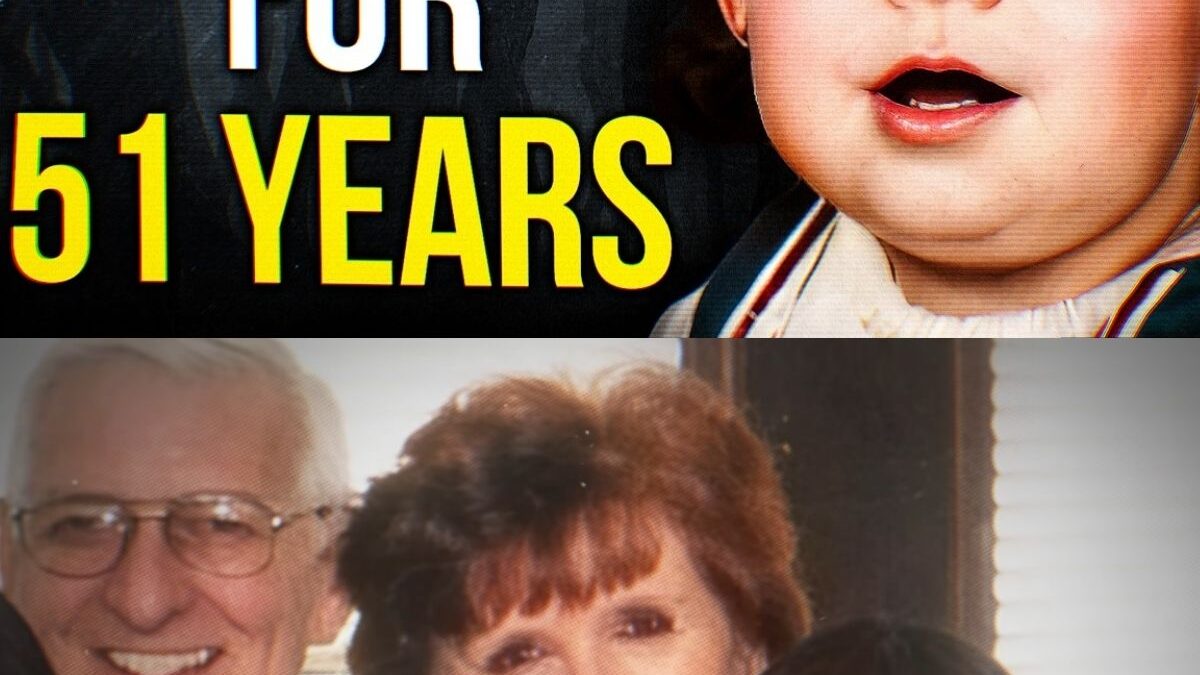
In other instances, the passage of time is so vast that finding the truth feels like a complete impossibility. In 1971, a desperate single mother in Texas hired a babysitter over the phone. The woman picked up baby Melissa Highsmith and never brought her back. For 51 years, the family chased phantom leads across the country. It wasn’t until 2022 that a 23andMe DNA test matched Melissa’s father to a woman named Melanie. Melanie had been raised by an abusive woman who claimed to have found her on the street. Armed with the undeniable proof of her birthmark and DNA, Melissa was finally able to embrace the family that never stopped looking for her, escaping the shadow of an abusive childhood built on a monumental lie.
Similarly, the story of Luis Albino proves that a mother’s hope can outlast almost anything. In 1951, six-year-old Luis was lured away from an Oakland, California park by a woman promising him candy, right in front of his ten-year-old brother, Roger. For over five decades, their mother Antonia visited the police station, keeping Luis’s clipping in her wallet until the day she died in 2005. The family carried the torch of her hope. In 2020, a casual online DNA test taken by Luis’s niece matched with an elderly man on the East Coast. That man was Luis, now 79 years old, a military veteran and retired firefighter who had been raised by a couple under a new identity, totally unaware he was a stolen child. In a race against time, Luis was flown to California in 2024. He wrapped his arms around his older brother Roger in a tearful, desperate embrace. Roger, having spent 73 years wondering what happened to his little brother in the park that day, finally had peace. He passed away just two months later.
These stories force us to reexamine the definitions of family, trauma, and identity. For the parents left behind, a missing child is a wound that never closes, a room kept perfectly intact, and a lifetime of looking for a familiar face in a crowd. But for the children themselves, the revelation of their kidnapping brings an agonizing duality. They are forced to reconcile the monsters who stole them with the parents who raised them, fed them, and loved them. Through the unstoppable march of DNA technology, the dark closets of the past are being thrown open, proving that while a name can be erased and a history rewritten, the biological truth will always find a way into the light.

