Maine 1980 Cold Case Solved — Arrest Shocks Community
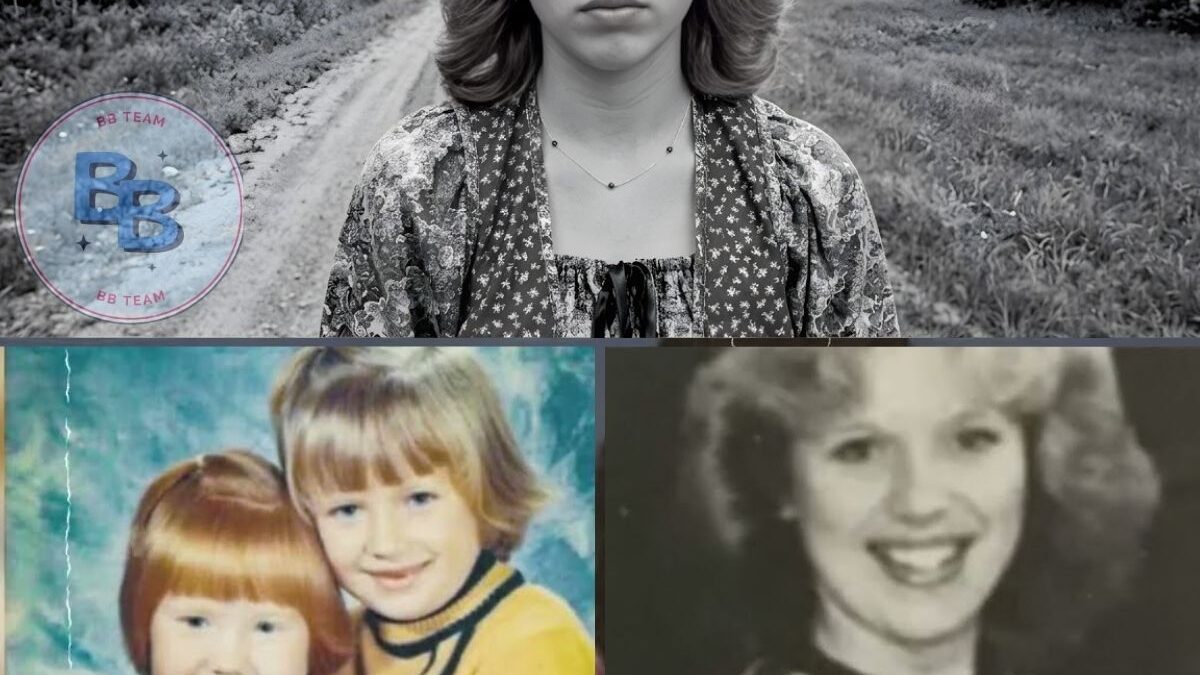
46 years ago, a 16-year-old girl from the small town of East Milanette, Maine, left home at 7:30 p.m. for a run and never returned. Her body was found 2 days later in the woods behind the school; She was brutally beaten, there were no DNA traces or witnesses. The police had a suspect who even repeatedly confessed to the pastor, parents, and work colleagues.
But he was never arrested, and the investigation remained silent for years. However, during all these 38 years, the girl’s mother never stopped fighting for a single day. She raised funds, hired private investigators, had her daughter’s body exhumed, knocked on the doors of the FBI and on national television, because she knew that her daughter’s killer was still living freely in this city.
And now, almost four decades later, one small detail, overlooked among thousands of pages of files, turned everything upside down, leading to an arrest that stunned the entire community in a way no one could have imagined. Before we dive into this story, please write where you are watching us from. And if you like videos like this, don’t forget to subscribe to the channel.
Joyce Marie Mlan, 16, was about to start eleventh grade at Shank School. She was an excellent student, her name was always on the school honor roll. She played the saxophone in the orchestra. Unlike others, Joyce didn’t just read music. She could master any musical instrument just by listening, without any help or sheet music.
Her mother, Pam Mlan, later said that such a talent cannot be taught. It was something Joyce was born with. In addition to music, Joyce was also a cheerleader, glee club president, class secretary, student council member, and drama club member, all at the same time. And none of this was a burden to her. She had just gotten her driver’s license, was planning to throw her 17th birthday party on the beach at the end of the month, and was starting to think about college after graduation.
Her younger sister Wendy admired Joyce as her role model. If you asked anyone in East Milanet about Joyce Mlan, they would tell you the same thing. A bright future awaited this girl. Friday, August 8, 1980. Summer. It was hot from the very morning. Joyce spent the whole day at the lake, swimming with her friends.
A typical summer day in a small town. Nothing special, nothing memorable in the usual sense. After lunch, she came home and had dinner with her family. Then, as night fell and the heat of the day began to subside, Joyce decided to go for a run—not because she liked running, but because football season was about to start, and she wanted to make sure she was in good enough shape for her position as a quarterback.
Around 7:30 p.m., she laced up her shoes, walked out the door, and ran the familiar route she had run many times: around the neighborhood, then behind Schenck High School—a path she knew like the back of her hand. 9:00 p.m. Joyce was still not home. Pam Mlan looked out the window. I must have gotten stuck some
where again. 10:00 p.m. Still not home. She began calling Joyce’s friends one by one. No one knew where she was. No one saw her after she left the house. Pam stepped outside , looking toward the school and into the darkness at the end of the block. There was no sound, no sign of people, only silence. The kind of silence that any mother would instantly understand as a sign that something is wrong.
That was the very moment when everything started to fall apart. Family and friends poured into the streets, searching for her all night, calling out Joyce’s name, but there was only silence in response. The police were notified. The official search has begun. But that night there was something that no one noticed .
A severe storm was approaching East Milanino . The downpour poured down, water seeping into every crevice of the ground and into every corner of the woods behind the Schenk School, washing away everything that lay on the ground. No one knew then that the night’s rain was erasing what could have been the only evidence in a case that would drag on for almost four decades.
From the very morning of the next day, all of East Milanino took to the streets. Volunteers gathered in front of the Schenk School, divided into groups and zones, and then dispersed in all directions. No one was allowed to return empty-handed. This was a small town, not the kind of place where people just stand by when something happens to a neighbor.
Everyone knew Joyce, everyone knew the Mlan family, and that morning everyone searched as if it was their own family member. But the rain on the night of August 8 made everything much more difficult. The ground was wet, leaves covered the paths, and any traces that might have existed had been erased during the night.
The Mlan family clung to hope with both hands. Maybe Joyce is injured and lying somewhere. Maybe she got lost. Maybe she’s still alive. This hope lasted for 2 days. The next day, volunteer Peter Larley was combing the woods behind the school’s football field when he suddenly stopped. In a clearing under the power lines, just 200 feet from the soccer field where Joyce was to play next season, he saw her.
Larley immediately called the police. The scene was surrounded, and what the police found there was something none of the volunteers standing by could have been prepared for. Joyce lay on her side next to a large rock, naked, brutally beaten beyond recognition. Her hands were tied behind her back with a piece of blue cloth.
The back of her skull had been shattered by numerous heavy blows with a hard object. Not one blow, not two, but many repeated blows. Police found no evidence of sexual assault—a detail that seemed unimportant at the time but later became a source of controversy that lasted for decades. The murder weapon was found at the scene: a large, heavy porcelain insulator from power lines, which are used to protect high-voltage lines in the area.
The insulator was broken. Its sharp edges matched the wounds on Joyce’s skull exactly. The killer did not bring a weapon with him. He didn’t need it, because everything he needed was right at his fingertips. But even though the murder weapon was found, forensic experts were faced with a harsh reality .
The storm on the night of August 8 washed away all fingerprints, blood outside the body, and destroyed almost all external DNA evidence that might have been at the scene. Everything that nature hasn’t erased. Time and rain destroyed it completely. There is almost no material evidence left. The news spread throughout East Milanino in a matter of hours.
In this small town, no secret stayed hidden for long , and this terrible news was no exception. Pam Mlan was informed of the tragedy. There are no words to describe that moment, and perhaps it’s not even worth trying. She soon told the Bangor Daily News: “I can’t believe anyone I know could do this, but someone did.
” There will be no peace. There will be no peace until this person is caught. The whole town was stunned. A 16-year-old girl, loved by everyone, was just murdered right behind her own school. And whoever did it was still at large, perhaps even in this same city. Maybe someone they knew by face and name. The state police headquarters took over the case and began with a picture that could have discouraged any detective from the very beginning.
No witnesses, no evidence. On the night of August 8, the area behind Schenck High School was not as deserted as one might think. There was a softball game going on in town. It was full of strangers, and local youth were going to have a drink near the schoolyard. The local paper mill just hired 300 construction workers from other cities.
People that no one in East Milan knew well. The list of potential suspects was so broad that it almost lost meaning. Whereas physical evidence was almost nonexistent. The case was at a disadvantage from the very beginning . The first thing the police did was to look at Peter Larley, the man who found the body. Whoever finds the body always becomes the first suspect.
This is the most important rule of any murder investigation. Larry was thoroughly questioned. His schedule was checked hour by hour, and a motive was sought from every angle. The result: his alibi was completely reinforced concrete. No connection to Joyce and no motive. Larry was cleared of suspicion. The first dead end, and, as it turns out later, far from the last.
The police then turned to the 300 paper mill workers: questioning dozens of them, checking alibis and looking for any connection to Joyce or the schoolyard that night. They found nothing. There was no evidence pointing in any particular direction, and there were not enough resources to test everyone .
This line of investigation was gradually shelved, not because anyone’s innocence was proven, but simply because they didn’t know where to start. Then, during the questioning of witnesses, one name began to emerge . Philip Scott Fournier, 19, who was often seen near the Schenck School athletic fields.
On the night of August 8, many saw Fournier drinking whiskey with friends near the school, right next to where Joyce was running. During interrogation, he gave testimony that the police didn’t know what to do with. He said that he left the party alone that night , went drunk into the woods, and came across a woman lying in the bushes, but he denied murder .
I came across a woman in the woods the very night Joyce Mlan disappeared and did nothing. He didn’t call anyone. He did not report this to the police. The statement was so strange that it was impossible to ignore. However, it could not be used immediately because there was no direct forensic evidence to press charges. Fournier was not arrested, but the police knew another detail that they could not explain.
That same night or early the next morning, Fournier broke into a local garage, stole a gas station, got behind the wheel while heavily intoxicated, and caused a serious accident. He suffered a serious head injury and was hospitalized. Why? Did he really steal a truck and flee the city just hours after he tripped over a woman in the woods? No one raised this question at the time , and since no one asked, there was no answer .
The investigation did not lead to any arrests or official suspects, devolving into anticipation of what no one knew. East Milanino has changed the way small towns change when they lose their innocence. Doors that once didn’t need to be locked were now locked every night . Children were forbidden to go outside after sunset. Rumors began to replace investigation, and silent suspicion slowly destroyed a relationship that had seemed unbreakable.
Years later, a detective working the case recalled, “We believed we knew who killed Joyce, but we also believed that this individual no longer posed a threat to the community.” This vague, ambiguous statement will haunt the Mlan family for many years to come. The following months passed without results, and those months stretched into years.
The official investigation has not made any significant progress. The case remained, but the detectives had other crimes and other families waiting for answers. No one has really forgotten Joyce Mlan. But not everyone could do what Pam Mlan did. Refuse to let this matter die in silence. Then, 9 months after that fateful night, in May 1981, the local pastor received a confession that stunned him.
Philip Scott Fournier, who was already 20 years old, came to the pastor and confessed. I killed Joyce Mlan. The pastor didn’t immediately believe him. He couldn’t believe it right away, just like no one else. He told Fournier, “If you’re telling the truth, you should tell your parents,” and Fournier did just that.
He went home, confessed to his father and mother, stood before them and told them what he had been keeping to himself for the last 9 months. The pastor then personally drove Fournier to the Bangor police station. Fournier sat before investigators and stated that he hit Joyce with a porcelain insulator.
This was supposed to be the moment when the case was solved. In 1981, 9 months after Joyce’s death, the perpetrator himself came to the police and confessed. But that did n’t happen. The police decided not to arrest Fournier because there was a detail in his testimony that did not match the evidence. He claimed to have raped Joyce before the murder, but forensic tests found no signs of sexual assault.
This contradiction was enough to make the police hesitate. And that hesitation, a decision made in a few hours at Bangor police station in 1981, stretched on for another 35 years. While the police hesitated, Pam Mlan did not sit idly by . Around 1985, when the case had been going on for five years without an arrest, she founded the Justice for Joyce organization, the Justice for Joyce Committee, raising money from the community, hiring private investigators, and doing everything she could to keep her daughter’s name in the local news.
Every year on August 8, she lit candles. The community held memorial services. Joyce was not forgotten, at least not in East Milanac, and not as long as Pam Mlan could stand on her feet. In 1989, the case first reached beyond Maine when it was featured on the NBC program “Unsolved Mysteries.” The most popular unsolved crime show in America at the time, hosted by Robert Stack with the same familiar deep voice that millions of Americans knew.
The Joyce Mlan case received 49 tips from across the country to the hotline . The police checked each of them. None of them led anywhere. But in 1989, something happened that almost no one knew about then and that no one would learn about for many decades to come. Fournier, who was then working as a janitor at Hasten University, told his supervisor during a normal workday and confessed a second time that he had killed Joyce Mlan and that he had deceived everyone during police interrogations . Not in a moment of panic,
not under pressure, but during a completely normal conversation at work with someone who had nothing to do with the case. The second confession, 8 years after Joyce’s death, to a complete stranger, and nothing happened. Two confessions: one to a pastor, the other to a colleague 8 years apart, to two completely different people in two completely different circumstances.
And Philip Scott Fournier continued to live freely, walking among the community, while the Joyce Mlan case quietly lay in the state police drawers, growing thicker but not budging. In 2008, 28 years after the night Joyce walked out the door and never came back, Pam Mlan did something few mothers would have the courage to do.
She decided to exhume her daughter’s body. The organization Justice for Joyce raised $20,000—enough to hire independent forensic experts to conduct a re-examination after nearly three decades. When the state police refused to reopen the investigation, Pam Mlan didn’t sit back and wait for them to change their minds. She created pressure in the only way available to the average person : through donations, independent experts, and undeniable results.
The results of the second examination did indeed provide new information about the murder weapon and the cause of death. This was enough to force the state police to reopen the case and review it after years of inaction. Pam Mlan’s 28- year persistence began to yield concrete results for the first time since the case was postponed.
Then 2009 brought a turning point from where no one expected. Not from a new clue, not from a witness who appeared, but from a completely different courtroom and on a completely different charge. Philip Scott Fournier appeared in federal court that year not for murder, but for possession of child pornography. And when federal judge John Woodcock handed down the sentence, he did something no detective or prosecutor had dared to do in the previous nearly 30 years.
He officially named Fournier as a suspect in the 1980 murder of Joyce Mlan . In open court, in the public record , without ambiguity or innuendo. This was the first time in nearly 30 years that Philip Scott Fournier’s name had been publicly and officially linked to Joyce’s death. The mainstream media reported it immediately.
East Milanino was stunned. This man had lived here for so many years, walked these streets, and this was the first time many of the city’s residents had heard his name in official connection with the death of Joyce Mlan. The pressure on the state’s top police officer has reached its peak. If a federal judge dared to say it clearly in court, then the state police had no more reason to remain silent.
In 2010, Pam Mlan took another step and officially asked the FBI to intervene in the case. In 2013, she knocked on the door of the producers of the television program “Cold Justice”, a show specializing in investigating ” dead” cases with the help of leading forensic experts. Ultimately, none of these avenues led to direct intervention, and the matter was left in the hands of the main police force.
But what Pam Mlan did all these years was not meaningless. Every time she spoke, appeared on the news, or knocked on the doors of institutions or television programs, she created an environment in which the state police could no longer delay without facing public backlash. Let’s stop here for a second. 33 years old.
This is the time that passed from the day Joyce Mlan disappeared to the day Pam Mlan knocked on the door of the television station for help. 33 years during which she had no legal instruments, power, position, or significant resources. She wasn’t a detective, she wasn’t a lawyer, she wasn’t someone who could make the system work on its own.
She was just a mother who lit a candle every August 8th, with a small organization built on donations from neighbors, and a tenacity that cannot be accurately described in any word in either Vietnamese or English. And it turned out that was enough. It’s enough that the flame doesn’t go out until the right person decides to revisit the matter from the beginning and truly see what was there all along.
That man was Daryl Perry, a state police sergeant who took on the Joyce Mlan case and began to do what his predecessors had never systematically done: read all 10,000 pages of investigative documents spanning nearly 30 years from the first page to the last , not missing a single detail. Perry understood from the beginning that he would not be able to find new forensic evidence that did not already exist.
The storm of the 1980s took care of that in time. Instead, he focused on what else could be used— people. Perry and his team began re-interviewing all the old witnesses, using modern interrogation techniques. Methods that didn’t exist in 1980 have been developed through decades of research into the psychology of witnesses and how memory works over time.
Perry later explained: “During re-interviews, people can describe details better, even if they were interviewed back in the 1980s.” We get a clearer picture of the chronology and reliability of each witness. The conclusion he reached after the first few weeks of working on the case was not that the case lacked information, but that it lacked a person who knew how to use that information correctly at the right time.
Along with re- examining witnesses, Perry and his team revisited all the suspects they had been considering for nearly 30 years. Not because they doubted the old results, but because they knew: the defense would try to use these names in court, and they needed clear answers about each of them. Peter Larley, the man who found the body, was acquitted back in 1980, with an ironclad alibi and no motive.
And this review only confirmed it again. Joe Albert, a criminal who murdered another young woman in Maine in 1983 and who was once investigated for similarities in his modus operandi, was thoroughly investigated and again acquitted thanks to an independently verified alibi. Paper mill workers, who were one of the initial areas of investigation.
No evidence ever linked any of them to Joyce or the school grounds that night, and that remained unchanged 30 years later. The more other leads were discarded, the clearer the path to Philip Scott Fournier became, and not because he was the only suspect, but because all the circumstantial evidence pointed in one direction.
Perry then tracked down a supervisor at Hasten University —the man to whom Fournier had confessed on a normal day in 1989, over 20 years earlier. This man confirmed everything officially and without any hesitation. Fournier told him that he had killed Joyce Mlan and that he had outwitted the police during all the interrogations.
Having received this confirmation, Perry looked back at the entire chain of events and saw a picture that no one before him had seen clearly enough. Confession of a pastor in 1981. Confession to his parents in 1981. A strange statement from the police immediately after the crime that he accidentally came across a woman in the woods.
Confession to the leader in 1989. And also kidnapping a gas station attendant and fleeing the city on the same night Joyce disappeared. There was no physical forensic evidence, but there was a chain of confessions spanning nearly a decade and many different people under circumstances that could not be faked.
And then , during another re-reading of the case , Perry noticed a small detail that everyone around him was looking at, but didn’t stop to notice. A detail so small it was easy to miss, but significant enough to change the whole thing. In previous police testimony, Fournier mentioned that Joyce was wounded in the left side of her face.
At first glance, it did n’t seem like much , but Perry remembered one detail from the 1980 expert report . When Peter Larley found Joyce’s body, she was lying in such a position that the left side of her face was completely invisible, pressed to the ground, completely covered. Information about the injuries to the left side of his face was never made public, did not appear in any news reports, and was not disclosed in any interviews with the press or the public.
Philip Scott Fournier could not have known this if he had not been in the woods behind the Shank High School football field that evening, August 8, 1980. This was the same detail that Judge Anne Murray would later directly refer to in her decision, and which no defense argument could convincingly explain. On March 4, 2016, Philip Scott Fournier was officially arrested.
He was 55 years old at the time, a middle- aged man with gray hair who had lived another 36 years after the night Joyce Mlan did not return home. Bail was set at $300,000. Fournier was unable to post bail and was held in Pinnabcott County Jail awaiting trial. East Milaninoet was stunned in a way that only small towns can be.
Not because they didn’t know the name of the arrested man, but precisely because they knew him too well. This person has walked these streets, been seen, recognized by face, and perhaps greeted for nearly four decades. Pam Mlan received the news by phone. After 36 years of waiting, after 36 years of lighting candles, raising funds, and knocking on the doors of institutions and television stations, she could not utter a word.
The prosecution team entered the courtroom with a challenge few prosecutors want to face. Assistant Attorneys General Lynn Zania and Leanne Robin, along with Detective Perry and Deputy Attorney General Lisa Marchese, had to build a case without any physical forensic evidence, DNA, fingerprints, or witnesses who saw the murder.
The prosecution’s entire case was based on a chain of confessions and details that only the killer could have known. And the prosecution’s main strategy was to prove one thing. Fournier confessed not once in a moment of panic or loss of control, but repeatedly, to many different people under circumstances that were impossible to arrange over the course of nearly a decade.
The defense, led by attorney Jeffrey Silverstein, built two main pillars. The first pillar is the brain injury that Fournier suffered in an accident with a fuel tanker on the night of August 8, 1980 . The same night Joyce disappeared, making his memory unreliable and his confession a product of brain damage, not the truth.
The second pillar—there were many other suspects who were not properly eliminated. Peter Larley, Joe Albert, and names that Fournier himself had mentioned in previous police statements. Silverstein appeared in court and bluntly stated, “35 years of meticulous detective work on this case, and there is nothing that links my client to the crime scene.
” On January 26, 2018, a trial began in Bangor, Maine, which was held without a jury. Judge Anne Murray was the only one who had to make the decision. Prosecutor Zena presented a chain of confessions in court, piece by piece. Pastor in 1981, parents in 1981, head of Hasten University in 1989. She dwelled on the details of the injury to the left side of her face for a particularly long time.
Information that was never made public, but which Fournier mentioned in his testimony. The defense countered: ” Brain damage created false memories.” There was no physical evidence. No one actually witnessed the murder. Xena responded with an argument she had been emphasizing until the last minute. The 36- year delay was a failure of the system, not proof of innocence, and a judge should not allow a failure of the system to become a shield protecting a criminal.
For many days during the trial, Pam Mlan sat in the courtroom every day, never missing a single session. The woman who had spent 38 years of her life getting to this point sat quietly and waited one more time. On February 26, 2018, Judge Anne Murray announced her verdict. She strongly rejected the argument about a traumatic brain injury.
Fournier remembered many other events from the same period with high accuracy. The brain injury did not explain why his memory was so selective , forgetting only what might expose him . Then she read a sentence that would later be quoted many times. Fournier’s statement about the injury to the left side of Joyce’s face, even though the left side of her face was invisible when the body was found, as well as Fournier’s attempt to flee the city by stealing a truck just hours after Joyce’s death, force the court to conclude that the state
has proven the defendant’s guilt beyond a reasonable doubt. Guilty of first-degree murder. Pam Mlan burst into tears. Assistant Attorney General Zena stood before the cameras and said: ” We are extremely pleased. This is something that should have happened a long time ago . After 38 years, justice has finally come.
In April 2018, Judge Anne Murray sentenced Philip Scott Fournier to 45 years in prison. Fournier was 57 at the time . With a 45- year sentence, he could not serve it and be released. It was effectively a life sentence, written with a specific number instead of the words ” life imprisonment.” Pam Mlan stood before the cameras after the verdict was announced and said: “It’s been 37 and a half years, and you will never see a happier mother than the one standing here right now.
” But not everyone who loved Joyce felt the same, and it was understandable. Joyce’s uncle, Mr. Daniel Gale, said what many were thinking but could not put into words. It was not her will return. I am not happy that he is behind bars. I feel sorry for his family. Justice and pain are not mutually exclusive in small towns where both the perpetrator and the victim are part of the community.
They coexist side by side, and no one has the right to tell others how they should feel. Fournier did not accept the sentence. In December 2018, an appeal was filed with the Supreme Court of Appeals, with three arguments carefully prepared by attorney Silverstein. First, the trial court violated religious privilege by accepting the confession that Fournier made to the pastor in 1981.
Second, Judge Murray did not properly consider the evidence against the other suspects. And third, the court did not allow the detective to testify about why the Bangor police decided not to arrest Fournier after he came to the station and confessed to 1981. These were carefully constructed technical legal arguments, but it is worth being clear: none of them were new claims of innocence.
No new evidence was presented, and no new witnesses appeared . This was a last-ditch effort to find a way around the technical loopholes of legal procedure, not an argument on the facts of the case. On February 21, 2019, the Supreme Court of Appeals handed down its decision. It dismissed the entire appeal without exception.
The court clearly held that Fournier had voluntarily waived his religious secrecy the moment he decided to repeat the confession to his parents. Once he actively violated that confidentiality, the privilege no longer existed. The trial court had not erred on any of the points at issue . The sentence of 45 years in prison was upheld. 38 years.
And when Judge Anne Murray finished reading the two words “ guilty,” Pam Mlany burst into tears on the spot, unable to hold back, and no longer needed to. It was the moment she had lived for nearly four decades. Every call to the police, every press conference, every candle lit on August 8. Every refusal , every time she had continued, even when there no longer seemed to be a good reason to continue—it had all led up to this moment .
In a courtroom in Bangor, Maine, when a judge finally said out loud what she had known for a long time. The news had reached East Millinocket in a matter of hours. Those who had grown up with the case, like a raw wound in the town. Those who still remembered the night Joyce disappeared. Those who had joined the search, those who had lived in fear and suspicion in the years that followed.
They all knew that something had finally been accomplished that day. Detective Perry, who had interviewed people in the town for years, said, “Almost Every witness we spoke to said how much this case has changed East Millinocket.” Being able to tell the community and family that there is now an answer to this story is what gives me the most satisfaction.
But amidst that relief was a somber note that Joyce’s uncle, Mr. Daniel Gale, had for those who didn’t know how to put it into words. It won’t bring her back. I’m not happy he’s behind bars. I feel sorry for his family. In a small town, both the perpetrator and the victim are part of the community, so justice sometimes hurts those who did nothing wrong.
In addition to what happened to those involved , Joyce Mlan’s case has left a concrete and lasting mark on Maine’s legal system. The case was one of the driving forces behind the creation of Maine’s Unsolved Crimes Investigation Division —the first of its kind in the state, ensuring that no case is simply closed simply because time has passed and everyone forgot.
The case set an important precedent for religious secrecy in Maine law. A confession made to a clergyman can be used as evidence in court if the confessor voluntarily violates that confidentiality by telling others—a legal line that had not previously been clearly defined. And Detective Perry’s method of re-examining witnesses became a model that has been referenced in other Maine cases.
It is proof that sometimes the answers lie not in new evidence but in the ability to ask old questions in new ways. But the most important legacy of this case is not the law, nor the legal precedent, nor the investigative procedure . This is Pam Mlan—a woman who, for 38 years, has proven what ordinary persistence can accomplish when the entire system has failed.
She had no power, no official position, no significant resources. All she had was a mother’s love and a refusal to accept that her daughter could to die without justice. She collected money from neighbors, exhumed her daughter’s body 28 years later, contacted the FBI, knocked on the doors of national television stations, and never let Joyce Mlan’s name fade.
No one gave her a medal. No one apologized to her for those 38 years. But in the end, the system did what it should have done long ago, and it happened in part because it wouldn’t let her continue to do nothing. At the news conference after the sentencing, Police Chief Chad Wagner stood before the cameras and did something few officials in his position dare to do.
He publicly apologized for the mistakes of 38 years, for the evidence that was ignored, for the missed opportunities and the unnecessary delays. That apology didn’t bring Joyce back. No apology could do that, but at least it was a sincere admission, and sometimes a sincere admission is all that remains .
On the evening of August 8, 1980 Joyce Mlan tied her shoelaces and walked out the door, never knowing it would be her last. She didn’t know that the beach party she’d planned for her 17th birthday would never happen. She didn’t know that the college degree she’d dreamed of would never be in her hands. She didn’t know that her saxophone would be silent, that the music that was growing in her head would never be recorded, and that the talent her mother had talked about would never have a chance to be revealed.
All she knew was that it was getting colder, that football season would soon start, and that she had run the trail behind Schenck High School many times and knew it like the back of her hand . Instead of everything she should have received, she left something else behind. A town that had learned to never give up, even when things seemed hopeless.
A mother who had taught the entire state of Maine the true meaning of perseverance. And a law firm. a system that was forced to look at itself and become better. In August 1980, Joyce Mlan left her home for a run and never returned. But 38 years later, in a courtroom in Bangor, Maine, in the silence of the trial, she was finally heard.
If you’ve made it this far , thank you for taking the time to read Joyce’s story. Please leave a comment below and let us know where you’re watching from. Don’t forget to subscribe so you don’t miss future videos.

