I Moved In With a Guy Who HATED Gays — Then He Did THIS With Me | Gay Love Story
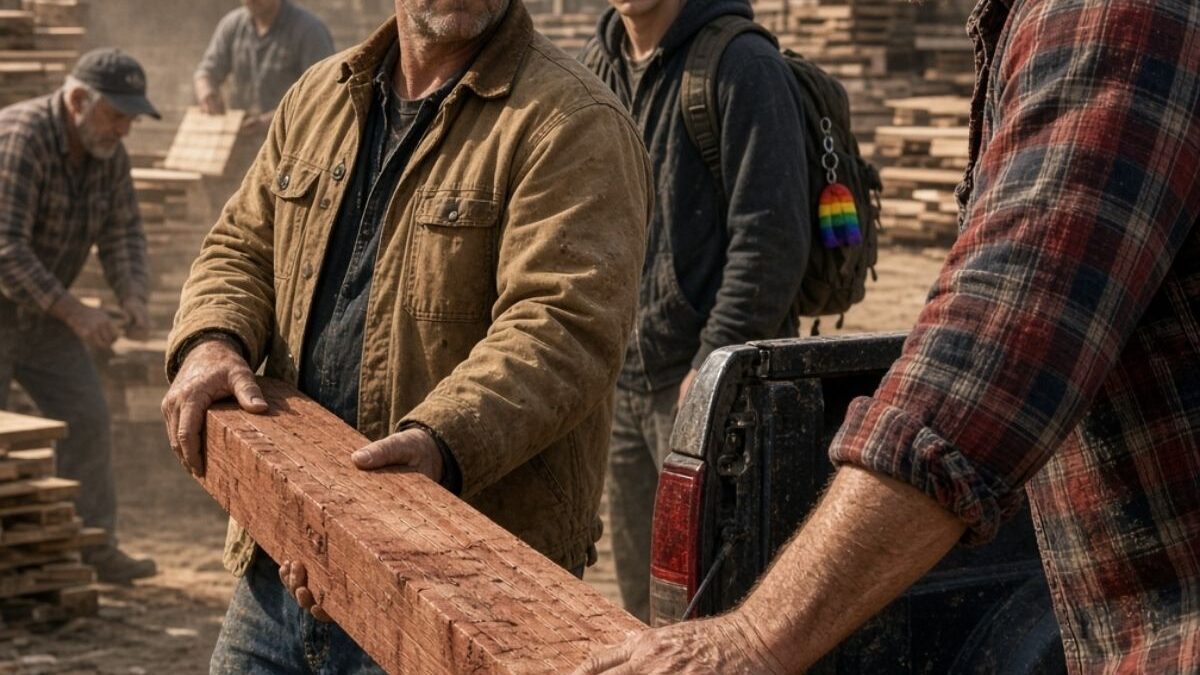
The first thing my new roommate ever said to me was, “I don’t live with gays.” And somehow, that sentence became the beginning of the greatest love story of my life. Looking back now, I sometimes wonder if fate has a twisted sense of humor. Maybe it enjoys placing people exactly where they never wanted to be just to see what happens next.
My name is Ethan Brooks, and 3 months before I met Logan Carter, my life had been perfectly ordinary. I was a senior graphic design student juggling classes, freelance projects, and a tiny apartment I could barely afford. Then my landlord decided to sell the building with only 30 days notice, and suddenly every affordable place within 50 miles had already disappeared.
My savings barely covered tuition, my parents lived halfway across the country, and sleeping in my car sounded less ridiculous every day. Then my best friend Tyler texted me a listing. Cheap room. Owner wants someone quiet. That was it. No photos of the roommate. No warning labels. Just an address on the edge of a quiet Oregon town where old pine trees lined every street, and every house looked like it had survived three generations of winters.
The rent was almost suspiciously low, but desperation has a way of making suspicious things look like miracles. The house itself looked surprisingly welcoming. A modest white craftsman with blue shutters, a deep front porch, and flower boxes that had long since been abandoned. Wind chimes swayed gently above the entrance, creating a soft melody that almost convinced me this might actually work out.
I knocked twice before the door opened. The man standing there looked like he had been carved out of oak. Broad shoulders. Dark blond hair cut short. Faded jeans covered with sawdust. Strong hands that looked more familiar with wood than with people. His gray eyes landed on my face with a calm expression that somehow still managed to feel cold. “You Ethan?” he asked.
“Yeah.” “Come in.” The house smelled faintly of cedar and fresh coffee. Everything inside was spotless. Shoes lined up perfectly by the wall. Books arranged by height. Not a single decoration that seemed unnecessary. It felt less like someone’s home and more like a place where emotions had been carefully packed away into storage boxes.
He watched as I set my backpack down. I’m Logan. I smiled politely. Nice to meet you. He didn’t smile back. Instead, his eyes drifted toward the small rainbow keychain hanging from my backpack zipper. It had been a gift from Tyler during Pride Month years earlier. I barely thought about it anymore. Logan stared at it for several long seconds before looking directly into my eyes.
His voice stayed calm, almost casual, which somehow made the words hit even harder. I don’t live with gays. The room became strangely quiet. Outside, I could hear birds singing somewhere beyond the kitchen window, completely unaware that my stomach had just dropped. I considered pretending I hadn’t heard him correctly.
Instead, I took a slow breath. Well, I answered carefully, you kind of do now. His jaw tightened almost imperceptibly. No, he folded his arms. I made that clear in the rental agreement. Actually, I replied, pulling out the printed lease, it says no smoking, no parties, no pets over 40 lb, and rent is due on the 1st. Nothing else.
For the first time, something flickered across his face. Not anger, surprise. Like reality had refused to follow the script he expected. He glanced at the paperwork before letting out a quiet sigh. You signed already? Yesterday. Another silence settled between us. Finally, he stepped aside and pointed toward the hallway. Last door on the left.
That was all he said. No welcome. No handshake. No apology. Just directions. As I carried my suitcase toward my room, I couldn’t shake the strange feeling that this house had rules no lease could ever explain, and somehow I had just walked into the middle of a story neither of us was ready to tell.
The first week felt less like sharing a house and more like participating in a silent contest where neither of us wanted to admit the other existed. Logan left the house before sunrise every morning, his heavy work boots crossing the old wooden floor with the same measured rhythm. And by the time I woke up for my online classes, he was already gone.
When he returned in the evening, the scent of freshly cut cedar followed him through the front door, lingering in the hallway long after he disappeared into his workshop behind the house. We barely exchanged more than a few words each day, and every conversation sounded more like two strangers discussing the weather than roommates learning to live together.
On the second morning, I discovered a sheet of paper taped to the refrigerator. It listed house rules in perfectly straight handwriting. Wash your own dishes immediately. Replace anything you finish. Quiet hours after 10:00. Lock every door before bed. Do not enter the workshop. At the bottom, one final sentence stood alone.
Respect personal space. I smiled to myself because that last rule was clearly aimed at me, even though I had done nothing except unpack my clothes. I grabbed a marker and added one more line underneath. Please do not steal my yogurt. When I returned from class that afternoon, my sentence had been crossed out.
Beside it, Logan had written, “I do not eat strawberry yogurt.” I could not help laughing. It was the closest thing we had shared to a conversation. Small moments like that became strangely common. Every time I tried to break the ice, Logan answered with as few words as possible, but he always answered. If I asked whether the mail had arrived, he nodded toward the kitchen counter.
If I wondered where the extra batteries were, they mysteriously appeared outside my bedroom door before dinner. If something broke, it was quietly repaired before I even had the chance to fix it myself. It was confusing. His words built walls, but his actions quietly erased a few bricks every day. One rainy Thursday afternoon, I came home carrying three heavy grocery bags after walking nearly half a mile from the bus stop.
Before I could reach the porch, one paper bag ripped open, sending cans and vegetables rolling across the wet driveway. I sighed and crouched to gather everything before the rain soaked through the remaining bags. Without a word, another pair of hands reached down beside mine. Logan picked up a carton of eggs before it slid into a puddle, placed everything neatly back into the bags, and carried the heaviest one inside. He never looked at me.
He simply set it on the kitchen counter and walked away toward the workshop. “Thank you.” I called after him. He paused for half a second before answering without turning around. “You would have dropped the eggs.” That was it. No smile. No eye contact. Yet, somehow it stayed with me the rest of the evening.
A man who claimed he did not want someone like me living in his house had just stood in the rain to help me without expecting anything in return. Later that night, while making coffee, I noticed a framed photograph tucked almost out of sight on the highest kitchen shelf. It showed a younger Logan standing beside another man about his age.
They were laughing at something outside the frame, arms resting casually across each other’s shoulders. Whatever memory that picture held, it was the only personal decoration anywhere in the house. Before I could study it longer, Logan entered the kitchen. His eyes immediately followed mine to the photograph. For the first time since we met, his expression hardened in a way that carried something deeper than annoyance.
He quietly lifted the frame, placed it inside a cabinet, and closed the door. Neither of us spoke, but as he walked away, I realized something important. People who truly hated rarely hid old memories that carefully. They buried them. By the second month, the silence between us had changed. It was no longer sharp enough to cut.
Instead, it settled into something almost predictable, like the steady ticking of an old clock that you only noticed when it stopped. Logan still kept his distance, but I had started recognizing the small routines that quietly revealed who he really was. Every Saturday morning, he drove into town before 8:00 and came back with fresh bread from the same family bakery.
Every Sunday evening, he sharpened his woodworking tools on the back porch while listening to an old country radio station that crackled more than it played music. Every night before bed, he checked every window and every lock in the house without fail. He lived like someone who believed order could keep the world from falling apart.
One Tuesday morning, I woke up with a pounding headache and a sore throat that made swallowing feel like work. I blamed the cold rain I had been caught in after class and figured I would push through the day. By lunchtime, I was wrapped in a blanket on the living room couch trying to finish a freelance logo project while my laptop fan sounded like it was about to give up.
Logan came home earlier than usual carrying a long wooden board under one arm. He glanced toward the couch for barely a second before disappearing into the kitchen. We did not exchange a single word. A few minutes later, I heard a mug being placed on the coffee table. I looked up to find a steaming cup of tea beside a bottle of cold medicine.
Logan was already walking away. You left this for me? I asked. Nobody else is here, he replied without stopping. Thank you. He simply nodded once and continued toward the hallway. I stared at the mug for several seconds before taking a sip. It tasted surprisingly good with honey and lemon mixed in just the right balance.
It was impossible to match that quiet kindness with the man who had looked me in the eye weeks earlier and declared that he did not live with gay men. The contradictions kept piling up. A few days later, my laptop suddenly froze in the middle of a client meeting. No matter what I tried, the screen remained black.
I let out a frustrated sigh and muttered to myself that I could never afford another computer. Logan happened to walk past my bedroom door. “What happened?” he asked. “I think it finally died.” He stepped inside for the first time since I had moved in. Without asking another question, he gently turned the laptop over, removed the back panel with a small screwdriver from his pocket, and examined it with practiced confidence.
20 minutes later, he handed it back to me. “Loose connection,” he said. “It should be fine now.” The screen lit up immediately. I laughed in disbelief. “Are you secretly good at everything?” He almost smiled. It was so brief that I wondered if I had imagined it. “No,” he answered. “Just old enough to fix things.
” That tiny moment stayed with me longer than I expected. It was the first joke he had ever made around me, even if it was barely more than a sentence. Then came the afternoon that made me question everything I thought I understood about Logan Carter. I had stopped at the local grocery store after class when I overheard two men whispering near the checkout line.
They were not whispering quietly enough. One of them glanced toward me before saying, “That must be the guy staying with Carter.” The other shrugged. “I heard Logan will throw him out soon enough.” I pretended not to hear them, paid for my groceries, and walked outside. As I reached the parking lot, I noticed Logan loading lumber into the back of his pickup truck a few spaces away.
Before I could decide whether to wave, one of the same men approached him with a smirk. I could not hear every word from where I stood, but I clearly heard one sentence. “I thought you said you did not want people like him in your house.” Logan looked at the man for a long moment before calmly answering, “Who lives in my house is none of your business.
” He closed the truck bed, climbed into the driver’s seat, and drove away without another word. I stood frozen beside my car, groceries forgotten in my hands. That single sentence echoed in my mind all evening. For the first time since moving into that quiet little house beneath the pine trees, I realized Logan was no longer trying to convince the world that I did not belong there.
He was beginning to convince himself. The answer finally arrived on an ordinary Wednesday evening, and it was hidden inside a dusty cardboard box that had no business falling off the top shelf. I had been looking for a spare light bulb in the hallway closet after one of the kitchen lights burned out.
The closet was packed with old paint cans, folded blankets, and forgotten tools. As I reached for a small plastic container, another box tipped forward and landed at my feet with a soft thud. The lid slipped open just enough for several old photographs to slide onto the hardwood floor. Before I could gather them, Logan’s voice echoed from the front door. “Ethan.” I looked up.
He had frozen in place the moment he saw the photographs scattered across the hallway. For several long seconds, neither of us moved. I quickly bent down, trying to put everything back exactly as I had found it. “I am sorry,” I said, “I was only looking for a light bulb.” Logan slowly walked over and knelt beside me.
His expression was unreadable, but there was no anger in his eyes, only exhaustion. He picked up one photograph and stared at it for a moment before letting out a quiet breath. “You did not do anything wrong,” he said softly. It was the gentlest I had ever heard his voice. Curiosity tugged at me, but I hesitated. “Is that the same man from the picture in the kitchen?” Logan nodded once.
“His name was Daniel.” The silence stretched between us until he surprised me by sitting down on the hallway floor instead of putting the the away. I slowly sat across from him. Outside, rain tapped softly against the windows, making the little house feel even quieter. Logan turned one photograph toward me.
Two young men stood beside an old fishing boat, laughing so hard that neither of them was looking at the camera. One was obviously a younger Logan. The other was Daniel. They looked almost identical except for Daniel’s longer hair and brighter smile. “My older brother,” Logan said. I glanced back at him. “You were close.” He smiled sadly. “He was my best friend.
” His fingers rested gently on the edge of the photograph. “Daniel came out when he was 24. Our parents did not know how to handle it. They stopped inviting him to family holidays. They avoided difficult conversations because pretending everything was normal felt easier than admitting they were afraid.” Logan paused, choosing each word carefully.
“I was younger. I thought staying quiet meant staying loyal to everyone.” His eyes drifted toward the rain outside. “It did not. It only meant Daniel carried everything by himself.” I listened without interrupting. There was nothing to fix, nothing to argue with. Some stories only asked to be heard. “After a while,” Logan continued, “he moved to another state.
We still called each other every week, every birthday, every Christmas. He built a good life. He found people who accepted him exactly as he was.” He looked down at the photograph again. Then he got sick. His voice became almost a whisper. “I spent months driving, back and forth whenever I could.
I kept thinking there would be more time.” He swallowed before continuing. “There was not.” The hallway fell completely silent except for the rain. I finally understood why every room in the house had been so perfectly organized, why every routine had been followed with military precision, and why every personal memory had been hidden inside closets and cabinets instead of displayed on walls.
Logan had not built a quiet house because he disliked people. He had built one because silence hurt less than grief. “I blamed myself,” he admitted. “Then I blamed everything connected to the part of his life I never understood. It was easier to be angry than to admit I missed my brother every single day.” He looked directly at me for the first time since we sat down.
“When you showed up with that rainbow keychain, I thought all those old feelings were coming back. I told myself pushing you away would make the memories disappear.” He gave a tired smile that barely reached his eyes. “It did not work.” I felt my chest tighten, not because I pitied him, but because I finally saw the truth.
Logan had never been fighting people like me. He had been fighting the guilt of a conversation he could never have again. And somewhere between shared groceries, cups of tea, repaired laptops, and quiet evenings beneath the pine trees, that fight had already begun to change him. After that night in the hallway, something invisible shifted between us.
Logan did not suddenly become cheerful, and I did not pretend his past had magically disappeared, but the walls inside the house no longer felt as tall. Conversations that once lasted only a few seconds slowly stretched into entire evenings. Sometimes we talked while washing dishes. Other times we sat on the back porch after dinner, listening to the wind move through the pine trees without feeling pressured to fill every silence.
I discovered that Logan had an unexpectedly dry sense of humor hidden beneath his serious exterior. He claimed he only owned one coffee mug because every other mug people had ever given him eventually chipped. I pointed out that he had an entire cabinet full of mugs. He looked at them for a moment before quietly admitting, “I forgot those existed.
” We both laughed, and for the first time, it felt completely natural. Saturdays gradually became our unofficial grocery days. Logan insisted on driving because, according to him, my little hatchback sounded concerned every time it climbed a hill. I replied that his pickup truck consumed gasoline like it had a personal grudge against the environment.
He pretended to be offended for almost 10 seconds before shaking his head with the faintest smile. At the grocery store, we somehow settled into an easy rhythm. I picked fresh vegetables while Logan compared prices with surprising patience. He always reached the highest shelves before I could even ask, and I always reminded him not to buy enough food for an entire football team when only two people lived in the house.
One afternoon, I convinced him to try the cinnamon rolls from the family bakery he visited every weekend. He took one careful bite, frowned thoughtfully, then reached for a second one without saying a word. I raised an eyebrow. So? He cleared his throat. They are acceptable. The empty paper bag by the time we reached home suggested a much stronger opinion.
As the weather warmed, we spent more evenings outside. Logan often worked on custom furniture in his workshop with the large garage door open, allowing the scent of fresh cedar to drift across the yard. One evening, he handed me a pair of safety glasses and asked if I wanted to help sand the surface of a walnut dining table. Are you sure? I asked.
I thought the workshop was off-limits. He shrugged. It was. What changed? He adjusted a measuring tape across the tabletop before answering. I changed the rule. It was such a simple sentence, but I carried it with me for days. Every new routine felt like another quiet decision to let me become part of his everyday life.
Sometimes we cooked dinner together, though Logan insisted his cooking consisted of only three recipes. I challenged him to learn a fourth, and the result was a homemade pasta dish that looked terrible, but tasted surprisingly good. When I complimented it, he laughed and admitted he had secretly watched three online cooking videos while I was in class.
I teased him for studying pasta the same way he probably studied woodworking with complete dedication. He answered, “If something is worth doing, it is worth learning properly.” That sentence explained almost everything about him. Then one Sunday afternoon, while cleaning the living room, I noticed the framed photograph of Daniel sitting back on the highest kitchen shelf.
This time it was not hidden inside a cabinet. It stood beside a small green plant near the window where sunlight touched the frame every morning. I looked toward Logan, who was reading on the couch. “You put it back.” He closed his book and followed my eyes. “He should not have been hidden.” There was no sadness in his voice this time, only quiet certainty.
A few moments later, he surprised me again. “Daniel would have liked you.” I looked down, unsure how to answer something that meaningful. Finally, I smiled. “I wish I could have met him.” Logan nodded slowly. “I think you would have been friends.” As evening settled over the little white house beneath the tall pines, I realized that home is rarely built in a single moment.
Sometimes it is created one shared meal, one quiet conversation, one repaired memory at a time. Without either of us noticing exactly when it happened, we had stopped acting like two strangers sharing an address. We had become the first safe place either of us had found in a very long time. Summer arrived quietly, painting the hills outside town in deep shades of green, and filling the evenings with the scent of warm cedar and fresh-cut grass.
Life inside the house settled into a rhythm that felt so natural I sometimes forgot there had ever been a time when Logan barely looked at me. We shared breakfasts whenever our schedules matched, argued playfully over which movie to watch on Friday nights, and somehow turned grocery shopping into an event that usually ended with us bringing home desserts neither of us had planned to buy.
The ordinary moments became my favorite part of every week because they were never really ordinary anymore. They belonged to us. Then, almost without warning, everything shifted again. One Monday afternoon, my phone rang during class. It was a design firm in Seattle where I had interviewed months earlier before losing my apartment.
I had almost forgotten about it. The hiring manager apologized for the delay and explained that a position had finally opened. Full-time, benefits, better pay than any freelance work I had ever managed to find. There was only one condition. They wanted me to start in 3 weeks. I thanked her, promised to think about it overnight, and ended the call with my heart racing.
It was everything I had worked toward since freshman year. It was also nearly 300 miles away. That evening I sat alone on the back porch long after sunset reading the offer letter again and again without actually seeing the words. Logan stepped outside carrying two mugs of coffee. He handed one to me before sitting on the porch steps. “Something happened,” he said.
It was not a question. Somehow he had learned to read my face almost as well as I could read his. I nodded slowly and handed him the printed email. He read every line without speaking. When he finished, he folded the paper carefully and returned it to me. “Congratulations.” His voice sounded steady, but something behind it felt strangely distant.
“You worked hard for this.” I did. Neither of us said anything else for a while. Crickets filled the silence between us. Finally, I asked the question that had been circling my mind since the phone call. “What would you do?” Logan stared toward the dark outline of the pine trees. “If I answered that honestly, it would not be fair.” I frowned.
“Why not?” He gave a small smile that carried more sadness than humor. “Because I would be answering for me instead of for you.” The next 2 weeks passed in a blur of uncertainty. I accepted the job because turning it down felt impossible. Yet, every time I packed another box, the excitement I expected never arrived. Instead, each empty bookshelf and each folded sweater made the bedroom feel less like mine.
Logan helped without being asked. He found extra moving boxes in the garage, wrapped fragile dishes in old newspapers, and even repaired one broken suitcase handle after noticing it had cracked. We worked side by side almost every evening, talking about everything except the one subject that mattered most. On my final Saturday before the move, Tyler drove over to help load the first few boxes into his SUV.
As we carried furniture toward the driveway, he quietly pulled me aside. “Can I ask you something?” I nodded. He glanced toward Logan, who was tightening a loose strap around a stack of boxes. “Are you sure you are leaving because of the job?” I hesitated. Tyler smiled knowingly. “That is what I thought.” Before I could answer, Logan walked over carrying another box.
Tyler thanked him, climbed into his car, and drove away to make room for the moving truck that would arrive the following morning. The driveway became quiet again. Logan looked at the nearly empty living room through the open front door before speaking so softly I almost missed it. “This house feels different already.” I looked at him, searching for the right words, but none of them seemed large enough.
For the first time since I had moved into that little white house beneath the pine trees, I realized that leaving was no longer just about changing my address. It felt dangerously close to walking away from someone who had quietly become part of my heart, even if neither of us had found the courage to say it aloud. The moving truck arrived just after 9:00 the next morning beneath a sky filled with low gray clouds.
By noon, almost everything I owned had been packed inside neat stacks of cardboard boxes. My bedroom, once cluttered with sketchbooks, coffee mugs, and scattered pencils, echoed with an emptiness that did not feel temporary. It felt final. Logan spent the entire morning helping the movers without slowing down once. He carried the heaviest furniture as though it weighed nothing, tightened straps inside the truck, and double-checked every box marked fragile.
We worked side by side, speaking only when necessary, both pretending that silence was easier than honesty. Around 3:00, the movers climbed into the truck and pulled away, promising to meet me in Seattle the following afternoon. Only my backpack and a single overnight bag remained on the porch. The plan was simple. I would spend one last night in the house and leave before sunrise.
I stood in the quiet living room, looking at the pale rectangle on the wall where one of my framed prints had been hanging for months. It amazed me how quickly a place could stop looking like home. Logan appeared in the doorway holding two paper cups from the bakery in town. “Coffee,” he said, “one last time.” We sat on the porch steps without saying much.
The wind carried the familiar scent of cedar through the yard. Somewhere farther down the road, a dog barked lazily before everything became still again. “You are going to do well,” Logan finally said. “Seattle is lucky to have you.” I forced a smile. “You sound like you are giving a graduation speech.” He let out a quiet laugh, but it disappeared almost immediately.
“Maybe I am.” Evening settled over the house faster than either of us expected. After dinner, I finished cleaning my room while Logan disappeared into the workshop. Around 10:00, I zipped my overnight bag closed and carried it to the front door. My alarm was set for 5:00 in the morning. I reached for the light switch when I heard footsteps behind me.
Logan stood in the hallway wearing his old work jacket, his hands buried deep inside the pockets as if he was trying to keep them steady. Do you have a minute? he asked. Of course. He looked at the floor for several seconds before meeting my eyes. I have been wrong about a lot of things. I waited quietly. When you first moved in, I convinced myself that pushing you away would protect me from old memories.
His voice remained calm, but every word carried the weight of months left unspoken. Then I blamed my fear on people like you because that was easier than admitting I never forgave myself. He shook his head slowly. You changed this house without trying. You changed me without asking. My throat tightened. Logan. He stepped one pace closer.
I spent weeks telling myself that helping you pack was the right thing to do. That watching you leave meant I was being supportive. He smiled sadly. The truth is I have hated every single box we sealed. Neither of us moved. The only sound came from rain beginning to tap softly against the porch roof outside.
Logan took one slow breath before continuing. I kept thinking I was afraid because you were gay. He looked directly into my eyes. His expression completely open for the first time since we met. I finally realized that was never true. I was afraid because somewhere along the way, you became the person I looked forward to coming home to every day.
My heart pounded so loudly I could barely hear the rain anymore. Logan reached out carefully, giving me every chance to step away if I wanted to. Instead, I closed the small distance between us. Our hands found each other naturally. Fingers fitting together with a quiet certainty that neither of us had expected when this story began.
He smiled through eyes that glistened with emotion and whispered, “Please do not leave because you think there is nothing waiting for you here. Stay because I finally found the courage to tell you that home has never been this house. It has been you.” In that quiet hallway, with packed boxes surrounding us and tomorrow waiting just beyond the front door.
I realized the future I had been chasing for years was no longer 300 miles away. It was standing right in front of me, holding my hand. Neither of us slept much that night. We stayed on the back porch until the rain stopped, talking about everything we had carefully avoided for months. Logan admitted that every time I smiled at him over breakfast or left terrible handwritten jokes on the refrigerator, another piece of the fear he had carried for years quietly disappeared.
I confessed that I had almost accepted the Seattle job because I believed he would never see me as anything more than the roommate who accidentally disrupted his carefully organized life. Somewhere between midnight and sunrise, we stopped speaking like two people afraid of making mistakes and started speaking like two people finally telling the truth.
Morning arrived wrapped in golden sunlight that spilled across the porch steps. My alarm rang at 5:00, but I was already awake. I walked into the kitchen expecting to load the last bag into my car. Instead, I found Logan making coffee exactly as he did every morning. He looked over his shoulder and smiled. A real smile this time, relaxed and unguarded. “Good morning,” he said.
It was such an ordinary greeting, yet somehow it felt like the beginning of an entirely different life. My phone buzzed on the counter. The design firm was calling to confirm my arrival. I stared at the screen for several long seconds before answering. The hiring manager sounded warm and excited, asking if I was ready for the drive to Seattle.
I took a slow breath. “I am incredibly grateful for the opportunity,” I said, “but I have to decline.” There was a brief pause before she wished me well and ended the call with kindness that made the decision easier than I expected. When I placed the phone back on the counter, Logan looked at me with quiet disbelief.
“You did not have to do that for me.” I shook my head. “I did not do it for you.” He frowned slightly. Then why? I smiled. Because for the first time in a long time, I stopped asking where I could build the best career and started asking where I wanted to build my life. A few days later, word traveled through our small town much faster than either of us expected.
People noticed that my moving truck never came back. They noticed we still shopped together every Saturday morning and worked side by side in the workshop almost every evening. Most people simply smiled and minded their own business, but not everyone welcomed the change. One afternoon at the hardware store, the same man who had once questioned Logan in the parking lot walked over while we were comparing wood finishes.
He glanced between us with an expression that carried more curiosity than kindness. So the rumors are true, he said. Logan calmly placed the paint sample back on the shelf. Which rumor? The man folded his arms. About you two. Logan did not hesitate. He stepped beside me instead of in front of me.
Close enough that our shoulders almost touched. His voice remained calm, but every word carried complete certainty. The only thing that matters is that we are happy. The man opened his mouth as if searching for another argument. Then quietly nodded before walking away without another word. I looked at Logan once we were alone again.
You handled that differently than I expected. He gave a thoughtful smile. Daniel spent too many years believing he had to explain himself to everyone. I promised myself I would not make the same mistake. As autumn slowly replaced summer, our lives continued moving forward together. I finished my degree online and began taking freelance clients from home while helping Logan design a website for his woodworking business.
He taught me how to recognize different kinds of hardwood by touch alone and I taught him enough graphic design that he eventually started offering custom engraved furniture with personalized artwork. Every project we completed felt like another reminder that the strongest partnerships are rarely built from perfection.
They are built from two people willing to grow beyond the fears they once believed would define them forever. Three years have passed since the morning I almost drove 300 miles away from the life I truly wanted. Sometimes I still stand on the front porch with a cup of coffee before sunrise and think about how close I came to mistaking success for happiness.
The little white house beneath the pine trees is still here, but it has changed just as much as we have. The old flower boxes now overflow with bright wildflowers every spring because Logan finally admitted he actually enjoys gardening, even though he insists he only waters them because I always forget.
The workshop behind the house is busier than ever. What started as one craftsman building custom furniture has grown into a small family business. My graphic design work found a place beside Logan’s woodworking, and together we create pieces that combine handcrafted furniture with personalized artwork. Customers travel from neighboring towns because they say every table, bookshelf, and rocking chair somehow feels like it has a story inside it.
Maybe they are right. Every piece we build carries a little of ours. One quiet Saturday morning, I walked into the kitchen and found Logan standing on a chair trying to hang a new picture frame above the window. I laughed because he had measured the wall three separate times and still managed to place the nail half an inch off center.
He climbed down, looked at the crooked frame, and shook his head with exaggerated disappointment. Please do not tell anyone I build furniture for a living, he said. I smiled as I straightened the frame with one finger. Your secret is safe with me. Inside the frame was a photograph taken by Tyler during our first town harvest festival together.
Logan and I were laughing at something outside the picture while carrying two cups of hot cider. Beside it stood the old photograph of Daniel smiling exactly as he had all those years ago beside the fishing boat. Logan looked at both pictures for a long moment before quietly saying, “He would have liked this house now.
” I slipped my hand into his. “I think he already does. Every year on Daniel’s birthday, we drive to the lake where he loved to fish. We bring coffee, fresh bread from the same bakery, and spend an hour talking about him as though he is still part of every conversation.” Logan no longer speaks about his brother with guilt.
He speaks with gratitude. The memories that once filled every room with silence now fill them with warmth instead. That may be the greatest change of all. People in town eventually stopped talking about us because there was nothing unusual left to discuss. We became exactly what we had always wanted to be, ordinary.
We waved to neighbors while collecting the mail. We argue over paint colors whenever we renovate another room. We compete over crossword puzzles every Sunday morning, and I still lose more often than I would like to admit. The extraordinary part of our story was never that we found love. It was that love quietly transformed two lonely people into a family without asking either of us to become someone else.
Every now and then, a college student searching for affordable housing calls after seeing the small room we rent above the garage. Logan always asks the same practical questions about work, school, and rent. Then he gives them a tour of the property. I usually wait until they leave before teasing him. “You forgot to tell them your old house rule.” He smiles every single time.
“That rule does not exist anymore.” Looking back, I finally understand something I could not have understood on the day I carried my suitcase through that front door. Some people enter your life exactly when you believe you already know who they are. Then they patiently reveal that you have been looking at only the surface all along.
Logan thought fear would protect his heart. I thought leaving would guarantee my future. We were both wrong. Home was never a city, a career, or even a house beneath the pine trees. Home became the place where two imperfect people chose each other every single day, proving that the strongest foundations are not built from wood or stone, but from forgiveness, courage, and the simple decision to stay.

