Great White Shark Wrecks $3M Yacht & Eats YouTuber Alive on July 15th, 2025
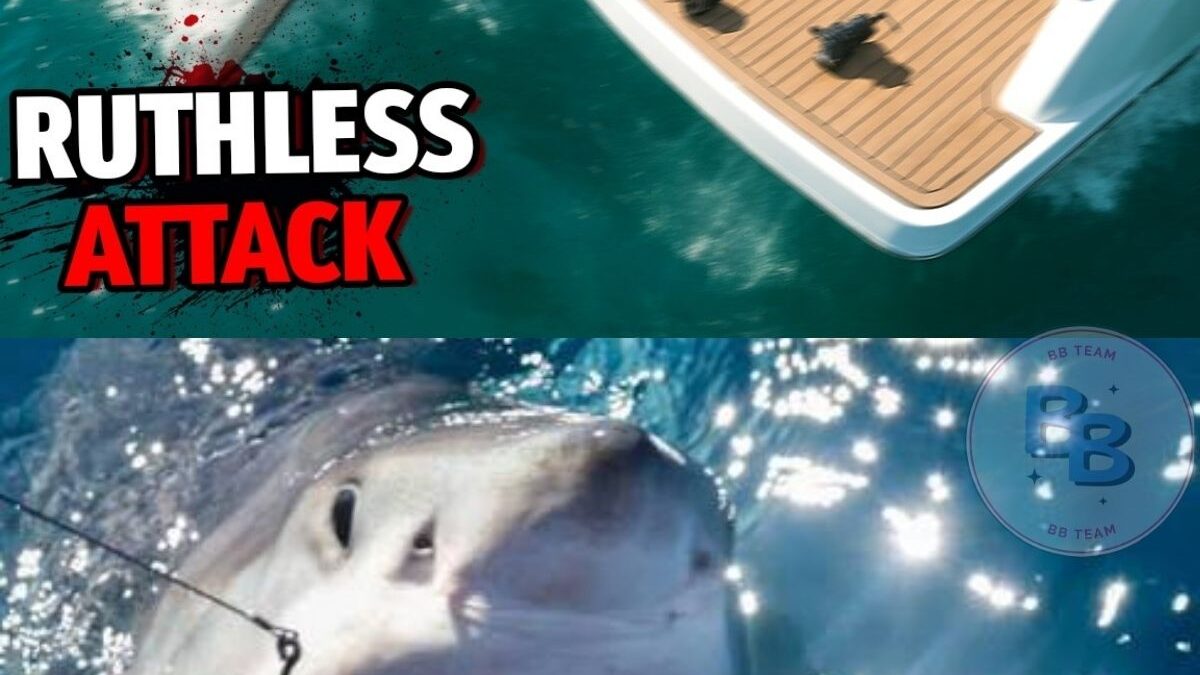
Great White Shark Wrecks $3M Yacht & Eats YouTuber Alive on July 15th, 2025
The ocean’s calm surface hides ancient, relentless predators, ready to turn a peaceful day into a fight for survival in an instant. In this video, you’ll hear six terrifying real life encounters. From a parasailor’s sudden attack off the California coast to a fisherman’s desperate battle to save his son from an oceanic white tip shark off the Bahamas.
On July 15th, 2025, the waters off Cape Town stretched in all directions under a bright clear sky. With the South Atlantic’s rolling swells reflecting the morning sun and shifting silver and blue, the 27-year-old YouTuber Nathan Cole stood barefoot on the gleaming stern deck of his $3 million luxury yacht.
A vessel fitted with polished teak rails and gleaming chrome trim built for speed and extravagance. Known online for his extreme ocean stunts and relentless pursuit of views, Nathan had drawn millions of followers over the years with increasingly daring challenges. Yet, none as reckless as this one. That morning, with three crew members operating cameras and monitoring the live stream, he had planned to bring in an audience by luring one of the ocean’s most feared predators, the great white shark.
Close enough for spectacular footage. Strips of raw tuna hung from a heavy rope trailing in the water. The scent carried quickly on the current. Nathan, dressed in a dark neoprene wet suit with a small harness strapped to his waist, moved with restless energy along the deck, checking angles, adjusting mounts, and constantly glancing at the water for the first shadowy sign of movement.
The crew kept a careful distance from the edge, but Nathan leaned low, his weight balanced dangerously forward, holding a camera in one hand while gripping the railing with the other. The water around the stern was dark and opaque, concealing everything beneath the rolling surface until a sudden disturbance rose without warning.
A massive dorsal fin sliced through the swells, followed by the pale flash of a belly turning below. In an instant, a 17 ft great white surfaced in full force. The massive bulk breaking the water as it rammed the yacht with a deep resonating thud that shuddered through the hull. The cameras shook. The rope snapped taut, jerking as the tuna vanished in a froth of white water.
Nathan’s grin widened as he crouched for a closer shot, his camera fixed on the turbulence below, his voice full of excitement, even as the crew shouted for him to step back. The shark circled wide, then accelerated, its head swinging side to side before driving forward again. The second impact came with such force that a sharp crack echoed beneath them.
A support beam in the stern’s framework had split. The yacht structure groaning under the blow. Alarm sounded from the engine room as water surged into the flooded compartment and the crew scrambled to check the damage. Nathan, fixated on his drone hovering above the chaos, began adjusting its angle to follow the shark’s path.
His eyes locked on the live feed. The swell rolled the yacht unexpectedly, the deck tilting sharply beneath his feet, and he staggered toward the open water. His knee hit the railing hard, the impact jolting his grip loose. In the next heartbeat, his weight shifted past the point of balance, and he pitched over the side, plunging into the cold, churning water.
The shock of the temperature stole his breath. His wet suit offered little protection against the icy bite of the Atlantic. Below him, the massive shadow wheeled around, drawn by the sudden splash and the new scent of human presence in the water. Nathan kicked hard, but the shark’s movements were impossibly fast.
Its bulk cutting effortlessly through the deep green below. The predator rose in a slow arc at first, then exploded upward with terrifying speed, the open jaws revealing rows of serrated teeth. It struck from below, clamping down on his left arm in a bone crushing bite that tore through neoprene flesh and muscle. The water bloomed red in an instant.
The metallic tang of blood mixing with salt. The water muffled Nathan’s scream, his other arm flailing as the shark shook him with brutal force. The power of the animals muscles radiating through the grip of its jaws. He twisted, kicking toward the surface, the motion forcing the shark to release him after a final wrenching shake.
Pain radiated from the mangled limb, the skin shredded in ribbons, deep lacerations revealing torn muscle and bone beneath. On deck, the crew scrambled into action, throwing a weighted line toward him as the shark circled again, its dorsal fin slicing closer with each pass. The yacht rolled with the swell, making the retrieval dangerous, but one of the deck hands managed to hook the harness at Nathan’s waist.
They heaved in unison, dragging him from the water as the great white surged upward in a final aborted lunge that sent spray across the stern. Nathan landed on the deck in a heap. The wet suit around his arm shredded almost to the shoulder. Blood pulled quickly on the polished wood. The color stark against the bright morning light. The crew moved fast, wrapping the arm in thick layers of gauze and applying pressure while another called for an emergency evacuation.
The hull continued to list slightly from the flooding in the engine compartment, forcing the captain to redirect toward the nearest harbor with reduced power. The trip back to shore felt longer than it was, every swell jarring Nathan’s injured arm and sending new waves of agony through his body. He lay pale and shaking, his breath shallow, the shock settling in even as he fought to remain conscious.
The smell of salt and diesel mixed with the lingering metallic bite of his blood. The rhythmic pounding of the waves against the damaged hull, echoing through the yacht like a drum beat counting down to landfall. When they finally reached the harbor, medics were waiting on the dock, rushing aboard to stabilize him before transferring him to a stretcher.
The wound was deep, the teeth having severed several tendons and damaged the nerves along his forearm. And though the bleeding was under control, the long road to recovery was clear in the medic’s tight expressions. They lifted him into the waiting ambulance. The siren rising as the vehicle sped toward the hospital, leaving behind the yacht with its cracked support beam and blood streaked deck.
Nathan’s arm would carry deep scars for the rest of his life, and the nerve damage would limit his strength and movement for years to come. The reality of what had happened and how close he had come to being pulled under entirely settled over him in the days that followed like a weight he could not shake.
For someone whose career had been built on courting danger, the event marked a brutal turning point. The raw power of the animal, the chaos of the attack, and the helplessness in the water had stripped away the illusion of control he once clung to. On September 3rd, 2018, the waters off the Bahamas churned under the weight of a fast-moving tropical storm.
The sky split by jagged streaks of lightning and the air thick with the sting of wind-driven rain. Captain Thomas Reed, a seasoned fisherman in his early 40s, gripped the wheel of his 28t sport fishing boat as it rose and fell in the steepening swells, each crest sending shuddering sprays of seawater across the deck.
His 13-year-old son, Evan, eager to be part of the action despite the weather, had been helping secure gear and checking lines. His slight frame dwarfed by the chaos of the sea around him. The storm had rolled in faster than expected, the clouds swallowing the afternoon sun and turning the turquoise shallows into a dark heaving expanse. The air was filled with the roar of the wind and the crash of waves slamming the hull, the fishing rods bending and rattling in their holders.
The deck slickened with every sheet of spray. Ropes coiled and uncoiled with the motion of the boat, and the sound of metal clanging against metal came in bursts as gear shifted. Evan was near the stern, trying to secure a loose tackle box that had slid with the pitch of the boat. When the vessel rolled hard to starboard on the crest of a wave, his feet lost traction instantly, the wet deck offering no grip.
He slammed into the railing. His shoulder jolted painfully, and before his father could reach him, a second violent lurch sent him tumbling overboard. The water swallowed him in an instant. The shock of the warm but raging sea forcing the air from his lungs. He surfaced between swells, coughing and gasping, the rain pelting his face in stinging bursts.
The boat seemed impossibly far already, the wind and waves pushing him away even as he kicked hard, his arms thrashing against the relentless pull of the ocean. Captain Reed’s heart surged with panic as he spun the wheel, trying to bring the boat around without capsizing in the rolling seas, his eyes locked on his son’s head as it disappeared behind the rise of another swell, his breath quickening with the fear of losing sight of him entirely.
In the water, Evan fought to keep his head above the surface. But the churning sea tossed him like a ragd doll, pulling him under and spitting him back up in a dizzying cycle. Beneath him, in the shadowy depths, where visibility vanished into green and gray, a sleek form moved with predatory purpose. The oceanic white tip shark, a powerful and opportunistic hunter, had been drawn toward the disturbance by the vibrations and splashes of the storm.
Its long pectoral fins spread wide as it approached, cutting smoothly through the shifting currents. Its pale tipped fins a stark contrast against the darkness below. The first contact came in a flash of force, its jaws clamping down on Evan’s left calf with bone jarring strength. The pain tore through him instantly, sharp and blinding, forcing a strangled scream from his throat.
The pressure was crushing, the teeth sawing into muscle as the shark gave a testing shake before releasing him just enough to circle back. Blood pulsed from the deep punctures, a dark cloud curling in the water around him. On the boat, Captain Reed saw the sudden thrash in the water and the streak of red spreading in the swell. He didn’t hesitate.
Stripping off his life jacket to move more freely, he grabbed the boat hook from its mount and vaulted over the side, the wind ripping at his clothes and the salt water closing over his head. The sea was chaotic, each wave threatening to shove him under as he fought toward his son. Evan’s strength was fading fast, the loss of blood and the shock slowing his kicks.
The shark returned, drawn tighter into its circling path, the dark eye fixed on its injured prey. It closed in again, its snout breaking the surface just feet from Evan, the dorsal fin slicing cleanly through the chop. Captain Reed surged between them, thrusting the boat hook forward with all the force he could muster, the metal tip slamming into the cartilage of the shark’s snout.
The Predator recoiled sharply, twisting away and vanishing below the neck swell. But it wasn’t gone. It wheeled back around in the shifting currents, its shape ghosting in and out of sight beneath the breaking crests. Captain Reed hooked the crook of the pole into the strap of Evan’s life vest and began hauling him toward the boat, his legs kicking to keep them both afloat.
Every motion sent a fresh wave of pain through Evan’s torn leg, the bleeding steady despite the water. The boat loomed closer, rocking violently in the storm, the stern dipping with each swell. One of the fishing lines was still dragged in the water, the rod clattering against its holder with every wave.
Captain Reed timed the lift of the boat with the rise of a wave, using the swell to push them into reach of the ladder. With one arm wrapped around his son and the other gripping the wet metal rungs, he fought to pull them both up, the rain blurring his vision as his muscles screamed from the effort. Below them, the shark made a final pass, its dorsal fin slicing through the water in a slow, deliberate arc before it sank back into the dark depths, disappearing as silently as it had come.
Once aboard, Captain Reed dragged Evan to the sheltered space near the cabin door. The wind howling around them, the calf was torn open. Four deep punctures and a jagged strip where the teeth had ripped through flesh, the wound bleeding freely. Reed pulled a strip of canvas from an old gear bag and wound it tight around the leg, pressing hard to slow the flow.
The return to shore was brutal. Every jolt sent a new flash of pain through Evan, but he clung to his father’s arm, eyes half-litted, but still open. Reed kept one hand on the wheel and the other on his son’s shoulder, driving the boat toward the nearest dock with relentless focus. By the time they reached land, paramedics were waiting, rushing Evan onto a stretcher and into the ambulance.
The wound was severe but survivable. The quick action having kept the blood loss under control long enough for him to receive emergency treatment. The ordeal had lasted only minutes, yet every second had carried the weight of life or death. On April 22nd, 2022, the Gulf of Mexico lay restless under a low haze.
The water a shifting blend of steel, gray, and green. The horizon broken by the towering silhouette of an offshore oil rig. The massive structure groaned faintly with the push of the currents below. The constant hum of machinery reverberating through the support beams into the depths. Beneath the surface, the world was darker.
The sunlight fractured by the churning motion of the water and dimmed further by stirred up sediment that turned the visibility into a hazy blur. Carlos Menddees, a 38-year-old commercial diver with more than a decade of experience in offshore inspection and repair, descended slowly along the guideline from the dive support boat toward the rig’s submerged pipelines.
His breathing was steady in his helmet, each measured exhalation, releasing a stream of silver bubbles that spiraled toward the surface. He wore a heavy harness, tools clipped securely to his suit, and moved with the deliberate caution borne from years of working in hazardous underwater environments. Above, on the rolling deck of the support vessel, his colleague, Mia Lewis, monitored his progress on the dive console.
A veteran surface supervisor in her early 40s, she kept one headphone pressed tightly against her ear, listening to his calm voice as he described his location and the condition of the pipeline joints. The surface swells rocked the boat gently, but down below, Carlos was contending with a steady crosscurren that tugged at him as he made his way along the metal structure.
The rig’s submerged framework groaned faintly with the rhythmic surge of the current, and the occasional metallic clang of shifting chains or pipes echoed through the water. Carlos ran his gloved hand over the pipeline surface, feeling for damage, while the beam of his helmet light cut only a narrow cone into the green haze. Out of the corner of his eye, a distant shadow moved briefly, then vanished behind a cloud of suspended silt.
At first, he thought little of it. Fish often swam near the rig, using it for shelter. But moments later, he saw it again, moving with deliberate slowness, just at the edge of visibility. He felt a pulse of unease as he realized the shape was far larger than any fish he had encountered on this job.
The shadow tilted slightly and for a fraction of a second, a blunt, broad head and dark, cold eyes flashed into view. Carlos’s voice broke through the radio, low but edged with tension as he told Mia there was a large shark nearby. She straightened instantly, scanning the surface and calling to the rest of the crew to prepare for potential retrieval.
In the water, Carlos backed away from the pipeline slowly, keeping the shape in his peripheral vision. Bull sharks were known to be aggressive, and in the murky gulf waters, they often approached without hesitation. The sharks movements changed in an instant, from a slow, assessing glide to a sudden, powerful surge.
Its muscular body propelled it forward with astonishing speed, closing the distance in seconds. Carlos tried to pivot and put the pipeline between himself and the predator, but the bull shark darted around the obstruction, jaws opening wide. The impact was explosive. The shark’s head slammed into his side, the jaws clamping down with crushing force on his right shoulder.
The pressure was immense, the serrated teeth tearing through the thick material of his suit and deep into muscle and bone. Carlos felt himself wrenched violently backward as the shark shook its head, dragging him away from the structure into the deeper shadow beneath the rig. Mia’s headset erupted with the sounds of his strained breathing and muffled cries, followed by a chaotic rush of static as the cable connecting him to the surface jolted taut.
She shouted to the deck crew, and within seconds, emergency protocols were in motion. The rescue boat was launched from the Davidits, slamming into the swells as it sped toward the spot where his bubbles had last been seen. Below the water roiled with a cloud of silt and blood, swirling in the current and making it nearly impossible to track the shark’s exact position.
Carlos struggled, trying to push against the predator with his free arm, but the animals weight and strength were overwhelming. Another savage shake sent a fresh wave of pain lancing through his body, his vision dimming inside the helmet. The shark released him only when the first crew diver from the rescue team entered the water, the splashes above breaking its focus.
It wheeled away into the haze, its pale underside flashing once before disappearing into the green gloom. Carlos’s body drifted slowly downward, limp in the water, the bright stream of blood from his wounds fading into the shifting currents. Two divers reached him quickly, hooking their arms under his harness and kicking hard for the surface as they signaled to the support boat.
The crew hauled him aboard with urgent precision, laying him flat on the deck as one man cut away the damaged section of his suit. The wound was catastrophic. Deep punctures and massive tearing across his shoulder and upper chest, the muscle shredded and the bone exposed in places. Mia knelt beside him, beginning chest compressions as another crew member pressed thick gauze pads against the wound.
Carlos’s skin had already taken on a pale bluish hue, his breath shallow and irregular, the blood loss severe and rapid. They worked on him through the rough ride back to the rig platform. The minute stretching long under the weight of their desperation. But even with the combined effort, Carlos’s pulse faded.
The damage to his body too great to overcome. At 11:27 a.m., less than 20 minutes after the attack, he was pronounced dead from massive trauma and blood loss. The incident stunned the offshore crew, many of whom had worked the rig for years without seeing a shark come so close, let alone attack.
Bull sharks were known to inhabit the Gulf, but an assault of such ferocity and speed in the middle of an active inspection was rare. The attack was later reviewed in detail by safety boards, prompting calls for enhanced underwater monitoring systems, more frequent use of shark deterrent devices, and stricter limits on solo diving near structures where large predators might patrol.
For Mia, the memory of Carlos’s voice breaking with urgency over the radio, followed by the abrupt chaos, remained etched deep in her mind. On August 19th, 2023, the late summer sun glinted off the waters of Mterrey Bay, turning the swells into rolling sheets of silver. A light breeze carried the tang of salt and the faint cries of gulls overhead, and the surface rippled with the movement of seals and sea lions returning to the rocky hallout points near the shoreline.
The bay was alive with activity. Sightseeing boats drifting near kelp forests, fishing vessels working in the deeper channels, and farther out, a bright red parasailing boat carving a smooth wake across the water. On the rear deck of that boat, 29-year-old Sarah Wittmann stood nervously in her harness. the nylon straps snug around her waist and thighs, the tow line stretching from the back of the ship to the parasail canopy that billowed like a giant wing in the wind.
It was her first time parasailing, a spur-of-the- moment decision made during her coastal vacation. Though she had always loved the ocean, she had never been suspended hundreds of feet above it with only a rope tether holding her to the boat. Her pulse was quick with anticipation, her palms damp inside her gloves as the crew secured the final clips.
The captain throttled the engine and Sarah felt the initial tug, her feet leaving the deck as the sail lifted her into the air. The wind caught the canopy and within seconds she was rising steadily, the boat shrinking below her. The view was stunning. The deep blue expanse stretching to the horizon, the coastline curving in the distance, the kelp beds swaying gently beneath the surface.
Far below, she could see the shimmer of schools of fish scattering in the light. and closer to the rocky shore. Dark shapes of resting seals. For several minutes, everything felt effortless. The parasail swayed slightly with each gust. The harness snug but not uncomfortable, and the steady drone of the boat’s engine rose from far below.
Sarah’s legs dangled freely, her toes pointed toward the glittering water, and the sensation was both exhilarating and peaceful. But then, as the boat slowed its pace, she noticed they were passing closer to a small, low-lying island crowded with seals. Their barks carried faintly over the water, and she felt the change in motion as the crew adjusted course.
The sea beneath her shifted from calm ripples to a subtle disturbance. A deep swirl, as if something large had moved far below. Sarah scanned the water, catching sight of a darker shadow sliding just beneath the surface. At first, she thought it was one of the sea lions heading toward the rocks, but the movement was faster, more deliberate, cutting directly toward the boat’s wake.
Without warning, the surface erupted. A massive great white shark, easily over 15 ft long, exploded from the depths in a surge of power that seemed to defy gravity. Its head breached completely, jaws a gape, rows of serrated teeth flashing white in the sunlight. The strike was aimed not at the boat itself, but at the thick parasail foot rope dangling just above the surface, swaying in the swell.
The impact was a blur of motion and spray. The shark’s jaws closed around the rope in a savage bite. The sound of splitting fibers carrying faintly even to Sarah’s position above. The rope jerked violently, snapping tight against her harness with a force that jolted her entire body. Her legs kicked instinctively as she saw the massive bulk below.
The dark eyes and pale underbelly just feet away from where she hung suspended. The shark thrashed, its tail cutting a powerful arc through the water, sending bursts of foam into the air. Each shake sent a shiver down the rope, the vibrations traveling up into her harness. For a split second, the possibility of the line snapping completely flashed through her mind.
The image of plunging into the shark-filled waters drove a surge of panic so sharp that it made her chest tighten. below. The captain reacted instantly. The engine roared as he pushed the throttle to full power. The bow lifting slightly as the boat surged forward. The sudden acceleration tightened the toe line further, pulling Sarah upward and away from the water.
The parasail caught a stronger gust and she felt herself rising rapidly, the distance between her feet and the shark growing with each second. The predator released the shredded section of rope, its head vanishing back beneath the surface in a churn of bubbles and displaced water. The severed fibers drifted loosely, the lower section of the foot rope trailing uselessly as the boat powered away from the seal hall out.
The crew worked quickly to reel Sarah in. Their movements urgent but controlled as the parasail descended in a broad, steady arc toward the deck. When her feet touched down, her legs were trembling so badly she nearly collapsed. The adrenaline still surging through her system. The harness straps dug into her as the crew unbuckled them, and the smell of salt and fuel filled her lungs as she tried to steady her breathing.
Her eyes darted toward the water where the attack had happened, but the surface was already smooth again. The predator gone as suddenly as it had appeared. Within minutes of returning to the harbor, paramedics were waiting at the dock. They examined her carefully, checking for injuries from the violent jolt of the harness.
Aside from bruising across her thighs and hips, she was physically unharmed. Though the tremor in her hands, and the pounding in her chest spoke to the depth of the shock, she stood wrapped in a towel, the sounds of the marina slapping Howiards, muffled conversation, the distant hum of an engine, feeling strangely muted compared to the violent noise she had just lived through.
News of the encounter spread quickly through the local tourism community. Great white sharks were no strangers to Monterey Bay, especially near areas where seals congregated. But a strike so close to a parasailor was nearly unheard of. For Sarah, the debate was distant noise compared to the vivid memory of the attack. The bay returned to its calm rhythm in the days that followed.
Yet for those who heard Sarah’s account, the idea of danger coming from below, even when high above the waves became harder to dismiss. On March 12th, 2024, the morning sun rose over the Pacific coast of Costa Rica, casting golden light across the rolling swells near Pia Hermosa. The air was warm, heavy with the scent of salt and faintly sweet from the flowering trees that lined the shore.
Offshore, the reef break was alive with surfers, their silhouettes bobbing between sets, waiting for the next perfect wave to rise out of the deep. Among them was 31-year-old Luis Romero, a seasoned local who had grown up riding these waters. Confident in his skill and attuned to the rhythms of the ocean, he had been in the water for hours already, catching wave after wave and carving smooth arcs down their faces.
The surf was steady, the tide high, and the crowd light for a weekday morning. His board, sunfaded from years of use, floated easily beneath him as he paddled back toward the outside break, scanning the horizon for the next set. Beneath the surface, the reef teamed with life, darting schools of silvery bait fish, flashes of yellow from reef dwellers, and larger predators patrolling the deeper channels.
Louisa’s hands dipped into the water with each stroke, his legs trailing behind, toes brushing the surface in a relaxed rhythm. The sunlight refracted through the swells, dappling the water in shifting patches of light and shadow. It was in one of those shifting shadows that a blacktip shark moved, swift and decisive, drawn closer by the commotion of the reef and the silhouettes above.
The attack came without warning. In a sudden surge from below, the shark struck with explosive force, its jaws clamping around Louis’s right ankle in a bonejarring bite. The pain was instant and searing, a white hot shock that tore through him before he could even register what had happened. The pressure crushed down, teeth puncturing deep into flesh and severing tendons in a single motion.
The force of the hit knocked him sideways, the board jerking under him before flipping entirely. He hit the water hard, disoriented by the impact, his ankle burning with agony. When he surfaced, the shock gave way to a terrifying awareness. The water around him was turning a deep blood red color. The sharp metallic scent of blood mixed with salt filled his senses as the waves rolled over him.
Through the churn, he caught sight of the shark’s slender, streamlined body circling just below, the black tipped fins slicing cleanly through the water. It moved with eerie precision, banking slightly before turning back toward him. His heartbeat thundered in his ears, his breathing fast and shallow as adrenaline flooded his body.
He kicked hard with his uninjured leg, trying to put distance between himself and the predator. But the black tip lunged again, drawn by the vibrations of his movements and the scent of blood. Its snout broke the surface for an instant, teeth glinting in the sunlight before it veered off at the last moment, passing close enough for him to feel the push of displaced water against his side.
Louisa’s voice broke the air as he shouted toward the other surfers, the sound ragged and desperate. Two of them closer to the inside break saw the commotion and paddled furiously toward him, their boards knifing through the water. The shark lingered, its shape a shifting shadow that darted in and out of the hazy red cloud.
One of the rescuers, a tall man on a long rescue board, reached Luis first, angling the board between him and the predator. The other came in from the side, grabbing Luis under the arms and hauling him partially onto the longer board. The sudden movement and splashing drew the shark’s attention again. But a sharp kick from the rescuer’s foot, and a pounding of hands on the board’s rails sent it veering away into deeper water.
Luis lay flat, gripping the rails of the rescue board, his breathing ragged. The wound was bad. Deep punctures on both sides of his ankle, the skin torn in long, ragged strips where the shark’s teeth had rad across. Blood continued to flow, each swell washing more of it into the sea. His rescuers worked quickly.
One of them pulled the leash from his board to use as an improvised tourniquet just above the injury, twisting it tight to slow the bleeding. The paddle back to shore was a race against both the tide and the possibility of the shark returning. Every bump of the board sent a jolt of pain up his leg, and the sound of the waves breaking in the shallows felt impossibly far away.
On the beach, a small crowd had gathered. Alerted by the shouts from the water, several rushed forward as the rescuers dragged the board onto the sand. They lowered him onto a towel, the wet fabric quickly darkening beneath his leg. Someone brought a first aid kit and a second makeshift dressing was added over the wound.
The tide hissed against the shore, and in the distance, the surf break that had seemed so welcoming hours before now looked wild and indifferent. Within minutes, an emergency vehicle arrived. The medics moving with practiced speed. They replaced the improvised tourniquet with a proper one, started an IV, and loaded Luis onto a stretcher.
He winced as they lifted him, the reality of the injury settling in as the adrenaline began to fade. The ride to the nearest hospital was a blur of flashing lights and the muffled sound of radio chatter. The doctors later confirmed that several tendons had been severed, requiring surgery and months of rehabilitation.
The deep puncture wounds would leave scars, both physical and mental, that would never fully disappear. In the weeks that followed, the surf community and Pia Hermosa spoke often of the attack. Some pointed to the presence of bait fish schools near the reef that morning as a likely trigger, while others saw it as a rare but inevitable risk of sharing the water with apex predators.
For Luis, the debate mattered less than the memory that replayed in his mind. the sudden burst of motion from below, the crushing bite, and the surreal clarity of realizing how close he had come to not making it back to shore. On May 10th, 2021, the morning off the San Juan Islands had been glassy calm, the kind of day that promised perfect conditions for whale watching.
The small boat carried a dozen passengers, cameras ready, eyes scanning the horizon. Among them was Emma, a marine biologist who had spent years studying citations, but rarely experienced the thrill of seeing them in the wild with tourists. The air carried a crisp tang of salt and kelp. The steady hum of the boat’s engine blending with the quiet chatter of the group.
Then, as if answering their unspoken hopes, black dorsal fins rose from the water ahead. A pod of orcas surfaced in unison, their sleek bodies cutting through the sea with effortless grace. Gasps erupted around Emma as one breached, its massive body twisting before crashing back in a shower of spray. Another spy hopped, lifting its head high enough for passengers to see the white eye patches glinting in the sun.
Cameras clicked rapidly, voices trembled with excitement, and for several minutes, everything felt like a rare and magical encounter. The kind of memory that stayed etched forever. But then Emma noticed something off. One of the males, a huge bull with a towering dorsal fin, was breaking from the group. Instead of moving parallel to the boat, he angled straight toward it.
His speed increased. The water in front of him churning white. Emma’s pulse quickened. She knew orcas sometimes displayed bursts of energy, but this trajectory felt deliberate. She stepped toward the side rail, eyes fixed on the approaching shape. The impact came with a deep, resonant thud that reverberated through the hull.
The boat lurched violently to one side, sending passengers stumbling and cameras clattering to the deck. A cry went up from the captain as he fought to steady the vessel. The bull orca rolled alongside then disappeared beneath them. The turbulence in his wake rocking the boat again. Emma, trying to grab the rail for stability, felt her foot slip on the wet deck.
Her body pitched forward and in an instant she was over the side, plunging into the icy waters of the Salish sea. The shock of the cold tore the breath from her lungs, and for a split second, she couldn’t move, her limbs heavy and burning. She surfaced, gasping, and saw the boat a few meters away, voices shouting her name.
The orca’s shadow passed beneath her. The water seemed to warp around its massive body as it circled back. She tried to keep her legs tucked close, instinct telling her to make herself smaller, but then its flank brushed against her hip. A firm, deliberate contact that spun her half around. The force wasn’t enough to injure, but the sheer mass behind it was staggering.
She kicked hard, eyes darting between the dark water and the boat. Before she could reach the rope the crew was throwing toward her. The orca came again, this time surfacing alongside with a burst of spray that drenched her face. Its black and white head dipped under, and a moment later, the sweep of its tail pushed a surge of water that knocked her off balance.
She went under, the cold swallowing her whole. In the muffled green silence, her mind raced. “This wasn’t predation,” she told herself. But curiosity or agitation could be just as dangerous when dealing with an animal weighing over 6 tons. Her chest burned as she fought to break the surface. When she did, the boat felt farther away than before.
But the rope was still there, floating just ahead, and a crewman was leaning out, arm extended. The orca’s shadow slid away, its movement slower now, almost languid. Emma seized the rope and with several strong pulls and the crew’s frantic heave, she was hauled bodily over the rail and onto the deck. She collapsed on her side, coughing up seawater, her skin numb and stinging from the cold.
Passengers hovered nearby, some crying, others staring wideeyed at the still visible dorsal fin slicing the surface a short distance away. The captain’s voice was sharp and tense over the radio, calling in the incident. A heavy silence settled between the sporadic gasps and murmurss.
Emma’s hands shook as she peeled off her soaked jacket. Her legs throbbed where she’d been bumped, deep bruises already forming. She forced herself to breathe evenly, though her heartbeat still pounded in her ears. The orca was drifting back toward its pod now, the earlier intensity gone. as though it had simply decided the encounter was over.
The boat slowly turned for shore, its passengers subdued, their earlier awe replaced by a nervous weariness. Emma sat wrapped in a blanket, the chills sinking deep into her bones, replaying each moment in her mind. The speed of the approach, the sudden impact, the two deliberate contacts in the water. She knew orcas were powerful, intelligent predators, capable of intricate social behaviors and complex emotions.
But she also knew they were wild, unpredictable, and utterly beyond human control. Word of the incident spread quickly after they returned to port. Some speculated the bull had been defending territory, irritated by the boat’s proximity to the pod. Others suggested it was simple curiosity, a testing of boundaries by a dominant male unused to close human presence.
Whatever the reason, it had been a vivid reminder of the risks that lurked even in the most breathtaking encounters. For Emma, the event left more than physical bruises. She had always respected the line between humans and the ocean’s apex predators. But that morning had shown her how thin and fragile that line could be. She would continue her work, she knew, but the memory of that massive shadow circling her in the cold green water would remain.
An unshakable testament to the raw and unpredictable force of the

