Great White Shark Kills 3 Divers Filming Underwater on January 3rd, 2026
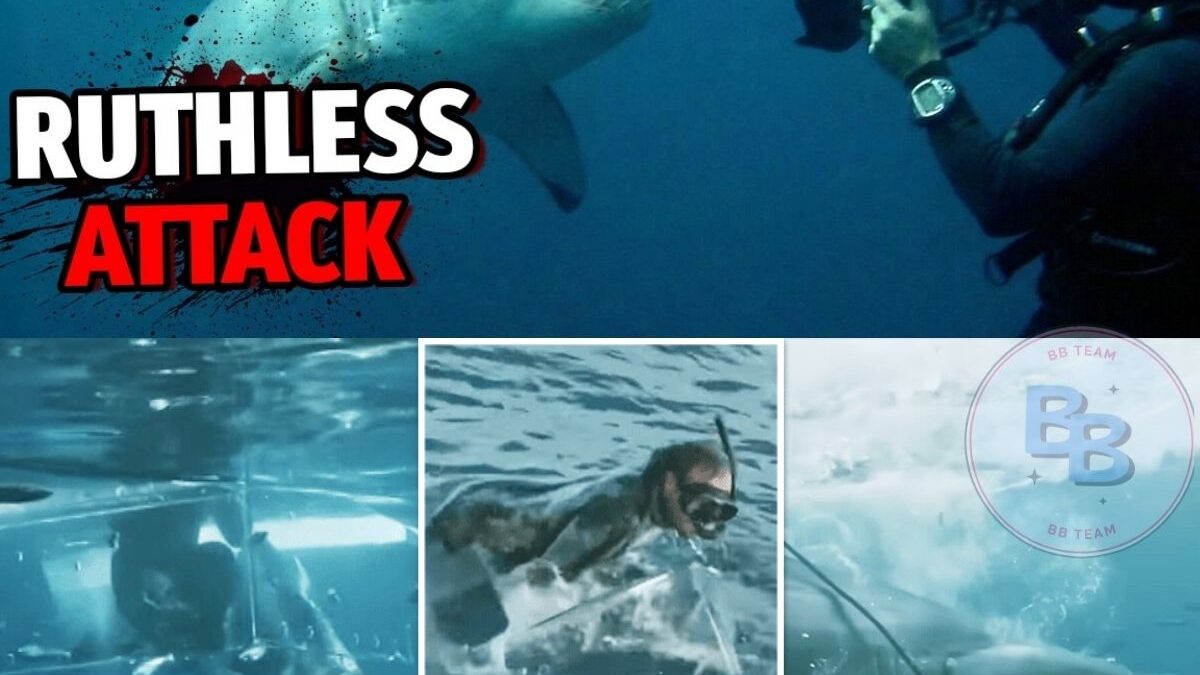
Great White Shark Kills 3 Divers Filming Underwater on January 3rd, 2026
Glassy water, flashing shadows, and sudden violence remind us how thin the surface illusion can be. Cameras roll, boards skim, cages rattle, and storms shift balance in seconds. From professional divers filming offshore to jet skis slicing coastal shallows, each moment tests human limits. In this video, we’ll uncover six chilling encounters, carefully examined, fully told, and thoughtfully concluded.
Off the southern coast of South Africa, near the small fishing town of Gansbaai in the Western Cape Province, the waters held a reputation that drew both fear and fascination. Gansbaai had earned its nickname as the great white shark capital of the world, where the cold Atlantic currents mixed with warmer Indian Ocean waters, creating perfect hunting grounds for apex predators.
[music] The coastline featured dramatic underwater topography with shallow reefs that dropped suddenly into dark abyssal channels, and large colonies of Cape fur seals that congregated on rocky outcrops, providing abundant prey for sharks that patrolled these waters year-round. On January 3rd, 2026, five experienced [music] divers gathered at the harbor before dawn, preparing for what they anticipated would be a routine filming expedition for a wildlife documentary series.
>> [music] >> Kieran Voss, a 34-year-old marine videographer from Australia, had spent the previous week scouting locations and studying seal behavior patterns. Amara [music] Sethi, a 29-year-old underwater cinematographer originally from Mumbai, had worked on three previous documentaries in these waters without incident.
Tobias Llewellyn, who [music] insisted everyone call him Toby, was a 41-year-old equipment specialist from [music] Wales, who had logged over 800 dives in his career. Elara Quinn, a petite but fierce 36-year-old safety diver from Ireland, had trained [music] extensively in shark encounter protocols. The fifth member, Nia Rivera, a 27-year-old production assistant from Cape Town, was relatively new to the team, but had completed advanced dive certifications specifically for this assignment.
The morning conditions appeared ideal as their boat motored toward the filming location, approximately 3 km offshore. The ocean surface remained unusually calm for summer, with visibility reported at over 20 m and water temperature hovering around 18° C. Their target site sat adjacent to a seal colony where hundreds of animals hauled out on jagged rocks, their barking echoing across the water.
The production team hoped to capture footage of natural hunting behaviors, though they planned to maintain safe distances from any predatory activity. After reviewing safety protocols and checking equipment, the five divers descended along a guide rope at 8:30 in the morning. The underwater landscape revealed itself in stunning clarity, with kelp forests swaying gently and schools of silverfish darting between rocky formations.
Kieran signaled to the group, pointing toward an area where seals dove and twisted through the water in their characteristic playful manner. The divers positioned themselves near a reef wall, cameras ready, observing the ballet of marine life around them. What none of them immediately noticed was how the current had subtly shifted, pushing them gradually toward a steep drop-off, where the seafloor plunged from 15 m to over 60 m in depth.
This underwater cliff created an ideal ambush point for great white sharks, which often approached from the murky depths below before launching vertical attacks at prey silhouetted against the brighter surface. The attack happened with terrifying suddenness. >> [music] >> A massive great white shark, later estimated at 19 ft in length and weighing close to 2,000 kg, rocketed upward from the dark water below the drop-off.
Kieran bore the initial impact as the shark struck him from beneath with explosive force, its momentum carrying both predator and victim upward in a violent spiral. The collision slammed Kieran against the reef wall with bone-crushing impact before the shark’s jaws clamped onto his torso. Its powerful triangular teeth, designed for shearing through flesh and bone, doing catastrophic damage to his [music] chest and abdomen.
Amara and Toby reacted instinctively, abandoning their cameras and swimming toward Kieran despite their team screaming at them to retreat. The shark, now in full predatory mode with prey secured, began the thrashing behavior characteristic of feeding great whites. The animal twisted and shook violently, its muscular body creating turbulent currents that scattered equipment and disoriented the other divers.
Amara reached out, attempting to grab Kieran’s arm, but the shark’s powerful tail swept and in the chaos, its jaws released Kieran only to snap toward her, catching her outstretched limb and tearing through her wetsuit and flesh with horrifying efficiency. Toby tried to position himself between the shark and his colleagues, shouting into his regulator in futile panic.
The predator, now surrounded by blood and thrashing movements that triggered its feeding instincts further, spun with surprising agility for its size. Its snout struck Toby hard enough to knock his mask askew before the jaws found purchase on his leg, dragging him downward toward deeper water. The shark shook him like a terrier with a rat, and Toby’s wetsuit shredded under the assault, his equipment torn away and sinking into the darkness.
Elara had grabbed her dive knife the moment the attack began, and she kicked hard toward the shark with the blade extended. She managed to stab at the animal’s flank, but the knife barely penetrated the thick rough skin, and the shark’s sheer size and power made her efforts feel absurdly inadequate. The predator seemed barely aware of her presence, focused on the prey items it had already engaged.
Nia, positioned slightly away from the main group when the attack commenced, made the split-second decision that saved her life. Rather than swimming toward her teammates, she kicked frantically toward the surface, her training overriding the instinct to help. A bright orange surface marker buoy floated nearby, and she grabbed its line, using it to propel herself upward faster.
Below her, she glimpsed the massive gray form of the shark as it lunged past, rows of white [music] teeth visible even from several meters away. The creature’s black eye rolling back in its head as it struck again at someone in the churning red cloud of water. The entire attack lasted less than 2 minutes, though for those involved, it seemed to stretch into [music] an eternity of horror and confusion.
Elara and Nia broke the surface, gasping and screaming for the boat crew, who had already spotted the disturbance in the water. >> [music] >> The boat roared toward them, crew members throwing rescue lines and hauling the survivors aboard. Elara had sustained lacerations to her arms and legs, but remained conscious and coherent.
Nia was physically unharmed but shaking uncontrollably with shock and adrenaline. Emergency protocols were activated immediately, with the boat speeding back toward the harbor while radio calls went out for medical assistance and recovery divers. The bodies of Kieran Voss, Amara Sethi, and Tobias Llewellyn were recovered over the following hours as specialized teams conducted search operations.
Investigators from marine research institutes later examined all available evidence, including the survivors’ accounts, equipment recovered from the scene, and data from underwater topography surveys. Their findings painted a picture of multiple factors converging into tragedy. The seal colony activity had been unusually intense that morning, with increased numbers of animals entering the water, which naturally attracted hunting sharks to the area.
The underwater drop-off created perfect conditions for ambush predation, and the divers had drifted into this zone without realizing the danger. Most significantly, the shark exhibited hunting aggression beyond typical investigative behaviors, suggesting it had been actively stalking prey when it encountered the divers. Whether it mistook them for seals or simply reacted to threats near its prey remained unclear, but the ferocity and duration of the attack exceeded what marine biologists typically observed in human shark encounters. The incident
sent shockwaves through the diving and documentary filmmaking communities worldwide, prompting renewed discussions about safety protocols in waters known for great white shark activity. For Elara Quinn and Nia Rivera, the psychological trauma would require years of therapy and support. Neither woman ever dove in the open ocean again.
The western coastline of Maui, Hawaii’s second largest island, had long attracted water sports enthusiasts from around the globe. The area’s consistent trade winds, warm tropical waters, and expansive reef systems created ideal conditions for kiteboarding, windsurfing, and other high-speed aquatic activities.
By September 2020, despite the global pandemic reducing tourist numbers, residents and visiting athletes still flocked [music] to the shallow reef waters where wind conditions remained reliable and the scenery spectacular. The reefs [music] themselves, built over millennia by coral polyps, created complex underwater ecosystems that supported abundant marine life, from tiny reef fish to apex predators [music] that patrolled the edges where deep channels met shallow flats.
On September 14th, [music] 2020, Lena Torres, a 32-year-old kiteboarding instructor originally from San Diego but residing in Maui for the past 6 years, prepared for an afternoon session in conditions she considered [music] perfect. The wind blew steadily at 15 knots. The tide was rising, which would provide better coverage over the shallow [music] reef sections, and the water temperature sat comfortably at 26° C.
>> [music] >> Lena had logged thousands of hours on her kiteboard, teaching beginners and pushing her own skills during personal sessions. She understood the local waters intimately, knew which reef sections [music] to avoid during low tide, and maintained a healthy respect for the ocean’s unpredictable nature.
[music] She launched from a sandy beach area, her bright blue and yellow kite catching the wind as she waded into knee-deep water before hopping onto her board. [music] Within moments, she was gliding across the surface, the board’s fins cutting through the clear water as she picked up speed.
The sensation of flying across the ocean never grew old for Lena, the combination of wind power and wave motion creating a unique experience that kept her returning to the water daily. The shallow reef section she traversed was particularly scenic with coral formations visible beneath the crystal clear water and occasional sea turtles surfacing nearby.
What Lena noticed but did not consider particularly alarming was the unusual concentration of baitfish in the area. Schools of small silver fish, likely a cool or sardines, swirled beneath her board in dense clusters. Their bodies catching sunlight and creating shimmering patterns in the water. These bait balls typically indicated the presence of predators, but Lena had seen similar formations hundreds of times without incident.
The tiger shark struck from directly below at approximately 2:30 in the afternoon. The animal, later estimated at 12 ft in length based on bite radius measurements, had likely been tracking the baitfish schools and detected the unusual vibrations and shadows created by Lena’s board moving across the surface at speed. Tiger sharks, known for their broad diet and curious nature, often investigated unfamiliar objects in their territory, and the splashing fast-moving board likely triggered predatory interest.
The impact felt like hitting a submerged log at full speed. The board suddenly stopped dead in the water, and Lena found herself pitching forward as something massive grabbed the board’s underside. Before she could process what was happening, powerful jaws clamped onto her right leg just above the ankle, [music] and she was dragged partially underwater.
The shark’s grip was vise-like, its serrated teeth designed for cutting through turtle shells and fish bones, easily penetrating her thin wetsuit and the flesh beneath. Lena’s training and instincts kicked in simultaneously. She kicked frantically with her free leg, striking at what she could feel was a large solid body in the churning water.
Her hands clawed at the kite control bar trying to maintain some stability, but the shark’s power was overwhelming. The animal shook its head in the characteristic thrashing motion sharks use to tear flesh from prey, and Lena felt searing pain as teeth ripped through muscle and scraped against bone. The attack lasted perhaps 15 seconds before the shark released its grip, possibly deterred by Lena’s thrashing or confused by the board and kite lines tangling around it.
The predator disappeared back into deeper water as suddenly as it had appeared, leaving Lena bleeding and shocked, but still conscious and afloat thanks to her life vest and the buoyancy of her kite board. Fellow kiteboarders who had been riding nearby witnessed the attack and responded immediately.
Two riders, both local surfers familiar with shark encounter protocols, quickly maneuvered to Lena’s position. They helped her detach from her kite and carefully pulled her onto one of their boards, applying immediate pressure to her mangled leg to slow the arterial bleeding that was turning the surrounding water pink.
The group made for shore as quickly as possible while one rider called emergency services on a waterproof radio. Beach observers who had seen the commotion met them at the water’s edge with towels and first aid supplies. A makeshift tourniquet was applied above the wound, and Lena remained conscious and relatively calm despite obvious shock and pain.
Emergency medical technicians arrived within 12 minutes, stabilizing her condition before transport to a medical center. Lena’s injuries required multiple surgeries to repair damaged muscles, tendons, and blood vessels in her lower leg. She retained the function of the limb, but faced months of physical therapy and rehabilitation.
Marine biologists reviewing the incident noted several contributing factors. The concentration of baitfish had drawn predators into unusually shallow water. The kiteboard’s movement and splashing mimicked the surface disturbance created by struggling prey, and tiger sharks were known to inhabit these reef areas regularly, particularly during afternoon hours when they moved into shallower hunting grounds.
The attack reinforced what ocean safety experts had long emphasized. Even experienced water sports athletes operating in familiar locations remained vulnerable when apex predators occupied the same space, and the combination of fast-moving equipment, prey-rich environments, and shallow reefs created conditions where encounters could turn dangerous within seconds.
The northern Gulf of Mexico, stretching from the coasts of Louisiana and Texas far into international waters, contained hundreds of offshore drilling platforms that extracted petroleum and natural gas from deposits deep beneath the seafloor. These massive steel structures, some standing in water depths exceeding 100 m, created artificial reef systems that attracted marine life of all kinds.
Smaller fish congregated around the platform’s submerged supports seeking shelter and feeding on organisms growing on the metal surfaces, which in turn drew larger predators, including various shark species. By mid-2021, the oil and gas industry employed thousands of workers on these remote platforms, where personnel lived and worked in shifts lasting weeks at a time, isolated from land and surrounded by open ocean.
On July 17th, 2021, temperatures in the Gulf soared into the mid-30s Celsius, creating oppressive [music] conditions on the metal decks of platform Echo Seven, located approximately 90 km southeast of the Louisiana coastline. Euan McCloud, a 43-year-old drill equipment operator from Aberdeen, Scotland, had been working his current rotation for 11 days and was due for relief in another week.
The heat that afternoon was particularly brutal, and during the crew’s scheduled break period, several workers sought relief by gathering on the lower deck near the water’s edge. The platform’s location regulations technically prohibited swimming, but enforcement of this [music] rule varied depending on supervisors and circumstances.
The water around the platform, >> [music] >> while industrial and somewhat polluted from drilling operations, appeared inviting in the oppressive heat. Euan, known among the crew as someone who bent minor rules when he thought conditions were safe, decided a quick swim would provide welcome relief. He stripped down to his shorts and lowered himself into the warm Gulf waters using a maintenance ladder at approximately 3:15 in the afternoon.
Several colleagues remained on the deck above watching and calling out jokes about jellyfish and oil slicks. The water temperature felt bath-like, probably close to 30°, >> [music] >> and Euan floated on his back for a moment enjoying the brief respite from the platform’s constant noise and heat. What neither Euan nor his colleagues observed was the concentration of baitfish that had gathered near the platform’s submerged supports over the previous days.
These small fish, likely menhaden or similar species, formed dense schools that fed on organisms growing on the platform’s metal surfaces. Their presence had attracted several bull sharks to the area, animals particularly well adapted to warm coastal and nearshore waters. Bull sharks, known for their aggressive temperament and ability to tolerate low salinity environments, regularly patrolled areas around offshore structures feeding opportunistically on whatever prey they encountered.
The shark that attacked Euan was likely a mature female, estimated between 8 and 9 ft in length based on bite evidence. It had probably been circling the platform for hours, feeding intermittently on baitfish when Euan’s entry into the water created vibrations and disturbances that drew the predator’s attention.
The attack occurred without warning. Colleagues on deck later reported seeing a large dark shape surge upward through the greenish water before massive jaws clamped onto Euan’s torso. The shark struck with the full weight of its body, driving Euan downward and shaking him violently in the characteristic feeding behavior of bull sharks, which relied on powerful bites and thrashing motions to incapacitate prey.
Euan barely had time to cry out before being dragged beneath the surface. The water erupted in chaos, blood spreading quickly as the shark maintained its grip, teeth designed for crushing bone and tearing flesh, inflicting catastrophic damage to his chest and abdomen. Workers on deck began shouting and scrambling for rescue equipment, throwing life rings and flotation devices toward the attack site.
The shark released Euan briefly before striking again, this time catching his leg and pulling him further from the platform. The animal’s power was overwhelming. Its muscular body easily overcoming any resistance from its victim. More crew members arrived on the lower deck, and two workers attempted to reach Euan using poles and ropes, but the shark’s aggressive behavior and the spreading blood made a close approach impossible.
The attack lasted approximately 3 minutes before the shark finally released its prey and disappeared into deeper water. Crew members managed to reach Euan and pull him toward the platform’s ladder, but his injuries were clearly fatal. He had lost consciousness from blood loss and trauma, and despite immediate attempts at first aid by the platform’s medic, he was pronounced dead within minutes of being brought aboard.
Emergency protocols were activated immediately, with helicopter rescue services contacted and company management notified. Euan’s body was transported to shore within 2 hours, and investigators from multiple agencies descended on platform Echo Seven to examine the circumstances of the attack. Their findings revealed several contributing factors.
The warm water temperature had drawn bull sharks closer to the surface and increased their metabolic activity and aggression. The concentration of baitfish around the platform had attracted multiple predators to the immediate area, and Euan’s isolation in the water, away from any protective barriers, had made him vulnerable to an opportunistic predator that likely mistook him for injured or struggling prey.
The incident prompted immediate policy changes across the offshore drilling industry, with swimming prohibitions strictly enforced and new protocols established for any water contact activities near platforms. For the crew of platform Echo Seven, the tragedy left lasting psychological scars and served as a brutal reminder that the Gulf’s warm waters, despite appearing benign, harbored apex predators perfectly adapted to exploiting any available prey.
The Neptune Islands, a small cluster of rocky outcrops located approximately 70 km south of Port Lincoln in South Australia represented one of the world’s premier locations for observing great white sharks in their natural habitat. The island supported a permanent colony of several thousand Australian sea lions providing reliable prey that attracted white sharks year-round.
By 2023, multiple commercial operators ran cage diving expeditions to these waters offering tourists and documentary filmmakers opportunities to observe apex predators from the relative safety of submerged metal cages. The industry operated under strict regulations designed to minimize risk while allowing close encounters with animals that could exceed 5 m in length and weigh over 2 tons.
On March 12th, 2023, a commercial dive vessel departed Port Lincoln at 6:00 in the morning carrying 12 passengers and five crew members for a full-day cage diving experience. Among the passengers was Ethan Clark, a 29-year-old marine biology graduate student from Perth conducting research on shark behavior patterns for his doctoral thesis.
Ethan had participated in several previous cage dives and felt comfortable with the protocols involved though he acknowledged the inherent risks of working in close proximity to large predators. The journey to the Neptune Islands took approximately 3 hours with seas moderate and weather conditions favorable. Upon reaching the dive site crew members deployed two submersible cages, each designed to hold four divers at depths between 5 and 8 m.
Bait of fish parts and blood was introduced to the water to attract sharks to the area, a standard practice despite ongoing debates about its ecological impact and whether it altered natural behavior patterns. By mid-morning, several sharks had appeared near the vessel and dive groups began rotating through the cages for 20-minute sessions.
The water visibility that day was disappointingly poor, perhaps 8 to 10 m at best with suspended particles and plankton creating a murky greenish haze. This reduced visibility while somewhat diminishing the experience for observers also created conditions where sharks might approach more closely before becoming aware of the cages presence.
Ethan entered the cage at approximately 11:30 with three other divers, all wearing wetsuits and using surface supplied air systems that allowed extended underwater observation without scuba tanks. The cage rocked gently in the current secured by lines to the vessel above. Within minutes of submerging, a large shape materialized from the murk and Ethan felt his pulse quicken with excitement and apprehension.
The animal was not a great white shark as everyone had expected but rather a massive tiger shark, an unusual but not unprecedented visitor to these waters. The creature measured approximately 17 ft from snout to tail. Its distinctive striped pattern visible even in the poor visibility. Tiger sharks, known for their broad diet and curious nature sometimes ranged into South Australian waters during warmer months following prey migrations or exploring new territory.
The shark circled the cage slowly, its movements deliberate and exploratory. Ethan and his companions pressed against the bars cameras raised documenting the unexpected encounter. The tiger shark’s behavior seemed typical of the species, investigating the cage and the baited area with methodical interest rather than aggressive intent.
The situation changed dramatically when the shark, possibly detecting vibrations or chemical signals from bait remnants, suddenly accelerated. The animal struck the cage with explosive force. Its massive head slamming into the metal bars with enough impact to twist the frame and send shock waves through the structure.
The four divers inside were thrown against each other and the cage walls, [music] their breathing regulators momentarily dislodged. The shark continued its assault ramming the cage repeatedly with its snout and attempting to bite at the bars. Unlike great white sharks, which typically investigated structures with relatively cautious behavior, this tiger shark displayed remarkable aggression and persistence.
The cage, designed primarily for white shark encounters, began showing structural weakness as welds strained and bars bent under the repeated impacts. Ethan braced himself against the far side of the cage trying to protect his camera equipment and maintain his position when one particularly violent strike caused a section of the cage wall to deform outward.
The widened gap between bars created an opening perhaps 30 cm across, larger than the shark’s head, but unfortunately positioned where Ethan had his right arm extended. In a movement too fast to avoid, the shark wedged its snout through the opening and its jaws snapped shut on Ethan’s forearm. The pain was immediate and overwhelming as serrated teeth designed for cutting [music] through turtle shells and large fish bones compressed flesh and fractured the radius and ulna bones.
Ethan later described feeling as though his arm was caught in industrial machinery >> [music] >> the pressure immense and unyielding. His three companions reacted immediately banging on the cage walls with dive weights [music] and metal clips creating loud percussive sounds underwater. The shark maintained its grip [music] for approximately 5 seconds before finally releasing and withdrawing through the murk.
Blood clouded the water inside the cage and Ethan gripped his mangled arm, his breathing rapid and shallow despite training that emphasized remaining calm during emergencies. Surface crew members, alerted by the violent cage movements and bubbles from the divers below, began the emergency retrieval process immediately. The cage was [music] winched upward at maximum safe speed while the crew prepared medical equipment.
Within 3 minutes, the cage broke the surface and Ethan was extracted, [music] his arm wrapped in a tourniquet fashioned from a wetsuit belt by one of his cage mates. The vessel’s first aid officer, a former paramedic, assessed Ethan’s injuries and began [music] treatment for shock and blood loss. The arm displayed deep lacerations and obvious fractures with several tooth fragments embedded in tissue.
Radio contact was established with emergency medical services and the vessel began the 3-hour return journey to Port [music] Lincoln at maximum speed while a helicopter was dispatched to intercept at a closer location. Ethan was transferred to the helicopter approximately 90 minutes later and flown directly to a hospital where orthopedic and trauma surgeons repaired the damage during an 8-hour operation.
He [music] retained the function of the arm but faced extensive rehabilitation. Marine biologists reviewing the incident noted that tiger sharks, while less common than great whites [music] in South Australian waters, possessed comparable size and power along with potentially more aggressive and persistent investigative behaviors.
The cages [music] design specifications, established primarily for great white encounters, proved inadequate against the tiger shark’s particular assault pattern leading to industry-wide [music] reviews of equipment standards and protocols. The outer beaches of Cape Cod, Massachusetts, stretching along the Atlantic coastline from Provincetown south through towns like Wellfleet and Truro had experienced a dramatic ecological shift over the previous two decades.
The recovery of gray seal populations, protected under federal marine mammal legislation, had attracted increasing numbers of white sharks to the area each summer fundamentally changing the risk profile for beachgoers and water sports enthusiasts. By August 2024, Cape Cod had become synonymous with shark awareness with warning signs, real-time tracking apps, and regular beach closures when predators were spotted close to shore.
However, most attention focused on great white sharks while other predatory species received less public awareness despite also frequenting these waters. On August 15th, 2024, a group of four surfers gathered at a beach access point in the town of Wellfleet for an early morning session. Ryan Callahan, a 36-year-old high school teacher from Boston who maintained a summer rental in the area, had organized the group to take advantage of a promising swell forecast.
Joining him were Megan Torres, a [music] 28-year-old graphic designer and experienced surfer along with two of Ryan’s teaching colleagues whose names were not widely reported following the incident. The group entered the water at approximately 7:15 in the morning paddling beyond the breaking waves to a sandbar located roughly 70 m from shore.
Water temperature registered around 21° C warmer than typical for Cape Cod due to unusual current patterns that summer. Visibility appeared excellent in the early light with the water clear enough to see several meters down. What the surfers did not observe because it remained below their visual range was the massive school of Atlantic menhaden that had moved into the area overnight.
These small baitfish, traveling in dense formation sometimes containing millions of individuals, represented a primary food source for numerous predator species. Their presence near the surface, likely driven by temperature gradients or pursued by larger fish, created a magnet for anything that fed on them.
Among the predators drawn to this prey concentration was a shortfin mako shark, one of the ocean’s fastest and most powerful hunters. Makos reaching speeds exceeding 70 km/h in short bursts, typically inhabited offshore waters but occasionally ventured closer to shore when following prey migrations. This particular animal, estimated at 9 ft in length based on later evidence, had likely been tracking the menhaden school through the night.
The surfers noticed unusual activity in the water around 8:00. Megan commented on what appeared to be disturbances in the surface further out, likely the baitfish school being attacked from below. The group discussed whether they should move to a different location but the waves were clean and consistent and none of them felt immediate concern about the distant splashing.
The mako shark attacked Ryan with the explosive speed characteristic of its species. The animal launched upward from approximately 10 m depth, likely having detected the surfboards vibrations and shadows against the bright surface. The impact flipped Ryan completely off his board, the shark’s momentum carrying both predator and victim briefly into the air in a scene that witnesses on shore later described as horrifying and surreal.
Ryan struck the water hard on his back, disoriented and unaware initially of what had hit him. Then came the pain as the shark’s teeth, designed for gripping rather than cutting like those of white sharks, tore through his wetsuit and into his torso and thigh. The mako, unlike the more methodical hunting style of white sharks, attacked with rapid repeated strikes, its speed and agility allowing it to wheel and come back for additional bites within seconds.
Megan the other surfers began screaming and paddling frantically toward Ryan. Though their training and common sense fought against the instinct [music] to approach an active shark attack. The predator struck Ryan twice more dragging him partially underwater with each bite, his blood spreading rapidly across the surface.
One of the other surfers managed to grab Ryan’s leash and began pulling him toward shore, but the shark struck again. This time catching Ryan’s leg and shaking violently. The thrashing finally ceased after perhaps 90 seconds. The mako, apparently losing interest or confused by the multiple targets and commotion, the three survivors, all injured to varying degrees from incidental contact in the chaos of the attack, managed to get Ryan onto a surfboard and began paddling desperately toward shore.
Beachgoers who had witnessed the attack were already calling emergency services and running into the water to help. Ryan was pulled onto the beach with catastrophic injuries to his torso, leg, and arms. Two off-duty nurses who happened to be present began immediate first aid, applying pressure to multiple bleeding wounds, but the damage was too extensive.
Ryan lost consciousness within minutes and despite the arrival of emergency medical technicians within 10 minutes of the attack, was pronounced dead on the beach at approximately 8:35. The three surviving surfers received treatment for lacerations and shock, with Megan requiring surgery for injuries to her shoulder and arm sustained during the rescue attempt.
The beach was closed immediately and authorities deployed drones and patrol boats to search for the shark. Marine biologists from several research institutions examined the evidence and circumstances of the attack. Their findings highlighted several unusual factors. The unusually warm water temperatures had brought both prey fish and predators closer to shore than typical.
The mako shark’s presence in shallow water represented an uncommon, but not unprecedented occurrence. And the shark’s aggressive repeated strikes differed from the single investigative bite pattern usually observed in great white interactions with humans. The incident sparked intense debate about [music] beach safety protocols, shark population management, and whether warming ocean temperatures might bring more offshore predator species into contact with coastal recreational users.
For the surfing community of Cape Cod, Ryan Callahan’s death served as a tragic confirmation that even experienced watermen remained vulnerable to sudden predatory strikes when conditions aligned to bring humans and apex predators into the same space. The coastal waters of Rio de Janeiro, Brazil’s second largest city, stretched along a spectacular Atlantic coastline featuring world-famous beaches interspersed with rocky headlands and small protected bays.
Praia do Forte, located in the Cabo Frio region approximately 160 km east of central Rio, had developed into a popular destination for water sports enthusiasts, particularly those engaged in jet skiing, parasailing, and similar high-speed activities. The area’s consistent waves, warm tropical water, and proximity to urban centers made it attractive for both residents and tourists seeking aquatic recreation.
By January 2024, the summer season was in full swing with water temperatures exceeding 27° C and beach areas crowded with holiday visitors. On January 22nd, 2024, Lucas Mendes, a 24-year-old personal trainer from Rio de Janeiro city, transported his jet [music] ski to Praia do Forte for an afternoon session.
Lucas had owned the watercraft for approximately 2 years and regularly rode in coastal waters throughout the region. Though he considered himself cautious and aware of ocean conditions, the day appeared ideal for riding with moderate [music] wind, small waves, and water clarity better than usual following several days without rain.
>> [music] >> Lucas launched from a concrete boat ramp at approximately 3:00 in the afternoon during high tide. The rising water provided excellent depth even close to shore, allowing him to maneuver near the beach without risk [music] of grounding on sandbars or rocks. His plan involved cruising along the coastline for several kilometers, practicing turns [music] and jumps in areas where boat traffic remained minimal.
The waters off Praia do Forte, while generally safe for recreation, supported diverse marine life, including seasonal migrations of various fish species. On this particular afternoon, massive schools of small baitfish, likely sardines or anchovies, had moved into shallow water near shore, creating dense concentrations visible from the surface as dark patches in the clear water.
These baitfish aggregations, while spectacular to observe, inevitably attracted predators ranging from larger fish to various shark species that fed opportunistically in the area. Among these predators were several blacktip sharks, a species common in tropical and subtropical coastal waters worldwide. Blacktips, >> [music] >> typically ranging from 5 to 7 ft in length, were known for their acrobatic feeding behavior, [music] often leaping clear of the water while pursuing prey near the surface.
While generally not considered particularly dangerous to humans, >> [music] >> blacktips had been implicated in numerous attacks on swimmers and surfers, typically striking [music] at moving objects they mistook for prey fish. Lucas cruised at moderate speed, perhaps 30 km/h, skimming over the surface and occasionally accelerating through turns.
The sensation of speed across water never failed to deliver an adrenaline rush, and he felt completely at ease in his familiar environment. What he did not notice, focused as he was on navigating and maintaining balance, was the shadow of a juvenile blacktip shark swimming beneath his jet ski’s path. The shark, probably around 5 ft in length and weighing approximately 30 kg, [music] had been feeding intermittently on the baitfish schools when Lucas’s jet ski passed overhead.
The fast-moving shadow, combined with vibrations from the engine and hull, apparently triggered a predatory response. The shark angled upward and accelerated, [music] reaching the surface just as the rear of the jet ski passed above it. The impact struck Lucas’s lower right leg with surprising force. The shark’s jaws clamped onto his calf, teeth designed for gripping small fish, puncturing through [music] his swim trunks and into his muscle.
The attack knocked Lucas off balance and the jet ski, its throttle released, began decelerating and turning in a wide arc. Lucas tumbled backward into the water, his momentum carrying him several meters from where the jet ski now drifted. [music] Pain shot through his leg, sharp and burning, and he glimpsed the dark shape of the shark wheeling in the clear water.
>> [music] >> For a moment he thought the animal might attack again, but it seemed to hang in the water several meters away, apparently uncertain. Lucas began swimming frantically toward shore, perhaps 40 m distant, his injured leg barely functional, but adrenaline driving him forward. The shark struck once more, this time catching his calf again in what seemed more [music] investigative than predatory, holding for perhaps 2 seconds before releasing.
Lucas later described the sensation as being gripped by a powerful vice, the pressure immense even if not as catastrophic as attacks by larger shark species. The shark then disappeared into deeper water, leaving Lucas bleeding and disoriented, but able to continue his desperate swim toward shore. >> [music] >> Several beachgoers had witnessed the attack and were already wading into the water to help.
Two young men reached Lucas approximately 20 m from the beach and supported him as he struggled through the shallows. Once on the sand, Lucas collapsed, [music] gripping his mangled calf while blood soaked into the beach. The shark’s teeth had created multiple puncture wounds and several lacerations, though fortunately had not severed any major blood vessels or tendons.
Beach patrol personnel arrived within minutes, applying pressure bandages, >> [music] >> and preparing Lucas for transport to a nearby medical clinic. Treatment revealed deep tissue damage and several embedded tooth fragments that required surgical removal. Lucas underwent procedures to clean and close the wounds, followed by a course of antibiotics to prevent infection from oral bacteria introduced by the shark’s bite.
Doctors estimated his recovery would require at least 3 months of limited mobility and physical therapy. >> [music] >> Marine biologists reviewing the incident identified it as typical of blacktip shark behavior in prey-rich shallow waters. These sharks, while not typically targeting humans, often struck at fast-moving objects when in feeding mode, particularly when abundant prey had them in a heightened state of activity.
The jet ski’s movement, shadow, and associated vibrations likely mimicked fleeing or injured prey, triggering the attack response. The incident prompted local authorities to issue warnings about increased shark activity in areas where baitfish concentrations were observed, and recommendations that water sports equipment operators maintain awareness of marine life indicators when operating in shallow coastal waters.
For Lucas, the attack meant months of recovery and a permanent wariness about returning to jet skiing in waters he had once considered completely familiar and safe.

