Everyone Laughed When the Single Dad Sat at the Piano—Until His Daughter Whispered, “Play Our Song”
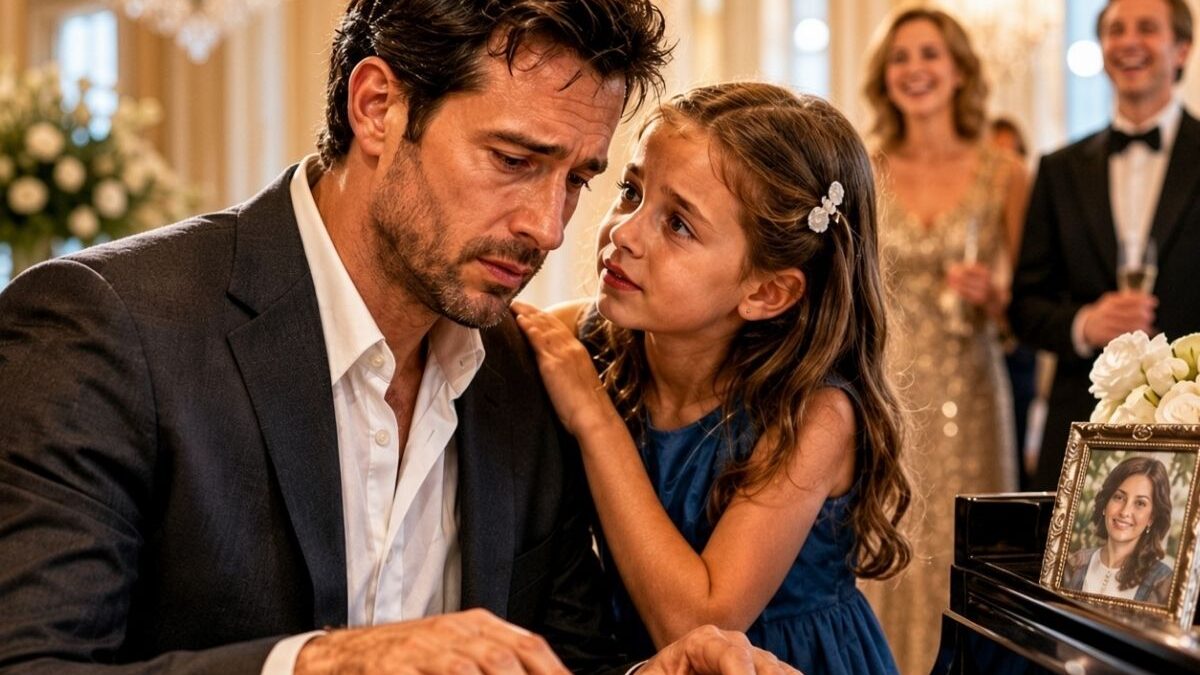
Everyone Laughed When the Single Dad Sat at the Piano—Until His Daughter Whispered, “Play Our Song”
The laughter started before Daniel’s fingers even touched the keys. He had only sat down at the grand piano because his 8-year-old daughter, Lily, had pulled him toward it during the company charity gala. Around them stood executives in tailored suits, wealthy donors holding champagne glasses, and people who knew Daniel only as the quiet single dad from the building maintenance team.
Someone joked that the piano probably cost more than his yearly salary. Another person laughed when Daniel adjusted the bench as if he actually knew what he was doing. Daniel almost stood back up. Then Lily leaned close, placed one small hand on his arm, and whispered, “Play our song.” The room went silent before the first note had even finished.
If you believe kindness still matters and that people deserve second chances when life has made them feel invisible, please like this video, leave a comment, share this story with someone who needs hope, and subscribe to Dad’s Hope. Your support helps stories like this reach people who may need a reminder that we should never assume we know someone’s whole story from the job they do or the clothes they wear.
Daniel Carter was 38 years old and had been raising Lily alone since his wife, Sarah, died 4 years earlier. During the day, Daniel worked as a maintenance supervisor at Ashford Financial, a large investment company headquartered in a glass tower downtown. He repaired broken doors, coordinated contractors, checked heating systems, replaced lights, and handled the problems most people only noticed when they were not solved quickly enough.
He was good at the work. He was dependable. He was also almost invisible to the executives who passed him every morning. Daniel preferred it that way. Before Sarah became sick, his life had been very different. He had studied music in college. Piano had been the center of his world. Daniel had once dreamed of performing professionally.
He played in hotel lounges, restaurants, weddings, and small concert halls while trying to build a career. Sarah had been the person who believed in him most. She would sit near the front whenever he performed. After Lily was born, Daniel began taking steadier work because music income was unpredictable. Then Sarah was diagnosed with cancer.
Piano lessons became hospital appointments. Performances became overnight shifts. Savings disappeared. Daniel eventually sold his own piano to help pay bills. After Sarah died, he stopped playing almost completely. The instrument reminded him too much of her. But there was one song he could never leave behind. It was a simple melody Daniel had written during the first year of his marriage.
Sarah loved it. When Lily was a baby, Daniel played it whenever she would not sleep. Sarah began calling it their song. After Sarah died, Daniel sometimes played the melody on a cheap keyboard they kept in the apartment. Only when Lily asked. Only when no one else could hear. To Lily, the song did not belong to grief.
It belonged to home. The charity gala was not an event Daniel expected to attend. Ashford Financial hosted it every year to raise money for community arts programs. This year, employees were encouraged to bring their families. Daniel normally avoided company social events, but Lily saw the invitation on the kitchen counter and became excited when she learned there would be live music and desserts.
Daniel agreed. He wore the same dark suit he had owned for 6 years. Lily wore a blue dress and small silver hair clip that had belonged to her mother. The ballroom was inside an expensive downtown hotel. A grand piano stood near the center of the room. A professional pianist had played during dinner, but after the performance ended, the instrument remained there beneath warm lights.
Lilly noticed it immediately. Daniel tried not to. For most of the evening, they stayed near the edge of the room. Daniel spoke with co-workers from maintenance. Lilly ate too much cake. Then she asked whether he could play the piano. Daniel said no. She knew that was not true. She asked again. Daniel explained that this was not their apartment.
People were talking. The piano belonged to the hotel. Lilly looked disappointed. A few minutes later, several executives gathered near the instrument. One of them had been drinking. He noticed Lilly staring at the piano and asked whether she played. Lilly said her father did. The man looked at Daniel. Then he laughed.
Not cruelly at first. More like he thought Lilly had made a joke. Another executive asked whether Daniel really played. Daniel said he used to. Someone told him to prove it. Daniel refused. That made the situation worse. People began encouraging him. Not because they expected anything beautiful. Because they expected something entertaining.
Daniel could hear it in their voices. One man joked that maintenance must include piano tuning now. Several people laughed. Daniel felt his face warm. He had spent years being comfortable with who he was. But there was something about being laughed at in front of Lily that made him feel small. Lily looked confused.
She did not understand why anyone thought her father sitting at a piano was funny. Daniel told her they should go home. Instead, Lily took his hand. She led him toward the piano. Daniel resisted at first. Then, he saw her face. She was not asking him to impress anyone. She wanted to hear something familiar in a room where both of them felt out of place.
Daniel sat. The laughter continued quietly. He placed his hands over the keys. For a moment, he could not move. The polished black surface reflected his face. He remembered Sarah. He remembered their first apartment. He remembered the piano he had sold. He remembered playing while Lily slept against her mother’s chest.
Daniel almost stood. Then, Lily leaned beside him. “Play our song.” Daniel closed his eyes. His fingers moved. The first notes were soft, simple. The room changed almost immediately. Daniel had not played for an audience in years, but his hands remembered more than he expected. The melody began slowly, carrying the warmth of something private.
Then, it opened. Years of grief, love, exhaustion, fatherhood, and memories seemed to move through the music without Daniel having to explain any of them. The people who had laughed stopped talking. A waiter paused near the wall. Several executives turned from their conversations. Lily stood beside Daniel with both hands resting on the edge of the piano.
She knew every note. Halfway through the song, Daniel looked at her. Lily was crying. Not painfully. She was smiling through the tears. Daniel nearly lost the melody. Then he remembered Sarah doing the same thing years earlier. He continued. When the final note faded, nobody spoke. For several seconds, the ballroom remained completely silent.
Then someone began clapping. The applause spread. Daniel looked down. He did not feel triumphant. He felt exposed. The song had never belonged to those people. It belonged to Sarah. To Lily. To the small life they had built together. Lily hugged him. That was the only reaction Daniel cared about. Then a woman approached.
Her name was Claire Ashford. She was the CEO of Ashford Financial. Daniel had seen her dozens of times, but had never spoken to her directly. Claire asked where he learned to play. Daniel explained that he had studied music before life moved in another direction. She asked about the song. Daniel hesitated. Lily answered.
She explained that Daniel wrote it for her mother. She told Claire that her mother had died and that her father played the song whenever they missed her too much. Claire’s expression changed. She apologized for asking something so personal. Daniel said it was fine. Then Claire looked across the room toward the executives who had laughed.
Several of them suddenly found other things to look at. Claire did not create a public confrontation. She did something Daniel respected more. She stayed. She listened. She asked him about Sarah. About Lily. About why he stopped playing. Daniel explained that music had once been his career, but after Sarah became ill, he needed stable income and benefits.
Maintenance work had given his family that. Claire asked whether he regretted it. Daniel looked at Lily. No. He missed music. He did not regret taking care of his family. The conversation stayed with Claire. The charity gala that evening was raising money for arts education, yet one of her own employees had abandoned a musical career because financial stability and family responsibilities made it impossible to continue.
A week later, Claire asked Daniel to meet with her. Daniel assumed it was about the gala. It was. But not in the way he expected. Ashford Financial funded several community arts programs. One needed a part-time coordinator for weekend music workshops. The role required someone who understood both operations and music.
Claire asked whether Daniel would be interested. The work was paid. The hours were optional. It would not interfere with his maintenance position. Daniel thought about it for several days. Then he accepted. The first Saturday he taught piano again. Lily sat in the back of the room coloring while six children waited at keyboards.
Daniel felt nervous. Then one little boy placed his hands incorrectly on the keys. Daniel moved beside him. Something old inside Daniel woke up. He began teaching regularly. He never became a concert pianist. He never wanted to anymore. But music returned to his life. He bought a used upright piano for the apartment two years later.
It had scratches along one side and one key that occasionally stuck. Lilly thought it was perfect. Daniel did, too. The people who had laughed at the gala eventually apologized. Daniel accepted. He did not need revenge. He needed them to understand what the moment had revealed. They had looked at a maintenance worker sitting at an expensive piano and assumed the scene was funny because they had already decided what kind of person belonged at those keys.
They had been wrong. If this story touched your heart, please like the video, share it with someone who has ever been underestimated because of where life placed them, and subscribe to Dad’s Hope. Sometimes the talents people once carried do not disappear. They simply become quiet while survival takes the microphone.
Before we end, please comment, “Never underestimate someone.” If you believe every person carries a story, a talent, or a dream that others may know nothing about. Years later, Lilly barely remembered the people who laughed when Daniel sat at the piano. She remembered the first notes of their song filling the ballroom.
She remembered her father looking at her the same way he looked at the old photographs of her mother. And Daniel remembered the moment Lilly whispered those three words more clearly than the applause that followed. “Play our song.” She had not asked him to prove the room wrong. She had asked him to remember who he was.
And sometimes that is all a person needs. A single voice that knows their story well enough to remind them that the part of themselves they thought life had taken away is still there, waiting beneath their hands.

