Colorado 1984 Cold Case Solved — The Killer Once Ran For Idaho Governor
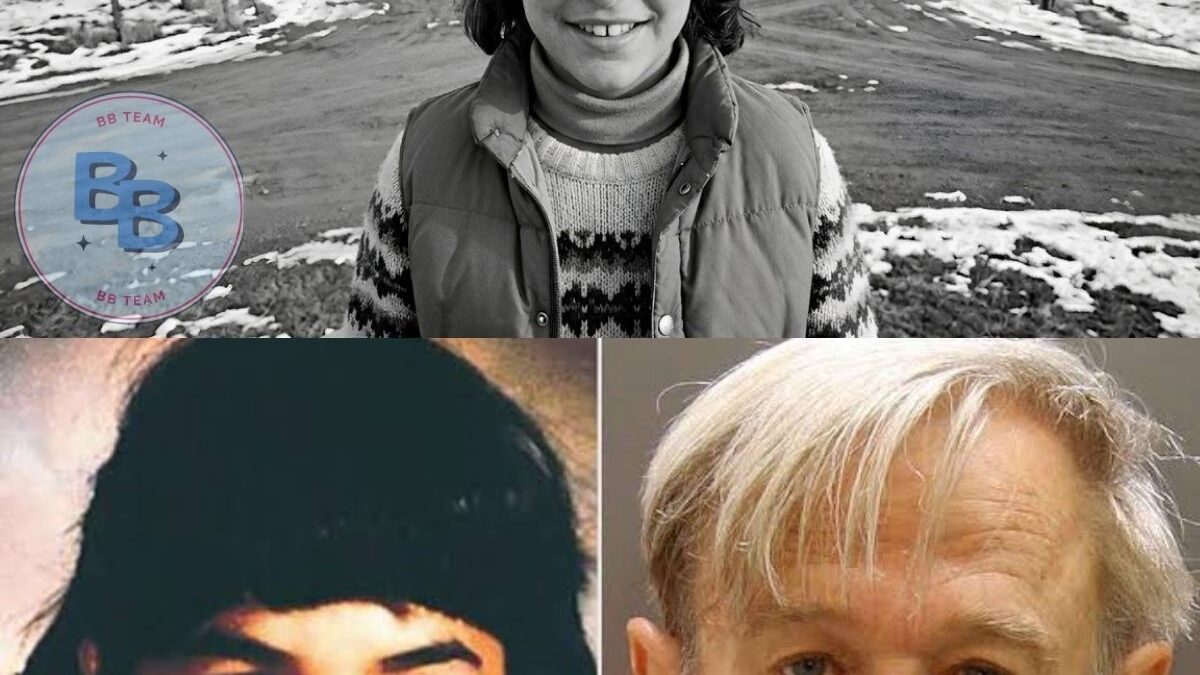
On the evening of December 20, 1984, twelve-year-old Jonelle Matthews took the stage at Franklin Middle School in Greeley, Colorado. A seventh-grader and proud member of the school honor choir, Jonelle had spent weeks rehearsing for the annual Christmas concert. She had been battling a nasty winter cold in the days leading up to the performance, but she refused to stay home. She had packed holiday gifts for her classmates, and nothing was going to keep her from singing. Her parents, Jim and Gloria Matthews, agreed to let her attend under one strict condition: the moment the concert wrapped up, she had to return directly home to rest.
Her father, Jim, the respected principal of Platte Valley Elementary School, was attending his older daughter Jennifer’s basketball game that evening. Gloria was out of state caring for her ailing mother. Family friends Russell Ross and his daughter Deanna drove Jonelle home after the festive performance. At roughly 8:15 p.m., Russell pulled his car into the driveway of the Matthews home on 43rd Avenue Court. Jonelle said her goodbyes, stepped through the garage entrance, and walked over to the front window. She flicked the lights on and off—a familiar, comforting signal between the families confirming she was safely locked inside. Russell saw the lights flash, smiled, and drove away into the snowy Colorado night.
Fifteen minutes later, around 8:30 p.m., the telephone rang. It was an elementary school teacher calling to notify Jim that she would be absent the following day. Jonelle dutifully jotted down the teacher’s name and message on a notepad, leaving it neatly beside the telephone for her father. It was the last ordinary act of a happy, energetic child.
When Jim Matthews arrived home from the basketball game at 9:30 p.m., he called out for his daughter. Only silence answered. Walking into the living room, Jim immediately sensed an unnatural presence in the quiet house. The television was on, and the holiday tree glowed in the corner. The electric space heater was running on full blast beside the couch. Jonelle’s favorite blanket was draped over the back of the sofa, and her shoes sat neatly side by side on the floor, exactly where she had kicked them off to relax. The handwritten phone message rested beside the telephone. Everything suggested she had settled in for a cozy evening, yet Jonelle had vanished.
When Jennifer returned home at 10:00 p.m. and confirmed Jonelle was nowhere to be found, Jim called the Greeley Police Department. Officers arrived within fifteen minutes, initiating an exhaustive search of the property. What they found deepened the mystery. There were no signs of forced entry, no broken glass, and no indications of a violent struggle. Not a single piece of furniture was overturned, and no blood was discovered.
Outside in the fresh snow, however, investigators made an unsettling discovery. Adult-sized boot prints circled the perimeter of the home and lingered near the garage. But whoever left those tracks had made a deliberate effort to conceal them: someone had taken a common garden rake and scratched across the snow, blurring the prints just enough to destroy their evidentiary value. Police could neither measure the shoe size nor determine the tread pattern. Recognizing that this was critical holdback evidence known only to the perpetrator, detectives kept the detail about the garden rake strictly confidential. It never appeared in press releases, news reports, or public appeals, remaining locked inside the investigative case file for thirty-five years.
Initial assumptions that Jonelle might have run away were swiftly dismissed. Jim Matthews adamantly pointed out that his daughter had four major events planned for the coming days: a slumber party with her best friend, the church Christmas pageant, holiday festivities, and her upcoming thirteenth birthday. A search of her room confirmed her winter coat, clothes, and savings were untouched.
Detectives then scrutinized Jonelle’s biological mother, Terry Vieira Martinez, who had placed Jonelle for adoption as an infant in California. Investigators wondered whether a birth parent had attempted to reclaim her, but weeks of surveillance and interviews proved that Terry had no knowledge of Jonelle’s whereabouts, no connection to Greeley, and had never attempted contact since 1972. The investigation had hit its first major dead end.
As months turned into years, the disappearance of Jonelle Matthews transformed from a local tragedy into an enduring national symbol. Her smiling school portrait—featuring feathered hair, a gentle smile, and wide, hopeful eyes—became one of the very first children’s faces ever printed on milk cartons across the United States through the National Child Safety Council. On March 7, 1985, President Ronald Reagan stood before Congress and explicitly invoked Jonelle’s name during a national address on the missing children crisis, lamenting that a vibrant twelve-year-old girl who should have celebrated her thirteenth birthday had been stolen from her family five days before Christmas.
Back in Greeley, the Sunny View Church of the Nazarene, where the Matthews family were devout members, organized twenty-four-hour prayer vigils. The community rallied, scouring fields, handing out flyers, and raising reward funds. Yet every lead withered. In May 1985, a human scalp was discovered on farmland in Weld County; Gloria Matthews had to endure the agonizing task of viewing the remains, only to learn through testing that it was not Jonelle.
Living in Greeley eventually became an unbearable torment for the family. Every street corner, school bell, and winter snowfall served as a painful reminder of the daughter who never came home. Nearly a decade after the disappearance, Jim and Gloria made the heartbreaking legal decision to have Jonelle declared dead so they could resolve administrative affairs. Eventually, the couple retired and moved to Costa Rica to find some measure of peace, while Jim continued to quietly monitor cold-case developments from thousands of miles away.
The dramatic turning point occurred on July 23, 2019. Around 4:50 p.m., an excavation crew constructing an oil and gas pipeline in a rural field fifteen miles southeast of the Matthews home unearthed human skeletal remains. Forensic anthropologists and DNA testing confirmed what the Matthews family had dreaded for thirty-five years: the remains belonged to Jonelle Renee Matthews. An autopsy revealed a clear gunshot wound to the skull. The missing person file officially became a homicide case.
The discovery handed the Greeley Police Department new legal authority, and Detective Mike Prill was assigned to lead the revived investigation. Rather than relying solely on modern forensics, Prill took an extraordinary investigative step: he spent an entire year reading through every single page of documentation generated since 1984. Across 298 handwritten initial police reports and decades of supplementary paperwork, Prill read 28,636 pages line by line.
Buried within that mountain of records, a single name appeared in just two brief paragraphs from 1984: Steven Dana Pankey.
In 1984, Steve Pankey was a thirty-three-year-old resident living roughly two miles from the Matthews residence. Shockingly, he had served as a youth pastor at Sunny View Church of the Nazarene—the exact church the Matthews family attended every week. He knew the congregation, understood family routines, and later admitted to police that he frequently sat in his car watching Franklin Middle School students walk home from school.
When Detective Prill and his team re-approached Pankey at his home in Twin Falls, Idaho, they intended only to inquire about another acquaintance from Greeley. Instead of cooperating, Pankey reacted with defensive hostility, immediately demanding a lawyer and insisting on an immunity agreement before uttering a word. To experienced detectives, an innocent witness does not demand criminal immunity when asked about someone else.
Investigators soon interviewed Pankey’s former wife, Angela Hicks. Her testimony pulled back the curtain on a terrifying domestic reality. Hicks recounted that on the night of Jonelle’s disappearance, Pankey had behaved erratically. On December 26, 1984, he abruptly forced the family into an unexpected, unseasonal road trip to Big Bear Lake, California. Upon returning to Greeley, Pankey became consumed by the case, obsessively following local broadcasts and forcing Angela to read every newspaper article about Jonelle. Around the same time, he began digging unexplained holes in their backyard, and a vehicle parked on their property mysteriously burst into flames without Pankey ever filing an insurance claim or contacting the police.
Even more condemning was Pankey’s long history of inserting himself into the investigation. Over three decades, he repeatedly contacted law enforcement agencies, filing bizarre court motions and submitting self-authored lists of “persons of interest” that included his own name. In a televised interview with Idaho news station KTVB, he slipped up by referring to Jonelle’s case as a “murder” prior to 2019, at a time when authorities had never publicly confirmed her death.
Most damning of all was a long-forgotten statement Pankey had made to detectives years earlier. During one of his unsolicited contacts with police, Pankey let slip that the perpetrator had used a garden rake to cover their footprints in the snow outside the Matthews home. It was the exact piece of classified evidence that investigators had safeguarded since the night of December 20, 1984. No one except the responding officers and the person holding that rake in the dark could have known that detail.
The psychological weight of the crime seemed to haunt Pankey in unexpected ways. In 2008, when his own son was tragically murdered, Pankey stood at the funeral and whispered an inexplicable sentence to Angela: “I hope God did not allow this to happen because of Jonelle Matthews.”
Despite carrying this monstrous secret, Pankey lived a life of shocking public visibility. After moving to Idaho, he ran for Lieutenant Governor in 2010 and launched campaigns for Governor of Idaho in both 2014 and 2018, standing on debate stages and asking voters for the executive power of the state. He was even discovered to be a monthly Patreon subscriber to “The Trail Went Cold,” a true-crime podcast that had produced an episode about Jonelle’s disappearance, paying money to listen to strangers discuss the crime he had committed.
In October 2020, Steve Pankey was arrested at his Idaho home and extradited to Colorado to face charges of first-degree murder, kidnapping, and false reporting. Although his initial 2021 trial ended with a hung jury, prosecutors retried the case in October 2022. Armed with the chronological record of his bizarre statements, his intimate knowledge of the rake in the snow, and the testimony of his former wife, prosecutors laid bare nearly four decades of guilt.
On October 31, 2022, a jury found seventy-one-year-old Steven Pankey guilty on all counts. The judge sentenced him to life in prison without the possibility of parole.
Nearly thirty-eight years after she turned out the living room lights on 43rd Avenue Court, Jonelle Renee Matthews was finally laid to rest at Linn Grove Cemetery in Greeley. Her story stands as a testament to the quiet persistence of a grieving father who never gave up, the dedication of an investigator willing to read 28,636 pages to find the truth, and the inescapable reality that even the coldest trails can eventually lead to justice.

