California 1998 Cold Case Solved — Arrest Shocks Community
California 1998 Cold Case Solved — Arrest Shocks Community
On the night of May 16th, 1998, 36-year-old Lisa Valdez in San Francisco said goodbye to her mother at the door of her new apartment after a small dinner party, closed the door, and no one in her family or friends saw her alive again. Four days later, police broke into the apartment and found her body in a state of heavy decomposition.
The TV was on, the room temperature was set to 80° F, and her waist-length long hair had been cut off. A partial fingerprint on the underside of the toilet seat lid was collected, numbered, and stored in the file along with DNA samples from the crime scene, but it matched no one in the system for 13 years.
Then 2011, a man was arrested for a petty theft in the Tenderloin area, and his DNA was entered into CODIS according to standard procedure, leading to a shocking match that affected everyone involved in a way no one could have imagined. Before we dive deeper into this story, let us know where you’re watching from, and if you like videos like this, don’t forget to subscribe to the channel.
Spring 1998 came to San Francisco with the city’s familiar rhythm, morning fog over the bay, afternoon sun on the hills, and the Diamond Heights neighborhood perched on the hill overlooking the city. A quiet residential area with apartments featuring windows facing the city and steep streets that people were used to walking every day.
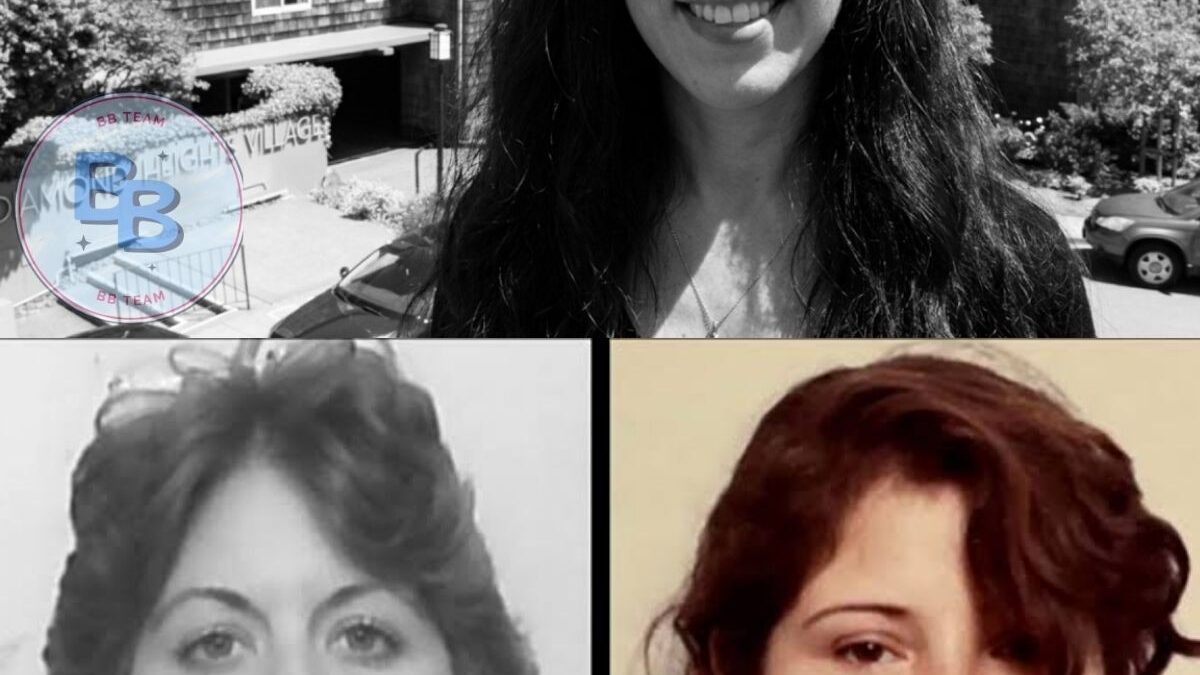
Lisa Valdez, 36 years old, born and raised in San Francisco, a computer programmer, had just moved into her new studio apartment in Diamond Heights that her mother Helen had bought for her as a milestone. A 36-year-old daughter with a stable career, life heading in the right direction, and a mother who wanted her daughter to have her own place in the city that both had called home their entire lives.
Lisa loved dancing in the way people love something they can’t live without. She attended class regularly every week like it was a job, never missing a session, and her best friend was Maiesa Robinson, whom she had known since age 15, who shared the same love for dancing. Maiesa said about Lisa, “She was a complete friend before that phrase even existed.
If she was your friend, she was your friend all the way.” On Saturday, May 16, 1998, Lisa invited her mother Helen and her mother’s boyfriend over for dinner at her new apartment, not for any special occasion, just the way Lisa liked to do it, gathering loved ones in the space she had just acquired, celebrating small things with warm meals.
Helen recalled that evening, “The food was good, the apartment was beautiful, and her daughter was happy.” Helen was the last to leave. At midnight, mother and daughter said goodbye at the door. Helen drove home, Lisa closed the door, and that was the last time Helen Valdez saw her daughter alive. Around 1:26 a.m. on May 17, a neighbor heard a loud noise coming from Lisa’s apartment, then heard footsteps running down the stairs, and Lisa’s computer was suddenly turned off around the same time.
On Sunday, May 17, Lisa did not show up for her regular noon dance class, something that had never happened before, but it wasn’t enough for anyone to worry immediately. That same evening, the neighbor returned from a weekend trip and discovered that the metal frame on their own door had been bent, the door latch had been pushed in, and there were blood stains on the door.
They reported it to the building manager as a potential burglary, and did not connect it to the neighbor across the way. On May 20, the building manager received a report of a strange smell coming from Lisa Valdez’s apartment, knocked on the door, got no answer, and called the police. And when police broke into the apartment that the mother had just bought for her daughter as a gift, they found something that no one in that Diamond Heights building was mentally prepared to see. The TV was on.
The room temperature was set to 80° F in springtime San Francisco when the outside temperature was only around 55 to 60°. Someone had set the temperature unusually high in a closed room. Lisa Valdez’s body lay on the floor near the Murphy bed that had been pulled out but was shifted off its frame in a state of heavy decomposition after 4 days in a warm room with the temperature maintained at a high level.
21 stab wounds on her body, partially undressed, and her waist-length long hair that the family later confirmed was Lisa’s pride and joy, something she would never have cut herself, had been cut off. Blood everywhere in the room, enough to indicate that the attack was violent and prolonged. Male DNA was collected from multiple locations in the apartment.
A partial fingerprint was found on the underside of the toilet seat lid in the bathroom, an unusual location. There were no signs of forced entry at the front door. The person had been let in or Lisa had opened the door for them or there was some other way the investigators had not yet determined. Investigators questioned the room temperature and the TV being on and concluded that the killer had stayed with Lisa’s body for a long period after killing her, setting the temperature high, turning on the TV as if creating an artificial living space while hiding
out in the apartment. This was not a crime of passion by someone who came and left immediately. The person had stayed. When investigators interviewed people connected to Lisa in those days, they discovered the most painful detail of the entire case. Lisa’s housekeeper had come to the apartment on May 18, 2 days before the police broke in, 2 days when the killer might still have been there.
She walked in, saw Lisa lying on the floor, and heard a man’s voice in the apartment. She thought she was intruding. She left. Lieutenant Dedet later recounted the housekeeper’s statement in court. She described seeing the swollen body and hearing the man’s voice, seeing a black rolling bag next to the body, and left without calling anyone because she thought she was disturbing them.
That meant Anthony Hughes may have still been in the apartment when the housekeeper arrived. More than a day after killing Lisa, still there, still not having left. If the housekeeper had not left, if she had called the police instead of turning around and walking out, Hughes could have been arrested at the scene on May 18th, 1998, instead of 13 years later.
Helen Valdez received a call from the police on May 20, 4 days after the dinner, 4 days after the last time she said goodbye to her daughter at the door of the new apartment. She had bought that apartment for her daughter so she could have her own place in the city. And that was where her daughter died. The San Francisco police opened an official investigation, DNA was collected, fingerprints were recorded, and samples were entered into the system.
Investigator Pam Hofsass of the San Francisco Police Department led the investigation from the very first days. The woman who would stay attached to this case for 13 years. The first steps, interviewing neighbors in the building, Lisa’s acquaintances, people who might know who had visited her on the evening of May 16 or the early morning of May 17.
The central question that all the evidence led to, who had gotten into that apartment? There were no signs of forced entry at the front door, meaning the person was invited in by Lisa or had a key or found some other way in that investigators had not yet identified. The second question, why was Lisa’s hair cut? The family confirmed it was her pride and joy, something she would never have cut herself, and investigators speculated this was a possessive crime, the act of someone who wanted to take something from the victim, not a random
stranger’s crime. Police collected DNA samples from the scene and sent them for testing according to procedure, but in 1998, the national DNA database CODIS was still very small compared to what it would become because the DNA Identification Act had only been passed in 1994, and many states had not yet submitted enough samples into the system.
Meaning a person could have committed crimes multiple times and still not be in the database because no one had taken their DNA sample. The DNA from Lisa’s scene matched no one. The partial fingerprint from the toilet seat also did not match. Investigators interviewed and ruled out every person in Lisa’s circle through DNA testing, person by person, sample by sample, negative result by negative result.
The police did everything they could with the tools available in 1998, and those tools were not enough. What the investigators did not know was that Anthony Quinn Hughes, a 39-year-old man living in San Francisco in 1998, had dated Lisa when they were both teenagers from ages 13 to 15 and then disappeared from her life.
No one in Lisa’s circle of friends and family mentioned Hughes’s name in the initial interviews. The connection from more than 20 years earlier was too far in the past for anyone to remember. And Helen Valdez only recalled him when she heard his name in 2011. She hadn’t liked him back then. The relationship hadn’t worked out, but ended amicably.
They broke up when they were still teenagers, and she hadn’t thought about him for decades. Hughes had no DNA record in the system in 1998. His name did not appear in any investigations, and he walked freely in the city while Hofsass sent DNA samples for testing and received negative results. 21 years after they dated in high school, Anthony Hughes had shown up at Lisa’s apartment, and no one knew why.
And that question would not have a complete answer even after he was convicted. Pam Hofsass was a forensic specialist with the San Francisco Police Department. She followed the development of DNA technology year after year throughout the years after 1998. As testing standards improved, as the database expanded to new states and new types of crimes, as methods for analyzing old evidence samples were upgraded enough to produce results that had previously been impossible.
Every time there was new technology, she sent the Valdez case evidence back for retesting. She never explained why she wouldn’t let go of this case. She just kept going in the way people continue doing the things they know are important. Maiesha Robinson, the friend from age 15, the one whose name rhymed with Lisa’s, who had danced with Lisa in the years before May 20, 1998, lived with the darkness from the day police broke into the Diamond Heights apartment.
That light went out in such a violent way that I really fell into darkness, she said. I thought the world would stop spinning. The world did not stop spinning, and that was what Maiesha had to learn to live with. The world continued while the question of who killed Lisa Valdez had no answer as the years passed. Helen Valdez lived with the question that had no answer of who had come to her daughter’s apartment that night, and why, and why no one was arrested.
And the apartment she had bought for Lisa as a gift, as a new beginning, as proof that her daughter was heading in the right direction in life. That apartment became something she could not think about without remembering how her daughter was found inside it. In that same city, on the streets that Lisa Valdez had once walked and Helen Valdez still walked, Anthony Hughes continued living his life from 1998 to 2011, not fleeing the city, not changing his identity, not doing anything to escape the shadow of the night of May 16-17, 1998, perhaps
because 13 years had passed and no one had knocked on his door and he had calculated that it was not necessary to do so. He continued committing minor crimes, thefts, break-ins, violations, not serious enough to trigger DNA sampling under California law at the time and continued to not be in the CODIS system.
In 2008, in 2010, CODIS had become much larger than in 1998 with millions of DNA profiles from across the United States entered into the system under successive expanded laws, but Hughes mainly committed minor crimes and still did not meet the threshold to trigger sampling. The Valdez case file was never officially closed at the San Francisco Police Department.
It remained open, still classified as an unsolved case, not dead, but with no one actively pushing it forward. There were no new leads, no new suspects, no new DNA matches, only Hofstee’s continuing to send the evidence for periodic testing. Anthony Hughes, born in 1959, lived in San Francisco, unremarkable, nothing special, nothing to distinguish him from the thousands of other people walking the streets of the Tenderloin every day.
He had been diagnosed with myasthenia gravis in 1993, had undergone thymus gland removal surgery, and had been on medication since then. The disease causes muscle weakness that needs to be managed with medication and in 1998, according to his own medical records, the condition was well controlled.
In those years, the DNA Fingerprint Act of 2005 significantly expanded the scope of DNA collection to include people arrested for federal crimes and in 2009, California passed Proposition 69 requiring DNA samples from anyone arrested for any charge that could lead to a conviction, not just serious felonies, but any crime. And the CODIS database grew from a few million to tens of millions of profiles in the years that followed.
Hofsas followed every one of these updates. She knew that each time the system expanded, the chance of finding a match for the 1998 evidence from the Valdez case increased. In September 2011, Anthony Hughes was stopped by plainclothes officers from Tenderloin Station while walking near the intersection of Turk and Leavenworth and was detained for a minor theft-related violation, the kind of situation that happens hundreds of times a week in San Francisco.
Nothing special, just a man stopped on the street for a trivial reason. Under the mandatory procedure required by Proposition 69, DNA sample collected, fingerprints taken, entered into the system. Standard procedure. No one thought anything more of it. But in the days that followed, the CODIS system scanned the database and found what 13 years of manual searching had not.
In early September 2011, Pam Hofsas received a notification from the CODIS system. The DNA from the evidence collected at Lisa Valdez’s apartment crime scene in 1998 matched a profile in the database, and the name that came up was Anthony Quinn Hughes, the man who had just been detained for petty theft in the Tenderloin a few days earlier.
Hofsas later said, “That may have been one of the most satisfying moments of my career.” And she said it in the way of someone who had waited long enough for that moment to understand what it truly meant when it arrived. Not explosive excitement, but the deep satisfaction of someone who knew what 13 years of not giving up meant.
The second confirmation came right after. Hughes’s fingerprint, middle finger, matched the partial fingerprint on the underside of the toilet seat lid in Lisa’s bathroom, the sample that investigators had collected in 1998 and kept in the file for 13 years following proper preservation protocol. Two independent pieces of evidence, the same person, 13 years later.
Hofsahs and her colleagues decided to arrest Hughes. On September 10, 2011, plainclothes officers from Tenderloin Station followed Hughes and stopped him while he was walking on the streets of the Tenderloin. Hughes was taken to San Francisco’s Hall of Justice. 13 years after killing Lisa Valdez, Anthony Hughes sat in an interview room at the San Francisco Police Department unaware that his DNA and fingerprints had already said everything that needed to be said before he even walked into the room. In the interview room, Hofsahs and
her colleagues prepared to meet the man they had been looking for for 13 years. They did not start with Lisa Valdez’s name. Instead, they asked questions about a series of thefts in the area near Lisa’s apartment as if that was the reason Hughes had been brought in. That tactic would create a moment no one in that room could have predicted.
And what happened next in that interview room is something Hofsahs would remember forever. Not because he confessed, but because he did the exact opposite in a way no one could have imagined. Hughes answered without obvious stress in the way of someone who had sat in interview rooms many times before and knew how to answer questions without saying too much.
Then Hofsahs placed a photo on the table, a photo of Lisa Valdez, and asked, “Do you recognize this person?” Hughes looked at the photo and shook his head. “No.” “You don’t know Lisa Valdez?” Hughes looked at the photo again. “Oh, yes. We dated in high school.” That statement confirmed what the DNA had already said before Hughes even entered the room.
He knew her. He had tried to deny it immediately upon seeing the photo and then he realized he could not deny knowing someone he had known since they were both teenagers. Hofsass continued the interrogation asking about his relationship with Lisa, about 1998, about the night of May 16-17. Hughes said he did not kill Lisa, said he was not involved, said he did not know what happened to her after they dated in high school.
Then he asked for a pen to write and the police handed him a pen out of the natural reflex of people thinking this was the moment the suspect would sit down and write a confession. Hughes took the pen, looked down for a brief moment and began stabbing the pen into his own chest and neck repeatedly, continuously, without stopping until the officers had to rush in to restrain him and take the pen from his hand. “I want to die.
I want to die.” Hughes said while being restrained bleeding from the wounds he had inflicted on himself with a ballpoint pen in the interview room at the San Francisco Police Department. He did not confess. He did the opposite and everyone in that interview room understood that was also a kind of answer. Hughes was taken for emergency medical treatment, his wounds were treated and he was formally arrested immediately after receiving treatment.
Hofsass and her colleagues drove to Helen Valdez’s home to deliver the news that she had waited 13 years to hear. Not over the phone but in person because there are some pieces of news that need to be delivered face-to-face. Helen, upon hearing the name Anthony Quinn Hughes, said “I was shocked. The memories came back.” He dated Lisa.
That same day, Hofsass called Maisha Robinson, the friend from age 15, the one who had said that when Lisa died the world should have stopped spinning, the one who had lived in darkness for 13 years since May 20, 1998. 13 years, and finally, a phone call. In September 2011, Hughes was charged with murder and attempted rape, and the next 4 years were lengthy legal proceedings in the way the justice system operates when many things need to be resolved before a trial can begin.
Hughes continued to deny all charges from the time of his arrest until trial. San Francisco Superior Court, December 2015, 17 years after the night of May 16, 1998, when Helen Valdez drove home not knowing it was the last time. Hughes walked into the courtroom, confident, head held high, not looking toward the Valdez family.
The prosecution built its case around the two pillars that 13 years and one petty theft had provided. The matching DNA and Hughes’s middle finger fingerprint on the underside of the toilet seat lid in Lisa’s bathroom. Two independent pieces of evidence collected from the same crime scene in 1998, both pointing to the same person with no other explanation except the one the prosecution presented.
The defense responded with the argument that Hughes could not have stabbed someone 21 times because of myasthenia gravis, which causes muscle weakness in the hands and arms, and they presented medical records from 1993 with the diagnosis thymus removal surgery, medication treatment, and notes indicating he could not perform repetitive hand and arm movements.
That argument was medically reasonable. Myasthenia gravis is real, the symptoms are real, and the physical limitations it causes are real. But the prosecution countered with Hughes’s own medical records from 1998. A neurological evaluation recorded as normal with no significant findings. The disease well controlled with medication at that time, and myasthenia gravis having periods of severity and periods of remission.
In 1998, according to his own records, he was in a good remission phase. The defense argument was medically reasonable. But the jury had the DNA and the fingerprint, and those things did not fluctuate with disease stages. The DNA expert testified in court the probability that the DNA in the samples from Lisa’s apartment belonged to anyone other than Hughes was virtually impossible.
The middle finger fingerprint matched Hughes’ records exactly. Hughes, in his own testimony, admitted knowing Lisa from high school, but denied seeing her again in 1998 or being in her apartment. And the prosecution asked the question that none of his answers could explain. If he was not in that apartment, where did his DNA come from? And what was his fingerprint doing on that toilet seat lid? The jury convicted Hughes of first-degree murder, but did not reach a verdict on the attempted rape charge, and the court declared a mistrial on
that count. Hughes filed for a retrial, and the judge reviewed it and made a decision the Valdez family did not agree with, reducing the charge to second-degree murder. The sentence, 16 years to life in prison. Hughes stood as the sentence was read with no clear expression, according to those present in the courtroom that day.
In the same way he had entered without looking toward the Valdez family, Maiesa Robinson stood before the court and spoke on behalf of Lisa’s family and friends, the friend from age 15, the one whose name rhymed with Lisa’s, who had lived in darkness since May 20, 1998. “That light went out in such a violent way that I really fell into darkness.
I thought the world would stop spinning.” She spoke about 15 years of living with a question that had no answer about the things Lisa would never get to live, about the dance classes that would never happen again. The friend from age 15 stood before the court and spoke about the friend who had been taken from her 37 years before they could grow old together.
Hughes was sent to the California Healthcare Facility in Stockton, continued to deny the charges and appeal, and in 2018, the California Court of Appeal reviewed the appeal and denied it in full, upholding the sentence. The Valdez case is a classic example of what forensics experts call a cold hit, a DNA match that came not from active investigation of the case, but from submitting a sample for a completely unrelated crime and letting the system do the rest.
Hughes was not arrested because of the Valdez case, he was arrested for petty theft. His DNA was taken as part of the standard procedure for a routine arrest, and the system found what 13 years of manual investigation had not. That leads to the question that forensics professionals continue to ask, “How many other cold cases would be solved if the DNA database had been large enough and updated earlier? If California’s Proposition 69 had been passed in 1999 instead of 2009? If people like Hughes had their DNA taken
in the early years after the crime instead of 13 years later?” The Valdez case also illustrates what Hofsäss understood from the beginning. Proper evidence preservation is not just paperwork, but the action of people who believe technology will eventually catch up. The fingerprint on the toilet seat lid from 1998 remained high enough quality to match in 2011 after 13 years in proper storage, and if the evidence had not been preserved correctly, if CODIS had not been expanded to include minor crimes, if Hofsäss had not sent the DNA for
periodic retesting, any one of those things would have been enough for this case to never be solved. Why Lisa’s hair was cut, a question that was never officially answered in court. Investigators speculated that Hughes took it as a trophy, but there was no evidence to confirm it. How Hughes and Lisa reconnected in 1998 after more than 20 years, how he found her, or whether they met by chance, or whether someone knows the answer but has not said, was never clarified in the court record. And the housekeeper who
came on May 18, saw her, and left. The question of responsibility and what could have happened differently if she had not left is a question that has no answer that makes anyone feel better. Hughes became eligible for parole in 2024, and the sentence put a legal end to the case. But the questions about Hughes, about motive, about why a man would return to a woman he had known since they were both teenagers, and kill her in her new apartment, those questions remain and will continue to remain. The Lisa Valdez case leaves
behind specific lessons that anyone living in America can apply right now. First, if you see anything unusual, report it immediately, even if you’re not sure. Lisa’s housekeeper came to the apartment on May 18, saw a person lying on the floor, heard a man’s voice, and left because she thought she was intruding.
If she had called 911 that day, Hughes could have been arrested on the spot. You don’t need to be certain to call, you only need to suspect something is wrong. The 911 system is designed to take calls that say, “I’m not sure, but something isn’t right.” Second, support the expansion of DNA databases. The Valdez case was solved because California passed Proposition 69 in 2009, requiring DNA samples from anyone arrested for any charge that could lead to a conviction.
If that law had existed in 1998, Hughes could have been caught many years earlier. If you live in a state that does not have similar rules, contact your elected representatives and support the expansion of CODIS. Third, understand that a cold case does not mean the case is over. The Valdez case went cold for 13 years, but never died because Pam Hoffsass kept sending the evidence for testing.
If your family has an unsolved case, contact the assigned investigator periodically and ask about new DNA technology that could be applied to the case. The DNA Doe Project and local police cold case units can be good starting points.

