Appalachia’s Darkest Confession: The Murder of Laura Foster—A Fate Worse Than Death
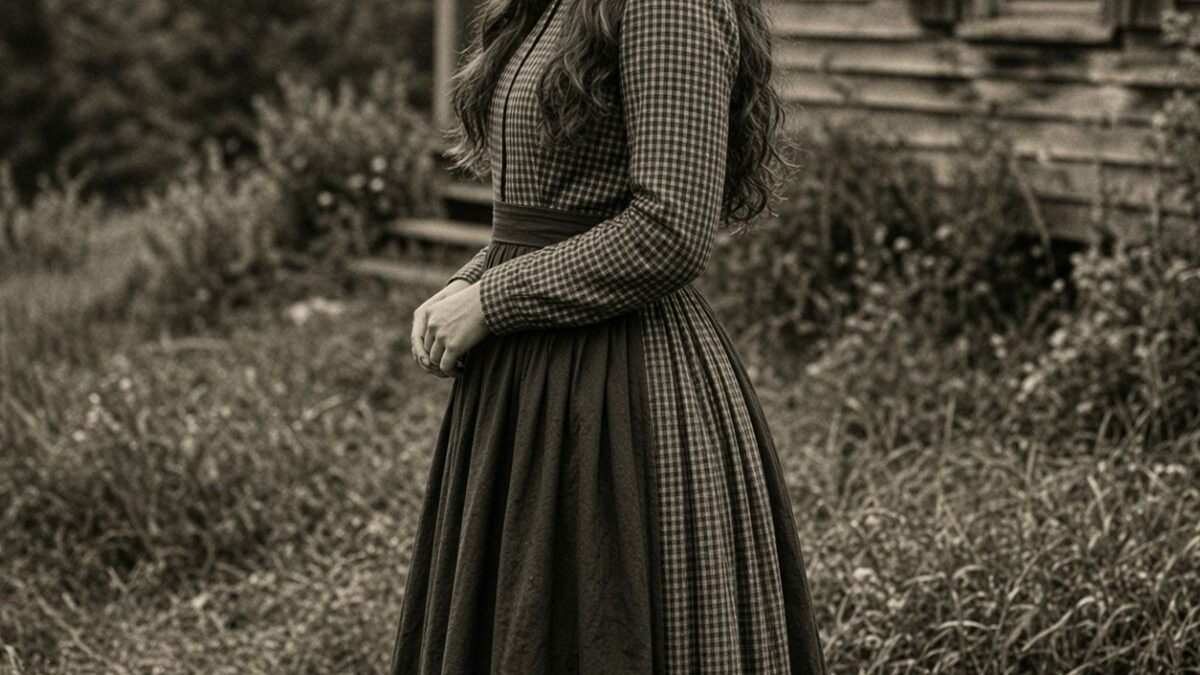
A cabin stood empty by the Yadkin. A mare came home with no rider. And a shallow grave on a lonely ridge held a secret three counties would argue over for a hundred years. This is the true story of the murder of Laura Foster. To understand what happened on that ridge in the spring of 1866, you have to understand the country it happened in.
Wilkes County, North Carolina, sits in the Blue Ridge foothills where the Yadkin River winds down out of the mountains through a scatter of small farms. There were two little settlements at the heart of this story. One was called Elkville, the other was Germansville. Today, the community nearby is called Ferguson, but in those years, it was just a web of hollows and ridges, corn ground and hog pens worked [music] by families who had lived each other for generations.
And they were tangled together, those families, Fosters, Meltons, Dooles. Cousins married cousins. A man’s neighbor was likely his kin. And his kin were likely poor. This was subsistence farming, the kind where a good corn crop and a few hogs stood between a household and a hungry winter. A single mare, a working horse, could be the most valuable thing a family owned.
Remember that. A horse matters in this story more than you would think. It was 1865, then 1866, and the war had just [music] ended. That matters, too. This was a defeated, impoverished corner of a defeated South living through the first hard years of reconstruction. Money was scarce, work was scarcer, and the young men who had marched off to fight were coming home, if they came home at all, to farms that had gone to seed and a way of life that had been knocked flat.
One of those young men was Thomas C. Dula. He had enlisted in March of 1862, 17 years old, in Company K of the 42nd North Carolina Infantry. By the later years of the war, he was rated a drummer. He was captured, and he was held as a prisoner of war at Point Lookout, Maryland, one of the grimmest camps of the whole conflict.
On the 11th of June, 1865, he took the oath of allegiance to the Union and was released. And Tom Dula walked home to Elkville, to a valley with no money and no work, and not much of a future. Now, the ballad that made him famous spells his name Dooly. That’s just the way the mountain said Dula, and the song kept the sound.
Through the rest of this story, he is Dula, the way the court records have him. Dooly belongs to the song and will come to the song. Dula was, by every account that survives, a charmer, handsome and easy. And when he came home from the war, he took up again with a woman named Ann Melton. Ann had been born Ann Foster, which tells you how close woven these families were, because the dead girl in this story would be a Foster, too, and Ann’s cousin.
Ann had married a farmer named James Melton back in 1859, when she was only 14 or 15 years old. James Melton worked the land and mended shoes, a cobbler as well as a farmer, and the Melton cabin was a kind of social hub in that neighborhood. People lodged there, people passed through, and it was not, by the accounts, a happy or a faithful marriage.
Ann Melton kept her own bed in that cabin. James slept apart. And Ann and Tom Dula had an understanding that everyone in the valley seemed to know about, the way everyone in a small place knows the things that are never said out loud. That was the world before. A poor valley, intermarried families, a charming veteran home from the war, and a marriage that was a marriage in name.
It was quiet. It was ordinary. And into that quiet, in the spring of 1866, came the pieces that would end with a man on a scaffold and a question that has never been answered, because Tom Dula did not love only Ann Melton. There was Laura Foster, Ann’s cousin, the daughter of a farmer named Wilson Foster over in the Germans Hill area.
Laura’s exact age was never firmly settled, and the honest sources hedge it to this day. She was reported to be about the same age as Dula, somewhere in her early to middle 20s. What matters is that Tom Dula was involved with Laura Foster and with Ann Melton. And there was at least one more woman in the household to reckon with.
That summer, a young cousin named Pauline Foster came to board and work at the Melton cabin. Pauline had come down from Watauga County, and she had come for a particular reason. There was a sickness moving through this little circle of people. A sexually transmitted infection, what they called the pock, was passing among them, and a local doctor was treating Dula and Ann and Pauline for it.
That is as far into that matter as we need to go. It was raised later in a courtroom as a reason, a motive, and it was ugly. And the people who testified about it pointed fingers in more than one direction. Some said Laura had brought the infection. Some said Pauline had. Those were allegations made by witnesses with their own reasons, and they should be held as allegations and nothing firmer.
But here is the piece the court would hang so much upon. Dula was said to have blamed his infection on a woman, and to have sworn he would put through, would do in, whoever had given it to him. That threat, reported by witnesses, became the spine of the state’s case. Hold it lightly. It is testimony, not proven fact, and the people who repeated it were tangled in the same web as everyone [music] else.
Now we come to the morning everything turned. It was the 25th of May, 1866. Before dawn, Laura Foster left her father’s home. She rode out on Wilson Foster’s mare, the family’s good horse, and by the accounts, she went to meet Tom Dula, riding toward a place called the Bates place, an old abandoned spot the local people used as a meeting ground.
She carried a small bundle of clothes. Some said the two of them meant to run off together and marry. Laura Foster rode into the gray light of that morning and she was never seen alive again. The next day the mare came home alone. It came back to the Foster place with a broken halter dragging its lead and no rider on its back.
And in a valley where a horse was wealth and a horse coming home riderless meant something had gone badly wrong. That was the first alarm. Wilson Foster raised the cry. His daughter was gone and so for a while was his mare. The searches began the way searches began in the mountains then. There was no detective force no county apparatus for a thing like this.
There was a sheriff and a deputy or two and there were neighbors. So, the neighbors turned out a community posse combing the ridges and the branches and the old rendezvous grounds calling Laura Foster’s name through the laurel. And as they searched suspicion settled where suspicion in a small place always settles.
It settled on Tom Dula and it settled on Ann Melton. Dula felt it settling. By the end of June he was gone. He slipped north into Watauga County and then across the line into Tennessee to a place called Trade in Johnson County where he took work under a false name. He called himself Tom Hall and he hired on for a farmer named James Grayson a Tennessee man a colonel who had no idea he had just taken on the most wanted man in Wilkes County.
The arrangement did not last a week. Word travels even across a state line and word came to Grayson that the man he knew as Tom Hall was wanted in North Carolina for a killing. When Dula, sensing the ground shifting again, moved on, Grayson himself joined the deputies who went after him. They took him on the Tennessee side and brought him back over the mountains into North Carolina.
By the reports, Dula was lodged in the jail at Wilkesboro on the 11th of July, 1866. The colonel he had worked for had helped run him down. But a jailed man was not a solved case. Laura Foster was still missing. All through that summer the valley had a suspect in irons and nobody, no proof, nothing but a mare that had come home alone and a young man who had run.
And the searches went on week after week through the heat of a mountain summer, the neighbors walking the ridges with no idea where to dig. The person who finally moved the case was Pauline Foster. She had been questioned >> [music] >> and she had not made it easy. When she was first taken up and asked what she knew, she had been drinking and her answers came out crooked and contradictory.
She was held, jailed herself as a witness the county could not trust to stay and could not trust to tell the truth. But over that summer, Pauline began to talk and what she said tied Tom Dula and Ann Melton together to a plan and to a place. She said things that pointed the searchers at last up onto a particular ridge.
It was around the 1st of September, 1866, a Saturday, roughly 3 months after Laura Foster had ridden out at dawn, that the searchers found what they had been looking for. High on the rise that people would forever after call Laura Foster Ridge, about 75 yd from a fallen pine log, they found a shallow grave. Among the men, there were Colonel James Isbell, who had helped drive the search, and an old man named David Horton, 74 years old, who had come out to walk the ridges with the rest.
The traditional account holds that a searcher’s horse balked at the spot, refused to go on, and that was the sign to dig. Take that detail as the mountains have handed it down, reported and retold, softer than fact. Laura Foster had been stabbed once in the left chest, and buried in that shallow grave off the ridge.
A country doctor named Carter examined her and fixed the single wound. That is the whole of what needs saying about how she died. The record itself never settled the rest, and neither will we. What the discovery gave the county was certainty of one thing only. This was no runaway who had gone off to marry. This was a killing, and it had been hidden on a lonely ridge for the better part of a summer while the woman’s own father wondered whether she was alive somewhere over the mountains.
If stories like this one from the mountains matter to you, take a second to subscribe. It keeps these cases from being forgotten, and it helps more people find them. Now the machinery of the law, thin as it was, began to turn. A grand jury was convened. Dula was charged with the murder of Laura Foster. Ann Melton was charged as an accessory with stirring up, moving, and abetting the crime and with harboring Dula afterward.
Though those harboring counts would later be dropped. The two of them were to be tried. And from the start their lawyers understood that Wilkes County was no place to try them. Feeling ran too high. Everyone had a cousin who had walked the search or an opinion already fixed. It was believed a fair jury could not be seated in the county at all.
So the case moved. The venue was changed from Wilkesboro to Statesville in Iredell County some 30 miles away over the hills. That was no small thing in 1866. It meant hauling the whole apparatus of a murder trial. Judge, witnesses, prisoners across the mountains to a different county seat because justice could not be trusted to stay cool at home.
Judge Ralph P. Buxton presided over the early proceedings. The court granted a severance which meant Dula and Ann Melton would be tried separately. Each to answer alone. And here the case gained the name that would carry it into history books. Tom Dula’s defense was taken up by Zebulon B. Vance. Vance had been the governor of North Carolina during the war and he would be governor again.
And later a United States Senator. He was one of the most prominent men in the state and he defended a penniless ex-drummer from a poor Wilkes County Valley for no fee at all, pro bono, without a dollar for his trouble. Why he did it was argued at the time and is argued still. Some said sympathy for a Confederate veteran. Some said the challenge or the notice it would bring him.
The honest answer is that no one truly knows what moved Zebulon Vance to stand up for Tom Dula and it remains an open question to this day. Vance was good. He won the severance. He won the change of venue. And when the first trial came and it went against his client, he was not finished. The first trial at Statesville ended in conviction.
The verdict reported on the 21st of October, 1866. The heart of the state’s case was Pauline Foster who testified that she had been taken by Ann Melton at night to check on the hidden grave, who tied the two lovers to the plan and to the ground where Laura lay. She was the most [music] damaging witness the prosecution had. She was also the most doubted.
A woman who had been drinking when first questioned, who had contradicted herself, who had been jailed, whom the defense tore at as a liar with reasons of her own. The jury believed enough of her to convict. But Zebulon Vance took Tom Dula’s case up to the Supreme Court of North Carolina and in 1867, that court reversed the conviction and ordered a new trial.
The grounds went to the admission of testimony to evidentiary irregularities in how the case had been put before the jury. The exact reach of the holding lies in the reported opinion and the case papers, but the effect was plain enough. The conviction was undone. Tom Dula would be tried again. The second trial began on the 20th of January, 1868, again at Statesville.
And again, the state made its case. And again, the jury heard Pauline Foster. And again, Tom Dula was convicted of the murder of Laura Foster. This time the appeal was denied. The law had said its final word. The date was set. And a young man who had come home from a prison camp less than 3 years before now had only a scaffold ahead of him.
The 1st of May, 1868, came clear and warm to Statesville, and the whole country round about seemed to be moving toward the town. A hanging in those days was a public event, and this hanging most of all. People came in from three counties on foot and on horseback and in wagons until the reporter for the New York Herald, who had come all the way south to cover it, put the crowd at around 3,000.
He noted something else, too. There were an unusual number of women in that crowd come to see Tom Dula die. And by every account, Tom Dula met that day with a strange composure. He was not broken. He talked. The Herald man reported that he spoke from the gallows for nearly an hour, an hour of a condemned man’s words before a crowd of 3,000.
But, listen closely to what that reporter set down because it matters. In all that hour, Tom Dula did not confess to the killing, >> [music] >> and he did not clear Ann Melton from the scaffold. Whatever he said up there, and the traditional last words that come down to us have him saying that he had not harmed a single hair on that fair lady’s head, and joking of the rope that it was so nice and clean he ought to have washed his neck.
He did not use his last public hour to name who killed Laura Foster, nor to lift the shadow from the woman he loved. Tom Dula was hanged at Statesville that 1st of May, 1868, not quite 2 years after Laura Foster rode out at dawn. He was 23 years old, or close to it. Born in June of 1844 in that same Wilkes County ground he would be buried in.
That is where the mechanics of that day end, and where the mystery deepens because the confession this case is remembered for was not shouted from a scaffold. It was written down. Around the time of his execution, Tom Dula is reported to have put his name to a short statement. In it, he declared that he alone was responsible for the death of Laura Foster, and that Ann Melton had no part in the killing.
A written note taking the whole weight onto himself and lifting it entirely off her. That is the documented confession at the center of this story, and you will notice what it does not do. It says Dula is responsible. It does not describe the act. It does not say his was the hand that held the knife. It does not walk anyone through what happened on that ridge.
It clears Ann Melton and it accepts the blame and it leaves the actual question, the one the two trials never answered, exactly as unsettled as it had all would been. Because Ann Melton had not yet been tried. She had been held all this while waiting, tried separately as the severance required. And in the fall of 1868, after Dula was already in his grave, Ann Melton finally answered the charge that she had helped bring about her cousin’s death. And Ann Melton was acquitted.
She walked out of that courtroom a free woman and by the accounts, it was Tom Dula’s written statement, his sworn insistence that she had no part in it, that set her free. He had gone to the gallows and from beyond it, his note had reached down and cut her loose. Think on what that leaves us. Two juries had looked at the evidence and convicted Tom Dula twice over of the murder of Laura Foster.
One jury had looked at the evidence against Ann Melton and let her go. And the one man who might have said plainly what happened on Laura Foster Ridge had signed a paper that took all the blame and told none of the story. Did Tom Dula kill Laura Foster with his own hand? Did Ann Melton, in a jealous rage over the man they shared, do the thing he then covered for? Did the two of them plan it together as Pauline Foster swore they had? The record holds two convictions and one acquittal and a confession that confesses almost nothing.
It does not hold the answer. It never has. Ann Melton lived on after her acquittal, free but not, by the accounts, at peace. She died young, around 1875, reportedly of some internal injury or illness, in pain at the end. And it is here that the mountains added the peace the courtroom never could. The story grew up afterward, passed hand to hand in the hollows, and told long after all the principals were gone.
That on her deathbed, Ann Melton made a confession of her own. That she saw something terrible come for her as she died. That the room filled with dreadful sounds, a hissing like something waiting. And that she cried out the truth at the last. [music] Hold that story at arms length, the way the honest tellers of it do.
It is not in the record. It rests on later local and family tradition, on second-hand recollection told and retold across generations. And the supernatural trimmings, the sounds and the signs, belong to folklore and to nothing firmer. It is the story the mountains have told, and it endures because it supplies the ending the trials refused to give, an ending in which the guilty one breaks at last and speaks.
Whether there was any truth under it, no one living can say. It is a legend grown up over a grave, and it should be named as one. The others in this story scattered and faded. James Melton, the cobbler whose cabin had been the hub of it all, was never charged with the killing and lived out his life. Wilson Foster, who had reported his daughter and his mare both missing on that spring morning, survived.
His name in the warrant and his grief unrecorded. Pauline Foster, >> [music] >> the young cousin from Watauga County whose contradictory, doubted, damaging testimony had done more than anything to convict Tom Dula, left the area after she had spoken and her later life is thinly documented. A witness who stepped out of the record almost as soon as her work in it was done.
Zebulon Vance went on to a second term as governor and to the United States Senate and the Dula defense stayed with him as one of the few jury trials the great man ever lost. [music] And then there was the song. In the weeks after the hanging, a local man, a poet by the name of Thomas C. Land, is said to have set the case to verse.
It was a simple thing, the kind of ballad the mountains made out of their sorrows, and it began to travel the way such songs traveled then, not on paper but on breath, sung on porches and at gatherings, carried from one valley to the next, handed down from a father to a son who had never known any of the people in it.
Hang down your head, Tom Dooley. That was the refrain with the old mountain sound of the name kept right there in the chorus. For generations, that song lived only in oral tradition, sung by people who half remembered there had once been a real Tom, a real Laura, a real Ridge. In the 20th century, the collectors came, the folklorists who went into the mountains to write down the old songs before they were lost.
The ballad of Tom Dooley was gathered from mountain singers, carried out of Wilkes County by the folk song collector Frank Warner, who learned it from a Watauga County man named Frank Proffitt. And there it might have stayed, one more mournful mountain tune in a scholar’s collection, except that in 1958, a group called the Kingston Trio recorded it.
Their version went to number one across the country. It sold in the millions. It became for a whole American generation the sound of a certain kind of tragic old ballad, and it fixed the name Tom Dooley in the national memory 90 years, almost to the year, after the man himself had been hanged at Statesville.
But here is the thing about the song, and it should be said plainly wherever the song is raised. The story the ballad tells [music] is not the story the trial records tell. The verses simplify, they rearrange, they hand the whole matter a neatness the actual case never had. The song knows exactly who did what.
The court, after two convictions and an acquittal and a written confession that confessed almost nothing, never did. So, the version of this story that the whole country came to know, the version that sold millions of records and still gets sung today, diverges from the documented record at nearly every turn. And it answers with a tune the very question the law left standing open.
The places all remain. Laura Foster lies beneath a marked stone off North Carolina Highway 268 in Wilkes County, a spot people still find and [music] still visit. Tom Dula rests in his family’s ground on private land near Ferguson, about a mile and a half southwest of the state historical marker that stands at the Yadkin River Bridge.
The marker cast in 1986 that reads simply of a man named Dula, born 1844, hanged at Statesville for the murder of Laura Foster. In Ferguson, there is a museum at the Whippoorwill Academy and Village that keeps portraits and artifacts of the people in the story, though it is worth noting that the likenesses there are artists’ interpretations made long afterward.
No verified photograph of Tom Dula is known to survive. None of Laura Foster, either. The faces have been imagined by later hands because the real ones were never captured. Or if they were, they are lost. So, think back to that spring morning in 1866 and the mare that came home alone to a farm on the Yadkin with a broken halter and no rider.
That riderless horse was the first alarm, and in a way, it has never stopped being one. Somewhere on a quiet ridge in Wilkes County, a young woman named Laura Foster was buried in a shallow grave, and more than a century and a half later, after two trials, one hanging, one acquittal, a confession that took the blame but told no story, and a song that sold a million copies while getting the facts wrong, the plainest question of all still has no answer.
We know Tom Dula was convicted. We know he swore Ann Melton was innocent. We know the mountains told their own tale of a deathbed and a reckoning. But who took Laura Foster’s life on that lonely ridge? No court, and no ballad, and no legend has ever truly settled. And so she rests beneath her marked stone off Highway 268. Not as the woman in a famous song, but as Laura Foster of Germansville, whose name the world still knows, and whose killer it never really has.

