A Case Almost Too GRUESOME The Police Needed Therapy
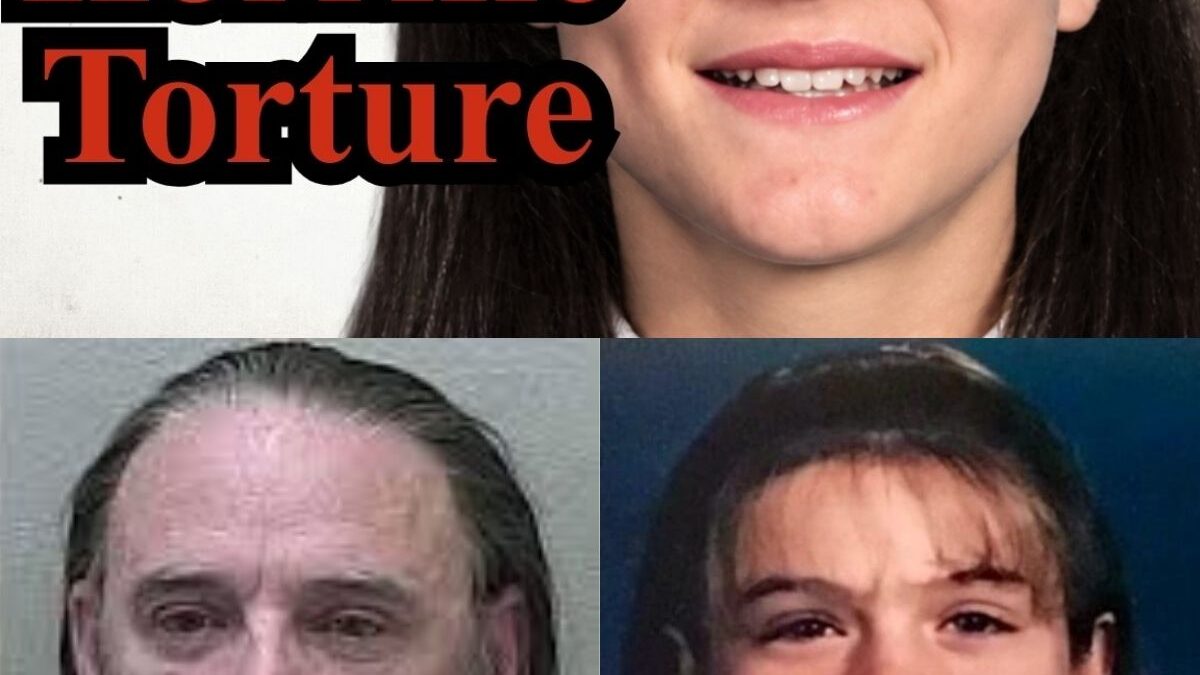
The morning sun over Shepherdsville, Kentucky, barely managed to cut through the heavy September mist in the autumn of 1999. In this tight-knit farming town nestled just south of Louisville, life moved along quiet gravel roads, rolling fields, and river bottoms where generations of families grew up alongside one another. The Dishon home was alive with the typical, hurried rhythm of an ordinary school day, filled with the clinking of cereal bowls, hurried footsteps on linoleum, and the familiar hum of morning routines.
Edna Dishon was the first out the front door, slipping quietly into the morning air to beat the traffic on her way to her job. Her husband, Mike, stepped out shortly after, leaving behind the comforting warmth of their shared home as he set off for his own workday. The two younger boys, Michael Jr., affectionately called Bubby by everyone who knew him, and his younger brother Christopher, grabbed their backpacks and headed out to catch the school bus just as they did every single morning.
Seventeen-year-old Jessica Dawn Dishon remained upstairs, lingering in the warm spray of the shower without having to rush out the door. Born on the second of May in 1982, she was the eldest child, a girl remembered by everyone in town for her bright personality, sharp wit, and a fierce, maternal devotion to her two younger brothers. She was a focused student at Bullitt Central High School, maintaining strong grades, near-perfect attendance, and serving in the school’s Junior ROTC color guard until her senior year when she decided to work extra hours.
Those extra shifts were logged behind the counter at the local Hardee’s restaurant, where managers frequently commended her as one of their most dependable and mature workers. She saved every spare dollar until she could accomplish a proud milestone: buying her very own car entirely outright, an eye-catching red Pontiac Sunbird. Jessica was still turning over ideas about her future, weighing whether to pursue accounting, veterinary medicine, or culinary arts, but whatever path she picked, she carried a quiet, fierce desire to travel beyond Shepherdsville.
Her life was woven from the small details that made her distinct: a delicate butterfly tattoo inked on her hip, an infectious laugh that could disarm a whole room, and an endearing habit of cooking experimental meals that her brothers playfully ribbed her about. Next door lived the Brooks family, long-established neighbors sharing property lines and gravel borders with the Dishons for decades. Around the house and family cookouts was Uncle Stanley Dishon, Mike’s brother, an unassuming man who blended effortlessly into the fabric of their lives.
At seventeen, Jessica had never been given a single reason to believe that the ordinary people walking her driveway could ever harbor unspeakable violence. As seven o’clock approached on that clear Friday morning of September 10, she collected her belongings, stepped down the porch, and walked toward her gleaming red Pontiac parked outside. It was a simple ten-to-twelve-minute drive along back roads to the high school campus, a mundane journey she had completed without incident hundreds of times before.
She stepped out, shut the front door behind her, and faded into the morning silence. That quiet moment on the gravel driveway was the very last time anyone ever saw Jessica Dishon going about an ordinary life. Nothing in the air signaled danger, no cry broke the quiet countryside, and no neighbor looked out to see anything alarming unfolding.
Just after one-thirty that afternoon, Edna Dishon returned home early from work and pulled up the long driveway, expecting an empty house until classes dismissed. Instead, her eyes caught the familiar silhouette of the red Pontiac parked precisely where Jessica always left it when she was home. Edna slowed her car, puzzled, glancing at the dashboard clock that confirmed it was far too early for high school classes to let out.
A sudden knot formed in her stomach as she stepped out, walking toward the driver’s side of Jessica’s car to see if her daughter had come home sick. The driver’s window revealed a disorienting, chilling tableau that caused every maternal instinct she had to sound an immediate, deafening alarm. In the back seat rested Jessica’s school backpack and purse; a half-empty water bottle lay on the console, and her cell phone rested right on the passenger seat.
Down on the floor mat beneath the pedals lay a single white sneaker, torn free without its mate anywhere in sight. The keys were not resting in the ignition barrel where they belonged; they had fallen to the floorboard as if wrenched suddenly from trembling fingers. Edna cracked open the unlocked door, her breath catching in her throat as she reached down and picked up her daughter’s illuminated cell phone.
On the glowing screen, two digits sat frozen in digital ink: the numbers nine and one.
Whatever Jessica had been frantically trying to accomplish in those terrible final seconds inside her vehicle, someone had physically stopped her before her thumb could press the second one. Edna dropped her belongings, dialled Mike’s workplace with trembling hands, and begged him in choked gasps to return home immediately. Mike abandoned his shift on the spot, racing across county roads until he skidded into the driveway and stared through the open door of the Pontiac.
Everything inside the vehicle pointed toward an abrupt, violent struggle that had silenced their seventeen-year-old daughter in the safety of her own front yard. Mike dialed Bullitt Central High School, holding onto the faint, fragile hope that maybe she had caught a ride with a friend after car trouble. The administrative clerk’s voice broke the family’s world apart, confirming Jessica had never marked attendance for homeroom, nor had she attended a single period all morning.
By five o’clock that evening, Mike and Edna stood inside the lobby of the Bullitt County Sheriff’s Department, desperate to file a missing person report. They met a twenty-three-year-old patrol deputy named David Greenwell, who was only seven months into his career in law enforcement. Despite his limited time on the road, Greenwell listened to the parents, inspected the vehicle notes, and immediately recognized that normal teenagers did not walk away from their purses, cell phones, and one shoe.
Greenwell picked up the station phone and contacted his commanding supervisor, Detective Charles Mann, urging him to deploy investigators to seal the Dishon residence. Mann dismissed the frantic call, stating flippantly that seventeen-year-olds regularly ran off with boyfriends on Friday nights and would stroll back home after the weekend. Mann refused to drive out to the scene that evening, instructing the rookie deputy to take a basic informational statement and let the girl return on her own time.
Left entirely without supervisory guidance, specialized crime scene equipment, or basic evidence gloves, Deputy Greenwell walked back out into the gathering dusk alone. He did what little an inexperienced officer could manage, looking around the gravel driveway with an ordinary flashlight while the family stood by in weeping despair. Over the following forty-eight hours, the Dishon driveway became an unsecured hub of chaos rather than a strictly managed and preserved crime scene.
Relatives walked through the grass, neighbors came to console the parents, friends reached inside the Pontiac, and television crews stood within feet of the driver’s door. By the time seasoned detectives even considered treating the car as the epicenter of a serious felony abduction, the vehicle had been thoroughly contaminated by dozens of people. The critical golden hours of the investigation slipped away into the damp Kentucky autumn, swallowed whole by official apathy and utter professional neglect.
A tearful neighbor outside the Dishon house spoke to local news cameras as relatives gathered on the porch:
“I think somebody took her. Why would somebody do that, though? Why do you think someone would hurt that child?”
A family friend standing beside her wiped tears away:
“I can’t imagine what she’s feeling. The not knowing, the knowing… which is worse? We all have hope that she’ll come home.”
While official investigators treated the case as a routine juvenile walkaway, the community of Shepherdsville refused to sit passively in their living rooms. Mike Dishon gathered brothers, cousins, coworkers, and church members, organizing civilian search grids that fanned out through farm pastures, drainage culverts, and wooded bluffs. In Bullitt County, local wisdom held a grim truth: whenever someone went missing or met foul play, searchers eventually ended up scouring the river bottoms along the Salt River.
Right beside Mike in the thick undergrowth was his brother Stanley Dishon, participating dutifully in the searches and offering solemn words of comfort. During one afternoon push through dense timber along the riverbank, Stanley suddenly doubled over, clutching his stomach with severe nausea and demanding to be taken back home. Those around him assumed the stress of hunting for his niece had overwhelmed his nerves, entirely unaware of the dark reality behind his physical reaction.
Disgusted by the lack of local urgency, Mike and Edna contacted federal authorities directly, pleading for federal agents to take over where local detectives had stalled. By Monday morning, three full days after Jessica vanished into thin air, FBI agents arrived in Shepherdsville and immediately impounded the red Pontiac. It was only then, seventy-two hours late, that criminalists examined the vehicle beneath forensic lighting and discovered a tiny shard of broken interior plastic near the driver’s seat tracks.
The digital display on Jessica’s retrieved phone still mirrored those terrifying unfinished digits: nine, one. This was not the car of a teenage runaway living on the margins; it was the preserved crime scene of a girl who had fought desperately against an ambush. Mike Dishon spoke through tears to community reporters who gathered on the edge of the search perimeter:
“I’m never going to give up hope. You know, hope and prayer right now is the only thing that’s keeping me going.”
Seventeen days passed in an agonizing blur of sleepless nights, dead-end sightings, false alarms, and frantic telephone calls that yielded no answers. Then, on the morning of September 27, a Bullitt County school bus driver named Karen Hobbs was navigating her regular route along Greenwell Ford Road. Near the banks of the Salt River, her gaze swept across an overgrown clearing where an unusual shape caught her eye among the weeds.
Resting upright against the trunk of a large tree, hidden partially behind tangled briars, sat the decomposing body of Jessica Dawn Dishon. Detectives, forensic technicians, and the county coroner converged on the tree line, cordoning off the brush as crime scene markers began dotting the terrain. Forensic investigators quickly observed unmistakable evidence that the tree base was not the primary site where the young woman had perished or remained throughout the search.
A rough length of utility rope was bound around one of her lower legs, speckled with dried paint flecks and frayed from being dragged across dirt. Ground depressions revealed she had been pulled out of an adjacent thicket toward the road just hours before, placed deliberately where an observant driver would spot her. The realization sent chills through the investigative team: whoever had abducted and murdered Jessica had returned to the river bottom weeks later to reposition her corpse.
The Bullitt County Sheriff drove down the Dishon driveway that afternoon, stepping onto the front porch to deliver the grim confirmation to the family. Edna Dishon looked the lawman dead in the eye, the accumulated agony and outrage of seventeen ignored days pouring out in a single, devastating sentence:
“Are you now going to say to me that she’s just a runaway?”
The sheriff looked down at the porch floorboards in silence, entirely unable to meet the grieving mother’s burning, shattered gaze. Mike Dishon leaned against the doorframe, his voice shaking with a volatile mixture of profound grief and volcanic anger:
“Whoever done this didn’t have no right to do this. And when they catch him, I hope they hang.”
Visual identification proved exceedingly difficult due to the passage of seventeen days in late-summer heat, but relatives confirmed her identity through unmistakable personal items. On her hand sat her high school class ring; around her neck hung a cherished silver pendant, and on her hip was the recognizable outline of the butterfly tattoo. A family member described the devastating moment the discovery was confirmed throughout the extended household:
“We at first thought, well, you know, is it really her? But then her aunts came by and took her pictures down from my mom’s placemat and said they found my niece’s body.”
The autopsy performed by the state medical examiner uncovered a harrowing sequence of violence that stripped away whatever peace the family had left. Jessica had sustained severe blunt-force trauma to the face that fractured her jaw, while deep ligatures around her neck established strangulation as the cause of death. Even more horrific was the medical examiner’s estimation of her time of death: Jessica had survived for roughly three days following her September 10 abduction.
While her family, classmates, and neighbors had combed the ditches within walking distance of her home, Jessica had been held captive somewhere nearby, alive and suffering. Desperate to produce a culprit to quiet the furious community, detectives cast their gaze toward the property line immediately bordering the Dishon residence. Their attention settled rapidly on David Brooks, a neighbor known throughout the farming community by the lifelong childhood nickname of Bucky.
Bucky lived in a modest farmhouse on the adjacent acreage, making him an easy and geographically convenient suspect for investigators desperate for momentum. When detectives sat Bucky down for initial questioning, his account of that Friday morning fluctuated, immediately tripping alarms for investigators looking for inconsistencies. First, he claimed he had caught a glimpse of Jessica walking down the gravel road; later, he altered his statement, claiming he had remained asleep in bed.
When detectives questioned his wife, she failed to corroborate his exact timeline, leaving detectives convinced that the neighbor was hiding a dark secret. Investigators escorted Bucky to a polygraph examination, a high-stress test that the flustered and uneducated neighbor ultimately failed with flying colors. What the sheriff’s department willfully failed to account for was that Bucky Brooks lived with an intellectual disability that rendered him cognitively impaired under intense stress.
In a closed interrogation room, surrounded by aggressive interrogators pointing fingers and shouting accusations, an intellectually disabled man will frequently contradict himself out of sheer confusion and terror. Detectives ignored this medical reality, convinced instead that they had snared a calculating predator who lived mere footsteps from the victim’s bedroom window. Their tunnel vision solidified when a cadaver dog alerted near an outbuilding on the Brooks property, seemingly confirming their suspicions.
A search of Bucky’s work van uncovered a length of utility rope that detectives hastily claimed matched the fibers found bound around Jessica’s leg. With rumors swirling through Shepherdsville, the Dishon and Brooks households collided in an ugly war of mutual suspicion, screaming matches, and cross-filed harassment complaints. Bucky Brooks’ wife spoke out in defense of her husband, pleading for reason:
“I hope they do find the poor girl’s killer. I don’t think she should have died like she did. But then again, they shouldn’t accuse an innocent man of something that he did not do.”
Standing firmly on the opposite side, Mike Dishon voiced the unshakeable conviction that local detectives had fed him from the interrogation room:
“I think Bucky done it. There’s not a doubt in my mind he did it.”
A relative of Bucky Brooks shook his head at the spectacle unfolding in their front yards:
“The things that we’ve already had to go through and to deal with, and then have to put up with this… it’s just not fair.”
In 2001, a Bullitt County grand jury formally indicted David “Bucky” Brooks for the kidnapping and capital murder of Jessica Dishon. His criminal trial did not commence until January of 2003, dragging the small town into a media circus inside the county courthouse. As the prosecution presented its case, legal observers noticed an astonishing vulnerability: the state possessed zero DNA evidence, zero fingerprints, and zero eyewitness testimony.
The entire indictment rested squarely on Bucky’s shifting statements to police, the disputed rope found in his van, and circumstantial neighbor gossip. Then, mid-trial, Detective Charles Mann—the very detective who had refused to get off his couch the night Jessica disappeared—stepped onto the witness stand. The defense attorney pressed Mann relentlessly, demanding to know what concrete forensic proof had led him to arrest an intellectually disabled neighbor.
Trying desperately to justify his shoddy investigation, Detective Mann let slip the fatal phrase that destroyed the state’s case:
“He told us he was the last one who seen her alive, and that was the reason… that’s how it was, he failed the polygraph.”
The courtroom fell dead silent for a fraction of a second before the lead defense counsel shot out of his chair, shouting objections that echoed off the mahogany walls. Polygraph results are strictly inadmissible under Kentucky law because of their documented unreliability, and mentioning a failed test directly taints a jury beyond repair. The judge sat stunned at the witness’s reckless blurt, rubbed his temples, and had no legal option under the rules of criminal procedure but to declare an immediate mistrial.
Years of painstaking preparation, hundreds of thousands of public dollars, and the Dishon family’s hope for courtroom justice vanished on a single sentence from the state’s lead detective. By September of 2003, acknowledging the catastrophic collapse of their circumstantial evidence, the Bullitt County Commonwealth’s Attorney stood before the bench and conceded defeat:
“We’re asking this court to dismiss the charges against David Brooks without prejudice.”
Post-trial interviews with the dismissed jurors revealed an even more damning reality: the jury had already been planning to acquit Brooks on all counts. The physical proof was nonexistent, the timeline did not align, and the prosecution’s theory was riddled with gaping, unexplainable holes. Bucky Brooks walked out of the Bullitt County Jail after spending over two full years in a cell for a horrific crime he had never committed.
Yet in a small town like Shepherdsville, where memories run deep, a dropped charge does not wash away the toxic stain of an accusation. For the rest of his life, Bucky remained an outcast, viewed with suspicion in grocery aisles and hardware stores by neighbors who refused to believe his innocence. A reporter later asked Bucky how he felt about the family who had spent years accusing him:
“Well, I’d tell them I was sorry for their daughter’s death and try to remain friends with them. But you’d want them to understand that you didn’t have anything to do with it.”
Bucky looked down at his rough hands and replied quietly:
“Yes, ma’am. I tried to make them understand it, but they probably wouldn’t.”
David Brooks was never Jessica’s murderer; he was simply the convenient scapegoat selected by an incompetent police department to cover its own catastrophic early failures. Following the mistrial and formal dismissal, the murder investigation ground to a complete, suffocating halt, gathering dust inside cardboard banker boxes in the basement archives. The years turned into a quiet, painful void where the Dishon household struggled to process the total absence of justice or accountability.
The immense psychological toll of Jessica’s unsolved murder acted like a slow poison inside the Dishon home, eroding foundations that had stood for decades. Mike and Edna found themselves isolated in their grief, processing the daily horror of their daughter’s stolen future through different, incompatible channels of despair. Unable to heal beneath the oppressive shadow of an unsolved homicide, the couple eventually made the painful decision to divorce, their marriage broken by the tragedy.
A decade slipped away, and Jessica’s case file sat untouched, deemed entirely cold while a killer walked free in the Kentucky bluegrass. Then, in 2013, fourteen years after Jessica’s red Pontiac had been discovered in the driveway, a cold case investigator named Lynn Hunt took over the docket. Hunt opened the ancient binders and discovered absolute procedural disarray: evidence manifests were mislabeled, handwritten officer notes were incomplete, and original exhibits were scattered across multiple storage units.
Recognizing that the original 1999 team had botched the investigation from day one, Detective Hunt made the deliberate decision to start completely from scratch. Her first visit brought her to Mike Dishon’s quiet residence, where the grieving father led the detective down the hallway to Jessica’s old bedroom. To Hunt’s utter astonishment, the room remained entirely untouched, frozen in amber precisely as it had been on the morning of September 10, 1999.
The very same floral bedsheets rested upon the mattress; high school track ribbons hung on the mirror, and schoolbooks sat undisturbed on the desk. Mike had refused to move a single piece of furniture or wash the linens for fourteen years, preserving the space as a living monument to his daughter. That preserved bedroom, maintained through a father’s unyielding sorrow, would unexpectedly become the key that unlocked the entire mystery.
Not long after Hunt began reviewing the cold case, an unexpected lead arrived from inside the walls of a Kentucky state penitentiary. A prison inmate contacted the detective, requesting an interview to relay a confession that his former cellmate had made while sharing a bunk years earlier. The name the convict gave to Detective Hunt hit the investigation like a thunderclap: Stanley Dishon, Jessica’s biological uncle.
Stanley was already serving time in prison, convicted years after Jessica’s murder for the sexual abuse of other young family members within his orbit. Detective Hunt sat down with the informant, recording his statement as he laid out the chilling details Stanley had bragged about behind bars:
“Tell me about how he killed her.”
The informant leaned forward, speaking into the audio microphone:
“He said he got into an argument with her in her backyard, wherever they lived at, and he started choking her. Then he went in the house and got a scarf, and he said after she had died… he knew she was dead. Then he started cutting her up.”
Detective Hunt leaned in, pressing for specifics:
“So, how did he get her around?”
The informant recounted the prison yard confession:
“He did the best he could as it was. And he had to dismember her, is what he told me. Then he left her and ended up leaving her in the woods by the road by the river.”
While the dismemberment claim proved to be prison yard exaggeration, the rest of the confession contained geographic details that had never been released to the press. Detective Hunt assembled an investigative team and returned to the wooded river bottoms along Greenwell Ford Road where Jessica’s body had been recovered. Scouring the nearby acreage, investigators located the rotting remnants of an old, abandoned barn hidden behind dense foliage near the Salt River.
Inside the dilapidated structure, buried beneath rotten floorboards and decaying agricultural debris, investigators uncovered a weathered bundle of household bedsheets. Detective Hunt transported the recovered linens directly to forensic specialists, who compared the textile patterns and thread counts to the bedding in Jessica’s preserved bedroom. The forensic conclusion was immediate and chilling: the sheets retrieved from the abandoned barn near the dump site matched the linens from the Dishon home.
The horrific truth, buried for a decade and a half beneath small-town secrets and police incompetence, finally emerged into the light. Long before that warm September morning in 1999, Stanley Dishon had been sexually abusing his teenage niece within the Dishon home. He was not an elusive stranger lurking along rural highways; he was Mike’s brother, an uncle who ate at their holiday tables and stayed overnight.
By the late summer of 1999, seventeen-year-old Jessica had begun dating a new boyfriend and had finally resolved to break the cycle of abuse. Investigators pieced together that Jessica had threatened to expose Stanley’s crimes, intending to tell her family and authorities about what he had been doing to her. Panicked that his predatory lifestyle was about to be unmasked, Stanley ambushed Jessica at her home on that Friday morning to permanently silence her.
Detectives confronted Stanley in an interrogation room, laying out the timeline, the prison confessions, and the matching forensic evidence recovered from the barn:
“We have evidence that you drove over there that morning. You drove to the school; she wasn’t there.”
Stanley folded his arms, his jaw tightening as he stared at the wall:
“Oh, no.”
The detective stepped closer, his voice rising with cold certainty:
“You drove to the house. You had been having sex with her.”
Stanley shook his head rapidly, refusing eye contact:
“Oh, no.”
The detective slammed his hand down on the metal table:
“She was going to tell on you!”
Stanley leaned back against his chair, his tone flat and devoid of emotion:
“Oh, no. You and she got into an argument? No. Mm-mm.”
The detective leaned down into the suspect’s face:
“Then you choked her.”
Stanley snapped back with venom:
“You’re cooked. I don’t care what you got. I did not do anything to harm my niece.”
The revelation forced the family to confront a betrayal so vile it defied comprehension. This was the same Stanley Dishon who had joined the civilian search teams, walking side by side with his distraught brother Mike through the dense underbrush. This was the same man who had fallen violently ill during the search along the river—not from grief, but from terror because searchers were approaching the barn.
He had stood beside Mike and Edna at the prayer vigils, attended Jessica’s funeral, hugged his brother over the casket, and wept crocodile tears for fifteen years. In 2015, realizing the mountain of circumstantial, physical, and testimonial evidence would ensure a capital conviction, Stanley entered an Alford plea. Under Kentucky law, the plea allowed him to maintain formal innocence while conceding prosecutors possessed more than enough evidence to convict him of manslaughter and sexual assault.
The court handed Stanley Dishon a combined twenty-year prison sentence for manslaughter and the sexual abuse of his other young family members. Inside the Bullitt County courtroom, sixteen years after their daughter was murdered, Mike and Edna stood feet from the man who had destroyed their world. Edna looked across the aisle at her former brother-in-law, her voice trembling with the agony of a stolen future:
“Well, for one thing, you know, he took away my daughter… and any chance of having grandchildren. I feel like I’m deprived of any grandchildren that she could have gave me. And there’s a hole in my heart that can never be filled.”
Mike Dishon gripped the podium with white knuckles, looking at the brother who had walked the search lines with him while knowing the girl was dead:
“Well, it took about seventeen years of my life away from me when he killed my daughter. And I said from day one, when the man was caught that killed my daughter, I wanted to see him hang.”
Twenty years of prison time was the final tally for fifteen years of deafening silence and a young, vibrant life extinguished at seventeen. When looking back across the wreckage of the Dishon case, one is confronted by the sheer catalog of human errors that allowed an uncle to walk free. It began with Detective Charles Mann, who refused to leave his house on a Friday night because he dismissed a terrified girl as a runaway.
It continued with an unsecured crime scene, handled by an unequipped rookie deputy with no gloves, where physical clues were erased by curious footprints. Because of that official negligence, David “Bucky” Brooks—an innocent, cognitively disabled neighbor—had two years of his life stolen behind bars for a murder he did not commit. Meanwhile, the actual killer sat in courtrooms and funerals, undetected by the very people who had sworn an oath to protect the community.
Before the bureaucratic failure, before the ruined neighbor, and before the cold case revival, there was simply a seventeen-year-old girl named Jessica Dishon. She was a daughter who drove a red Pontiac, wore a butterfly tattoo, worked hard at Hardee’s, and dreamed of culinary school or veterinary clinics. Jessica deserved that bright future, but instead, her legacy remains a stark reminder of systemic failure and a family whose broken pieces could never be restored.

