3 Screams, 2 Men, And The Town That COVERED It Up – The Unsolved Case of Kristin O’Connell

Every town has a quiet undercurrent, an unspoken reality running beneath its peaceful surface. In general, when compared to bustling metropolitan centers, small villages feel substantially safer. People take comfort in the idea that in a tight-knit community, very little remains completely hidden.
It makes sense that when everyone knows your lineage, the social fabric tends to keep people honest. That comforting theory sounds wonderful on paper, but reality often tells a far darker story. Having analyzed so many criminal investigations over the years, one begins to uncover a bitter paradox.
Sometimes a secluded community is not the mechanism that brings a vicious predator to justice. Instead, that very insularity becomes the exact reason why perpetrators are never apprehended. In rural places, strict silence can become the ultimate price residents pay to protect their own.
Preserving relationships with lifelong neighbors, relatives, and familiar routines often takes precedence over outside justice. Thus, the selfsame social pressure that maintains domestic order also enforces an impenetrable code of secrecy. A quiet rural hamlet can easily transform into an impenetrable vault where catastrophic secrets stay buried forever.
Tonight, the narrative turns toward a tiny, isolated village located deep within the Finger Lakes region. There, in the lush New York countryside, an innocent young woman fell victim to a brutal murder. She was discovered slain in a summer cornfield, and forty years later, nobody has been held accountable.
This harrowing, still unresolved tragedy has long been known as the girl in the cornfield case. Most people across the country have likely never heard of the quiet settlement of Ovid, New York. It is an unassuming village tucked away in Seneca County, nestled snugly between Seneca Lake and Cayuga Lake.
Surrounded by rolling hills, expansive farmland, and vineyards, it sits directly in the Finger Lakes territory. Back during the mid-nineteen-eighties, the entire residential population added up to roughly six hundred souls. Across the four decades that followed, the small municipality did not experience any real municipal expansion.
In fact, modern census data shows that the village numbers have actually contracted to barely five hundred. A hamlet that small does not sustain an elaborate nightlife, meaning a single local tavern sufficed. That sole drinking establishment was known throughout the county as the Golden Buck.
The Golden Buck was vastly more than a neighborhood watering hole where blue-collar men grabbed cold beers. It functioned as the central nervous system and undisputed social calendar of the entire rural district. Whatever significant gossip or dispute arose in someone’s personal life during the week happened right there.
Because there was literally nowhere else to congregate, the tavern concentrated every dynamic under one roof. Consequently, any outside stranger who happened to cross that wooden threshold was noticed instantly. Unfamiliar faces were thoroughly scrutinized, remembered with vivid clarity, and whispered about across the bar counter.
Yet Ovid was not utterly severed from the surrounding world during that late-summer period of nineteen eighty-five. Just a few miles north, the state-run Willard Psychiatric Center was still functioning with hundreds of regional employees. Meanwhile, over in nearby Romulus, the high-security Seneca Army Depot was operating at peak Cold War capacity.
Because of those facilities, enlisted military personnel and institutional medical staff frequently cycled through the surrounding landscape. Even so, day-to-day life inside the core limits of Ovid remained slow, routine, and profoundly tranquil. Due to that unchanging, sleepy atmosphere, the native residents genuinely felt secure leaving their doors unlocked at night.
Tragically, for one bright college student visiting from the Midwest, that peaceful sanctuary became a death trap. What actually happened to Kristin O’Connell on that sweltering August night in upstate New York? That unresolved question is the very torment her loved ones have carried for more than four continuous decades.
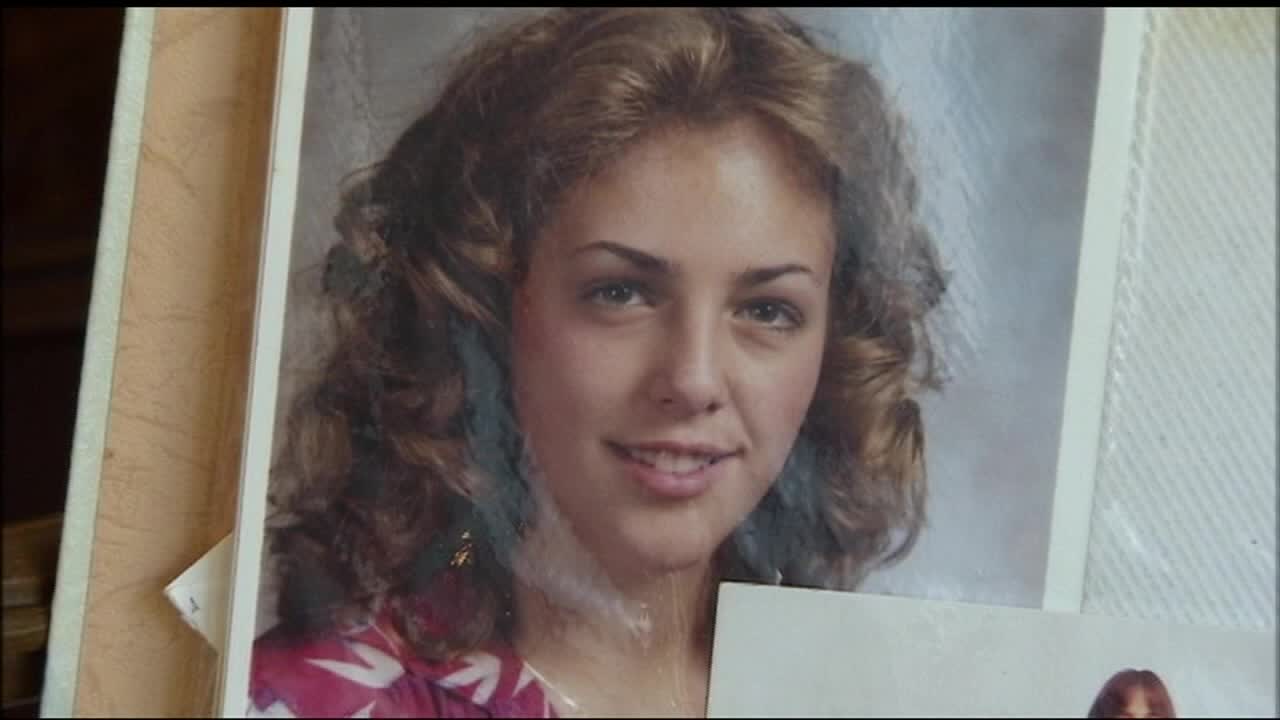
Kristin was born into the world on January twelfth, nineteen sixty-five, bringing immense joy to her family. She grew up as the older of two children, looking after her younger brother, Kyle, with gentle warmth. Her home was in Burnsville, Minnesota, a pleasant suburban area situated just south of the Minneapolis metropolis.
She was raised with devoted affection by her hardworking parents, Michael and Phyllis O’Connell. By every single account ever provided by neighbors, teachers, and childhood companions, she was a lovely soul. Kristin carried an instinctive generosity, possessed a radiant smile, and naturally treated everyone she met with respect.
Her mother often recalled that their bond went beyond the typical maternal connection, sharing absolute mutual trust. Physically beautiful yet completely unpretentious, Kristin never used her striking looks to demand unnecessary attention. She was entirely unaware of how genuinely captivating her quiet demeanor was to those who encountered her.
Every afternoon when she arrived back at the family house, she would warmly call out to her mother. “Hi, Mom,” she would announce from the doorway, a cheerful greeting etched permanently into Phyllis’s heart. Longtime acquaintances described her as an old soul who held a passion for horses and the open air.
Kristin always preferred sitting down for hours to truly understand someone rather than engaging in empty pleasantries. By nineteen eighty-five, she had enrolled in college courses, steadily working toward a career in hospitality management. She possessed great ambition, hoping to work in upscale resort administration where she could welcome people with grace.
When March arrived that year, she decided to join several classmates on a well-earned Florida spring break. Her parents initially harbored protective reservations about the long interstate trip, but they ultimately supported her independence. She was an intelligent, mature young adult, and they trusted her moral compass implicitly as she traveled south.
Down on the sun-drenched beaches of Captiva Island, Kristin crossed paths with a young man named Jim Viers. Jim was an upstate New York native, having grown up right in the rural farmlands outside Ovid. The two hit it off almost immediately, finding common ground despite their vastly different regional backgrounds.
They spent the majority of that coastal vacation swimming, walking the beaches, and talking beneath the palm trees. When the spring trip concluded and everyone returned to their everyday routines, they chose not to break ties. Kristin returned to her Minnesota collegiate studies, while Jim journeyed back to his Seneca County roots.
The two maintained a dedicated long-distance correspondence over the spring and early summer of nineteen eighty-five. They exchanged regular handwritten letters and placed expensive long-distance phone calls across several months. Anyone who has attempted to sustain a long-distance relationship knows that it demands authentic emotional investment to endure.
By August, five full months had passed since their initial sun-soaked meeting on Captiva Island. Convinced that their chemistry was genuine, Jim extended an open invitation for Kristin to visit him in Ovid. Kristin viewed the gesture as a wonderful signal that their casual romance might evolve into something permanent.
Thrilled at the prospect of exploring the beautiful Finger Lakes region, she eagerly accepted his summer invitation. She packed her vacation luggage, gathered her seasonal clothing, and assured her protective parents that everything was fine. According to Phyllis, her daughter walked over, embraced her, and gently kissed her cheek by the front door.
Kristin looked her mother in the eyes, offering reassurance before walking out to begin the journey. “Do not worry about me, Mom, because everything is going to be just fine,” she promised softly. With those parting words, she set out on what was intended to be an idyllic, week-long countryside holiday.
Upstate New York in August is famous for picturesque waterways, lush valleys, and warm, golden sunshine. Traveling eastward across several states, Kristin arrived safely in the rural vicinity of Ovid around August twelfth. Yet almost the moment she unpacked her bags, an uncomfortable and unsettling atmosphere began to emerge.
Kristin had reasonably assumed she would be staying as an invited guest in Jim’s comfortable family home. She expected standard domestic amenities like running water, a private bedroom, and relief from the thick humidity. Instead, shortly after her arrival, Jim abruptly informed her that his domestic arrangements had suddenly changed.
Rather than hosting her at his parents’ residence, Jim had rented an extremely small, weathered mobile home. That modest trailer was stationed in a gravel lot situated directly behind the loud, crowded Golden Buck tavern. Jim probably believed securing an independent bachelor pad adjacent to the town’s rowdiest bar was convenient and exciting.
For an out-of-state visitor expecting a quaint lakeside getaway, living beside a boisterous saloon was decidedly unpleasant. Beyond the claustrophobic trailer accommodations, Jim’s interpersonal demeanor took an immediate, confusing turn for the worse. Instead of treating Kristin as an honored romantic guest, he seemed emotionally distant, preoccupied, and oddly detached.
Jim picked up numerous work shifts, leaving Kristin sitting entirely by herself in that hot trailer for hours. Local patrons and neighborhood residents later confirmed to detectives that Jim had another active girlfriend in the area. In fact, rumors suggested he might have been juggling multiple romantic interests around the Ovid township that summer.
Kristin’s sudden Midwestern presence had evidently complicated his local social standing in ways he had failed to anticipate. Whatever his underlying motives were, the long-anticipated romantic vacation rapidly degenerated into a lonely, depressing ordeal. Stranded without independent transportation, Kristin spent long daylight hours trying to pass the time in quiet solitude.
On August thirteenth, her second day in the region, Kristin walked into town to buy bandages for her ankles. She had rubbed them raw while wearing unfamiliar shoes during her long travels to the Finger Lakes area. That evening, Jim took her to a movie theater alongside several of his regular local male companions.
The following day, Wednesday, August fourteenth, the tension surrounding her awkward stay finally reached a breaking point. During the daytime, Jim, Kristin, and a few regional acquaintances traveled to Lodi Point on Seneca Lake. The lakefront park was typically a refreshing spot to swim, relax on the dock, and escape the heat.
While they were gathering along the water, Jim and his local buddies initiated an aggressive confrontation with another youth. The group began harassing and bullying the local boy without any justifiable provocation, treating the cruelty as amusement. Disgusted by the cowardly display of intimidation, Kristin immediately stepped between the aggressors and the targeted youth.
She spoke up forcefully, demanding that her hosts abandon their hostile posturing and leave the kid alone. “Knock it off right now and leave him alone,” Kristin commanded, stepping directly into the tense altercation. Witnessing that ugly side of Jim shattered whatever romantic illusions she had held about the young New Yorker.
Observing his willingness to humiliate an innocent person was the final straw that ruined the entire trip for her. Later that afternoon, around three o’clock, Kristin walked over to a nearby outdoor payphone to place a call. She dialed her family home in Burnsville, needing to hear her mother’s voice amidst the mounting emotional chaos.
Phyllis answered the ringing phone and instantly registered that her daughter sounded distinctly anxious and troubled. Kristin announced that she was abandoning the Finger Lakes vacation early and boarding a flight back home tomorrow. Phyllis asked what was happening, but Kristin declined to share the exact specifics of the conflict over the phone.
The protective mother could clearly feel in her parental instincts that something unsettling had occurred to trigger the departure. Phyllis supported the decision wholeheartedly, promising that they would welcome her back home the very next day. As evening descended across Seneca County, Jim’s social group gathered to play billiards at an acquaintance’s house nearby.
They shot pool for approximately an hour before relocating back to the small trailer stationed beside the Golden Buck. At roughly eleven-five that night, the crowded quarters of the trailer were filled with music, chatter, and smoke. Feeling utterly alienated, Kristin quietly pulled one of the local young women aside into a quiet corner.
She asked a question that, in tragic hindsight, remains one of the most heartbreaking moments of the tragedy. “Why did Jim even invite me to come all this way if he was going to ignore me?” she asked. The girl looked at Kristin with unvarnished honesty, unwilling to keep up the charade any longer for Jim.
The local acquaintance offered a plain, matter-of-fact answer that laid out the uncomfortable social reality. “Jim has a steady girlfriend around here now, and that probably explains why he’s acting this way,” she stated. Having her humiliating suspicions confirmed out loud made Kristin feel deeply unwelcome inside the crowded, stifling living room.
Roughly twenty-five minutes later, around eleven-thirty at night, Kristin decided she could no longer tolerate the atmosphere. She needed fresh air, physical space, and time away from the alcohol and mounting pettiness within the mobile home. Addressing the room with quiet exasperation, Kristin announced that she was stepping outside for a brief solitary stroll.
“I am going out for a walk to get some fresh air,” Kristin informed the gathered group. She stepped outside into the heavy, dark summer night barefoot, leaving behind her footwear, purse, and identification. Walking barefoot down country paths was entirely typical for Kristin, who cherished tactile contact with the earth.
Those close to her knew she loved late-night strolls under clear skies, taking time to watch the stars above. She had no intention of undertaking an ambitious expedition along the dark rural routes winding through the countryside. Kristin simply intended to clear her cluttered thoughts and regain her composure before packing her bags the next morning.
Yet the horrifying reality is that when she crossed that trailer doorway into the darkness, she never returned alive. Roughly ten minutes after Kristin departed on her walk, Jim announced that he was going to pick up food. He left the mobile home to grab pizza from a nearby shop, leaving his other friends behind in the trailer.
While the gathered group continued drinking beer and smoking marijuana, Kristin had refused to partake in any substances. Jim returned to the gravel lot with the warm pizza boxes at approximately eleven forty-five that Wednesday night. Upon walking inside, the friends informed him that Kristin had wandered off into the dark without her shoes.
While low-key interpersonal drama unfolded within the trailer, witnesses along County Route 139 watched a chilling scenario take shape. Between eleven-fifty and midnight, several passing motorists reported seeing a lone young woman walking along the road shoulder. She was proceeding westward on foot along the north side of Route 139, moving slowly through the summer shadows.
Suddenly, an older-model sedan, painted either dark green or faded blue, pulled up directly beside the walking pedestrian. The driver rolled down the side window, idling along the roadway while leaning out to speak directly to her. A second vehicle was spotted pulling over onto the road shoulder directly behind the idling older sedan.
No passing motorist was close enough to capture the exact dialogue exchanged between the driver and the young woman. However, investigators have maintained for decades that the occupants of the car were attempting to coax her inside. Evidently declining the invitation, Kristin refused to enter the vehicle, brushed off the occupants, and maintained her pace.
Sometime between midnight and twelve-fifteen, other drivers traveling Route 139 saw the same woman walking in reverse. She had completely reversed her direction, abandoning her westward path to walk eastward back toward the village center. Realizing that her casual stroll was growing precarious, she was visibly attempting to return to the trailer’s safety.
Yet on the opposite shoulder of the rural road, approximately fifty yards behind her, two unidentified men were trailing her. Witnesses described the pair as slender young Caucasian men with noticeable shoulder-length hair walking in the exact same direction. One wore a rugged denim jacket, with one standing roughly six feet tall while his companion appeared slightly shorter.
Kristin clearly sensed the escalating danger behind her, quickening her pace along the darkened macadam of the road. She was hurrying toward the lights of Ovid, desperate to reach the relative safety of the tavern and trailer. Tragically, physical evidence and witness timelines suggest the two stalking figures overtook her before she could reach shelter.
Between twelve-fifteen and twelve-twenty-five in the morning, the heavy summer night was pierced by an agonizing sound. Multiple residents living across that stretch of Seneca County heard a terrifying, piercing scream tear through the countryside. Back at the Golden Buck trailer, two young men noticed Kristin was missing and walked down the street looking.
Those two youths distinctly heard the distant scream, but they could not determine the exact quadrant it originated from. Assuming the sound was merely drunken screaming carrying through the trees from the tavern, they turned around and returned. Meanwhile, an entirely separate family living further down the road near McCarager Road registered an even more terrifying occurrence.
A woman in that rural household reported hearing three distinct, bloodcurdling screams coming from a nearby dirt agricultural path. Locals commonly referred to that isolated dirt access lane leading through the hedgerows and fields as Lovers Lane. The screams were followed immediately by the roar of an automobile engine being violently revved in low gear.
The witness then observed a dark vehicle speeding away down the dirt lane without activating its headlights for illumination. Only after putting considerable distance between itself and the farm fields did the vehicle’s headlamps finally flicker to life. Roughly an hour later, at one-fifteen in the morning, the two long-haired men were seen walking east toward Ovid.
Fifteen minutes after that, motorists spotted them again walking westward along Route 139 near the agricultural field edges. Incredibly, none of the numerous individuals who witnessed those suspicious movements contacted law enforcement that critical night. The teenagers at the trailer dismissed the screaming, the rural family waited until morning, and passing motorists drove home.
Only days later, when detectives began canvassing every farmhouse, would this chronological nightmare finally be reconstructed into a cohesive timeline. Because Jim’s trailer lacked a working telephone landline, reporting her disappearance proved to be a painfully delayed administrative process. On the morning of August fifteenth, Jim walked into the village attempting to reach the New York State Police barracks.
Due to bureaucratic delays and poor communication, an official missing persons report was not recorded until one that afternoon. That meant thirteen hours had elapsed since Kristin stepped outside into the darkness before authorities even knew she was missing. A state trooper eventually arrived at the mobile home around four in the afternoon to gather her personal belongings.
The officer pulled Kristin’s driver’s license from the wallet left behind inside the purse resting on the trailer counter. Shortly after the initial report was filed, the summer skies darkened and torrential rain began hammering Seneca County. Because of the torrential downpours, an organized ground search could not be mobilized until the following morning arrived.
Back in Burnsville, Minnesota, the O’Connell household was suddenly plunged into every loving parent’s absolute worst living nightmare. The moment Michael and Phyllis received the phone call stating Kristin was missing, Michael booked an immediate commercial flight. He flew straight toward New York, determined to walk the unfamiliar cornfields himself to find his beloved daughter.
Phyllis and their teenage son, Kyle, remained behind in Minnesota, keeping an agonizing vigil by their household landline telephone. On the morning of Friday, August sixteenth, state troopers and Seneca County deputies began interviewing everyone from the trailer. Officers systematically documented statements, cataloged Kristin’s remaining possessions, and coordinated search teams with dozens of local civilian volunteers.
The physical search expanded outward in concentric circles, beginning at the Golden Buck tavern and sweeping across regional farmland. Just after five o’clock that afternoon, a search team pushed through an overgrown cornfield less than a quarter-mile away. There, hidden beneath dense corn stalks that had grown six feet high, searchers discovered Kristin’s lifeless, violated body.
She was found completely unclothed, having suffered catastrophic violence including multiple stab wounds to her upper chest. Her throat had been savagely slashed, yet her clothing was found resting remarkably close beside her intact remains. Her garments were not shredded or flung across the field, but rather laid out neatly alongside her brutalized form.
Subsequent toxicology screenings conclusively confirmed that Kristin possessed zero alcohol or illicit substances in her bloodstream that night. The official post-mortem findings supported the witnesses who maintained she had remained completely sober throughout the evening hours. Seneca County Coroner Michael McLaughlin surprisingly reported that he found no conclusive physical evidence of a completed sexual assault.
Investigators surveying the battered earth noted that the young college student had fought ferociously for her very survival. Tragically, the torrential downpours that inundated the field had obliterated virtually all fragile forensic clues at the scene. Footprints, tire impressions, and potential fluid transfers were washed away before forensic identification technicians arrived with collection kits.
Every single young person who had attended the gathering at the mobile home was brought in for interrogation. Jim Viers and his immediate circle submitted to questioning, provided alibis, and were ultimately eliminated as viable homicide suspects. With the trailer occupants formally cleared, state police investigators were forced to rely almost entirely on regional witness sightings.
Their primary operational lead centered on the two slender young men observed stalking fifty yards behind Kristin along Route 139. Yet despite displaying composite sketches and questioning dozens of residents, no local would publicly identify the two figures. Then, on August twenty-third, roughly one week after the discovery, a mysterious phone call reached the Waterloo police barracks.
The anonymous caller spoke directly to Investigator D.C. Ryer, issuing a bizarre, chilling directive over the crackling receiver. “Go check the green Chevrolet parked on Main Street in Waterloo,” the unidentified male caller instructed hurriedly. The mysterious voice urged the investigator to act swiftly before providing an ominous justification for the urgent tip.
“Pop the trunk, and you will find what you need,” the man insisted through the phone. The caller then offered a startling admission that continues to haunt detectives looking back at the original investigation. He confessed that he had personally warned an associate not to carry out this violent attack against the girl.
“I warned them not to do it, but they did it anyway, so now I am leaving town,” he stated. Investigator Ryer desperately tried to keep the mysterious individual speaking to trace the origin of the payphone line. Before any identifying questions could be answered, the unknown caller abruptly terminated the connection, leaving the phone line dead.
Shockingly, that chilling audio recording remained completely concealed from the general public for ten full years before being broadcast. To this very day, no official has ever identified the anonymous man who claimed insider foreknowledge of the homicide. Detectives never confirmed whether that green Chevrolet actually sat on Main Street containing critical evidentiary material inside its trunk.
Here is precisely where the tragedy of Kristin O’Connell transforms from an unsolved crime into an agonizing systemic scandal. It is not merely that law enforcement failed to apprehend the responsible individuals during the initial nineteen eighty-five canvass. For decades following the murder, the pursuit of justice was continually sabotaged by bureaucratic refusal, terrible fortune, and misconduct.
During the initial nineteen eighty-five processing, the microscopic trace fiber evidence was handled by State Police Investigator Gary Veeder. For years, the criminal justice system regarded Veeder as an infallible forensic luminary whose testimony routinely secured murder convictions. However, in two thousand seven, a blistering official report from the New York State Inspector General exposed shocking corruption.
The formal inquiry revealed that Veeder had engaged in systemic misconduct, falsifying reports across one-third of his cases. His gross professional negligence and invented findings compromised dozens of major criminal prosecutions across the state of New York. Phyllis O’Connell was devastated to discover that Veeder had personally overseen the vital physical evidence recovered from Kristin’s remains.
To this day, Phyllis has never received confirmation whether the evidence collected from her daughter was corrupted or fabricated. By the late two thousand, modern forensic technology presented investigative possibilities that were unimaginable during the original eighty-five investigation. Touch DNA extraction emerged as a revolutionary tool capable of isolating microscopic skin cells from aged, decades-old physical evidence.
In two thousand nine, Seneca County District Attorney Barry Porsch and Investigator Jeff Arnold sought outside scientific intervention. They contacted Richard and Selma Eikelenboom, a world-renowned husband-and-wife forensic team operating out of an advanced Dutch laboratory. The Dutch scientists had pioneered reliable methodologies for harvesting usable genetic profiles from heavily handled garments and weathered evidence.
Arnold and another senior investigator flew overseas to the Netherlands, presenting crime scene photographs and physical evidence inventories directly. The American detectives returned across the Atlantic utterly convinced that the Eikelenboom laboratory offered their greatest opportunity for a breakthrough. Recognizing the monumental stakes, the Seneca County Board of Supervisors unanimously authorized up to forty thousand dollars to fund testing.
The only remaining requirement was securing an administrative sign-off from the New York State Police forensic unit in Albany. Following an exhaustive three-hour administrative meeting, state police officials stunned county prosecutors by rejecting the Dutch laboratory outright. Albany administrators claimed the European facility lacked appropriate regulatory permits issued by the New York State Department of Health.
Investigators pointed out that the health department maintained a special, routine exemption process designed explicitly for unique cold-case analyses. Such historic exemptions were routinely approved without friction whenever local law enforcement faced exceptional homicide circumstances involving outdated techniques. Seneca County prosecutors formally submitted the specialized exemption paperwork, confident that common sense and justice would easily prevail.
In May of two thousand nine, the state bureaucracy returned their final administrative ruling, issuing a flat, incomprehensible denial. The refusal sparked outrage, prompting United States Senators Chuck Schumer of New York and Amy Klobuchar of Minnesota to intervene. Both high-ranking federal lawmakers personally lobbied the state health commissioner to authorize the private Dutch forensic genetic testing immediately.
Incomprehensibly, the New York State Commissioner of Health refused to budge, upholding the bureaucratic blockade against the O’Connell family. Years later, an entirely different, private forensic DNA laboratory fully certified within New York State boundaries offered testing services. Yet once again, state gatekeepers rejected the local prosecutor’s requests, refusing to release the secured physical evidence boxes.
For Kristin’s aging parents, watching one promising technological avenue after another get strangled by state paperwork was pure torture. They were forced to endure the agonizing reality of knowing their daughter’s killers were walking free due to administrative stubbornness. Then, in early twenty-fourteen, nearly three decades after Kristin’s life was stolen, the dormant investigation suddenly reignited locally.
Two native Ovid men, Doug Zammuto and his lifelong associate Michael Swank, found themselves thrust squarely into the crosshairs. Around that time, Zammuto’s stepsister walked into a regional police station claiming she possessed critical information regarding the eighty-five murder. She informed detectives that she remembered seeing Doug arrive home covered in dark blood on the weekend Kristin died.
When confronted by investigators, Doug provided an immediate explanation for the biological stains his stepsister claimed to have witnessed. He stated that he and a group of local friends had slaughtered a whole pig for an outdoor barbecue. That regional pig roast had occurred two days following the homicide discovery, which he insisted accounted for the slaughter blood.
State police investigators were far from satisfied with his explanation, subjecting both Zammuto and Swank to aggressive interrogations. Detectives transported the two longtime companions into separate interview rooms, conducting exhaustive grilling sessions that lasted eleven grueling hours. Doug voiced his immense frustration to reporters, claiming police treated their willingness to answer questions as an admission of guilt.
“If you refuse to talk to them, they say you are hiding something,” Zammuto explained bitterly to the press. He summarized the unwinnable psychological trap that detectives laid out before him and his lifelong friend during those interrogations. “And if you do talk to them, they say you are lying, so how can you possibly win?” he asked.
Doug voluntarily submitted personal genetic samples to the state crime laboratory, offering detectives complete access to his DNA profile. He also agreed to undergo a formal polygraph examination administered by certified law enforcement examiners to clear his name. Doug passed the polygraph completely, answering with direct negatives when asked if he killed Kristin or knew who did.
He also revealed to journalists that he had actually attempted to provide a substantial investigative tip back in nineteen ninety. At that time, a workplace peer had confided information regarding a local resident who hid terrified inside a basement. That terrified individual had remained barricaded underground for several days following Kristin’s murder, displaying deep scratches across his arms.
Doug stated that when he phoned the state police to relay that potential lead, the trooper simply laughed him off. Regarding why his stepsister had suddenly emerged with incriminating accusations twenty-nine years later, Doug pointed toward messy domestic retaliation. He explained that the two of them had previously engaged in an intimate relationship that had ended on bitter terms.
When he formally terminated their relationship, she became furious, subsequently fabricating the blood allegations to enact personal vengeance against him. Feeling continuously harassed and surveilled by the cold-case task force, Doug and Michael decided to send an unmistakable message. Using bold spray paint, the two men scrawled a provocative public message across the wooden fence outside Doug’s home.
The property was positioned directly along Route 139, meaning every passing resident and patrol vehicle was forced to read it. The painted text addressed the lead state investigator by name, telling the task force in crude terms to stop playing games. Directly beneath that profane demand, they added a sarcastic, dark reference to their nineteen eighty-five pig roast alibi.
“We had a pig roast; should have had chicken,” the hand-painted wooden fence proclaimed for the entire rural township to see. When local news journalists questioned Zammuto regarding the community backlash over the controversial fence, he remained utterly unrepentant. “I do not care what the public thinks about that message,” Doug told reporters bluntly during a recorded interview.
He made it abundantly clear that the message was not intended for the casual passing neighbors living around Seneca County. “That sign was painted specifically for the cops who keep harassing us,” he insisted without backing down an inch. Both Zammuto and Swank have maintained absolute innocence on the record, and neither has ever been charged with any crime.
In August of twenty-ten, marking the twenty-fifth anniversary of the cornfield murder, the Seneca County District Attorney took action. The prosecutor’s office announced a ten-thousand-dollar cash reward for any verified community tip leading to an arrest and conviction. During the subsequent years, the O’Connell family hired a skilled private attorney with extensive former prosecutorial experience to apply pressure.
Their legal counsel attempted to work directly with state police leadership to finally authorize contemporary, cutting-edge forensic DNA testing. Yet shockingly, modern forensic genetic testing on the preserved garments has still never been permitted by state authorities. To any objective observer following this decades-long saga, that ongoing administrative blockade appears nothing short of completely insane.
Despite high-profile media coverage, nationwide public awareness campaigns, and petitions carrying tens of thousands of signatures, the barricade remains intact. A seemingly impenetrable brick wall continues to divide independent scientific laboratories from the physical evidence locked inside state storage vaults. That astonishing, decades-long administrative obstruction inevitably invites chilling questions regarding whether regional figures are actively shielding someone from prosecution.
One cannot help but wonder whether influential local interests are intentionally guarding an individual who took part in the slaughter. Was one of the attackers a favored community son, a prominent resident’s brother, or connected to regional law enforcement figures? In August of twenty-twenty-five, marking forty agonizing years since Kristin was stolen, her family returned to Seneca County once more.
Phyllis O’Connell, her son Kyle, and dozens of supportive local residents gathered to hold a solemn public memorial walk. Together, the somber procession retraced the dark, rural steps Kristin took along County Route 139 on that fateful Wednesday. They issued the exact same desperate plea for DNA testing that they have championed continually since two thousand nine.
And tragically, the state bureaucracy returned the exact same answer they have delivered for over fifteen continuous years: total silence. Phyllis frequently reflects upon the final loving conversation she shared with her daughter before Kristin departed for upstate New York. “You know, Mom, I really love you so much,” Kristin had told her with pure, unprompted affection.
Phyllis remembers looking back at her radiant, smiling daughter, delivering words that would become their final earthly exchange. “Well, Kristin, I love you too, so very much,” Phyllis had responded warmly from the family doorway. That tender Midwestern moment remains the very last time the grieving mother ever heard her daughter’s living voice speak.
Despite advancing in age and enduring forty years of profound emotional heartbreak, Phyllis refuses to surrender her crusade for justice. “I am not going anywhere, I will not rest, and I will never give up,” Phyllis has vowed repeatedly. Today, the official New York State Police investigation into the murder of Kristin O’Connell remains classified as an open homicide.
The haunting, undeniable reality is that someone who walked the streets of Ovid has possessed the truth for forty years. It is entirely plausible that multiple individuals within Seneca County know the exact sequence of events that occurred that night. Perhaps that dark truth resides with the two slender, long-haired men observed stalking fifty yards behind her along the roadway.
Perhaps the answers belong to that unidentified informant who frantically warned authorities about the Waterloo vehicle before vanishing forever. Or perhaps the secret is held by a quiet resident who has never whispered a single syllable to their spouse. If you harbor any knowledge regarding the savage murder of Kristin O’Connell, state police investigators urge you to speak out.
If your own daughter, sister, or cherished friend was murdered in an isolated cornfield, you would demand justice as well. The time for rural silence, misplaced familial loyalty, and terrified neighborhood secrecy has long since drawn to a close. Those who participated in this atrocity must understand that true reckoning is inevitable, arriving either in this life or the next.

