What the Miners Said About the 150 Tunnels Beneath Cripple Creek — Documented in 1894
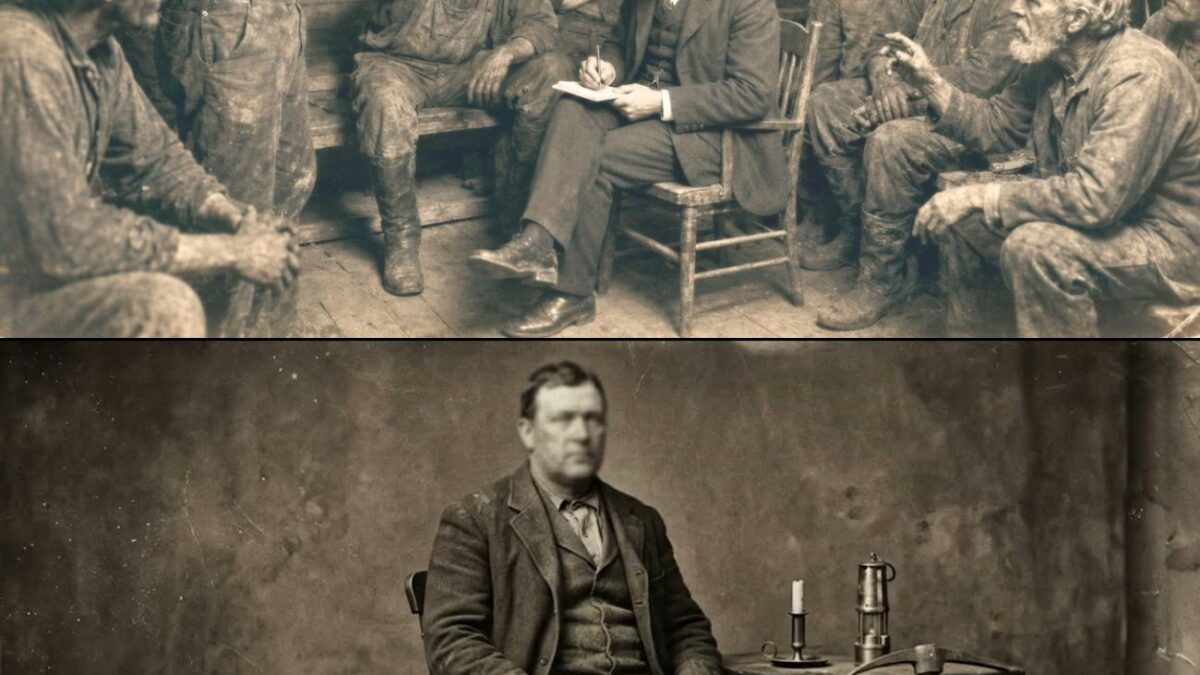
What the Miners Said About the 150 Tunnels Beneath Cripple Creek — Documented in 1894
There is a town in Colorado that should not exist the way history says it does. Not because it was built in the wrong place, not because the mining records were falsified, but because underneath the ground where they built it, beneath the streets, the churches, the assay offices, the railroads, there were already tunnels. Tunnels that ran in directions that made no sense for gold extraction, wider than any mining drift needed to be, with alcoves cut into the walls at regular intervals like rooms that had been stripped of whatever once filled them. According to the men who first entered them in 1894, these tunnels did not always end where they should have.
The official story of Cripple Creek, Colorado, is a clean one. Gold was discovered in 1890 by a rancher named Bob Womack, and by 1900, the district had produced more gold than any district in American history, transforming a sleepy landscape into a bustling city with hundreds of miles of underground workings. But before most of those tunnels were dug, miners working claims on Battle Mountain, Bull Hill, and Raven Hill started hitting something they did not put there: pre-existing passageways, chambers, and corridors. What was documented in the local press, written into engineering reports, and passed from miner to miner tells a story that the official history has never been able to fully accommodate.
When gold was found at Cripple Creek, it changed everything. Situated inside an ancient volcanic caldera nearly 10,000 feet high, the geology was unusual. The gold came up from deep in the earth through breccia pipes, columns of broken rock created by ancient volcanic explosions, distributing gold vertically rather than in horizontal veins. This meant miners had to go deep, and almost immediately, they started reporting anomalies. In the fall of 1893, a foreman named James McCaffrey at the Anaconda mine broke through into a passage that had clearly been worked before. The walls were smooth in a way that drilling and blasting did not produce, the floor was level, and there were no tool marks consistent with 19th-century mining technology. McCaffrey estimated the passage was about eight feet wide and seven feet tall, running north-northeast for about 300 feet. Unlike the rest of the wet district, this passage was completely dry, with no ventilation systems, timbering, or drainage works. McCaffrey concluded it was ancient, made by human hands, and recommended an examination by an engineer.
Reports soon multiplied across different mines like the Portland, the Elkins, the Independence, and Winfield Scott Stratton’s great mine on Battle Mountain. Stratton reportedly told a Denver Republican reporter in 1895 that his men had found three separate chambers of ancient origin in the Independence, noting walls showing evidence of sustained torch burning and unfamiliar markings. Though Stratton never spoke of it publicly again, the stories lived on in the oral tradition of the district.
In September 1894, the Cripple Creek Morning Times ran a four-part series over two weeks gathering these underground accounts. The second article detailed the physical characteristics of the tunnels: straight lines, precise intersections, and finished smooth walls that a Cornish miner compared to Roman stonework. The dimensions were consistently eight to nine feet wide and seven to eight feet tall, featuring a deliberately arched profile for structural loading and alcoves or niches cut into the walls every 15 to 20 feet. The flat, leveled floors showed heavy, repetitive foot traffic wear right down the center.
The third article tackled the question of origin. Native American construction was ruled out, as the Ute people and other regional tribes were not a tunneling culture and lacked oral traditions or archaeological evidence of underground building. Spanish colonial mining also failed to fit; while Spaniards were active in Colorado, the documentary record for Cripple Creek was non-existent, and the sheer scale—tunnels spanning a six-mile district without explosives, tool marks, or equipment traces—far exceeded any Spanish operation in North America. The reporter ultimately concluded that the passages predated known historical populations and possessed technical capabilities beyond pre-industrial construction.
The fourth article explored what was found inside the chambers branching off the main corridors. In the Anaconda workings, miners discovered metal equipment made of an unidentified alloy resembling brass in color but too light, showing no rust or oxidation, and with a surface neither cast nor hammered. In another unnamed mine, furnishings designed for human-sized use were confiscated by management and kept hidden. The third and most troubling chamber, found beneath the future town of Creek during drainage shaft excavation, was a circular room roughly 40 feet in diameter with a domed ceiling. Its smooth walls featured markings arranged in horizontal bands like text or engineering diagrams. That chamber was subsequently sealed, and the drainage shaft filled in.
This evidence forms part of a much larger pattern extending far beyond Colorado, challenging conventional historical models. The dimensions, precision, lack of debris, and massive scale of 150 documented passages across a six-mile volcanic caldera point to systematic, permanent infrastructure rather than temporary mining access. The conventional model relies on dismissing experienced miners or assuming an elaborate hoax, while alternative frameworks suggest a sophisticated pre-diluvian global civilization that built infrastructure suited to geophysical and geothermal properties.
Labor conflicts between 1894 and 1903 further disrupted the historical record as mine offices were ransacked, records seized, and workers scattered, burying inconvenient discoveries under the chaos of the gold rush. Yet the accounts remain preserved in archives and local histories. Ultimately, the presence of these sophisticated, ancient passages beneath one of America’s richest gold fields proves that the accepted historical record is incomplete, leaving us with the haunting reality that an unknown civilization built an extensive underground network long before recorded history began.

