Was Justice Served? | The Terrible Crime of Jeannie Donald
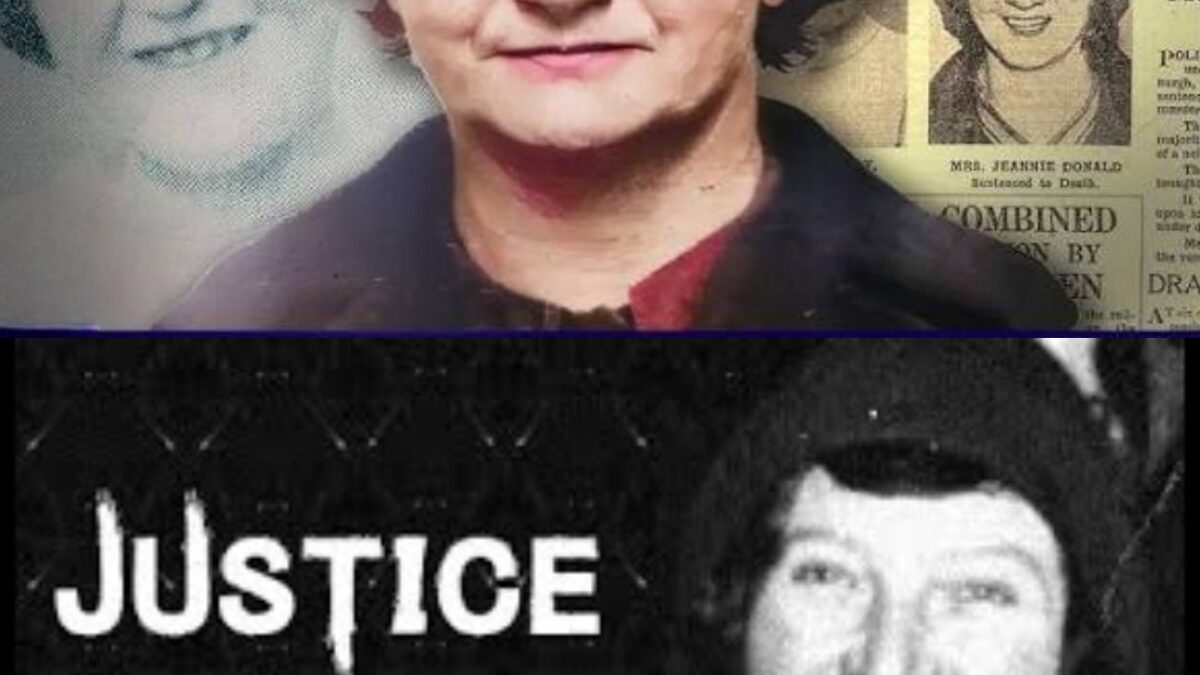
Was Justice Served? | The Terrible Crime of Jeannie Donald
Aberdeen is a city in the northeast of Scotland which is famously known as the Granite City, and by the end of the 19th century, Aberdeen became the granite capital of the world. Its coastal location ensured that granite, a historically difficult commercial material to transport, could be easily exported. There was a lot of work in Aberdeen in the 1930s, and living conditions were improving as housing slum clearance took place. Between 1919 and 1939, 2,955 slum houses were demolished and over 6,500 new authority-owned houses were built.
John and Agnes Priestley lived on the second floor of a drab and overcrowded tenement block, number 61 Urquhart Street. The imposing and dilapidated four-story building had been divided into two-room flats, providing squalid and cramped living conditions for working-class people. They probably hoped that their building would eventually be replaced and their living conditions would vastly improve from their current oppressive surroundings.
At lunchtime on Saturday, April the 21st, 1934, Agnes Priestley sent her little eight-year-old daughter named Helen to the shops to buy a loaf of bread. Little Helen was well known in the neighborhood, she was bold for her age, and she had run the errand for her mother on many occasions. As time passed, Helen’s mother became increasingly worried as her daughter had not returned home. Concerned, she asked all the neighbors if they had seen her, but they hadn’t. So after asking everyone she could think of, the neighbors and Mrs. Priestley all started looking for Helen. The search failed to find the little girl, and the Priestleys reported their daughter as missing to the police.
This started one of the largest searches in Aberdeen history. Dozens of locals, men, women, and children, began searching the streets and alleyways for any sign of the missing girl. The police also broadcast Helen’s disappearance in radio announcements and it flashed up on screens in local cinemas. The search lasted until the early hours of the morning, when it was suggested that Helen’s father, John Priestley, who was completely exhausted, should go home and get a couple of hours of rest. One of her neighbors named Alexander Parker promised he would go to the Priestleys’ home at around 5:00 a.m., so three hours later, to wake him so they could continue the search at first light.
At five in the morning, Mr. Parker headed to Urquhart Street, but this morning would be different. He turned into the close where the Priestleys’ building was, and he saw a blue Hessian bag lying against the wall. He thought, “Why is that there?” and he could not recall it being there on the previous day. Intrigued, he opened the bag, and inside was the dead body of Helen Priestley. Shocked, confused, and horrified, Alexander Parker informed his friend John Priestley that his daughter was dead. They contacted the police immediately, and the police thought it very strange that someone had risked returning the body almost to the child’s home and so close to the area that was being searched by the police.
From the examination of the body, it seemed the child had been strangled, so it was unlikely to have been an accident of any kind, but it was considered most certainly to have been murder. Examination also revealed bruising on the child’s upper thighs and sexual organs, which meant that in all likelihood, the motive had been sexual. When the local community heard the news of Helen’s terrible murder, they feared that a child sex attacker was on the loose, so they formed vigilante groups and took to the streets armed with clubs and other weapons. This wasn’t good for the police, as they didn’t want to have to deal with vigilantes who were investigating the terrible murder of a little girl. The police decided that as the murder was of someone so young and that the local people were also concerned that a sexual predator might be amongst them, they would put a lot of resources into their inquiry.
The police began to interview all the residents of number 61. Had the Priestleys argued? Had John or Agnes ever been seen mistreating little Helen? Or was there someone in the building who might have had cause to want to kill or harm the little girl? It was well known that there was a continuing issue between the Donald family, who occupied the flat on the ground floor, and the Priestleys, who lived immediately above them. The police soon discovered that one neighbor had heard a scream from a house close to the Priestleys’ home at about lunchtime, and this was confirmed by routes later from outside the area who had been working at the back of Urquhart Street the same day. Jeannie Donald had been seen shouting at Helen Priestley on a number of occasions due to Helen’s bad behavior. Helen had been known to torment the Donald family; she would often bully Jeannie Donald’s little daughter, also named Jeannie. She also kicked at the Donalds’ front door and rattled the banister outside their house to annoy the family, and she had shouted abuse at Mrs. Donald. The police took note that the Donald family were the only residents of 61 Urquhart Street who had not participated in the search for Helen.
The police began to look a little bit closer at the Donald family and interview its members. Alexander Donald was a barber; he didn’t own his own business, but he worked hard and was good at his job. Jeannie Donald was a 38-year-old housewife who filled her day with household chores and looking after their daughter. As police interviewed the Donald family, they also investigated the Hessian bag that Helen had been found in. The bag revealed distinctive markings of a Canadian export stamp. The police discovered that it was a particular type of bag that was used for flour transportation. It also contained traces of washing cinders, an unusual cleaning habit that was very much out of date in the 1930s, and it had saucepan burn marks where it had been used as a makeshift tablecloth.
The local baker where Helen purchased her bread on the fateful day confirmed that they had received a shipment of flour in the same bags. The baker told police that a customer had asked if she could have some of the bags and that he had given them to her. It was a while ago, so he was unable to give a good description of the customer. The police wondered if Helen had actually made it back to number 61 that day. Maybe not up the single flight of stairs to her home, Helen would have had to pass the Donald family flat. Had Helen kicked the door and the Donald family finally cracked and harmed the little girl?
They searched the Donalds’ flat and found nine more identical bags to the one the body was found in, each with similar saucepan stains. Bloodstains were found on a packet of soap flakes, a scrubbing brush, and some cleaning cloths. The evidence was starting to mount against the Donalds. The police enlisted Sir Sydney Smith, a very well-known professor of forensic medicine in Edinburgh, to examine the flat. He discovered that little Helen had suffered from a rare condition that caused her to produce an extremely rare bacterium. This meant that she would often faint, and microbiological tests showed that this bacterium was found in many places in the Donalds’ flat. Professor Smith also examined the dust fibers in the bag, and they were an exact match to the dust found in the Donalds’ flat. Bloodstains in the flat matched the same blood group as Helen.
Mr. Alexander Donald was arrested. Had he finally snapped and murdered the naughty little girl, or did he rape her first and then murder her? The police thought that they had caught the perpetrator of this terrible crime. People gathered outside the flats wanting to attack Mr. Donald, but the police managed to get him into the police van and take him to the police station without the vigilante groups taking the law into their own hands. When the police started to interview him, they were shocked as Mr. Donald had a rock-solid alibi. He told police he had been working on the day of the murder. When the police investigated this, many witnesses came forward, all of whom were willing to state that at the time of Helen’s murder, he had been miles away at the barbershop cutting hair.
The police were stuck. If Mr. Donald wasn’t the killer, then who was, as forensics seemed to point to Helen being killed inside the Donalds’ flat? They then focused on his wife, Mrs. Jeannie Donald. Samples of Mrs. Donald’s hair were taken and analyzed by Professor John Glaister of Glasgow University. He could say beyond a doubt that Jeannie Donald’s hair perfectly matched hair found on the body and the blue Hessian bag. The police were shocked, as all the evidence now pointed to Jeannie Donald being the murderer. They arrested Jeannie and charged her with murder.
As the trial approached, the newspapers reported the facts of the case. They wrote that the case showed that a woman could commit crimes as horrific as a man, but they also highlighted that despite the modernization of authority-run houses in the country, many people in Scotland still lived in cramped and unfit living conditions. On Monday, the 16th of July 1934, the trial of Jeannie Donald commenced at Edinburgh High Court before Judge Lord Craigmyle Aitchison.
The defense was simple: Jeanne could not have committed the murder as she was physically incapable of raping a young girl, the motive for murder being so obviously sexual. The prosecution, however, had carried out extensive tests on Helen Priestley’s body. One thing that Sir Sydney Smith was always worried about was the fact that no semen had been found on Helen’s body. When he had examined the bruises and abrasions more closely, he concluded that they had not been committed during a rape, but by an object such as a broom handle, to try and make the murder look like it was a result of a sexual attack. The forensic evidence seemed very solid. Jeannie’s daughter also testified that the loaf of bread they ate that day looked and tasted different from the bread they usually buy. Jeannie Donald did not testify.
The jury was sent out to consider the verdict, but it took just 18 minutes for them to return a verdict of guilty. Jeannie was sentenced to death by hanging and was taken to Craiginches Prison in Aberdeen to await execution on the 3rd of August 1934. Jeannie’s lawyers lodged an appeal, and remarkably, the Secretary of State commuted her sentence to life in prison. She was then transferred to the female jail in Duke Street, Glasgow, to serve out her sentence. In jail, she was a model prisoner, but it was still a surprise when her husband, Alexander Donald, fell terminally ill with cancer in June 1944, and Jeannie was granted compassionate leave to care for him. When he eventually died, the authorities decided that Jeannie should be allowed to remain a free woman. She lived the rest of her life under an assumed name and died 32 years later in 1976 at the age of 81, never once publicly speaking about her reasons for murdering little eight-year-old Helen Priestley.

