This Victorian Woman’s Life was More Tragic than You Can Possibly Imagine
This Victorian Woman’s Life was More Tragic than You Can Possibly Imagine
Being poor in the Victorian era was a miserable existence. After all, there is a reason the adjective Dickensian, borrowed from the famous author’s surname, became descriptive of dark streets, destitution, and the terrible lives people lived. Hard times indeed. Among the destitute, some lives saw more suffering than others. Born into hardship, perhaps as an orphan or with a disability, in a world with no welfare state as we know it today, their fate might be an existence on the streets, seeking alms from charitable passersby, or the dreaded workhouse.
The life you will discover today is perhaps one of the most tragic: the story of a woman named Old Sarah. It comes to us from a reliable and respected source, the renowned Victorian journalist Henry Mayhew, who investigated the plight of London’s poor and working classes in the 1840s. Discover the life story of Sarah, as she told it to Mayhew—a life born into misfortune, lifelong disability, the workhouse, poverty, and the neglect of those she trusted most.
One of the most deserving and peculiar of the street musicians was an old lady who played upon a hurdy-gurdy. She had been about the streets of London for upwards of 40 years, and being blind, had had during that period four guides, and worn out three instruments. Her cheerfulness, considering her privation and precarious mode of life, was extraordinary. Her love of truth and the extreme simplicity of her nature were almost childlike. Like the generality of blind people, she had a deep sense of religion, and her charity for a woman in her station of life was something marvelous. For though living on alms, she herself had, I was told, two or three little pensioners. When questioned on this subject, she laughed the matter off as a jest, though I was assured of the truth of the fact.
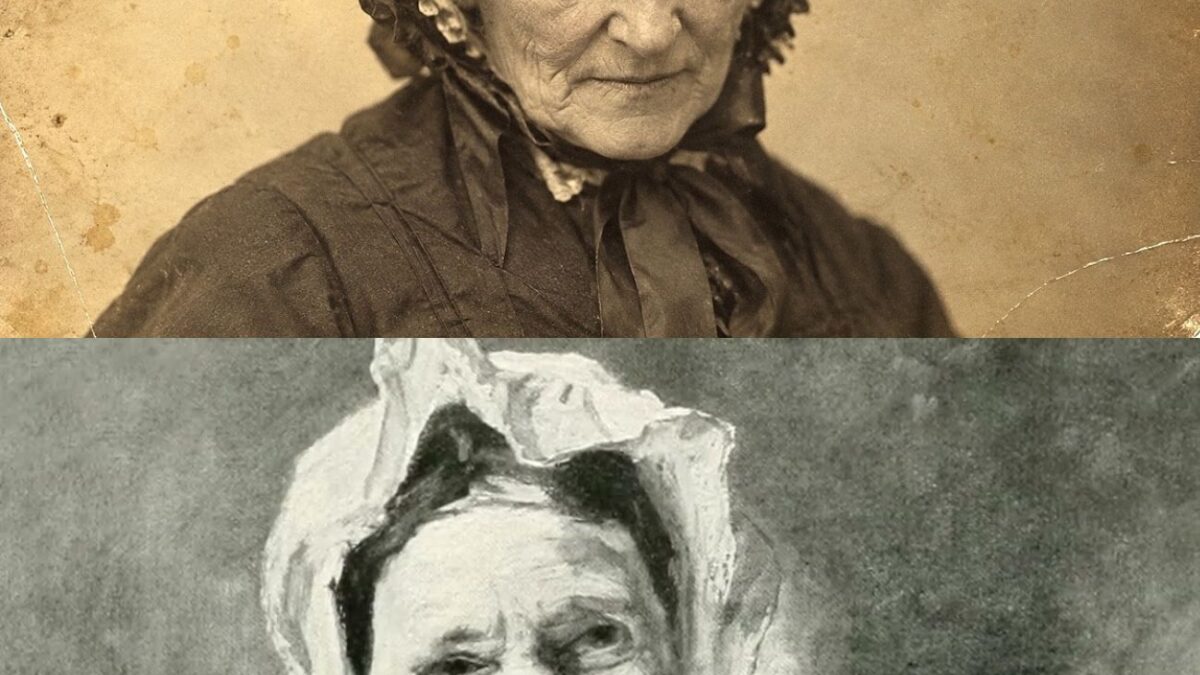
Her attention to her guide was most marked. If a cup of tea was given to her after her day’s rounds, she would be sure to turn to the poor creature who led her about and ask, “You comfortable, Liza? Is your tea to your liking, Liza?” When conveyed to Mr. Beard’s establishment to have her daguerreotype taken, she, for the first time in her life, rode in a cab, and had a fear at being pulled backwards, as she termed it, for she sat with her back to the horse. After her alarm had in a measure subsided, she turned to her guide and said, “We must put up with those trials, Liza.”
In a short time, however, she began to find the ride pleasant enough. “Very nice, ain’t it, Liza?” she said. “Pero I shouldn’t like to ride on them steamboats. They say they’re shocking dangerous. And as for them railways, I’ve heard tell they’re dreadful. But these cabs, Liza, is very nice.” On the road, she was continually asking Liza where they were, and wondering at the rapidity at which they traveled. “Ah,” she said, laughing, “if I had one of these here cabs, my rounds would soon be over.”
Whilst ascending the high flight of stairs that led to the portrait rooms, she laughed at every proposal made to her to rest. “There’s twice as many stairs as these to our church, ain’t there, Liza?” she replied when pressed. When the portrait was finished, she expressed a wish to feel it.
The following is the history of her life, as she herself related it, answering to the variety of questions put to her on the subject.
“I was born the 4th of April, 1786. It was Good Friday that year, at a small chandler’s shop, facing the White Horse, Stuart’s Rents, Drury Lane. Father was a hatter, and mother an artificial flower maker and feather finisher. When I was but a day old, the nurse took me out of the warm bed and carried me to the window to show some people how like I was to father. The cold flew to my eyes, and I caught inflammation in them, owing to mother being forced to be from home all day at her work.
“I was put out to dry nurse when I was three weeks old. My eyes were then very bad by all accounts, and some neighbors told the woman I was with that Turner’s cerate would do them good. She got some and put it on my eyes, and when poor mother came to suckle me at her dinner hour, my eyes were all a gore of blood. From that time, I never saw afterwards. She did it, poor woman, for the best. It was no fault of hers, and I’m sure I bear her no malice for it.
“I stayed at home with mother until I was 13, when I was put to the blind school, but I only kept there nine months. They turned me out because I was not clever with my hands, and I could not learn to spin or make sash lines. My hands were oar-like. I had not been used at home to do anything for myself, not even to dress myself. Mother was always out at work, so she could not learn me, and no one else would. So that’s how it was. I was turned out.
“I then went back to my mother and kept with her till her death. I well remember that. I heard her last. When she died, I was just 16 years old. I was sent to the union workhouse—St. Pancras Union it was—and father with me, for he was in at the time. He died too, and left me in seven weeks after mother. When they were both gone, I felt I had lost my only friends and that I was all alone in the world and blind. But take it all together, the world has been very good to me, and I have much to thank God for, and the good woman I am with. I missed mother the most. She was so kind to me. There was no one like her. No, not even father.
“I was kept in the union until I was 20. The parish paid for my learning the symphonicon. God bless them for it, I say. A poor woman in the workhouse first asked me to learn music. She said it would always be a bit of bread for me. I did as she told me, and I thank her to this day for it. It took me just five months to learn the symphonicon—hurdy-gurdy ain’t its right name. The first tune I ever played was God Save the King, the Queen as is now. Then Harlequin Hamlet. That took me a long time to get off. It was three weeks before they put me on a new one. I then learned Malbrook. Then I did the Turnpike Gate and Patrick’s Day in the Morning. All of them I learned in the union.
“I got a poor man to teach me The New Rigged Ship. I soon learned it because it was an easy tune. Two and forty years ago, I played The Girl I Left Behind Me. A woman learned it me. She played my symphonicon and I listened and so got it. Oh! Susanna, I learned myself by hearing it on the organ. I always try to listen to a new tune when I am in the street and get it off if I can. It’s my bread. I waited to hear one today, quite a new one, but I didn’t like it, so I went on. Hasten to the Wedding is my favorite. I played it years ago and play it still. I like Where Have You Been All the Night? It’s a Scotch tune.
“The woman who persuaded me to learn the symphonicon took me out of the union with her. I lived with her and she led me about the streets. When she died, I took her daughter for my guide. She walked with me for more than five and 20 years, and she might have been with me to this day, but she took to drinking and killed herself with it. She behaved very bad to me at last, for as soon as we got a few halfpints, she used to go into the public house and spend it all, and many a time, I’m sure, she’s been too tipsy to take me home. One night, I remember, she rolled into the road at Kensington and as near pulled me with her. We were both locked up in the station house, for she couldn’t stand for liquor and I was obligated to wait till she could lead me home. It was very cruel of her to treat me so. But, poor creature, she’s gone, and I forgive her.
“I’m sure I had many guides after her, but none of them was honest like Liza is. I don’t think she’d rob me of a farthing, would you, Liza? Yes, I have my regular rounds, and I’ve kept to them for near upon 50 years. All the children like to hear me coming along, for I always play my symphonicon as I go. At Kentishtown they called me Mrs. Tuesday, and at Kensington, Mrs. Friday, and so on. At some places they like polkas, but at one house I plays at in Kensington, they always ask me for Hasten to the Wedding.
“No, the symphonicon isn’t very hard to play. The only thing is you must be very particular that the works are covered up, or the halfpence are apt to drop in. King David, they say, played on one of those here instruments. We’re very tired by nighttime, ain’t we, Liza? But when I get home, the good woman I lodges with has always a bit of something for me to eat with my cup of tea. She’s a good soul and keeps me tidy and clean. I helps her all I can when I come in. I carry her a pail of water upstairs and such like. Many ladies, as have known me since they were children, allow me a trifle. One maiden lady near Brunswick Square has given me sixpence a week for many a year, and another allows me eighteenpence a fortnight. So that, one way and another, I am very comfortable and have much to be thankful for.”
It was during one of old Sarah’s journeys that an accident occurred which ultimately deprived London of the well-known old hurdy-gurdy woman. In crossing Seymour Street, she and her guide Liza were knocked down by a cab as it suddenly turned a corner. They were picked up and placed in the vehicle—the poor guide dead, and Sarah with her limbs broken—and carried to University College Hospital. Old Sarah’s description of that ride is more terrible and tragic than can easily be expressed. The poor blind creature was ignorant of the fate of her guide, she afterwards told us, and kept begging and praying to Liza to speak to her as the vehicle conveyed them to the asylum. She shook her, she said, and had entreated her to say if she was hurt, but not a word was spoken in answer. And then she felt how terrible a privation was her blindness. And it was not until they reached the hospital, and they were lifted from the cab, that she knew, as she heard the people whisper to one another, that her faithful attendant was dead.
In telling us this, the good old soul forgot her own sufferings for the time, as she lay with both her legs broken beneath the hooped bedclothes of the hospital bed. And when, after many long weeks, she left the medical asylum, she was unable to continue her playing on the hurdy-gurdy, her hands being now needed for the crutch that was requisite to bear her on her rounds. The shock, however, had been too much for the poor old creature’s feeble nature to rally against. Though she continued to hobble around to the houses of the kind people who had for years allowed her a few pence per week, and went limping along through the streets without her music for some months after she had left the hospital, her little remaining strength at length failed her.
She took to her bed in a room in Bell Court, Gray’s Inn Lane, never to rise from it again. Surrounded by the quiet gloom of her final days, old Sarah passed away peacefully in her sleep, her quiet resilience matching the gentle simplicity of the life she had so bravely endured. Though her instrument fell silent and her familiar footsteps vanished from the cobblestones of London, the memory of her cheerful spirit, her profound gratitude, and her unwavering loyalty remained etched into the heart of the city she had walked for half a century.

