This Case Is So Gruesome MOST PEOPLE CAN’T FINISH IT
This Case Is So Gruesome MOST PEOPLE CAN’T FINISH IT
He was dead by the time anyone thought to look. For weeks, his death had been seen as the end of a quiet life, a man who worked, raised a family, and kept to himself. That’s all anyone believed he was until his daughter began clearing out what was left behind. A few weeks after the funeral, she and her fiance went through his belongings. Among them was a garage he’d been renting for years, tucked away in a small courtyard. Inside, it was packed. They worked through it slowly, moving things aside until they came across two sealed plastic drums. So, her fiance opened one.
The smell hit immediately, strong enough to stop you in your tracks. He stepped back, then forced himself to look. At first, it didn’t make sense, just something pale, something wrong. And then, it came into focus. Two human legs, cut clean, standing upright inside the container, and a severed arm placed besides them. They called the police straight away. And when officers arrived, it became clear this hadn’t just happened. It had been hidden for years. And in that moment, the man they had just buried became something else entirely.
Because Manfred Seel had been living a double life, and he would soon be linked to a series of brutal murders. This case is crazy. It’s kind of flipped on its head, as this is a case where the investigators find the killer, but now they need to find his victims. And when they do, it’s some of the worst I have ever heard. It’s no wonder he is known as the German Jack the Ripper.
By the time police arrived at that garage in Hessen, Germany on the 10th of September, 2014, they had already been told what had been found inside the first drum. The garage was left untouched, entirely as it had been when Nicole came in. The second drum hadn’t been opened. An officer forced the lid open and pulled it back. Inside, there was no mistaking what they were looking at. There was a torso that had been cut apart, and a severed head had been placed in with it. With both drums examined, the full picture began to form. The body hadn’t just been concealed, it had been dismembered and divided between the containers.
The next step was to find out who she was. This wasn’t straightforward. The body had been there for years, and the level of decomposition made identification difficult. Parts of the remains had deteriorated significantly, but some areas were still preserved well enough to work with. On the hands, the skin had broken down over time, but using specialist techniques, forensics teams were able to recover usable fingerprints. Those prints were run through the national database, and a match came back. Her name was Britta Simone Diallo, known simply as Simone. She was 43 years old when she was last seen in 2003.
But what stood out immediately was the fact that there was no missing person’s case attached to her name. In the years leading up to her disappearance, she had been living on the streets. Most of her time was spent around Frankfurt’s main station, where she worked as a street worker. Her life had become unstable, and she was heavily dependent on alcohol and other heavy substances. People who knew her described her as someone who was struggling, moving between places, and trying to get by day-to-day. She had multiple run-ins with the police, mostly for minor offenses, which is the only reason her details existed in the system at all.
The postmortem findings made it clear this hadn’t been a straightforward killing. The injuries to Simone’s body showed that what had happened to her hadn’t happened quickly. There were also indications she may still have been alive when her arms and legs were dismembered with a hacksaw. Further examination revealed additional injuries. Nails had been driven into different areas of her body. One was all the way into her right breast, with two piercing the side. Another nail was found in her right knee, and one was in her thigh, and three were plunged deep into her genital area. There were also various cuts and slashes on her body. The murder of Simone appeared to have been enjoyed, and the killer reveled in her prolonged suffering.
Based on the condition of the remains, investigators estimated that Simone had been dead for 11 years. That placed her death sometime in 2003, long before the garage had even been rented, which meant she hadn’t been kept there the entire time. At some point, her body had been moved. Seel had access to other locations over the years. A basement inside his home, a garden plot he used regularly, places where no one else would have reason to look. Investigators began working backwards, trying to establish where she could have been kept before ending up inside that garage.
Investigators also believed that there was no way this was the killer’s first victim. He was too methodical, too planned. So, they decided to search other places and potentially find more victims. Officers moved on to search Seel’s home, working through each room carefully, documenting everything they found. On the surface, nothing stood out. It looked like a normal family home, lived in, organized, no obvious signs of anything out of place. But, that changed when they reached the basement. It was a space Seel kept to himself for years. No one else was allowed down there, not his wife, not his daughter. It was separate from the rest of the house, almost cut off entirely.
When investigators went inside, it became clear very quickly that this wasn’t just a storage space. Across multiple computers and hard drives, they recovered several terabytes of data, tens of thousands of images, along with a huge number of video files, all stored and organized over time. This wasn’t an interest, this was an obsession. A large portion of what they found was extreme, violent adult films, of which some focused on torture, cannibalism, and even youths. But, it didn’t stop there. Among the files were drawings, detailed sketches showing cuts, wounds, and placements across the body. In one of them, the content closely reflected the kind of injuries that had been inflicted on Simone. It was too close to ignore.
They also discovered that he had been active on online forums centered around extreme violence and necrophilia. Spaces where people discussed and shared fantasies involving the dead. All of it painted a clearer picture of what he had been consuming and what he had been thinking about. But despite everything they had recovered, there was one thing they couldn’t find. There were no images of his victims. But given everything else that had been uncovered, they felt they would exist somewhere.
As investigators continued building a timeline, attention began to shift towards Seel himself. By that point, he was already dead. But his movements, his habits, and the places he had been seen all became central to the investigation. In November 2013, he was diagnosed with esophageal cancer. Within months, his wife of 40 years died along with his closest friend and business partner, Werner Lüdke. Seel’s health declined quickly after that. By August 2014, just 9 months after his diagnosis, he was gone. To everyone around him, it was a quiet ending to a man who had lived a normal life, kept to himself, and never gave anyone a reason to look twice. And that’s exactly why no one did.
Manfred Seel was born in 1946 in Krumbach, a town just outside of Frankfurt, and grew up in the nearby Oberursel. He had no siblings and his early life was by all accounts straightforward. He went through school without any issues and followed a fairly typical path into adulthood. After finishing his education, he trained to be a plate etcher, a skilled trade within the printing industry. Once qualified, he completed 2 years of mandatory military service before returning to civilian life. In the years that followed, he attended evening school and later began studying art and social history. He would quickly drop out and never completed his degree.
After that, life moved into something more settled. In 1973, at the age of 27, he got married. Six years later, in 1979, his daughter was born. The family lived together in a house that belonged to his wife’s family and from the outside, everything appeared ordinary. A steady job, a home, a routine that gave no reason for concern. In 1986, he set up a business with his friend, Werner Loderer. Together, they ran a removals and clearance company, going into people’s homes, often after someone had died, clearing out entire properties and moving what was left behind. It was steady work and over time, Seel earned good money from it. So much so that he and his family started going on luxury holidays in various countries all over the world. From the outside, it looked like a good life, stable, active and creating great memories.
Seel also began playing music. He joined a band with friends called Overall Jazz Game. This was a great love of his and he played until he died. Inside the family home, there were parts of Seel’s behavior that stood out from everything else. He spent long periods of time alone in the basement. It was a space he kept to himself completely and this is where he delved into his dark fantasies. He also drank heavily and when he did, his behavior would sometimes change. People who knew him later said he would talk about what he called his perverse side. The way he said it didn’t seem like a joke, but it was treated like one, something said under the influence and then forgotten. Officers found his wife’s diary, which had entries where she spoke about her husband being a useless drunk who was probably cheating on her. Seel had struggled with alcohol for years. He entered rehab twice, once in 1994 and again in 1996, but nothing seemed to work. The drinking continued and so did the behavior that came with it.
He also did cheat on his wife. He had a flat that he secretly rented with his business partner, Werner, and he would take street workers there. Witnesses had also placed him in Frankfurt’s red-light district throughout the 1990s. He was a regular presence, known to drive through the area late at night. He would approach women, speak to them briefly, and in some cases pay them for intimacy. Simone had been street working in that same area. She was not popular with the other workers as she sold herself for a very low price. This took work away from the other women, but Simone had a big substance addiction to pay for in the last few months of her life. It was reported she was looking worn down, like the lifestyle and addictions were starting to get too much. She had no front teeth. She was often seen on the streets begging for money and generally appeared desperate.
But some men like this look. They chose her because of it, because they knew she was more vulnerable and easier to abuse. Simone would go with men that other women avoided. Men who were known to be aggressive, unpredictable, or simply not worth the risk. But she was desperate and that desperation overrode everything else. According to witnesses, Seel had encountered her more than once. He had picked her up before and she had been in his car. That alone was enough to connect the two of them.
A woman later came forward and described getting into Seel’s car herself. She only went with him once. What happened inside stayed with her. She later described the look in his eyes. Not panic or rage, but something she described as hate. She claimed he assaulted her and as he did, he made unsettling noises, adding to the sense that this wasn’t just another client. It was awful, she said. Just once. Never again. Afterwards, she didn’t stay silent. She contacted a helpline for intimate workers. Not to report what had happened to her, but to warn others. To make sure no one else got into his car thinking it was safe. For a long time, that was all it was. An isolated account. A warning that never went further.
Two years passed since the body was found in the barrels in the garage and investigators put out a public appeal asking for any information linked to Seel, his movements, his habits, the places he had been. They weren’t building a case in the usual way. This time, it was the other way around. They believed they had found the killer. Now, they needed to find his victims. Around that point, a dedicated task force was formed to focus entirely on the investigation. It was made up of profilers, detectives, and forensic specialists working to piece together a timeline that no longer had a suspect to question. They quickly assessed that Simone’s murder was very sadistic, and killers with sadism usually start their murder spree in their early to mid-20s. But Seel would have been roughly 57 when he murdered Simone. So, investigators started to look back at previous cold cases, ones that had a sadistic nature about them, ones that contained dismemberment, particularly brutal cases. Investigators began to ask, “Has there really been a serial killer on the loose in the area, and no one has even noticed?”
The first case that begins to stand out to investigators is the brutal murder of 19-year-old Gudrun Ebel. She worked as a cleaner at the Johanna Kirchner Nursing Home, and was described as quiet, friendly, someone who kept to herself. She came from a modest background, living with her parents and seven siblings. She was known to be kind and someone who cared for others. On the 6th of February, 1971, her body was found inside a hunter’s shed in a wooded area not far from where she worked. What they found inside that shed was difficult to process. Gudrun had been strangled and her abdomen had been sliced open with a wire knife. Her small intestines were then removed along with her uterus and right ovary, none of which were ever found. It hadn’t been rushed or chaotic. It had been done in a controlled way.
The brutality of it shocked the small town of Bad Vilbel, just north of Frankfurt. Murders didn’t really happen there and when they did, they certainly didn’t look like this. Investigators focused closely on how the body had been handled. The precision stood out immediately with a level of skill that didn’t come from nowhere. They didn’t believe that this was the first time the person that was responsible had done something like this. There was growing suspicion that whoever had carried this out had experience, possibly working with dead bodies or from carrying out similar acts on animals. Not long before the murder, there were reports in the area of animals being mutilated, their genitalia being slashed off in a way that felt disturbingly similar.
There were other details that didn’t sit right. Gudrun had alcohol in her system when she died. According to her sister, that wasn’t typical of her, especially not drinking alone. It raised the possibility that she hadn’t been alone that night and that she may have known the assailant. Investigators also couldn’t establish the sequence of events, whether she had been taken to the shed before she was killed or moved there afterwards. Despite the level of brutality, despite the unusual nature of the crime, the case never moved forward. No suspect was ever identified and over time, the case went cold.
Then, as the town was still reeling from such a horrific murder, just 2 months later, the remains of 23-year-old Hatice Yükregül were found. She was a Turkish woman who had moved to Germany in search of a better future for her family, and she had two children and a husband back home waiting for Hatice to get settled enough to have them all move over. But sadly, she never got the chance to fulfill this. Hatice was found under Cambus Bridge. Her skull had been caved in, seemingly with a rock. She was unrecognizable. She had been stabbed multiple times all over her body, and her left breast had been removed, hacked off. There was even more mutilation to her body. Her vagina and the skin around it had all been cut out of her body. It lay close beside her, but the breast had been taken.
Investigators quickly made the connection. Hatice had been working at the same nursing home as Gudrun. The two women didn’t know each other, but the overlap was difficult to ignore. Despite the similarities, and despite the brutality of both crimes, the investigation led nowhere. No suspects were identified, no arrests were made, and like in Gudrun’s case, it eventually went cold. It wasn’t until a year later, after Seel’s death, that those connections were revisited. In 1971, Seel would have been 24 years old. At the time, he was working at a printing factory, just minutes away from that same nursing home. People who knew him later said he left that job around the same time, and began clearing out flats in the nursing home itself, working inside the same building both women had been connected to. It placed him right there, close enough to see them, close enough to approach them.
For a long time after those two murders, nothing else surfaced that matched the same level of brutality. The case appeared to have stopped there with no clear continuation, and over time they faded into the background. It wasn’t until 1991, nearly 20 years later, that investigators came across another case that seemed to fit. On the surface, that kind of gap doesn’t make sense. Serial killers don’t usually stop for that long, but there are exceptions. Some go quiet, some suppress it, and others simply become more careful. When investigators looked at Seel’s life during that period, the timeline didn’t rule it out. In the 1970s, he got married, had a child, and his life, at least from the outside, seemed to become stable. But the more terrifying prospect was that he honed his skills, and maybe officers could not detect who he had killed during that time period. Maybe he chose women who would not be missed and put them somewhere they would never be found, keeping their suffering a secret forever.
In June 1991, a group of mushroom pickers were walking through a rural stretch of land between Hofheim and Langenhain when they came across something they weren’t expecting. In a shallow ditch, not far from a footpath, lay the remains of a woman who had been there for up to two weeks. She was later identified as 36-year-old Gisela Singh. Her body had been covered with sticks and branches, but not properly concealed. Her clothes and shoes had been removed and placed neatly beside her head. It wasn’t random. It had been done with intent. The injuries were severe. Her stomach had been sliced open and her intestines and large parts of the skin around her thighs were missing. None of it was ever found.
Gisela was different from his previous victims; although originally she came from a stable background, she grew up mostly in care. Something had happened in her life where she took the wrong path. From the age of 16, she was living on the streets. She developed a large dependency on heroin and would sell herself to fund it. She was also a mother to a young daughter who was also sadly growing up in care. Gisela was regularly having unprotected intimacy with a large amount of men and at some point she contracted HIV. At the time of her death, she was very weak and desperate. She would get into cars with men others wouldn’t dare. With men who were known to be violent, but addiction blinded her and made her disregard her own safety. She was last seen 2 weeks before she was found at a substance support center and a couple of witnesses saw her get into a car with a man and she was never seen alive again.
Now, being a street worker, the same intensity of investigation was not given by police. She didn’t have family or friends. No one really missed her when she was gone. The identity of the driver of the car she had gotten into remained a mystery until 2014 when investigators reopened the case. It was of course Manfred Seel’s car. Was this how Seel had managed to avoid detection through the 70s and 80s by preying on vulnerable women?
The next victim was found 2 years later in mid-December 1993. A couple of street cleaners had found the remains of a woman wrapped in blue plastic bags near an overpass on the motorway. It was hidden in some bushes, but in an area where it would be quickly found. Little effort had been put into concealing her. Upon closer inspection, it was just a torso. The head, arms, and legs were all missing. Based on her skin, she was believed to be of African or Latin American descent, and she had been murdered by a stab wound to the heart. Investigators found large levels of methadone in her blood, which told them that she had been murdered not long after she had been abducted. But, the state of decomposition on the body also told investigators that she had not been dumped immediately after her death, and that the perpetrator had kept her remains for up to 10 days.
The woman was identified because her boyfriend had reported her missing, and there were identifiable marks on her body. She was 31-year-old Dominique Monrose. She had come to Germany from Martinique, which was a small island in the Caribbean Sea. Dominique had also been working as a street worker who was at her lowest ebb in life. She was homeless, addicted to substances, and selling herself for cheaper than the going rate. She was even offering more extreme services, all to feed her addictions. She was very similar to Seel’s later victims. She was desperate.
On the 7th of February, three more rubbish bags were discovered near Frankfurt Airport. They had been scattered across the area, each one found a few hundred meters apart. Inside, investigators found further human remains. Two arms and a leg were recovered from the bags, while another contained animal bones mixed with an unidentified tissue. It wasn’t a single disposal. It had been broken up, spread out, and left in different locations. The arms and legs were also in a different state of decomposition to the torso that was found nearly two months prior, meaning they must have been kept frozen somewhere. But her right leg and head were never found.
During the 2014 investigation, officers started to connect the dots. They located a garden plot in Krumbach that Seel had rented with his best friend and business partner, Werner Lüdke. When it was searched, officers found adult magazines and Polaroids of naked women’s body parts scattered around the place. They believe that not only was Dominique’s body kept there, but also Simone Diallo’s, the woman who was found in barrels in the garage. As the garage had only been rented from 2008, at the plot, there was a gazebo that had collapsed. It’s believed that when this collapse happened, it may have caused a dent in one of the barrels that Simone was found in. Also, the dismemberment that had taken place was remarkably similar on both women. The cut marks found on Dominique and Simone were almost certainly made by the same person, and Dominique’s remains were found not far from where Gudrun’s remains were found. Things were starting to link up. There was a pattern forming, but then investigators found something that didn’t add up.
It was one of the most infamous and disturbing cases in German criminal history. On the morning of March 26th, 1998, 13-year-old Tristan Brübach called his father at work. He told him he’d hurt his back the day before after falling from a tree and asked if he could stay off school to see a doctor. His father didn’t think much of it. It was the last day before the Easter break and it sounded like an excuse to miss school. He told him to go in as normal and if his back was still bothering him later, then they would deal with it after. Tristan went to school, but by early afternoon, he was still complaining about back pain. At around 1:30, his teacher allowed him to leave so he could go to the doctor. He never made it there. Whilst walking under a tunnel, roughly 120 meters long, Tristan was ambushed. He was punched in the face and then strangled. Once he was subdued, the attacker dragged him into the darkness of the tunnel and cut his throat from ear to ear, so deep that it went down to his spine. After this, he was brutally stabbed and left to die, bleeding out into the river.
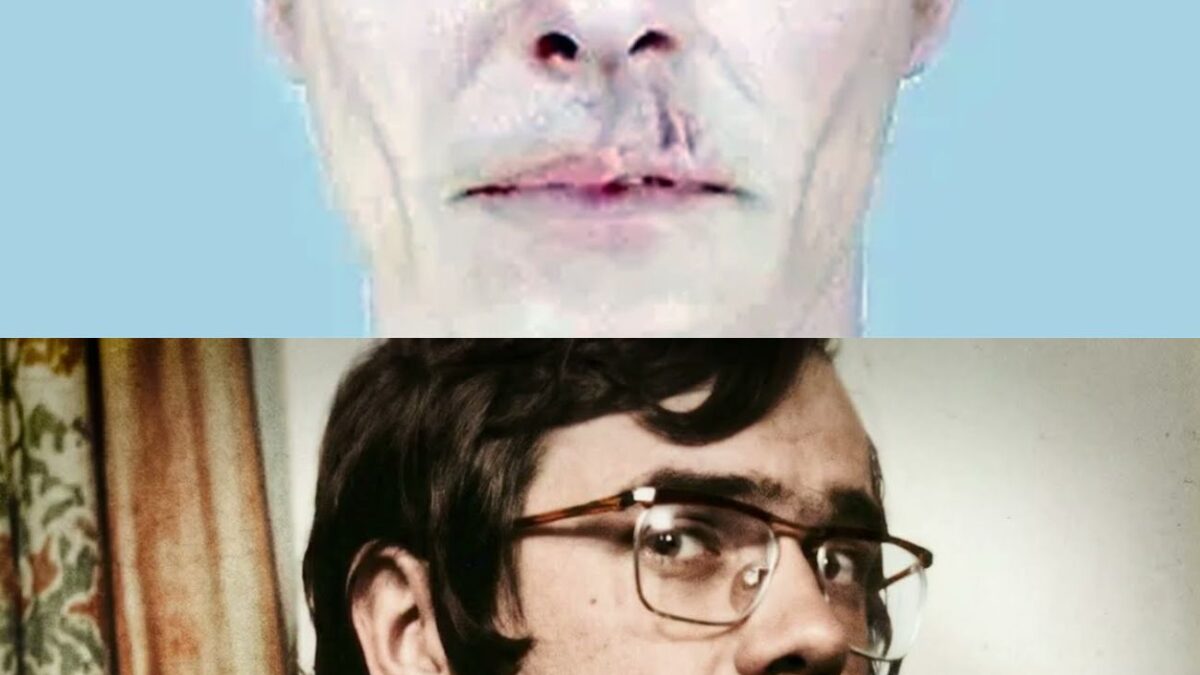
After this, mutilation began. His face was found to have bruising all over it, showing a beating had taken place. Muscle tissue from his thighs and buttocks were removed. This was something that is known as prime cuts on cannibal forums and Tristan’s testicles had been severed clean off, none of which were ever recovered. This was a horrific scene. His clothes and shoes were then folded and placed next to his head and he was laid down like he was sleeping. This case horrified the locals and witnesses said they saw a man loitering near the tunnel at around 3:30, which is when Tristan was believed to have been murdered. The man was described as slim with light-colored eyes, standing 1.75 meters tall with blonde hair and a ponytail. He also had a distinctive scar on his upper lip. The suspect was nicknamed Softman and his police sketch appeared in all the country’s media when the case came to light. The reward to find Softman was 100,000 marks.
At the time, Softman was never found, but during the 2014 investigation, many links were being made to Seel. The tunnel where Tristan was found was 7 miles away from Seel’s home and Seel himself was known to take this path many times on his way to work. It was not far from where the remains of Gisela S. and Dominique M. were found and perhaps the most telling of all was not only the mutilation to the body, but also the folded-up clothes and shoes that were placed next to the remains almost in a ceremonial way. Tristan was even vulnerable like the killer’s later victims. Although he was a male, which did not fit his MO, his mother passed away when he was young and his father worked a lot, leaving him often alone to fend for himself and vulnerable. Also, the brutal nature of the murder linked him. Investigators thought Seel was clearly the perpetrator. However, a bloody fingerprint was found in one of Tristan’s schoolbooks near the crime scene and it did not match Seel’s. So, with that, in 2016, he was officially deemed not a suspect in this case. But, how many killers in that area were committing those kinds of horrific murders? This is a terrifying thought.
Police were certain Seel was guilty of the murders of Gudrun, Hatice, Gisela, and Dominique. But, there are four other women who police suspect he could have murdered over the years. In 1996, Pia Isabelle Heim disappeared on the 24th of July, 1996, whilst on her way home from work. She was a bank clerk, but in recent months, she had been suffering severely from schizophrenia, and her medication had increased her libido, and she began sleeping with random men, and became very promiscuous. She began hanging around the train station, where it became more of a red-light district. Her severed head was found 5 months later, wrapped in a plastic bag near a tram stop. Investigators noticed how clean the decapitation had been, and also that it appeared to have been frozen at some point, making it fit well with Seel’s MO. The rest of Isabelle’s body was never found.
Two other women were later considered possible victims: 18-year-old Julia Schroeder and 32-year-old Gabriele De Haas. They had both disappeared, and neither of their bodies were ever recovered. Both were known to be street workers, and both have been linked to Seel. Witnesses placed them in his company on multiple occasions. They were also known to take on more extreme clients, putting them in situations others would avoid. But without bodies, without forensic evidence, those links could never be proven. They remain possibilities. In 2004, another discovery added to the uncertainty. A human head was found, reduced to skeletal remains wrapped in foil. Investigators determined it likely belonged to a middle-aged Eastern European woman. In an effort to identify her, her face was reconstructed and appeals were made to the public. But sadly, no one came forward and her identity remains unknown to this day.
Even now, it has never been fully established how many victims Manfred Seel may be responsible for. The investigation built a picture, but it could never be completed. There are gaps that may never be filled. For his family, the impact was immediate and lasting. His daughter required psychological treatment after the discoveries were made. In an interview, she later said she was relieved her mother had died before him so that she did not have to face the truth of what had been. Seel’s closest friend, Werner Lüdke, was also looked at during the investigation. The two spent a lot of time together. They drank heavily, worked side by side, and were known to use the same spaces, including the garage and the garden plots where remains were later discovered. They also shared access to a flat where both men would take street workers. On the surface, it was enough to raise questions, but nothing concrete ever linked Lüdke to the crimes. There was no evidence to show he knew what Seel was doing or that he had any involvement. In the end, there was nothing to prove he knew anything at all, just suspicion, and no way to truly know.
As for Seel, there was never a trial. By the time the investigation uncovered the full extent of what may have happened, he was already dead. Legally, he remains innocent. There are no convictions, no formal judgment, only the conclusions drawn from what was found after his death. Investigators built a profile of a man who was an intimate killer, who acted out on intimate fantasies during his crimes. These apparently centered on sadism and necrophilia, and likely cannibalism. Keeping parts of his victims wasn’t just concealment, it tied him back to the act itself, a way of holding on to control long after it was over. At a press conference, one of the investigators made a comment that stayed with people. He said that body parts were missing across multiple victims, and that if you were to put them together, you could effectively reconstruct an entire body. It was a chilling way of summing up what they were dealing with. This wasn’t just a man hiding his crimes; it was a shadow that had moved through the streets of Germany for decades, leaving a trail of silent victims whose ultimate fates were only brought to light by the grim contents of a rented garage years after he was gone.

