The Wicked Crimes of Mary Bell
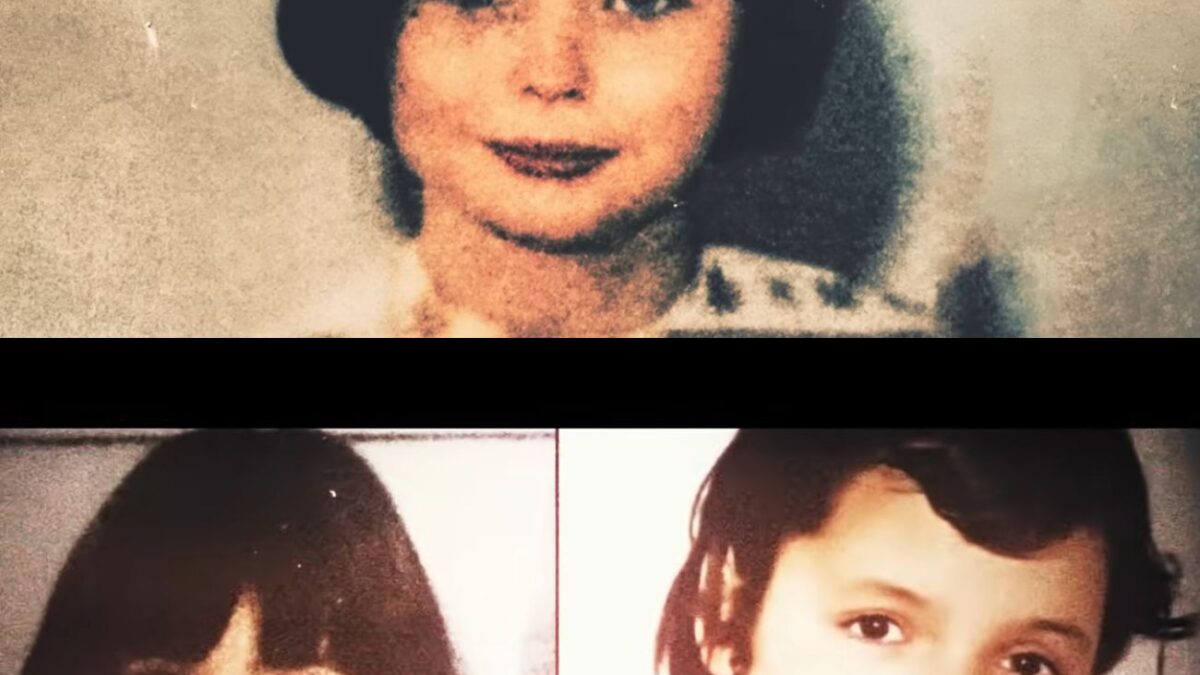
The Wicked Crimes of Mary Bell
Taking the life of another human being is a horrific and inconceivable act that always leaves us with the question: why? Unfortunately, we do not always get a solid answer. Even in the case of an adult killer, their motives can remain puzzling, let alone if the perpetrator was just a child. While it is rare for children to commit such a serious crime, when it happens, we begin to search for who is to blame: the child, the family, or perhaps the society they live in. In the case of 11-year-old Mary Bell, people were swift to condemn the girl as being a bad seed and a freak of nature. But was Mary really evil from birth and destined to kill, or did her upbringing mold her into a monster?
Much like the rest of the UK, the northeast of England was an area going through many changes during the 1950s. The numerous shipyards and coal mines there meant its residents were in a prime position to quickly bounce back from the horrors of World War II. As the baby boom began, more housing was required, and many old buildings were pulled down and replaced with new modern blocks of flats. The average annual income was 600 pounds, and the average house price was just 2,300 pounds. Indeed, in 1957, then-Prime Minister Harold Macmillan proclaimed, “Most of our people have never had it so good.”
Most, but not all. Elizabeth Betty Bell, née Crichet, would have counted herself among the others—those who had fallen between the cracks of this newfound prosperity. That same year, the 17-year-old working girl, alcoholic, and drug addict found herself pregnant with her second child, giving birth to her daughter Mary on May 26. She would have believed that this wasn’t the way her life was meant to go. Growing up, she had a safe and supportive family and had been very religious; it was even believed at one point that she may become a nun. But when her father died, Betty’s life went off the rails, and Mary’s birth only added to her troubles.
According to her aunt, Isa Crichet, just moments after giving birth, Betty had shouted, “Take the thing away from me,” as the nurse attempted to present her with her newborn. Mary’s life was not off to a good start, and things wouldn’t get much better. The identity of her biological father isn’t known for sure, but Mary grew up seeing her mother’s partner, William “Billy” Bell, as her dad. While he treated her much warmer than her mother, he was far from an angel. Billy was a petty criminal and a heavy drinker with an arrest record for crimes including armed robbery. Still, for Mary, or May as she was known to most of her family, he was her support and safety—one of the only people to show her any kind of affection.
The family lived together in an impoverished slum area of the West End of Newcastle called Scotswood. The house on White House Road has been described as bleak, almost Spartan, with none of the personal touches as you would typically see in a family home. Friends of Betty and William would often lodge at the home despite its small size, and the cramped room Mary shared with a sibling had previously been used to store coal. Betty would go on to have three more children after giving birth to Mary, though she appeared not to want any of them. She tried to give her daughter away several times, only to have her brought back by family members. When she was 3 years old, Mary was on the verge of being adopted by a family moving to Australia; if this had happened, it’s possible she would have had a very different life. But Betty’s sister Isa, believing she was acting in her niece’s best interest, put a stop to it.
For most of the time, William, along with Isa and Betty’s other relatives, were tasked with looking after Mary, as her mother would often travel to Glasgow to apply her trade there. Instead of missing her mother during these periods, her time away was a respite; she later said, “Everything was all right when my dad was there,” but he was not there often.
For Elizabeth’s children, being left in her care was ironically the most dangerous place for them. She was said to suffer from severe depression, had mood swings, and could be violent. For these ailments, Elizabeth had many pills and sedatives; it’s believed that she would often give these to her children either to keep them quiet or to silence them permanently. This led to several trips to A and E for Mary and her siblings as they suffered overdoses. Betty also made an attempt to drown Mary in a bath and almost allowed her to fall out of a third-floor window. It’s claimed that on occasion she beat her children and even William Bell with a dog chain.
As horrific as these actions were, they were only the tip of the iceberg. When she wasn’t able to walk the streets of Glasgow looking for punters, Elizabeth would often bring them to her family’s home. She specialized in bondage and sadomasochism, and when social workers asked her about this, she stated, “I always hid the whips from the kids.” But walls are thin and children are perceptive; it’s likely they knew what their mother was up to. Shockingly, Mary would later claim that her mother not only involved her in her despicable actions but allowed her clients to abuse the girl. However, these claims are disputed by her siblings, who said they witnessed nothing like this happening.
One thing that is for certain, however, is that Mary’s mental anguish was only increased when she witnessed a bus accident that resulted in the death of a child. It’s said that from this point she seemingly suffered some form of PTSD. Perhaps unsurprisingly, given this incident and her home life, Mary was described as an odd child. Her teachers stated that despite being bright, she found personal interactions and making friends difficult. Her peers may have seen things differently. Her fellow Delaval Road Junior School students knew to avoid the girl with the cold and piercing blue eyes. They saw her as an unemotional bully who only received joy by harming others. Like her mother, she also had vicious mood swings, from laughing one moment to lashing out the next.
While these behaviors kept many at a distance, Mary did have at least one close friend: an older girl named Norma Joyce Bell, who lived two doors along from her home. Though the pair shared a last name, they were not related. This was the mid-to-late 1960s, and the newfound prosperity the country had found manifested in Scotswood in the form of streets filled with Victorian-era terraced houses being flattened in favor of tower blocks. This was not a quick process and had left many streets and areas derelict and eerily empty. During their time together, Mary and Norma would spend their days exploring this wasteland and the abandoned homes there.
The pair were an odd coupling. Despite being two years Mary’s senior, taller, and more robust, it’s said that Norma played second fiddle to her companion. She was not particularly bright, and her face, which sat below her unkempt short hair, is said to have had an almost permanent look of confusion. The strong-willed Mary easily dominated her companion, though she clearly displayed more humanity and innocence than the other Bell girl—features that might have played a significant role when she was put in front of the people set to decide her and Mary’s fate. On their journeys around the derelict wasteland, it’s said the pair discussed running away. If the actions in May of 1968 are anything to go by, they also discussed much darker subject matters.
On May 11, a three-year-old boy was discovered blooded and confused near a pub on Delaval Road, less than a mile from Scotswood. Earlier in the day, Norma and Mary had taken the boy to a sweet shop. According to a later statement, they then sent the boy home, only to find him bleeding and confused by some sheds. After raising the alarm, a man took him to the pub where he called an ambulance. In reality, the girls had taken the boy to an old air-raid shelter where they partook in one of their games of dare. Unlike the innocent version most have played, theirs often resulted in rising levels of violence. While Norma would often make excuses and back out, Mary would push the limits without a second thought. Such was the case with the young boy, whom in reality she had pushed from a high ledge. Given how her violent actions would escalate in hindsight, he could be considered lucky.
The children that Mary bullied and attacked all had something in common: they were always younger and smaller than Mary, posing no threat of physical retaliation or resistance. Such was the case with the victim of her next attack. The day after the incident with the boy, she and Norma got through a fence and into the playground of a nearby nursery. It was a Sunday, so the nursery was closed, but three other girls were there playing in the sandpit: Pauline Watson, seven; Cindy Heppel; and Susan Cornish, both six. Mary is said to have demanded that the girls leave, but they refused. In a later statement, Norma described what happened next:
“Mary was talking to Pauline, saying, ‘Do you know Mary Bell?’ The girl said, ‘Yes, you’re Mary Bell.’ Mary said, ‘No, I’m not.’ Mary then said to Pauline, ‘Can you fight Mary Bell?’ Pauline said, ‘Yes, I could fight you.’ Then Mary went to the other girl and said, ‘What happens if you choke someone, do they die?’ Then Mary put both hands around the girl’s throat and squeezed. The girl started to go purple. I told Mary to stop, but she wouldn’t.”
She would turn her attention to each of the three children, clasping her hands around their throats and putting sand into their mouths. Thankfully, this brutal attack would not prove fatal, with the girls quickly running off and telling their mothers, who then informed the authorities. Both Norma and Mary were brought in for questioning, with Mary stating that Pauline had simply fallen and hurt her throat. As we know, however, Norma told a very different story. Despite authorities speaking to the girls twice in as many days about brutal attacks, no further action was taken; perhaps they had seen their actions as nothing more than roughhousing. But they would soon be proven wrong.
On May 25, four-year-old Martin Brown played outside with some friends. The little boy was described as a cheeky and energetic child, his curly hair bouncing with him as he ran out with his playmates. When Martin did not come back home by teatime that day, his parents were not too worried; it was usual for the young children in Scotswood to disappear for long periods and spend time in the area called Rat Alley, where many derelict buildings provided a place for children to climb and explore. Surely Martin was just having fun there with his friends and lost track of time. Sadly, this wasn’t the case. Around 3:00 p.m., one deserted house in particular seemed to be the focus of attention for the children in the area. Electricians who had been working nearby were trying to revive Martin after three children had discovered the boy unconscious and blooded on the floor inside.
The youngsters outside were drawn to the dramatic scene unfolding in front of their eyes, and nestled amongst this pack, coldly soaking in the shock and panic displayed by those around her, was Mary Bell. She and Norma were some of the first to arrive at the house after the alarm had been raised, and she now watched on with apparent glee. By the time Martin’s parents were alerted to the situation, the boy had tragically passed away. A police investigation was begun, but the cause of death proved hard to pinpoint. It was initially believed the boy may have overdosed after an empty bottle of aspirin was found nearby, but no evidence was found to support this. With seemingly little to go on, his death was initially put down as simply a tragic accident.
The day after Martin Brown’s death was Mary’s 11th birthday. While for many this would be a joyous occasion filled with fun and celebration, Mary would spend it enraged. She had been caught strangling Norma’s sister by the girl’s father, who then broke up the fight, giving Mary a tap on the shoulder in the process. Angered by this perceived slight, Mary would seemingly take her rage out on the day nursery on Woodlands Crescent. Along with Norma, the pair broke into the building and committed mild acts of vandalism—overturning tables, tearing books, and spilling paint. But what stood out most for those who happened upon the scene the next day was a set of scrawled notes, poorly written with many spelling mistakes. They were obviously written by children, but these letters contained many obscenities and, chillingly, a confession to the murder of Martin Brown.
Despite their alarming content, these notes were put down as being simply a prank made in poor taste. While Mary and Norma were well known to police for their escapades, the punishments for their actions never seemed to top a stern telling-off. Mary felt unstoppable and is said to have bragged to other children in the area that she was a murderer. The game of dare, where she and Norma would encourage each other to do the naughtiest thing they could, also reached new lows as Mary would openly goad the Brown family. On the day of Martin’s funeral, the pair called in on his mother, June, asking to see the boy. When June told them they couldn’t see him as he had died, Mary replied, “Oh, I know he’s dead, I want to see him in his coffin.”
Though she was almost always in tow, Norma was not immune to Mary’s wrath, and it’s claimed that on several occasions, despite being physically inferior to her older companion, she would lash out at Norma, kicking her and scratching her face. Perhaps she was growing tired of their friendship, but simply walking away wasn’t an option for someone as broken as Mary Bell. In the close neighborhood, another home she would find herself visiting was that of the Howe family, and in July she told them that she knew something about Norma. She told them that Norma Bell had strangled Martin and killed him. Though she would later be forced to apologize for this statement, she was perhaps planting a seed of doubt about Norma in people’s minds, maybe some part of her wanted to blame the girl for her next evil act.
On Wednesday, July 31, three-year-old Brian Howe was playing out in the street with other children, the family dog, and Norma and Mary Bell. It’s claimed he then decided to go to see the demolition of the houses on Rat Alley. Soon after, he disappeared. As time passed, Brian’s parents thought he was just playing with his friends and, like in Martin’s case, lost track of time. It was not until it got darker that Brian’s parents decided to send their daughter Pat out to search for him. She happened across Mary, who told her she had seen Brian playing at a patch of grassland known as the Tin Lizzy. The area was overgrown, a dumping ground filled with large concrete blocks. Despite Bell’s insistence, Pat believed this wasn’t a place her brother would go to play, and so she didn’t look there. Unknowingly, she had just saved herself from a horrible discovery.
Brian was eventually reported missing, and as police and neighbors searched the area, the young boy was soon found. Brian’s body was discovered lying between two concrete blocks, just where Mary had said she had seen him last. Some of Brian’s hair had been cut off, and there were cuts to his legs and genitalia; it’s believed these wounds were inflicted with a pair of bent scissors found nearby. A postmortem concluded that Brian had been asphyxiated. As the body was cleaned, it became evident the marks carved on the skin after his death had been made on purpose to look like initials—an M or an N. It was also believed that whoever inflicted these injuries wasn’t very strong. This soon led pathologist Dr. Bernard Tomlinson to believe that whoever committed this crime may have been a child themselves.
One thing was for certain: this case would not be filed alongside that of Martin Brown as some tragic accident, and a police investigation was soon underway. As they went about their investigations in and around Scotswood, they noticed a familiar face regularly popping up, seemingly fascinated with the aftermath of Brian’s death. When an officer spotted her laughing and rubbing her hands as Brian’s coffin was brought out of the Howe family home, it was quickly decided that she needed to be brought in for questioning. Tales of the two Bell girls’ violence and troublemaking were well known, and so Norma was also taken in. Their contrasting and inconsistent statements saw them eventually placed as prime suspects.
In her interview, Mary tried to blame a boy who had been playing with Brian earlier in the day for his murder. While the boy had a solid alibi and the police were quick to remove him from their investigation, one of the details Mary shared peaked the interest in the story she had spun: she mentioned the pair of bent scissors that had been found at the scene. This detail had not been shared with the public; it was clear she certainly knew more about the incident than she let on.
When police called in on Norma Joyce, the net grew even tighter. Around Mary, she asked to talk to authorities away from her father, and when they obliged, she told them that Mary had confessed to her that she had murdered the youngster. After committing the heinous act, she led Norma to the Tin Lizzy site, where the girl then tripped over something in the long grass. When she looked to see what it was, among the verdure she saw the pale, lifeless face of Brian Howe. Mary then excitedly told her about what she had done as she ran her fingers across the boy’s purple lips: “I squeezed his neck and pushed up his lungs, that’s how you kill them.”
However, in a later statement, she admitted to playing a larger role in events. In this second retelling of the story, she and Mary had taken Brian away from his friends as they played outside their home. The young boy had with him a pair of scissors, which Norma took from him. The group later arrived at the blocks, where Mary asked the boy to lift his head up. When he did so, Norma states, Mary seemed to go all funny as she grasped the boy’s neck, wrestled him to the ground, and strangled him. When her hands became tired, she asked Norma to take over, at which point the older girl ran away. When she later returned, Mary is said to have cut the body with a razor blade that she then hid beneath one of the heavy blocks. When Norma accompanied officers to the location, the bloody razor was still where she said it would be.
Mary Bell was immediately arrested, and connections were soon made to the murder of Martin Brown. When questioned again, her new story was similar to that of Norma’s, but with the roles reversed. She painted herself as the innocent party who was afraid of the bigger girl and had tried to pull her off of the boy as she went wild with rage. Investigators didn’t buy her version of events for a minute, but Norma’s statement also left question marks over her involvement. So, on August 8, 1968, both Mary and Norma were charged with the murder of Brian Howe, and later that of Martin Brown.
As the two girls sat in the cells at the local police station, it’s said the pair screamed and shouted at each other before they eventually calmed down and began discussing how their fantasy alter egos, Fanny and Willie, would make their escape. By this time, news that two young girls had been arrested in connection with the murders had reached the press, and papers began filling their pages with tales of the wicked girls’ sadistic ways.
Before their trial, the once-inseparable pair would be kept some distance apart. Norma was placed under psychiatric observation at the Prudhoe Hospital in Northumberland, while Mary was sent to her remand home in County Durham. It’s claimed that before the building had found itself part of the prison service, Lewis Carroll had written part of Alice’s Adventures in Wonderland there. How Mary must have wished that she could step through a meadow into a different world! During her stay at the home, she was allowed visitors, but it’s said the thought of a visit from her mother, Betty, wasn’t a welcome one. When she did eventually travel to see her daughter, Elizabeth lambasted her for the shame she had brought the family.
Some of the staff at the home felt charmed by the young murderer; to them, she presented a very different persona to the callous and evil girl that they had been prepared to meet. However, that version of Mary would resurface when talking to psychiatrists, who found her to be cold and calculating, stating she was willing to lie to get her own way and avoid punishment.
The trial of the two girls began on December 5, 1968, at the Newcastle Assizes. According to the prosecutor, Mary’s reason for committing the murders was solely for the pleasure and excitement of killing. The judge, Mr. Justice Cusack, decided to waive the girls’ right to anonymity granted due to their age, and the British press were quick to refer to Mary as a fiend for her actions and a “string garlie” for her ability to manipulate others. When doctors were then called into the trial to assess Mary and labeled her as a psychopath, people felt they had their confirmation of a child who had just been born evil.
Her defense relied heavily on the girl’s rocky upbringing and her apparently suffering from a serious personality disorder. Mary’s own testimony lasted nearly four hours and consisted mainly of placing the blame on her onetime friend Norma. However, she was proven to have the mental age of an eight-year-old and be highly susceptible to Mary’s influence. On December 17, the jury retired to consider their verdict, eventually deciding that Norma Joyce Bell be acquitted of all charges, while Mary Bell was found not guilty of murder, but instead guilty of the manslaughter of both boys on the grounds of diminished responsibility.
With this, Mary was sentenced to be held at Her Majesty’s pleasure, a sentence that would see her held indefinitely until she was determined to no longer pose a threat to the general public. Mary was sent to the Red Bank secure unit in Newton-le-Willows, the same facility where Jon Venables, one of James Bulger’s killers, would be held 25 years later. During her time there, Mary was the only female among 24 other inmates. In 1976, she was transferred to an open prison, from which she would abscond along with a fellow inmate the following year; the pair spent several days with two men before finally being captured.
Then, in 1980, 23-year-old Mary was released from Askham Grange open prison after nearly 12 years in the prison system. Upon her release, she was granted anonymity and given a new identity. Four years later, she would give birth to her only child, a daughter. The girl knew nothing of her mother’s past until 1998, when reporters discovered her mother’s new home on the south coast of England. This was due to Mary’s collaboration with author Gitta Sereny, who interviewed her for a book about her life called Cries Unheard: The Story of Mary Bell. The fact Bell would benefit financially from this book caused public outcry. In the book, she speaks of a lifetime of abuse and the strained relationship with her mother, though she states this troubled upbringing in no way absolves her of her callous acts. Today, she is a grandmother, her new identity and location once more a closely guarded secret.
While it’s important to understand the traumatic home life and abuses that Mary suffered played a major role in fracturing the young girl’s mind, and away from these influences she seems to have lived a relatively normal life, we can’t turn a blind eye to the fact she committed these atrocious murders. One of the controversies around the book Mary contributed to was that it didn’t focus on the victims and those who were left behind.
With that in mind, we shall leave you with words from the mother of Martin Brown:
“Martin was blonde, chubby, and had big blue shining eyes. He was a right little villain. I only had him four and a half years, so I remember everything about him. Love came so easy. It wasn’t exactly forgiveness—that’s hard—but I came to think of her as dead, as someone who couldn’t hurt us anymore. I have tried to have a decent life and sometimes now I do feel happy, but it is not the same kind of happiness as I knew before. When a child dies, you don’t get over it. You survive. The pain doesn’t go away. You live with it.”

