The Wicked Crimes of Martha Needle – One of Australia’s Most Evil Killers
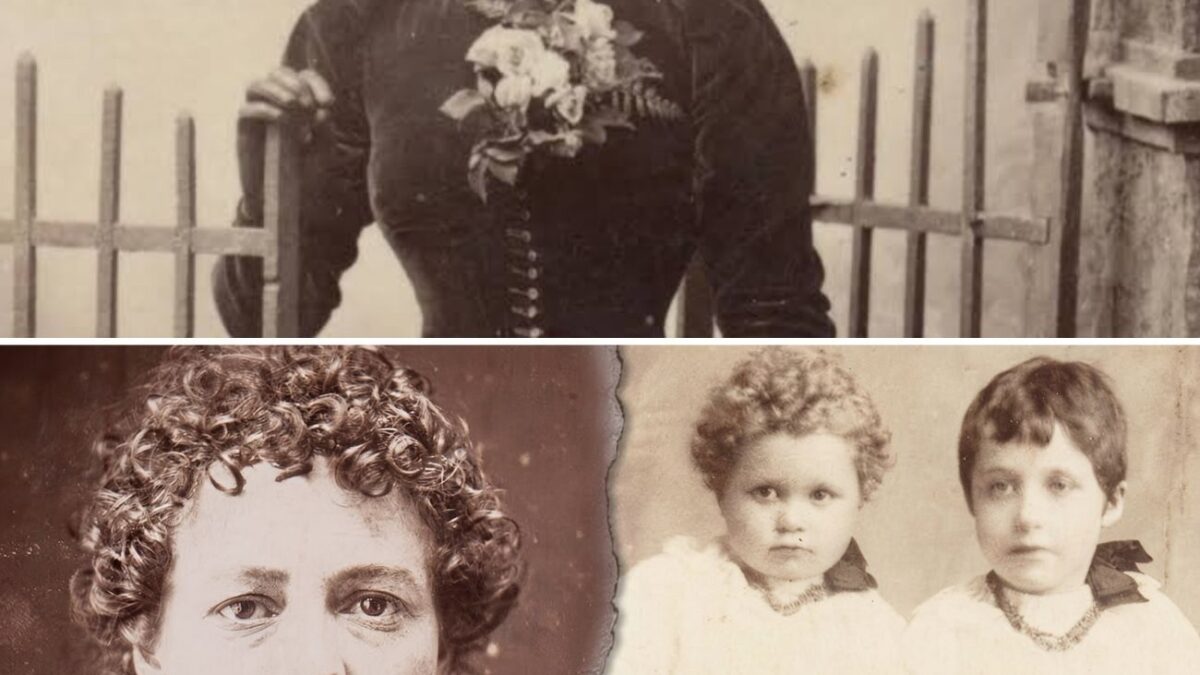
The Wicked Crimes of Martha Needle – One of Australia’s Most Evil Killers
Martha Needle seemed like a woman whose entire life was touched by tragedy. In the late 1800s in Melbourne, Australia, she lost her husband before losing all three of her young children, with each death spaced just far enough apart to seem like a cruel misfortune. At the time, illness was common, and death came quickly, especially in households without much money, so no one looked too closely or wanted to believe there was more to the story. But a few years later, another man connected to Martha fell ill, and this time, things didn’t go unnoticed. The pattern was too familiar, and once authorities started digging, what they found behind the soft-spoken widow’s calm exterior would lead to one of the most unsettling murder cases in Australian history.
Martha Needle was born Martha Charles on April the 9th, 1863, in the rural town of Morgan, South Australia. She was the eldest child of Mary Charles, and from very early on, her life was unstable. Her father died when she was still very young, leaving her mother to care for the family alone. In 1870, when Martha was about seven years old, her mother remarried a man named Daniel Forin. Mary and Forin had two additional children, and the growing family moved into a small two-room home in North Adelaide. The house was modest and overcrowded due to their strained financial circumstances, and Martha would later describe her childhood as one of abuse and neglect, claiming that her mother frequently beat her with sticks or rope, and that at the age of 12, her stepfather had allegedly assaulted her. These traumatic events left an indelible mark on her early worldview, ultimately contributing to the emotional detachment and psychological disturbances that would manifest later in her life.
At 13, unable to endure the conditions at home, Martha ran away and began working as a housekeeper, a common occupation for young working-class girls in 19th-century Australia with few other options available for earning an income. In 1882, at the age of 18, Martha married Henry Needle. At first, their marriage appeared to be a happy one; Henry was a quiet man, and the couple quickly settled down together, having three daughters: Mabel, Elsie, and May. For a time, the family unit seemed stable, but beneath the surface, tensions were slowly rising. In 1885, the Needles moved from South Australia to Richmond, a suburb of Melbourne, marking a turning point in Martha’s life. While the relationship initially appeared normal and happy, the marriage began to deteriorate soon after arriving in Melbourne. Martha was known for her pleasant looks and enjoyed the attention of others, particularly men, while Henry was shy, withdrawn, and reportedly prone to jealousy. Accounts from the period claim that Henry became increasingly controlling and violent, often beating Martha out of suspicion or resentment.
Whatever new beginning they imagined only began to unravel further when that same year, three-year-old Mabel suddenly fell ill with symptoms that included violent stomach pains, fever, and vomiting. The doctor gave them no answers, attributing it to an illness passing through the city. When Mabel died, the family received £100 in life insurance, and naturally, as she appeared to grieve the loss, no one questioned Martha. Four years later, Henry too grew ill, his decline slower and more drawn out, but grimly familiar as he wasted away in much the same manner as his daughter; upon his death, Martha claimed £200. Next to wither and die would be Elsie and then finally May, all three children passing away under nearly identical circumstances—sudden illnesses that coincided with Martha becoming involved with a new suitor.
There were signs even then that something was terribly wrong, leading some to suspect that Martha was experiencing what we would now call Munchausen syndrome by proxy, a psychological disorder in which a caregiver deliberately harms others to gain attention or sympathy. Martha seemed to shine in the role of the devoted mother experiencing an unbearable loss, with people pitying her and marveling at her strength, while her only detractors were those who believed she was cursed. While it is easy to see the large sums coming in from insurance payouts and jump to conclusions, it is worth mentioning that Martha invested much of it in a grand family grave at the Kew cemetery, visiting it regularly and often alone to place flowers and tend the site. However, future events would reveal those quiet visits may have masked something far more sinister.
By 1891, Martha had begun taking in lodgers, among them a man named Lewis Yunken and his brother Otto, German-born craftsmen who set up their saddle business in the front room. Otto was the younger of the two—kind, polite, and well-spoken—and Martha quickly warmed up to him. The relationship developed and bloomed rapidly; Otto was no fool, but he was gentle, and there was something about Martha’s calm and quiet sadness that may have drawn him in, offering the idea that he could be her second chance and salvation. When he proposed, Martha eagerly accepted, but not everyone was pleased. Lewis was deeply unsettled by the engagement, lacking trust in his brother’s new fiancée, and he protested the relationship, even discussing bringing in other family members to intervene and break it off before it was too late. But then Lewis became ill, and as before, the sickness took hold at a frightening pace, beginning with fatigue and discomfort before spiraling into fever and digestive pains that mirrored the symptoms of Henry Needle and his children. Doctors believed it to be typhoid, a plausible cause given the outbreaks at the time, and no one suspected otherwise. When he died, his body was sent home to South Australia for burial, marked down as another unfortunate tragedy and another man taken before his time.
Martha did not seem stricken; if anything, she appeared more preoccupied with managing the details of her wedding to Otto, as though she had simply cleared another obstacle from her path. But Lewis’s death triggered a ripple effect. When another young brother, Herman, was sent to Melbourne to settle Lewis’s affairs and look into the saddle business, Martha welcomed him into her home, inviting him to stay and offering meals, tea, and her full hospitality. Behind her gentle voice and welcoming demeanor, however, a new unease took root because Herman, unlike Otto, was suspicious. He didn’t believe the typhoid story, unsettled by the timeline and the house itself. Shortly after dining with Martha, he too became violently ill. Only this time, Herman briefly recovered and quickly sought out help from a doctor. The symptoms did not align with typhoid, and the doctor advised him to return if they flared up again—which they did, even more violently than before.
Growing suspicious, the doctor collected vomit samples and sent them for testing, returning results as startling as they were clear: arsenic poisoning. The police were informed, a trap was set, and Herman was asked to play along, sitting down for one final meal at Martha’s table as a man too sick to suspect anything. The woman still set to become his sister-in-law served him tea, pouring it herself. The exact moment he lifted the cup to his lips, Herman blew a whistle, and officers burst into the room. Forensic testing later revealed that the teacup contained around 10 grains of arsenic—enough to kill five men.
Martha was arrested initially for the attempted murder of Herman Yunken, but the investigation widened, and authorities ordered the exhumation of Henry Needle, the three children, and Lewis Yunken. Every single one of them tested positive for arsenic, each body telling the same story of poison traces, slow suffering, and a woman who had played the part of the grieving mother and widow to perfection. The charges escalated to five counts of willful murder, and her trial at the Supreme Court in Melbourne lasted just three days, with the jury taking a mere 40 minutes to return a guilty verdict. Through it all, Martha remained composed—no crying, no protest, only a calm that unsettled even the seasoned officers who had dealt with her. When the judge handed down her sentence of death by hanging, she didn’t even flinch.
A few days after the trial, lawyer Marshall L. wrote to the governor on behalf of the Howard Association urging clemency on the grounds of insanity. He acknowledged that her crimes were revolting, but argued that a mother who murders her children is by nature mentally ill, criticizing the prison doctor’s simplistic sanity test—a quiz on the Ten Commandments—and calling for a proper medical inquiry. The governor forwarded the letter to the government, but Attorney General Isaac Isaacs dismissed it, arguing that Needle had received a fair trial and that the petition offered no compelling evidence of insanity. The plea was denied, and Martha’s fate remained unchanged.
While awaiting execution in the old Melbourne jail, Martha continued to receive visits from the few who still considered themselves her friends, including a Mrs. Owen to whom Martha wrote a final letter, advising, “Try not to grieve too much for me.” Finally, on the morning of October the 22nd, 1894, at exactly 8:00 a.m., Martha was led to the gallows. When asked if she had any last words, she simply replied, “I have nothing to say.” Then, without a struggle, she stepped forward and was hanged.
After her death, public opinion turned from fascination to discomfort, as the idea that such violence could wear such a kind face and live the life of a devoted mother deeply unsettled many. The newspapers dubbed her the black widow of Richmond. Martha Needle was the third of only four women ever hanged at the old Melbourne jail, and her death mask remains on display there, preserved as a disturbing reminder of her infamy alongside the others who shared her fate: Elizabeth Scott in 1863 for allegedly coercing two men to murder her abusive husband; Frances Kloss, a baby-farming serial killer in 1894; and Emma Williams, who murdered her offspring in 1895.
Unfortunately, Martha’s legacy of violence did not end with her execution. Years later, on July the 15th, 1920, her nephew Alexander Nuland Lee—the son of her older sister, Ellen—was executed at Adelaide jail for poisoning his wife, Muriel, and three of their seven children with strychnine, whether by coincidence or some darker inheritance remaining unknown. During the Great Depression, the Brighton City Council used bluestone from the demolished outer walls of the old Melbourne jail to construct seawalls meant to protect local beaches from erosion. Included in the salvaged materials were headstones of executed prisoners engraved only with initials and dates. Most were placed with their markings turned inward and hidden from view, but not Martha’s; her stone, marked simply “MN” and the date of her execution, was laid with its inscription facing out. For years it lay half-buried by sand until it was rediscovered near Wellington Street, its letters still sharp against the stone.
More than a century has passed since Martha Needle’s name last made headlines, but her story is still preserved in museum displays and the pages of history books. However history chooses to remember her, Martha Needle remains cemented as one of Australia’s most unsettling and prolific female serial killers, a chilling testament to how easily darkness can masquerade behind a gentle smile.

