THE WEAPON OF INVISIBILITY: The Story of Mary Ellen Pleasant – The Genius Multi-Millionaire Tycoon, Master Abolitionist, and Mother of Civil Rights
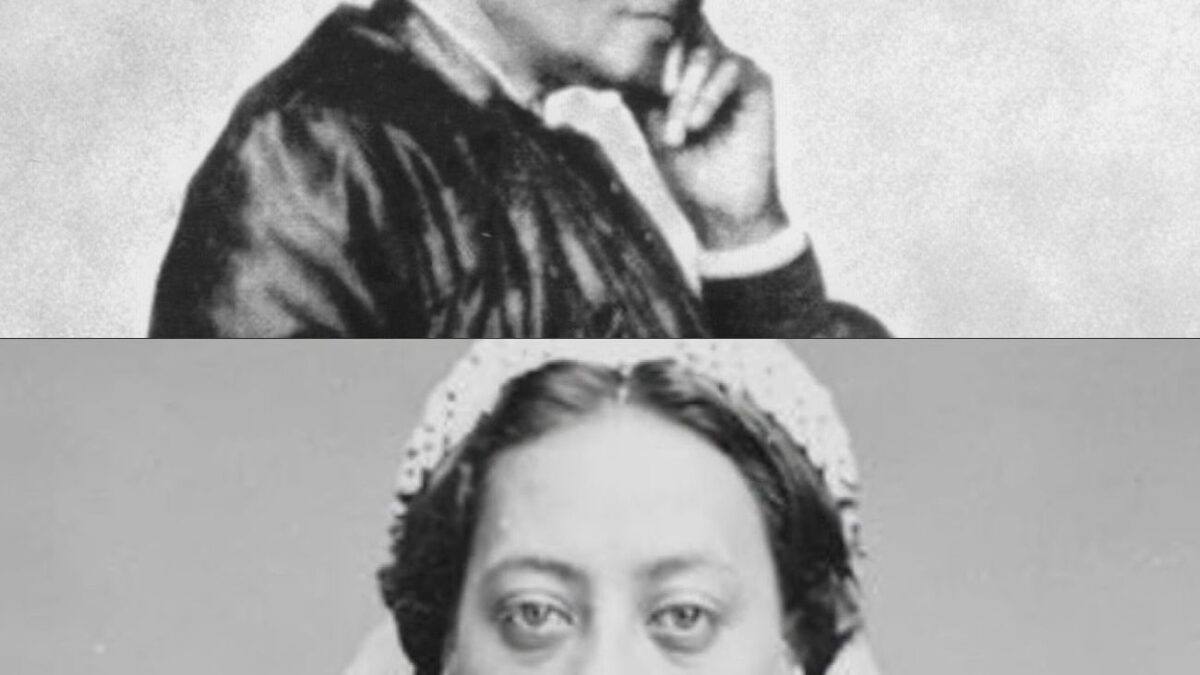
THE WEAPON OF INVISIBILITY: The Story of Mary Ellen Pleasant – The Genius Multi-Millionaire Tycoon, Master Abolitionist, and Mother of Civil Rights
Introduction: Whispers Behind the Grand Dining Tables
In the 1850s, amidst the chaotic and booming gold rush of San Francisco, the ultimate source of power did not reside in the deep gold mines or the massive checks signed on mahogany tables, but rather in the ears of a single woman.
Beneath the glittering chandeliers of the city’s wealthiest mansions, amid the clinking of crystal wine glasses and the thick smoke of cigars, California’s most affluent men chatted carelessly about making fortunes. They mapped out empires, bragged about wild investments, and shared insider information on failing mines and impending bankruptcies. To them, the Black woman tending to the fireplace or clearing the dining table was nothing more than background scenery—voiceless, inanimate, and entirely non-existent.
They had no idea that the servant girl pouring their wine was absorbing every single word.
Her name was Mary Ellen Pleasant—a brilliant mind masked beneath the identity of a domestic worker, an elite strategist who transformed the arrogance and contempt of white society into the sharpest weapon in American history.
Part 1: Born from the Fog and the Lesson of “Invisibility”
The early life of Mary Ellen Pleasant is shrouded in the mists of 19th-century American history—an era that cared very little for documenting the lives of Black individuals. Born around the early 1800s, potentially into slavery or freedom, Pleasant grew up in Nantucket, Massachusetts, where she learned a vital survival truth: In a society ruled by the arrogance of the powerful, invisibility is the ultimate camouflage.
When the Gold Rush transformed San Francisco into an explosive boomtown in 1849 and the early 1850s, Pleasant arrived with a calculated master plan. She did not come to pan for gold in freezing streams like thousands of other dreamers; she came to mine something infinitely more valuable: Financial intelligence.
She secured jobs as a cook, housekeeper, and servant in the homes of San Francisco’s elite. There, wealthy bosses spoke freely about the economy because they assumed a Black domestic worker lacked the intellect to understand—or simply wasn’t worth noticing. But Pleasant understood everything. She memorized every figure, stock tip, business loophole, and market prediction.
Part 2: The Art of Shadow Chess and a Hidden Multi-Million Dollar Empire
Acquiring intelligence was only the first step. The true challenge was figuring out how a Black woman could convert information into wealth within an intensely racist state like California during the 1850s.
The laws of the time severely restricted property ownership and business rights for people of color. If Pleasant attempted to build wealth openly, white mobs would simply seize, loot, or destroy it.
Yet, a master strategist never fights a wall head-on; they slip through its smallest cracks. Pleasant became a ghost operating the financial system from the shadows:
-
The White Proxy Network: She quietly funneled assets and managed wealth behind the scenes by utilizing trusted white allies to hold property and business licenses under their names while she retained total control.
-
Strategic Investments: Using her accumulated wages and funds from past marriages, she bought shares in laundries, boarding houses, high-end restaurants, mining operations, and real estate when prices hit rock bottom, selling them at peak heights.
-
Controlling the Lifelines of Commerce: She expanded her business web across San Francisco and the Oakland Bay Area, issuing strategic loans to cash-strapped merchants and pulling the strings of major players in the commercial sector.
By the 1860s, Mary Ellen Pleasant’s net worth reached the modern equivalent of millions of dollars—making her one of America’s very first self-made female millionaires (paving the path decades before Madam C.J. Walker).
Part 3: Weaponizing Wealth – The Heart of a Great Abolitionist
Many people who accumulate such immense wealth choose safe, comfortable luxury. For Pleasant, however, money was never the end goal; money was a lever to dismantle slavery.
Throughout her years operating within the abolitionist movement, Pleasant channeled vast amounts of capital into fueling an underground liberation network:
-
Expanding the Underground Railroad: She funded safe houses, provided cash, secured employment, and protected fugitive slaves who successfully escaped to California. Many of the individuals she sheltered eventually rose to become prominent Black community leaders.
-
Backing John Brown’s Raid: In 1859, when radical abolitionist John Brown planned an armed raid on the federal armory at Harpers Ferry, Virginia, to spark a slave rebellion, Pleasant was one of the secret financial masterminds who pumped substantial funds into his historic mission.
When the raid failed and federal authorities hunted down the financial backers, they found a piece of paper carrying coded initials pointing back to Pleasant. Too sharp and cautious to get caught, Pleasant immediately fled to Canada until the heat died down. The dinner server of yesteryear had secretly financed one of the most significant acts of armed rebellion in U.S. history.
Part 4: The Arena of Justice and the Elite Counter-Attack
Following the Civil War and the abolition of slavery, Mary Ellen Pleasant returned to San Francisco to further expand her empire. She turned her luxury boarding houses into headquarters frequented by city power brokers and politicians, exerting a powerful hidden influence over local elections and public policy.
However, the mere existence of a wealthy, powerful Black woman who dared challenge social norms deeply threatened the white elite of San Francisco. They could not stomach the reality that she had outplayed them at their own financial game.
Unable to defeat her through legitimate legal means, they resorted to a dirtier tactic: Assassinating her character.
-
Newspapers began publishing vicious propaganda, branding her a “Voodoo Queen” and spreading rumors that she used dark magic to manipulate wealthy white men.
-
They fabricated absurd stories accusing her of running brothels and controlling fortunes through supernatural manipulation.
-
A barrage of malicious legal battles was launched to drain her resources and strip away her empire.
Pleasant refused to break. Her famous motto became legendary: “I’d rather be a corpse than a coward.”
She fought back in the courtroom, defending every inch of her empire. Notably, between 1866 and 1868, she even sued the North Beach Railroad Company for racial discrimination after being barred from public streetcars—a pioneering civil rights stance decades ahead of Rosa Parks. Though met with heavy judicial bias at the time, her lawsuits exposed systemic racial injustice to the public eye.
Part 5: The End of a Legend and an Enduring Legacy
By the time Mary Ellen Pleasant passed away on January 11, 1904, much of her vast fortune had eroded due to relentless malicious lawsuits, betrayed business partners, and a system determined to snatch away what it believed she had no right to hold.
She died with very few material assets left, and most of her obituaries were hostile or dismissive. Mainstream American history tried hard to erase, distort, or reduce her to racist caricatures like a “Mammy” or a “Voodoo Queen.”
Yet, there is one thing history could never erase: Her concrete impact.
Today, at the corner of Bush and Octavia streets in San Francisco, a small memorial plaque rests on the pavement dedicated to this extraordinary woman. The plaque bears only a remarkably modest inscription:
“She was a friend of John Brown.”
That single sentence omits her millions, her financial genius, and barely scratches the surface of her colossal life. Yet anyone who truly understands history knows that Mary Ellen Pleasant was, in reality, the Mother of the Civil Rights Movement in California.
She never needed to break down closed doors with brute force—she was far too smart for that. She simply located every crack in a system designed to cage her, slipped through it, built an empire from the inside out, and used her power to shatter the cage.
They thought she was invisible. She was just quietly waiting for them to stop watching.

