The Tragic Case of the ‘Brighton Babes in the Wood’ Murders
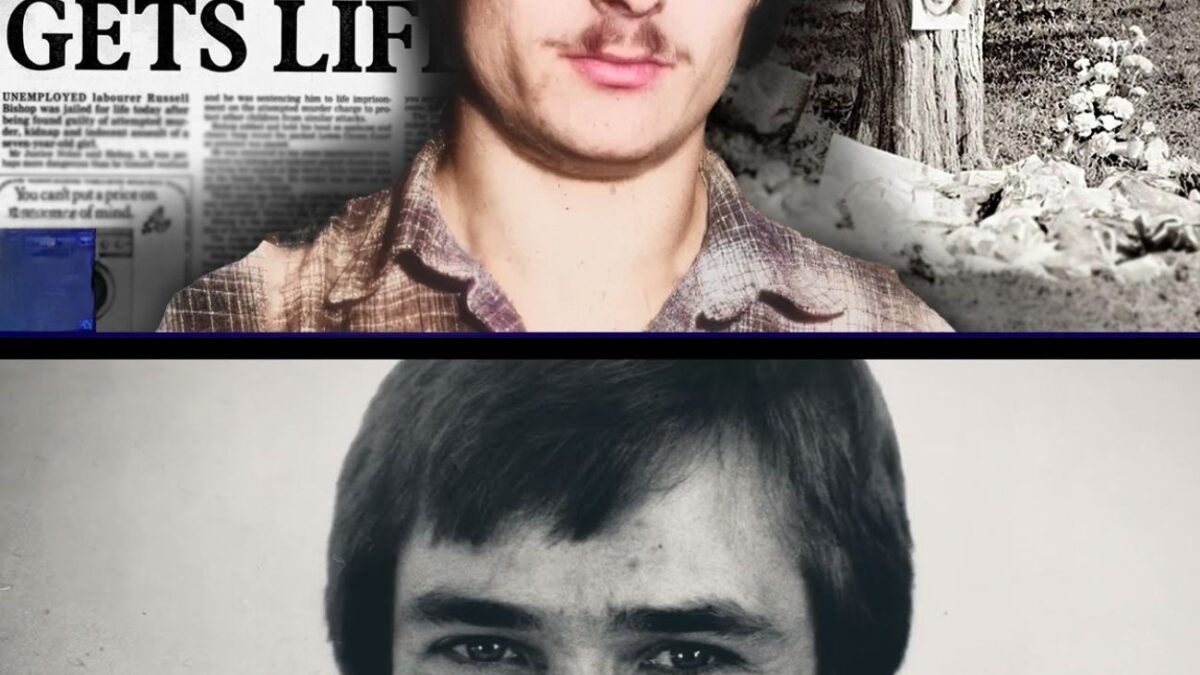
The Tragic Case of the ‘Brighton Babes in the Wood’ Murders
For some 800 years, England’s criminal law operated under the basic principle of the double jeopardy rule. In short, if a defendant is found not guilty by a jury, that person cannot be charged and retried for the same crime again.
In theory, the principle of double jeopardy protects the defendant from the threat of being tried twice for the same offense or being punished multiple times for a single crime. But it could also allow a guilty person to walk free, never to be retried for their crimes, even if fresh evidence is discovered.
In 2003, the United Kingdom reformed its criminal law, including double jeopardy. Now defendants who have previously been found not guilty of some serious crimes that carry a maximum sentence of life imprisonment can be retried. These changes in UK criminal law have allowed for the conviction of several murderers, bringing justice and closure to families. But perhaps the most compelling proof that the repeal of double jeopardy was worthwhile was the conviction of the perpetrator of the notorious Babes in the Wood murders, a crime that had haunted the city of Brighton for over three decades.
On October 9th, 1986, 10-year-old Nicola Fellows and 9-year-old Karen Hadaway met after school to play. The girls were best friends who lived close to each other on the Moulsecoomb council estate but attended different schools, so it was typical for the pair to spend their afternoons together. On this particular day, the girls walked to the Lewes Road area where they bought chips to share. A teenage acquaintance of the girls told them to get home before their parents were worried, but Nicola was overheard telling Karen they should go over to the park. The park Nicola was referring to was Wild Park, a sprawling densely wooded nature reserve the children were expressly forbidden to visit. Around 6:40 p.m. as darkness descended that evening, the girls were spotted playing near the area. It was the last time they would be seen alive.
When the girls weren’t home by bedtime, Karen’s mother Michelle Hadaway called 999 to report them missing. The next day, a massive search party of some 200 police officers and volunteers scoured the park and surrounding areas. Among the searchers was 20-year-old Russell Bishop who offered to use his terrier Misty, claiming she was a trained tracking dog. After hours of searching the dense undergrowth, Bishop told a passing constable he was going to head home. When the constable pressed him to search the woods a while longer, Bishop responded saying he was worried that if he found the girls and they had been killed, people would suspect him of the crime. The constable took note of the odd comment, mentally adding Bishop to a growing list of people to question should the worst outcome be confirmed.
Shortly after, two teenage boys discovered the bodies of Karen and Nicola in a wooded den deep in the park. The two girls were lying close together, looking at first glance as if they had simply nestled together and drifted off to sleep. The falsely idyllic tableau earned the nickname Babes in the Wood. But there was nothing peaceful about the way Karen and Nicola had died. Both had been assaulted and strangled.
After finding the bodies, the two teenagers ran from the wooded den shouting for help. Russell Bishop, searching nearby with his dog, ran toward the crime scene along with several officers. Later, Bishop would claim he checked the girls’ necks for signs of a pulse, but witnesses did not remember him ever approaching the bodies directly.
The discovery of such a horrific crime shocked and terrified the Brighton community. Parents were warned to keep their children indoors after dark as swarms of police officers canvassed neighborhoods and stopped cars on the road. The wooded den where the girls’ bodies were found was remote, hidden, almost invisible. Whoever put the bodies there knew the area well, which meant whoever had killed Nicola and Karen was most likely a local.
Russell Bishop quickly became a suspect for the murders. He had been seen in the area on the same evening the girls had died, and police were suspicious of his involvement in the search. When the bodies had been discovered, he had shown little interest or surprise. Combined with his strange comment about fearing becoming a suspect, his behavior was enough to pique police interest.
Russell was a local out-of-work roofer and petty thief. He had ties to both girls’ families. He played cricket with Nicola’s dad, Barry, and his friend was lodging with the Fellows family at the time of the murder. The girls had also run errands for Russell and his girlfriend, Jenny Johnson, though their parents had warned them not to trust them. He and Jenny had one child together and another one on the way, amidst rumors on the housing estate that he was having an affair with a 16-year-old girl.
Bishop’s statements on both his whereabouts on the day of the girls’ murder and his behavior during the search were often contradictory and ever-changing. Investigators had an unshakable hunch that he was the killer, but they needed evidence. And when a blue Pinto brand jumper was unearthed from the lost property box, they knew they just might have it.
The pale blue jumper had been found lying on a path near the Moulsecoomb railway station shortly after the murders. It was discovered on the same route Russell Bishop walked home from Wild Park. What was first believed to be blood stains on the sweatshirt turned out to be a very specific shade of red paint—a shade that coincidentally was found on the shelf of a friend’s auto repair shop where Bishop often had his red Ford Cortina worked on. Fibers and ivy spores on the sweater matched the wooded den where the bodies had been found. And when police knocked on Bishop’s door with the sweater in hand, Jenny Johnson exclaimed, “Oh good, you found Russell’s sweater.”
Now confident that they had sufficient evidence, Sussex police arrested Russell Bishop and charged him with the murders of Karen Hadaway and Nicola Fellows on December 3rd. But at trial, the prosecution’s case fell apart. The forensics team had failed to determine an accurate time of death for the two girls, but the prosecution suggested they had likely been killed around 6:30 p.m. Witnesses testified to seeing the girls alive closer to 6:40, allowing the defense to poke holes in the timeline and for Russell Bishop’s spotty alibi to go unchallenged. And when Jenny Johnson took the stand to testify about Russell’s blue sweatshirt, she shocked the prosecution by claiming that she had been bullied into saying the clothing belonged to Russell. The Pinto sweatshirt, she said, did not belong to her boyfriend.
The presiding judge gave the jury explicit instructions: “Be sure the girls were dead by 6:30. If not, acquit.” After just 2 hours of deliberations, the jury returned with a verdict of not guilty.
The outcome was devastating for the Fellows and Hadaway families. With no other suspects or leads, Sussex police were forced to tell the families the unthinkable. They knew who the killer was, but they would never be able to hold him accountable.
Shockingly, Russell Bishop himself was one of the first to mount a campaign for the case to be reopened. His name wouldn’t truly be cleared, he said, until someone else was convicted of the double murder. And he had a suspect of his own in mind: Barry Fellows. Eager to divert suspicion away from himself, Bishop had spent the months after the murder spreading rumors about Nicola’s father, attempting to convince anyone who would listen that Barry had killed the girls to stop them from reporting him for sexual abuse. The Fellows home, where they had erected a makeshift shrine to their daughter, was graffitied with phrases like “child killer” and “Fellows should hang.” At trial, Bishop’s defense had offered up Barry as another possible suspect, while Bishop was presented as a hero who helped police find the girls’ bodies. The harassment became unbearable, and the Fellows family moved away following the Hathaways, who had already left the estate in the months after the murder.
Sussex police had been devastated by the verdict, not just because Nicola and Karen’s family were denied justice, but because they believed Russell Bishop would strike again. And on February 4th, 1990, that’s exactly what happened. Rachel Watts was new to Brighton, her family having just moved to the Whitehawk estate days before when the 7-year-old strapped on her roller skates and asked her dad for a pound to spend at the sweet shop. The young girl, whose anonymity was protected until she shared her story publicly in 2022, got turned around after finding that the sweet shop was closed. She saw Russell Bishop nearby working on his car and asked him for directions. He reminded her of her dad, who also had a mustache and tinkered on his vehicle; she felt like she could trust him.
Instead, Bishop grabbed the girl and locked her in the trunk of his red Ford Cortina before driving off. In the terrifying darkness, Rachel removed her roller skates so she could run when the trunk was opened. She found a hammer, which she used to bang on the trunk’s interior hoping someone nearby would hear. Bishop stopped the car at Devil’s Dyke on the Sussex Downs, dragged Rachel into the back seat, assaulted her, and then strangled her. Believing her to be dead, he disposed of her unclothed body in a clump of gorse bushes and drove away.
But Rachel regained consciousness and flagged down a motorist for help. Three days later, she would pick Bishop out of a police lineup without hesitation. The brave child would go on to testify at his trial, resulting in Russell Bishop being convicted of kidnap, assault, and attempted murder, ultimately being sentenced to life imprisonment with a minimum of 13 years.
He was finally off the streets and safely behind bars, but the nightmare was not over for the Fellows and the Hadaway families. Lee Hadaway passed away in 1998, never seeing his daughter’s killer brought to justice. Michelle Hadaway, Barry and Susan Fellows lived in fear of the parole board granting Bishop release. The Fellows moved to London for a fresh start, however, their grief pulled them apart and they divorced. And in 2009, Barry was arrested on suspicion of conspiracy to rape his daughter. Douglas Judd, the former lodger and friend of Russell Bishop, was arrested on the same day on suspicion of rape. The allegations were made by Bishop’s former girlfriend who had found some media attention when she told the same story to a tabloid years before. The men were both released without being charged.
Russell Bishop still had reason to hope Barry Fellows would at the least be maligned again. In 2002, Sussex police began reviewing the Babes in the Wood case after the government’s plan to abolish the double jeopardy rule was announced. From then on, Bishop likely knew that his guilt hung in the balance, coming closer with each new improvement in DNA testing technology.
The process of retrying him for the murders of Nicola Fellows and Karen Hadaway was not as simple as rectifying the mistakes of the first trial. For a case to be retried, new compelling evidence against the acquitted person must be presented. Convincing Jenny to testify that the sweatshirt had belonged to Russell was not new evidence, nor was any evidence that existed at the time of the first trial but was not presented. The standard for evidence to grant a new trial is high, and it would take years before investigators were even ready to try.
In August 2012, cold case specialist Roy Green took possession of boxes of evidence from the forensic archive related to the case. When Detective Superintendent Jeff Riley was appointed senior investigating officer in the cold case the following year, he had some ideas for those boxes of evidence. Green extracted DNA matching Russell Bishop from the cuff of the Pinto sweatshirt. It seemed like the answer everyone had been waiting for. However, forensics experts could not conclusively rule out the possibility of contamination. The blue sweatshirt had been examined on a table next to other evidence, and there was a possibility, however slight, that the sweatshirt had been contaminated. An acquitted defendant can only be retried for the same crime once, even under the new double jeopardy laws. There was no room for mistakes, and the new and compelling evidence Riley had counted on was too risky to pin the case on. It would take another 2 years for Riley to get what was needed to apply for a new trial.
In June 2015, Green found fibers and DNA to link Bishop, the victims, and the sweatshirt. Fibers on the blue sweatshirt matched the sock and two other sweaters found in Bishop’s home. His blue sweatshirt also yielded fibers that matched the clothing worn by Nicola and Karen. Plus, fibers from the blue sweatshirt were found on Nicola and Karen’s skirts, t-shirts, and underwear. DNA collected from the inside of the blue sweatshirt was matched to Bishop and Jenny. And hair recovered from the garment was another match to Bishop. More DNA was collected from the then 30-year-old samples that had been taken from the victims’ skin during their postmortems. Swabs from tapings of Karen’s left arm matched Bishop’s DNA.
Armed with new and compelling evidence, Riley submitted the case for consideration of a second trial. A year later, Russell Bishop was re-arrested for the murders. He remained defiant and denied any involvement with the murders beyond being a concerned neighbor who helped with the search.
But during his second murder trial in 2018, the prosecution ensured the jury saw clearly who Russell Bishop really was. While he claimed his DNA was present because he had checked for a pulse on each of the girls, witnesses who were with him when the bodies were found testified that he never got near them. The jury also learned about Bishop’s unsettling comments during the search and his cold lack of interest once the crime scene had been discovered. The prosecution also corrected the timeline of the murders, now having advanced technology that showed the girls were still alive at 6:30 p.m., allowing time for Bishop to turn back into Wild Park and kill them after they were last sighted.
The jury learned that Bishop had been to the Fellows’ house earlier that day to see his friend Douglas who lived there. He had his 16-year-old girlfriend with him and Nicola called her a slag. Likely, the 10-year-old didn’t know what the word even meant, but Russell Bishop had a history of doling out punishments. He admitted to the jury that he had abducted Rachel Watts in 1990, but explained that his actions weren’t sexual in nature; he wanted to belittle and shame the girl, he said, after he thought he’d heard her make a snide comment about his car repairs. It didn’t take a leap of judgment to imagine a man like that could assault and kill a child who called his girlfriend a mean name.
The prosecution questioned him about letters he had written to a 13-year-old while in jail awaiting his first murder trial. Bishop had known the girl since she was 11 when he had babysat her. The letters were sexually suggestive and provided strong evidence that Bishop was grooming the child.
Again, his defense relied on casting suspicion on Barry Fellows. But this time it backfired. When Barry testified, the jury saw not a possible suspect, but a grieving father who had again offered himself up to horrific public scrutiny in order to secure justice for his daughter. Barry was broken and angry, but he was at court every day. Bishop, on the other hand, gave evidence in his defense, but did not return for cross-examination, and then was absent for the rest of the trial. The visible difference in character between the two men left no doubt in the jury’s minds about who was guilty.
In an ironic twist, the jury deliberated almost the same amount of time as in Bishop’s first trial. But this time, they returned with a guilty verdict. The date was December 10th, 2018, precisely 31 years since he was acquitted in 1987. The next day, Russell Bishop was sentenced to life imprisonment with a minimum term of 36 years.
Following the verdict, Michelle Hadaway told reporters, “After 32 years of fighting, we finally have justice for Karen and Nicola. Time stood still for us in 1986.” And the Fellows family said in a statement, “The guilty verdict doesn’t bring Nicola and Karen back, but we know that other children are now safe from the hands of Russell Bishop. He is a monster.”
In May 2021, Bishop’s former girlfriend, Jenny Johnson, was convicted of perjury and perverting the course of justice for her testimony at Bishop’s first murder trial. She was sentenced to 6 years in prison. Russell Bishop died from cancer on January 20th, 2022, at 55 years old. Whilst Nicola and Karen’s families expressed relief that Bishop was finally gone, the enduring legacy of the case remains a poignant reminder of a system’s flaws—that a dangerous predator served only a fraction of the time he deserved for his horrific crimes, while grieving families had to endure a harrowing three-decade wait for accountability.

