The Tragic Case of Maria Marten and the Red Barn Murder | Did a Ghost Help Solve the Crime?
The Tragic Case of Maria Marten and the Red Barn Murder | Did a Ghost Help Solve the Crime?
True Crime is one of the most popular genres in entertainment; in fact, recent research shows that 50% of Americans enjoy the genre. While TV shows like Dateline, Unsolved Mysteries, and Forensic Files have had a strong fan base for decades, newer media has ushered in a massive marketplace for all things True Crime. Although the genre as entertainment is often considered a modern phenomenon, the truth is that it has always been popular. At least as far back as the early Renaissance, stories of sensational crimes were passed around through song. The invention of the printing press made sharing news of murders and violence far easier, at least for those who had the luxury of literacy. In the 1600s, savvy Englishmen looking to make money on the public’s thirst for gruesome tales began publishing broadsides, or cheaply printed pamphlets detailing hideous crimes. Some broadsides sold over a million copies, often to the crowds gathered at public hangings. Madame Tussaud’s Chamber of Horrors became a must-see attraction, theaters put on shows about convicted killers and their dastardly deeds, and peep shows began featuring images of bloody crimes alongside exotic animals, far away places, and yes, pornography.
By the 1800s, each new murder presented a money-making opportunity for the business-minded. Perhaps one of the best examples of this is the case of Maria Martin and the Red Barn murder. Maria Martin was born in 1801 into a humble household in Polstead, a small Suffolk parish about 80 miles, or 129 kilometers, northeast of London. Maria’s father, Thomas, was a mole-catcher who earned a small salary for ridding local farms of the pesky creatures and selling the skins to furriers. Maria spent part of her childhood living with a clergyman’s family in nearby Layham, where she learned to read and write while caring for the family’s little ones. But when Maria’s mother passed away, the nine-year-old was forced to return to the family home to step into the role of homemaker. While Thomas eventually remarried a woman named Ann, Maria was never able to return to her formal education. Maria grew into a beautiful woman who attracted her fair share of suitors despite her family’s modest means.
At 17, she began a romantic relationship with Thomas Corder, the second eldest son of a middle-class family of tenant farmers. Perhaps because of their unequal social standing, Thomas insisted they keep their affair a secret. Before long, Maria became pregnant and gave birth to a child whom Thomas refused to acknowledge or help support financially. Sadly, the child died when it was only a few weeks old. Thomas Corder may have thought the tragedy had granted him a new lease on life, but it was short-lived, as the man accidentally drowned in a pond shortly after.
Maria sought comfort in the arms of Peter Mayhew, a respected member of a local landowning family of an even higher social class than Corder. But again, Maria did not win the wedding band she so desired and became pregnant once more. This time, her child, a son named Thomas Henry, lived. The laws at the time required nothing more for the child of an illegitimate father than maintenance fees, which Peter Mayhew at least had the decency to pay each quarter. He paid five pounds, roughly four hundred pounds today, to the Martin family for the upkeep of little Thomas, though he refused to have any part in the child’s life. Still, this financial contribution was likely more than Maria’s father earned and was undoubtedly a help.
The Martin family were close, but their lives were not without drama. Maria’s stepmother Ann was only ten years older than her, and they often argued like sisters. Maria’s actual sister was still at home too, and now they all had a toddler to care for. Maria wanted an escape, but she knew marriage wouldn’t come easily. She was in her mid-twenties and had had two illegitimate children with two different men. Her father could not afford to finance a proposal from a suitable groom. Without the means to secure an eligible bachelor through the usual means of public courtship, Maria fell back on what she knew: illicit love affairs.
Her next beau was already familiar to her, Thomas Corder’s elder brother, William. William Corder, born in 1803, had lived a life of comparative privilege in his securely middle-class farming family. As a boy, he’d attended a boarding school in Hadley where he excelled academically, but his early adulthood was riddled with tragedy. After his father died, William’s mother and her six children were left to manage their farm alone. After Thomas drowned, two other Corder brothers, James and John, both died of unknown health conditions less than 18 months later. William found himself the only man standing, responsible for the care of his mother, two sisters, and the family’s 300-acre farm.
While he was handsome and scholarly, he also had a reputation for heartlessness and dishonesty. Before his father died, William stole several pigs from the family farm and sold them to a local farmer, leading to an ugly dispute. Antics like this earned him the nickname “Foxy,” not for his good looks, but for his wily, deceptive nature. William and Maria began seeing each other secretly around September 1826. Before long, Maria was pregnant again. She likely feared William would abandon her too, but he accepted responsibility for the pregnancy and began visiting the Martin home. Maria’s stepmother Ann disapproved of the match, but Maria seemed to genuinely love William. Plus, as the now-owner of a successful farm, William offered an appealing financial advantage. By the time Maria’s baby was born, he had promised to marry her, and Maria was confident all of her troubles would soon be over.
Tragically, their baby lived only a few weeks, and the couple buried their child in the fields outside of Sudbury. But the death did not seem to deter William’s affections. On May the 18th, 1827, William visited the Martin household and laid out a plan to Maria and her stepmother Ann. He said that he’d heard the parish constables were considering arresting Maria for having illegitimate children. While this may seem unthinkable now, having children outside of wedlock was still a punishable offense in 19th-century England. Because Maria’s child was supported by Peter Mayhew, it is unlikely that the parish was concerned, but in cases where a mother had multiple illegitimate children that had to be supported by the local parish, it was not uncommon for them and their children to face punishment, such as being sent to a workhouse.
The threat of such a fate was enough to frighten Maria and Ann into agreeing to what William suggested next. William told Maria to dress as a man to evade capture by the local constable, who had allegedly obtained a warrant for her arrest. She was to meet him at a barn on the Corder farm where she could change back into her clothes, and they would travel together to Ipswich, where they would be married, effectively saving Maria from prosecution. While perhaps not the white wedding she may have envisioned, it was undeniably romantic in its own way: disguises, elopement, and a man risking all to protect her. So, Maria hastily packed a bag for her beau to carry to the Red Barn for her, and after he departed, dressed in men’s clothing, said goodbye to Ann, and followed her paramour to the clandestine meeting place. It was the last time that anyone saw Maria alive.
For weeks, Maria’s family wondered what happened to the young couple. Then, William reappeared in Polstead, claiming all had gone as planned. He said Maria could not yet return for fear of upsetting his relations, but she was happy and healthy. Eventually, William’s visits to his hometown stopped entirely, and he communicated with the Martin family only by letter. Now, he claimed, he and Maria were living on the Isle of Wight, conveniently located in the English Channel nearly 200 miles, or 320 kilometers, away. Each time Maria’s family questioned why she did not write herself, William offered an excuse: her hand was injured, she was feeling unwell, the letter had been lost, and so on.
Maria’s family grew increasingly suspicious, and William eventually stopped communicating with them entirely. The entire purpose of Maria’s hasty, secret marriage was so that she could live in Polstead safely; why would she elope with William only to move further away, leaving her family and her young son behind? The Martin family did not have the resources to check to see if their missing member was indeed living on the Isle of Wight, so they suffered along, hoping against all odds that she was alive and well.
But as the months passed, Ann told Thomas she’d began to have dreams about Maria. She said that in these nightly visions, she saw Maria dead and buried inside the Red Barn. Unable to bear it any longer and convinced by the vivid visions, Ann urged Thomas to follow her hunch. On April 19th, 1828, he went to the Red Barn armed with a mole-spike and began quite literally poking around. After a short while, Thomas Martin discovered the body of his daughter, badly decomposed and buried in a sack.
Despite the horrific state of the body, there was no question of its identity. The corpse had remnants of Maria’s hair along with unique characteristics that matched Maria, such as missing teeth and a facial cyst. Around her neck was a green handkerchief the Martin family had often seen with William Corder. Determining the ultimate cause of death was not possible, as it appeared Maria had sustained multiple injuries; she had been shot in the head with a pistol and had been stabbed and strangled.
Regardless of how Maria was killed, there was little question of who had killed her, and finding the foxy William Corder proved surprisingly simple. While he had not followed through on his promise to marry Maria, he had already moved on, seeking a wife by placing an advertisement in the classified sections of several newspapers. William’s request for a “female of respectability willing to confide her future happiness in one every way qualified to render the marriage state desirable” received nearly 100 responses. Now, he and his selected bride were running a girls’ school in Brentford, near London.
William was arrested at his breakfast table in front of his astonished wife. Though he claimed to have no knowledge of Maria Martin, a hasty search of the house unearthed a pair of pistols, letters from a Polstead friend warning about the discovery of Maria’s body, and a passport from the French ambassador likely obtained in case he needed to flee the country. Corder was brought to Bury St. Edmunds, where the biennial courts of assize were held for Suffolk.
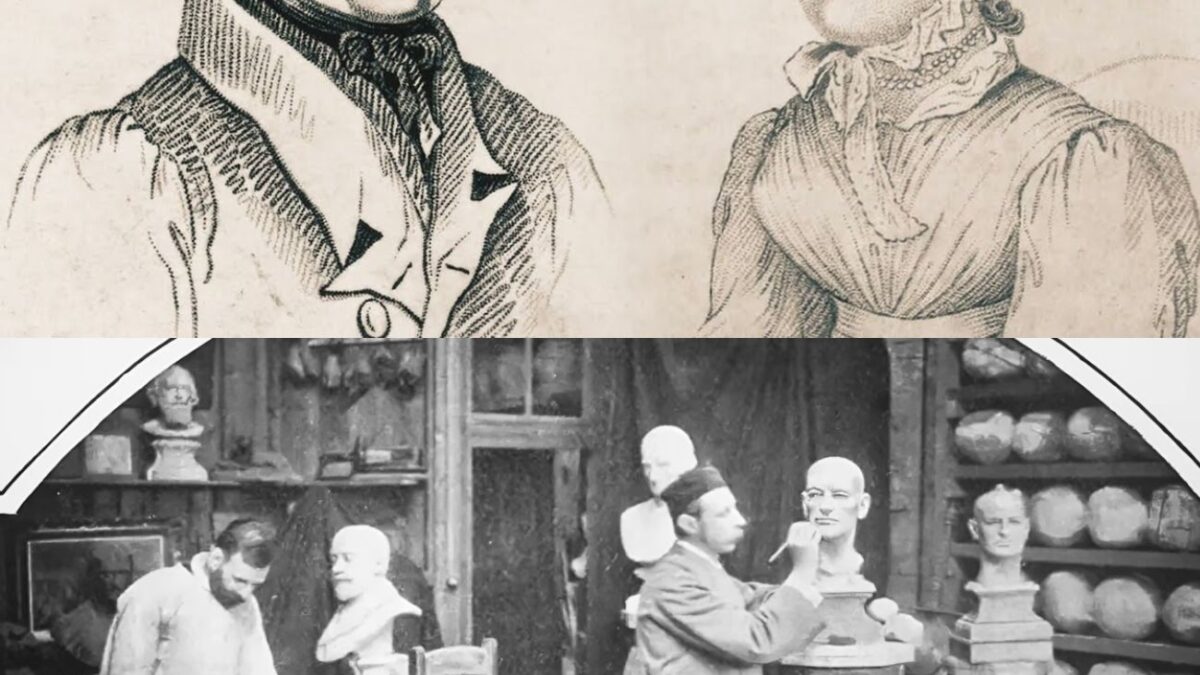
By the time Corder’s trial began, the story of Maria’s death, Ann’s psychic dreams, and William’s subsequent new life had spread like wildfire across the county. Thousands flocked to Bury St. Edmunds after reading the accounts printed by journalists that sensationalized the murder further. In these accounts, Corder was not a middle-class tenant farmer, but a filthy rich squire; likewise, his record of swine theft morphed into a description of his character as unfeeling and wretched. The Times claimed that Corder had also attempted to murder Maria’s toddler by feeding him a poisoned fig. Broadsides devoted all pages to elaborate engravings depicting the victim, the accused, and the murder. Peep shows at a local traveling circus showed scenes of the murder and Ann’s prophetic nightmares. Dramatizations of the crime, now known widely as the Red Barn murder, were hastily scripted. In May 1828, less than a month after the discovery of Maria’s body, the Cherry Fair at Stoke by Nayland featured a theatrical show called The Late Murder of Maria Martin.
As the date for Corder’s trial grew closer, attempts to capitalize on the crime continued. Stafforshire potters sculptured models of the Red Barn and figurines of Maria and William. The Red Barn itself became a tourist attraction, with sightseers traveling miles to see the site of the murder. Accommodations in Bury St. Edmunds were booked solid, and a ticket system was arranged to limit the number of observers inside the courtroom. When the trial began on August the 7th, 1828, the judge and court officials had to push their way through a massive crowd gathered outside before proceedings could even begin.
Corder faced 10 counts of murder, one for each of the possible ways in which the forensic investigation determined Maria may have died, including being buried alive. The accused pleaded not guilty and made the bold decision to take the stand in his own defense. William claimed that Maria had met him at the Red Barn as planned, but had flown into a passionate fit and shot herself. Afraid he’d be accused of murdering her, William said he’d panicked and buried the body instead of reporting the suicide.
This defense did nothing to endear the jury to Corder. Suicide was at the time a capital offense, and offenders were condemned to burials in unhallowed ground; to claim a woman discovered with numerous injuries had killed herself was offensive and crude. The evidence against William Corder was substantial: Maria was last seen in his company, his green handkerchief was discovered on her body, and police found a handbag belonging to Maria in Corder’s study along with pistols and a sword which he’d had sharpened right before the death. He’d also lied to the Martins for months about living on the Isle of Wight with Maria while in reality he had married another woman.
Unsurprisingly, Corder was found guilty of murder and sentenced to death. However, the end of the trial did not mean the end of the public spectacle. At the hanging at Bury St. Edmunds jail on August the 11th, around 10,000 eager spectators gathered to see Corder’s final moments. These moments turned out to be long and agonizing. The condemned survived the initial fall from the scaffold, and the executioner was forced to use his own weight to speed up the death. Still, Corder twitched and kicked for nearly 10 minutes before finally dying. The executioner sold sections of the rope used in the hanging to the eager crowd for a guinea an inch.
Even after all that excitement, the festivities were far from over. Corder’s body was transported to the Shire Hall, where a surgeon stood waiting to perform a public dissection of the corpse. The surgeon removed the skin from the torso, allowing thousands of spectators to view the inside of a murderer’s body at their leisure. Over the next day, Corder’s remains were transferred to the county hospital, where so-called specialists wired the corpse to a battery and administered shocks in an attempt to reanimate the dead man in a procedure called galvanic therapy. Corder’s skull was given to phrenologists, who claimed the areas associated with secretiveness, acquisitiveness, and destructiveness were larger than average, while the area where benevolence was thought to reside was underdeveloped.
At some point, William Corder’s skeleton was passed along for use as an anatomical aid at a surgical school. The bones were used by medical students for over 100 years before being rehoused in the Royal College of Surgeons Museum and finally cremated in 2004. The skin from Corder’s body was tanned and used to bind a surgeon’s copy of James Curtis’s book about the murder trial. This grisly artifact and others related to the trial are on display at Moyse’s Hall Museum in Bury St. Edmunds.
Even after Corder was dead and his pieces thoroughly scattered across England, the story of his crime remained popular. Versions of it appeared on stage for most of the 1800s, featuring increasingly lifelike special effects, including the ghostly apparition of Maria Martin visiting him in his jail cell on the eve of his execution. In 1908, folk singer Joseph Taylor performed a ballad about Maria that was recorded on a wax cylinder and is available to listen to at the British Library sound archives. In the 20th century, at least five film versions of the Red Barn murder were produced, along with radio dramas, plays, books, and songs.
The Red Barn and the Martin’s cottage became popular sites for True Crime enthusiasts. The barn was stripped for souvenirs down to bits of wood being sold as toothpicks; its remains eventually burned down in 1842. Maria’s gravestone located in St Mary’s churchyard in Polstead was chipped away by tourists until only a few scattered stones remained, and the only marker left today is a wooden plaque on a nearby wall that denotes Maria’s final resting place.
Even today, the crime remains popular with locals and global audiences alike, and theories about the case abound. Some claim that Maria’s stepmother Ann was also having an affair with William Corder and conspired with him to kill Maria after discovering William had married another woman, and supposedly invented the dreams about Maria’s murder to force the discovery of her body and implicate William alone in her death as revenge for him loving another. Others believed Corder had connections to suspected serial killer Thomas Griffiths Wainewright, while another theory places the blame for Maria’s death on a local Romany woman. But most agree that William Corder was undoubtedly guilty of the murder and worked alone, believing his intellect and status would protect him from prosecution.
It’s unlikely that as Corder waited at the Red Barn to kill Maria, he ever imagined that he may be tried, hanged, and then parceled off for the public’s entertainment. Maria’s tragic death in the Red Barn gripped the nation, leaving behind a legacy of fear, intrigue, and the commercialization of true crime. While justice was ultimately served, the haunting story of Maria Martin continues to resonate—a dark chapter in the annals of crime that we still reflect on today. Though much has changed since 1827, our fascination with the morbid and macabre remains as strong as ever, ensuring that tales born from human darkness will forever endure in the cultural memory.

