The Terrible Crimes of Styllou Christofi
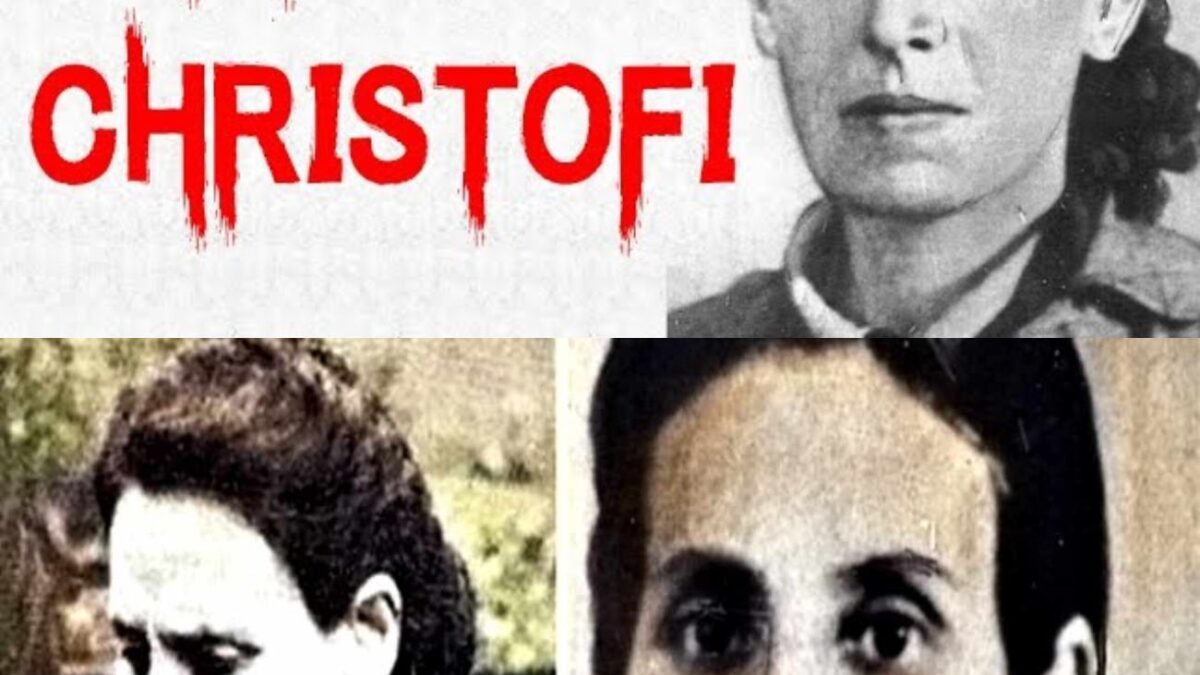
The Terrible Crimes of Styllou Christofi
Stavroula Christofi was born in the beautiful Mediterranean island of Cyprus in 1900. Her family were very poor, and she did not receive much of an education. She was illiterate, and at the age of 14, she married and later gave birth to a son, whom the couple called Stavros. Her relationship with her mother-in-law was bad, and along with two other women, in 1925 when she was 25 years old, she was put on trial in Cyprus for killing her own mother-in-law. The way Christofi murdered her mother-in-law was quite brutal: she shoved a burning piece of wood down her throat. At the trial in Cyprus, however, the three women covered for each other, and Christofi was acquitted for lack of evidence.
Her husband, however, left her after the trial, so now she was homeless and very poor, left to bring up her son Stavros alone. She did however bring him up well, and Stavros grew up and got a job as a waiter in the country’s capital, Nicosia. Stavros was a very good worker, and in 1941 he secured work in London, England, as a waiter in Café de Paris, which was a very popular venue in the city. While working there, he met Hela Bleicher, who was a German and worked in the dress department of a clothing store close to Café de Paris. They went out and eventually got married.
The couple were happy and worked hard to improve their prospects, and after a while managed to move to the very nice area of Hampstead in London. They had three children, and life was good, especially for Stavros, who had worked hard, learned English, and was liked by everyone who knew him. In July 1953, Stavros’s mother decided to visit the family in London; she hadn’t seen her son for 12 years. At first, the family welcomed Christofi into their home, but as time went on, things started to deteriorate. There were rows between Hela and Christofi. Christofi blamed her daughter-in-law for everything: she didn’t like the way Hela had decorated the house, she didn’t like the way Hela brought up the children, and the fact that Stavros was happy living in London and did not want to go back to Cyprus really bothered her.
Christofi had been living in London with her son, daughter-in-law, and grandchildren for 12 months, and Hela had pretty much had enough of her mother-in-law. She had had enough of the criticism. She told Stavros she was going to take the children to Germany for a visit, and when she came back, she expected her mother-in-law to have gone back to Cyprus. Christofi, however, liked living in London and had no intention of going back to her Mediterranean homeland.
On Wednesday, July 28th, 1954, Stavros left for work. He said goodbye to his wife and then said goodbye to his mother, who was in the living room. Hela had just put the children to bed and was about to have a shower. Christofi heard the bathroom door close, so she went to the kitchen and took out the heavy metal tray from under the wooden stove. She crept upstairs and quietly opened the bathroom door. She saw Hela. Hela turned her head as the bathroom door opened, and with one hard blow, Christofi hit her daughter-in-law in the head with the tray.
Hela fell to the floor but was still alive. Christofi then dragged the unconscious body to the kitchen, where she strangled her until she was dead by using a scarf. According to the forensic report, she did this with so much force that the scarf had penetrated Hela’s skin. Christofi now had to cover her tracks, so she took off her son’s wife’s wedding ring and hid it in her bedroom. She then dragged the dead body out to the garden, where, in an attempt to destroy the evidence, she put paraffin-soaked newspaper around it and set it on fire.
At the time, a neighbor, John Young, who was letting his dog out, noticed the fire in the back garden and could see what appeared to him to be a tailor’s dummy being burnt. It was now 1:00 on Thursday morning. Christofi then ran into the street and raised the alarm by stopping a passing car. She shouted in her very limited English, “Please come, fire burning, children sleeping.” The fire brigade arrived and put out the fire. They rescued the children, who were still asleep, and discovered the partly charred body of a woman in the garden. They were able to notice a red mark around the neck. Christofi had planned that the body would be too badly burnt to reveal anything.
The police were then called, and a search of the house revealed Hela’s wedding ring wrapped in a piece of paper in Christofi’s room. When questioned, she told officers that she had been asleep and had been awakened by the sound of two male voices downstairs. She went downstairs and had seen one man in the garden before she went to Hela’s bedroom, where there was no reply. She said she kept knocking on the door, and then she saw the body on fire in the garden, so went for some water to try and put it out. Police did not buy her account of what happened and immediately arrested her. She was remanded in custody, and after the postmortem, she was charged with murder.
Christofi’s son Stavros and her lawyers advised her to plead insanity, but she refused, saying, “I’m a poor woman of no education, but I’m not a mad woman.” Dr. T. Christie, the principal medical officer at Holloway Prison, examined her and stated that after observation of the prisoner since July 30th, 1954, he had formed the conclusion that she was insane but was medically fit to plead and stand trial. He found her to be suffering from a delusional disorder that made her fear that her grandchildren would not be brought up properly by Hela and that she would in time be excluded from seeing them due to the clash of cultures between the two women. This seems a reasonable conclusion, but did it make her insane?
Christofi’s trial began at the Old Bailey in London on October 25th, 1954, and lasted for several weeks. Despite the overwhelming evidence that included blood and paraffin on her own shoes, she kept protesting her innocence. The prosecution portrayed her as ungrateful, callous, and domineering—a woman who attacked an attractive, young, defenseless mother in the most gruesome manner, attacking a woman who had shown her nothing but hospitality and provided her a home. At the end of proceedings, the jury of 10 men and two women took just under two hours to find Christofi guilty. She was sentenced to death by hanging.
Christofi showed no emotion when the verdict was read out. However, under the provisions of the Criminal Lunatics Act of 1884, the Home Secretary had the duty to have a condemned prisoner examined by prison psychiatrists to see if there was concern over their sanity. The psychiatrist reported that the prisoner was not in their view insane and that in their view she did not suffer from any minor mental abnormality which would justify them in making any recommendation for the reprieve of the sentence on medical grounds. On December 12th, it was announced that there would be no reprieve and the execution would be carried out on Wednesday, December 15th. There was then a debate among British MPs on how that was possible; according to various accounts, six Labour members of parliament questioned the death penalty in her case, with one noting, “The mere fact she did not claim insanity shows she is not of sound mind.”
Christofi was the last foreign woman and the second to last female ever hanged in Britain. There was very little press interest in her execution; some say this was because she was middle-aged, unattractive, and foreign. On December 13th, 1954—29 years after she had murdered her mother-in-law in Cyprus—Christofi was executed by hanging in Holloway Prison for murdering her daughter-in-law.
In the quiet aftermath of her passing, the house in Hampstead remained haunted by the shadows of that tragic night, leaving a fractured family to pick up the broken pieces in a foreign land they had once hoped to call home.

