The Teenagers Whose Fantasy World Turned Deadly – The ‘Heavenly Creatures’ Murder Case
The Teenagers Whose Fantasy World Turned Deadly – The ‘Heavenly Creatures’ Murder Case
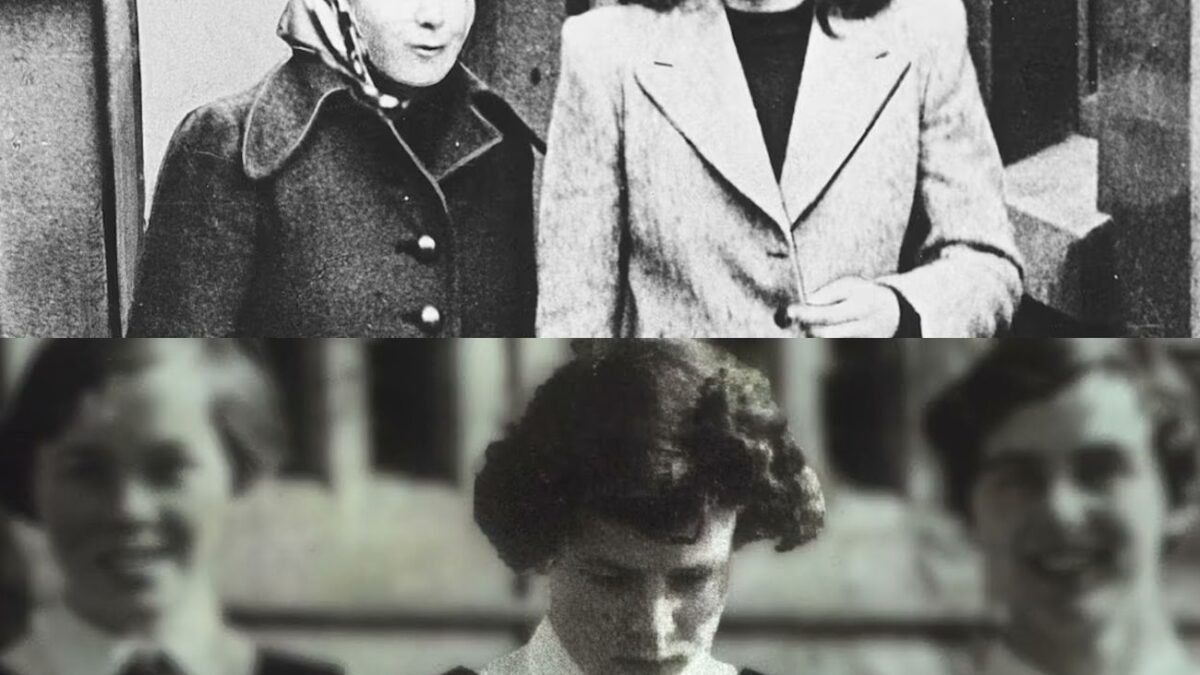
It began with a scream on a quiet Christchurch path and ended with a case that would reverberate through New Zealand’s history for decades. In 1954, a woman was found dead in Victoria Park, her skull crushed in what appeared to be a horrific accident. But as the police dug deeper, what surfaced was anything but ordinary. At the center of the brutal crime were two teenage girls. They were smart, imaginative, and inseparable. But what bound them seemed to be more than friendship. Rather, it appeared to be a strange obsession and a shared world far removed from reality.
As the facts came to light, a nation was left stunned. How could two schoolgirls commit such a violent act? And why?
Juliet Hume was born on October 28, 1938, in Blackheath, London, England. She was the daughter of Dr. Henry Rainsford Hume, a distinguished scientist, and Hilda Marian Ree, the daughter of a socially prominent clergyman. Her birth coincided with the start of World War II, and her mother would later state that on one occasion, she and two-year-old Juliet were caught in an air raid, with the event leaving the young girl suffering from bomb shock. For weeks, she awoke screaming from nightmares.
In 1944, Hilda gave birth to a second child, Jonathan, and due to complications, she was taken back to the hospital one night and would stay there for some time. It would be claimed that waking in the night to find her mother gone led to Juliet having a negative view of her new brother, one that would stay with her into later life.
Her father’s career took the family from England to New Zealand in 1948 when he was appointed director of Canterbury University College in Christchurch. The family, seen as intellectual and refined, moved into Ilam, a grand Tudor-style house provided by the university which quickly became a symbol of their upper-class privilege in postwar New Zealand.
But Juliet’s early life continued to be tainted, now by illness. She suffered from tuberculosis and pleurisy and was sent away to live in warmer climates, first in the Caribbean and later in South Africa, where she spent much of her childhood isolated from her family. These long periods of physical isolation contributed to her highly active imagination and introspective nature. She read a lot, excelled academically, and developed a fascination with fantasy, history, and storytelling.
By the time she returned to Christchurch, Juliet was seen by many as precocious, charismatic, and unusually intelligent, but also emotionally immature and socially isolated. It was when she began attending Christchurch Girls’ High School that she would meet Pauline Parker.
Pauline Parker was born May 26, 1938, in Christchurch, New Zealand. While Juliet came from a wealthy and prominent family, her roots and upbringing were very much working-class. Her father, Herbert Rieper, was a German-born fish shop manager, and her mother, Honora Mary Parker, was a homemaker who ran their household as a boarding house to supplement their modest income. Unlike the Humes, the Parkers lived with limited means and social status, which often made Pauline feel inferior to her wealthier peers.
As a child, Pauline suffered from osteomyelitis, a serious and painful bone infection that left her with a permanent limp and frequently confined her to hospital care. This long period of physical suffering contributed to her isolation and a growing sense of alienation from others. She was intelligent, but emotionally volatile and prone to intense attachments and mood swings. Teachers and peers often described her as introverted, intense, and distant. Although Pauline adored her mother, there was often tension in the household. Her parents were never legally married, which added a layer of social stigma at the time. All these factors contributed to Pauline’s difficulty connecting with others her age.
But that all changed when Juliet arrived. The pair met at Christchurch Girls’ High School around 1952. From the outside looking in, Pauline and Juliet had very little in common. Their families couldn’t have been more different, and while Pauline was dark-haired and brooding, Juliet was tall, blonde, and spoke with an English accent. But they quickly found that they had more similarities than differences, and their bond was immediate and intense.
Both girls were outsiders in their own ways, and they recognized in each other a kindred spirit. They were frequently sidelined from physical education due to their chronic illnesses. Left to themselves, they discovered a shared love of art and fantasy. But their friendship soon deepened into something far more sinister. Together, they shared a vivid fantasy life, writing stories, operas, and even inventing an entire fantasy world known as the Fourth World, a personal utopia where they believed their souls would ascend.
This world was filled with fictional characters, kings, saints, and their own made-up religion. They gave each other elaborate alternate identities and wrote daily, private journals filled with their adventures, emotions, and sometimes violent imaginings. Their emotional dependency on one another also intensified. Pauline practically lived at the Hume house. When separated, they wrote long letters, suffered from anxiety, and in some cases became physically ill. As their friendship deepened, they started to become increasingly detached from reality, and by mid-1953, the girls were inseparable, often speaking in invented languages and living more in their fantasy world than the real one.
The intensity of the relationship concerned both sets of parents. Juliet’s parents, already dealing with the impending disintegration of their marriage, became wary of Pauline’s influence, and Pauline’s mother, Honora Rieper, began consulting doctors about her daughter’s health and mental well-being. In November 1953, she was referred to a psychiatrist who concluded that she was developing a homosexual attachment to Juliet, something that in 1950s New Zealand was seen as morally deviant and even criminal. Alarmed that their friendship may be turning romantic, Honora began restricting their time together.
The separation was emotionally devastating to both girls, particularly Pauline, whose diary entries from the time speak of despair, violent fantasies, and a growing obsession with preserving the friendship at any cost. Then came the news that shattered their world: Juliet’s parents were divorcing, and Juliet would be sent to South Africa to live with relatives.
The girls were devastated. Their attachment to one another had become the center of their lives, and the thought of being separated was unbearable. Juliet’s parents were open to the idea of Pauline accompanying her, but Pauline was certain her mother would never permit it. To them, she became the one thing standing in their way. In the weeks that followed, their frustration turned into planning, and soon what started as just an idea quickly became a carefully detailed murder plot.
In the weeks before the murder, the girls’ diaries revealed their spiraling state of mind. Pauline, who was just 16 at the time, wrote candidly about their plan, writing, “Why could mother not die? Dozens of people are dying all the time. Thousands. So why not mother and father too?”
The plan was cruelly simple. On June 22, 1954, the trio took tea at the Victoria Park tea kiosk. The girls had brought with them a half-brick hidden in a stocking, an improvised weapon designed for stealth, but capable of lethal force. After tea, the girls led Pauline’s mother, Honora, down a secluded path under the guise of a casual stroll. Some reports state that the girls had placed a pink stone along the path, and when Honora bent to pick it up, they began to attack her with what police would describe as animal ferocity.
However, in a later statement, Juliet would say, “On the way back, I was walking in front. I was expecting Mrs. Rieper to be attacked. I heard noises behind me. It was loud conversation and anger. I saw Mrs. Rieper in a sort of squatting position. They were quarreling. I went back. I saw Pauline hit Mrs. Rieper with the brick and the stocking. I took the stocking and hit her, too. I was terrified. I thought that one of them had to die. I wanted to help Pauline. It was terrible. Mrs. Rieper moved convulsively. We both held her. She was still when we left her. The brick had come out of the stocking with the force of the blows.”
Honora Rieper was bludgeoned more than 20 times, her skull fractured, her body left blooded and broken in the underbrush. The girls then ran breathless and smeared with blood back to the tea kiosk, screaming that there had been an accident. But the story unraveled quickly. The extent of Honora’s injuries was too severe to be the result of a mere fall. The brick-in-stocking was soon found, and their bloodstained clothes betrayed the deception. What had looked at first glance like a terrible misstep on a slippery path revealed itself to be something far darker: the calculated murder of a mother by her own daughter and her closest companion.
Under questioning by law enforcement, the girls’ story began to shift as their once-strong bond seemingly began to break. Pauline initially stuck to the story that her mother had fallen and hit her head on a rock, but soon she admitted her involvement and implicated Juliet as well. The next day, Juliet admitted her role in the attack. They were arrested that same day and charged with Honora’s killing.
The confessions shocked Christchurch, but the case took an even darker turn when investigators uncovered Pauline’s diary. In it, she had documented the girls’ obsessive friendship, their shared fantasy world, and most damning of all, their premeditation of the crime. Just days before the murder, Pauline had written, “We decided to use a rock in a stocking rather than a sandbag. We discussed the matter. I feel keyed up, as if I were planning a surprise party.” One entry even called the murder day “the day of the happy event.”
The trial began on August 23, 1954, and quickly became a media sensation. Held at the Christchurch Supreme Court, it drew packed crowds and made front-page headlines across New Zealand. The combination of a violent crime, teenage killers, and the suggestion of a lesbian relationship ignited public fascination. The prosecution leaned heavily on the diary, using it as irrefutable evidence of premeditation. They portrayed the girls as cold, calculating, and emotionally disturbed with an unnatural dependency on one another. Witnesses testified about the intensity of their friendship, their shared imaginary world, and their increasing isolation from others.
But the defense attempted to prove insanity. Their strategy centered around the psychiatric concept of folie à deux, or madness of two, a rare condition in which two individuals share the same delusion. Psychiatrist Reginald Medlicott testified that the girls had formed a dangerously close system of belief in which their actions seemed entirely rational to them, each enforcing the other’s views and beliefs. The defense argued that this distorted sense of reality meant they could not be held fully responsible for their actions.
Despite these efforts, the girls’ own words worked against them. The diary entries showed excitement, planning, and awareness of the consequences. And although the prosecution touched on the rumors of a sexual relationship between the girls, both Pauline and Juliet denied it, and the court chose not to dwell on it. At the time, homosexuality was not only taboo, but considered a form of mental illness, and the insinuation added another layer of scandal to the trial.
On August 28, 1954, after a swift trial, both girls were found guilty of murder. Because they were minors—Pauline was 16 and Juliet just 15—they were too young to face the death penalty. Instead, they were sentenced to be detained at Her Majesty’s pleasure, a legal term indicating an indefinite sentence based on the Crown’s discretion. In the end, both girls served five years in separate prisons before being quietly released in 1959. There are claims that one condition of their release was that they never contacted one another again, though this was denied by the then-Secretary of Justice, Sam Barnett.
But the story didn’t end there. In the decades that followed, the Parker-Hume case continued to haunt New Zealand, not just because of the brutality of the crime, but because of the startling paths both women would later take and the immense attention brought on by a surprising Hollywood success.
Following their release in 1959, Pauline Parker and Juliet Hume disappeared from the public eye. The New Zealand government, concerned about the public reaction and the intense media scrutiny the case had received, handled their release discreetly. The public never learned the exact terms of their detention or the precise date of their release until many years later.
Interest in the Parker-Hume case exploded anew with the release of Heavenly Creatures, a psychological drama directed by New Zealand filmmaker Peter Jackson. The film, which premiered in 1994, starred Melanie Lynskey as Pauline and introduced a young Kate Winslet as Juliet in her feature film debut. It dramatized the intense friendship between the two girls and the events leading up to the murder of Honora Rieper. Rather than focusing solely on the crime, the film portrayed the girls’ emotional and psychological world, particularly their elaborate shared fantasy realm. The film seemed to leave audiences unsettled and divided over whether the girls had been monstrous, delusional, or tragically damaged.
The movie received critical acclaim, earning Jackson an Academy Award nomination for Best Original Screenplay. It also renewed public interest in the case, prompting media outlets to dig into the fate of the two women and leading to the unmasking of author Anne Perry.
It turns out that Juliet Hume had reinvented herself under the name Anne Perry upon her release—Perry being her stepfather’s last name—and began a career as a writer of murder mysteries. Over the years, she had become a successful and prolific author, publishing dozens of crime novels, many of which appeared on bestseller lists and received critical acclaim. Her true identity remained a closely guarded secret until the 1994 movie. She later confirmed the truth, stating in interviews that she had been deeply remorseful and had spent her life trying to atone for what she had done, insisting that she had changed entirely from the girl she had once been. She died in April 2023 at the age of 84.
After prison, Pauline Parker too was given a new identity. She moved to England and eventually settled in a small village in Kent, where she lived a quiet, reclusive life. Taking the name Hillary Nathan, she converted to Roman Catholicism and reportedly dedicated herself to a life of prayer and repentance. For decades, she worked as a writing instructor, shunning the media and refusing all interviews. Neighbors who knew her later described her as polite but reserved, and most were unaware of her past until the story resurfaced in the 1990s with the release of the film.
Today, the Parker-Hume case remains one of New Zealand’s most infamous crimes. It is studied in criminology courses, analyzed in discussions of adolescent psychology, and referenced in debates about crime, rehabilitation, and the nature of evil. Decades later, it still leaves us with an unsettling question: Were Pauline Parker and Juliet Hume suffering from a shared mental illness, or were they simply cold, calculated killers all along? As the decades passed and both women lived out their lives under new names, the shadows of Victoria Park never truly faded, leaving behind an indelible reminder of how fragile the boundary between reality and imagination can truly be.

