The Story of the Vench Kin (1883, Ozarks) — The Family Every Doctor Refused After the First
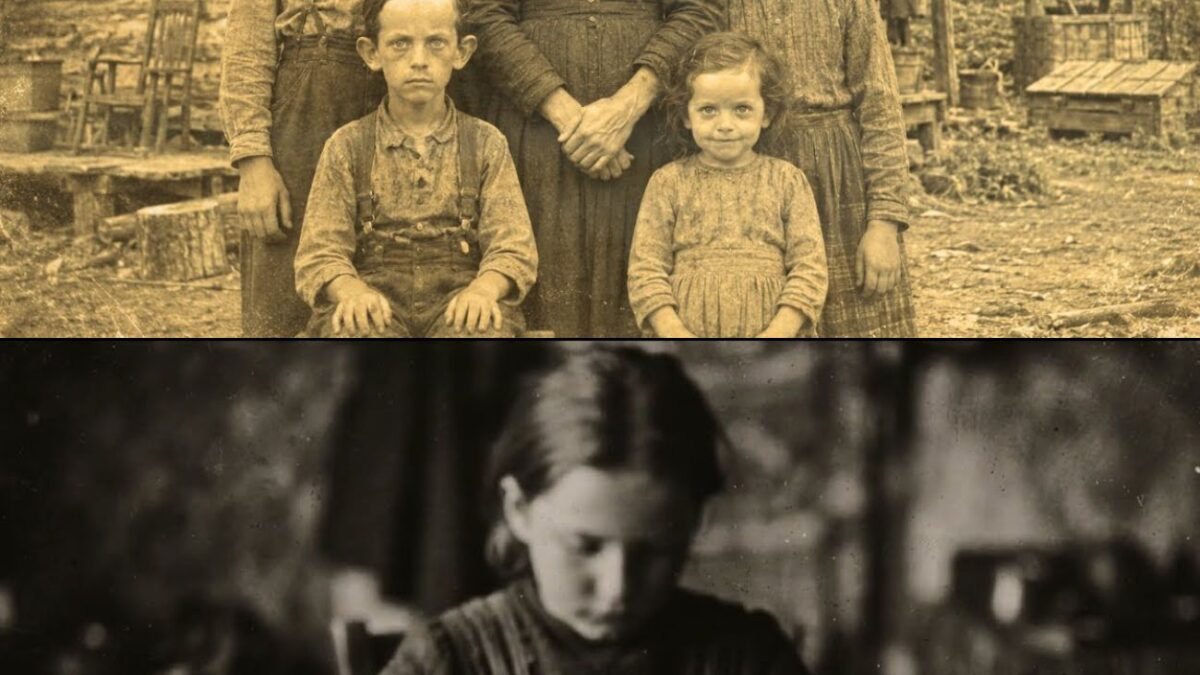
The Story of the Vench Kin (1883, Ozarks) — The Family Every Doctor Refused After the First
In the winter of 1883, a doctor named Absalom Reed rode 11 miles into the Ozark hill country to deliver a baby, and when he rode back out, he burned his coat, his gloves, and the blanket he had carried in his saddlebag. He did not explain why, simply writing four words in his logbook that county clerks would copy and recopy for the next 60 years: I will not return. That baby belonged to the Venge family, a household tucked into a hollow so narrow the sun only touched the cabin floor for about two hours a day. And here is the part that should be impossible: for the next four generations, every single doctor who treated a Venge for the first time refused to treat one again. Not some of them, not most of them, but everyone without exception across 60-some years, three counties, and at least 11 different physicians who had no reason to know each other’s decisions. Something happened in that first visit, something that made grown men who had survived war, cholera, and childbirth gone wrong decide that whatever was in that hollow wasn’t worth the trip back, and the county never wrote down what it was, only noting that it happened over and over like a pattern nobody wanted to name.
To understand what happened in that hollow, you first have to understand what the Venge family actually was before anyone called them cursed, and it is worth saying plainly what this story keeps circling. Researchers who dig into old-world architecture in places that supposedly had no old world yet—foundations under farmland that predate the farmland by centuries, wells that go down further than any well should need to go—keep landing on the same uncomfortable idea, that some of this country wasn’t built on empty ground, and that something was already here, buried under a layer of dirt nobody can quite explain the origin of, so that every so often a family digging a root cellar finds the edge of it.
The Venches arrived in Taney County sometime around 1861, according to a single tax assessment listing a Josiah Vinch as the owner of 40 acres nobody else wanted. The land sat in a hollow locals called Bitter Notch, named for the water running through it that tasted faintly of iron even after boiling, and nobody farmed there before the Venches or after them either. The soil was thin, the light was bad, and the hollow flooded twice a year without warning, but Josiah Vinch built there anyway, and for two decades the family kept to themselves in a way that didn’t draw much comment since hill families did that and isolation wasn’t suspicious on its own. A tax collector’s note from 1868 describes Josiah as civil but unwilling to discuss his land beyond its boundaries, which at the time probably just read as backwards reticence, though looking back at it now with everything we know came after, it reads a little differently.
What made the Venches different started in the fall of 1882 when Josiah’s son, a man named Ezra, began digging out a root cellar behind the cabin and hit stone 11 feet down—not fieldstone or the loose limestone shelf running under half the Ozarks, but cut stone fitted flat and laid in a pattern too regular to be natural and too old to match anything built in that county in living memory. A neighbor named Colum Draper helped with part of the dig and later told a circuit preacher that the tiles underneath ran in spirals instead of rows, and that in the center of the spiral was a shaft going straight down, wider than a well and lined with the same cut stone, disappearing past the reach of any lantern they lowered into it. Draper said Ezra Venge covered the shaft with planks the same week and never spoke of it again, and that within a month Ezra’s wife gave birth, which was the birth Absalom Reed rode out to deliver. Draper himself never went back to Bitter Notch either, and while it is easy to overlook because he wasn’t a doctor and doesn’t fit neatly into the medical pattern, he was the first outsider to see what was under that hollow and the first to decide on his own, without any of the medical language the doctors would later use, that he was finished with the place, reporting only that the shaft didn’t feel like a hole in the ground so much as a hole with a bottom that was still being used by something.
We do not know exactly what Reed saw in that cabin since his logbook entry was only four words long, but we do know the child lived, a fact confirmed by a baptismal record from a circuit church 8 miles off dated the following spring, listing the child only as Venge infant unnamed. No first name was given, not because the family hadn’t chosen one, since circuit preachers of that era recorded names constantly for infants who lived only days, but an unnamed entry usually meant the family refused to give one, and preachers rarely pushed back on such refusals. Before going further, sit with that detail for a second: a family digs into the ground and finds something old enough that a cut-stone spiral runs beneath their cabin floor, within weeks a child is born, the doctor delivering it burns his own coat rather than bring whatever touched it back into town, and the family, when asked to name their baby in front of God and a congregation, says nothing at all.
That is where the doctor pattern begins, and it does not stop with Reed, as the second doctor on record is a man named Otis Pruitt, called out to Bitter Notch in 1887 for what the request described only as a fever in the household. Pruitt’s own diary survived, donated decades later to a regional historical society, and in it he describes the trip in detail right up until he reaches the cabin, after which the entries simply stop for 11 days. When they resume, Pruitt writes about ordinary matters—a broken axle, a bill collected in Forsyth—with nothing about Bitter Notch at all, until years later in a separate letter to his brother he wrote one line historians still argue about: “I have seen what a fever does to a house, and that was not fever.” He never treated a Venge again, and when a second request came from the family in 1891, his ledger shows he sent a junior physician named Calder Fitch in his place, paying the man’s travel expenses out of his own pocket rather than go himself. Fitch went, and Fitch also never went back.
By this point, you might think the simplest explanation covers it: bad water, bad air, and illness real doctors of the era simply couldn’t name, something scaring educated men because they had no framework for it. That is a fair thought, holding up perhaps for the first two doctors, but it stops holding up with the third, because the third doctor wasn’t scared off by disease at all, but rather by something he found in the yard. His name was Dr. Pearless Nash, called to Bitter Notch in 1894 for a Venge child with a broken leg—about as ordinary a country call as existed—and while he set the leg without incident and waited for the family to prepare a place for him to sleep before the ride back, he noticed the well behind the cabin had a second, smaller opening beside it, capped with the same weathered planks Colum Draper had described a decade earlier. Nash, being curious, asked about it and recorded the answer in a letter to a colleague in Springfield that still exists in family papers: “They told me it went down further than any well needs to go, and that something in the house had been born from what they found at the bottom of it and that I should not ask a second time. I did not.” Nash rode home that night instead of staying in the dark on unfamiliar hill roads, choosing the danger of the road over another night under that roof.
Between Nash’s visit and the next documented account, there is a gap of nine years with almost nothing written down except for one strange entry in a Forsyth newspaper from 1897, a short item about a traveling tinker who camped one night near Bitternut and left before dawn telling the innkeeper the next town over that he had heard something under the ground singing to itself low like a hymn nobody taught it right. The paper ran it as a curiosity, and nobody at the time connected it to a family of doctors already refusing return trips, since we only notice it now knowing what to look for.
By 1894 you have three doctors, three separate refusals, and a pattern a small county was starting to notice, and this is where the story stops being about isolated incidents and starts being about something structural built into the family itself, generation after generation, no matter who married in or which child was born. The fourth doctor’s account is the one finally connecting the well, the cabin, and the children: her name was Ruth Callaway, one of the very few licensed women physicians working rural Missouri in the 1900s. Called to Bitter Notch in 1903 for what the request again described only as a fever using the same vague language from 16 years prior, Callaway kept detailed clinical notes throughout her career, trained to observe rather than speculate, and her notes read that way right up until the Vinch visit. She describes four children in the household, ranging from roughly 4 to 15 years old, all noted as unusually still—a phrase she used nowhere else in decades of surviving notes—and describes the mother as unwilling to leave the children alone with her in the room, not out of protectiveness exactly, but out of a kind of guarding Callaway called something she had only otherwise seen in animals near a den. In a single clipped sentence near the bottom of the page, she describes the moment the fever broke on the child she had come to treat: the child’s eyes opened and for a moment did not track anything in the room, only the ceiling, as though listening to something above it rather than looking at anything at all. Callaway finished her visit, was paid in coin she later noted she never spent, and left, refusing to return and referring a 1909 Vinch request to a younger physician without explanation, exactly mimicking the pattern Pruitt had set with Fitch 15 years before her.
If this were only about a family with bad luck and a scary well, the pattern would likely have broken somewhere since doctors are practical people and fear fades while money matters, but it did not break, and in 1911 the county finally sent someone whose job wasn’t to heal the Venches, but to investigate them. His name was Deputy Coroner Amos Trilling, dispatched after a neighbor reported that one of Ezra Venche’s grandchildren had gone missing for nine days and returned on the tenth without any memory of where he had been, found sitting calmly at the mouth of the old well shaft with the cover planks removed and stacked neatly beside him as though set down with care. Trilling’s surviving report is the most detailed document we have, noting his interview with the 11-year-old boy who said he remembered darkness, warmth, and a room with no walls he could find, just floor going down and down, and that he wasn’t scared down there, only scared once he came back up and realized nine days had passed because inside the shaft it had felt like an afternoon. Trilling also examined the shaft itself, describing it as descending well past what any tool available to his office could measure, lined in cut stone of an unrecognizable manufacturer, reminding him of European cathedral crypts though built to a scale and depth no crypt would ever require, as though whoever cut the stone was building a passage for something meant to keep moving. He recommended the shaft be sealed permanently with concrete at county expense, which it was that same year.
Sealing the shaft didn’t end the pattern, but it changed what the doctors saw, because from 1911 onward no Venge doctor ever mentioned the well again, mentioning instead across three more physicians and two more decades the children’s way of sleeping. Dr. Harlan Voss, called out in 1919, wrote that he was asked to examine a Venge child for what the family called night trouble, and that upon entering the room the child was lying perfectly still with its eyes open, staring at the ceiling exactly the way Ruth Callaway had described 16 years earlier in an unseen report. When Voss spoke to the child, it did not respond for nearly a full minute and then answered a question he hadn’t asked, prompting Voss to write, “I did not ask again, and I will not go back to that house while any of them still live there”—the exact same phrase Absalom Reed used word for word 36 years earlier. Two more doctors recorded versions of the same experience, and every one of them refused a second visit, giving some version of the answer Nash gave in 1894 that they had been told not to ask a second time, and they hadn’t.
By the time the last Venge doctor’s account was written in 1927, the family had mostly stopped appearing in public records, and the hollow simply went quiet on paper, with a final 1931 surveyor’s note remarking that the old Venge cabin had partially collapsed into what he assumed was an old cistern, refusing to investigate further because the ground around the opening did not feel stable. Locals will tell you the fence erected around it then is still there, rusted and leaning, marking a hollow showing up on no modern map by the name Bitter Notch.
There is one more account worth mentioning from a schoolteacher named Hera Osgood, who taught at a one-room schoolhouse 3 miles from Bitter Notch between 1922 and 1926 and had two Venge children in her classroom. Osgood’s memoir describes the children as bright, quiet, and unfailingly polite, noting that both were unusually good at arithmetic involving depth and distance, able to estimate measurements they had no obvious way of learning. When she asked one of them gently where he had learned to judge distance so well, he told her without unease that he had learned it counting stairs in the dark, and when asked whose stairs, he said he didn’t know whose they were, only that they didn’t end where stairs usually end. Osgood assumed it was a child’s imagination at the time, only connecting it years later after hearing pieces of the doctor story from old-timers in the county, by which time both children had grown, married elsewhere, and stopped using the Venge name entirely.
What actually happened to the Venge family? We do not have a single neat answer, but rather a pattern repeating with uncomfortable precision across 60-some years and documented physicians, featuring a stone structure predating any known settlement, a missing child coming back describing a room with no walls and time moving differently inside it, and doctor after doctor choosing the danger of a night ride over one more hour under that roof. Whatever was under Bitter Notch, the people closest to it agreed on one thing across three generations: from a doctor’s burned coat to a coroner’s careful choice of the word passage to a schoolteacher’s quiet memory, you go once, you do not go back, and for 60 years in a hollow the sun barely touched, nobody ever did, leaving the secret buried permanently beneath the sealed stone and quiet soil.

