The Story of the Vance Clan (1883, Cumberland) — The Family Born with Fused Fingers and Webbed Hands
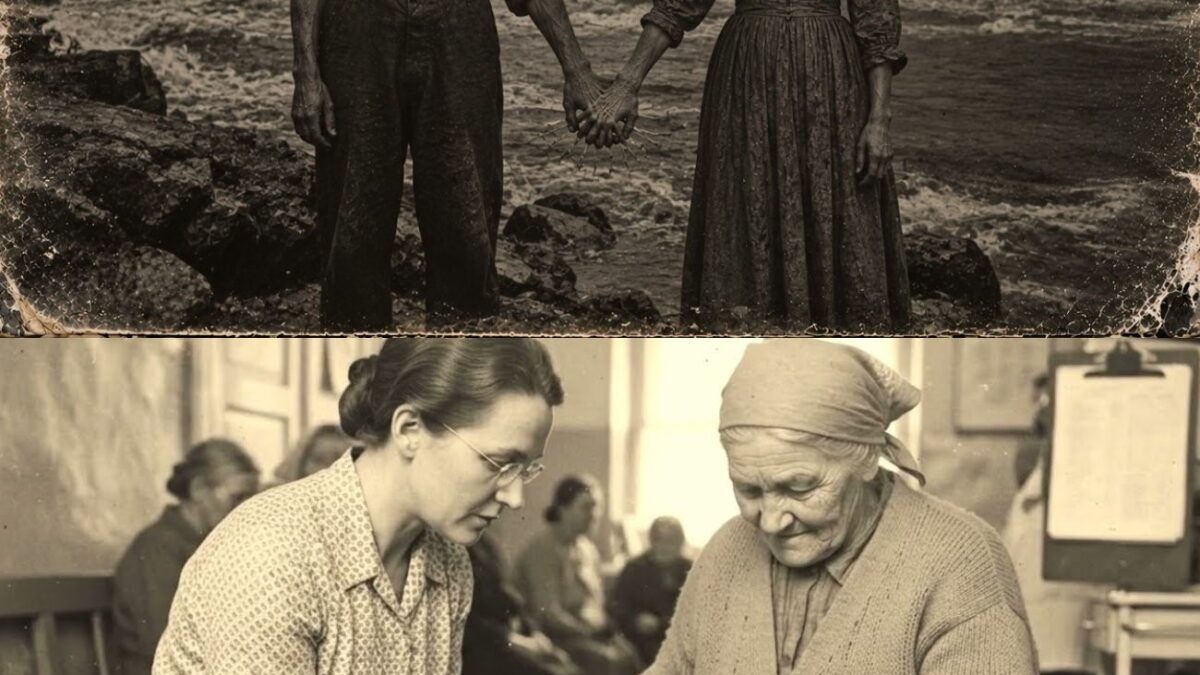
The Story of the Vance Clan (1883, Cumberland) — The Family Born with Fused Fingers and Webbed Hands
On the afternoon of April 19th, 1883, a traveling public health physician making a smallpox vaccination circuit through the mountain settlements of what was then Harlan County, Kentucky, reached a homestead above a bend in the Cumberland River to inoculate a family of 10. His task was routine and, by that point in the circuit, tedious: roll up a sleeve, scrape the skin, note the household in his ledger, move on before dark. According to the physician’s own case book, when he asked the youngest Vance child to hold still and extend her arm, he found he could not roll her sleeve past the wrist without first noticing that her fingers did not separate in the ordinary way, and that a thin webbing of skin ran between each of them up to the second knuckle, matched, he wrote, by the same condition in every member of the household present, from the grandmother down to the infant, none seeming troubled by it in the least, as though it were no more remarkable than the color of their hair. The entry ends there without further comment. And the next dated entry in his case book is two days later.
The bend in question does not carry the Vance name on any current map. Modern USGS charts list it simply as a meander of the upper Cumberland River within what is now Bell County, Kentucky, roughly 9 miles northwest of the Cumberland Gap itself, the historic mountain pass connecting Kentucky, Virginia, and Tennessee. But county deed records, church registers, and at least one 1880s timber survey consistently referred to the site by a different name: Vance’s Bend, or, in a surviving 1889 logging company map, the Held Water.
The hydrology of the site is what makes the name make sense. The bend sits at the bottom of a narrow gorge where three separate mountain drainages converge within less than a mile of one another—a configuration a 1974 US Army Corps of Engineers flood study of the upper Cumberland Basin specifically singles out as disproportionately prone to flash flooding, noting that the confluence can raise the river’s level by several feet within a span of 20 minutes during heavy rain, far faster than comparable confluences elsewhere in the basin, for reasons the study’s hydrologists describe only as the site’s unusually rapid discharge concentration, not fully explained by drainage area alone. This detail will matter later.
The Vance family had settled at the bend in 1851, part of an early wave of Scots-Irish settlers moving into the Cumberland Gap corridor from Western Virginia. County tax rolls list Hosea Vance as holding a modest bottomland claim along the river by 1853. By 1883, the family numbered 10 across three generations, the only household living directly on the bend itself.
The physician who documented the family in his case book that April was a 38-year-old contract vaccinator named Dr. Willis Aldrich Pruit, employed at the time by the Kentucky State Board of Health to carry smallpox inoculation into isolated mountain communities. Pruit was, by every surviving account, a methodical and unsentimental man. His surviving case book, held today in the Kentucky Historical Society’s manuscript collection in Frankfort, is otherwise a document of complete clinical dryness: symptoms noted, dosages recorded, distances between households logged in miles for his own travel accounting. It was written for the state board’s records, not for any reader looking for a story.
Which is precisely why the entries surrounding April 19th stand out. Pruit wrote that when he asked the family about the webbing, the grandmother, Sarah Vance, told him, “It runs in the blood and has always run in the blood, and that it is no affliction but a duty,” though she would not say more with the children in the room. Pruit’s next line, written in noticeably smaller handwriting crowded into the margin, reads: “I have set down her words exactly as she gave them. Not for any credit I give the notion of a duty carried in the hands, but because I have practiced medicine 11 years and never once seen a congenital condition present identically across three generations without a single exception.”
Pruit’s case book remained in state board storage for decades before being transferred to the Kentucky Historical Society in a batch donation of 19th-century public health records in 1971. It sat uncataloged by individual case until a public health historian researching the state’s early vaccination campaigns found it in 2016 while looking for immunization rates, not folklore.
The second source comes from inside the family itself. And, as with these documents generally, it resists easy explanation. It is a household ledger and remembrance book kept by Sarah Vance, the grandmother Pruit interviewed, covering the years 1866 to 1887, now held in the Bell County Historical Society’s small archive in Pineville, donated by a descendant in 1993. The bulk of the ledger is unremarkable mountain household accounting: seed corn, a debt for a milk cow, notes on hard winter provisions. But interspersed through the ordinary entries are shorter private lines that read like a woman recording something she could not otherwise bring herself to say plainly.
On June 8th, 1871: “The boys linked hands at the bend again tonight. All four together, same as always. Water came up fast after but held where it ought.”
On March 30th, 1874: “Told the Hardesty family the water would hold through their planting season, same as always. And it did, though none of them know why or ask.”
And on a page dated only autumn 1882, in a hand noticeably shakier than the surrounding entries: “Told the young ones they cannot all four keep linking every time the sky darkens. Eli says, ‘If the chain breaks even a moment, the water will make up the time all at once.’ I did not know what to tell him back.”
Sarah Vance’s ledger never once uses a word like ritual or pact. It never explains in plain language what linking hands at the bend is meant to hold back. It simply records, in the same flat register she used for seed corn and milk cows, that members of the family—their webbed and partially fused fingers allowing an unusually complete, unbroken grip between hands—formed a physical chain across the narrowest point of the bend during heavy rain and held it there sometimes for hours until the danger of the confluence passed.
What the ledger implies, and what regional oral history collected decades later confirms in fragments, was that the Vance family’s condition—hands built for an interlocking grip no ordinary hand could replicate—was not a passive trait the family simply happened to carry. It existed to be used repeatedly at direct physical cost. Interviews conducted in the late 1930s by a Federal Writers’ Project field worker collecting mountain folklore in Bell and Harlan counties recorded from two informants with no connection to each other a belief that the confluence above Vance’s Bend would flash flood and take a house or a life with it every single heavy rain, the way it reportedly had before the Vances settled there, were it not for the family’s hands holding the water back at the narrows during the worst of the surge. The field worker’s own summary calls this an unusual local tale likely arising from a hereditary hand deformity, entirely missing what both informants actually described: not a deformity anyone pitied, but labor performed at real cost that the rest of the hollow depended on without ever fully acknowledging it.
The cost was neither slight nor merely traditional. Every surviving account of Vance family members after linking at the bend describes the same aftermath: hands left numb and unresponsive for a day or more afterward, an exhaustion out of proportion to the hours spent standing in water, and, in more than one account, a period afterward in which the person struggled to grip ordinary objects at all. Sarah’s repeated notes about the family being not fit for chores afterward line up precisely with this. The Vances were not simply an oddity; they were functionally a living floodwall, and the toll for holding that line was paid out storm after storm in the hands of whichever family members answered the call that night.
Read this way, what Dr. Pruit witnessed on April 19th, 1883, was not merely an unusual congenital trait worth a clinical footnote. It was a family in the middle of a decades-long, physically demanding arrangement that every neighbor downstream benefited from, and as far as any surviving record shows, essentially none of them ever formally acknowledged.
At least one institution understood the arrangement well enough to build its own convenience around it and chose not to look further: the Bell County timber operation active in the gorge through the 1880s. The Cumberland Gap Lumber and Boom Company left behind a company ledger held today in the University of Kentucky’s special collections that includes an 1885 memorandum from its site foreman recommending against the expense of constructing a proposed log boom and retaining structure at the confluence above Vance’s Bend, on the stated grounds that the narrows there have never yet lost a raft of logs to flood, the current being remarkably well-behaved at that point, regardless of weather upriver. The same foreman’s private correspondence with the company’s owner, preserved in the same collection, mentions in passing that the Vance family holds some notion that their people keep the water in check by hand at that spot, which the crews find amusing, though not one of them cares to test the notion by asking the family to stop of an evening. The company built no retaining structure at the bend for the remainder of its operation there. It also, by its own surviving records, never once lost equipment or a man to flooding at that specific stretch of river—an anomaly no company report ever pauses to explain.
The county government shows a similar pattern of convenient silence. An 1886 petition preserved in the Bell County Courthouse records requesting county funds for a flood warning post and evacuation bell near the bend for the safety of downstream households was denied by the county magistrate on the recorded grounds that the bend in question has proven itself reliably safe through every flood season in living memory and the expense is not presently warranted. At least one signatory to that denial was, according to his own later WPA interview, aware at the time of what locals attributed the bend’s safety to. The county’s convenience—a dangerous confluence that never once produced a flood disaster on its official record—rested on a cost it declined to formally examine.
The clearest firsthand account of what the arrangement cost survives in the diary of Eli Vance, Sarah’s grandson, born in 1865, whose diary as a young man survives in a private family collection and was transcribed and partially donated to the Bell County Historical Society in 2009. Eli’s entries from 1884, when he was 19 and had been part of the bend’s chain for several years already, offer the most direct first-person account of the practice on record.
“It is not like ordinary hard work where a man is tired and then he rests and is himself again,” he wrote on July 11th, 1884. “This leaves the hands strange for a day after, clumsy at the simplest things, as though something borrowed them for the night and gave them back not quite fitted right.”
A later entry from September 1884 reads: “Asked grandmother how many floods she has stood against at the bend since she was young. She said she stopped counting floods the way she stopped counting winters, and that a body does not keep score of a thing it cannot refuse to do.”
Eli’s diary also records a specific and formative incident. In June 1885, an unusually violent storm struck all three drainages above the bend simultaneously, and word reached the family in Eli’s account that the Hardesty place, and two others besides, stood to be lost entire if the water came through the narrows at full force. The full family—all six members capable of linking hands—held the chain at the bend for what Eli’s diary describes as nearly four hours in rising water, longer than any prior recorded instance. The downstream households were spared. Eli’s entries after that storm grow markedly shorter and more clipped, listing mostly dates in much the way his grandmother’s ledger once had.
Eli Vance died on May 14th, 1889, at age 23. According to family oral history later relayed to a WPA interviewer in 1939, his death occurred during what the family called a regular linking—a routine storm well within what the chain had handled many times before. The Bell County coroner’s record on file lists the cause of death as drowning, circumstance not fully established; decedent found at the river narrows below the family homestead. It does not speculate on how many storms Eli Vance had stood against at that bend before the one that did not release him.
The bend today sees little traffic beyond the occasional kayaker, the old timber operation abandoned since the early 20th century. But the confluence above Vance’s Bend has continued to produce incidents that echo the older record. In May 2015, a Bell County Emergency Management after-action report on a flash flood along that stretch of the upper Cumberland noted that the river rose nearly 6 feet in 19 minutes, well outside the range predicted by the rainfall totals recorded at the nearest gauge, describing the discrepancy in its own findings as a hydrological anomaly consistent with prior unexplained rapid rise events documented at this specific location. The report does not identify a cause for the discrepancy.
More recently, in 2020, a graduate hydrology researcher from the University of Kentucky attempting to install stream gauges at the narrows above Vance’s Bend to study its documented history of anomalously rapid flooding found, according to a brief note in her thesis’s methodology section, that one gauge installation was found disturbed and partially dismantled within a month on land confirmed to be privately owned. Her thesis attributes this to probable vandalism or unauthorized access and does not pursue the matter further. It does not name the landowner. Current Bell County property records list the parcel at the narrows under a family trust bearing the Vance name.
There is a phrase that surfaces twice independently in the surviving record of the hollow: once in Sarah Vance’s ledger, and once in nearly identical wording in a 1939 WPA interview with an elderly Bell County resident with no known relation to the family who could not recall where she had first heard it said. Both versions carry the same meaning: “The water takes its due one way or another, and it goes easier on everyone downstream when somebody chooses how it’s held.”
As the decades passed and the descendants scattered from the gorge, the physical chain at the bend grew thinner, until only one person remained to stand in the freezing dark of the rising spring torrents. The final entry in the family records, scrawled in an unsteady hand in the margin of a tattered almanac from 1902, simply noted that the river had finally learned the shape of empty palms, and that no matter how tightly one tries to press their fingers together against the current alone, the water will always find the gaps left behind by those who did not come back.

