The Mysterious Case Of Nell Cropsey
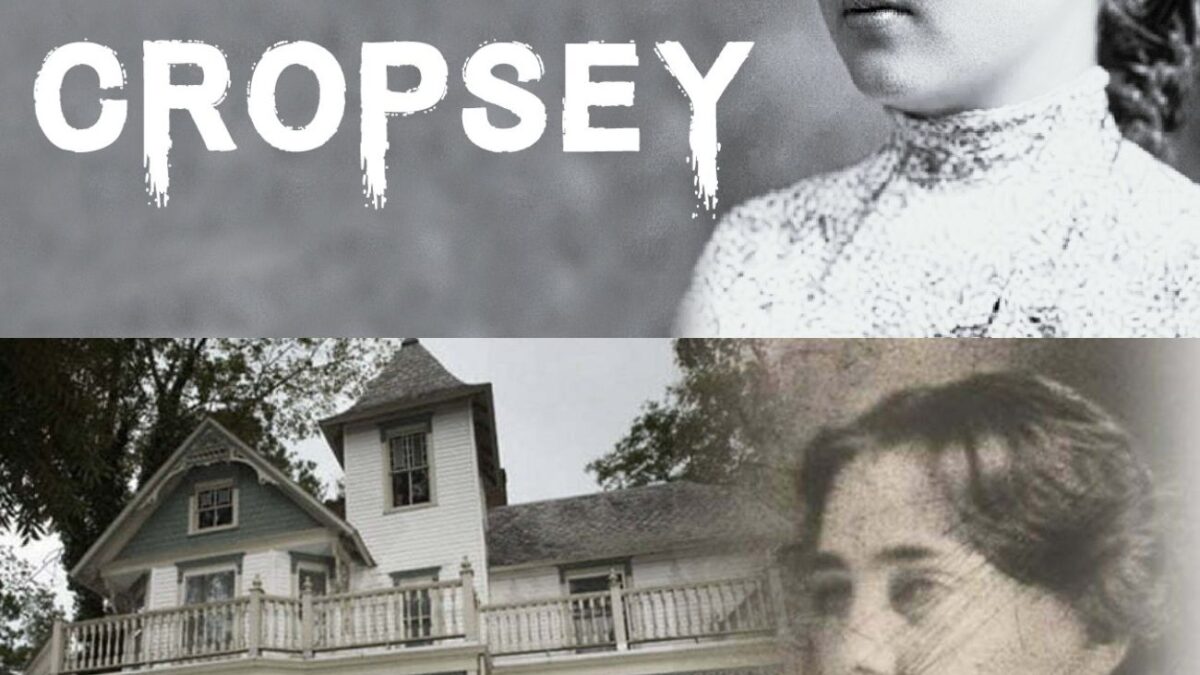
The Mysterious Case Of Nell Cropsey
Today we are looking at a case from the start of the 20th century, so sit back as we go to the USA. Nell Cropsey was born in New York in 1882, the third of nine children born to William Hardy Cropsey and his wife Mary Louise. She spent her childhood in a city that was changing rapidly. New York was crowded and busy with horse-drawn streetcars, wagons, and carriages filling the avenues while factories and workshops provided employment for thousands of families. Electricity was beginning to appear, but gas lamps still provided most of the lighting, and most homes had no modern conveniences. For working-class children, life could be demanding with household chores expected from an early age and many leaving school in their early teens to find work.
By the 1890s, New York was becoming an even larger and more modern city. The elevated railways carried passengers above the streets, department stores and theaters attracted growing crowds, and new immigrants continued to arrive from Europe. Yet life depended greatly on family circumstances. Some children grew up in cramped tenements where several families shared limited space, while others like Nell lived in a comfortable home. In 1898, however, the family left the busy life in New York and moved to Elizabeth City in North Carolina. Elizabeth City was very different from the busy metropolis of New York. It was a small but busy place of roughly 6,000 people and stood on the Pasquotank River, which was central to the city’s life with steamboats carrying passengers and agricultural produce, while lumber, tobacco, cotton, and other goods were traded through the waterfront.
By now Nell was 16 years old and started to attract the attention of some of the young men in the town. One of them was Jim Wilcox. He was clearly taken with her, and before long the two were spending more and more time together. Their relationship developed into a proper courtship, and Jim and Nell were often seen together around Elizabeth City. By 1901 they had been courting for around three years, but Jim had still not proposed. He worked in a mill, but was mindful of his father’s financial downturn, so was determined to establish himself through a correspondence law course and hard work, and was hesitant when anyone spoke of him and Nell getting married.
Nell, however, continued to attract attention from other young men, and although she never officially became involved with anyone else, she did allow some of them to believe that she might consider them as potential suitors. This very much annoyed Jim, and the couple began to argue quite frequently. Elizabeth City was a small place where people tended to know one another’s business, and word of Jim and Nell’s quarrels began to spread. Before long, their troubled relationship had become a topic of local conversation.
On the evening of November 20, 1901, Jim visited Nell at her family home. The Cropseys lived in a large house on a 65-acre farm beside the Pasquotank River. Also there that evening was Nell’s cousin named Carrie Cropsey, who was visiting from New York, as well as Nell’s sister Ollie, who was spending the evening with her own suitor, a young man named Roy Crawford. Jim had been a regular visitor at the house, but over the previous few weeks he had not been there. The evening was an unusual one. Jim was very quiet, and he and Nell barely spoke. Roy Crawford also behaved somewhat strangely, paying Nell several compliments even though Nell’s sister Ollie, who was being courted by Roy, was in the same room.
Around 11:00 p.m., Jim asked to speak with Nell privately, and the two stepped out onto the front porch. Shortly afterwards, the household began preparing for bed, and Roy Crawford departed, passing both Nell and Jim as he left the property. When Nell’s sister Ollie went upstairs to the bedroom they shared, she noticed Nell’s bed was empty. This, however, did not concern her, as she presumed that her sister was still talking with Jim outside.
Around midnight, a sudden commotion broke out in the backyard. Fearing that someone was trying to steal his pigs, Justice William Hardy Cropsey grabbed his rifle and rushed towards the door. Before he could investigate further, Ollie called out to warn him that Nell had not come back inside and might still be out in the yard with Jim. Justice William Hardy Cropsey searched the immediate grounds, but neither Nell nor Jim could be found, and the family became quite concerned. After conducting a thorough search of the premises on their own, Justice Cropsey contacted the local police, and at around 3:00 a.m., accompanied Police Chief Dawson to the Wilcox home, where they confronted Jim. He told the two men that he had left Nell on the porch at around 11:15.
Not convinced by his answers, Police Chief Dawson took Jim Wilcox back to the Cropsey house, where the young man repeated his story to Nell’s weeping mother. Despite both Justice Cropsey and Police Chief Dawson trying to get Jim to give them more answers, he refused to say any more, only that Nell was crying when he left. Unconvinced by his explanation, Police Chief Dawson placed Jim under arrest. An extensive and frantic community search immediately followed, involving the use of bloodhounds, dragging the nearby river, and inspecting over a hundred local homes. Despite these exhaustive efforts, 19-year-old Nell Cropsey remained missing, and there was no sign of where she had gone.
Over the next few days, the search continued while gossip and rumors spread throughout Elizabeth City. With no explanation of how she went missing, people began speculating about what might have happened. By now, the news of Nell’s disappearance had spread beyond North Carolina and somehow seemed to have reached all the nearby states. Rumors circulated that she had been seen in Plymouth, Norfolk, Mackay’s Ferry, and Goose Nest, but all proved to be false. There was even an apparent sighting in Baltimore, but again, it came to nothing. As the days and weeks passed, more claimed sightings of Nell surfaced, and many people in Elizabeth City felt confident she would turn up alive and well.
Mrs. Cropsey, however, did not share this opinion. Nell had gone missing in just the clothes she was wearing; if she had run away, she had taken nothing with her. So, Mrs. Cropsey held the view that something untoward had happened to her daughter. As well as the supposed sightings, an anonymous letter arrived at the Cropsey house in which the writer stated that on the night of her disappearance, Nell was in the yards and saw a man trying to steal the pigs. Because the man did not want to be recognized, he killed her and disposed of her body in the Pasquotank River. Despite their best efforts, however, the police were unable to trace the mysterious person who had written the letter.
On December 28, 1901, 37 days since Nell had gone missing, the body of a young woman was found by a fisherman named Charles Long floating in the Pasquotank River very close to the Cropsey family home. He went to the house to speak to Nell’s father and then went and informed the sheriff. As word of the discovery spread, it seemed that the whole city rushed to the shore to see what was happening, and among the crowd, there was an expression of sorrow and pity for the dead girl along with threats against the life of Jim Wilcox. Many people then started to question how the body had been found in the river so close to the place where the young girl had gone missing when that part of the river had already been searched so many times.
As tension grew, the police feared that some members of the crowd might try to take the law into their own hands and seek vigilante justice. The governor therefore ordered that special officers be immediately dispatched to arrest Jim Wilcox. They found him working in his father’s field, so he was taken at first to the mayor’s office, but then later moved to a cell in the local jail. Nell’s body was lifted from the water, wrapped in a sheet, and placed on a stretcher. It was then carried into a small barn in the Cropsey home, where the county coroner, a man named Dr. Fearing, attempted to undertake an autopsy. However, with the large crowd and the cramped conditions in the barn, a second autopsy was ordered, and the body was transported to Academy Hall.
The Cropsey family was devastated. Nell’s mother was particularly overcome by the tragedy. For weeks she had watched from her window each day hoping to see her daughter return alive, and the strain had left her completely overcome with grief. A coroner’s jury was ordered, and during the second autopsy, the doctors found no external signs of violence, apart from a bruise on the front of the head and slight discoloration on the neck and scalp. However, beneath the scalp, they discovered a dark bruise on the bone, although there was no fracture of the skull. The stomach contained about two ounces of dark fluid and undigested food. The lungs were collapsed and contained no water, and they also found that Nell had died a virgin, with her virtue still intact. Following the autopsy, an inquest began, which concluded that Nell had died from a blow to the left temple before her body was placed in the river, and the coroner’s jury subsequently returned a verdict which implicated Jim Wilcox in the crime and recommended that he be held for trial.
Two days later, the funeral service was held for Nell Cropsey before her body was transferred to Brooklyn to be buried in the family plot. As the trial approached, public sentiment seemed to be overwhelmingly against Jim Wilcox, and there was a widespread belief in his guilt. In fact, a group of local people who called themselves a citizens’ committee had been formed in order to gather information that might help the prosecution in their case. Inside the prison, there were many concerns regarding his safety. There were suspicions that someone had attempted to poison him, and ground glass had been found in his food. Due to this, he refused to eat the prison rations, and his sister brought him meals from the family home instead. The whole ordeal was taking a devastating toll on the Wilcox family, particularly his mother. The grief and notoriety of the case had worn her down so severely that her condition became critical, leaving her confined to her room for several weeks. Her husband, who was a former sheriff, told the press that her failing health was entirely brought on by the family’s deep trouble.
The case eventually came to court in mid-March 1902 and took place in Elizabeth City, North Carolina. It soon became one of the state’s most anticipated and talked-about murder trials. It was held before Judge Jones, and the proceedings drew vast crowds who filled the gallery, while the jury remained under constant guard, housed overnight above the mayor’s office. The prosecution was led by District Attorney Ward, who opened the case by presenting detailed forensic evidence which aimed to establish that 19-year-old Nell Cropsey had been the victim of a violent murder rather than an accidental fall or death by her own hands. He presented medical experts, including Dr. Fearing, who had performed the autopsy, and Dr. J. Woods, the county health officer. Both men were able to give a detailed description of the condition of the body and agreed that despite 37 days in the water, the body was remarkably well preserved. Dr. Woods attributed this to the cold preservative qualities of the juniper-tinged Pasquotank River.
Both doctors noted the absence of water in Nell’s lungs and stomach, which according to Dr. Fearing strongly indicated that Miss Cropsey was not breathing when she entered the river and thus did not die by drowning. He added that he also found a significant bruise on her left temple accompanied by clotted blood beneath the scalp. Dr. Woods expressed the opinion that the injury had been produced by a compact handheld impact weapon such as a cosh, and that the blow had been inflicted with sufficient force as to cause a fatal bruise before the body was thrown into the river. When asked if they had found any photographs on her person, Dr. Woods replied that they had not, and this was important as it directly undermined Mr. Wilcox’s claim that he had handed Nell her picture back on the night she vanished.
The defense was led by Mr. Aydlett, who subjected the medical experts to an aggressive cross-examination, pressing them on whether drowning could still occur without fluid in the lungs and arguing that a bruise alone was insufficient to prove the cause of death beyond a reasonable doubt. The prosecution then called a number of witnesses to examine Mr. Wilcox’s movements on the night Nell disappeared and to challenge his account of what had happened. Leonard Owens, an 18-year-old boat engineer, testified that he had seen Mr. Wilcox near the Cropsey residence at around 11:45 p.m. This evidence placed Wilcox in the area at a time that contradicted the statement that Jim himself had given. Mr. G. H. Forbes, who kept a local livery stable, gave evidence about the time shown on Mr. Wilcox’s watch compared with the town clock; his testimony was intended to establish whether Wilcox’s account of the night’s events was consistent with the actual time.
Chief Dawson described the investigation and the measurements taken at the scene, including the distance between the Cropsey residence, the summer house, and the place in the river where Nell’s body was eventually discovered. He also recalled arresting Mr. Wilcox and said that he was found in his bed with mud on his trousers reaching as high as his knees. The prosecution, however, ensured that there would be an emotional climax to their case through the testimony of Nell’s sister, Ollie Cropsey. She recounted the evening in detail, testifying that Mr. Wilcox was visiting their household alongside other guests. She described a tense atmosphere and said that Nell and Mr. Wilcox had been arguing over the previous few weeks and that night Nell had seemed reluctant to engage in conversation with him.
According to Ollie, at approximately 11:00 p.m., Mr. Wilcox pulled out his watch, mentioned his mother wanted him home, rolled a cigarette, and asked Nell to step outside onto the porch for a minute. She said that Nell complied, and this was the last time the family saw her alive. In an emotional testimony, Ollie further described the harrowing hours that followed. She said that she heard the dogs barking at around midnight and told of when she realized that her sister was missing and the search that ensued. She said that sometime in the early hours, Mr. Wilcox was brought back to the house. It was in that moment on the witness stand that the young Miss Cropsey broke down. After a few minutes she regained her composure and continued her testimony, saying that she could remember her mother grabbing Mr. Wilcox by the arm and saying, “Jim, for my sake and your mother’s sake, tell me where Nell is.” She stated that Mr. Wilcox swore that he did not know and claimed that he had left Nell crying near the porch. Miss Cropsey added that when someone later falsely reported that Nell had been found, Mr. Wilcox’s hand shook and his arm visibly trembled.
Throughout this intense courtroom drama, newspaper dispatches frequently remarked on the stark contrast between the heavy emotional atmosphere and the prisoner’s unyielding composure. He sat quietly beside his father and legal counsel and maintained a calm, almost emotionless demeanor despite the compelling testimony from the Cropsey family, the medical experts, and other witnesses called by the prosecution. The case faced one significant hurdle: the absence of direct physical or eyewitness evidence that linked Mr. Wilcox to the crime itself. The defense attorneys repeatedly emphasized to the jury that the prosecution’s case rested entirely on circumstantial deductions. When all the evidence had been presented, both the prosecution and the defense rested their cases and began closing arguments.
For the defense, Mr. McCullum and Mr. Leary attacked the medical testimony regarding whether Nell had drowned and argued that the evidence pointed squarely towards her dying by her own hands or by an accident rather than by foul play. Mr. Bond then spoke for the defense for nearly three hours, managing to move some spectators to tears by expressing deep sympathy for the grieving Cropsey family while vigorously maintaining that there was no conclusive proof that Mr. Wilcox had murdered Nell. He ended by warning the jury against being swayed by popular pressure, mob mentality, or intense public prejudice. For the prosecution, Mr. Sawyer and Mr. Ward reviewed the medical evidence, arguing that a violent blow to the head, not drowning, had caused the tragic outcome, and pointed directly to the defendant, claiming that he had killed 19-year-old Nell Cropsey. When they did, Mr. Wilcox showed no reaction and maintained his usual cold expression.
Following the closing arguments, the judge summed up the case, and the jury was sent out to deliberate. They did so for over a day before returning to declare that they found the defendant, James Jim Wilcox, guilty of first-degree murder, and the judge sentenced him to death. The courtroom fell silent as the sentence was pronounced before murmurs could be heard among those gathered in the gallery. The reality of the punishment now faced by Jim Wilcox was clear to everyone in the courtroom; however, his legal battle was not over. His attorney filed for a mistrial, claiming that some members of the jury had been pressured into finding his client guilty. The conviction was then overturned and a mistrial declared, meaning that Jim Wilcox would have another day in court.
The second trial began in March 1903, this time in Hartford, as the defense did not believe that their client would receive a fair trial in Elizabeth City. The case proceeded in the same way, and the witnesses were the same as those called in the previous trial. Again, the jury found Jim Wilcox guilty, but this time of second-degree murder, and he was sentenced to 30 years in prison. In both trials, Jim had pleaded not guilty, and from his prison cell, he continued to insist that he was innocent. In November 1904, efforts were made to get him pardoned, but this petition was denied by the governor. Over the next 10 years, there were further petitions seeking a pardon for Jim Wilcox, but each one was denied.
By March 1915, however, sentiment towards him had changed, and many people in Elizabeth City who had previously believed him to be guilty had since changed their minds and were now of the opinion that Nell Cropsey had died by her own hand. Another petition containing thousands of signatures calling for a pardon was again presented to the governor, and there were reports that Wilcox had contracted tuberculosis while in prison and that unless he was released, he was not expected to live much longer. However, once again, after considering the petition, the governor refused to pardon him. Another petition was denied in 1917, but in December 1918, Governor Bickett finally pardoned Jim Wilcox, saying that no further good could come from keeping him in prison.
Following this, Jim returned to Elizabeth City but found little welcome there. Although there were those who felt that he had been wrongly convicted, others did not share that opinion, believing that if he was innocent, he would have testified in his own defense at the trials. Jim struggled to find work and increasingly withdrew from the people around him. He was asked by many newspapers to give his side of the story, but always declined their offers. In 1934, he did agree to meet a local newspaper owner named W. O. Saunders to discuss the possibility of writing a book about Nell Cropsey’s death. He had met Mr. Saunders previously while in prison, and although what was actually said in the meetings between the two men remains unknown, it was reported that Mr. Saunders came away convinced that Jim Wilcox had not been responsible for Nell’s murder.
On December 4, 1934, two weeks after his meeting with Mr. Saunders, Jim Wilcox was dead. He had died by his own hand. But he was not the only person connected to the case whose life ended tragically. Over the years, others who had been close to Nell also met unhappy ends. Roy Crawford, who had been Ollie Cropsey’s suitor and was present at the house on the night Nell disappeared, died by his own hand in 1908. Nell’s younger brother Will died the same way in 1913, and Nell’s sister Ollie never married and eventually became a recluse, spending the remainder of her life largely withdrawn from society.
The tragic aftermath of Nell Cropsey’s disappearance therefore continued for decades, leaving many to believe that Jim Wilcox was innocent, while the full truth surrounding Nell’s death remained forever buried in the past. To this day, the legacy of that fateful night lingers along the banks of the Pasquotank River. Over the years, the old Cropsey homestead became central to local folklore, with generation after generation whispering stories of a lonely, ghostly figure in period dress wandering the property in the mist. Whether these spectral encounters are merely the product of a grieving town’s collective imagination or a lingering echo of a young life cut short, they ensure that the sorrow and mystery of Nell Cropsey will never truly be forgotten.

