The Monster Of The Andes | Pedro Lopez
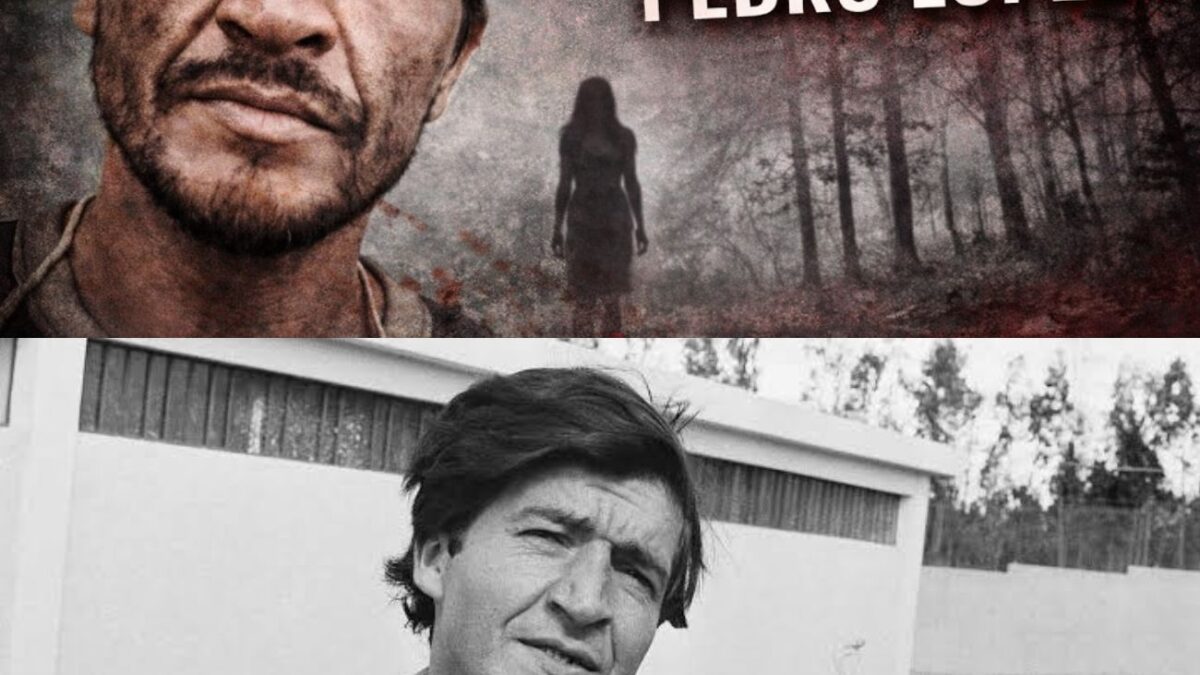
The Monster Of The Andes | Pedro Lopez
Childhood was hard; he was born on October the 8th, 1948, in Tolima, Colombia, which at the time was politically unstable and had the highest crime rate in the world. He was the seventh of thirteen children born to a Colombian prostitute. His father, Madero Reyes, was a member of the country’s right-wing political party and was killed in the armed conflict that destabilized the country. Pedro’s mother, Belinda, was three months pregnant with Pedro at the time of his father’s death.
When Pedro was eight, his mother caught him touching his sister, so she threw him out of the house. Other accounts, however, say that he ran away of his own accord. So eight-year-old Pedro was living on the Colombian streets. One day, he was offered food and shelter by a sympathetic Colombian, but the eight-year-old was taken to an abandoned building and repeatedly sexually assaulted before being put back on the streets. It is thought that this attack had a major influence on Pedro’s later life of crime. After being assaulted in Tolima by the pedophile, Pedro became very aware of strangers. He stayed out of sight during the day and looked for food at night.
Soon after his ordeal, he left and traveled to the Colombian capital, Bogota. In Bogota, he was helped by an American couple who took him to their home and enrolled him in a school for orphans. But when he was 12, a male teacher molested him. Pedro then went back to his life on the Bogota streets. As Pedro got older, he graduated from small crimes such as stealing food to larger crimes such as stealing cars and selling them to chop shops. Now, chop shops are places that would break up the car and sell on the parts. At the time, it brought in a good income for Pedro, but at 18, he was arrested and sent to prison for car theft. In prison, he was set upon by four inmates and gang-raped. This made him so upset and angry that it was allegedly consuming him. He then killed three of the four men responsible. The Colombian authorities added a mere two years to his sentence as they judged his actions to be self-defense.
During his time in prison, he thought a lot about his life and childhood and developed a rage towards his mother who had put him out on the streets. He was also fascinated with pornographic magazines. His memories of his prostitute mother and pornography started to feed Pedro’s demented hatred of women. Pedro was released from prison in 1978 and moved to Peru, where he began kidnapping and killing young Peruvian girls. These girls were usually of indigenous background and with limited economic means. He was eventually caught by a group of Indians who tortured him and buried him up to his neck in sand. Fortunately for Pedro, an American missionary was passing and persuaded them to release him to the Peruvian authorities, which they reluctantly agreed to do. The Peruvian police, however, did not want to get involved with what they considered to be a trivial local complaint, so deported him to Colombia without truly considering the crimes inflicted upon Peruvian citizens and the danger he posed to society.
The near-death experience did nothing to stop his murderous ways, and his killing of young girls continued. Ambato, Ecuador, is built on the banks of the Ambato River in a valley surrounded by mountains, and in 1980, the people were celebrating the festival of fruits and flowers, which is one of the most important festivals in Ecuador. However, their celebrations were muted as girls between the ages of 8 and 12 had gone missing. The increase of missing girls was noticed by authorities, but it was concluded that they had probably been kidnapped by child peddlers or sold as sex slaves, or had just run away as they had not been doing so well at school that year. In Ambato, there was unseasonal high rainfall which resulted in a flood, and this exposed the bodies of four murdered children. Only now did Ecuadorian authorities realize there was a serial killer at large.
The police didn’t have many resources or leads. In order to catch the killer, they would even need the public to be vigilant or have luck on their side. A few days later, they got their breakthrough. At the Plaza Rosa marketplace in Ambato, Cabina Pavetta saw a man leaving the plaza with her twelve-year-old daughter Maria. She shouted loudly at the man, who was later discovered to be Pedro, and he was captured by the townspeople. He was taken to the police station, and soon the police realized that they had a madman in their custody. Pedro, however, refused to answer any questions, so they decided to enlist the help of a local priest. They dressed him as a prisoner and placed him in a cell with Pedro. The priest soon got Pedro talking, and he shared his brutal crimes with his new cellmate.
When Pedro was confronted by the police about the crimes he shared with his cellmate, he broke down and confessed. His memory of his crimes is very clear, which is remarkable since he confessed to killing at least a hundred and ten children in Ecuador, over a hundred more in Colombia, and another hundred in Peru. Pedro admitted that he would walk the streets looking for innocent, good girls, and he would lure them away with a promise of gifts. “I like the girls in Ecuador,” he told police. “They are more gentle and trusting, more innocent. They are not as suspicious of strangers as Colombian girls. They never scream, they expect nothing, they are innocent.”
Pedro usually prepared graves in advance, sometimes filled with the dead bodies of other girls he had killed. In the course of his confession, Pedro declared that he had lost his innocence at age eight, so he had decided to do the same to as many young girls as he could. He would walk around markets in villages looking for selected targets with a certain look of innocence. Pedro first raped his victims, then stared into their eyes as he strangled them, deriving sadistic pleasure from watching them die. He hunted his victims by daylight, then he would always calm his victims with soft, reassuring words throughout the night. Then, at sunrise, he would rape and strangle them, satisfying his sexual needs as he watched their eyes fade as they died. He never killed at night because he could not see the victims’ eyes, and he felt without that element, the murder was a waste.
In Pedro’s confession, he told of having tea parties and playing morbid games with the dead children. He would prop them up in their graves and talk to them, convincing himself that his little friends liked the company. But when the dead children failed to answer, he would become bored and go off to find another victim. Police were initially skeptical of their suspect’s gruesome claims, but doubts evaporated after Pedro led detectives to 53 graves in the vicinity of Ambato. He stood by in irons as the police unearthed the remains of girls aged 8 to 12. At 28 other sites, searches came up empty; this was probably due to the bodies being taken by predatory animals, but the police were now convinced of Pedro’s guilt. The public renamed Pedro the “Monster of the Andes.”
The trial started on the 31st of July 1981. Pedro was now 33 years old, and he pleaded guilty to the murder of 57 girls and was imprisoned in Ambato, where he was officially diagnosed as a sociopath. Because of Ecuador’s laws, he received the maximum jail sentence, which at the time was 16 years. Ecuador would later change its maximum prison sentence to 25 years, so this meant for one child’s life, Pedro served roughly one month in prison. However, no one was concerned that Pedro would have the opportunity to kill again if paroled, because upon release from prison in Ecuador, he would still have to stand trial for his murders in Colombia and Peru.
Pedro never showed remorse for his crimes. In a prison interview with a journalist, he said that if he got out of prison, he would happily return to killing young children. The pleasure he received from his demented acts of murder overpowered any sense of right from wrong, and he admittedly looked forward to the opportunity to wrap his hands around the throat of his next victim. After 14 years in prison in Ecuador, Pedro was released. He was released two years early for good behavior and deported to Colombia, his homeland, where authorities attempted to convict him for a two-decade-old murder. Instead, he was declared insane and, in 1995, institutionalized in a psychiatric facility.
Three years later, in February 1998, he was declared sane and released under a 50-dollar bail with one or two additional stipulations. He then went and visited his elderly mother and asked for his inheritance. He was informed that she was living in poverty, so he sold her sofa bed and chair to people on the streets, and he vanished.
Pedro has not been seen since, and what ever happened to the Monster of the Andes remains unknown to this day. While many believe that one of the many bounties offered for his head eventually caught up with him in the shadows of the South American underworld, no official proof of his death has ever surfaced. Whether he quietly perished in obscurity or lived out his final years hiding in plain sight, the chilling reality of his freedom remains an unpunished ghost in criminal history. Pedro Alonso Lopez was responsible for the horrific murders of over 350 children, yet in 1998, he was set free, leaving behind a legacy of absolute terror that continues to haunt the world.
I hope you liked the story, and if you did, please hit the like button and leave a comment, and I will see you for the next brief case.

