The Horrifying Case of Maria Marten & The Red Barn
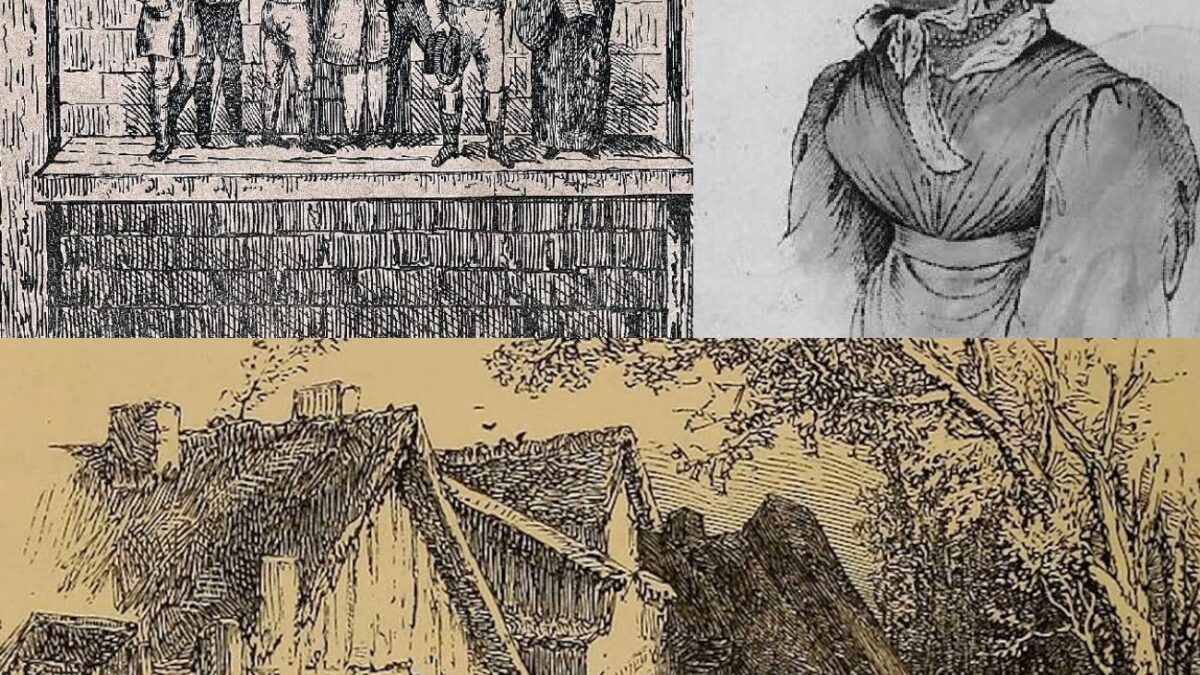
The Horrifying Case of Maria Marten & The Red Barn
Today we are looking at a case from the first part of the 19th century, so sit back as we go to England. Maria Martin was born on the 24th of July, 1801, in the small village of Polstead in the English county of Suffolk. Her father, named Thomas, was a mole catcher, trapping the little creatures in places where they were considered a nuisance to crops and gardens. At the time, England had not established a compulsory system of education, and very few children received any schooling. Maria, however, was an intelligent child, and from the very little teaching she received, she learned to read and write.
It was a humble upbringing in the Suffolk countryside, but when she was nine years old, tragedy struck when her mother died. Maria now took it upon herself to look after her younger brother and sister, and eventually, her father remarried. Maria grew up to be a very attractive and very likable young lady. She was often approached by the local gentlemen in the village, even though she was considered to be of a lower social status. One gentleman was named Thomas Corder, the son of a wealthy tenant farmer. He became a regular visitor to the small cottage where Maria lived with her family. However, he did not want it to become known that he was courting the daughter of the local mole catcher, and their relationship was conducted in a somewhat secretive manner.
Maria was only 17 years old and quite an impressionable young lady, although she was surprised when she discovered that she was with child. As the pregnancy progressed, Thomas’s visits became increasingly less frequent. Following the birth of the baby, Thomas stopped visiting altogether. He did not want to draw attention to the fact that he had fathered an illegitimate child, and he also did not provide Maria with any child support. It was a very difficult time for her. She was now 18 years old and living in the small cottage. At the time, the infant mortality rate was 300 deaths per 1,000 infants born, but higher in the more rural areas. Sadly, Maria’s baby died a few months later.
Maria started a relationship with a respectable gentleman named Mr. Peter Matthews. He was not from the village, but knew Polstead well as he had relatives who lived there. Again, she soon discovered that she was pregnant, but just like Thomas Corder, Mr. Peter Matthews had no intention of marrying her. Fortunately, however, this gentleman was not going to totally abandon her either, and he agreed to provide financial assistance for his child.
Thomas Corder’s youngest brother was named William, a likable character who unfortunately did not have the best of reputations. He had attended a boarding school where he was considered a bright student, but earned the nickname of Foxy due to his sly manner. He once fraudulently sold his father’s pigs, although his father managed to settle the matter without involving the law. He also passed a forged check for the sum of 93 pounds and became well known to the local constable when he assisted a man named Samuel Smith to steal a pig from a neighboring village. His father had come to despair of his youngest son’s transgressions, so sent him to London in the hope that he would find work and change his ways. Instead, William gambled and spent all the money he had been given.
William had to return to Polstead as his father and brothers all died within 18 months of each other. Thomas had drowned after attempting to cross a frozen pond, and his father and other brothers succumbed to tuberculosis. This meant that William now had to run the farm with his mother. In March 1826, he started a relationship with Miss Maria Martin. She was now 24 years old, and neither Maria nor William seemed concerned that she had had a previous relationship with William’s now-deceased brother Thomas. It did seem, however, that William approached their relationship in the same way. He too made sure that they were never seen out together. This became more difficult when she discovered that she was with child.
In an attempt to avoid the local gossip, the couple left the village and went to live in the nearby town of Sudbury, where they claimed to be husband and wife. When, in 1827, her baby was born, Maria insisted that William marry her, and although he agreed that he would, he always found an excuse to delay the wedding. The couple returned to Polstead, but within a month of giving birth, the baby died. William suggested that they take the body back to Sudbury for burial, and although he and Maria did leave the village to travel the ten miles to the town, William stopped before they arrived and instead buried his baby in a field.
With no living child, William had no reason to now marry Maria. She was considered a fallen woman, and it would be difficult for her to find a husband, especially one that was considered to be in good financial circumstances. However, William told her and her stepmother that he was a gentleman and maintained that he intended to marry her. Although he was now working, he was in fact reliant on his mother for a weekly wage. She was aware that her son would often spend everything he had, so made sure that she kept control of the money, something that displeased William.
Mr. Matthews continued to pay Maria maintenance to assist with the upkeep of the child that he had fathered, but on one occasion in 1827, it disappeared. Knowing William had a rather checkered past, she thought that he may have stolen it. She was in a hopeless situation, as if she accused him and he was found guilty, he could be hanged for theft, yet she could also be prosecuted for being a young woman who had given birth to three illegitimate children. William had promised to marry her, and she knew that if he did, the magistrate would no longer be able to bring these charges against her. William denied taking the money and continued to say that they would soon be married.
In May 1827, William arrived at the Martin’s small cottage and told Maria and her stepmother named Anne that he had heard that the local constable was seeking to get the authority to prosecute Maria for giving birth to three illegitimate children. He said that Maria would have to leave the village, so together they would make their way to the market town of Ipswich. Plans were made to leave on the Wednesday evening, but this was delayed until Friday the 18th of May, when William came to the cottage and told Maria that they had to leave immediately, as he had been reliably informed that the warrant to prosecute her had been signed and that she would soon be arrested.
Mrs. Anne Martin was worried about her stepdaughter leaving in the daytime, as she feared that she may be recognized. William told her that Maria should dress in boy’s clothes and meet him at the Red Barn on Barnfield Hill. He would take a dress for her to change into before going to Ipswich. Fearing arrest, Maria hurriedly got ready and made her way to the Red Barn.
Over the next few weeks, William continued to work on the farm, although there was no sign of Maria. When approached by her father, Mr. Thomas Martin, William reliably informed him that his daughter was staying on the Norfolk coast in Yarmouth and did not want to yet return to Polstead as she feared she may be arrested. He said that she would soon write, but at present was unable to as she had unfortunately injured her hand. Despite William’s assurances that Maria was quite well, questions continued to be asked about her whereabouts. Anyone that inquired was told that they were to marry in September, but his reputation meant that many did not believe him.
Eventually, William decided to leave Polstead and moved to London. He continued to write to Maria’s father and stepmother, informing them that he and Maria had married and were now living happily on the Isle of Wight. Strangely, he also requested that Mr. Martin burn the letters, citing that he and his wife feared that Mr. Peter Matthews may find out their address.
As the months passed, Mr. and Mrs. Martin became increasingly more concerned about Maria. It was now 1828, and they had not heard from her since the 18th of May the previous year. William always informed them that she was very busy and that she had written, but if the letters had not arrived, they must have been lost. The villagers no longer gave much thought to Maria Martin; after all, she had given birth to three children out of wedlock and was now apparently living elsewhere.
However, Mrs. Anne Martin was becoming increasingly more troubled. She believed that something was not right and began to dream about her stepdaughter and talk in her sleep. She would say that Maria had been murdered and buried in the Red Barn. On the 19th of April 1828, her husband agreed to go to the barn. He did not think he would discover anything, after all, many people had been in and out of it since Maria left with William, and no one had ever suspected anything untoward. Nevertheless, he went there and started to dig around the grain storage bins. A few moments later, he was horrified as he saw beneath him what he thought was a badly decomposed body covered with a sack.
He then contacted the constable. Once assistance had arrived, the deceased was taken to the local inn where an inquest was arranged. Despite the poor condition of the body, it was identified to be Miss Maria Martin. Her sister and stepmother recognized the clothes she was wearing, her hair color was the same, and there was a small gap in her teeth. It was noticed that wrapped around the neck was a green handkerchief, which was said to have belonged to Mr. William Corder. A doctor concluded that she had been shot. She also had stab wounds in her chest. Cause of death, however, was impossible to determine, so nine different possibilities were listed, including strangulation and being buried alive.
It was now up to the constable to find Mr. William Corder. Unbeknownst to everyone in Polstead, he had in fact married, and along with his new wife, was running the Everly Grove Boarding House for Ladies in the town of Brentford, just a few miles west of London. His wife was named Mary Moore, and he had met her by placing an advertisement in the lonely hearts pages of two newspapers. His advert had been very convincing, and he had apparently received over 100 replies.
Polstead Constable Ayers was assisted by a London policeman named Officer Lee, and together they managed to trace the suspect to the ladies boarding house in Brentford. Officer Lee approached Mr. Corder on the pretext that he had a daughter who he would like to stay there for a while. When the three gentlemen were alone, Officer Lee told William that he had the authority to arrest him and have him taken back to Suffolk, where he would be charged with the murder of Maria Martin.
The trial was to take place in the town of Bury St Edmunds, and even before it began, the press and the public had declared him to be guilty. Puppet shows told of how he had killed Maria in the Red Barn, and songs were written about him. The intrusion of the media and the fascination of the public meant that the trial had to be delayed. The judge, the Chief Baron of the Exchequer, William Alexander, was so displeased by the coverage given to the case he said that it was to the manifest detriment of the prisoner at the bar. As it had been difficult to determine the exact cause of death, William Corder was charged with murdering Maria Martin by willfully shooting her with a pistol through the body and likewise stabbing her with a dagger. However, to avoid any chance of a mistrial, he was indicted on nine charges, including one of forgery.
The trial eventually started on the 7th of August 1828 and took place at Shire Hall in Bury St Edmunds. The hotels in the town were full, and as the interest was so great, the entrance to the court was by ticket only. Nevertheless, on the day, large crowds gathered outside hoping to get a glimpse of the accused. There were so many people that even the court officials had to push their way to the front so they could be allowed to enter the building.
The defendant, Mr. William Corder, pleaded not guilty. He was reminded by the defense that he was the last person to have seen Maria alive, and witnesses told of the events of Friday the 18th of May 1827. Mrs. Anne Martin informed the court of how William instructed Maria to dress as a boy and make her way to the Red Barn, as she told them that she had to leave Polstead because the constable was going to arrest her on the charge of having given birth to three illegitimate children. However, when questioned, the constable said that he had never considered obtaining a warrant to arrest Miss Martin.
Maria’s brother named George, who at the time of her disappearance was nine years old, informed the court that he had seen the defendant on the day in question. He said that Mr. William Corder was walking towards the barn with a pistol and a pickaxe. The prosecution claimed that the defendant had never intended to marry Ms. Martin and that tension had been caused between them following the theft of the money that had been sent by Mr. Matthews, the father of her living child.
When Mr. William Corder took the stand, he told a different story. He said that Maria had been in possession of his pistols and that she had been ever since they had lived for a short time in Sudbury. He insisted that she had taken them to be repaired. The gunsmith testified that they were indeed collected by both a young lady and a young gentleman. Other witnesses testified that they had seen the pistols solely in Maria’s possession.
William confirmed that he had been in the barn with Maria, but said they had argued and that she was talking unfavorably to him. He claimed that he had told her that if she was to treat him in this manner, he would not marry her. He said that he then left the barn, and as he was walking away, he heard a shot, so he rushed back only to find Maria had killed herself. In a panic, he buried her body. He told the court that he was innocent of the crime for which he was being charged.
When the jury retired to consider the verdict, they did so for only 35 minutes before returning to find the defendant, Mr. William Corder, guilty, and the judge sentenced him to death. He was then escorted back to the prison, where he was visited by his wife. Throughout the trial, she had maintained a calm and dignified manner, and now, along with a prison chaplain, encouraged him to make his peace with God.
The execution was set for the 11th of August. When the day arrived, William wrote a full confession. He claimed that he and Maria had argued and he had shot her, but he maintained that it was an accident. Just before 12 PM, he mounted the scaffold where a large crowd had gathered behind the prison. Before he was hanged, he said, “I am guilty, my sentence is just, I deserve my fate, and may God have mercy on my soul.”
His body was left hanging for an hour before being taken back to the courtroom at Shire Hall. Here, it was slit open and put on display to the public. The newspaper, the Norwich and Bury Post, estimated that in excess of 5,000 people lined up to view it. The case of poor Maria Martin had fascinated the whole country, and following the trial, books and plays were written about it. Pieces of the rope which were used to hang William Corder were sold for a guinea, and a lock of Maria’s hair sold for two guineas. Polstead became very popular with visitors and souvenir hunters, and it was estimated that in the year of the trial, more than 200,000 people descended on the small village. The Red Barn was stripped for souvenirs, which included toothpicks made from its wooden side planks. Souvenir hunters also took pieces of Maria Martin’s gravestone from the churchyard of St. Mary’s, so much so that now only a sign on a shed marks the place where she is buried.
William Corder’s skeleton was put on display in a glass case in West Suffolk until 2004, when it was finally removed and cremated, allowing a measure of quiet to settle over a legacy that had long transcended mere history. The Red Barn burned down in 1842, and the body of Maria Martin’s baby that was believed to have been buried in a field has never been located. The 1828 Red Barn murder case has been the subject of songs, books, and plays, as well as TV shows, movies, and documentaries, and nearly 200 years later, remains one of the most well-known British murder cases, sealing its grim and enduring place in the annals of true crime.

