The Exorcist Priest of 1932 Who Confessed What He Saw Before He Left the Faith
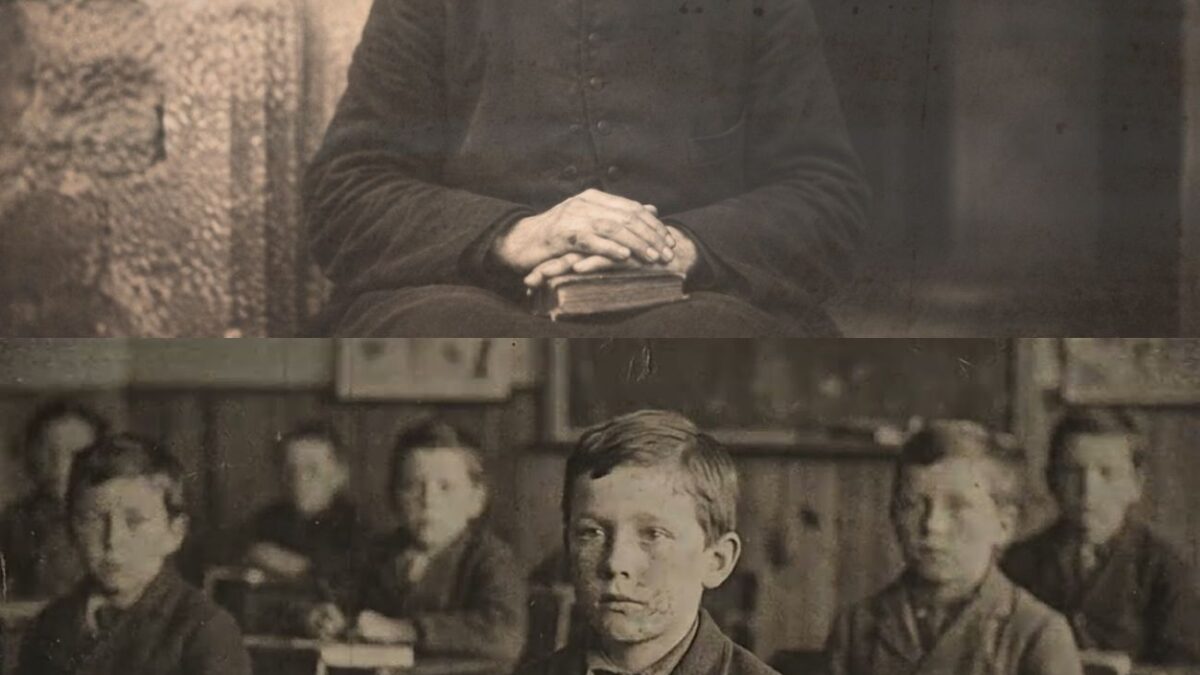
The Exorcist Priest of 1932 Who Confessed What He Saw Before He Left the Faith
In the winter of 1932, a priest sat alone in a cold room and wrote a letter he was never supposed to send. He had spent eleven years inside the church, performing rites most only read about in old books, in rooms where candles refused to stay lit and the air felt thick enough to chew. On that night, with his hands still shaking, he wrote a single line across the top of the page: I have seen the seam where the world was stitched back together, and I can no longer pretend I did not. Three days later, Father Matias Verhalt folded his collar, laid it on the altar of the cathedral he had served for a decade, and walked out into the snow. He did not resign in the usual way, nor did he ask for a transfer. He simply vanished from every register the diocese kept, as if someone had taken a wet cloth and wiped his name off the ledger of the living. For ninety years, almost no one knew what he had written. The letter was not lost; it was buried quietly in the back of an archive that most people are not allowed to enter. When it finally surfaced, it did not read like the ravings of a broken man, but like a confession from someone sent to cast out demons who came back convinced the real deception was not hiding in the dark corners of a haunted house. It was printed in neat type in the history books we were all handed as children, but this is the story of that priest, of what he claimed to have seen, and why he came to believe an entire civilization had been erased from the record.
His buildings had been reassigned to lesser hands, and his story rewritten so completely that we now walk past the evidence every single day without a flicker of suspicion. You do not have to believe a word of it, but by the time we are finished, I promise you will never look at an old building the same way again. To understand why Matias Verhalt broke, you first have to understand how solid his background was. His father worked with his hands, his mother kept the house and kept the boy in line, and from an early age, Matias showed a quality his teachers found unusual: he did not accept easy answers. When told a thing was simply true, he wanted to know how anyone had come to know it, a trait that made him a difficult student and an excellent one. He studied theology, but he also studied stone because in that city the two were tangled together. He read the histories of the great churches and learned the names of the men who supposedly built them, yet even as a young seminarian, something small and cold sat in the back of his mind—a question he did not yet have the words for. He looked at what surrounded him and then at what he was told about who made it, and the two did not fit. He pushed the feeling down, knowing faith is partly the discipline of not needing every answer at once.
He was ordained young—sharp, obedient, and unusually calm under pressure. That last quality is why the diocese eventually gave him a role almost no priest wants and very few are trusted with: they made him an exorcist. Before your mind runs to the films, understand what that word actually meant in his world. It was not theatrical or a performance for a camera; it was a bureaucratic and spiritual burden involving sitting with people society had given up on—the mentally ill, the desperate, the grieving men and women whose families had run out of doctors and hope. Most of the cases Verhalt handled had nothing to do with the supernatural, and he knew it, writing in his early notebooks that human suffering simply wore a frightening mask and his real job was patience. But he also wrote carefully that a handful of cases did not fit that explanation, and he was too honest a man to pretend they did. For eleven years he did this work, building a reputation as the reliable priest you called when a case was serious because he never panicked and never exaggerated.
Then, in the autumn of 1932, he was handed the case that would end his career, unravel his faith, and send him walking out into the snow with nothing but a folded collar and a letter he was afraid to send. The case came from a village outside the city, built around one of the strangest structures in the region. To the locals, it was just the old fort, a low fortress of earth and stone that had stood for as long as anyone could remember, but it was not shaped like a normal fort—it was shaped like a star. If you have never really looked at a star fort, stop and look at one now, because they are one of the great unexplained facts hiding in plain sight all over the world. There are hundreds of them on every inhabited continent, sharing a precise geometric design with points radiating outward like a frozen explosion, angles calculated with a mathematical exactness that seems wildly out of step with the muddy, low-technology world told to have built them. We are told they were military and that the shape deflected cannon fire and eliminated blind spots, and there is truth in that as far as it goes, but it never seems to go far enough when the identical geometry appears in places that never fought the same war.
Verhalt noted that many of them sat in low, wet ground beside rivers, marshes, and coastlines—positions a general would never choose for defense, but an engineer might choose for something else entirely that needed water and flat, conductive earth. He noted that their points aligned with a strange consistency to the compass and to one another, as if the whole scattered network had once been laid out as a single instrument spread across a continent. He noted that the oldest chambers, the sealed ones, held recesses, channels, and fittings that no cannon needed and no soldier could explain, with the metal carefully stripped away, leaving only sockets where something important used to sit. Someone had gone through these places, removed a particular thing thoroughly everywhere, and left empty stone behind to be called a fortress. He began to suspect the forts were not defenses repurposed into machines, but machines repurposed into defenses, that the war story had been draped over them afterward the way the church story had been draped over cathedrals. Always the same method: take the inexplicable thing, invent a mundane purpose for it, assign it to the wrong hands and century, and trust no one would count. The forts were not built to keep armies out; they had been emptied to keep the truth in.
Verhalt did not know any of this when he arrived, knowing only that a young man in that village had begun speaking in ways that terrified his family. The family met him at the door, pale and exhausted, explaining their son had not slept in weeks, stopped eating, and began talking in long, lucid, terrible sentences about things a farm boy had no way of knowing. Verhalt sat with him, listening without confronting, and recorded in his careful handwriting what the young man said. The boy talked about the fort, saying it was far older than histories named and that the star was an instrument, a machine that gathered and moved a power the modern world had forgotten how to name. He described a city that no longer existed—streets of white stone, towers crowned with strange metal crowns, and a warm, constant light coming from the buildings themselves with no fire and no wire. Then he said the sentence Verhalt underlined twice so hard the pen tore the paper: “They did not lose it. They took it from you, and they made you thank them for the theft.”
The priest went home that night and did not sleep either. A lesser man would have dismissed it as a frightened farm boy repeating scraps of a pamphlet or a traveling storyteller, and Verhalt considered that seriously, but two things gnawed at him: first, the boy could not read; second, the boy had described the interior of the fort’s oldest chamber, a room sealed for generations, in exact and specific detail that Verhalt later confirmed he had never been inside to see. That was the crack, and once a crack like that opens in a relentless mind, it spreads. He should have finished the rite and moved on, but instead he began to investigate quietly, telling himself he was gathering evidence to disprove the boy. We know from his later writing he was pulling a thread that ran straight into the foundations of the world he trusted. He started with the buildings because buildings cannot lie, only the stories we tell about them can. He asked who built his own cathedral and how, and the official answer of a name and a date began to feel absurd when looking at the scale, the precision, the impossible upper reaches where no scaffolding could have stood, decorated with a care no one on the ground would see. He did the arithmetic on the labor, time, and coordination required, and the numbers did not work; the surrounding poverty simply could not have produced it. It was as if a starving village had produced a monument that would exhaust a modern industrial nation. The story and stone did not match, and the cold question came roaring back: if they did not build it, who did, and why were we told they had?
Widening his search, he traveled and noticed a pattern that once seen cannot be unseen: grand, ornate, monumental architecture credited to periods of backwardness and squalor, built to a quality the modern age struggled to imitate. Everywhere, he found windows and doorways at the base half-buried, sunk into the earth as if the ground had risen up to drink them. While the official explanation was slow urban accumulation, Verhalt kept finding examples where the burial was too even, deep, and sudden, as if a tide of mud had rolled across the land in a single event, entombing the lower world. He began to wonder if local flood folklore was the last memory of a real catastrophe that drowned the old world in a matter of days. His mind then turned to children, noting how the historical records were full of enormous waves of parentless children moved across countries and oceans, redistributed and renamed. While poverty and war accounted for much, Verhalt wondered if a catastrophe had swept the world, leaving a generation of children raised by strangers in ruins, growing up believing whatever they were told. They would be a blank page on which you could write any history, telling them the buildings were always ruins or the work of a mysterious vanished people. He wrote that a lie only needs to survive a single generation; if you make children forget, the lie becomes history, and the forgetting becomes its own prison.
He returned to the village, intending to complete the rite. The young man was worse, having not eaten in days, yet he looked up with clear eyes and began speaking about Verhalt’s own research—the buildings visited, the buried windows measured, the arithmetic that did not add up—things written only in a private notebook that never left his person. The boy described the torn paper and smiled, saying the priest was close now, closer than the church would allow, and that this was the problem. When asked what the old civilization had been and what power the buildings held, the boy spoke of crown spires drawing power out of the air, earth, and sky freely the way a plant draws light. The great buildings were instruments tuned to gather and channel a current that surrounded everything and cost nothing. The ones who came after destroyed this because a power that costs nothing cannot be sold, and a people who need nothing cannot be ruled. The free current was broken, instruments repurposed into churches and halls, and a new, bought power running through wires you did not own installed in its place. “You call it progress,” the boy said, “it is the most expensive cage ever built, and you decorated it yourselves.”
The priest completed the rite that night, and the young man recovered, living a long, ordinary life without speaking of it again. But Verhalt was not the same man, convinced the world was suffering from a single engineered wound, a theft so complete the victims thanked the thieves. He tried with everything he had to prove it false, returning to buildings and world’s fairs—vast, magnificent cities of white palaces raised in months and then demolished. He refused to believe they were temporary disposable wonders of plaster and lath, believing instead they were the last public appearance of old structures before wrecking crews came. These temporary cities were crowned by tall, slender spires wrapped in metal and spheres that matched no decorative style, looking more like apparatus or working parts of a machine. Photographs of these fairgrounds blazed with a soft, all-consuming glow from no visible source, defying arithmetic.
In an archive winter visit, he spoke with an old priest who guarded oldest records, who warned him that every generation a clever priest pulls at loose threads and it never ends well. The archivist leaned in and said, “The buildings are not the secret. Anyone can see the buildings. The secret is that we are not supposed to be able to count. Go home, Matias. Look at nothing. Measure nothing.” This confirmed he was not imagining the wall; a mechanism tended by men who gently remove those who notice. Though he tried to stop, he could not unlearn the numbers that followed him everywhere. He realized the mortar of the wall keeping people from looking behind history was not force, but embarrassment—making questions sound ridiculous so prisoners enforce it on one another. Finally, the question turned on his own church, realizing cathedrals credited to ages of poverty meant his own church stood on stolen ground, moving into palaces of the dead and telling orphans its own hands raised the stone. He went to his superiors to ask questions, but as he stood before them, he realized the full weight of the silence he was about to break, choosing to step out into the snow rather than remain a brick in the wall of a carefully constructed lie.

