The Disturbing & Sinister Case of Marius Bogaardt
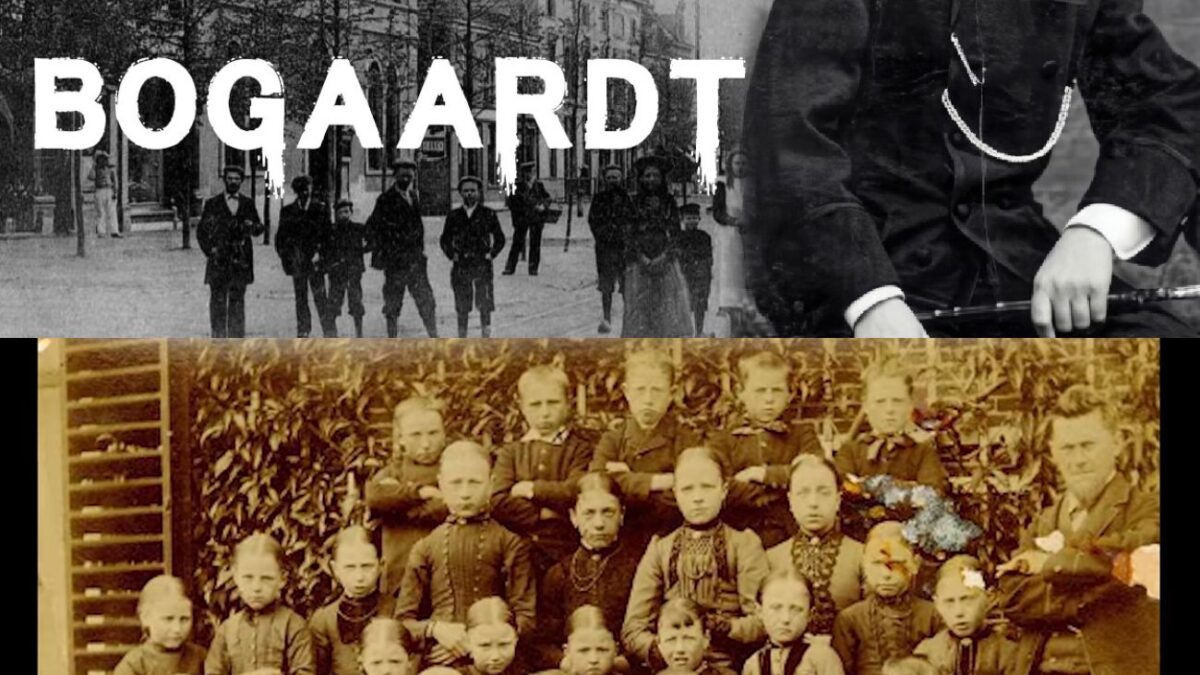
The Disturbing & Sinister Case of Marius Bogaardt
Today we are looking at a case from the second part of the 19th century, so sit back as we go to Holland. Frederick Marius Beerut was born on the 23rd of May 1867 in Surabaya in the Dutch East Indies. He was named after his father, so to avoid confusion, he was known simply as Marius. He was the second of four children. His eldest sister, Louisa Isabelle, had been born in 1864, and his younger brother was born in 1869, but sadly he died in infancy. He had another sister named Marie Julie, who was born in 1874.
The family had spent several years living in Surabaya, where Marius’s father had made a considerable fortune. He had become a successful and wealthy plantation owner and was also the head of the trading firm Fraser Eaton and Company. His success provided the family with a comfortable and privileged life. In 1873, the family returned to the Netherlands, where they settled in The Hague, which was one of the country’s most prosperous and fashionable cities. It was the seat of the Dutch government and the royal courts, and its streets were home to politicians, diplomats, wealthy merchants, and members of the aristocracy. New residential areas were now developing beyond the old city center with broad streets, elegant houses, and substantial villas, while the city’s parks and avenues gave parts of The Hague a distinctly residential character.
In 1877, Marius’s father, Frederick, purchased Groot Engelenburg Castle, which was near Brummen. The estate had a long history, but by this time, the castle had been transformed into an elegant country residence surrounded by landscaped grounds and gardens. Frederick initially acquired it as a summer residence, while the family’s main home remained in The Hague. In the late 1870s, the Netherlands was undergoing considerable economic and social change. The country was becoming increasingly industrialized, although much of the population still lived in smaller towns and rural communities where agriculture remained important. The growing prosperity of the professional and upper classes was reflected in the expansion of comfortable country estates and the development of better schools in the larger cities. For children from wealthy families, education was considered a very important part of preparing them for adult life, and there were many private institutions that offered classes in languages, history, mathematics, and other subjects. The Hague was particularly well served by private schools and catered to the city’s wealthy and professional families.
When Marius was 13 years old, he started to attend the prestigious Institute Bousquet. Here he spent his weekdays alongside other boys from the city’s wealthier families. He normally traveled to school with his family’s groom, who then collected him again later in the afternoon. On Thursday, the 23rd of September 1880, Marius went to school as normal, but went home for lunch with his parents before returning to school for afternoon classes. However, as the groom escorted him back, Marius said that he should not come for him at the usual time because he was going to be kept behind as he was being punished for his behavior that morning. At about 3:00 PM, a man arrived at the school and informed the maid that he had come on behalf of Marius’s father, Mr. Frederick Beerut. He said that he had been instructed to collect the boy. There was nothing particularly unusual about the request, as pupils were sometimes taken away before the end of the school day, and the visitor had also said that Marius’s father was waiting for him. A message was passed on to one of the teachers who, after being told that Marius knew the man, permitted the boy to leave with him. They both climbed into a cab and set off in the direction of Scheveningen, traveling through the western part of The Hague. After continuing for some distance, the cab eventually stopped near Laan van Meerdervoort, one of the city’s growing residential avenues.
By 5:00 PM, Marius had not returned home, and his parents were becoming increasingly worried. They contacted the school hoping to find out where he was, but they were told that he had been allowed to leave because a man had arrived to collect him. This did little to ease their concerns. They had no idea who the man was or where he had taken their son. As the hours passed, their anxiety grew. Then, at around 8:00 that evening, a letter arrived. The writer demanded 75,000 guilders for the boy’s safe return and claimed that Marius had been taken somewhere secure where he was being given neither food nor freedom. The location, the writer insisted, could not be discovered. The family was told that if the money was paid, Marius would be put on a train and sent back to The Hague, but if the ransom was not paid, they would never see their son again.
However, Mr. Frederick Beerut did not pay the ransom. Instead, he reported the kidnapping to the public prosecutor. The police were then informed of the ransom demand and began investigating the disappearance. The family could now only wait and hope that the police would be able to find Marius and bring him back home safely. A few hours after the ransom note arrived, a second letter was received. This time, the writer stated that they no longer required the ransom and gave no clear explanation for the change of plans. The unexpected message only added to the family’s uncertainty. They still had no idea where Marius was being held or what had happened to him.
While the police were faced with the difficult task of trying to establish who had kidnapped the boy and where he had been taken, the coachman who had transported Marius and his abductor was located. He was questioned about the journey and was able to tell the police where he had left them. This gave the authorities an important starting point, and officers began searching the area. However, the following day, men who patrolled the coastal dunes made a grim discovery in a secluded area. They found the body of Marius Beerut. He had been bound, and his body bore numerous stab wounds. The discovery confirmed the worst fears of his parents. Marius had been kidnapped, apparently with the intention of obtaining a ransom, but he had been found murdered before any ransom money could be collected.
Police began searching for the man responsible. While details of the ransom letter were made public, the letter was reproduced in newspapers in the hope that someone might recognize either its wording or the handwriting and perhaps be able to provide the authorities with a clue that could lead to the person responsible. As the news spread, information began to reach the police, and before long, investigators had their first suspect. Based on descriptions provided by the cabman and members of the school staff, plainclothes officers arrested a man named Willem Marinus De Jong. However, Mr. De Jong strongly denied having anything to do with Marius’s disappearance or his murder, and although he was questioned at length, there was not enough evidence to hold him, so he was eventually released.
The funeral of Marius took place on the 27th of September 1880 and attracted a huge crowd. Thousands of people lined the streets of The Hague as the funeral procession passed, and the number of mourners seemed to reflect the shock and sorrow that had been caused by the murder of a 13-year-old boy. One of the people following the case closely was Jack Deur, a journalist associated with the newspaper Dagblad van Zuid-Holland en ‘s-Gravenhage. As he examined the details of the ransom letter, he noticed something unusual in the way it had been written. The writer had used a hyphen in the formal name for The Hague (‘s-Gravenhage). Although this might have seemed like a minor detail, Mr. Deur knew that this particular use of the hyphen was very unusual at the time. He mentioned his observation publicly, hoping that someone familiar with the case might recognize the same habits.
His comments attracted the attention of a sergeant in the Dutch army. He knew Willem Marinus De Jong from their time serving in the Dutch East Indies and remembered that Mr. De Jong had a distinctive habit of using the same hyphen when writing ‘s-Gravenhage. The sergeant obtained several letters written by Mr. De Jong and showed them to Mr. Deur. When these letters were compared to the ransom notes, there were noticeable similarities in the handwriting. The unusual use of the hyphen was one of the details that attracted attention, but there were other similarities in the writing as well. These observations were then passed on to the police.
Following this, the investigation focused on Willem Marinus De Jong. He was 24 years old and a former sergeant in the Royal Netherlands East Indies Army who was now employed at the Ministry of Colonies. The cabman and the school maid both confirmed that he was the man they had seen with the boy. Police questioned him about his movements and his connection to the case and confronted him with the evidence they had gathered, including the similarities between his handwriting and the ransom letters. Although Mr. De Jong denied any wrongdoing, after some time, he admitted that he had indeed written the ransom letters. He did, however, attempt to distance himself from the murder and claimed that an accomplice had killed Marius and that he had not been responsible for the boy’s death.
After more questioning, he eventually abandoned this explanation and confessed that he had committed this most horrible crime. According to his confession, killing Marius had not been his intention. Instead, he had planned to keep the boy hidden until the ransom could be obtained. But during the journey in the cab, Marius made a remark that caused him to fear that the boy might be able to identify him. Mr. De Jong then told officers that he became so afraid that Marius would be able to reveal who had taken him that he decided he could no longer risk keeping him alive. Looking down and speaking in a soft voice, he said that he took out a sword stick and attacked the child. A sword stick was something that looked like an ordinary walking cane, but had a handle on top that could be removed, which allowed the blade to be drawn.
Mr. De Jong went on to say that after he realized Marius was dead, he covered the boy’s face as he could not bear to look at him, knowing what he had done and seeing the consequences of his actions. Asked what he did next, Mr. De Jong replied that he left the boy’s body and continued with his original plan to obtain the ransom. So, he returned to The Hague by train and sent a letter to Marius’s father. The murder of a 13-year-old boy had caused widespread horror, and there was little sympathy for the accused. Mr. De Jong was brought before the criminal court in The Hague, where the circumstances of the kidnapping and the murder were examined in detail. His previous confession formed an important part of the case, but the court also heard evidence about the ransom letters, the journey taken in the cab, and the discovery of the boy’s body in the dunes. The evidence presented a picture of a kidnapping that had begun as an attempt to obtain money, but had ended with the death of an innocent child.
However, as the trial continued, Mr. De Jong changed his position. He no longer accepted the admissions he had previously made. Instead, he claimed that his involvement had been limited to writing the ransom letter and lending the sword stick to the person who had murdered Marius. He offered no explanation as to why he had not previously disclosed this and refused to name his accomplice, saying that he would be willing to accept responsibility for the crime rather than betray the other man. The defense team requested that a man named Mr. Bouwman be called as a witness, as they said that he had seen the sword stick being given to Mr. De Jong by a man named Mr. Vandermissen. The prosecution objected to Mr. Bouwman giving evidence because he had recently been convicted of other offenses. Nevertheless, the court allowed him to testify. Mr. Bouwman identified the sword stick and said that he had once heard Mr. Vandermissen discuss plans to extort 75,000 guilders from Marius’s father.
The judges, however, were not convinced by this explanation. They regarded Mr. De Jong’s new accounts as an attempt to escape responsibility for the killing, and his claim that he was protecting an accomplice was dismissed as a trick. When the trial ended, the court found Willem Marinus De Jong guilty of murder, and on the 30th of December 1880, he was sentenced to life imprisonment. Although he had been found guilty, he did not accept the outcome and remained determined to challenge his conviction. He repeatedly told his mother that he was not the murderer and appealed against the sentence. When the appeal was heard, his lawyer argued that there was not enough evidence to prove that the murder had been planned and maintained that Mr. De Jong should not have received a life sentence. The prosecution countered this by arguing that even if Mr. De Jong had not intended to kill Marius, his actions had certainly caused the boy’s death. After much consideration, the appeals court agreed with the defense: premeditated murder had not been proved. Willem Marinus De Jong then had his conviction changed to manslaughter, and his life sentence was reduced to 25 years in prison.
Despite this, he was still not satisfied and continued to insist that the full truth about the murder had not been established and that he was actually an innocent man. The years of imprisonment, together with his belief that he had been wrongly convicted, appeared to take a heavy toll on him, and it was reported that he had succumbed to insanity and was tormented by visions of a deceased child. Eventually, he named his accomplice as a man called Gerrit Ketz and said that he was the person responsible for the murder of Marius Beerut. Mr. Ketz had been engaged to Mr. De Jong’s sister at the time, and De Jong insisted that he could prove he had been wrongly convicted, again seeking to have his judgment overturned. The claim, however, produced no results. In 1901, he again applied for a retrial, claiming that new evidence would prove he had not been the murderer and that Mr. Ketz had been the person responsible. This application was once more rejected by the courts as they stated that there was no convincing evidence to support it.
Willem Marinus De Jong eventually completed his imprisonment and was released in 1905. Following this, he went to live with his mother, but after she died, he moved to Amsterdam, where he married in 1908. However, his life remained troubled, and he was constantly tormented by the events of the 23rd of September 1880. In 1919, Willem De Jong died by his own hand.
The murder also had consequences for others. The actions of the sergeant who had recognized Mr. De Jong’s distinctive use of the hyphen and brought his observations to the attention of the authorities were considered by some in his regiment to have betrayed a fellow soldier, and the criticism and hostility he faced continued to trouble him over the following years. In 1887, while in the Dutch East Indies, he also died by his own hand. Marius’s family left The Hague and went to live on their country estates. For the people of The Hague, the name Frederick Marius Beerut remained forever associated with one of the most shocking child murders of the period, and although the 13-year-old boy was so cruelly taken away on that autumn day in 1880, his tragic memory continues to linger silently in the historic streets of the city, serving as a solemn reminder of a life cut far too short by greed and fear.

