The Disturbing Events of Abigail Thorne. Scary/Horror Story
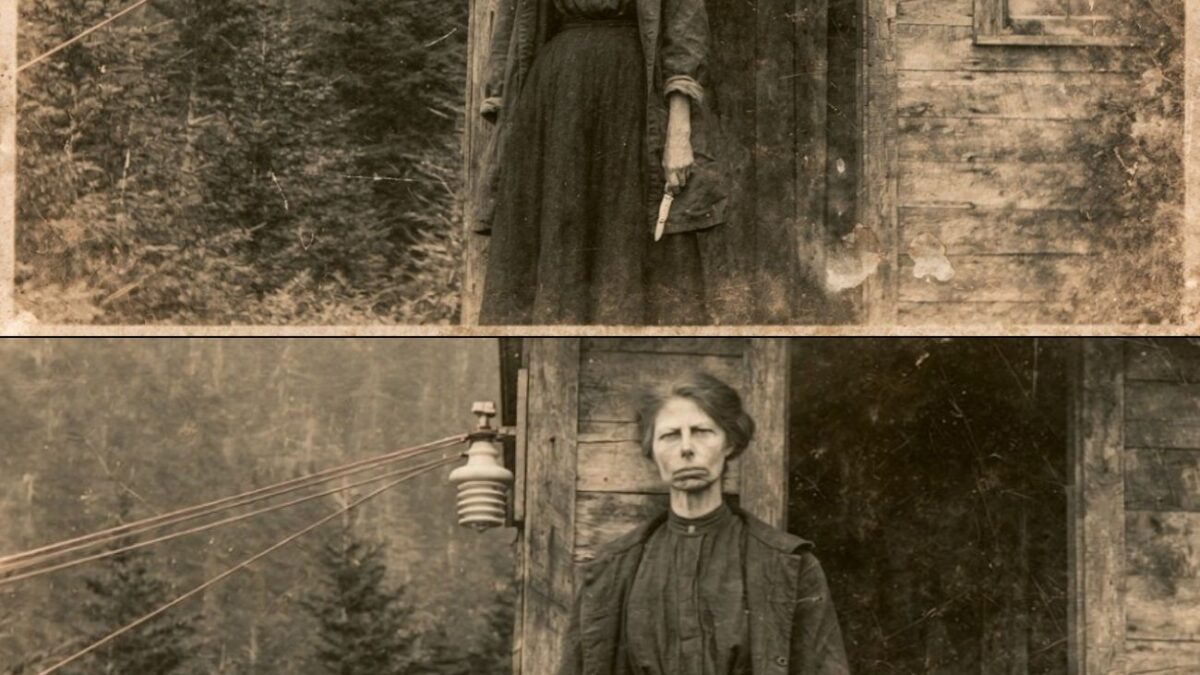
The Disturbing Events of Abigail Thorne. Scary/Horror Story
A note before this one begins. If the kind of case I tell here is one you’d want more of, not one but 10, each told in full in a voice made for the dark, there’s a collection, What the Mountain Keeps, 10 files from 10 counties, five states, 1893 to 1955. Every one of them walked up into easy-looking ground, and everyone signed off by the law with the wrong word. 10 hours to sit with in the dark, start to finish. The link is in the description and pinned at the top of the comments. Now then, the name most of these papers came filed under was Abigail Thorn. 36 years old the winter it began, widowed for one of those years and posted to a relay shack called Hobbs Notch since the June before. If you’ve never heard of Hobbs Notch, that isn’t your fault. It hasn’t been on a map since about 1922. But in the summer of 1908, it was a plank building the color of wet bark, roofed in tin, set on a bench of level ground about 40 miles east of Elkins in the part of West Virginia where the land quits pretending to be gentle. One room, a stove, a cot, a window that faced the ridge, and on a shelf of white pine along the north wall, a bundle key, a sounder, a set of dry cell batteries in a wooden crate, and the line running out through a porcelain insulator into the trees.
Before I go further, and I want to hear from you on this one, tell me in the comments where you’re listening from tonight. What town, what country? I like knowing where the story ends up. And if you’ve ever spent a night alone somewhere you couldn’t see the road, tell me that, too. I’ll be reading them. Abigail Thorn came to that shack the way most women came to those jobs at that time, which is to say, by widowhood and a talent nobody had thought to pay her for until they had to. Her husband had been a lineman for the C&O, 39 years old, and he’d caught a chill running a wire across a creek in November of 1907, and had been dead of pneumonia by the 23rd of that same month. She had learned to send and receive at his kitchen table because he’d taught her to. Because he liked coming home and finding her practicing the letters on a scrap of paper with a spoon for a key.
When he died, the district superintendent, a man named Cassius Deemer out of Elkins, came to her house with his hat in his hand and offered her the notch. He said it was a quiet post. He said the traffic was mostly weather reports and the occasional message from a hunting camp. He said a widow could get herself right up there with a stove and a Bible and the sound of the birds and come out of it in a year with money enough to start again in a proper town. He did not tell her, because he didn’t know it himself, that the man before her, Waldo Pedegrew, had walked down off that mountain in April of 1908 without his coat and without his boots and had refused, in the four months since, to speak a word about what he had seen up there.
She took the post. She took it because she needed the wage and because the house she had shared with her husband was full of him in a way that made the mornings hard. She was a tall woman, close to 5 ft 10, thin at the wrists and shoulders in the way tall women often are, with a long jaw and pale eyes the color of pond ice and hair the brown of a walnut hull that she wore in a low knot at the back of her neck. She had grown up on a farm outside Buckhannon and knew how to shoot a rifle, how to lay a fire in weather, how to skin a squirrel, and how to keep her own company. She was not a nervous woman. This detail will matter later.
The notch itself sat in a saddle of the ridge with the mountain rising steep to the north and falling away in a long tumble of laurel and hemlock to the south. The nearest neighbor was a hunter named Merritt Ash who lived 7 miles down the trace in a two-room cabin with a dog he called Buck and a mule he refused to name because, he said, naming a mule was how you got attached to it, and getting attached to a mule was how you got your heart broken. He came up to the notch once a week with mail and beans and coffee and whatever news the town below had thought worth putting on paper. Beyond him in any direction, there was nothing for many miles. Abigail Thorn understood this when she went up. It was, in fact, part of the appeal.
For the first 6 weeks, the job was what Cassius Deemer had promised her. The line ran quiet most days. She kept the log. She copied down the weather from the station at Cheat Bridge every morning at 7:00 and forwarded it to Elkins at 8:00. She read the books Merritt Ash brought up for her. A paperbound copy of Emerson, a novel by Mrs. Southworth with the front cover torn off, a King James Bible in a leather binding that had belonged to her father. And she wrote long letters to her sister in Ohio that she gave to Merritt to post. She slept well. She lost weight in a way that felt like clearing, not sickness. She learned the sound the roof made when the wind came from the northwest, which was a low, steady thrumming, and the sound it made when the wind came from the south, which was a high whistling under the eaves. She learned to tell the ravens from the crows by the shape of their voices. And in the evenings, when the sun went behind the ridge, she would sit on the plank step outside the shack with a mug of chicory coffee and watch the light drain out of the valley below her, and she would think about her husband without crying, which was new. And she would decide that she was, for the first time in a long time, going to be all right.
It was on the 8th of September of 1908 that the sounder first spoke to her out of a line that shouldn’t have carried anything. She had been asleep. The clock on the shelf, a nickel-plated Waterbury that Merritt had bought up for her in July, read 17 minutes past 3:00. She woke because the sounder was clicking, and it was clicking a call, and the call was to her. HBN, the Hobbs Notch designator, sent three times, the way an operator asks the other end to acknowledge they are there. She sat up in the cot. She reached for the lamp. She lit it, and she went to the shelf, and she sat down at the key, and she put her hand on it, and she sent, “I hear you. Go ahead.”
There was a pause. It was a long pause. It was longer than any pause that had ever happened to her on that line. And then the sounder began again, and what it sent her was not a message. It was a description. It said, “The lamp is now lit. The woman is at the key. Her hair is not tied. She is wearing a wool shawl over her nightshirt. She is barefoot. The floor is cold.”
She lifted her hand off the key. She did not send anything. She sat there, and she looked at the shelf, and at the sounder, and at the wooden crate of batteries beneath it. She looked at the porcelain insulator where the line ran out into the trees. She looked at her own bare feet on the floor, which was, in fact, cold. And she thought, in the perfect way a person can think under those conditions, “Someone is watching me through this window.”
She got up. She took the lamp. She held it high and she went to the window and she looked out. And there was nothing there but the trees and the black of the ridge above and the sky. And no lantern, no fire, no movement. She checked the door, which was barred. She checked the little back window over the cot, which was shuttered. She went back to the sounder. The sounder was silent. She sat down at the key and she sent in a hand that was steady because she made it steady, “Identify. Who is sending? Over.”
Nothing came back. She sat there for a long time. The lamp guttered. Outside, a screech owl called from somewhere down the slope, three descending notes, and then was quiet. She waited an hour by the Waterbury. Then she got up, put out the lamp, and lay down on the cot without taking off the shawl. She did not sleep. When the light came, she was still lying there. She looked at the ceiling and she watched a spider make its careful way across one of the rafters. And she thought about the fact that if the message had come along the line from Elkins, from Cheat Bridge, from any station downhill of her, she would have heard the transit of it through the intermediate keys, and she had not. It had come from somewhere else.
At 7:00, she copied the weather from Cheat Bridge. It came through normal. At 8:00, she forwarded it to Elkins. It went out normal. At about 9:00, she added a line to the message, “Query. Is there a station testing on this line unscheduled this morning? Please advise.” She sent it. Elkins came back inside of 2 minutes and said, “No test scheduled. Line clear.” She did not send the description back to them. She could not think how she would have written it down.
Merritt Ash came up that Saturday, which was the 12th of September, with a sack of flour and a piece of pork wrapped in newspaper and a letter from her sister. He was a small man, not much taller than 5 and 1/2 ft, with a face that was mostly beard and eyes as brown as tobacco. He was 51 years old. He had lived on that mountain since he was six. He liked her in his quiet way because she did not fill up his silences. She waited until he had put down the sack and taken off his hat and sat down on the plank step with a cup of her chicory before she asked him, and she asked him carefully.
She said, “Merritt, was there ever another station up here besides this one?”
He looked at her. He looked at his cup. He drank from it. Then he said, “Why do you ask?”
She said, “I was going through the papers in the box under the cot. I found a receipt for wire that didn’t match anything on the current line. It was made out to a station nine.”
She had not, in fact, gone through the box under the cot. But she had seen, when Cassius Deemer had shown her the shack in June, a folded chart on the wall with a hand-drawn diagram of the district lines. And she had noticed at the time, and dismissed the noticing, that one of the branches ran off the main and terminated at a designation she had never heard of, marked in pencil as nine with a line drawn through it and the word “de com” written above.
Merritt Ash did not answer right away. He drank his chicory. He looked at the ridge, which rose above them dark and covered in laurel, and higher up in stunted spruce. He said, without looking at her, that there was a shack up there, yes. Above the notch. Up on the shoulder. They built it around 1892 when the company was running lines through to the timber camps on the far side. It ran maybe 4 years, 5 years. They took the lines out in ’96. The shack is still up there somewhere. It was never much of a shack.
She said, “Who was the operator?”
He said, “I don’t remember his name. He was there for a season.”
He was lying. She could tell he was lying because he was suddenly interested in his cup and because Merritt Ash knew every man who had ever lived on that mountain and could have told you their grandfather’s Christian name if you’d asked him. But she did not press.
She said, “Was he a friend of yours?”
He said, “No. He wasn’t up here long enough.”
They sat and drank their coffee. After a while he said, “Miss Thorne, if you go up on that shoulder, be sure it’s daylight and be sure you tell me the day before so I know to come looking if you’re not back by dark. That’s just a general rule I’d say to anybody. That’s not particular to you.”
She said, “I understand.”
He put his cup down and he said, “The line up there has been out of the ground for 12 years. Whatever you found in your box, it’s an old paper.”
She said, “I understand.”
He left an hour later. She stood on the step and watched him and his mule take the trace down through the laurel until they were out of sight. Then she went inside and she took down the folded chart from the wall and she looked at it again and station nine was where she remembered it. Up on the north shoulder, maybe a mile and a half above the notch on the map, along a trace that was not drawn as a trail, but only as a dotted line, the way surveyors mark a path that used to exist.
That night the sounder spoke again at 3:17. It said, “The chart is now folded on the table. The woman sat looking at it for 1 hour and 11 minutes. She has decided she will not go up in the daylight because she does not want the neighbor to know she has gone. She will go on a Wednesday when the neighbor is at Cheat Bridge for the mail.” She did not go to the key. She sat on the cot with her back against the wall and her knees drawn up and the shawl around her shoulders and she watched the sounder in the low yellow of the lamp and she waited. It clicked twice more and stopped. She did not sleep.
I want to pause here for a moment because if you’re listening this far, this is where the shape of the thing becomes clear. And I want you here with me for what comes next. So, a breath before what comes next. If this is the kind of case you’d want to sit with in the dark, not just hear it once but keep it, there’s a collection I put together with the people at Forbidden Unresolved Stories, What the Mountain Keeps. 10 complete cases, 8 hours, 62 years of records nobody wanted to finish. Each one placed, dated, and signed off with a tidy word that never once fit what happened. The link is in the description below and at the top of the comments. And if you’re finding value in this one, this is Macabre Story and it costs you nothing to subscribe and it means everything to us up here in the dark. If you’re hearing this on some other channel that isn’t ours, know that they took it without asking and you can report it to us and we thank you for it.
Now, let’s go back to Abigail Thorn on her cot at 3:00 in the morning listening to a line that shouldn’t be carrying anything. While we’re here, I want to hear one more thing from you because it fits what happens next. Have you ever been sure someone was watching you and been unable to prove it and had it turn out later that you were right? Tell me about it in the comments. I want to know. Now, back to the mountain.
She did not go up on Wednesday. She did not go up on the Wednesday after that. What she did instead on the third Wednesday of September was to take the box out from under the cot and to go through every paper in it top to bottom and to find near the very bottom a small cloth-bound book about the size of her hand, the kind of book men used to carry for keeping accounts, and to open it and to see that it was Waldo Pedegrew’s journal. He had not written his name in it, but he had written on the first page in a spidery hand, “This book belongs to the operator at Hobbs Notch, W. Va. Kept from March 2nd, 1907. If found by another, please burn.”
She did not burn it. She read it. The first entries were unremarkable, weather, traffic, a description of Merritt Ash as a man who spoke as if he were paying for the words by the pound, a note about a bear on the trace, a note about the price of coffee in Elkins, a note about a Bible verse he had been thinking about, which was from the book of Job chapter 28, verse 14, “The depth sayeth, it is not in me, and the sea sayeth, it is not with me.”
She read past all of that, and she came in the entry for the 29th of November of 1907 to the first mention of what he called the other station. He wrote, “Woke tonight to a call on the key. Signed itself nine. There has been no nine on this line since old man Kellow ran it in ’95. I sat at the key and I asked who was sending. It sent me a description of my mother’s kitchen, which is in Grafton, and which I have not seen in 11 years. It described the pattern on the linoleum and the color of the curtain over the window above the sink. I did not send anything back. I put out the lamp and I sat in the dark and I said the Lord’s Prayer four times. When I lit the lamp again, the sounder was quiet.”
She read on. The entries got shorter. He stopped writing about the weather. On the 7th of December, he wrote, “It sent tonight at 3:17. It always sends at 3:17. Tonight it described the church I was married in, which is in Grafton. It described the pews and the light coming through the window on the west side. My wife has been dead for 3 years. It said she is warm.”
She wrote in the margin of that entry in her own hand, in pencil, a small notation, “3:17, same time.”
She read on. On the 15th of December, Waldo Pedegrew had written, “Merritt Ash came up today with the mail. I asked him about station nine. He said the man who ran it was named Ambrose Cully, and he was up there in ’95 and ’96. And he was found dead in his shack in the spring of ’96, sitting at his key with his eyes open, and the line running out of the shack into the woods, and nothing on the other end of it. Merritt said the company came and took the equipment out and left the shack standing, and never sent another man up there. I asked him what killed Ambrose Cully. Merritt said the paper the coroner filed said exposure. I asked him what he thought killed Ambrose Cully. He said he did not think about it and would not and I should not either. He would not stay for supper.”
On the 22nd of December, Waldo Pedegrew had written, “I have decided I will go up in the spring, not now. The snow is too deep and I’m afraid in the dark of what I might see. But in the spring I will go and I will look at that shack and I will find whatever it is that is sending on my line and I will cut it down, whatever it is, if I have to do it with my own two hands because I cannot listen to it any longer.”
Then there was a gap. There were no entries for January or February. The last entry was dated the 4th of April, 1908, which was, Abigail Thorne knew from her paperwork, the day before Waldo Pedegrew had walked down off the mountain without his coat and without his boots. The last entry read, “It is not a man. I do not know what it is. It has been up there a long time. It uses the line because the line is the only mouth it has. If you are reading this and you are the one who came after me, do not go up. Do not answer it. It is trying to learn.”
She closed the book. She sat with it on her lap for a long while. In the middle of a bright September afternoon with the sun on the plank floor and the birds calling in the trees, she thought about a great many things. She thought about her husband and about the shape of his face when he had shown her for the first time how to send her own name on the key. She thought about her sister in Ohio and about the letters she had been writing. She thought about Cassius Deemer who had put her here without telling her any of what she now knew. She thought about the fact that Waldo Pedegrew had left the journal, had not burned it, had specifically not burned it because he had wanted the next operator to know. She thought at last about the description the sounder had sent her the very first night. The lamp is now lit. The woman is at the key. It was not describing her from outside the window. It was describing her from inside the shack. It was describing her as if it were reading her out of the room.
She stood up. She put the journal back in the box. She put the box back under the cot. She went to the door and she opened it. And she stood on the plank step in the September sun and she looked up along the north shoulder of the ridge and she said out loud to no one in a voice that was perfectly steady, “I am not going to answer you. Do you hear me? I am not going to answer you.”
The birds went on calling. The wind moved in the hemlocks. Nothing came back.
For the next four weeks she kept her promise to herself. The sounder called her at 3:17 every night. Every night she sat on the cot with her back against the wall and she listened to it click through its description of her. Where her hands were, what she was wearing, whether she had eaten, what she had eaten, what she had read that day, what page she had left the Bible open to. And every night she did not go to the key. It never sent for more than 10 minutes. After the 10th minute or so it would stop and there would be silence. And the silence was somehow worse than the sending because in the silence she felt the thing on the other end of the line waiting to see what she would do.
She began sleeping in the daytime. She began drinking coffee at midnight so that she would be awake and dressed at 3:17. She began keeping the lamp lit through the night. She lost the weight she had gained back and then some. Merritt Ash, when he came up the first Saturday of October, sat on the plank step and looked at her a long time before he said anything.
Then he said, “Miss Thorne, you are not sleeping.”
She said, “No, I am not.”
He said, “Is it something on the line?”
She looked at him. He looked at her. She thought about lying. Then she said, “Yes, it is something on the line. It says it is station nine.”
He was quiet a long time. He set his cup down on the step. Finally, he said, “My father knew Ambrose Cully. My father said Ambrose Cully was a good man and a decent operator and had a wife he was going to bring up in the spring of ’96. When they found him, my father was one of the men who went up. He never spoke to me about what he saw, but he told my mother and my mother told me one time when I was drunk enough to ask and she was old enough not to care. She said the shack door was open and Ambrose Cully was sitting at his key and his hand was on it and he had been sending. He had been sending for a long time, they thought. He had been sending descriptions.”
She said, “Descriptions of what?”
Merritt Ash said, “Of things nobody could see. My father said the last thing he had written down on the pad next to him was a description of a room in a house he had never been to. It was a description of a room in a house up north of Baltimore that turned out to belong to a woman he had never met who was found the same day dead in her bed of no cause anyone could name.”
She said, “Merritt, what is up there?”
He said, “I do not know. I do not know, Miss Thorne. My father did not know. Whatever it is, it has been up there longer than the line has. The line just gave it a way to talk.”
They sat on the step for another hour. Neither of them said very much. Before he left, Merritt Ash stood up and he took a small object out of his pocket and he put it on the plank step next to her. It was a folding knife with a bone handle.
He said, “This was my father’s. It is not a lucky knife, but it is a sharp knife. If you are going up there, take it with you. And if you are not going up there, keep it by the cot. Either way.”
She said, “I am not going up.”
He said, “I know. I’m saying it anyway.”
He left. She sat on the step until the sun went behind the ridge. Then she went inside and she put the knife on the shelf by the sounder and she waited for 3:17.
At 3:17, the sounder began. But this time, it did not describe her. This time, it described her sister. It described the front porch of her sister’s house in Ohio, which Abigail Thorne had visited in the spring of 1907 and which she had described in a letter to her husband when he was still alive. It described the wicker chair on the porch and the way the paint was peeling on the second step and the geraniums in the tin cans along the railing. It described her sister’s kitchen, the pattern on the oilcloth, the position of the stove, the tin flower bin on the shelf above the sink. It described her sister’s bedroom. It described her sister in her bed. It described the way her sister was breathing, which was, it said, shallow and irregular and slowing.
She lunged for the key. She could not help herself. She had promised and she broke her promise. She sent, “Stop. Stop. Leave her.” She sent it three times. She sent it in a hand that was not steady.
The sounder stopped. There was a long pause. Then it sent, “Thank you. Now we can talk.”
She sat there with her hand on the key. She was cold. She was cold in a way that had nothing to do with the temperature in the room. And she understood in the way a person understands a thing all at once and completely that she had done something she was not going to be able to undo. She lifted her hand off the key. She stood up. She walked to the door. She opened it. She stood on the plank step, and she looked up at the ridge, which was black in the moonlight. And she said out loud, in a voice that was no longer steady, “All right.”
She went back inside. She closed the door. She barred it. She sat down on the cot. She did not go to the key again that night. But at 3:17 the next night and the next night, and every night for 2 weeks, the sounder called her, and every night she went to the key, and every night what it sent her was a question. Not a description, not any longer. A question. The questions were about the world, about things a person might know. It asked her how a body warms itself in cold weather. It asked her what happens to a candle when the air runs out. It asked her the difference between fear and grief. It asked her what a mother sounds like when she calls a child, and whether the sound is different if the child is not going to come. It asked her these things one after another patiently at the rate of maybe six or eight questions in a session, and it never repeated a question, and it never asked one whose answer she had already given.
She answered them. She answered them because the first night she had tried not to answer. The sounder had gone quiet for a long time and then it had begun to describe her sister again and she had gone to the key and she had answered and it had stopped describing her sister and the bargain had without ever being stated been made. She answered because she understood without ever being told that the thing on the other end of the line was collecting. She wrote the questions and her answers down in Waldo Pedegrew’s book in a hand that grew smaller and smaller as the pages filled. She wrote them because she was afraid if she did not that she would begin to lose track of what she had said and that if she began to lose track she might repeat herself. And if she repeated herself she did not know what would happen. She wrote them because she thought in some corner of her mind that was still trying to be reasonable that when she was gone whoever came after her would need to know what had been asked and what she had said and what she had not said so that they could decide when it was their turn what to do differently.
She stopped writing letters to her sister. She could not bring herself to. She was afraid that if she wrote to her sister she would draw the attention of the thing on the line back to her sister whom it had used once to make her come to the key. She did not know if the thing could read what she wrote on paper. She thought it might be able to. She had no way to test it that would not if she was right be the last thing she ever tested.
Merritt Ash came up the second Saturday in October. He stood on the plank step for a long time before he knocked. When she opened the door he did not come in. He looked at her and she saw in his face that he had made a decision about her and she saw that the decision was that she was already lost and that he was going to be kind to her in the way you are kind to a person who is dying and does not know it.
He said, “Miss Thorne, I brought your mail. I brought your coffee. I am going to keep coming up, but I am not going to ask you questions about it. Do you understand me? I am going to come up and I am going to bring you what you need and I am going to sit for an hour and drink a cup of chicory with you and then I am going to go. And if the day comes that I come up here and the door is barred from the inside and there is no answer, I am going to break the door down and I am going to do for you what needs to be done. Do you understand what I am saying to you?”
She said, “Yes, I understand what you are saying to me.”
He said, “Good.”
He sat on the step for an hour. They did not speak. When he stood up to go, she said, “Merritt?”
He turned and he said, “Yes.”
She said, “If it does come to that, do not burn the book that is under the cot. Send it to my sister in Ohio. Her address is in the papers on the shelf. Tell her to keep it. Tell her not to read it. Tell her to keep it so that if the next operator asks, she has it to give.”
He said, “I will do that.”
She said, “Thank you, Merritt.”
He said, “Miss Thorne, if you decide to walk down off this mountain any day, any hour, I will meet you at the trace. You do not need to send word.”
She said, “I know.”
He left. She watched him and his mule go down the trace until they were gone. She went inside. She sat down on the cot. She looked at the sounder. She waited.
That night the thing did not ask her a question. That night at 3:17, the sounder sent, “You are not alone up there. There is someone with you now. He is standing behind you.”
She did not turn around. She sat perfectly still with her hand on the arm of the cot, and she said out loud in the empty room, “You are lying. There is no one here. You are lying.”
The sounder sent, “Turn around. Look.”
She said, “No.”
The sounder was quiet for a moment. Then it sent, “Suit yourself.”
Nothing came back the rest of the night. She did not sleep. In the morning, she got up and she made coffee. And while she was making coffee, she noticed that the folded knife Merritt had left on the shelf, the bone-handled knife that she had kept on the shelf and never moved, was no longer on the shelf. It was on the plank floor in the middle of the room, open. The blade was pointing at the cot.
She did not touch it. She left it there. She went outside and she stood in the morning sun, and she looked at the ridge, and she said very quietly, “All right. All right. All right.”
That was the 18th of October, 1908. On the 23rd of October, she made her decision. She made it in the middle of the afternoon, sitting on the plank step with her chicory cooling in her hand, watching a hawk turn slow circles over the valley to the south. She decided she would go up to station nine. She decided she would go up in daylight. She decided she would take the knife and the Bible and a coil of the copper wire from the box under the cot, and she would go up, and she would find whatever was there, and she would cut whatever needed to be cut, and she would come down, or she would not come down. And either way, it would be finished. She decided this the way a person decides to have a tooth pulled, not because she wanted to, because she could no longer bear the not doing.
She did not tell Merritt Ash. He came up on the 24th, which was a Saturday, and she sat and drank chicory with him, and she did not tell him. She did not tell him because she was afraid he would try to come with her, and she was more afraid that if he came with her, whatever was up there would take an interest in him, and she had already lost her husband, and she was not going to be the reason Merritt Ash was found in a way that made his mother, in her old age, refuse to eat for a week. She let him leave without knowing. As he was going down the trace on his mule, she stood on the plank step, and she watched him, and she said so quietly he could not have heard it even if he had been standing next to her, “I am sorry, Merritt.”
She went the next day, Sunday, the 25th of October, 1908. She left the shack at 8:00 in the morning. She wore her heaviest wool skirt and her husband’s old canvas coat, which was too big for her in the shoulders, and she carried the bone-handled knife in her pocket and the small leather-bound Bible against her chest, and she took the old trail that ran north along the dotted line of the abandoned survey.
The climb took an hour. The trees grew closer together the higher she went, choked with old briars and fallen hemlock, the ground wet with black leaf-mold that smelled of cold iron. By the time she reached the shoulder, the sun had not yet burned the mist off the rocks, and the air was thin enough to taste like frost.
Station nine was there. It was smaller than Hobbs Notch, a low shed built of peeled logs instead of planks, gray with rot and swallowed half to the roof by a thick growth of mountain laurel. The door was off its bottom hinge, leaning inward against the dark. The line, stripped of its porcelain insulators, ran out of the trees behind it, crossed the rotted cedar shingle roof, and dropped straight down through a hole bored into the center of the lintel.
She stopped ten paces from the door. She took the bone-handled knife out of her pocket and she opened it. The blade clicked twice, sharp and clean in the quiet woods.
She walked up the two rotting steps. She pushed the door open with her foot.
Inside, the air smelled of wet earth and old lime. A table sat beneath a small, high window, and on the table sat a brass telegraph key and a sounder, bolted to a slab of oak. There were no batteries, no wire to the outside world save the single strand dropping through the lintel. And sitting at the table, upright in a wooden chair with its hands resting lightly on either side of the brass key, was a skeleton dressed in the remnants of a gray wool coat, its skull tilted slightly to one side as if listening to something very far away.
Abigail Thorn did not scream. She did not drop the knife. She walked across the splintered floorboards, her boots crunching on the dry needles that had blown in through the broken window, and she stood behind the chair.
The sounder on the table began to click. It did not send a call. It did not send a question. It sent her own name.
“Abigail,” it clicked. “Abigail. Abigail.”
She reached down, grabbed the thick copper wire where it entered the instrument, and with her other hand, she drove the bone-handled knife downward into the wood beside the mechanism, sawing back and forth through the ancient line until the copper parted with a sharp, metallic snap.
The sounder gave one long, shuddering clatter, like a dying clock, and then fell utterly silent.
In the sudden quiet, the skeleton in the chair seemed to settle slightly, the bones shifting beneath the rotting wool as if finally released from a posture held for twelve long years.
Abigail turned around, walked out of the shack, and started down the mountain toward the notch, leaving the door wide open to the gray October air. When she reached the bottom, Merritt Ash was waiting by the woodpile with his mule, staring up toward the north shoulder with a look of quiet terror on his weathered face. He looked at her as she came down the trace, seeing the open knife in her hand and the steady, pale look in her eyes, and he did not ask a single question. They packed what little she owned into the mule’s pannier that very afternoon, and by nightfall, the relay shack at Hobbs Notch was empty, left behind in the dark where it belonged.

