The Disturbing and Intriguing Case of María del Pilar Moreno Díaz
The Disturbing and Intriguing Case of María del Pilar Moreno Díaz
Today we’ll be looking into a case from the 1920s. So sit back as we go to Mexico. In 1922, Mexico was emerging from years of political change brought on by the Mexican Revolution. The country’s capital, Mexico City, was home to around 750,000 people and was a center of Mexico’s political, economic, and cultural life. It reflected both the legacy of the revolutionary era and the nation’s hopes for the future. Government ministers, banks, newspapers, and growing industries were concentrated in the city, and people came from across the country to work there. Although economic inequality remained a challenge, the relative stability of the early 1920s encouraged investment and commercial growth, helping Mexico City strengthen its position as one of Latin America’s most important urban centers.
The morning of the 10th of July 1922 seemed like any other in Colonia Roma, an elegant part of Mexico City just west of the historic center. Outside number 48 Tonalá Street, a senator named Francisco Tejeda y Perea was talking to a few of his acquaintances. He had survived the most violent years of the Mexican Revolution and now held a prominent position in national political life. Shortly before midday, a car stopped near his home—something that would never usually cause him concern and on any other day would have passed without notice. This time, however, a 14-year-old girl stepped from the vehicle and walked directly towards him. She was dressed entirely in white and, looking at him, she shouted that he had killed her father.
The senator turned towards her and looked. He smiled and then approached her, demanding an explanation. But before very much was said, the girl pulled out a pistol and shot him. Francisco Tejeda y Perea then fell to the floor while panic erupted in the streets. Some people ran to help him while others ran to safety. But as all this was happening around her, the young girl remained motionless, just staring as if she was not entirely sure what she had done. The senator was rushed back inside his house, but not long afterwards, it was announced that he was dead.
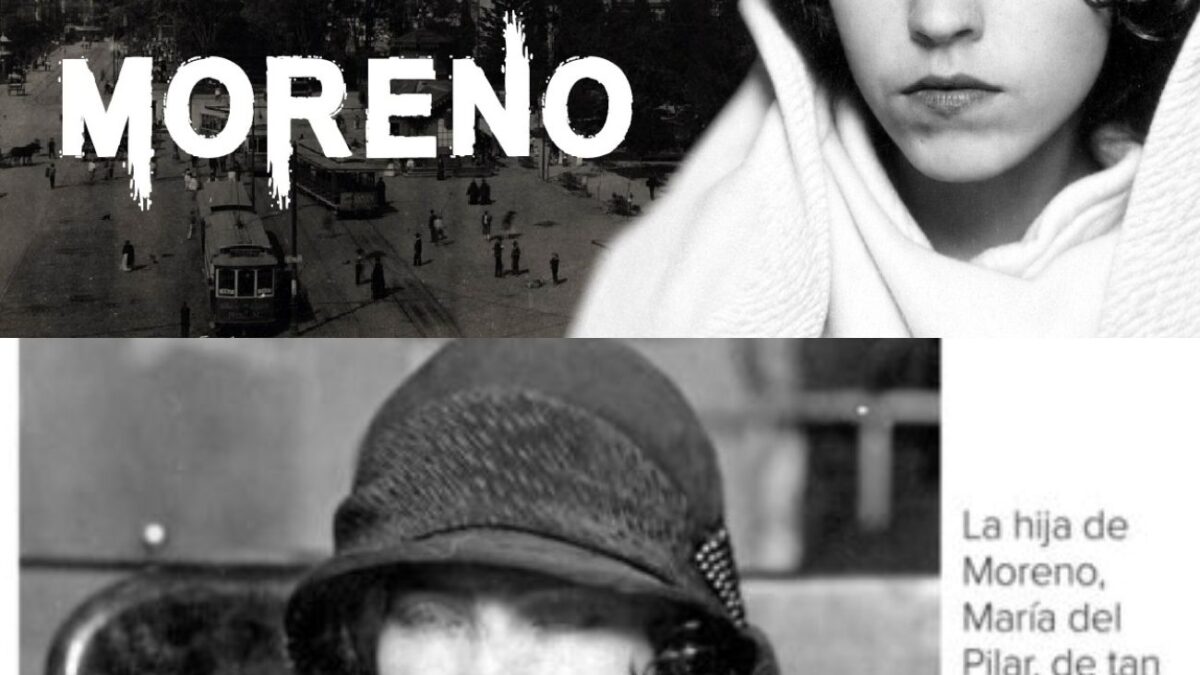
The girl’s name was María del Pilar Moreno Díaz, the daughter of a journalist and politician who had been killed only weeks earlier, and news of what she had now done quickly spread through the city. In cafes, barber shops, hairdressers, grocery stores, and on street corners throughout the capital, everyone was talking about the girl who had shot a senator in broad daylight. Newspapers devoted front-page coverage to the case and filled many columns writing about the tragedy. With each new edition, the story captured the public imagination, transforming a local crime into a national sensation.
Yet as the background of the case became known, many Mexicans began to view it not as an isolated crime, but as the final act in a chain of events that had begun weeks earlier. María del Pilar’s father was Jesús Moreno, the director of the newspaper El Heraldo de México and a political figure of growing importance. At the time, he was running for a seat in Congress representing a district in Veracruz, a major Gulf state east of Mexico City and one of Mexico’s most important commercial and port regions. His political ambitions and growing influence had brought him into conflict with Senator Francisco Tejeda y Perea, a powerful revolutionary veteran with extensive political connections.
The rivalry between the two men had not appeared out of nowhere. They had political disagreements and personal disputes, and it was known that in his newspaper, Señor Moreno had criticized the senator, while the senator had complained that he had been subjected to constant attacks and threats. On the 24th of May 1922, Senator Tejeda went to the Ministry of the Interior in Mexico City. The building was a hub of political activity, and that morning, he and a number of politicians, officials, and visitors had gathered in the hope of securing an audience with one of the most important political figures in the country, a man named Plutarco Elías Calles, who was the Secretary of the Interior and widely expected to become Mexico’s next president.
A few minutes after Senator Tejeda had arrived, Jesús Moreno also appeared. As the director of El Heraldo de México and a congressional candidate for Veracruz, he was already a well-known figure, and most politicians and political journalists were aware that for some time the relationship between the two men was deteriorating. Political disagreements, personal animosity, and criticism exchanged through newspapers and public statements had turned them into bitter rivals. Once there, Señor Moreno walked towards the senator, and the two men began to argue. Soon they were surrounded by government employees, and a crowd gathered to see what was happening.
The confrontation, however, soon turned physical. Insults gave way to pushing, and then the two men started fighting. Attempts were made to pull them apart, but as the insults and punches were exchanged, the sound of gunfire suddenly echoed through the crowd. Then, for a moment, there was stunned silence. Seconds later, there were more shots. Following this, everyone started to run, and the crowd that had gathered out of curiosity now fled in fear. When the smoke and confusion began to clear, Jesús Moreno was found lying on the floor. Blood stained his clothing, and he struggled to remain conscious. His chauffeur rushed to his side, attempting to support him, and those who had remained called frantically for medical assistance. A Red Cross ambulance soon arrived, and the wounded man was placed on board and rushed to a hospital for emergency treatment. But despite the best efforts of doctors, his wounds proved too severe, and not long after arriving, the journalist, newspaper editor, and aspiring congressman was dead.
The news sent shockwaves through Mexico. Jesús Moreno was not an obscure political figure, but a prominent journalist whose newspaper El Heraldo de México was widely read throughout the country. His growing political ambitions had also made him a familiar name in public life, ensuring that reports of the shooting spread rapidly beyond the capital. Newspapers rushed out special editions, while politicians and journalists debated the circumstances of the fatal encounter. Supporters of Señor Moreno condemned the killing, while others waited for the official investigation to determine exactly what had happened.
At the hospital, the scene was one of grief and confusion. Members of the Moreno family hurried to his bedside, hoping against hope that his life might still be saved. Their hopes were soon dashed when the news of his death was confirmed. The emotional toll was devastating. It was reported that one of his daughters collapsed upon seeing her father’s lifeless body, and that relatives struggled to comfort one another as they confronted the sudden loss of a husband and a father. Only hours earlier, they had been preparing for the future, with Señor Moreno pursuing both his journalistic career and his campaign for Congress. But now these plans had vanished. For 14-year-old María del Pilar Moreno, the loss was especially profound. She had enjoyed a comfortable upbringing and had been deeply devoted to her father.
Meanwhile, Senator Tejeda appeared before the authorities, accompanied by several deputies who had witnessed the altercation. Even before giving a formal statement, he publicly defended his actions. He claimed that Señor Moreno had initiated the attack and had been under the influence of alcohol. According to the senator’s version, the journalist had drawn a revolver during the fight, and the senator stated that he had managed to seize the weapon and fire in self-defense. Not everyone accepted that explanation. Examinations conducted on Señor Moreno’s body found no evidence that he had been intoxicated, which contradicted one of the central claims made by Senator Tejeda. Furthermore, many of Señor Moreno’s journalistic friends, his colleagues, and political supporters regarded the incident as an unjustified killing rather than an act of self-defense. As more details of the confrontation emerged, newspapers published different accounts of what actually had occurred outside the Ministry of the Interior. Some defended the senator’s actions, while others questioned his version of events and called for a thorough, independent investigation. The shooting was no longer simply a personal dispute between two men, but a matter of national importance.
During her father’s funeral, María del Pilar openly expressed her outrage. She believed that her father had been murdered and that the man responsible was walking freely through the streets of Mexico City, protected by his position and political influence. Friends and relatives were concerned about the depth of her grief, which seemed to be accompanied by a growing sense of anger. To the 14-year-old girl, justice seemed not only delayed but entirely absent. Over the following weeks, she became increasingly withdrawn as it grew apparent that Senator Tejeda would face no immediate consequences for the shooting. The senator’s parliamentary immunity, combined with his extensive political connections, made any attempt to prosecute him extremely difficult. Legal proceedings moved slowly, and there appeared to be little prospect of quick action. To many observers, particularly those who supported the Moreno family, the case seemed destined for impunity. The perception that one man had died while the other remained untouched by the law fueled public debate and resentment—sentiments that María del Pilar shared with increasing intensity.
However, the 14-year-old girl never accepted the situation. Following her father’s funeral, she frequently visited his grave, and her mother watched as her daughter’s grief slowly transformed into an obsession. While adults debated legal and political matters, the teenager reached a simple conclusion: no one would punish the man who had killed her father. On the morning of the 10th of July, she left her home accompanied by an aunt. She was dressed in white and said that she was going to mass. In her pocket, however, she had concealed a pistol. Upon arriving in Colonia Roma, the place where Senator Tejeda lived, the young girl got out of the car and walked towards him. When she was close enough, she fired.
However, while this might have been a case of a young girl getting revenge for her father’s death, there were some witnesses who claimed to have heard more gunfire than could be explained by one gun alone. Rumors circulated about the presence of a second shooter, and some neighbors of the senator said that they had seen an armed young man near the scene. These accounts, however, were never confirmed and never played a decisive role in any judicial proceedings.
Following the shooting, the girl’s mother, Señora Ana Moreno Díaz, was summoned to the scene, and when she was told what her daughter had done, she took her to the offices of El Heraldo de México, the place where her husband had worked. There, a crucial decision was made: it was considered best that María del Pilar give herself up to the authorities. So, accompanied by her mother and representatives of the newspaper, the young girl went to the police and surrendered. During questioning, she admitted shooting the senator and made little effort to deny her actions. She was very composed and showed no signs of remorse. In fact, she declared that she had acted because justice had failed to punish the man responsible for her father’s death. In her mind, the law had protected the senator while denying justice to her family.
The authorities immediately initiated legal proceedings, and although she was a minor, the killing of a prominent senator in broad daylight was too serious a matter to be treated with leniency. María del Pilar spent her first nights in custody while investigators gathered statements from witnesses and attempted to reconstruct the events on Tonalá Street. Meanwhile, news of the shooting spread rapidly across the country, transforming the affair into a national sensation. Newspapers devoted extensive coverage to the case, often placing it on front pages for days at a time. Photographs of the 14-year-old appeared alongside dramatic accounts of the shooting and lengthy discussions of the earlier death of her father. Editorials debated whether she was a criminal or a victim of circumstances beyond her control.
Public opinion soon became sharply divided. Some viewed her as a murderer who had taken the law into her own hands. Others, however, saw her as a grieving daughter driven to a desperate act after the authorities had failed to deliver justice. As public sympathy grew, letters of support arrived from across Mexico, and many people openly expressed their admiration for her courage and her devotion to her father’s memory. As the case progressed, the 14-year-old girl increasingly became a symbol of the public’s frustration with political privilege and the perception that powerful men could evade accountability. What began as a murder investigation was now evolving into one of the most closely followed legal dramas in modern Mexican history.
Although María del Pilar had admitted the shooting, the legal process was far from over. Investigators gathered testimony from witnesses, examined the circumstances surrounding both her father’s death and that of Senator Tejeda, and the courts began the lengthy task of determining her fate. As the case wound its way through the judicial system, newspapers reported every development in detail, ensuring that public interest remained intense. Month after month, the affair continued to dominate headlines, with supporters and critics alike following each new development.
Nearly two years passed before the case finally came before a jury in 1924. After hearing all the evidence and the arguments presented by both sides, María del Pilar Moreno Díaz was acquitted. The ruling was greeted enthusiastically by many supporters, and as María del Pilar left the courthouse, she passed through a crowd celebrating her freedom. Some accounts described a path covered with flowers, which had been thrown by admirers and sympathizers. With the verdict, one of the most extraordinary criminal cases of post-revolutionary Mexico finally came to a close.
The deaths of Jesús Moreno and Senator Francisco Tejeda had occurred little more than six weeks apart, but they had captivated the nation. Politics, journalism, family loyalty, revenge, and questions of justice had all combined in a story that filled newspaper columns and divided public opinion. People who criticized the young girl regarded her as someone who had committed a calculated act of murder. Her supporters, however, saw her as something very different: a devoted daughter driven to desperate measures after becoming convinced that the legal system would never hold her father’s killer accountable. Some people believed that the jury’s decision was ultimately influenced by the overwhelming sympathy María del Pilar had inspired throughout Mexico, reflecting a broader public yearning for moral justice outside the rigid bounds of corrupt politics. More than a century later, the case continues to revive debates, leaving a haunting legacy of a young life forever altered by the turbulent tides of early 20th-century history.

