The Dark & Twisted Case of George Townley
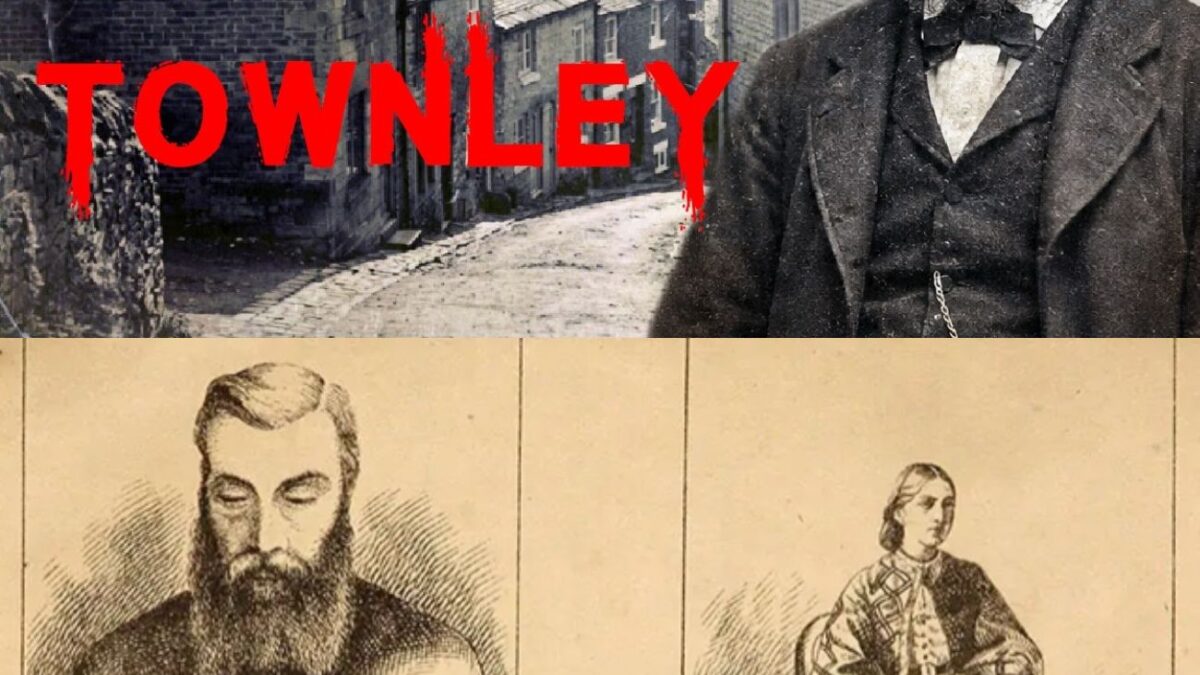
The Dark & Twisted Case of George Townley
Today we are looking at a case from the 1860s. So, sit back as we go to England. George Victor Townley and Elizabeth Caroline Goodwin both belonged to families that were described at the time as highly respectable and were considered to occupy an equal position in society. They had first met in Manchester while Elizabeth was staying with her uncle, a local physician, and their acquaintance soon developed into a close relationship. Before long, George became Elizabeth’s accepted suitor and the families had every reason to regard the match as a suitable one.
By 1861, George was 23 years old. He was a very good musician and an accomplished linguist. His father worked as an accountant in Manchester and Elizabeth was a granddaughter of Captain Goodwin who was a magistrate and lived in the fine residence of Wigwell Grange, which was in Wirksworth in Derbyshire. Although the couple had become engaged, marriage did not immediately follow. George had no visible employment of his own and as time passed, the engagement remained unresolved. Despite their attachment, the pair continued to wait for the circumstances that would allow them to marry. During this period, they had a brief separation and during that time George’s behavior became sufficiently unusual as to attract attention. While in London, he was said to have jumped into a bath fully clothed and on another occasion, he purchased seven white hats at once.
The couple soon reconciled their differences and resumed their courtship. By the summer of 1863, however, Elizabeth again began to reconsider the future of their relationship and she eventually decided that the engagement should come to an end. On the 15th of August, she wrote to George informing him that she wished to be released from her commitment to him. For George, the letter was devastating. He started to suffer from what was described as severe mental anguish. He could not sleep, he lost his appetites, and he began taking morphine and drinking heavily. George replied to the letter informing Elizabeth that he was deeply affected by what she had written and requested to see her once more. Elizabeth replied and wrote that they should not meet as she was now engaged to another man and it would not be appropriate for her to see him again.
George was now left with the knowledge that the woman to whom he had been engaged for several years was promised to someone else. On Friday, the 21st of August, he traveled to the village of Wirksworth. He stopped in the Bulls Head Inn where he drank two glasses of brandy. He spoke to the Reverend Harris and asked if he thought it would be possible to obtain a meeting with Elizabeth. The Reverend advised him that he could likely secure one by sending her a note requesting it. George did this and then proceeded to Wigwell Grange. He arrived at half past five in the afternoon and requested to see Elizabeth. The housekeeper had already been told that if George arrived, he was to be let in and Elizabeth would speak with him.
A few minutes later, Elizabeth came to the drawing room and greeted George with a smile. Together, they walked into the garden and Elizabeth asked the housekeeper to inform her when tea was ready. George appeared to be calm, but as he spoke to Elizabeth, he told her that unless she agreed to accept his addresses once more, he would prevent her from encouraging the attention of others. His words suggested that he was trying to appear reasonable and confident, but beneath this calm exterior, he was driven by jealousy and frustration. When the housekeeper came out and told Elizabeth that tea was ready, she went back inside while George remained in the garden. The housekeeper noticed that Elizabeth now seemed cautious and when she asked if she was feeling well, Elizabeth told her of George’s threats and that he wanted to continue their conversation once she had finished her tea. The housekeeper had always thought Mr. George Townley to be a strange gentleman and advised Elizabeth not to see him again.
However, after drinking her tea and reading the newspaper to her grandfather, Elizabeth returned to the garden. She carried on walking with George and eventually they went into the lane which was adjacent to the property. As they had walked about another 20 yards, George pulled out a spring-back clasp knife with a 4-inch blade and attacked Elizabeth. He stabbed her three times. The wounds were very severe and the young lady immediately began to bleed heavily and fell to the ground. As she lay there holding her neck, a farm laborer who was returning from work named Reuben Conway ran over to see if he could assist. He asked her what had happened and Elizabeth pointed towards George and said, “Do you see a gentleman standing in the lane? He has done it.”
Mr. Conway stayed with Elizabeth for several minutes before George approached him and told him that he had indeed stabbed Elizabeth and that he would remain with her while Mr. Conway went to fetch help. George then kissed her and said, “Poor Bessie,” before attempting to stop the bleeding. Mr. Conway ran to Wigwell Grange, but instead of remaining with Elizabeth, George decided to try and carry her back towards the house. Tragically, she died before they reached it. When George arrived, Captain Goodwin and the housekeeper were in the garden and were confronted with a terrible sight. Elizabeth was dead and covered in blood. Despite this most terrible event, George remained remarkably calm and told Captain Goodwin that he had taken the life of his granddaughter because she had deceived him. He made no attempt to conceal what had happened or to flee. Instead, he produced two packets of letters Elizabeth had written to him, handed them to Captain Goodwin and told him he could read them or burn them, but made it clear that he did not want them brought before a court. Realizing he was in a strange state of mind, Captain Goodwin offered him tea while word was sent to a doctor and the police.
Shortly after, Dr. Mant arrived. He looked at the body and saw a major wound on the right side of Elizabeth’s neck, approximately 3 inches long, which extended towards her spine and it divided the principal blood vessels of the throat. He also noted there were two other deep wounds. At around 11:00 p.m., Police Constable Charles Parnham arrived and when he did, George stood up and admitted the murder once more. Constable Parnham then escorted him to the police station. It did not take long for news of the terrible tragedy to spread through the surrounding area and rumors about the broken engagement and the devastation felt by Mr. Townley soon began to circulate. Before long, the circumstances surrounding Elizabeth’s death had become the subject of widespread discussion with people trying to understand what could have driven a young man from a respectable family to commit such a desperate act.
On the afternoon of Saturday, the 22nd of August, 1863, the formal inquest into the murder of Elizabeth Caroline Goodwin was convened at Wigwell Grange and was presided over by Mr. Bennett, the coroner for the district. The inquest sought to formally examine witnesses, establish the cause of death, and determine criminal responsibility. Captain Goodwin, the victim’s 84-year-old grandfather and senior magistrate on the Wirksworth bench, was the first witness. He recounted the tragic moments following the assault. He told of how his granddaughter was brought back to the house and of how George Townley had immediately confessed to him that he had stabbed her, stating that he had taken Elizabeth’s life because she had deceived him.
Key details about the sequence of events earlier that evening came from Elizabeth Hodgson, who worked as the housekeeper at Wigwell Grange. She testified that Elizabeth had told her of her conversation with Mr. Townley and said that after Elizabeth had come in for tea, she warned her against seeing him again due to the threat that he had made when they were walking around the grounds. When the coroner asked what the threat was, Mrs. Hodgson replied that Mr. Townley had declared that unless Elizabeth accepted his addresses, he would prevent her from encouraging others. Reuben Conway, the farm laborer, was the next witness and told of how he saw Elizabeth in the lane following the attack. He said that he heard someone moaning quietly and when he looked around, he saw Elizabeth and realized that she was bleeding. He said that he asked her who had attacked her and she pointed towards Mr. Townley, who was standing nearby. Mr. Conway said that when he spoke to Mr. Townley, he offered no resistance and admitted that he had carried out the deed.
Medical evidence was presented by Dr. Newton Mant, who testified that Elizabeth had already died before his arrival. He said that he did examine her body and discovered a terrible wound on the right side of her neck that had severed vital blood vessels alongside two other wounds on her shoulder. The next witness was Police Constable Charles Farnham, who told the inquest that when he arrived at Wigwell Grange, Mr. Townley immediately surrendered himself and admitted to the murder. He added that during his arrest and subsequent journey to the police station, Mr. Townley displayed extraordinary composure and handed over the murder weapon, which was a spring-back clasp knife with a 4-inch blade that was heavily stained with blood. Throughout the inquest, which took place in the kitchen at Wigwell Grange, Mr. Townley remained calm but chose not to make a statement. Once all the testimony was heard, the coroner’s jury returned a formal verdict of willful murder against Mr. George Victor Townley. On the authority of the coroner’s warrant, Mr. Townley was then officially committed to stand trial at the next Assizes in Derby.
George Victor Townley was brought before Mr. Baron Martin in December 1863 and charged with the murder of Elizabeth Caroline Goodwin. The same witnesses who had been present at the inquest gave evidence, but the defense did not deny that Mr. Townley had inflicted the fatal wounds. Instead, their central argument was that when he attacked Elizabeth, he was suffering from insanity and therefore should not be held criminally responsible for his actions. Evidence of insanity in the family of his mother was presented and the defense stated that in total 11 family members had suffered from the condition. The defense also called witnesses who described the state in which Mr. Townley had found himself after Elizabeth ended their relationship. The witnesses spoke of his mental anguish, his loss of sleep, his lack of appetite, and his use of morphine and alcohol. They all said that he experienced this disturbed behavior before he decided to go to Wigwell Grange.
The most important medical evidence came from Dr. Forbes Winslow, who had examined Mr. Townley while he was in custody. The doctor told the court that he had seen him on the 18th of November and again the night before the trial. He stated that on both occasions, he considered that Mr. Townley was suffering from what was then described as moral insanity. This evidence was supported by Mr. Gibsbourne, the doctor at the prison where Mr. Townley had been confined. Although the defense tried to argue that the murder was due to George Townley suffering extreme emotional distress rather than a deliberate act of a rational individual, the prosecution rejected this claim. They argued that Mr. Townley had not been shown to suffer from insanity in the particular form that was recognized by the law.
The judge told the jury that they should pay particular attention to whether Mr. Townley had been suffering from delusion and stated this meant whether he generally believed something to be true when in reality it was not. This was important because doctors and other medical experts recognized mental illness could take different forms. A person might be suffering from a serious mental disorder and act because of an overwhelming or uncontrollable impulse, even if they did not have any false or imaginary beliefs. The law, however, took a narrower view of insanity. At the time of the trial, simply showing that someone was mentally ill or driven by an uncontrollable impulse was not enough to make them legally insane. This created a difficult situation for the jury. They had to decide whether Mr. Townley was legally responsible for Elizabeth’s death according to the law, even though the medical experts who believed he was insane may have understood his mental illness in a different way. In other words, the doctors and the law did not necessarily use the same definition of insanity.
The jury, nevertheless, rejected the defense of insanity and found Mr. Townley guilty of murder. He was then sentenced to death. The verdict, however, did not end the matter. There was still considerable concern about Mr. Townley’s mental condition and efforts were immediately made by the defense to prevent his execution while this question was investigated further. Even Baron Martin, the judge who had presided over the trial, expressed his view to Sir George Grey, the Home Secretary, that Mr. Townley’s state of mind required further examination. Following this, the Home Secretary ordered a special investigation. He instructed three Commissioners of Lunacy to visit Mr. Townley in Derby Jail. The three men examined him on two occasions and also questioned his father and mother together with officials in the prison. Their conclusion was very different from that reached by the trial jury. They considered George Townley to be insane.
The defense also ordered a private examination on the state of Mr. Townley’s mind. This was conducted by Dr. Goods, Dr. Harwoods, the prison doctor, and three Derby magistrates, and they all came to the conclusion that Mr. Townley was indeed insane. Following this, the death sentence was suspended and George Townley was taken to Bethlem Hospital in Southwark in London where he would undergo further observation. The press criticized the government’s handling of the case while the magistrates in Derbyshire strongly opposed the action taken by the Home Secretary. A prolonged dispute followed and arguments continued about Mr. Townley’s sanity. Eventually, a second government commission was appointed to investigate the case and this time it was conducted by doctors Bucknill, Hood, Helps, and Myers. After some time, they concluded that George Victor Townley was of sound mind.
This left the case in an extraordinary position. The first commission had declared him insane, the second declared him sane. While the doctors who had conducted the first examination continued to maintain their view that Mr. Townley was suffering from moral insanity, the doctors who conducted the second would not accept that his mental state amounted to the form of insanity which was required to remove his criminal responsibility. Eventually, Mr. Townley had his death sentence commuted to penal servitude for life and was transferred to Pentonville Prison.
Despite this judgment, the disputes over his mental condition did not disappear. Those who believed him to be insane continued to point to his behavior before the murder as evidence of mental disturbance. Evidence concerning his earlier behavior in London also came to light when Mr. P. Dolan, an artist with whom Mr. Townley had lived when his relationship with Elizabeth had previously broken down, gave evidence describing his highly unusual behavior at that time. These details were not presented to court at the trial but were subsequently placed before the Home Secretary. The newspapers continued to report on the controversy with many accounts drawing attention to the medical evidence and this unusual behavior. Yet despite these continued questions, Mr. Townley remained a convicted murderer serving a life sentence rather than being regarded as a man legally incapable of responsibility for his crime.
On the 12th of February, 1864, while in Pentonville Prison, George Townley climbed over the staircase rails and fell into the prison lobby, a distance of about 23 feet. The fall fractured his skull and severely injured his brain. He survived for approximately 3 hours before dying from his injuries. Following this, there was an inquest. The coroner was Dr. Lancaster. The final official finding concerning the circumstances of his death stated that George Victor Townley had been in an unsound state of mind when he died by his own hand.
The question that had divided the doctors, the courts, and the authorities during his lifetime therefore remained unresolved in another sense. George Townley had been convicted of murder and legally judged responsible for the death of Elizabeth Goodwin, yet the first government commission considered him to be insane, while the second concluded that he was of sound mind. His death brought the public dispute to an end, casting a permanent shadow over how Victorian society balanced the rigid definitions of criminal law against the complex, shifting shadows of human psychology.

