The Dark & Disturbing Case Of Henry Jacoby
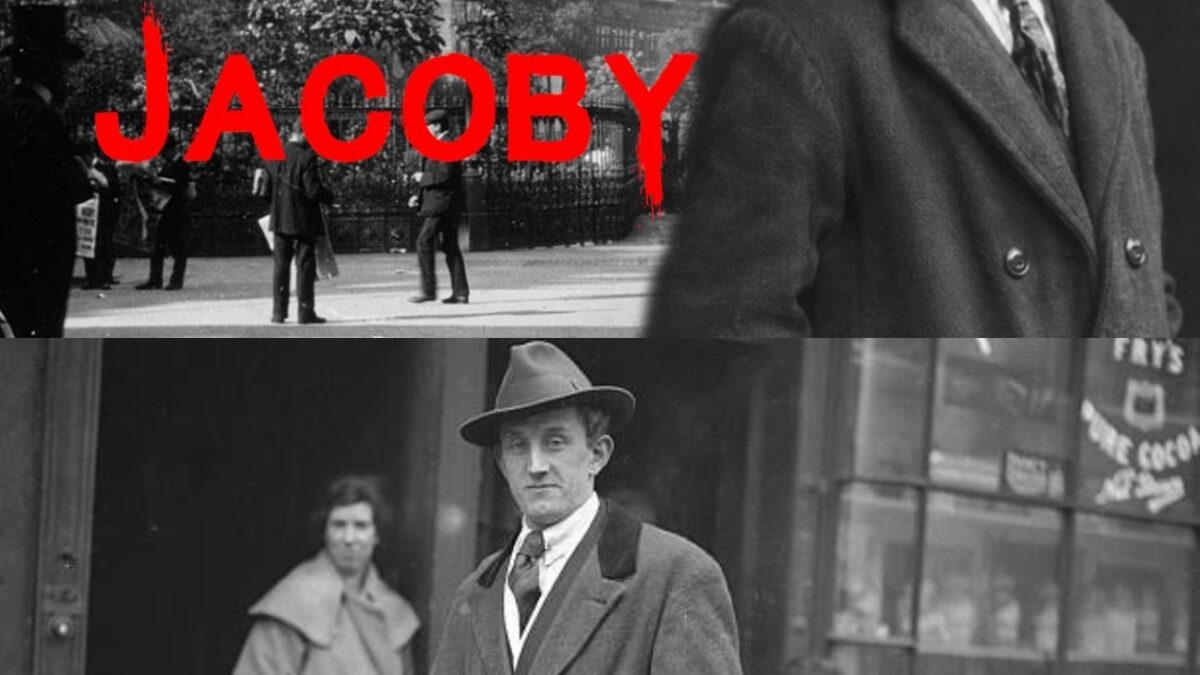
The Dark & Disturbing Case Of Henry Jacoby
Before I tell you where and when we’ll be going in today’s case, I first want to introduce you to the sponsor of today’s video, Zocdoc. Have you ever moved to a new city, switched insurance, or finally decided to prioritize your health only to realize that finding a new doctor is a whole task? Well, this is where today’s sponsor, Zocdoc, can help. Zocdoc is a fantastic service that lets you search and compare local in-network doctors, making everything so much easier. They have more than 150,000 providers with 200-plus specialties across all 50 states. Their website also has tons of reviews from real patients and detailed doctor profiles to help you choose the right one. Best of all, Zocdoc is free to use and appointments happen very fast, usually within 24 to 72 hours. Another great feature is that you can see actual appointment openings and click to instantly book a visit. I know it may seem small, but just clicking the link in the description is a huge step towards prioritizing your health.
Today we are looking at a case from the first part of the 20th century. So, sit back as we go to England. Henry Julius Jacobi was born in Hoxton, in the London Borough of Hackney, on the 28th of June, 1903. He grew up in a violent and abusive household, a situation further destabilized by a mother who was forced into prostitution by the family’s desperate financial circumstances. Seeking a reprieve from this hostile environment, he went to live with his aunt and uncle, where he managed to find some stability. However, when he was 14 years old, that peace was cut short when his father forced him back into the same violent family home once again.
Fourteen was a standard age that many children legally left school to enter the workforce, and desperate to try and escape his turbulent home life, Henry sought out immediate employment opportunities, taking whatever manual labor or entry-level roles he could secure to help keep him away from the house for as long as possible. Eventually, he secured work at a respectable hotel in Portland Place. It was a good position for a teenager who had left school at 14, but the job demanded long hours and constant attention to the needs of the guests. Henry was expected to carry luggage, deliver messages and parcels, escort visitors through the building, answer bells, perform errands for both guests and management, and to assist wherever required.
The work often began early in the morning and continued late into the evening, and as a junior member of staff, he was expected to be available whenever needed. Like many employees of the period, Henry lived at the hotel itself. His sleeping quarters were in the basement alongside other members of staff, and this meant that he could be called upon at any hour. Although the work was demanding, this arrangement provided him with both accommodation and a regular income, something he had never had before.
Among the hotel’s permanent residents was Lady Alice White, the widow of Sir Edward White. Sir Edward had been a prominent public figure, serving as chairman of the London Council from 1909 to 1910 before his death in December 1914. Following his passing, Lady White engaged in charitable pursuits and had taken up residence at the Portland Place Hotel in November 1921. She was 65 years of age and had become well known to both the management and the hotel staff. She occupied room 14, a comfortable first-floor suite which overlooked the street, and she was regarded as a courteous and considerate guest who treated the hotel employees with much kindness.
Monday, the 13th of March, 1922, had been an entirely ordinary day. During the evening, Lady White had entertained a small group of female friends with a bridge party in her suite. According to those who attended, the gathering was a pleasant social occasion, and there was nothing unusual about Lady White’s behavior. She appeared to be in good health and excellent spirits throughout the evening. Shortly before 11:00, the guests departed, and Lady White went to her bedroom. By this time, most of her living staff had also gone to bed, although the night porter stayed near the hotel entrance, occasionally walking the corridors of the building.
At around 2:00, he heard footsteps approaching through the hall. He looked up and saw 18-year-old Henry Jacoby walking towards him. He asked him why he was up and commented that he looked very nervous. Keeping his voice low, Henry asked the night porter if he had heard anything unusual. The porter replied that he had not. Henry then explained that he believed he had heard two men whispering outside his room in the basement, and concerned that someone may have entered the building during the night, he suggested that they both go and investigate.
The two men searched the basement corridors together. They checked every area that they believed someone could conceal themselves and carefully looked through the passageways and storage areas. Despite their efforts, they found no trace of anyone. With nothing suspicious discovered, the night porter concluded that Henry had probably mistaken ordinary sounds for voices, or perhaps imagined them after being suddenly woken up. Satisfied that there was no immediate cause for alarm, he advised the young man to return to his bed before resuming his own overnight duties.
By 8:00 a.m., it was noted that Lady White had not come down for breakfast, so a maid was sent to knock on her door. The maid waited outside for a few minutes, but received no response. At first, there seemed little reason for concern. Guests sometimes chose to sleep later than usual, particularly when they had entertained visitors the previous evening. However, Lady White was always up early, so at around 8:30 that morning, the chambermaid was instructed to enter her room. The door was unlocked, so the maid walked inside, but when she drew back the blinds, she was confronted with a horrifying scene.
Lady White was lying in the bed with blood covering her face. As she looked closely, she saw that blood had also soaked into her nightdress. She knew that something terrible must have happened and quickly raised the alarm. Her doctor was summoned and the police were contacted. When the doctor arrived, he confirmed that Lady White had suffered a large wound to the left side of her scalp and that her skull had been fractured by blows delivered with a heavy blunt object. Although she was alive, the doctor described her condition as critical and requested an ambulance to take her to the hospital. Later that night, Lady Alice White succumbed to her injuries.
As this was now a murder case, Chief Inspector Cornish took charge of the investigation. He instructed detectives to begin the task of examining Lady White’s room, but their initial findings only deepened the mystery. There were no signs of anyone who had forced their way into the room. There was no murder weapon and there was no evidence of a violent struggle. Furniture remained in place, drawers had not been ransacked, and valuables including Lady White’s jewelry and money that she had in her purse were still where they should have been. This presented the investigators with an immediate problem: why had nothing been taken?
However, detectives did not dismiss the possibility that the intruder had intended to rob Lady White, but had been interrupted before having the opportunity. The building itself also presented a puzzle. The hotel occupied an old property that had been converted from two separate houses and had two exits. Every evening the gates were locked and the entrances secured. Detectives inspected the doors and windows leading to Lady White’s suite together with the balcony outside her room and tried to find the slightest indication that someone had entered from the outside. However, they did not find anything. No lock had been forced and no window showed any signs of interference.
These findings led Chief Inspector Cornish to believe that rather than entering the building during the night, the person who had attacked Lady White had been inside the hotel before the doors and gates were secured. If this were true, the killer would have been familiar with the layout of the building and could have easily avoided the night porter by moving quietly through the back staircase after the other guests and staff had gone to bed. From the position of the injuries and the evidence within the room, detectives concluded that the attacker had been standing between the two beds when Lady White suddenly awoke. They believed that as she raised her hands in an attempt to protect herself, she received defensive injuries before the blows to her head were delivered.
Building work was being carried out on the premises and the workmen stored their equipment in the cellar. Inspector Cornish ordered every tool to be examined and soon noticed something unusual. One hammer appeared to be much cleaner than the others. While the remaining tools showed the ordinary grime expected from regular use, this particular hammer looked as though it had recently been washed. The hammer was subjected to close examination and when put under a microscope, minute traces of blood were found. It looked like the police had found the likely murder weapon, but they still had no clear suspect.
Every member of the hotel staff had been interviewed, but the night porter had forgotten to tell the police about seeing young Henry Jacoby in the early hours of the morning. When he did eventually inform Inspector Cornish, the young man was once again questioned by officers. He confirmed that he had heard voices during the night, although he now suggested that they may not have come from inside the hotel after all. Instead, he proposed that the sounds could have come from men talking in the street above his basement room. Detectives decided to test this and find out if voices from the street could indeed be heard below. Their test showed that this was entirely possible. For the moment, Henry’s account could not be disproved and investigators reluctantly accepted that the mysterious whispering might have had no connection with the murder whatsoever, and they seemed no closer to identifying Lady White’s attacker.
Scotland Yard continued in its methodical elimination of every possible suspect. One of the first stages in that process involved carrying out background inquiries into every person who had access to the hotel on the night of the attack. They checked references, family circumstances, and previous histories looking for anything that did not fit. It was during these inquiries that questions arose about Henry Jacoby. He had told detectives that his grandmother, who supposedly lived in St. Albans, gave him an allowance of 5 shillings every week. Police inquiries failed to confirm this. Detectives also discovered that Henry had run away from his father’s home after stealing 10 pounds from one of the lodgers. Although the theft had no direct connection with Lady White’s murder, it demonstrated a willingness to steal and cast further doubt upon his credibility.
Officers once again searched his room and this time they found a handkerchief that had been stained with blood. When he was asked to explain it, Henry stated that he had suffered a nosebleed after some friendly sparring with another porter. Initially, the police thought that this was unlikely, but when they asked the porter, it was confirmed that the incident had taken place exactly as Henry had described. Once again, what had initially appeared as suspicious turned out to have an innocent explanation.
Even so, Chief Inspector Cornish found himself increasingly concerned about Henry Jacoby. It was not simply the inconsistencies in his background that attracted his attention; it was the young man’s general behavior. Whenever the inspector had spoken to him, Henry seemed unusually eager to discuss the case. He repeatedly offered his own ideas about what had happened and appeared fascinated by every stage of the investigation. Instead of limiting his answers to questions he had been asked, he volunteered theories and observations without prompting. The inspector considered this quite strange, and the more Henry talked, the more he became convinced that something about his conduct was not quite right. He ordered one final search of the hotel and told his officers to pay particular attention to both the basements and Henry Jacoby’s living quarters.
This time the police found something of interest. Hidden away in the cellar was a blood-stained coat, which hotel staff had no difficulty in identifying. They all knew that it belonged to Henry Jacoby. Unlike the blood-stained handkerchief, which had already been explained, this was far more difficult to account for. Combined with the inconsistencies uncovered during the background inquiries and the suspicious interest that Henry had shown in the investigation, the Chief Inspector knew that he had sufficient grounds to arrest Henry and escorted him to the police station.
At first, Henry remained largely silent. Detectives pressed him on the evidence that had been found and the contradictions in his earlier statements, but he offered little in reply. For a time, it appeared that the investigation had stalled once again. Then Henry made an unexpected request: he asked to speak directly to Chief Inspector Cornish. When the Chief Inspector arrived, Henry told him that he wished to make a statement. What followed finally provided the investigators with an explanation of the events that had taken place during the early hours of the 14th of March.
Henry said that after searching the basement with the night porter, he had returned to his bed, but found himself unable to sleep. He said that as he lay awake, his thoughts turned towards stealing money from one of the hotel’s wealthy residents. He said he did not want jewelry, only cash, as money would be much harder to trace. Speaking quite quickly, he said that he made his way to the cellar where the workmen’s tools were stored and picked up a hammer. He then described how he walked through the hotel using the back staircase until he reached the first floor. He said that he tried one bedroom, but found it locked, so he continued along the corridor until he came to another room where the door had not been secured.
He then told how he entered the room, but as he looked for money, the lady in the bed woke up and started to shriek. He said this frightened him, and he panicked and struck her on the head with the hammer. He went on to say that afterwards he left the room and washed the blood from the hammer before drying it with a handkerchief and returning it to the workmen’s toolbox, believing that no one would notice that it had been used. Henry also admitted that despite entering the room intending to steal, he had actually taken nothing.
This confession explained why there had been no signs of forced entry, why valuables had been left untouched, and why the killer had apparently vanished without attracting the attention of the night porter. Satisfied that the evidence supported Henry’s own admission, the 18-year-old young man was charged with the murder of Lady Alice White.
News of the arrest quickly spread across London. For days, newspapers had reported the mystery surrounding the murder of a prominent widow inside what was considered a respectable and secure hotel. Public speculation had centered on the possibility that an unknown intruder had somehow entered the building unnoticed. Few suspected that the man accused of carrying out the attack would prove to be one of the hotel’s own staff.
Following his appearance before the magistrates, Henry was committed for trial at the Old Bailey. Throughout the proceedings that began on the 28th of April, 1922, the courtroom remained crowded as journalists, members of the public, and legal observers followed every part of the trial. The case was heard before Mr. Justice McCardie, and the prosecution was led by Mr. Percival Clarke, assisted by Mr. H.D. Roome and Mr. Bentley Purchase, while Henry was defended by Mr. Lucien Fior. When Henry first arrived in court, he was wearing a gray overcoat, a colored shirt, and a black tie, and many people commented that he looked quite pale. When the judge asked him how he pleaded, despite his earlier confession, Henry replied, “Not guilty.” Newspapers reported that although still a teenager, Henry looked to be younger than his 18 years, and there seemed little about him to suggest that he was capable of such a brutal attack.
Before the jury heard the evidence, Henry’s lawyer challenged the statement that he had made to Inspector Cornish, arguing that he had not given it voluntarily. The judge, however, said that he would not make a decision on the matter until he had heard the evidence from both the police and Mr. Jacoby. Justice McCardie later excluded parts of the statement relating to an earlier alleged offense and false claims about Mr. Jacoby’s past, but let other parts of the statement stand.
The prosecution laid out the events of the 13th and 14th of March, 1922, explaining how Lady White had retired to her room after entertaining friends at a bridge party before being fatally attacked during the early hours of the morning. The jury heard that there had been no sign of forced entry, no valuables had been taken, and that the detectives had concluded the attacker had remained inside the hotel after it had been secured for the night. Chief Inspector Cornish outlined the investigation, including the discovery of the workman’s hammer, which bore microscopic traces of blood despite having been washed. The prosecution also highlighted Henry’s false story about receiving money from a grandmother in St. Albans, the blood-stained coat found hidden in the cellar, and his confession, which closely matched the physical evidence recovered during the investigation.
As various exhibits were shown to the jury, observers noticed changes in Henry’s behavior. When Henry entered the witness box, he offered a different version of events from the one he had previously given detectives. He claimed that when he entered the bedroom, he did not realize the occupant was Lady White. According to him, he thought someone who had no right to be in the room was inside, and he told the court that after striking the figure in the darkness, he switched on the lights and was horrified to discover that the victim was in fact Lady White. He said that the shock of what had happened had affected his state of mind, and during questioning had led him to tell detectives things that he had not meant to say.
The prosecution challenged his explanation, arguing that it was entirely inconsistent with both his earlier confession and the physical evidence. They maintained that Henry had entered the room intending to commit theft, and had armed himself with a hammer before leaving the basement, which he had only done in case he may have encountered resistance.
After hearing all the evidence, the judge summed up the case before sending the jury away to consider the verdict. They deliberated for some time before returning to the courtroom to seek further legal guidance. They informed Mr. Justice McCardie that they had unanimously reached the conclusion that Henry had entered Lady White’s room intending to rob her, rather than intending to murder her. They asked whether in those circumstances they could return a verdict of manslaughter instead of murder. The judge, however, informed the jury that the crucial issue was not whether Henry had planned to kill before entering the room, but whether he had initially struck the blows that caused Lady White’s death. He said that under English law, if a person intentionally inflicted serious bodily harm and the victim died as a result, the offense amounted to murder.
Following this legal direction, the jury retired once more to continue its deliberations. After further discussion, they returned with a unanimous verdict. They found Henry Jacoby guilty of willful murder, but added a strong recommendation for mercy due to his young age. Following this, the judge sentenced Henry Jacoby to death.
The jury’s recommendation for mercy was forwarded to the Home Secretary for consideration, but after reviewing the case, he decided that there were no grounds to interfere with the sentence passed by the courts. This was appealed by the defense as they claimed that when the jury came back before giving their verdict, they had asked for instructions from Mr. Justice McCardie as to whether in certain circumstances they could return a verdict of manslaughter. The defense claimed that the judge did not properly direct them on the question as to whether Henry Jacoby had any intent to do bodily harm. The defense also claimed that when he made the confession, the young man was in such a hysterical state of mind that he knew little about what he was saying.
Despite these claims, the appeal was dismissed, and with no reprieve forthcoming, on the 7th of June, 1922, 18-year-old Henry Jacoby was hanged at Pentonville Prison, bringing a tragic and chilling close to one of the most sensational crimes of post-war London.

