The Dark Case of Sunny Ang
The Dark Case of Sunny Ang
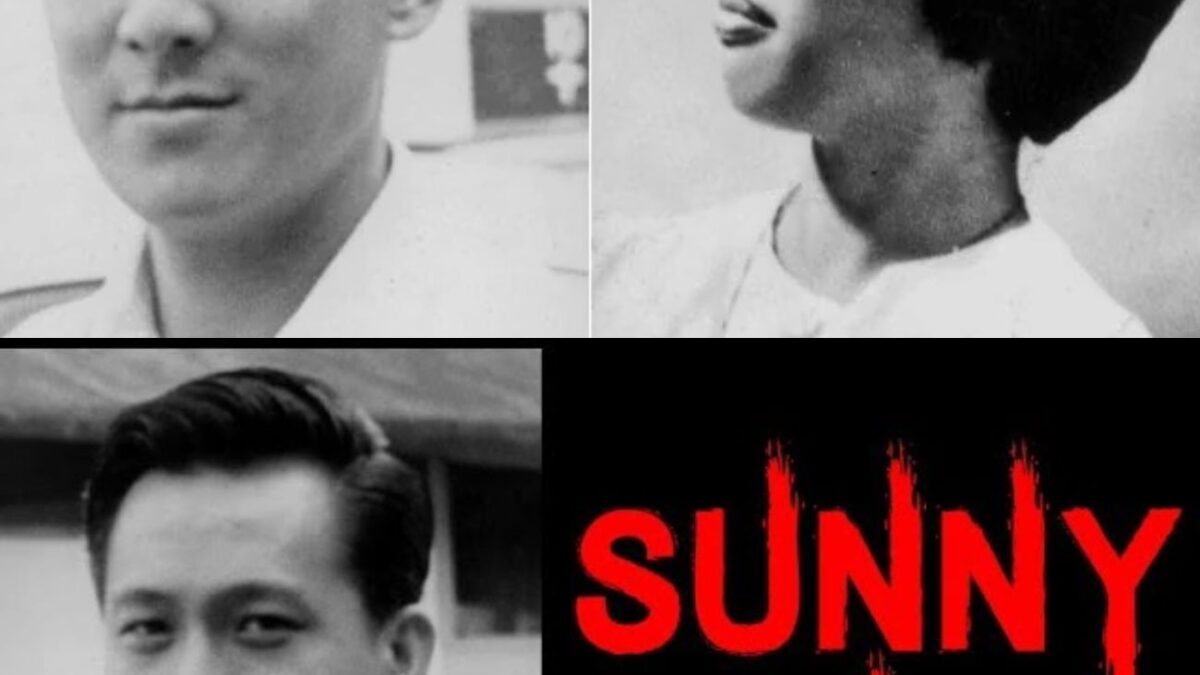
Sunny Ang was from a middle-class family; he was well-educated and well-spoken. He was attending a teacher training college when he suddenly left in 1957 to join a government scholarship scheme to become a commercial pilot. The idea of becoming a pilot was far more glamorous and fast-paced. In Ang’s world, this didn’t last, and he was asked to leave the course because he ignored safety regulations.
So he had left teacher training and failed to become a pilot. He then took part in the 1961 Singapore Grand Prix. Now, this was a tourism event, not the Formula One event it is today, but Ang was a skilled driver. The race was attended by rich, high-standing, and influential people—the type of people that Ang aspired to mix with. In 1962, he was arrested for negligent driving after killing a pedestrian. This was followed by being put on probation for attempted burglary the same year. He started studying for a law degree, but shortly after starting, he was made bankrupt. Life for the young Ang, who wanted to be a wealthy, prosperous young man in the early sixties, wasn’t going exactly as he had hoped.
Jenny Cheong Kim was a waitress at Odeon Bar and Restaurant. She was very different from Ang, as she only had a basic education. For her work, she didn’t earn very much money; her main income was from the daily tips from customers. She lived with her two children in her house, but the marriage was not a good one, and her main aspiration was to have a happy and fulfilling life. Jenny and Ang met in 1963. He was twenty-four, and she was twenty-two. He was handsome and educated; she was naive and simple. She fell completely in love with Ang, who made out that he was sophisticated and well-off.
She left her husband and her unhappy married life soon after they met. Jenny left her job, and Ang borrowed a friend’s car and drove his new girlfriend to Kuala Lumpur for a holiday. Jenny was really excited about the trip, but it was unfortunately cut short as the couple both became ill. However, before they returned to Singapore, Ang took out an accident insurance policy on himself and Jenny—thirty thousand dollars for himself and a hundred thousand for her. Remarkably, some may say, after taking out the policies, their car crashed on the way back from Kuala Lumpur, allegedly as a dog had run out onto the road. The passenger side of the car was damaged, but Jenny escaped the crash with minor injuries.
The couple continued to date, and Jenny became increasingly infatuated with Ang and decided to take out more accident insurance on herself, totaling four hundred thousand dollars. The beneficiaries were Ang’s mother, whom Jenny had only briefly met, or Jenny’s estate. At the start of August 1963, Ang took Jenny to make a will leaving her entire estate to his mother. It suited a naive Jenny, who just signed the paperwork believing Ang to be a kind-hearted, perfect boyfriend.
On Monday, August 26, one of Jenny’s policies expired, so Ang extended the policy for just five days. The policy paid twice the sum if the insured died from natural causes, but four times—or one hundred and sixty thousand dollars—if death was a result of an accident. The reason Ang gave as to why these policies were all short-term was because his girlfriend wanted to take up flying, as she was allegedly the heiress of a chicken farm. This, of course, was not true, and Jenny had no income to pay the insurance premiums; her boyfriend was paying them for her. It is estimated that the total sum insured was about nine hundred thousand dollars.
At 2:30 PM on Tuesday, August 27, 1963, Ang and Jenny chartered a boat with a boatman at Jardine Steps. They said they wanted to go diving and paid the boatman for the trip. They went out into the Singapore Straits until Ang instructed the boatman to drop anchor near Sister’s Island. Ang, who was in swimming trunks, had also brought along three air tanks, two pairs of flippers, two knives, a small axe, Aqualung equipment, and a transistor radio. He dropped a guide rope and helped Jenny put on a dive belt to which an axe, a knife, and a metal weight were attached. Jenny was a bit anxious, as she had never dived before, but entered the water alone.
Some ten minutes later, she surfaced, changed her tank, and went back into the water. Still in his trunks, Ang started checking his own tank and found that it was leaking. He said the problem was with the washer, and the boatman helped him improvise a new one, but it still would not work. Jenny was still somewhere underwater. Ang then tugged at the guide rope three times and asked, “Where’s the girl?” The boatman said he did not know and gave three more tugs. There was still no sign of his girlfriend. He pulled the rope up and told the boatman to look for air bubbles in the water; there were none.
“What are we going to do?” Ang asked. The boatman suggested going to nearby St. John’s Island to call the police. He hauled anchor, circled a few times to look for bubbles, and then left for the island. Very strangely, neither the boatman nor Ang entered the water to look for Jenny. They went to the island, but the boat was slow. Despite his girlfriend going missing, Ang was quite calm, never shouting at the boatman to speed up, and when they did arrive, he did not rush onto the island as a desperate boyfriend probably would have.
Ang returned with a guard who suggested picking up some fishermen from a nearby island on his way back to where Jenny had gone missing. They returned with five fishermen, all of whom dived into the water to look for Jenny while Ang stayed in the boat. All that was recovered of Jenny was a single flipper worn by her. It had been severed cleanly at the top and bottom, likely by a sharp instrument such as a knife or a razor blade. Diving experts said the loss of a flipper would have affected a person’s mobility; Jenny, being an inexperienced diver, would have panicked and probably drowned in the strong currents around the island.
The police always suspected Ang, a skilled diver who didn’t enter the water. He also stood to gain from the insurance policies he had purchased for Jenny shortly after they met. The police reclassified Jenny’s disappearance as murder. On September 5, 1963, their investigations finally led them to arrest Ang on December 21, 1964, and he was charged with murder the next day.
When Ang’s case was mentioned in court on December 29, the magistrate rejected the prosecution’s request for an adjournment to build their case and granted Ang a discharge, but a discharge that did not amount to an acquittal. However, Ang was rearrested an hour later and again charged with the crime. This time, on December 30, the prosecution pressed for an adjournment, citing the seriousness of the alleged offense and the extra time they needed to prepare the case due to the circumstances. This time, the magistrate accepted the prosecution’s application and disallowed bail.
Following the preliminary inquiry, which lasted from February 25 to March 5, 1965, Ang was tried in the High Court before a seven-man jury between April 26 and May 18. The case was very unusual, as it was the first case in Singapore and Malaysia where there was no body. All the evidence presented was circumstantial. Expert witnesses testified that the waters around Sister’s Island were dangerous due to strong undercurrents and that it was unsafe for a novice to dive alone in those waters.
Witnesses from several insurance companies testified that Jenny had personal accident policies for over four hundred and fifty thousand dollars—a substantial amount in the 1960s. The policies were taken out within three weeks of Ang first meeting Jenny. The beneficiaries named in these policies were either Ang’s mother or Jenny’s estate. One of the insurance policies for the sum of $150,000 had lapsed on August 26, 1963; it had been extended on the morning of August 27, 1963, for a further five days. Evidence was also produced that Ang did not renew or extend his own accident policy, which had been taken out at the same time. Another of Jenny’s accident policies for the sum of $100,000 was due to expire on August 28, one day after she disappeared.
It also transpired that Jenny had drawn up a will on August 7, 1963, at Gnanalingam & Co law firm, and she had been accompanied by Ang, and that Ang’s mother was named as the sole beneficiary. Representatives from insurance companies also testified that Ang had filed for claims with their companies on Jenny’s insurance policies barely twenty-four hours after the disappearance of his girlfriend. Actions on the day were highlighted: the fact that he never entered the water to look for Jenny, did not seem anxious when she failed to resurface, and displayed no urgency in getting help from nearby St. John’s Island.
There was no body, and Ang did not enter the water, so how could he have murdered his girlfriend? The trial concluded after thirteen days. The jury deliberated for only two hours, and on May 18, 1965, unanimously delivered the verdict of guilty to the murder of Jenny. Ang appealed the verdict, but all appeals were rejected. He petitioned for clemency to the President of Singapore, but this was also rejected. On January 31, 1967, Ang was hanged on Monday, February 6, 1967. Jenny’s body was never found, bringing a chilling final chapter to a case built entirely on cold calculation, greed, and circumstantial proof that forever altered legal history in the region.

